Italian Dolomites vs Swiss Alps: a first-hand recap and comparison of scenery, hiking, costs, food, transport, crowds. Which Alpine trip is better for you?
I've spent a lot of time in both the Italian Dolomites and the Swiss Alps, and if there's one question I get all the time, it's this one. Which is better? Honestly, I wish the answer were easy.
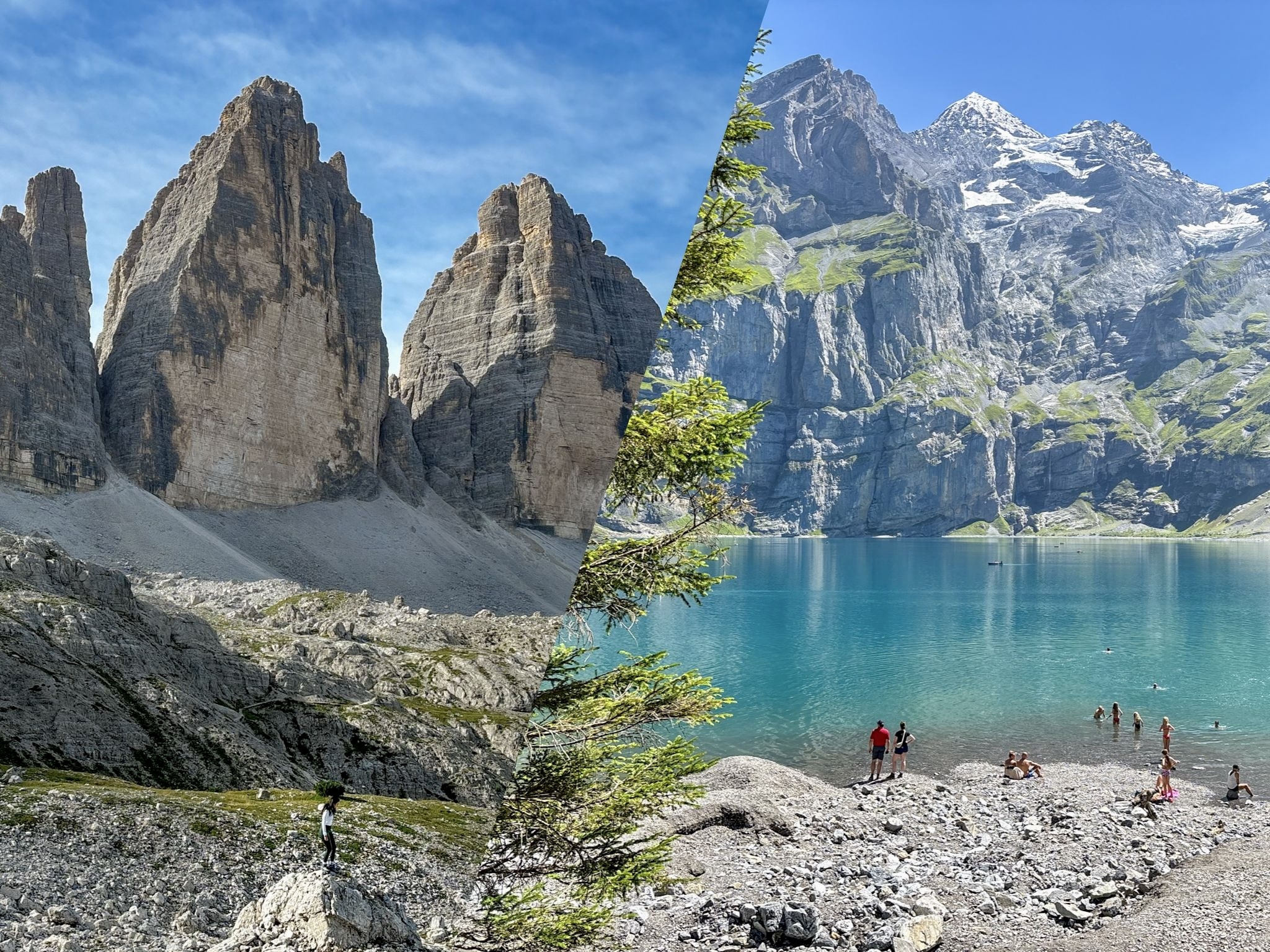
Places in the Dolomites like Seceda, Tre Cime, Lago di Braies and Passo Giau have produced some of the most ridiculous views I've ever seen. Then again, some of my favorite hiking days happened in Switzerland, where I somehow found empty trails and quiet mountain huts in the middle of August.
That's why the Dolomites vs Swiss Alps debate is so interesting. The beauty gap between the two is surprisingly small, but the experience gap, on the other hand, can be huge.
After many road trips, hikes and slices of apple strudel, I've come to the conclusion that there isn't a universal winner. In this guide, I'll compare them in terms of scenery, hiking, costs, transportation, food and crowds to help you figure out which one fits your travel style best.
Scenery
What the Landscapes in the Dolomites Are Like
The Dolomites have an incredible visual intensity. The mountains are sharper, stranger and more theatrical than most of the Alps, with pale rock towers rising straight above green valleys, spruce forests and high meadows.
The strongest part is the density of famous views. Seceda, Alpe di Siusi, Lago di Braies, Lago di Misurina, Lake Carezza, Santa Maddalena and the roads around Cortina all deliver that immediate, slightly ridiculous postcard effect. The Dolomites also include nine UNESCO mountain systems.
What I find hard to beat is how often the Dolomites give you a perfect foreground and background in the same frame: church and peaks, lake and cliffs, meadow and ridgeline, village and vertical rock. It is scenery that almost composes the photo for you.
What the Swiss Alps Are Like
The Swiss Alps on the other hand felt broader, higher and more cinematic to me. The beauty is less about the rock itself and more about scale: deep valleys, glaciers, huge snow peaks, cliff walls, waterfalls and villages placed with suspiciously good taste.
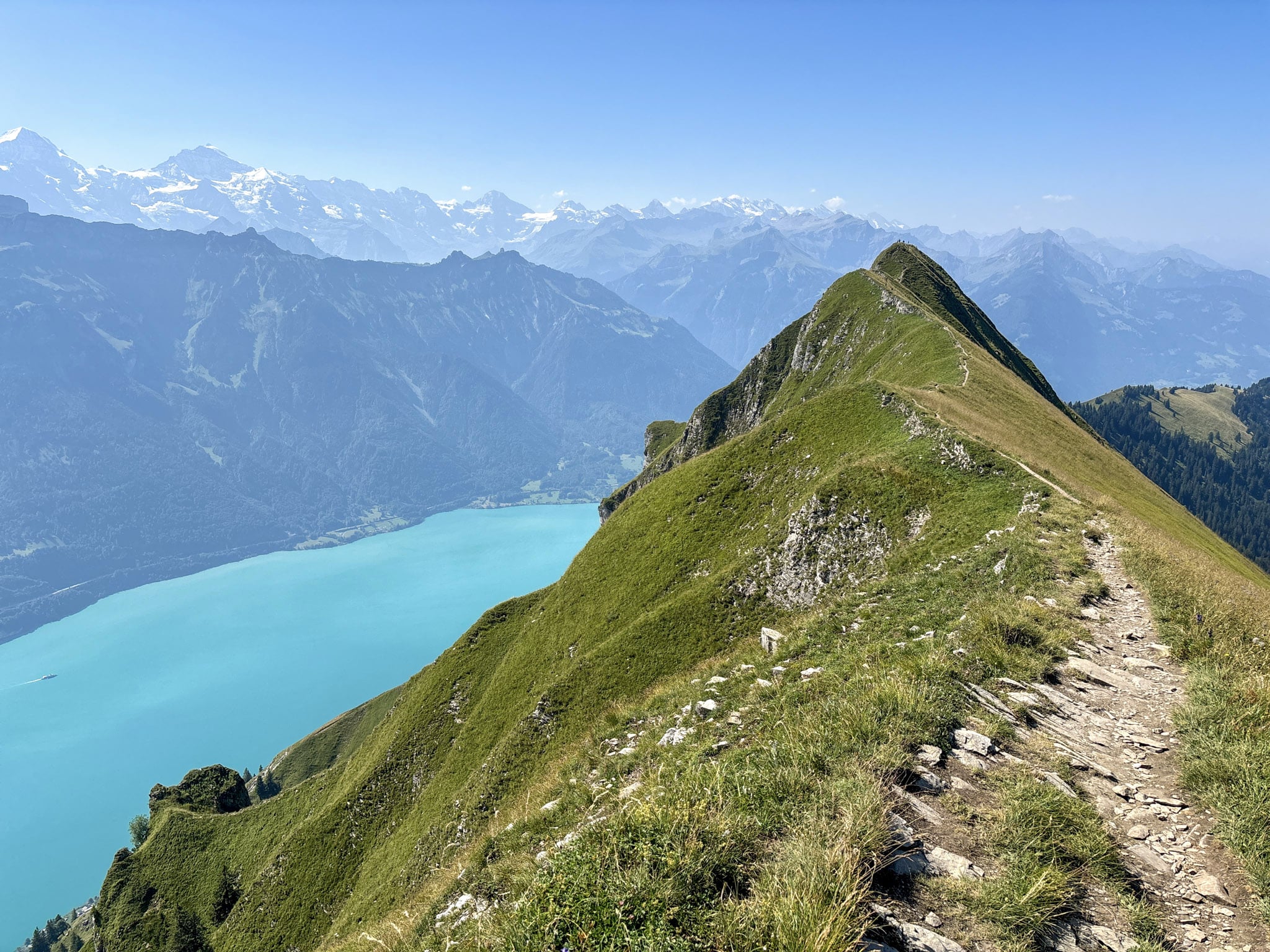
Lauterbrunnen is the obvious example, with 72 waterfalls dropping into one valley. The Matterhorn gives Zermatt one of the most recognizable mountain silhouettes in the world. Around Grindelwald and Wengen, the Eiger, Mönch and Jungfrau create a monumental backdrop. Bachalpsee and Oeschinensee, the most beautiful lakes in Switzerland, add the classic formula: still water, sharp peaks, absurd reflections.
Which One Has More Dramatic Views
For pure scenery, I give the Dolomites a slight edge. Switzerland feels bigger and more monumental, but the Dolomites have a higher concentration of views that feel instantly distinctive.
Winner: Italian Dolomites, by a small margin.
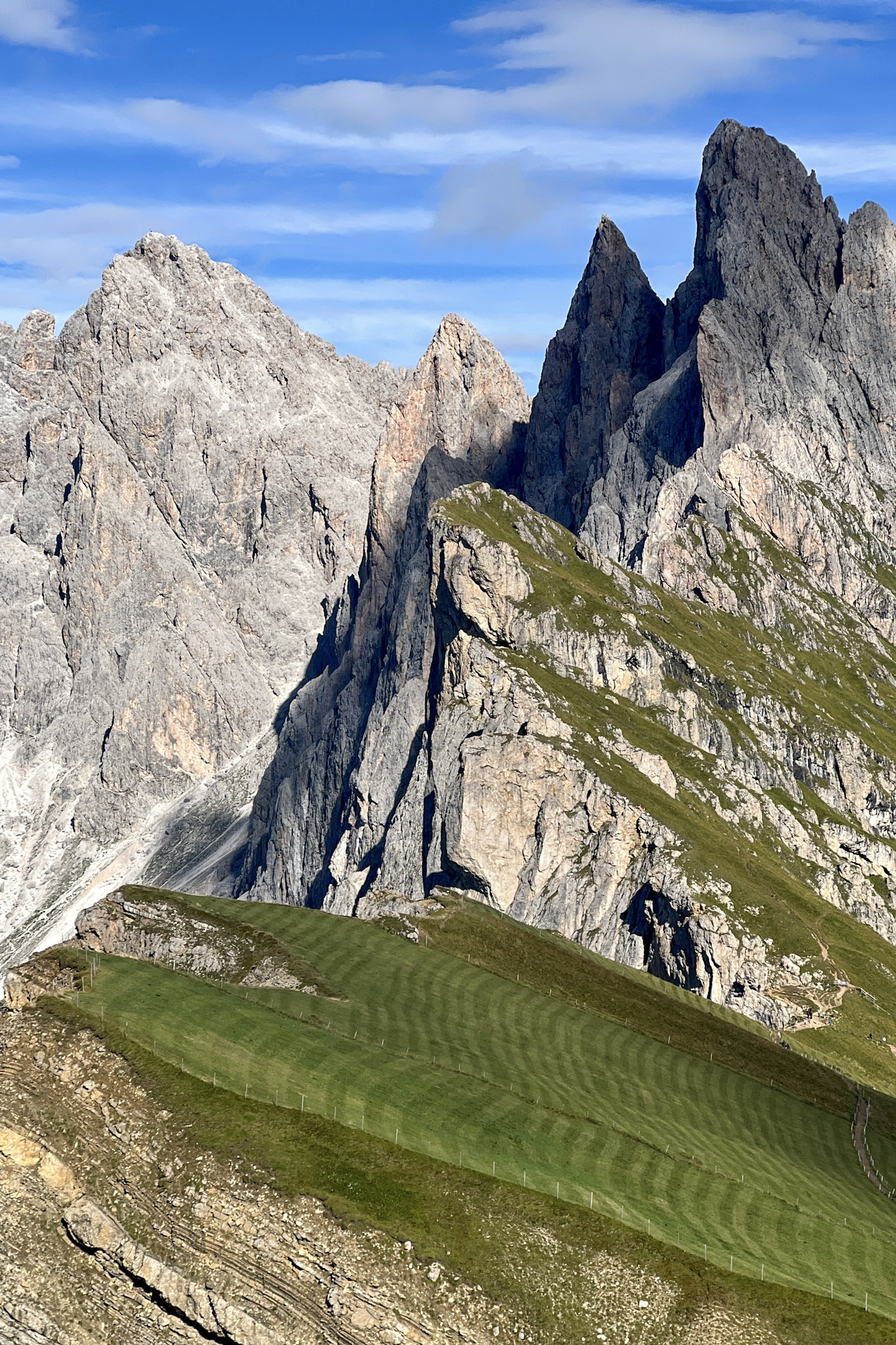
Seceda Peak, Dolomites
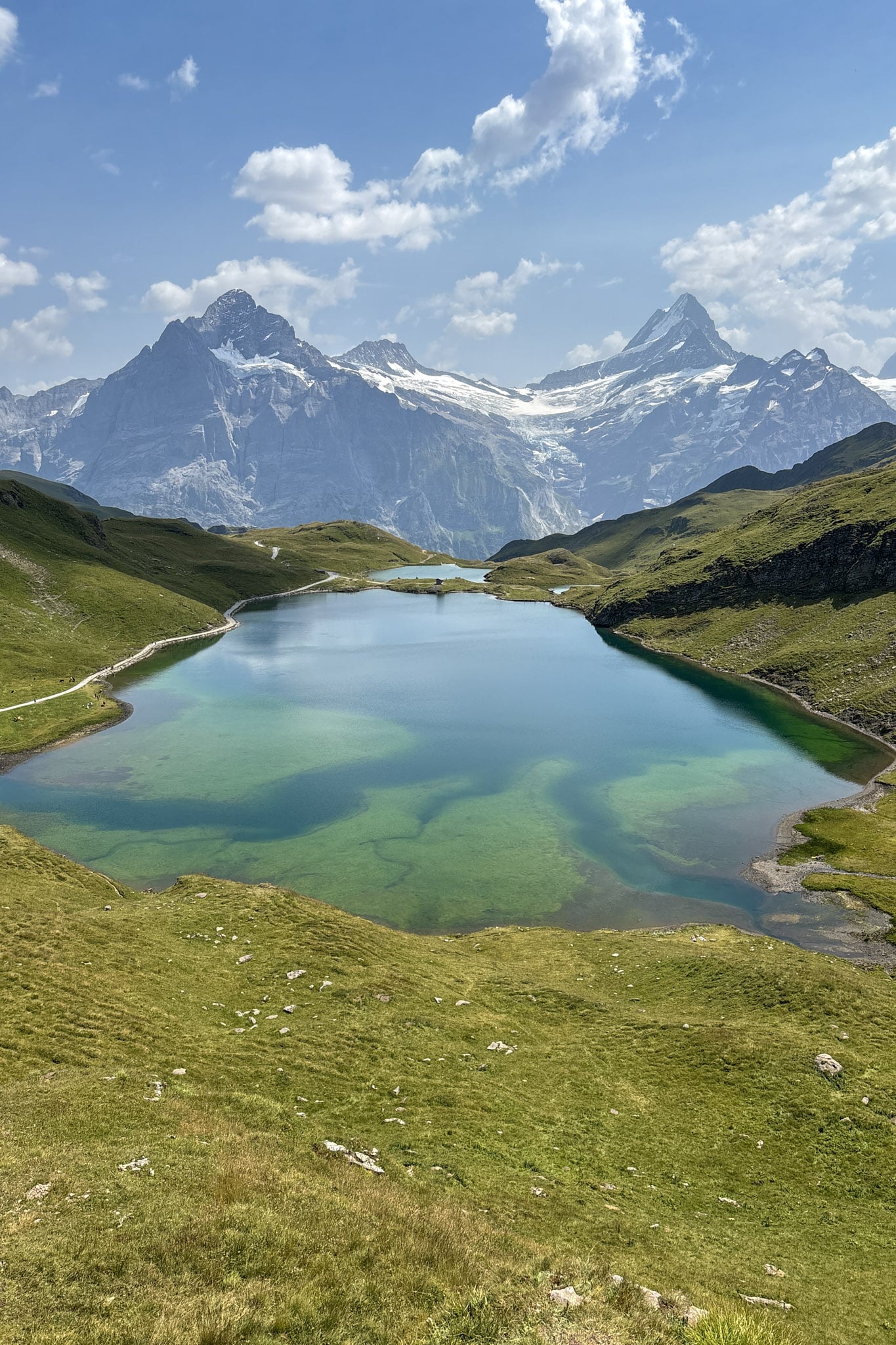
Bachalpsee, Swiss Alps
- Want to research more incredible views in the Italian Dolomite, or Swiss Alps? You’ll love my guide to the 10 most beautiful places to visit in Swizerland and to the 10 best places to see in the Dolomites
Hiking
Hiking in the Italian Dolomites
The Dolomites are probably the stronger hiking destination on paper.
Beginners can do easy scenic walks around Lake Misurina or Lake Braies, and lift-assisted routes that deliver major views without a brutal climb, like the famous Seceda. Intermediate hikers get the best deal: Tre Cime di Lavaredo, Cadini di Misurina, Five Towers from Passo Giau, parts of the Puez-Odle area, Lago di Sorapis, Adolf Munkel Trail and dozens of hut-to-hut style day hikes. Strong hikers can go harder with Alta Via 1, Alta Via 2, via ferrata routes, long ridge days and bigger elevation gains.
The trails I did were generally well marked and well kept, especially around the famous areas. The Dolomites also have one of Europe’s great hut cultures, with over 150 rifugi commonly cited across the range.
The catch is that the most famous routes are very TikTok famous, and some of the hikes I’ve mentioned were spectacular and extremely chaotic in the same morning. I still love hiking in the Dolomites, but I plan those days with more caution: only in the shoulder season, never on weekends, always early starts, parking rules checked twice and hut reservations where needed.
You can check here the list of the 10 best hikes you can find in the Dolomites, in my opinion.
Hiking in the Swiss Alps
Switzerland has a different kind of strength. The country has over 65,000 km of marked hiking trails, all clearly signed and well kept.
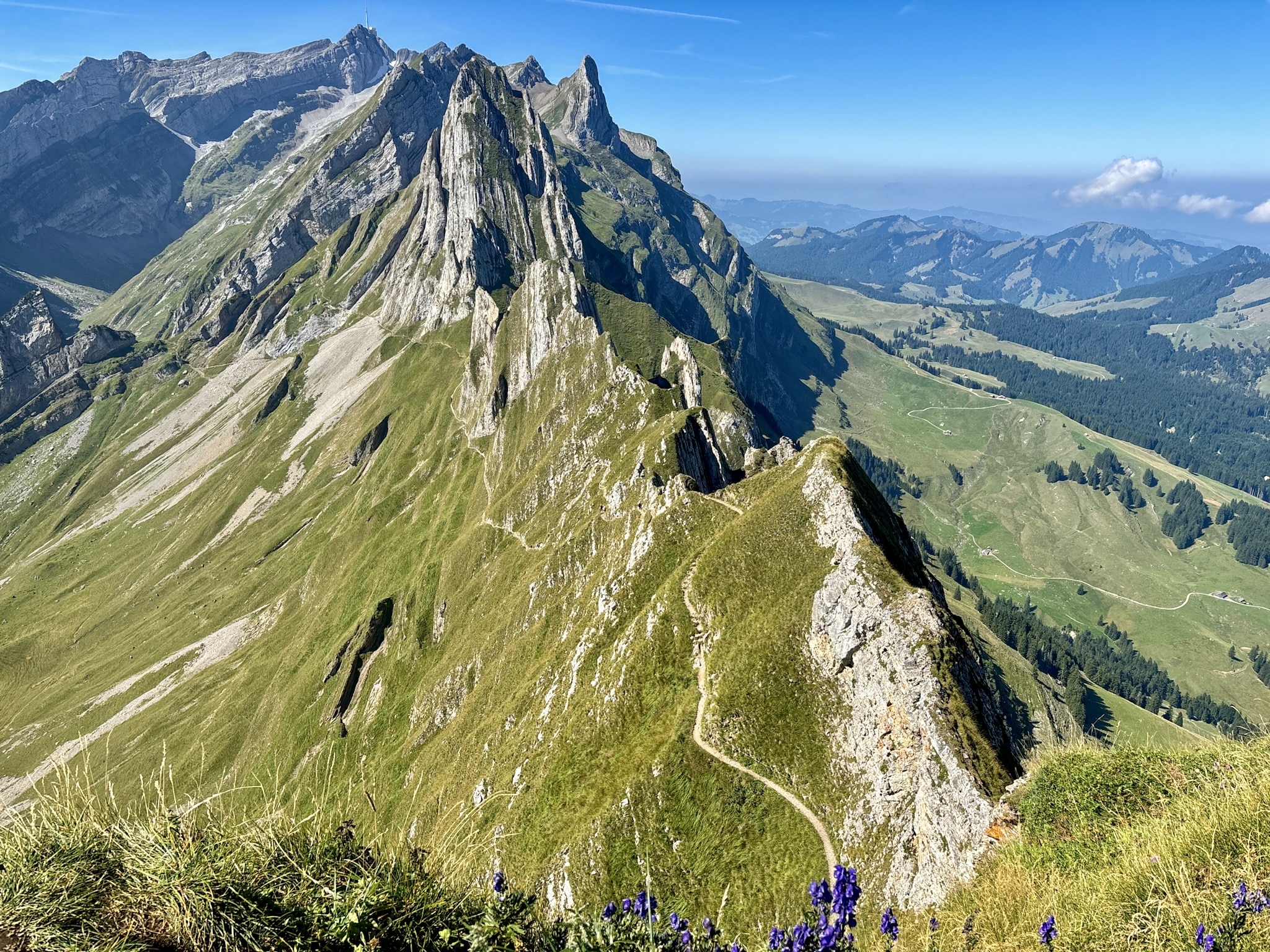
Beginners can do easy walks around Lauterbrunnen, Lake Oeschinen base hike, Grindelwald & Bachalpsee, Stoos Ridge and lake regions without needing alpine experience. Intermediate hikers have endless options: Oeschinensee panorama trails, Five Lakes Walk in Zermatt, Saxer Lucke and Schafler Ridge in the Appenzel, and countless more routes in the Jungfrau Region like the Augstmatthorn. Strong hikers can move into tougher alpine terrain, long traverses, SAC hut approaches, glacier-adjacent routes and multi-day routes like the Via Alpina.
The Swiss hut system is also serious, with 153 SAC huts and more than 6,000 tours listed by the Swiss Alpine Club. The huts felt more simple to me than the Dolomite rifugi, focused more on quick service, precision, mountaineering culture and clean execution.
The surprising part? The breathing room. Even on August weekends, I found no crowds, trail traffic, no lift queues and no parking stress.
You can check here a list of my absolute 10 favourite hikes in Switzerland, with a mini guide on how to do them.
Which Destination Is Better for Hiking?
For trail variety and hut-to-hut culture, I would give the edge to the Dolomites. For the actual day-to-day hiking experience, I personally lean Switzerland. That sounds contradictory, but it is the most honest answer.
Winner: Tie, with the Dolomites stronger for variety and Switzerland for a peaceful experience.

Tre Cime di Lavaredo, Dolomites
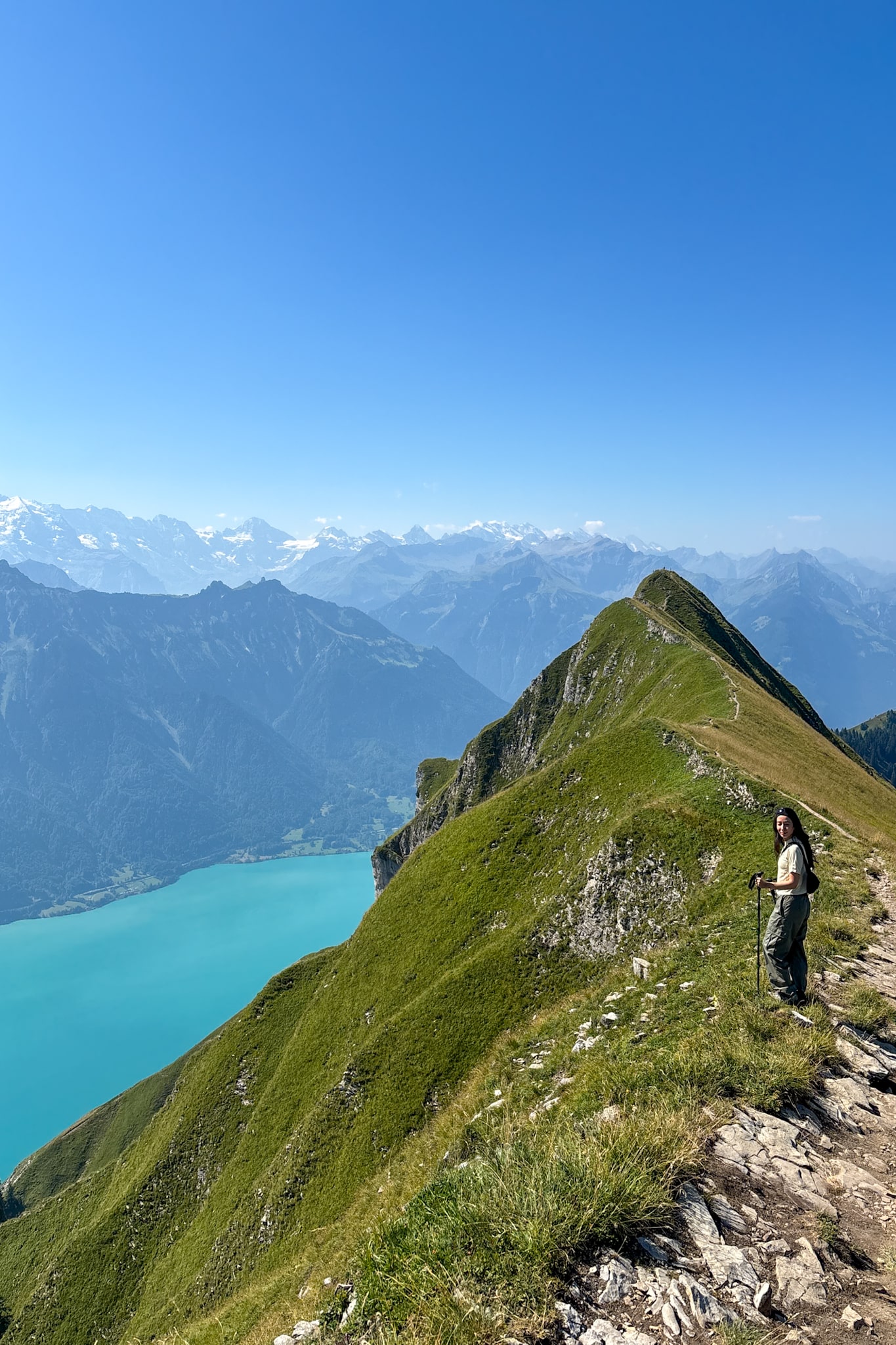
Augstmatthorn, Swiss Alps
- For a deep dive into the Alpine hiking culture, you can read more on this article on the European Hiking Culture and Experience
Villages and Atmosphere
Mountain Towns in the Italian Dolomites
The Dolomites have the better-looking towns, at least to my taste. Ortisei is the obvious one: compact, polished, backed by mountains, and equipped more than enough to feel like a real base. It has around 4,830 residents, but 5,700 guest beds and roughly 700,000 overnight visitors a year, which tells you everything about its double identity. It is a village, yes, but a very busy and very organized one.
Selva, Corvara, San Candido and Cortina all have that Alpine mix of carved balconies, church towers, mountain views and serious tourism infrastructure. Cortina adds a more glamorous layer, with boutiques, historic hotels and the whole “Queen of the Dolomites” identity, which can be charming or slightly much depending on your taste for luxury.
Mountain Villages in the Swiss Alps
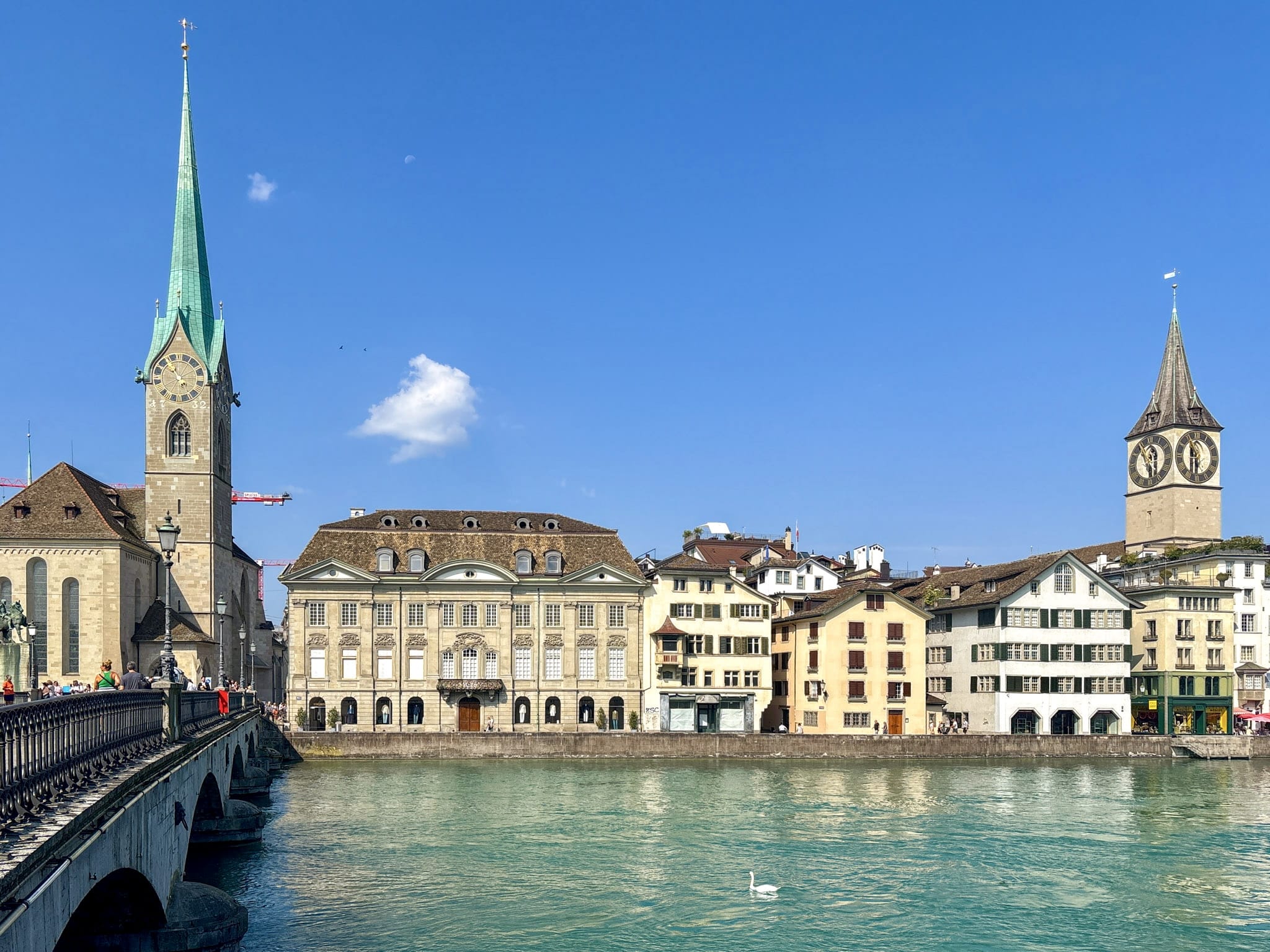
Swiss Alpine villages are usually less warm, but more perfectly composed. Lauterbrunnen is built for aesthetic, sitting on the valley floor under cliffs and waterfalls. Wengen and Mürren feel more cinematic because they sit above the valley. Zermatt is the most famous of the bunch, partly because of the Matterhorn, partly because the village is car-free.
The Swiss villages can feel less embellished and touristy than the Dolomites, but they are incredibly easy to like. They are cleaner, quieter and often better integrated with the landscape and I often enjoyed walking around them more, especially in the evening when the day-trippers disappeared.
Which One Has More Charm
For pure charm, I would call this a tie, but for different reasons. If I wanted a beautiful town for aperitivo, dinner and a lively base, I’d choose the Dolomites. If I wanted a peaceful Alpine village where the whole setting feels calm from breakfast to sunset, I’d choose Switzerland.
Winner: Tie, with more character in the Dolomites and more serenity in the Swiss Alps.
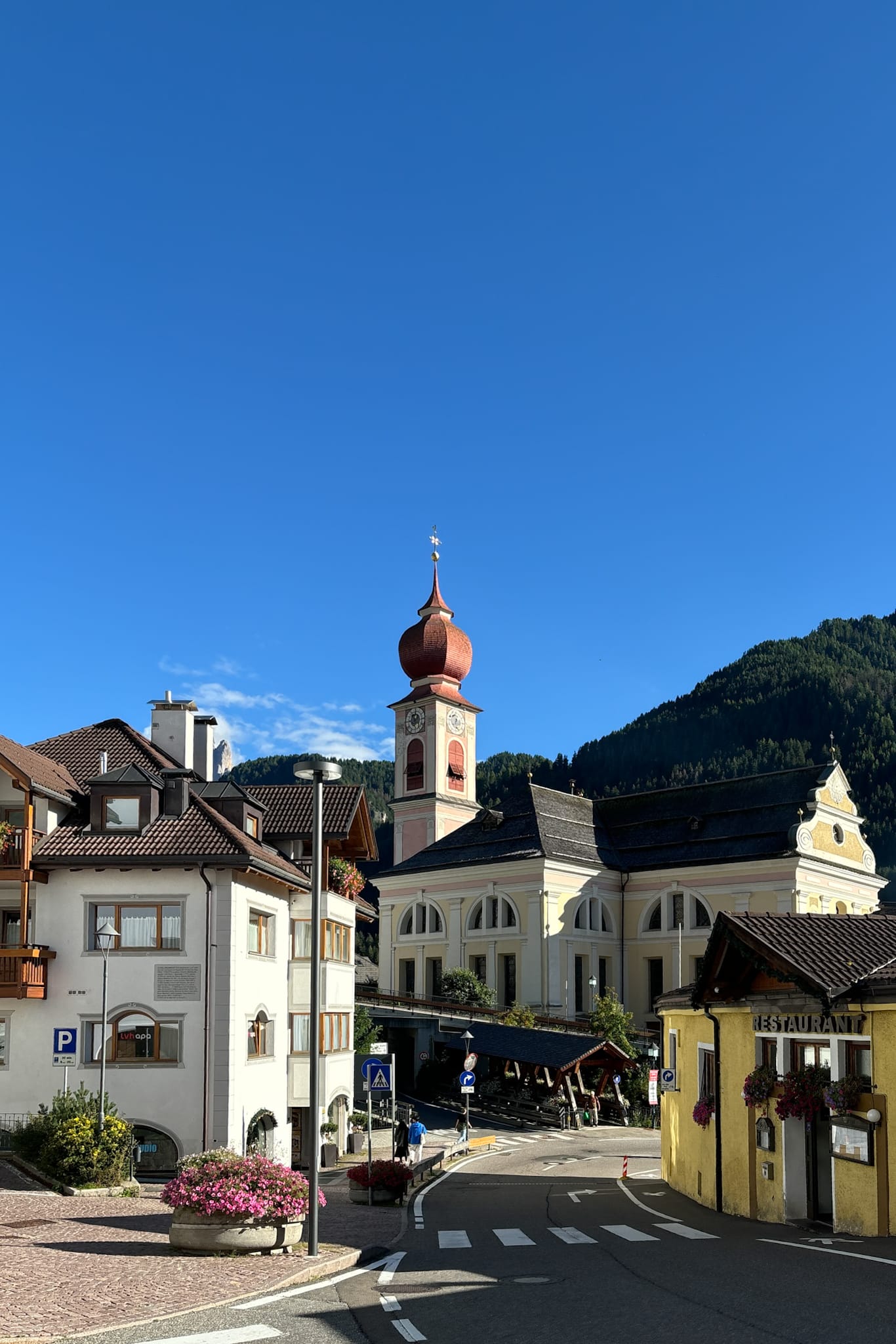
Ortisei, Italy
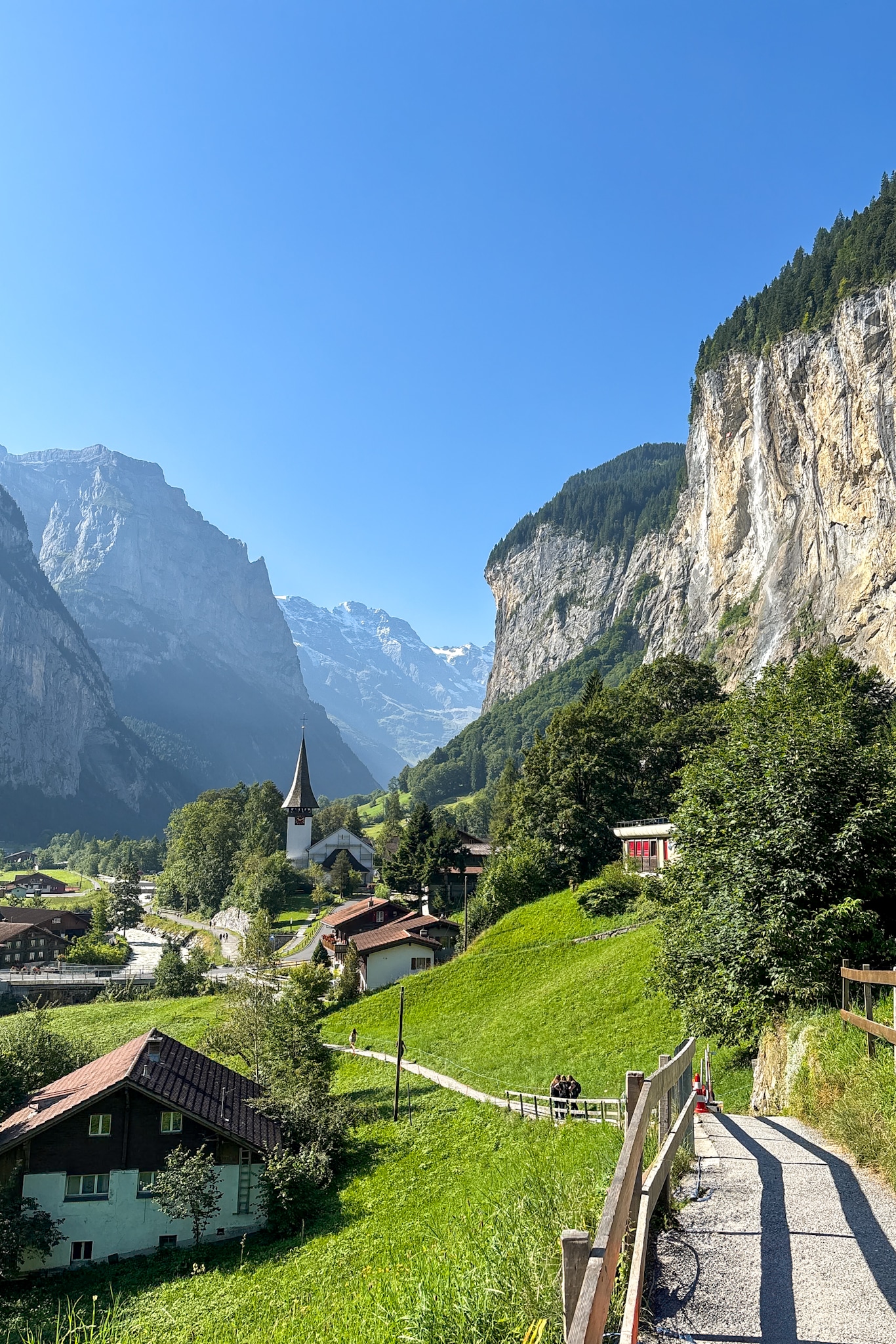
Lauterbrunnen, Switzerland
Food
Eating in the Dolomites
The Dolomites win this one quickly for me.
Food is part of the experience there: mountain huts serve amazing meals, like canederli, polenta, speck, goulash, pasta, apple strudel, often with very good wine. I find the mix of Italian, South Tyrolean and Ladin cooking gives the region far more personality than the usual Alpine menu.
Eating in the Swiss Alps
Swiss mountain food is good, especially in huts, but it rarely gave me the same excitement. I did love rösti, fondue, raclette, sausages, and their cakes, often served in beautiful locations. So it’s nothing tragic here.
The issue is price and variety, and maybe a bit of personal taste in my case. In Swiss mountain towns, I often felt I was paying more for meals that were perfectly fine, but less memorable. Switzerland does many things better than Italy, but dinner, in my experience, is usually not one of them.
Which One Has Better Food
The Dolomites win clearly. Switzerland has good mountain huts and plenty of enjoyable meals, but the Dolomites combine better value and more exciting food after a day outside.
Winner: Italian Dolomites.
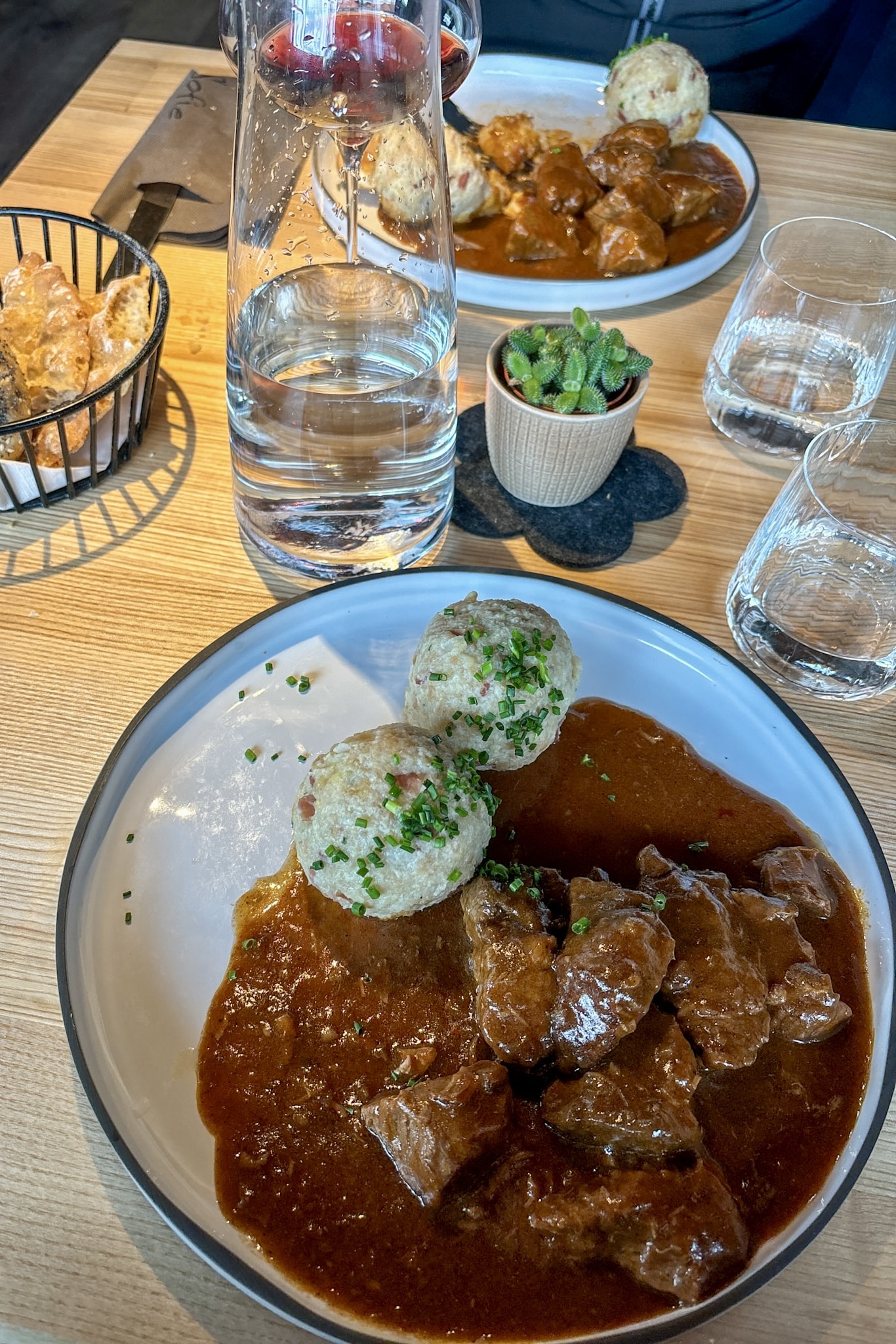
Seceda mountain hut food
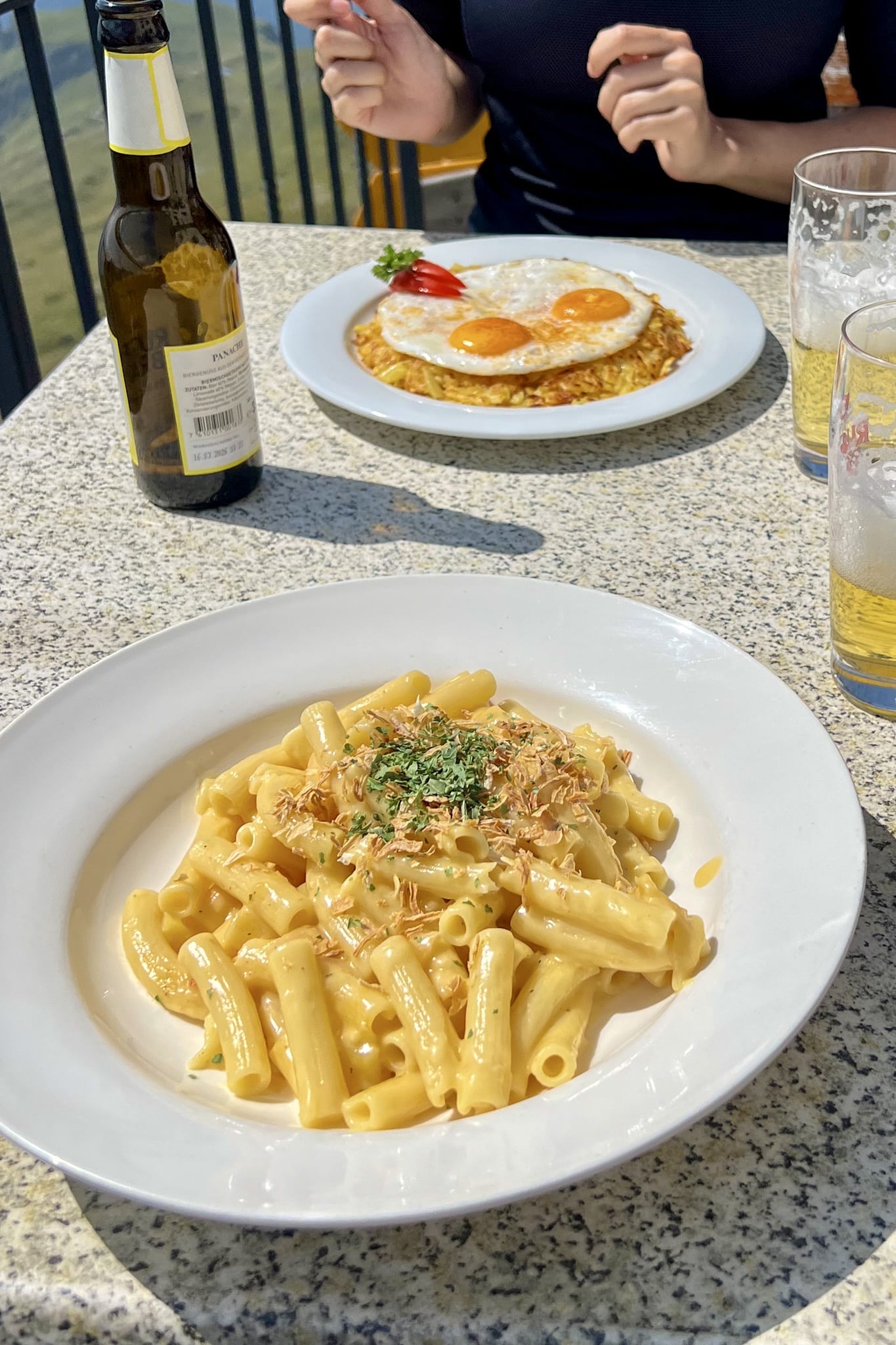
Bachalpsee mountain hut food
Crowds and Overall Experience
Visiting in Summer
This is where the comparison changed for me.
In the Dolomites, the most famous places can feel insanrely busy in summer: Seceda, Lago di Braies, Tre Cime, Alpe di Siusi, Cinque Torri, the main viewpoints around Cortina. The views are still absurd, but the experience often comes with early alarms, parking anxiety, lift queues, drone noise everywhere and the spiritual damage of seeing someone block a trail for 15 minutes to get the perfect picture.
Switzerland surprised me in the opposite direction. I expected summer to be just as chaotic, especially around photogenic places like Oeschinensee, Grindelwald, and Zermatt. Instead, I often found the Swiss trails surprisingly peaceful, even on weekends. Tourists were there, obviously, but so few that I barely noticed them.
Visiting During Shoulder Season
Shoulder season helps both destinations, but it does not solve the Dolomites completely anymore. May and late October can be tricky because lifts, huts and roads may still be closed or already closed. June, September and early October are better, but famous places can still be busy.
In Switzerland, shoulder season felt even more calm.
Which Destination Has Less Crowds
Switzerland is far less crowded, even in peak summertime. The Dolomites may win on scenery by a small margin, but crowds affect the way you experience that scenery. For me, this is one of the biggest differences between the two.
Winner: Swiss Alps, much easier to enjoy.
Cost
Hotel Prices
Switzerland is the more expensive trip, and hotels are where you feel it first. In peak summer, I would budget roughly $250 to $400 per night for a decent mid-range double room in places like Zermatt, Grindelwald, or Interlaken, and more if you want views, spa access or a central location. You can find cheaper rooms, but they usually involve compromise: shared bathrooms, or a less convenient village.
The Dolomites are hardly a budget destination anymore, especially around Ortisei, Selva, and Cortina in July, August or peak ski season. Still, I usually find better value there. A good mid-range hotel or guesthouse often sits closer to $170 to $320 per night in summer, with better chances of half-board, proper breakfast and free parking included.
For one night, the difference may seem manageable. Over a 6 or 7 night trip, Switzerland can easily add $500 to $1,000+ to the lodging budget compared with a similar Dolomites itinerary.
Food and Restaurant Costs
Food is another category where the Dolomites win on price.
In the Dolomites, a mountain hut lunch can still be fairly reasonable: expect roughly €12 to €20 for dishes like canederli, polenta, pasta, goulash or eggs with speck, depending on the hut and location. In towns, a casual dinner often lands around €30 to €55 per person.
In the Swiss Alps, lunch at a hut or casual mountain restaurant is often closer to CHF 20 to CHF 35 for one main dish, and dinner in towns like Zermatt, Grindelwald or Wengen can easily reach CHF 40 to CHF 70 per person once you add a drink.
Transportation and Cable Car Prices
This is where the comparison gets more nuanced. Switzerland is much more expensive overall, but cable cars and mountain railways in the Dolomites are also seriously pricey now.
A return ticket from Ortisei to Seceda costs €74 for adults. Alpe di Siusi from Ortisei is €41 return and Col Raiser is cheaper at €34 return. The Tre Cime di Lavaredo road and parking system costs €40 for cars, with online booking required for access to Rifugio Auronzo. That is before fuel, tolls, rental car costs and regular parking in towns.
Switzerland can be even more brutal on big-ticket excursions. Gornergrat from Zermatt costs CHF 132, Ebenalp / Shafler Ridge from Wasserauen is CHF 36 return, Grindelwald First for Bachalpsee is about CHF 76.
The key point is this: single lift prices are comparable, especially between famous Dolomite lifts and famous Swiss lifts.
Also, both regions have discount systems. In the Dolomites, the Gardena Card costs €124 for 3 consecutive days or €160 for 6 consecutive days and covers Val Gardena lifts, while the Dolomiti SuperSummer Card is listed at €185 for 5 days out of 7 and covers about 140 lifts across the Dolomiti carousel.
Switzerland has a more layered system: hotel guest cards often give free local public transport plus discounted or free cable-car discounts. Grindelwald overnight guests, for example, receive a guest card with discounts on Pfingstegg, Männlichen and First, plus free local bus use. If you stay for 3 or more consecutive nights in the Appenzell region, you will receive the Appenzell Card for free rides on the Wasserauen-Ebenalp cable car..
Which Destination is Less Expensive
The Dolomites offer perhaps better value overall, at least for now, that is 2026.
I wouls say that in Switzerland, high transport costs are often part of a coherent train-and-lift system. In the Dolomites, you may pay for the rental car and still pay heavily for lifts and parking. So the Dolomites are cheaper, yes, but they are less cheap than people imagine.
Winner: Italian Dolomites
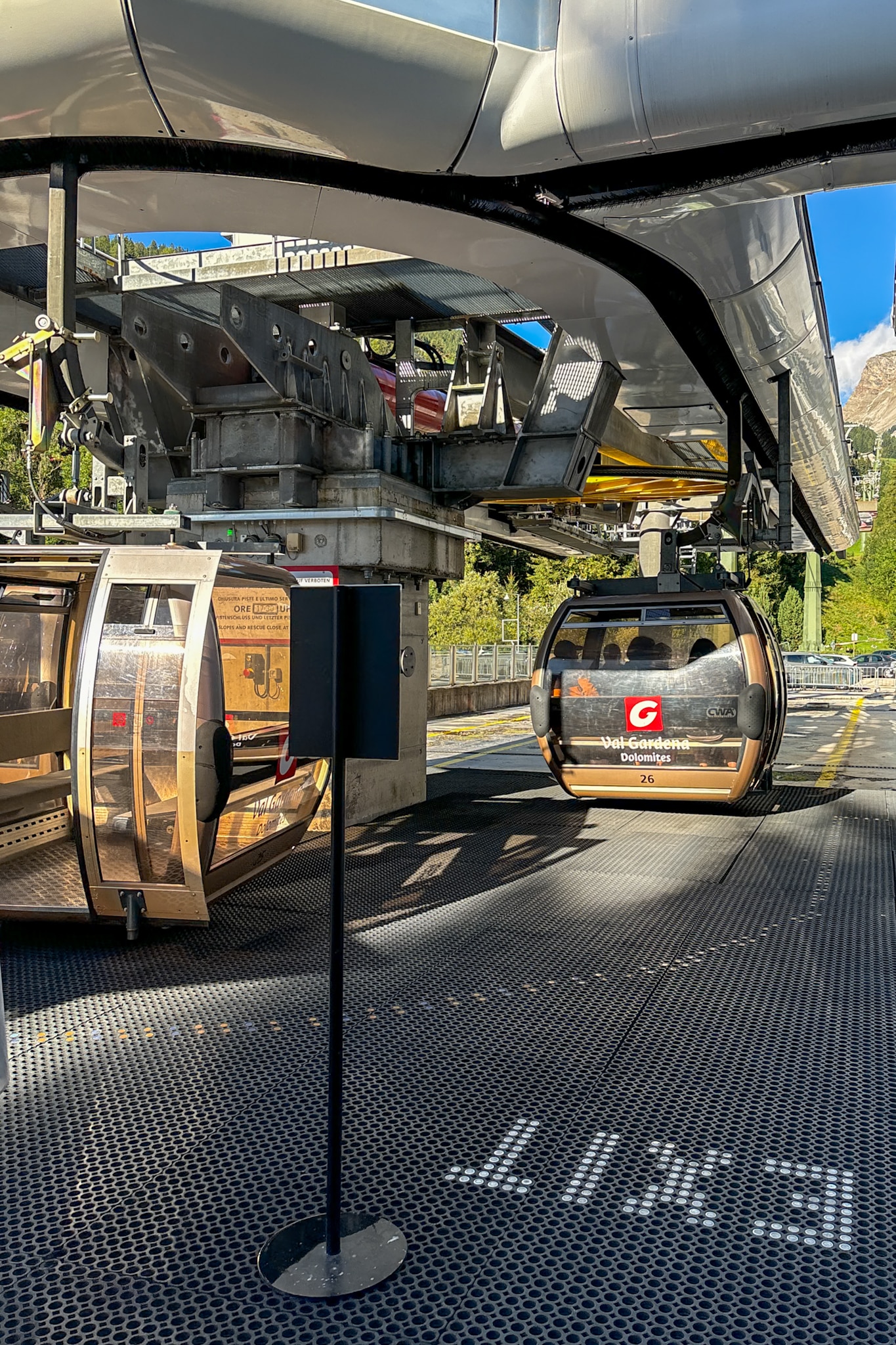
74€ cable car to Seceda, Italian Dolomites
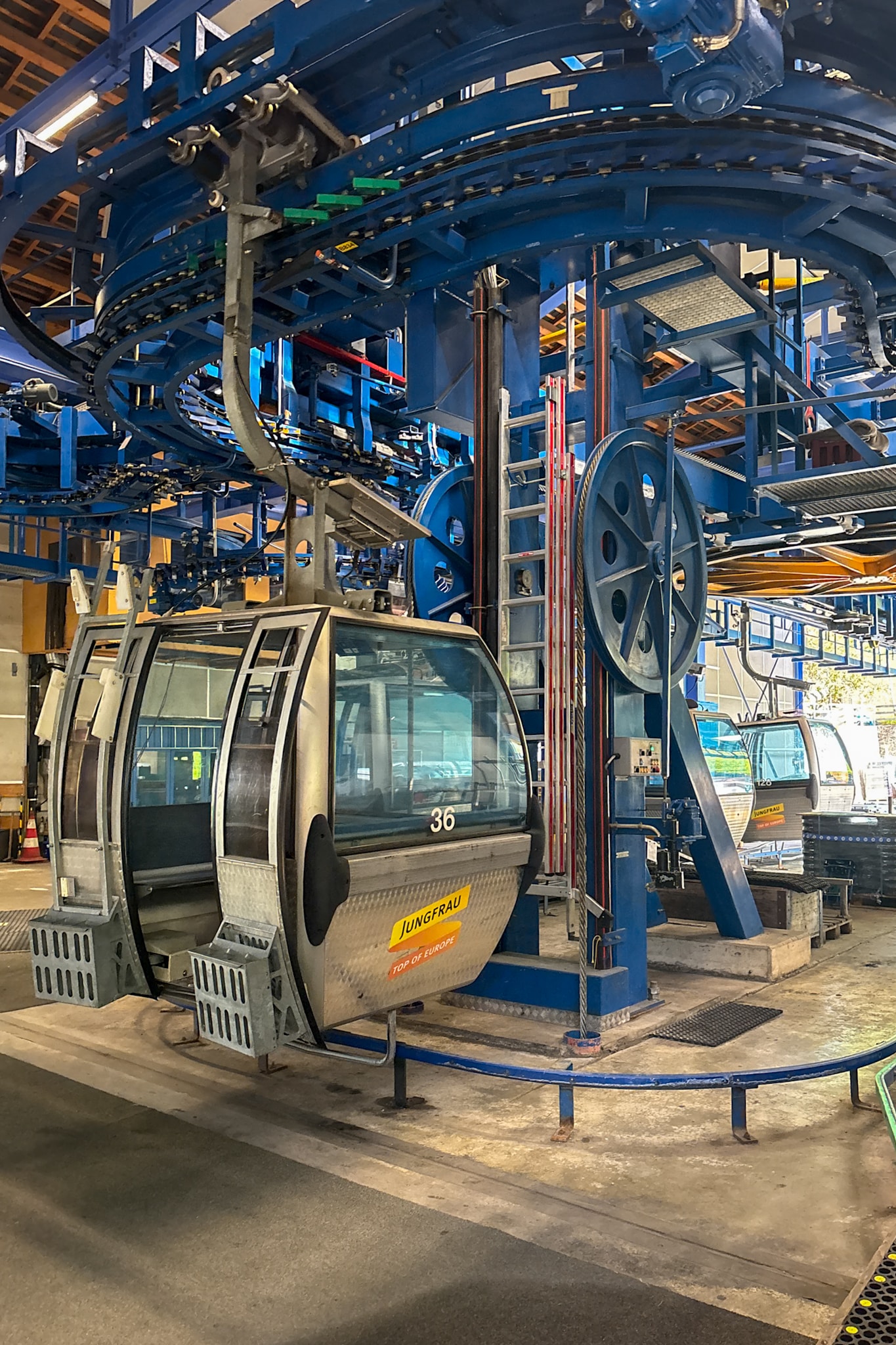
76 CHF cable car to Bachalpsee, Swiss Alps
Getting Around
Exploring the Dolomites
I would treat the Dolomites as a car-first destination. You can visit without one, but the trip becomes more rigid, and you need to accept that your trip will be more regional.
The easiest car-free base is Ortisei in Val Gardena, in the western Dolomites. From Venice or Milan, take the train to Bolzano, then bus 350 to Ortisei, which takes 1 hour. From there, you can visit Seceda, Alpe di Siusi, Col Raiser, Santa Cristina, and several Val Gardena hikes without needing a rental car. Most participating accommodations provide the Val Gardena Guest Pass, which includes public buses in Val Gardena and nearly all public transport in South Tyrol. This is the cleanest car-free Dolomites setup.
The second realistic base is Dobbiaco or San Candido in Alta Pusteria. This works better if your priority is the eastern Dolomites: Lago di Braies, Tre Cime di Lavaredo, Lago di Dobbiaco, San Candido, Drei Zinnen Nature Park and the Cortina side if you are patient with bus connections. From Venice, you can also use seasonal bus links toward Cortina and onward connections toward Dobbiaco and San Candido.
The third option is Cortina d’Ampezzo, especially if you are arriving from Venice. Cortina Express and ATVO run direct services from Venice Marco Polo Airport. From Cortina, you can reach nearby places like Faloria, Tofana, Cinque Torri, Lago di Misurina and, with the right seasonal bus, Tre Cime di Lavaredo.
The car gives you much more freedom, but it also gives you chores. Popular parking lots fill early, mountain roads can be slow, and access rules change by area and season.
Traveling Through the Swiss Alps
Switzerland is the opposite. You can absolutely drive there, and I have, but the country is designed very well around trains and buses. The public transport network is part of the trip, with rail stations always sitting very close to cable car stations and in the middle of a town. Zurich, Lucerne, and Interlaken are all connected by trains.
Zermatt is actually car-free, so drivers leave the car in Täsch and continue by train. Mürren is also car-free and reached from Lauterbrunnen by public transport. Stoos, with its famous Stoos ridge hike, is also completely car-free. These are some of the most famous bases in the Swiss Alps, and the system is built around making them work without cars.
The discount system also favors train-based travel. The Swiss Half Fare Card gives visitors 50% discounts on many trains, buses, boats and numerous mountain railways for one month.
Which One Is Easier to Visit
Switzerland is easier, as you can both drive and use public transport. The Dolomites can be done by public transport, but the experience is more chaotic and area-specific. The Dolomites reward people who drive well, wake up early and tolerate parking drama.
Winner: Swiss Alps, clearly.
Which One Should You Choose?
The Italian Dolomites Are Better For...
Choose the Italian Dolomites if your main priority is scenery with maximum visual impact. This is the place I would send someone who wants the most dramatic concentration of famous views in the spam of a week: Seceda, Alpe di Siusi, Lago di Braies, Tre Cime, Lago di Carezza, Misurina, Santa Maddalena, Cortina.
The Dolomites also make more sense if you want a road trip. With a car, you can move between valleys, passes, lakes and trailheads in a way that feels spontaneous, at least when parking is not trying to ruin your personality. They are also better for food, better for overall value, and possibly stronger for hikers who care about rifugi, trail variety and hut-to-hut routes.
I would choose the Dolomites for a first trip if you are comfortable driving, good at planning early starts, and willing to accept crowds as the tax you pay for some of Europe’s most photogenic mountains.
The Swiss Alps Are Better For...
Choose the Swiss Alps if you want the easier and calmer trip.
Switzerland is the better choice if you don’t want to rent a car, dislike messy logistics, or value quiet trails more than squeezing every famous viewpoint into one itinerary. Especially if you’re travelling in July or August, in Switzerland you can still get smoother days, reliable transport, less stress and more beautiful hikes and walks that are also peaceful.
The Swiss Alps are also stronger for car-free travelers. Zermatt, Interlaken, Mürren, Grindelwald, Lauterbrunnen and many other bases work naturally by train, cable car and local transport.

Can You visit Both On The Same Trip?
How Long You Need
Yes, you can visit the Dolomites and the Swiss Alps on the same trip, as long as you have more than 12 days, especially if you plan on hiking.
With 10 days or less, pick one. Seriously. Otherwise you lose too much time moving between mountain regions, changing hotels, checking trains, collecting rental cars, returning rental cars, and pretending that sitting on transport counts as “seeing the Alps.” It does not.
With 12 days, you can do a tight version: 5 nights in the Dolomites, 2 travel days, 5 nights in Switzerland. That gives you enough time for bad weather, one slow day, and the physical recovery for your hardest hikes.
Suggested Itinerary
The cleanest version starts in Venice or Milan, goes first to the Dolomites, then continues west into Switzerland. I would choose Cortina d’Ampezzo or Val Gardena as the Dolomites base. Cortina works for Lago di Misurina, Tre Cime, Cinque Torri and the Ampezzo area. Val Gardena works better for Ortisei, Seceda, Alpe di Siusi, Santa Cristina, Selva and the Sella area. In Switzerland I would also choose one base, and for a first trip, that means Interlaken or Grindelwald to cover the Jungfrau Region.
Driving Between the Two Regions
For most travelers, the smartest route is either: rent a car in Milan or Venice for the Dolomites, return it in Milan, then continue into Switzerland by train. Or, keep the car only if you are doing a broader road trip and staying in drive-friendly Swiss bases.
The most practical route usually goes from Cortina toward Dobbiaco, then north over the Brenner Pass into Austria, past Innsbruck, and into Switzerland before continuing toward Lucerne and Interlaken. In practice, that means crossing Italy, Austria and Switzerland, with the route sometimes passing close to Liechtenstein.
The drive is roughly 520 to 530 km and takes about 7 to 8 hours without major stops. Add lunch, traffic, roadworks, fuel, photos, and it becomes a full travel day.
I would however avoid picking up a car in Italy and dropping it in Switzerland, as cross-border one-way rental fees can be ugly.
Frequently Asked Questions
Which is better for first-time hikers?
Switzerland is perhaps slightly better for first-time hikers because the trail system is extremely organized, signs are clear, public transport connects well with trailheads, and many easy routes still have huge views.
The Dolomites also have excellent beginner hikes, especially around Alpe di Siusi, Seceda, Lago di Braies and Cinque Torri. The issue is that access can be more stressful, especially in summer, when parking, shuttles and crowds become part of the hike before the hike has even started. Cruel, but true. Expert hikers could find workarounds or can manage longer routes to avoid popular trails or parking spaces, but for beginners it may be difficult.
Which is better for experienced hikers?
The Dolomites may be slightly better for experienced hikers who want dramatic terrain, rifugi, via ferrata routes and long hut-to-hut trips like Alta Via 1 or Alta Via 2.
Switzerland is also outstanding for serious hikers, with long alpine routes, SAC huts, glacier views and multi-day trails like sections of the Via Alpina. I would choose the Dolomites for drama and hut culture, Switzerland for organization and range.
Which is better for families?
The Swiss Alps are usually easier for families.
Car-free villages, reliable trains, clean infrastructure, easy cable car access and well-marked trails make Switzerland feel less complicated with kids. The Dolomites are great for families too, especially around Val Gardena, Alta Pusteria and Alpe di Siusi, but a car makes the trip much easier.
Which has better nightlife?
Neither is a nightlife destination in the city-break sense.
The Dolomites have a livelier evening atmosphere in towns like Cortina, Ortisei, Selva and Corvara, especially if you want wine bars, restaurants, hotel lounges and a bit of post-hike social energy. The Swiss Alps are generally quieter, although Zermatt and St. Moritz have more polished nightlife than smaller villages like Mürren or Wengen.
For nightlife, I would choose the Dolomites, but only if your idea of nightlife includes dinner, wine and being asleep before midnight because tomorrow’s hike starts early.
Which is better for a honeymoon or couples trip?
It depends on the kind of couple.
Choose the Dolomites for food, wine, spa hotels, beautiful villages and romantic scenery. Choose the Swiss Alps for peace, car-free villages, luxury hotels and a more polished trip. Personally, I would choose the Dolomites for a more adventurous trip and Switzerland for a calmer one.