Hiking European Alps explained from the inside: how trail systems, huts, safety and cultural structures really shape the experience beyond guidebooks.
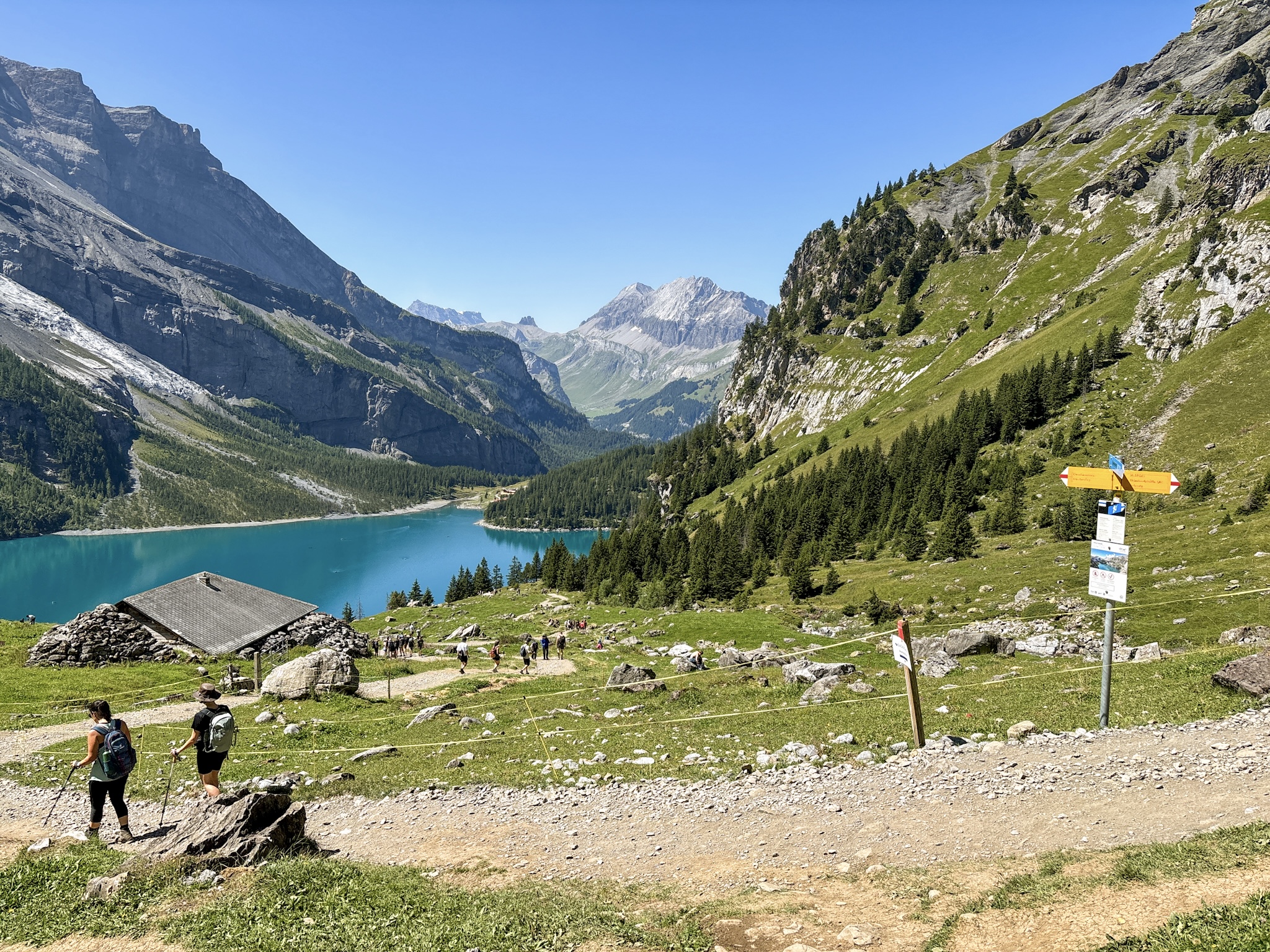
Hiking in the European Alps follows a framework that has been deliberately built and standardized over generations. Trails belong to a coordinated network, signage is based on time rather than distance, high-altitude access is widely maintained, overnight travel relies on a dense system of huts with shared operational rules, and long-established cultural norms shape how hikers move and interact. These elements are the result of decades of planning, not a coincidence.
This article examines hiking in the European Alps as an organized system. Drawing on alpine club standards, accident statistics, and documented practices across all Alpine countries, it explains how this framework shapes route planning, pacing, and overnight logistics, and why understanding it is essential to understand how alpine terrain should be approached.
The European Alps Work as a Built Hiking System
In much of the United States and Canada, hiking is understood as choosing a trail and moving through it. In the European Alps, movement on foot has been organized at a much higher scale, across eight countries: Italy, Slovenia, Austria, Germany, Liechtenstein, Switzerland, France, and Monaco. Routes are designed to connect valleys, passes, and settlements across borders, forming a continuous network rather than isolated paths.
A clear example is the Via Alpina, a transnational hiking system that was shaped in the early 2000s within the framework of the Alpine Convention and was developed through coordinated efforts between public institutions. The route crosses all Alpine countries over more than 2,000 kilometres, structured into over 100 defined stages, with huts, villages, and access points positioned to support sustained travel.
This connectivity matters because it shapes every aspect of hiking in Europe. Routes are planned to feed into one another; refuges, huts, and services are positioned with thought to network flow.
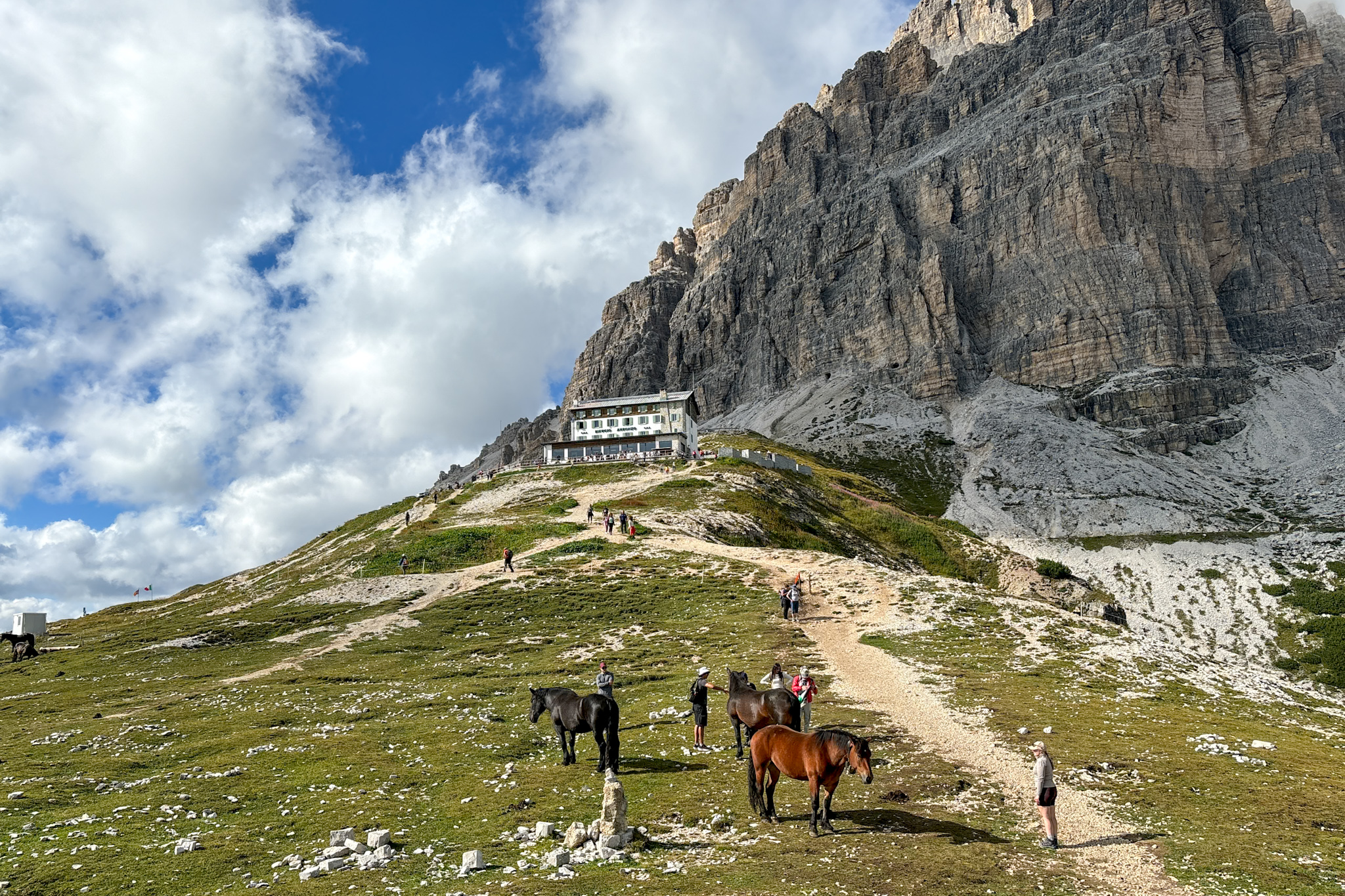
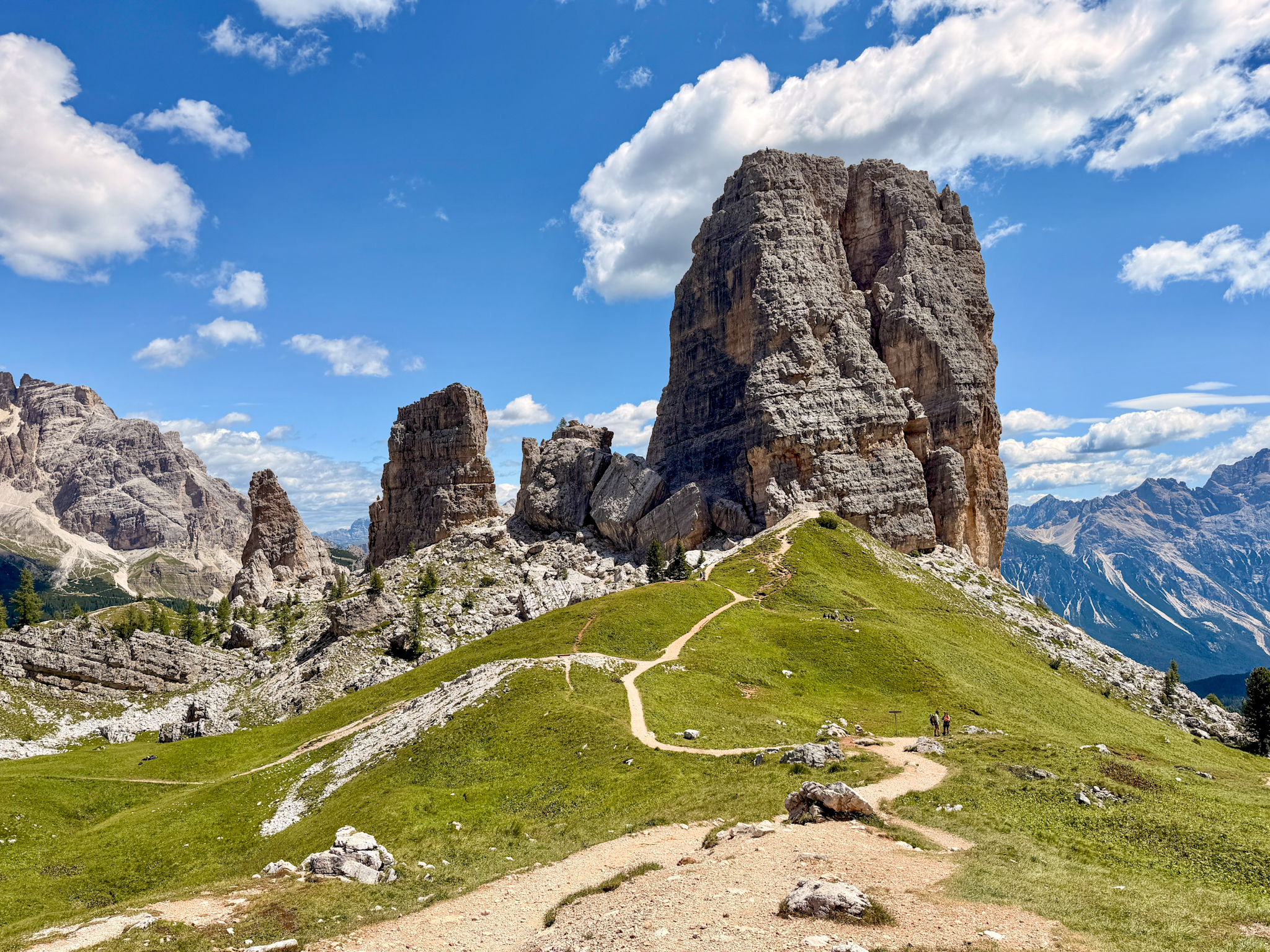
A practical take: several popular hikes in Switzerland (like Grindelwald or Kandersteg) and the Dolomites (like Tre Cime or Puez-Odle) sit on routes that also serve as Via Alpina stages, functioning simultaneously as day hikes and as links within a much larger trans-Alpine network.
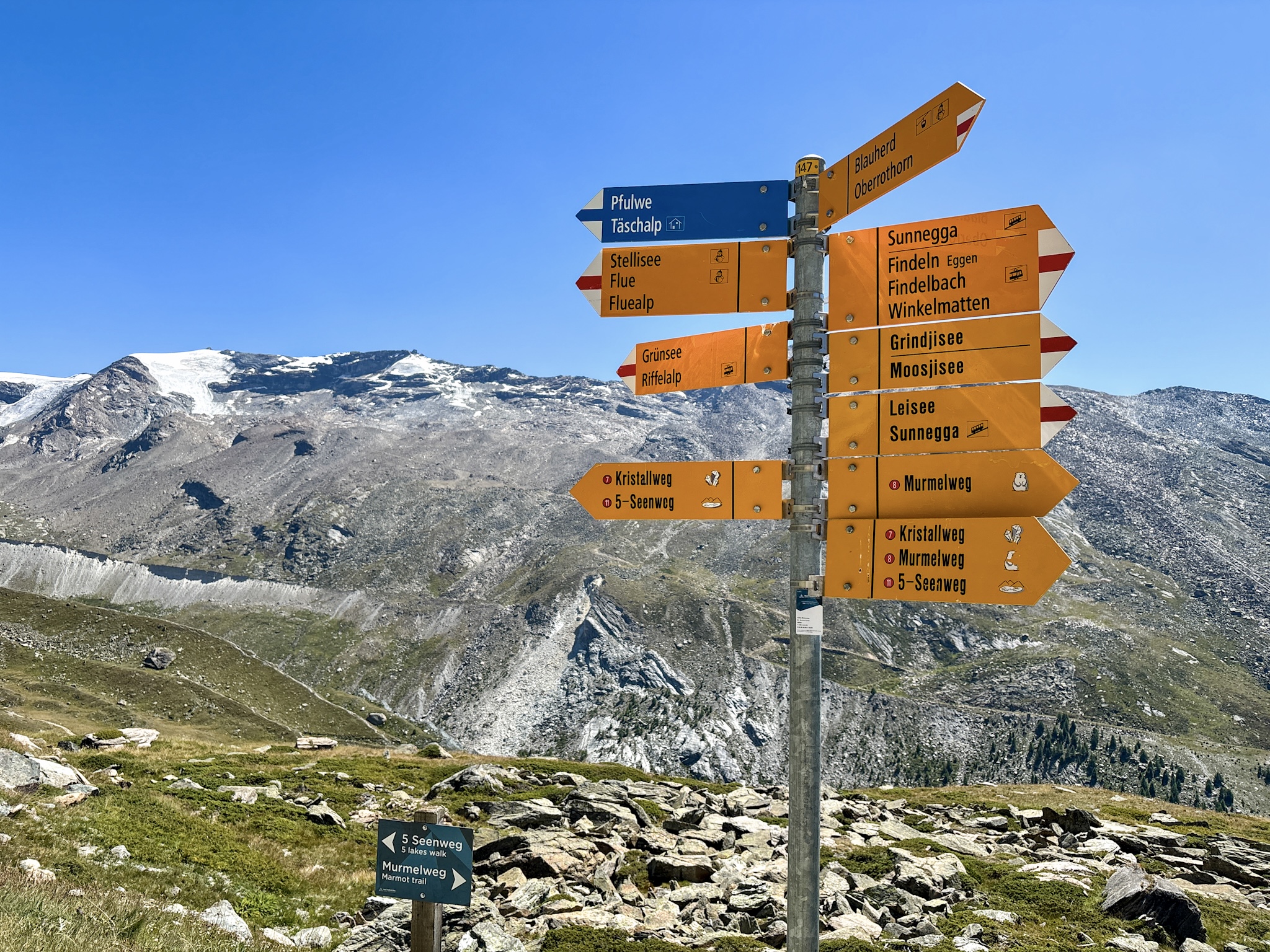
Why Trail Signs Show Time Instead of Distance
Across the European Alps, trail signs report walking time, not miles. The underlying assumption is simple: in mountainous terrain, elevation change determines effort more reliably than horizontal distance.
Alpine time estimates are all built on pacing models that convert terrain into hours. A common baseline assumes a flat-ground speed of about 4.2 km/h (2.6 mph), with ascent and descent added directly into the calculation. In practical terms, route planners work with segment-based conversions such as:
- 1,000 m (0.6 mile) flat ≈ 14–15 min
- 1,000 m with +100 m (330 ft) ascent ≈ 20 min
- 1,000 m with +300 m (1,000 ft) ascent ≈ ~50 min
- 1,000 m with –300 m (1,000 ft) descent ≈ ~27–28 min
These segment times are summed to produce the number you see on signs. The logic aligns closely with Naismith’s Rule, a planning model still widely used in mountain travel, and it also matches the assumptions behind Tobler’s Hiking Function, a mathematical model that predicts walking speed as a function of slope, showing a rapid drop in speed as gradients steepen uphill or downhill.
For someone used to planning hikes by miles and vertical feet separately, Alpine signage removes the conversion step. A sign reading “3 h 45 min” already includes distance, climb, descent, and trail conditions in one number. In steep terrain, that estimate is usually more predictive of real effort than mileage alone, which is why time remains the dominant planning unit in hiking in Europe.
How the Alpine Hut System Actually Works
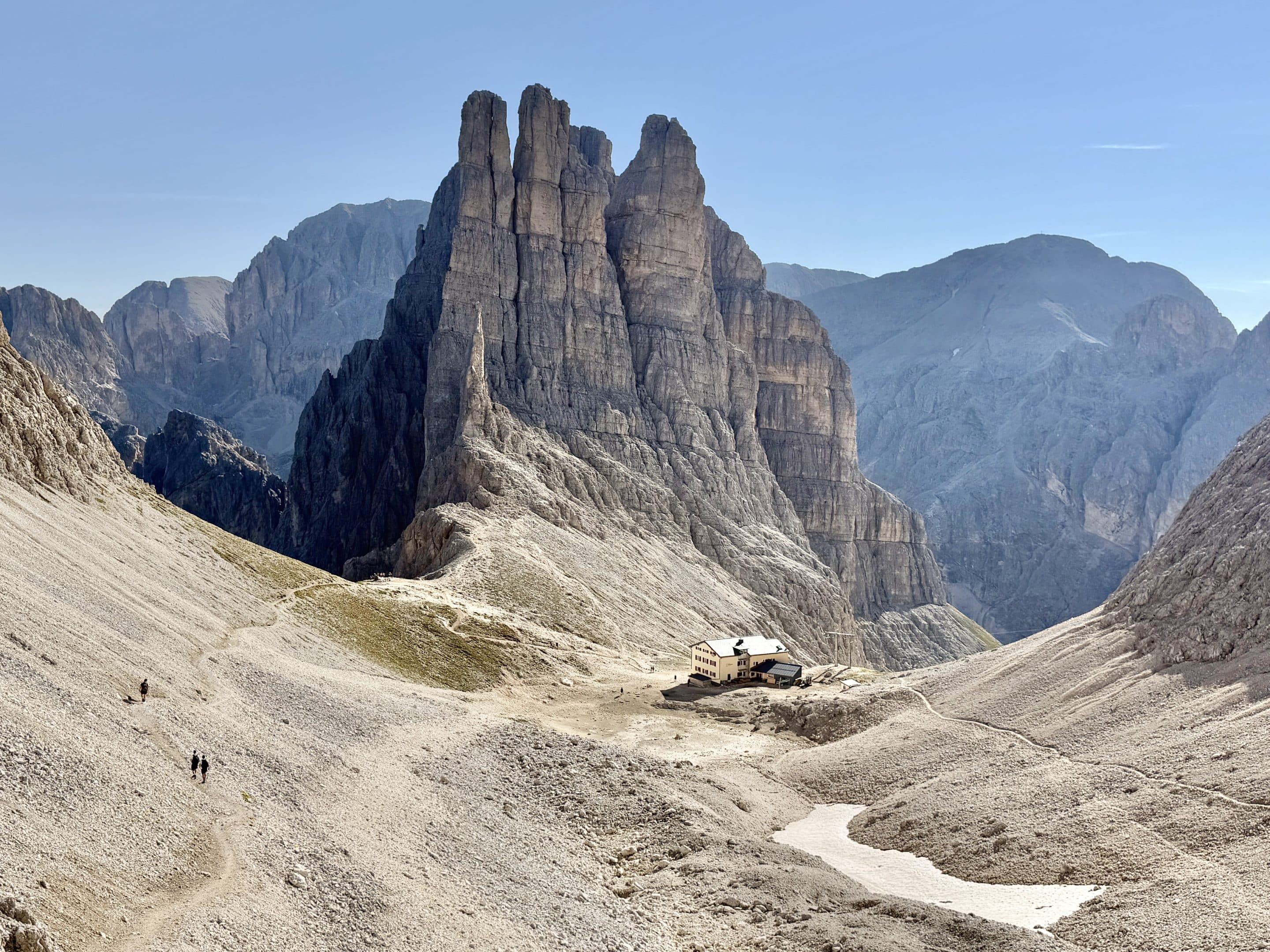
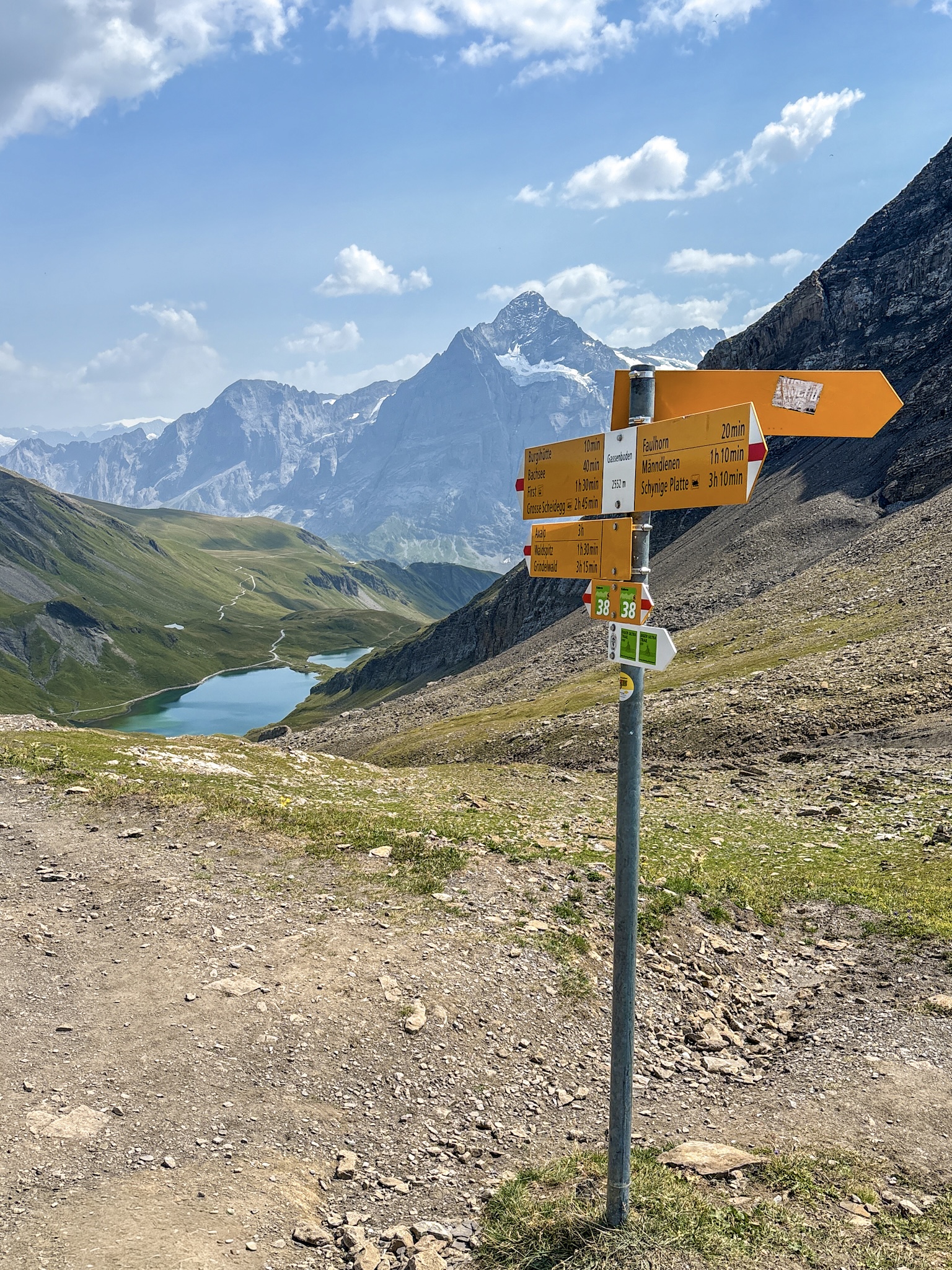
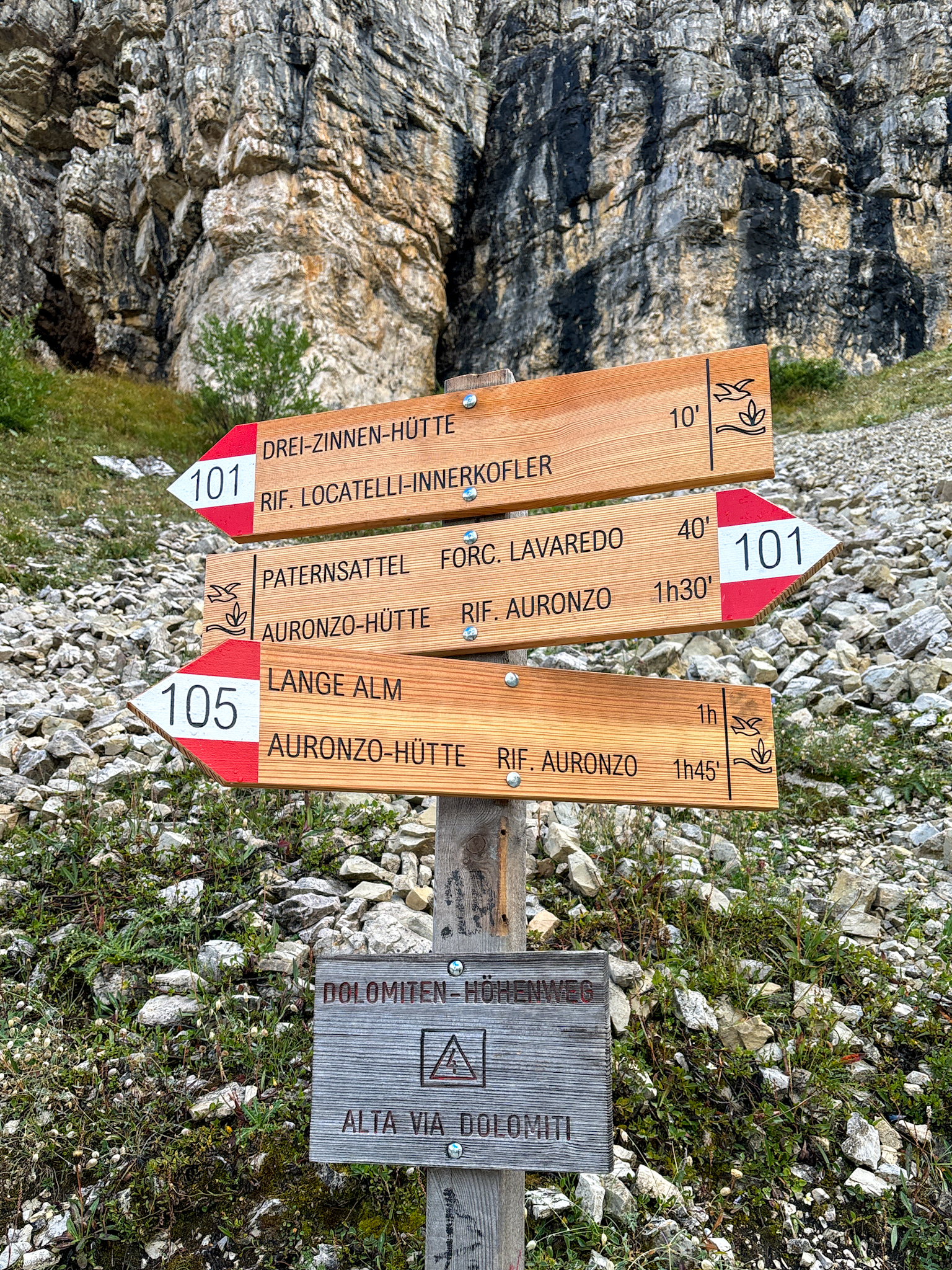
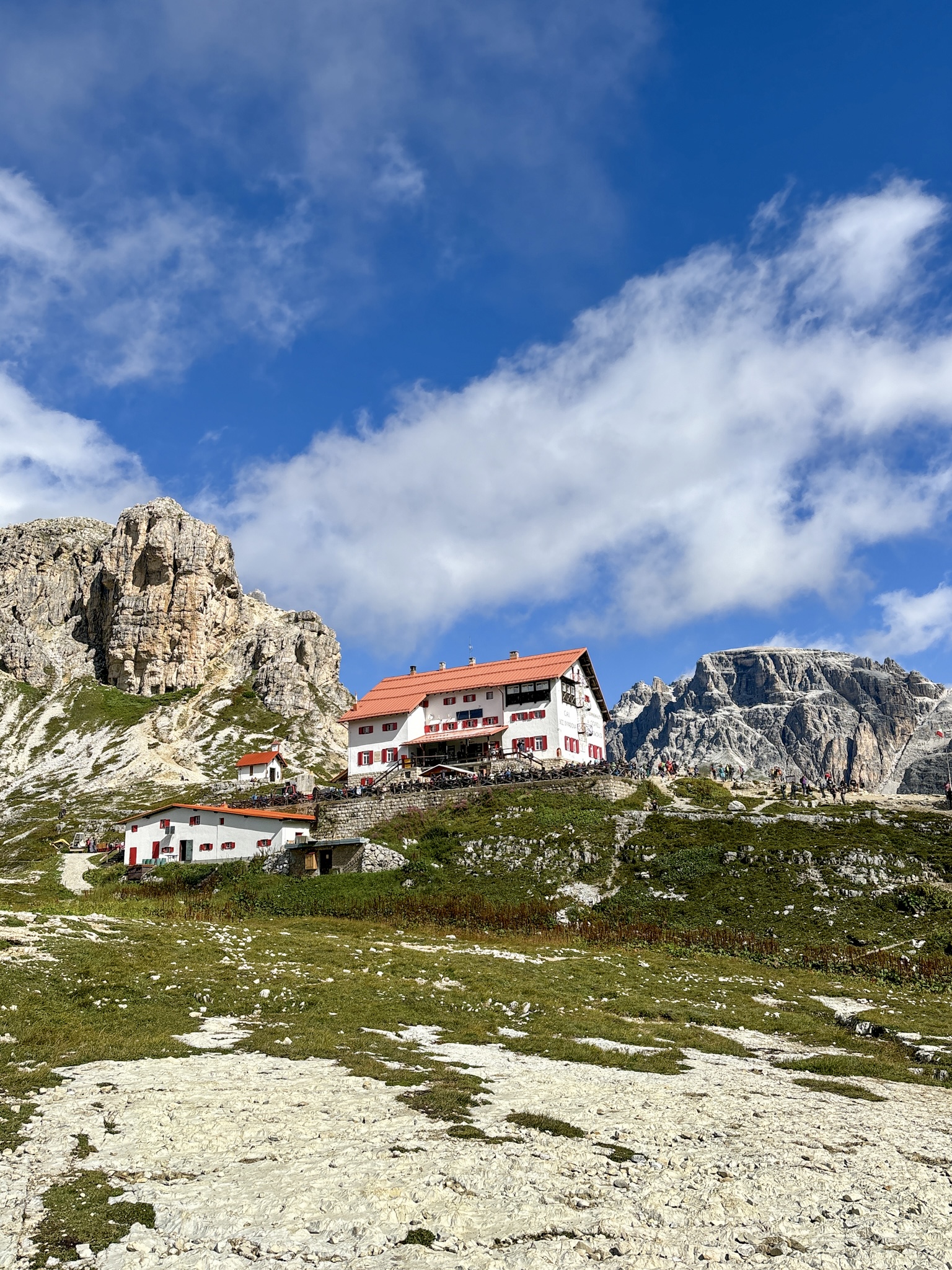
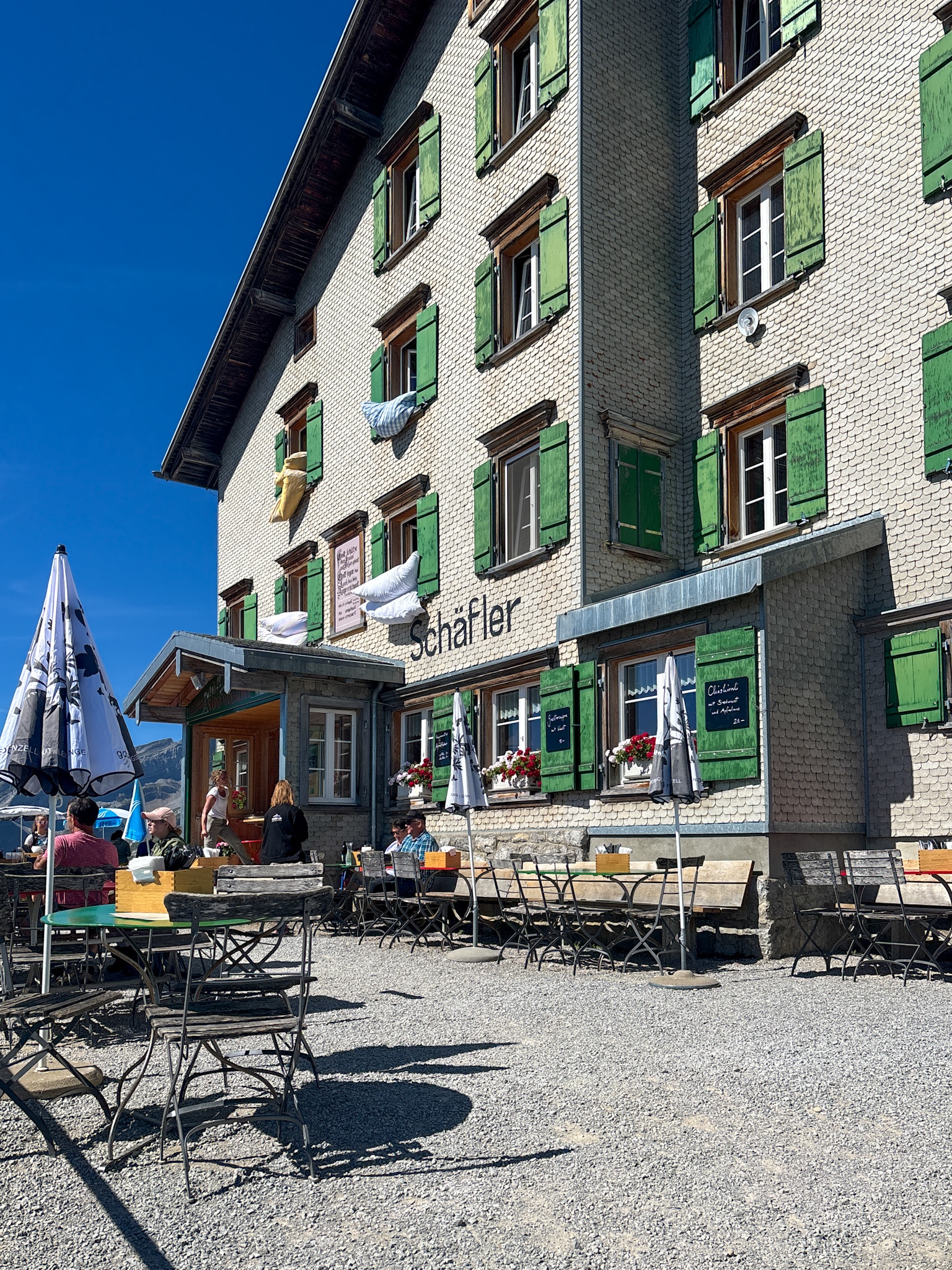
Across the European Alps, mountain huts are part of the hiking infrastructure. There are more than 1,200 staffed huts across the Alpine countries, offering roughly 70,000 beds, most of them placed at altitude and spaced 2.5 to 4.5 hours of walking apart. Huts are not all run the same way, but there are a few recurring operational patterns that you learn quickly once you start using them.
Booking is not uniform, and you need to know which system you’re dealing with
- Some huts, especially those on famous routes, operate almost entirely on advance reservations during summer.
- Others deliberately keep part of their capacity unbooked, reserving beds for hikers who arrive without a reservation.
- In parts of the Alps, hut managers are allowed to pre-book up to ∼90% of capacity, leaving the rest for walk-ins.
“Full” does not always mean closed
- In many huts, beds are assigned in the afternoon once arrivals settle.
- If bad weather rolls in or hikers arrive late, wardens can open emergency sleeping spaces, sometimes on floors or in dining rooms. This isn’t informal generosity, emergency accommodation is a recognized category in several national hut systems.
Daily life inside a hut follows shared norms
- Dinner is usually served at a fixed time, often early evening, because food is limited and resupply is complex.
- Sleeping is communal by default, typically in dormitories with bunks or mattresses. You’re always expected to carry a sleeping bag or liner; blankets are provided, sheets are not.
- Cash is often preferred or required, since card terminals at altitude can fail.
Huts are not bivouacs
In English, “hut” usually refers to a staffed mountain refuge with food, beds, and a warden. A bivouac is something else entirely: a small, unstaffed shelter meant for emergencies or minimalist overnight use. Bivouacs are basically empty storage rooms, and as such, don’t have heating, don't take reservations, don’t have food, and may have only a handful of sleeping places. Confusing the two is a common mistake for people new to hiking in Europe.
What the Data Says About Hiking Accidents in the Alps
Large, centralized datasets from Alpine rescue services show a consistent pattern across countries. Hiking accidents in the Alps are common but rarely extreme, and their distribution says more about how people hike than about the terrain itself.
A 9-year retrospective study based on Austrian Alpine rescue data (n > 10,000 incidents) reports that falls account for roughly 70–80% of hiking accidents, with 75.3% occurring during descent. Importantly, 80.9% of incidents happened on marked hiking trails or small paths, not off-trail terrain or exposed ridgelines. Two points matter here:
- First, navigation errors are uncommon. In the same datasets, “getting lost” represents a small fraction of incidents. Most hikers involved in rescues were on their intended route, often close to trail junctions, huts, or known waypoints. This reflects the density of signage and the fact that most hiking in the Alps takes place on an official trail network.
- Second, altitude is not the primary risk driver. A substantial share of accidents occur below 2,000 m (6,500 ft) and on routes classified as hiking rather than mountaineering. The data consistently links incidents to duration, cumulative elevation change, and late-day fatigue, not to technical difficulty.
From a safety perspective, the Alps also stand out for institutional response capacity. Swiss air rescue service Rega alone coordinates over 14,000 missions per year, with several thousand involving hikers. Comparable helicopter rescue coverage does not exist at the same density in many other mountain regions, even those with similar terrain. This does not reduce accident frequency, but it reduces consequence severity.
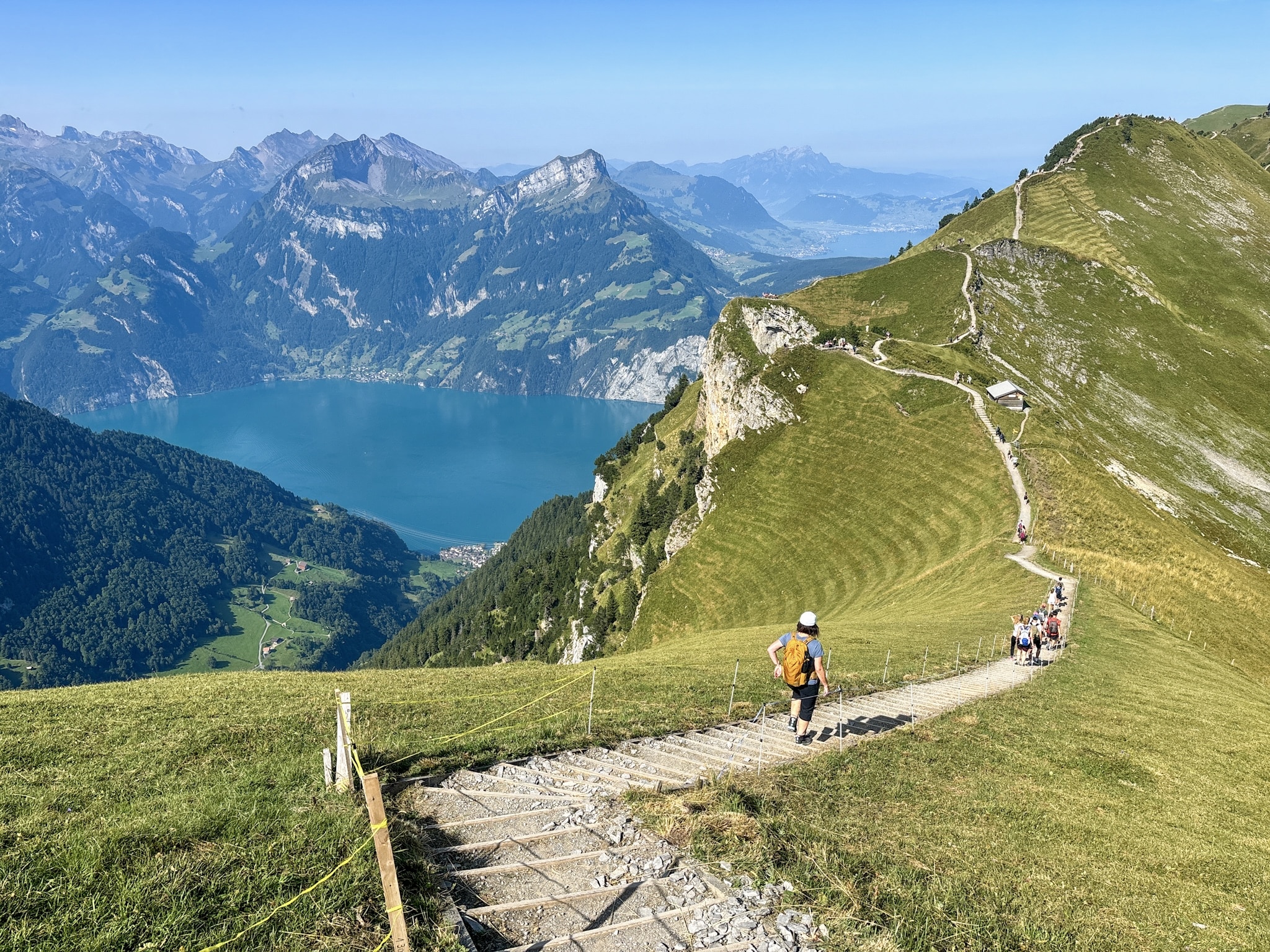
Taken together, the data supports a clear interpretation. Alpine hiking in Europe is not low-risk, but it is highly structured. People travel farther and stay at elevation longer because trails are continuous, huts are spaced predictably, and rescue systems are integrated into normal mountain use.
What Changes From Country to Country in the Alps
The Alpine hiking system is shared across borders, but the way information is communicated, routes are graded, and trails are used changes noticeably as you move from one country to another. These differences don’t require relearning how to hike, but they do affect planning, expectations, and on-trail behavior.
In Switzerland, trail information is explicit. The SAC T1–T6 scale is widely used and consistently referenced across maps and official descriptions, although usually you won't find it directly on signage. A route graded T3 or T4 carries a clear expectation of terrain, exposure, and required sure-footedness, assuming favorable conditions. Trails are heavily used, often busy near cable cars and scenic areas, and socially treated as shared public infrastructure. Public transportation is often so strong in some regions, you barely need a car, if at all.
- For a curated selection of routes that show how this Swiss system works in practice 👉 see our guide to the best hikes in Switzerland.
In Italy, the CAI classification system (T, E, EE, EEA) is widely used, but route descriptions often rely as much on narrative notes as on the letter grade itself. The Dolomites combine dense hut coverage with very high seasonal demand, making advance booking more critical than elsewhere, especially in July and August. Huts are social spaces, but expectations around self-reliance on the trail are strict. Crowding is common on famous routes in the Dolomites near Cortina, especially the ones served by public transportation (which is, however, not as strong as the Swiss one), less so once you move away from marquee areas.
- For concrete examples of how these systems and trail densities play out on the Italian ground 👉 check out our guide to the best hikes in the Dolomites.
In Austria and Germany, difficulty communication relies more on trail type and color conventions, commonly blue for easy, red for moderate, and black for difficult. In higher terrain, many routes are classified as alpine trails, where markings may be sparse and the expectation of personal judgment is higher. Trails are popular but generally less crowded than comparable Swiss routes, and early starts are the norm. There is a strong cultural emphasis on planning conservatively and sticking to time estimates.
In France, long-distance hiking culture is highly visible through the GR network, marked with white and red blazes. These routes emphasize continuity and stage-based travel more than granular difficulty grading. Popular sections near national parks or iconic landscapes can be busy. The system assumes hikers read terrain rather than rely on numeric grades.
In Slovenia, trails are clearly marked with the Knafelc blaze and classified as easy, demanding, or very demanding. The scale is compact, and routes often feel more direct and physical relative to distance. Crowds are lighter than in the central Alps, but expectations of fitness and sure-footedness remain high. The culture assumes hikers are comfortable with steeper paths and fewer intermediate bailout options.
Liechtenstein and Monaco matter less for their internal trail systems than for how they sit within trans-Alpine routes. For hikers, they function as connectors and endpoints rather than distinct hiking cultures, and most visitors experience them as short segments within longer itineraries.
Across the Alps, asking hut staff about conditions is normal, but the expectation is that hikers make their own decisions.
Where Non-European Hikers Usually Get the Alps Wrong
Even experienced travelers often misinterpret how hiking in the European Alps actually feels in practice. These mismatches show up again and again in how international hikers plan time, choose trails, and handle season and crowd dynamics.
“Moderate terrain” feels harder and longer than expected
In the Alps, many routes that appear easy on distance still involve repeated vertical gain, exposed sections and technical terrain changes that aren’t obvious from a quick map check. Classics like the Tre Cime di Lavaredo circuit, roughly 10 km with 350–400 m of elevation change, are often described as easy in Italy, yet the limestone ridges, rocky sections and sustained climbing can make them feel comparable to much longer non-Alpine routes.
Crowds shift the experience, and often the flow of a hike
On famous Alpine routes, especially in the Dolomites, crowds have reached unexpected levels. Local authorities are even experimenting with turnstiles and entry fees on peaks near popular trails like Seceda because footfall and congestion are overwhelming fragile ground and local infrastructure. This widespread overtourism stems in part from social media visibility, where viral imagery drives heavy traffic to a few marquee trails. One practical consequence is that trails which look “quiet” on paper can feel far busier or unpleasant in person, especially near huts, cable-car starts, or iconic viewpoints. These crowds affect pacing, available space on narrow ridges, and even the timing of sunrise starts meant to avoid heat or afternoon storms.
Seasonal snow persists longer than many expect
Even in high summer, snow above roughly 1,900–2,000 m (about 6,200–6,500 ft) can linger, especially early in the season or after cooler springs. Hikers planning itineraries based solely on calendar weeks may find that key passes or ridge sections remain soft, wet, or partially snow-covered, slowing progress and requiring micro-route choices.
Unlike some other ranges where trails clear quickly, Alpine snow melt timing varies year to year and must be integrated directly into itinerary estimates. This is why many multi-day routes only fully open from mid-June through September, a tight window that visitors often don’t anticipate.
Huts and huts availability are more constrained than assumed
Longer hut-to-hut routes in the Dolomites, France, and Switzerland often sell out in advance, especially over weekends and peak season. Last-minute bookings — routine in some other hiking regions — are frequently impossible at the busiest huts.
This is a common adjustment hikers make only after doing their first loop or multi-day section, when they realize that availability sets the rhythm of the route, not the other way around.
Cable cars and access infrastructure change perceptions
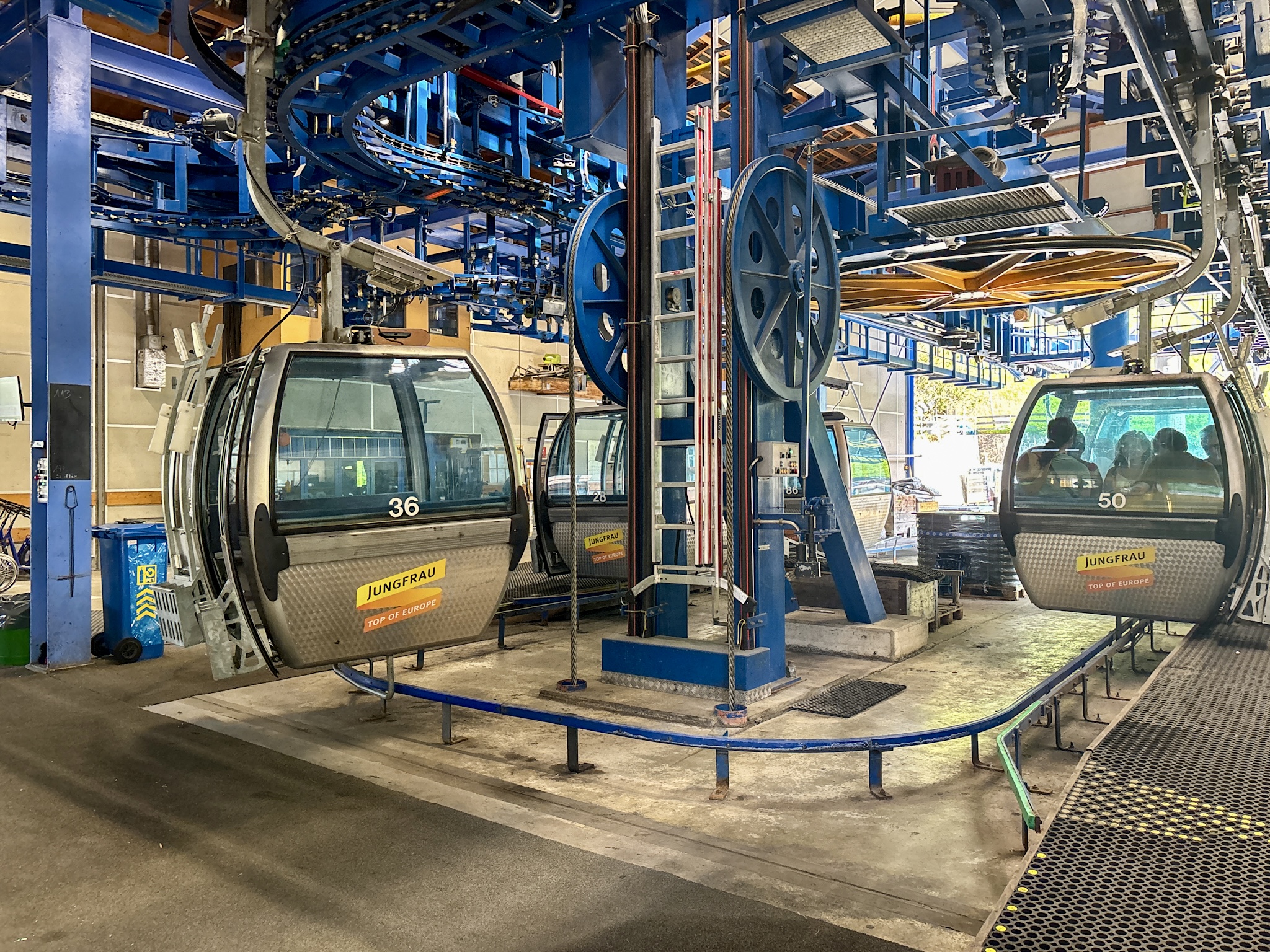
Cable car systems that shuttle hikers into the mountains ease access but also create false proximity. A trailhead a 10-minute gondola ride from a town doesn’t mean “easy.” Once on the ridge, continuous elevation, exposure, and weather windows dominate timing. Combine this with huts that operate on seasonal schedules linked to cable car runs, and the infrastructure you see can mislead you about how much effort a day actually requires.