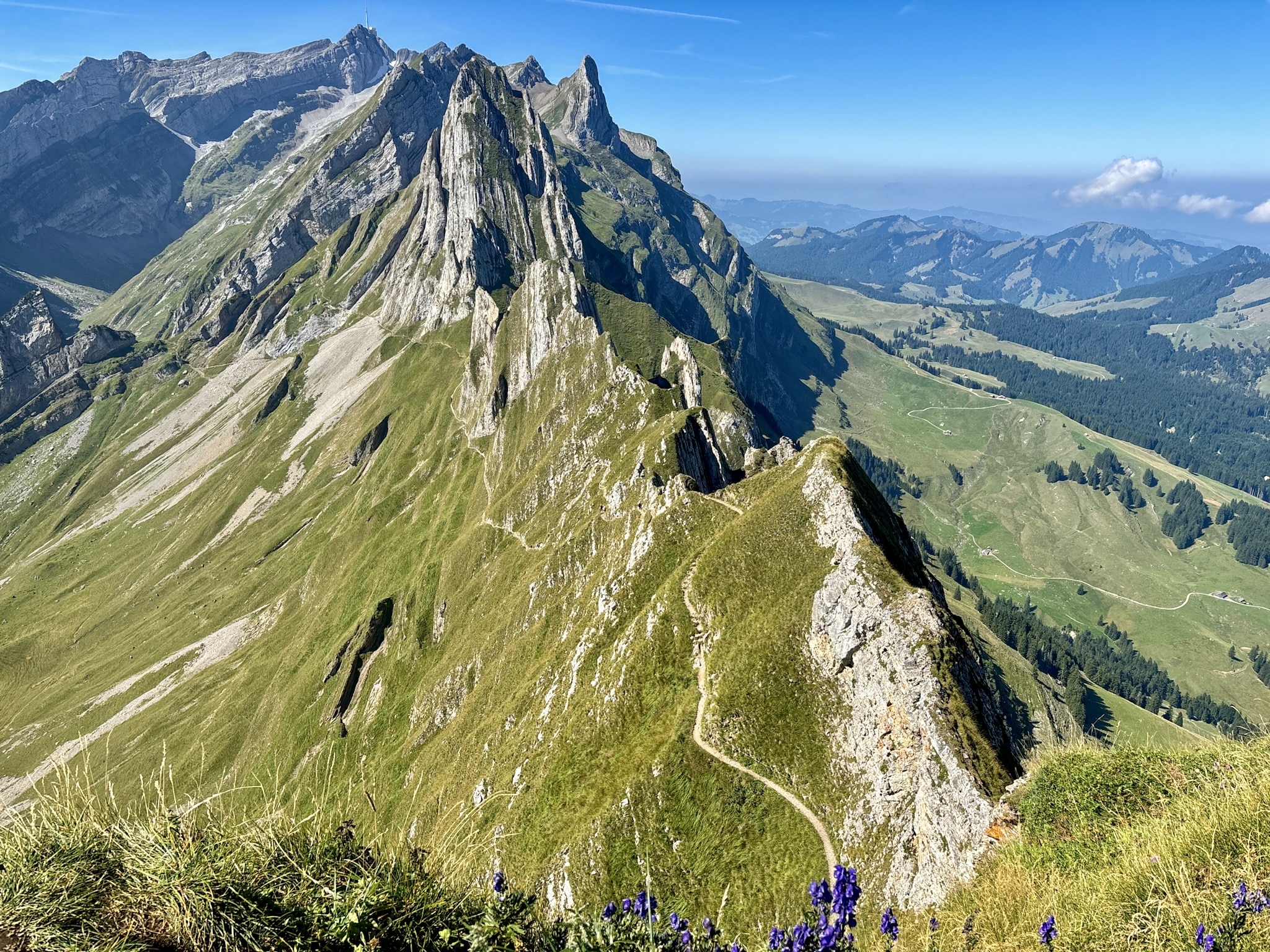
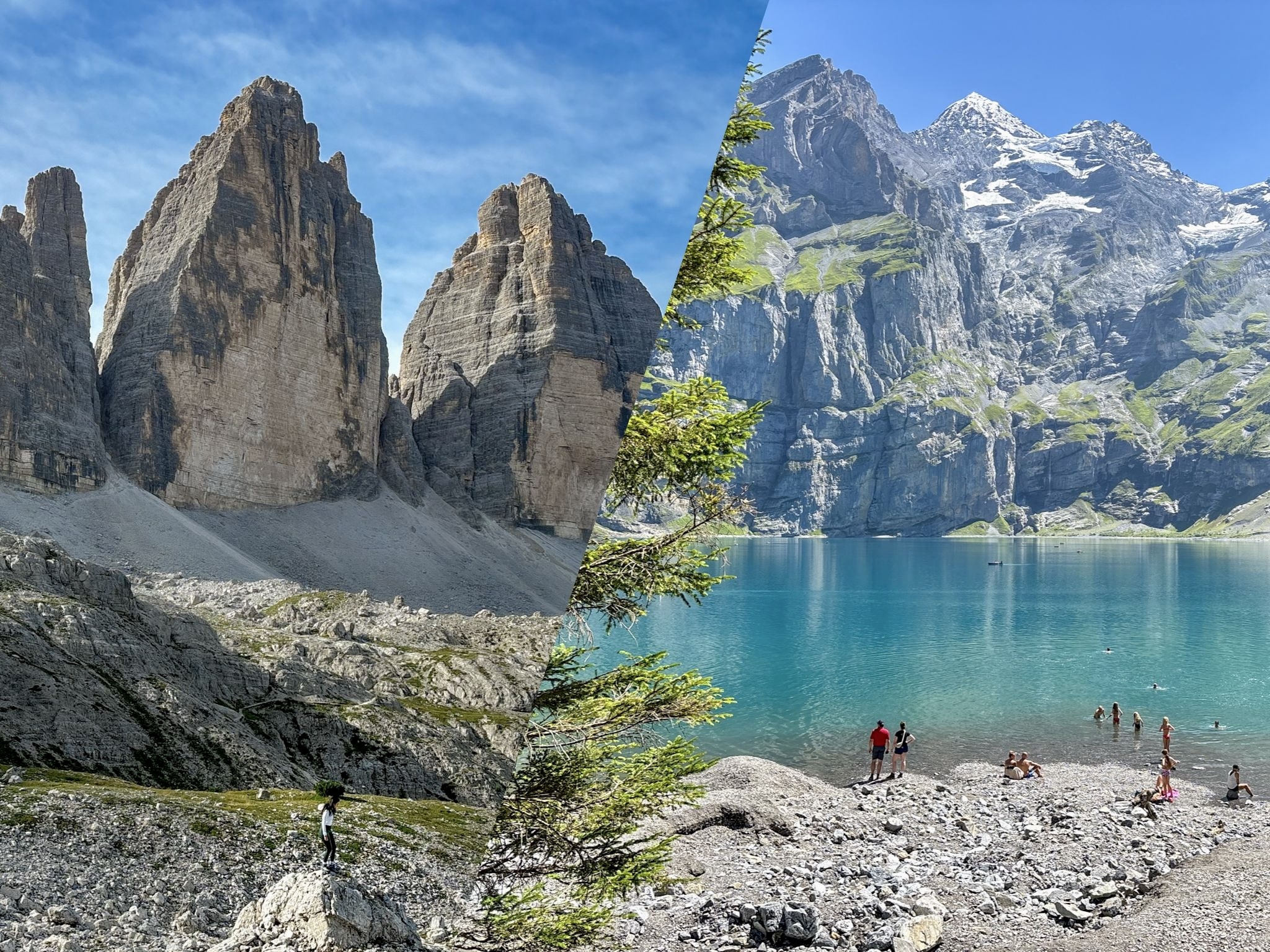
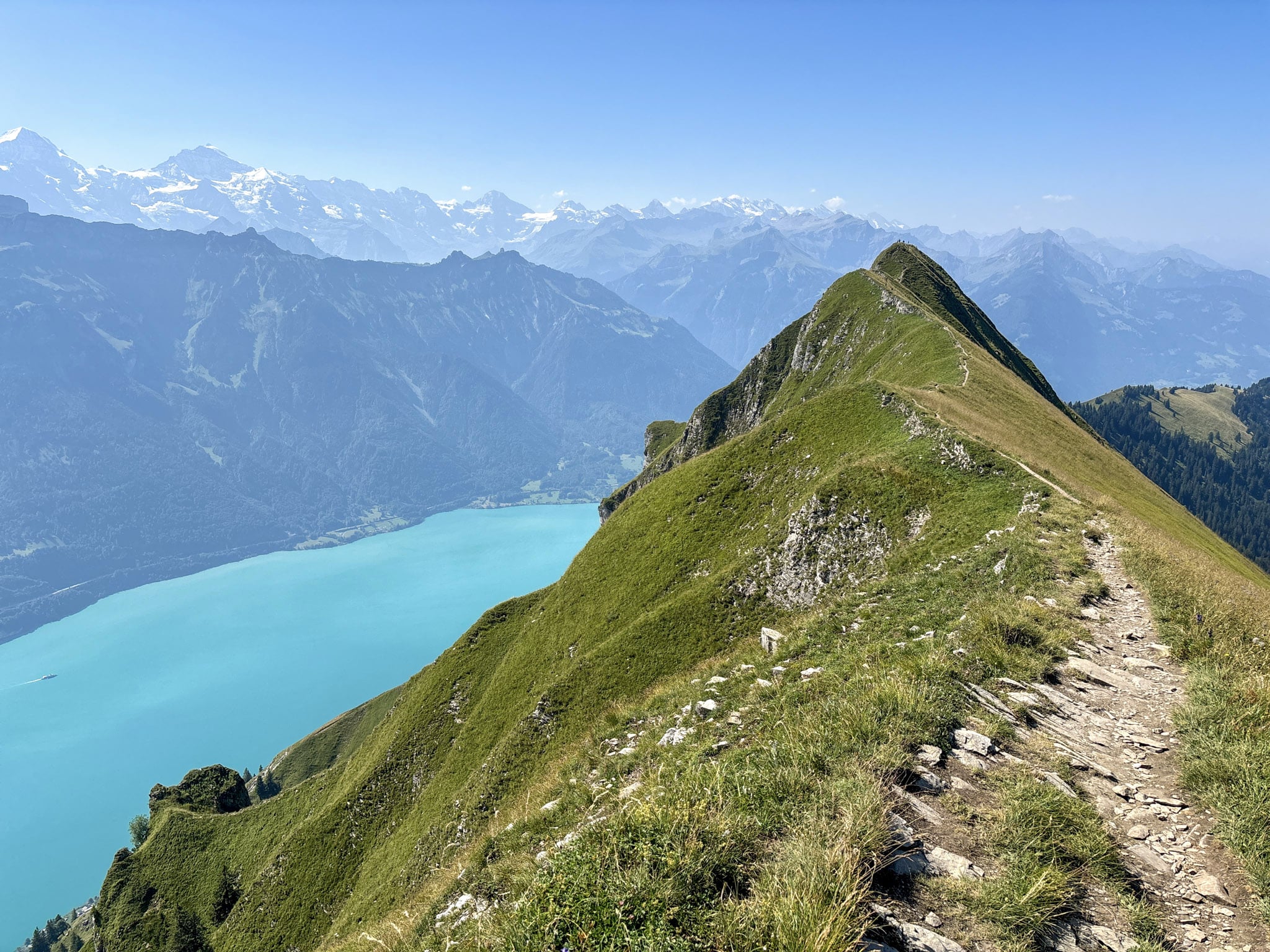
Spending 1 or 2 days in Zurich? This guide covers the best things to do in Zurich, itinerary ideas, real costs, and how to move through the city with that proverbial Swiss efficiency.
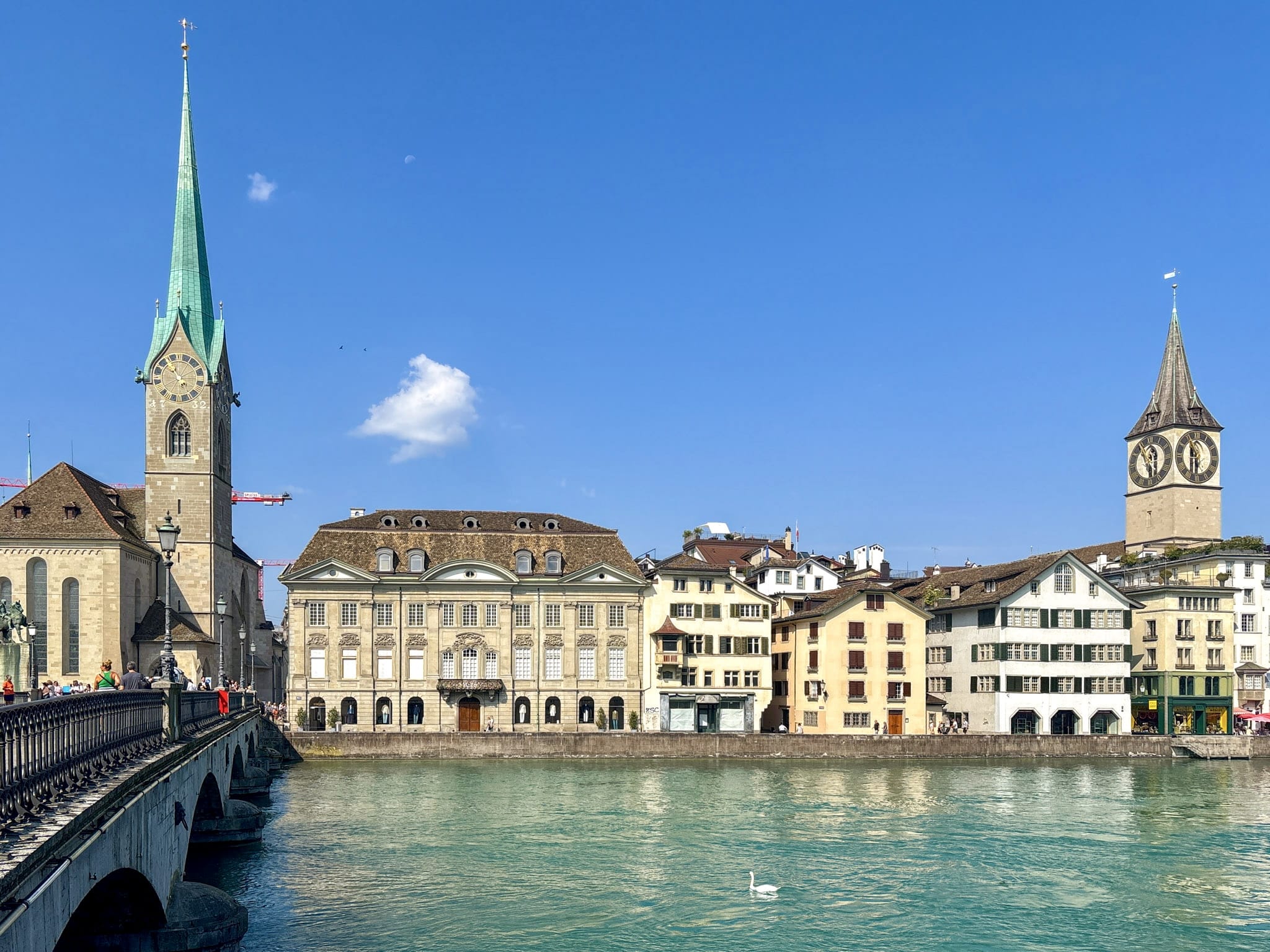
I drove into Zurich from the south, rolled past the deep blue of Lake Zurich, and parked near Sechseläutenplatz with a very clear plan. Coffee in the Old Town. Lindenhof before the tour groups. Polybahn up to Polyterrasse while the light still hits the rooftops from the east. When you treat Zurich as a city that rewards precision, it gives you a remarkably satisfying day.
I’ve since used Zurich as a base for hikes, for quick stopovers, and for more longer Swiss loops. Most visitors stay one or two days, so this guide is built for that reality.
This guide gives you the best things to do in Zurich in a way that flows geographically and practically. You’ll get costs, time ranges, and exact access notes. You’ll get a 1-day and 2-day plan that fits inside daylight hours and train schedules. If Zurich is your entry point into Switzerland, I’ll also show you when to stay in the city and when to escape into the hills.
Zurich Planning Basics
Arriving in Zurich
Zurich Airport sits about 10 kilometers north of the city center. The fastest way into town is the S-Bahn from Zürich Flughafen to Zürich HB. Trains run roughly every 5 to 10 minutes, and the ride takes 9 to 12 minutes platform to platform. A second-class ticket within Zone 110 costs around CHF 6.80 one way.
If you’re arriving by car, parking in central Zurich typically runs between CHF 25 and CHF 40 for 24 hours in structured garages near Bürkliplatz, Urania, or Hauptbahnhof. Street parking in blue zones requires a time disc and is limited in duration. For short stays, a central garage or a hotel with private parking saves time and mental energy.
Getting Around Zurich
Zurich’s public transport system is compact and highly synchronized. Trams, buses, S-Bahn trains, and even the Polybahn funicular all operate under the Zürcher Verkehrsverbund network.
Most of what you’ll do in one or two days sits within Zone 110. A 24-hour pass for this zone costs about CHF 8.80 and covers unlimited travel on trams, buses, local trains, and the Polybahn. For Uetliberg, you’ll move into an additional zone, bringing a day pass closer to CHF 17.
Walking plays a central role. From Bahnhofstrasse to Lindenhof takes roughly 8 minutes. Lindenhof to Grossmünster is about 6 minutes downhill. The city is compact once you understand elevation changes.
Where to Stay for a Short Trip
For one or two days, base yourself inside or just outside the Old Town, between Zürich HB and Bellevue. This keeps you within 10 to 15 minutes walking distance of most core attractions.
If you prefer a slightly calmer neighborhood with excellent tram connections, look at Seefeld near the lake or Zürich West near Hardbrücke station. Zürich West gives you a contemporary atmosphere with industrial architecture and quick S-Bahn access to the center in about 3 minutes.
How Many Days Should You Spend in Zurich
- One full day allows you to cover the Old Town, one major museum, a viewpoint, and either Zürich West or the Lindt Home of Chocolate.
- Two days give you breathing room to add Uetliberg, spend more time at Kunsthaus Zürich, or take a half-day hike without compressing your schedule.
- Three days or more work best if you want to plan a hike in one of the nearby mountains.
If you’re extending your trip across the country, my guide to the 10 Most Beautiful Places in Switzerland breaks down where to allocate your nights across regions.
What Things Actually Cost
Zurich operates at Swiss price levels. Here are realistic ranges:
- Coffee in a central café runs CHF 4.50 to CHF 6.
- Museum tickets typically range from CHF 20 to CHF 25.
- Polybahn funicular ride is included in Zone 110 travel passes, or about CHF 2.50 single ride.
- Lindt Home of Chocolate entry costs around CHF 17 for adults.
- Casual lunch at a sit-down restaurant averages CHF 35 per person.
Budgeting CHF 100 to CHF 150 per person per day for attractions, food, and transport gives you flexibility without constant calculation.
Best Things to Do in Zurich
1. Explore the Old Town and Lindenhof
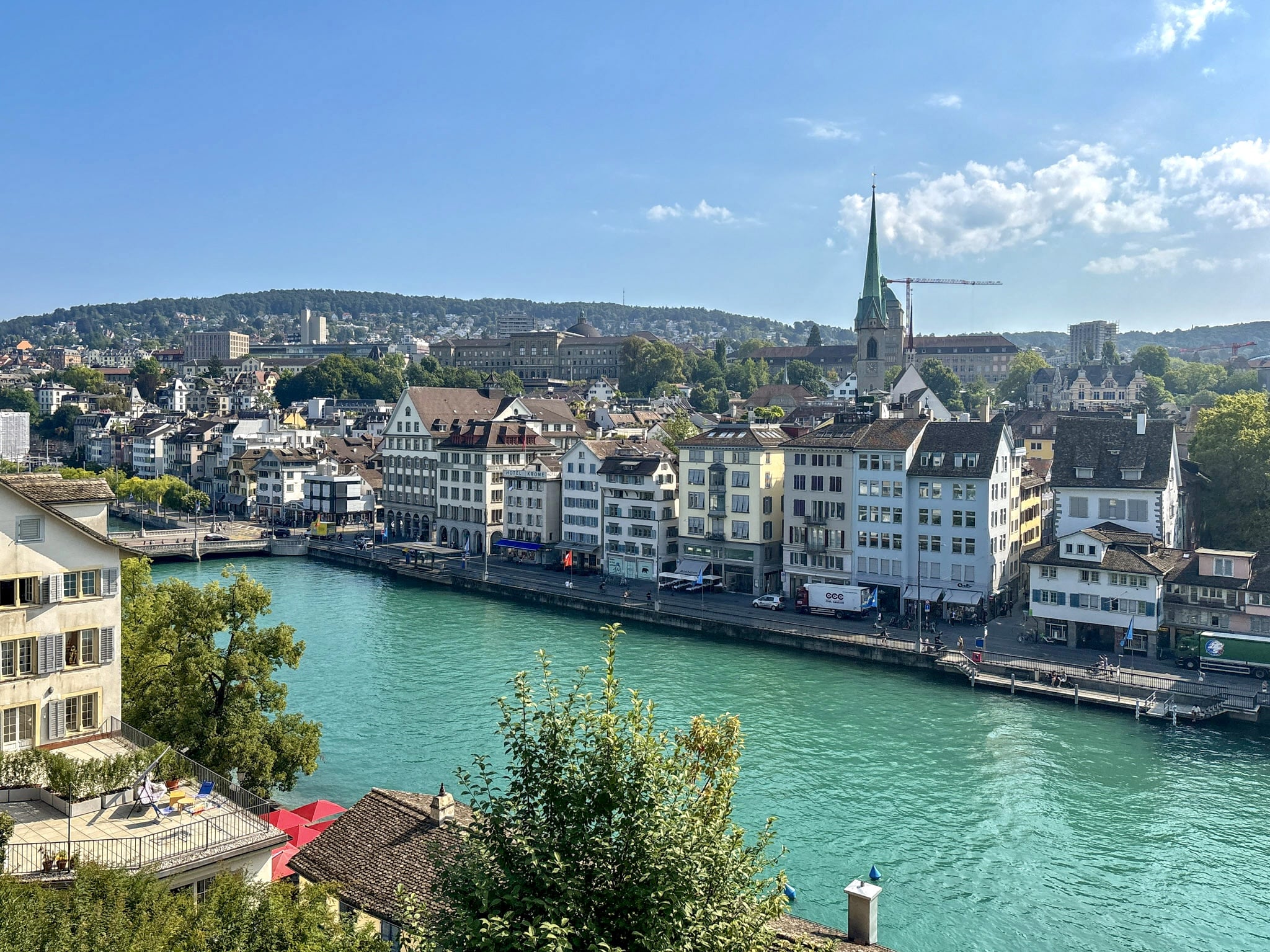
Zurich’s Old Town, or “Altstadt”, wraps around the Limmat River in a tight weave of medieval lanes, painted guild houses, discreet courtyards, and narrow staircases that rise and fall with the terrain. This is where the city’s personality concentrates. At the top of one of those rises sits Lindenhof, a small hill that once hosted a Roman fort and now delivers the cleanest overview of central Zurich.
Walk up first. From Bahnhofstrasse, turn into Rennweg and follow the incline toward Lindenhof. The climb takes about 3 to 4 minutes. Once you reach the square, the city suddenly makes sense. Directly across the river you’ll see Grossmünster, the Romanesque church with the two square towers that appear in nearly every Zurich skyline photo. A few steps downstream you’ll spot Fraumünster, identifiable by its slender green spire and famous for stained-glass windows created by Marc Chagall in the 1970s. Closer by, St. Peter’s Church holds one of the largest clock faces in Europe, measuring about 8.7 meters in diameter.
I went up just before 9:00 in the morning, when the light sharpened the rooftops and the outdoor chess boards were already in use. Wear shoes that handle stone surfaces confidently, because the slopes are gentle but persistent.
2. Walk the Lake Zurich Promenade
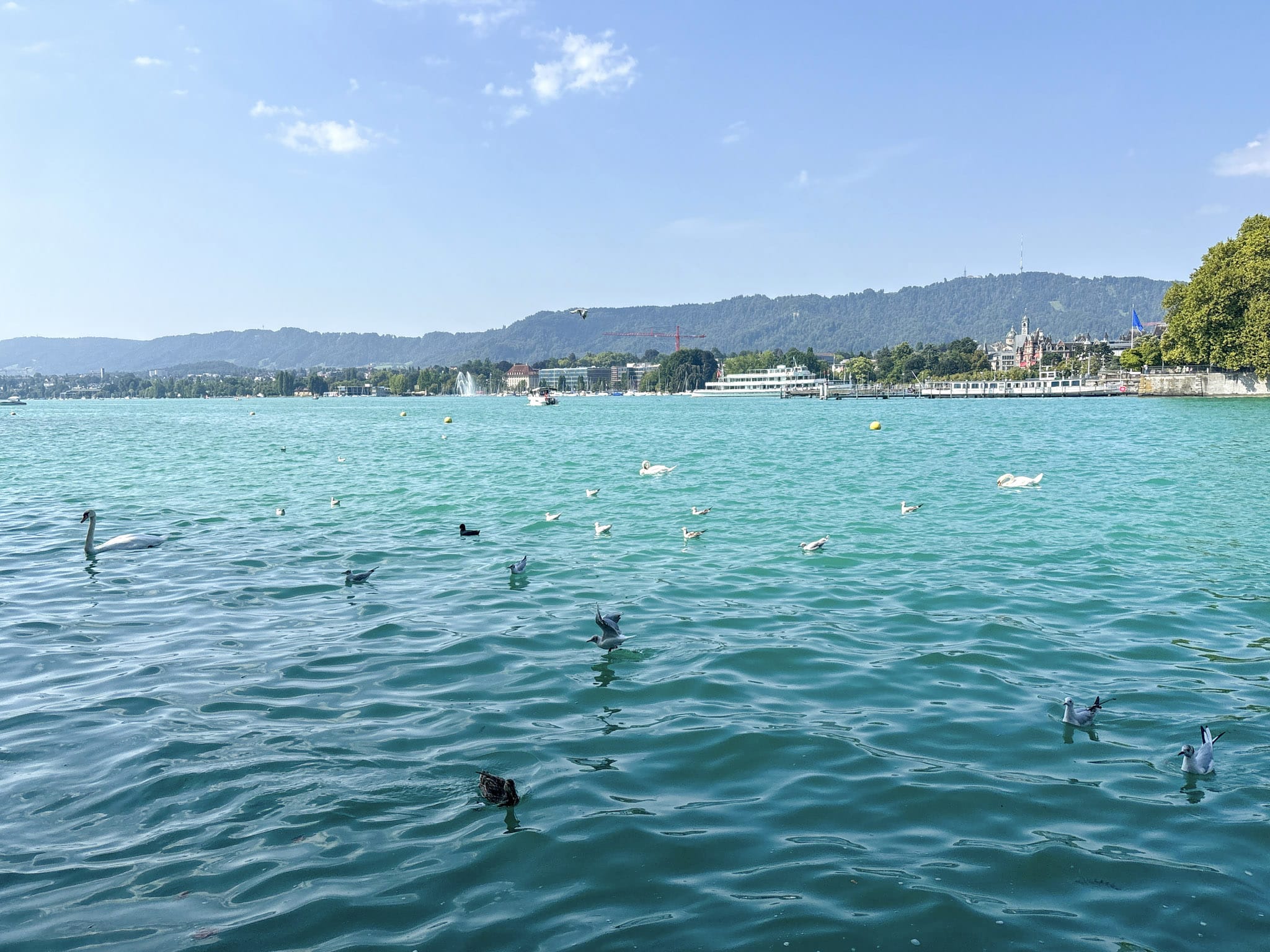
From Lindenhof, walk downhill toward the river, cross Münsterbrücke, and continue south until the Limmat widens into Lake Zurich at Bürkliplatz. The descent takes about 10–12 minutes.
This is where Zurich opens up, and the stone streets give way to sky and water. Swans gather along the edge year-round, moving slowly through the shallows with complete confidence. Just offshore you’ll notice the large circular fountain, the Quaibrunnen, set directly in the lake, a quiet landmark most visitors photograph without realizing it has a name.
From Bürkliplatz, follow the promenade north toward Seefeld. The paved lakeside path runs about 1.5 km (0.9 miles) one way. Walking out and back fully totals roughly 3 km (1.8 miles) and takes 45–60 minutes.
If you want time on the water, lake cruises depart from Bürkliplatz. The short “Zürichsee” loop lasts about 90 minutes. Longer cruises extend 3.5 to 4.5 hours depending on route. Standard ticket prices typically range between CHF 9 and CHF 30 depending on duration and zones. Boats run more frequently between April and October.
In summer, Seebad Utoquai and Seebad Enge open for swimming. Entry usually costs CHF 8–10. Water temperatures reach around 20–23°C (68–73°F) in peak season.
3. See the Chagall Windows at Fraumünster
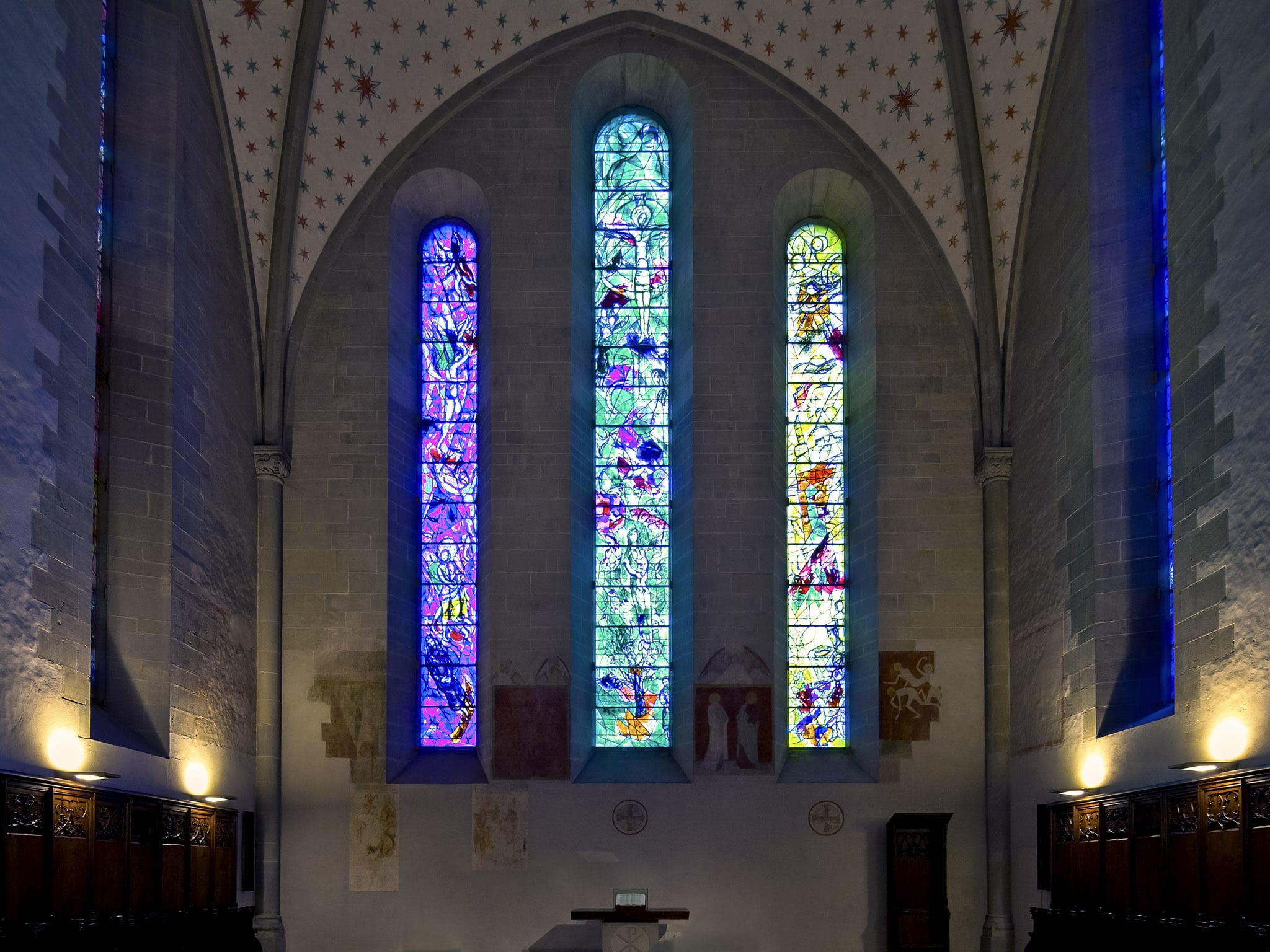
Directly on the Limmat River promenade stands Fraumünster, founded in 853 by King Louis the German as a convent for aristocratic women. Today, most visitors step inside for one reason: the stained-glass windows created by Marc Chagall in 1970.
The interior carries a soft tone. Pale stone walls frame five tall, luminous windows at the choir end, each saturated in deep blues, greens, and reds. Chagall’s panels depict biblical scenes, though even without decoding every symbol, the color composition alone pulls your focus upward. I recommend standing a few rows back from the choir and letting your eyes adjust for a minute, as the light shifts subtly depending on cloud cover and time of day.
Entrance costs CHF 5 for adults. Opening hours typically run from 10:00 to 18:00 in summer and slightly shorter in winter, with restricted access during services. Photography without flash is generally permitted. Arrive before large midday tour groups if you prefer a quieter atmosphere.
Directly across the Limmat from Fraumünster stands Grossmünster, the Romanesque church with the two square towers that define Zurich’s skyline. The interior feels deliberately restrained, with whitewashed walls, tall columns, minimal ornamentation. Entry to the church is free, while the tower climb admission is CHF 5 for adults.
4. Walk Bahnhofstrasse Properly
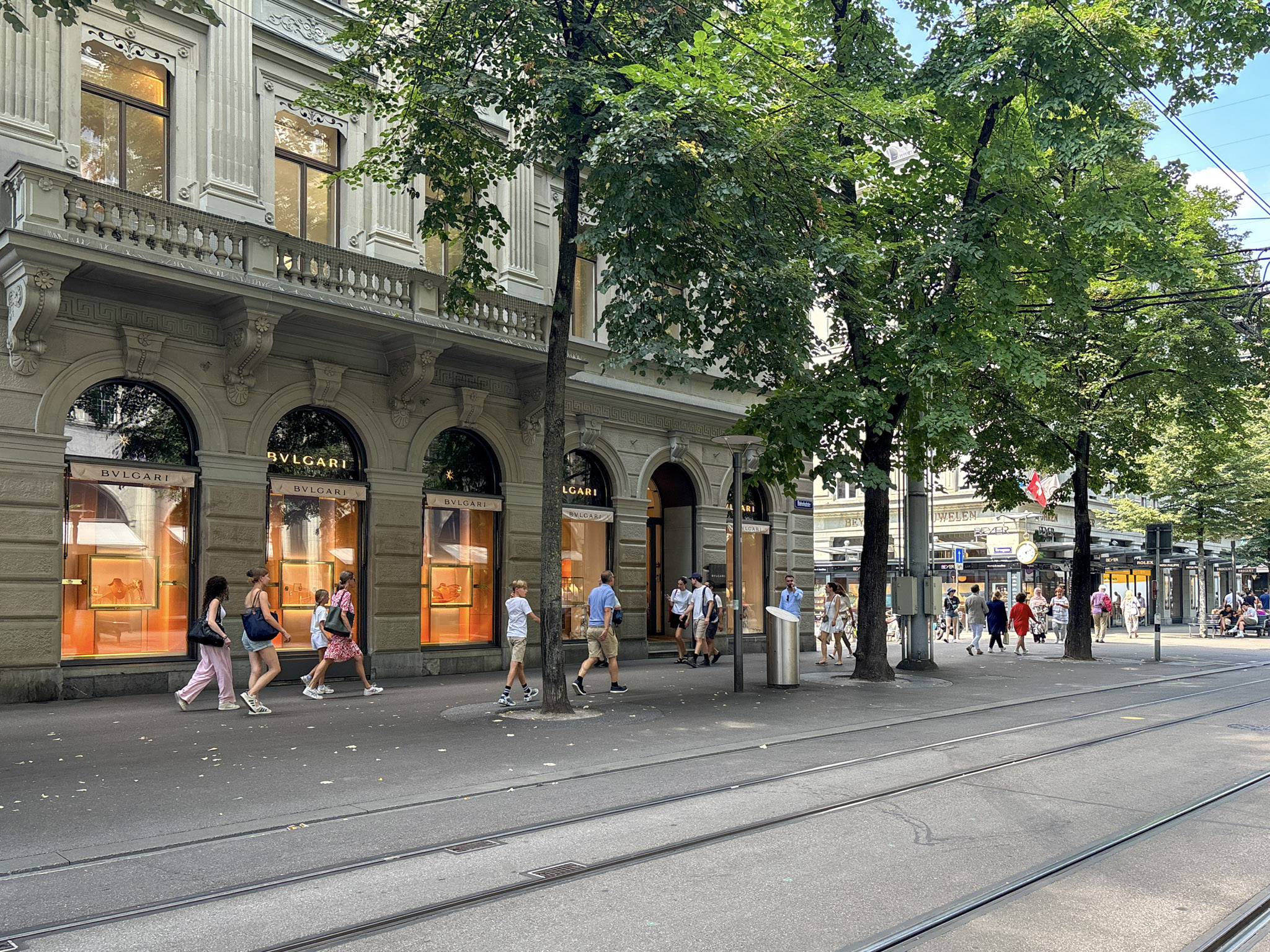
Bahnhofstrasse runs for roughly 1.4 kilometers from Zürich HB to Bürkliplatz on the lake. On paper it’s a shopping street, but in practice it’s the city’s central axis, where finance, fashion, chocolate, and daily Swiss life intersect in a very choreographed way.
Start at the Hauptbahnhof end and walk south. The first stretch carries corporate vibes: UBS, Credit Suisse, polished stone façades, precise window displays. Halfway down, around Paradeplatz, the tone shifts. Paradeplatz anchors Zurich’s banking district and doubles as one of the city’s main tram junctions, served by lines 2, 6, 7, 8, 9, 11 and 13. From there, continue toward the lake and you’ll notice the air open slightly as the street approaches Bürkliplatz.
This is also where you’ll find flagship stores for Swiss watch brands, high-end chocolatiers like Sprüngli, and seasonal installations that subtly change the street’s mood.
Walking the full length at an unhurried pace takes 20 to 30 minutes. Add time if you step into Sprüngli for Luxemburgerli or linger near Paradeplatz to watch the choreography of trams intersecting. Cost is zero unless you decide to participate in the luxury ecosystem around you. A coffee here ranges between CHF 5 and CHF 7 depending on the café.
5. Spend Time at Kunsthaus Zürich
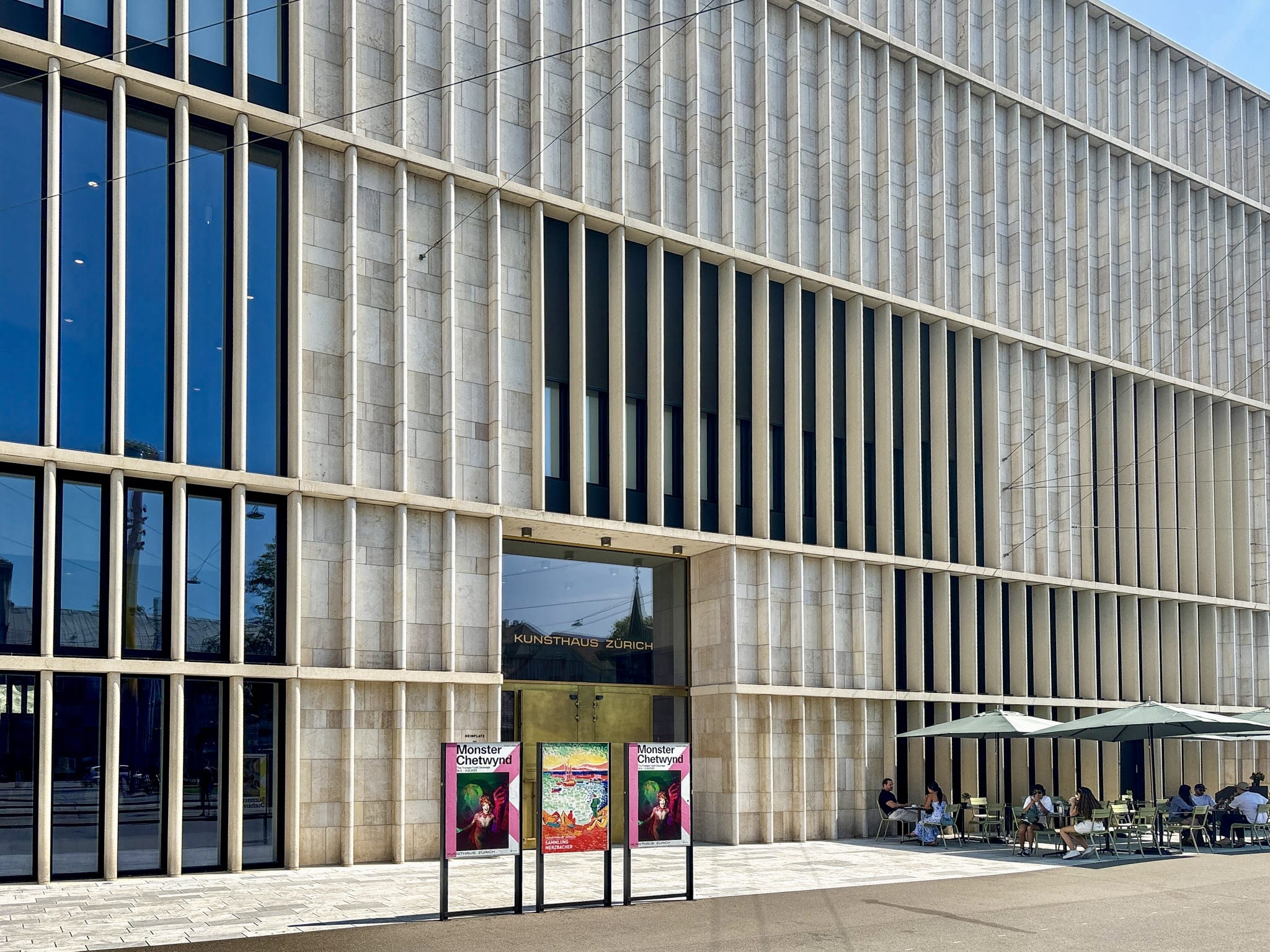
Kunsthaus Zürich holds one of the most significant art collections in Switzerland, and not just in Swiss terms. The museum holds one of the largest Edvard Munch collections outside Norway, a dedicated Giacometti room with works by Alberto Giacometti and his father Giovanni, and major paintings by Monet, Van Gogh, Cézanne and Picasso. The Giacometti room alone can hold your attention for 20 minutes if you let the scale and spacing work on you.
Architecture is also interesting here. Kunsthaus Zürich operates across two distinct buildings that sit on opposite sides of Heimplatz and are connected by a bright underground passage. The original 1910 building by Karl Moser carries a classical stone façade and traditional gallery proportions. In 2021, the museum expanded with a monumental limestone-clad extension designed by David Chipperfield. The two structures face each other across the square, and you move between them through a wide subterranean corridor.
That transition is part of the experience. You leave early 20th-century gallery rooms, descend gently below street level, and re-emerge into tall, restrained exhibition halls defined by natural light and pale stone.
Begin at the main entrance on Heimplatz, a short 8-minute tram ride from Zürich HB (tram 3 or 8 to Kunsthaus stop), followed by a 2-minute walk.
Hours and access
• Tuesday–Sunday: 10:00 – 18:00
• Wednesday: open late until 20:00
• Closed Mondays and select holidays.
Ticket Cost
• CHF 23 adult ticket
• CHF 17 reduced rate
• Free for visitors age 16 and under
Expect a thorough visit to take between 1.5 and 2.5 hours if you explore key movements and take advantage of the audio guide. Drop-in visits under 60 minutes are possible but feel a bit rushed.
6. Explore Zürich West and the Viadukt
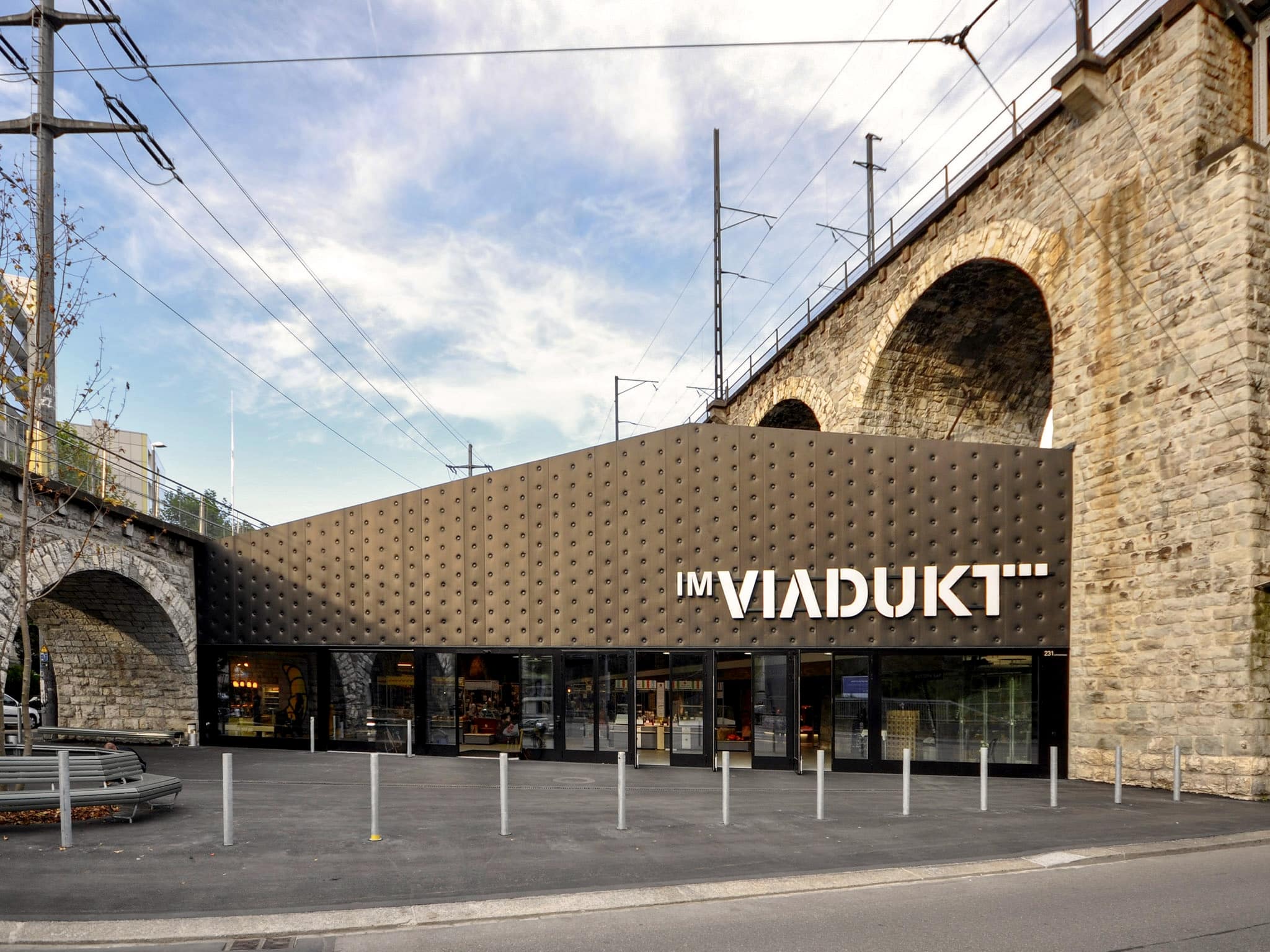
Zürich West sits northwest of the Old Town and tells a completely different story. What used to be an industrial district filled with shipyards and warehouses has turned into a polished, design-forward neighborhood with converted brick buildings, creative studios, and one of the city’s most photogenic structures: the Viadukt.
The Viadukt is a 550-meter-long railway viaduct built in 1894. Its stone arches now house independent boutiques, small restaurants, wine shops, and specialty stores. You walk under the arches while trains pass overhead every few minutes, a quiet reminder that this is still an active railway line. I liked entering from the Hardbrücke side and strolling east; the rhythm of arches creates a natural flow, and the mix of retail and food spots feels curated without being forced.
Getting here is simple. From Zürich HB, take the S-Bahn to Hardbrücke. The ride takes about 3 minutes. From Hardbrücke station, it’s a 5-minute walk to the Viadukt. Tram 4 also stops at “Schiffbau,” which places you within 3 minutes on foot of the arches. Plan at least 30 minutes if you wander casually, longer if you stop for lunch.
7. Ride the Polybahn to Polyterrasse
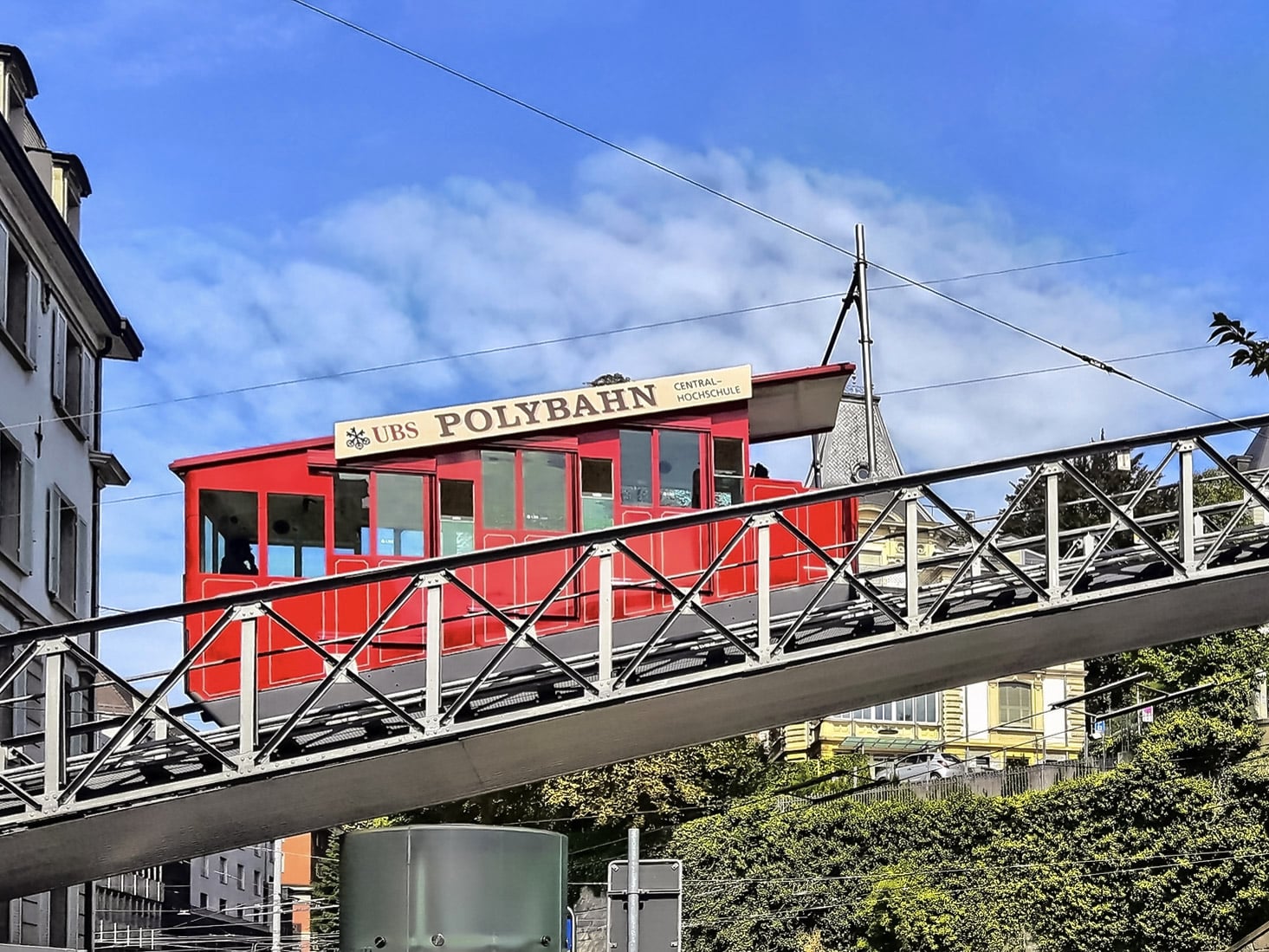
The Polybahn is a short, steep funicular that climbs from Central square up to Polyterrasse, the panoramic terrace in front of ETH Zurich. It opened in 1889 and covers only about 176 meters in length, yet the elevation gain is enough to lift you above the Old Town rooftops in under two minutes.
Board at “Central”, a major tram hub served by lines 3, 4, 6, 7, 10 and 15. The ride to “Polybahn” at the top takes roughly 100 seconds. From there, walk straight ahead to the terrace. The view opens wide: Grossmünster’s twin towers sit below you, Lake Zurich stretches south, and on clear days the Glarus Alps form a crisp horizon line.The Polybahn operates under the Zürcher Verkehrsverbund network. A Zone 110 day pass, which covers most central Zurich travel, includes the ride. A single adult ticket for Zone 110 currently costs CHF 4.40 one way or CHF 8.80 for a 24-hour pass within the zone (2026 ZVV pricing). The funicular runs approximately every 5 to 10 minutes throughout the day.
Sunset draws more visitors, especially in summer. Early morning delivers the clearest visibility toward the Alps. Practical detail: the terrace is fully exposed. Wind at the top can be noticeably stronger than at street level, particularly in shoulder seasons.
8. Visit the Lindt Home of Chocolate
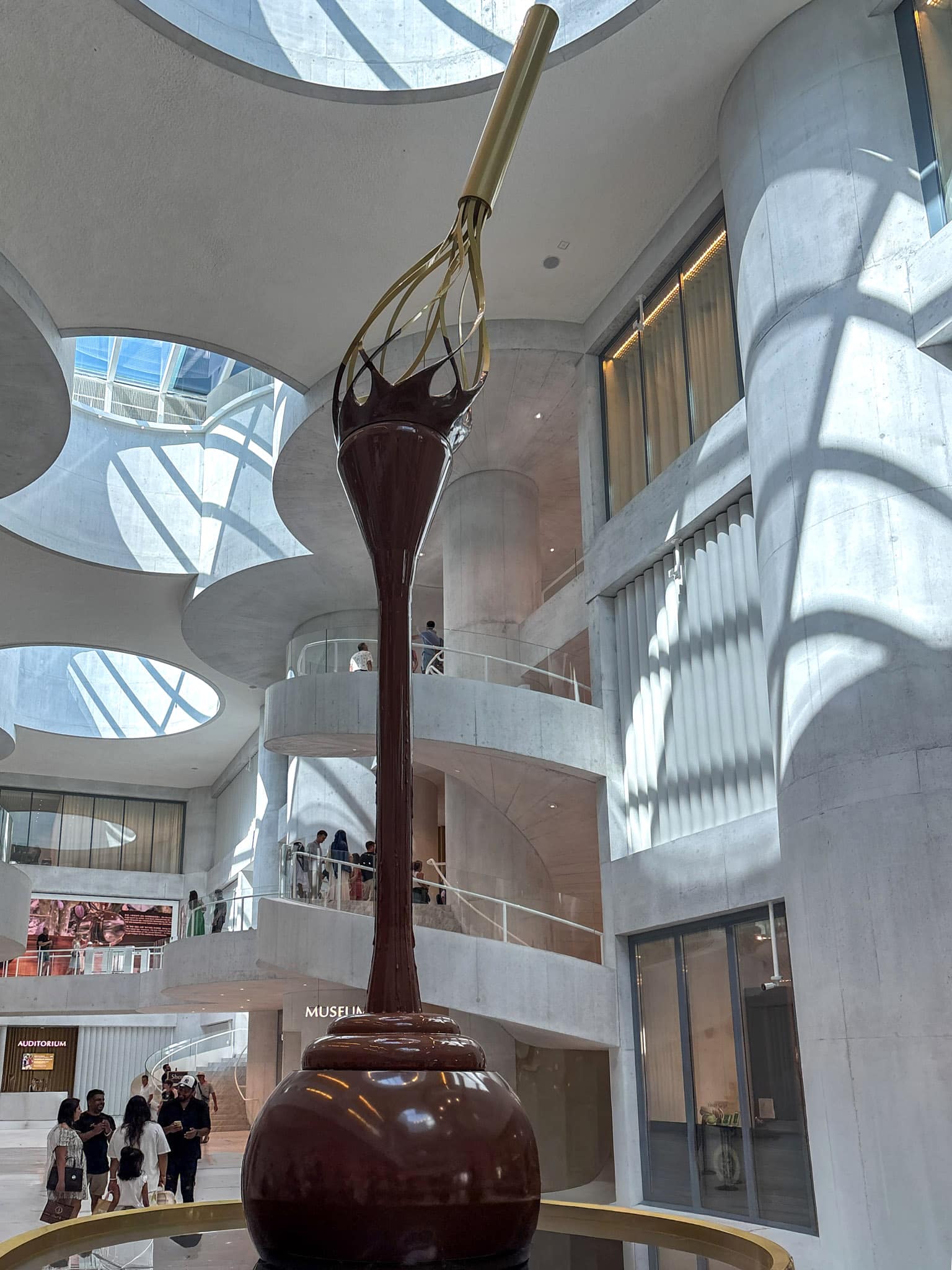
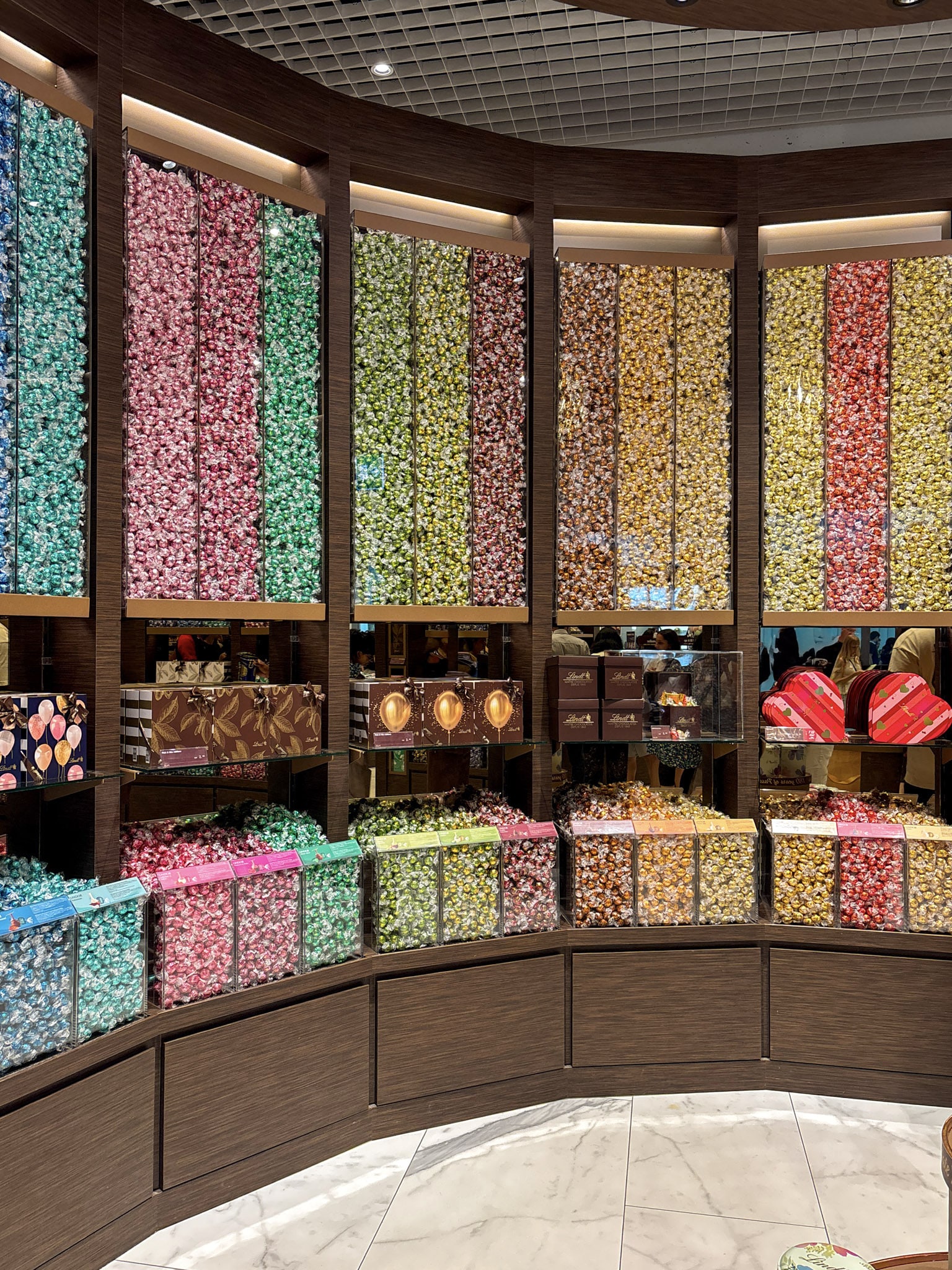
The Lindt Home of Chocolate sits in Kilchberg, just south of central Zurich, and yes, it’s unapologetically touristy. It’s also fun, well-designed, and very Swiss. The building opened in 2020 next to the original Lindt & Sprüngli factory and houses the world’s tallest free-standing chocolate fountain, which rises about 9 meters through the entrance hall.
To get there, take the S8 or S24 from Zürich HB to “Kilchberg ZH.” The ride takes 10 to 12 minutes. From Kilchberg station, it’s about a 10-minute walk downhill toward the lake, clearly signposted. Alternatively, bus 165 from Bürkliplatz takes around 20 minutes and stops closer to the entrance.
You can enter the building freely without a ticket and explore the dramatic entrance hall with its 9-meter chocolate fountain, swing through the world’s largest Lindt Chocolate Shop (circa 500 m² of bars, pralines, seasonal exclusives, and custom options), and sit for a hot chocolate at the bar.
To go deeper into the interactive museum exhibition that threads multimedia exhibits, tasting stations, cocoa history, and the production timeline, you must book a museum ticket for a specific time slot. Those paid slots often sell out in summer and on weekends, so booking online in advance is advised if you want the full experience.
Opening hours 2026: Daily 10:00–18:00.
Admission 2026: the entrance hall with the chocolate fountain, shop, and café is free to enter and roam. Instead, for the exhibition:
CHF 17 adult ticket
CHF 15 reduced
Free under 8 years old
Practical detail: weekend afternoons draw crowds of families and larger groups. If you prefer quieter conditions, aim for weekday mornings shortly after opening.
9. Go Up Uetliberg for the Big-Picture View
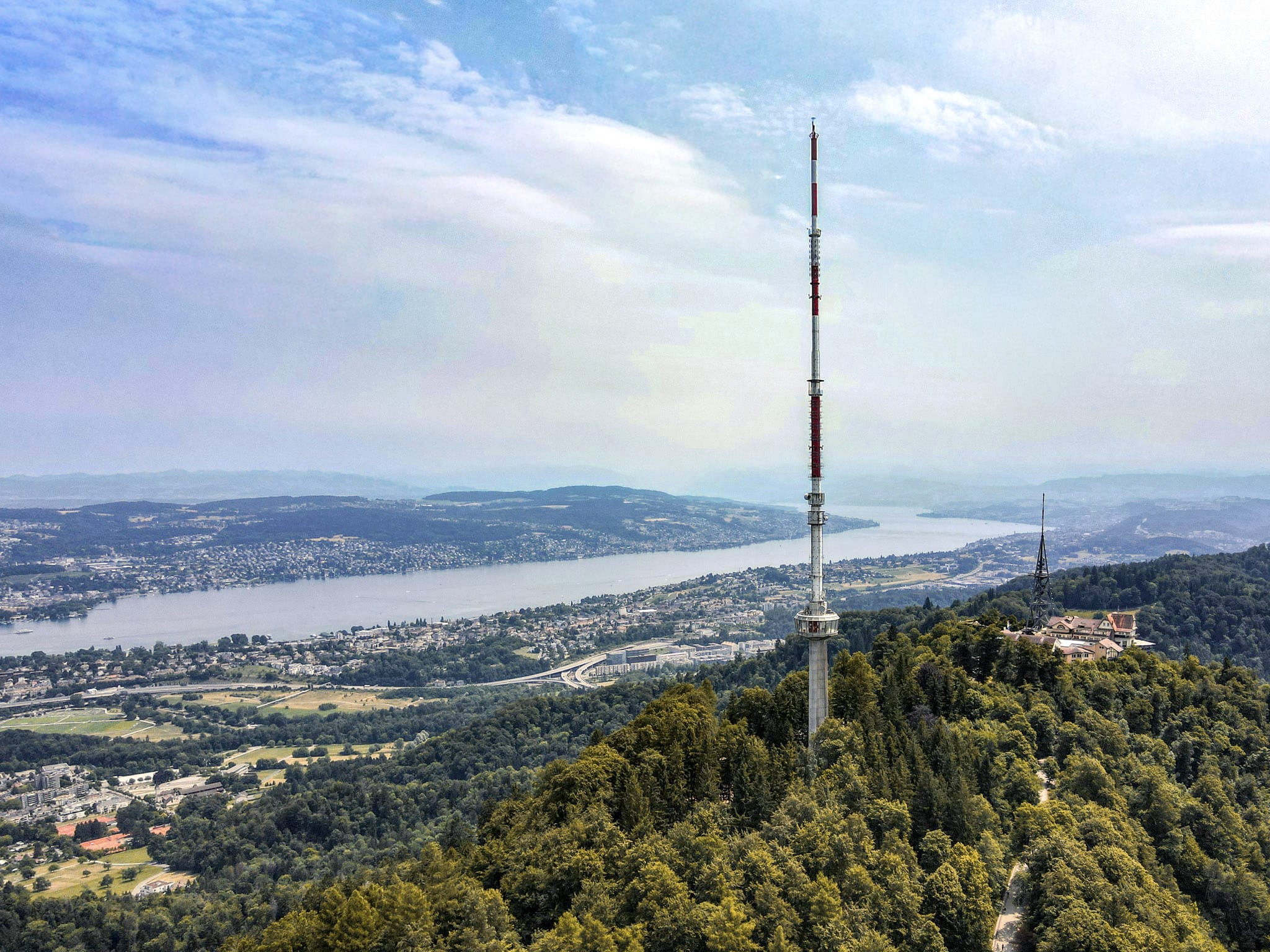
Uetliberg is Zurich’s local mountain, rising to 871 meters above sea level and giving you the kind of panoramic view that explains the city’s geography in one sweep. From up there, Lake Zurich bends south, the Old Town sits compact and precise, and on clear days the Alps line the horizon with theatrical confidence.
From Zürich HB, take the S10 train toward “Uetliberg.” Trains run roughly every 20 to 30 minutes. The ride takes about 20 minutes. As mentioned Uetliberg station sits at 813 meters, and from there it’s a 10-minute uphill walk to the main viewpoint area.
At the top you’ll find a viewing terrace and the Uto Kulm observation tower, and the tower adds extra height and gives a full 360-degree panorama. Access to the tower costs CHF 2, payable via a small ticket machine at the entrance. The terrace area itself is free.
The path from the station to the summit is paved and manageable in regular sneakers. Another practical tip for the visit: visibility determines everything here. Check the mountain webcam or weather forecast before committing, considering that clear mornings after rain often deliver the sharpest Alpine outlines.
10. Take a Day Hike from Zurich
Zurich makes hiking almost unfairly convenient, as Zürich HB plugs straight into trailheads that deliver elevation and views. Here are three day-hike options that work cleanly from the city, starting close and building up to the headline act:
Option 1: Wildnisweg Sihlwald, forest immersion close to the city
Sihlwald is one of Switzerland’s oldest protected forests, and it sits right in the Sihltal valley. The Wildnisweg loop runs about 6 kilometers (3.7 miles) with roughly 300 meters (984 feet) of elevation gain. It feels remote, dense, and green in a way that surprises people who just stepped off Bahnhofstrasse an hour earlier.
Take the S4 from Zürich HB toward Sihlwald. Travel time is about 25 minutes. Trails are clearly marked in yellow, and signage includes time estimates between junctions.
Option 2: Bachtel, classic Zurich panorama
Bachtel is the region’s reliable summit. The popular route from Gibswil to Wald covers about 9 kilometers (5.6 miles) with roughly 370 meters (1,214 feet) of ascent and around 500 meters (1,640 feet) of descent. At the top, the Bachtel observation tower opens views across rolling hills toward the Alps on clear days.
From Zürich HB, take a train to Gibswil. Travel time is about 45 minutes. Finish in Wald ZH and catch the train back.
Option 3: Stoos Ridge, the dramatic one
Stoos Ridge is the headline hike. The ridge section from Klingenstock to Fronalpstock stretches about 4.7 kilometers (2.9 miles) with roughly 286 meters (938 feet) of elevation gain along the crest. The full experience usually includes lifts to reach the starting point and a descent at the end.
From Zürich HB, plan roughly 1 hour 40 minutes to reach Stoos via train to Schwyz, bus to the Stoos funicular base, then the steep Stoosbahn ride up. The Stoos funicular has a maximum gradient of 110 percent and climbs nearly 744 meters (2,441 feet) vertically in under 7 minutes.
Transport + lift budget: CHF 40 to CHF 70 depending on combinations
If you want the exact routing, ticket combinations, and pacing strategy, I break down every step in my Stoos Ridge Hike guide.
1-Day in Zurich Itinerary
Zurich fits into one day if you move in a clean loop and respect elevation.
Morning: Old Town core (3–4 hours)
Start at Zürich HB around 8:30. Walk Bahnhofstrasse while it’s still calm, turn into Rennweg, and climb to Lindenhof. Spend 15–20 minutes at the viewpoint. Descend toward the river, visit Grossmünster (20 minutes), cross to Fraumünster for the Chagall windows (30 minutes), then take the Polybahn from Central up to Polyterrasse for another 20 minutes of skyline perspective.
Walking distance so far: about 3 km (1.8 miles).
Transport: Zone 110 day pass CHF 8.80 (24 hours).
Midday: Choose culture or chocolate (2 hours)
Kunsthaus Zürich: tram 3 or 8, 6–8 minutes. Focus on Giacometti and Munch.
OR
Lindt Home of Chocolate: S8 or S24 to Kilchberg (12 minutes) + 10-minute walk. Book museum tickets ahead in summer.
Late afternoon: Urban or alpine edge (1–2 hours)
Zürich West and the 550-meter Viadukt via Hardbrücke (3 minutes by S-Bahn).
OR
Uetliberg via S10 (20 minutes) for lake-and-Alps views.
Evening: Lake stroll
Walk from Bahnhofstrasse to Bürkliplatz in 5 minutes and end by the water.
2-Day in Zurich Itinerary
Two days give Zurich space to breathe. Keep Day 1 compact and historic. Use Day 2 for elevation, contemporary design, and chocolate.
Day 1: Old Town + Art
Follow the 1-day structure
- In the morning, you can complete the loop Bahnhofstrasse → Lindenhof → Grossmünster → Fraumünster → Polyterrasse. Walking distance: about 3 km (1.8 miles).
- Midday, head to Kunsthaus Zürich (tram 3 or 8, 6–8 minutes). Spend 90–120 minutes moving between the original building and the modern Chipperfield extension connected underground.
- Late afternoon, walk downhill toward Bellevue and finish at Bürkliplatz by the lake. Flat and easy, about 1.2 km (0.75 miles).
Day 2: Views + West + Chocolate
- Morning: Uetliberg. Take the S10 from Zürich HB (about 20 minutes), then 10-minute uphill walk from station. Plan 2 to 3 hours, including return.
- Midday: Zürich West. Take the S-Bahn to Hardbrücke (3 minutes), then walk the 550-meter Viadukt and explore for about 60–90 minutes.
- Afternoon: Lindt Home of Chocolate. Take the S8 or S24 to Kilchberg, 12 minutes + 10-minute walk. Remember that the museum exhibition requires reserved time slot (CHF 17 adult). Allow 90–120 minutes. Return to Zurich in early evening and end along the lake promenade.
Map of All the Things to Do in Zurich
I recommend checking the custom map alongside this guide before you finalize your route. Zurich looks compact on paper, but elevation shifts and tram lines create subtle barriers that matter once you’re on foot.
Use the zoom function to understand how close the Old Town landmarks are to each other. Most of them sit within a 10-minute walking radius. Then zoom out to see how Uetliberg and the Lindor museums require more connections.
FAQ About Visiting Zurich
Is 1 day enough for Zurich?
One full day can work if you move in a clean loop. The Old Town, Lindenhof, Grossmünster, Fraumünster, and Polyterrasse sit within roughly 3 km (1.8 miles) of each other. Add either Kunsthaus or Lindt, and you’ll fill 8–9 solid hours without rushing. However, if your goal is depth in museums or a mountain excursion, consider adding a second and even a third day.
Is 2 days too much for Zurich?
Not at all, two days are perfect to cover all the best things in Zurich without rushing it. Day one handles the historic core and culture. Day two adds Uetliberg, Zürich West, and either chocolate or a short regional hike. The pacing becomes calmer and you avoid stacking viewpoints and museums back-to-back.
Is Zurich worth visiting compared to Lucerne or Interlaken?
Yes, because Zurich gives you urban structure plus immediate mountain access. Lucerne concentrates on postcard scenery and lake views, while Interlaken functions as an alpine base for Jungfrau-region peaks. If you want to see major art museums alongside a more modern side of the country, Zurich performs extremely well as a starting point.
How expensive is Zurich really?
Zurich is considered to be expensive, at least by European standards. Coffee runs CHF 4.50–6. Casual lunch sits around CHF 35, while dinners at a nice restaurant land around CHF 70. Museum entries average CHF 20–23. A 24-hour Zone 110 transport pass costs CHF 8.80. A comfortable daily city budget lands around CHF 100–150 per person, excluding hotel.
Do you need a car in Zurich?
Not at all, and you actually gain speed without one. Trams, buses, S-Bahn trains, and the Polybahn operate under the ZVV system. Most central attractions sit within walking distance once you’re in Zone 110. Parking in central garages typically runs CHF 25–40 per 24 hours.
Is Zurich boring at night?
It depends on your definition of nightlife. The Old Town has compact bars and wine spots. Zürich West offers larger venues and design-forward spaces. Bars' closing times vary, though many places remain active well past midnight on weekends. But I would say Zurich leans polished rather than chaotic, and the party scene is perhaps not the strongest point here.
What’s the best month to visit Zurich?
May through September deliver long daylight hours and clear hiking conditions. Summer temperatures usually range between 70–85°F (21–30°C). December offers Christmas markets and illuminated Bahnhofstrasse, with snow-capped mountains in the background.
Can you swim in Lake Zurich?
Yes, and locals do. Public lake baths such as Seebad Enge and Seebad Utoquai open in summer. Water temperatures typically reach 68–73°F (20–23°C) by mid-season. Entry fees usually range CHF 8–10.
Is Zurich safe?
Zurich consistently ranks among Europe’s safest cities. Violent crime rates remain low. Standard urban awareness applies, especially around major transit hubs late at night.
Can you hike from Zurich without staying overnight?
Yes. Sihlwald sits about 25 minutes away by train. Bachtel takes around 45 minutes. Stoos Ridge requires roughly 1 hour 40 minutes each way and fits into a full-day excursion with lift connections.
If you’re building a longer hiking-focused route, my Best Hikes in Switzerland guide breaks down trail distances and elevation gains across regions.