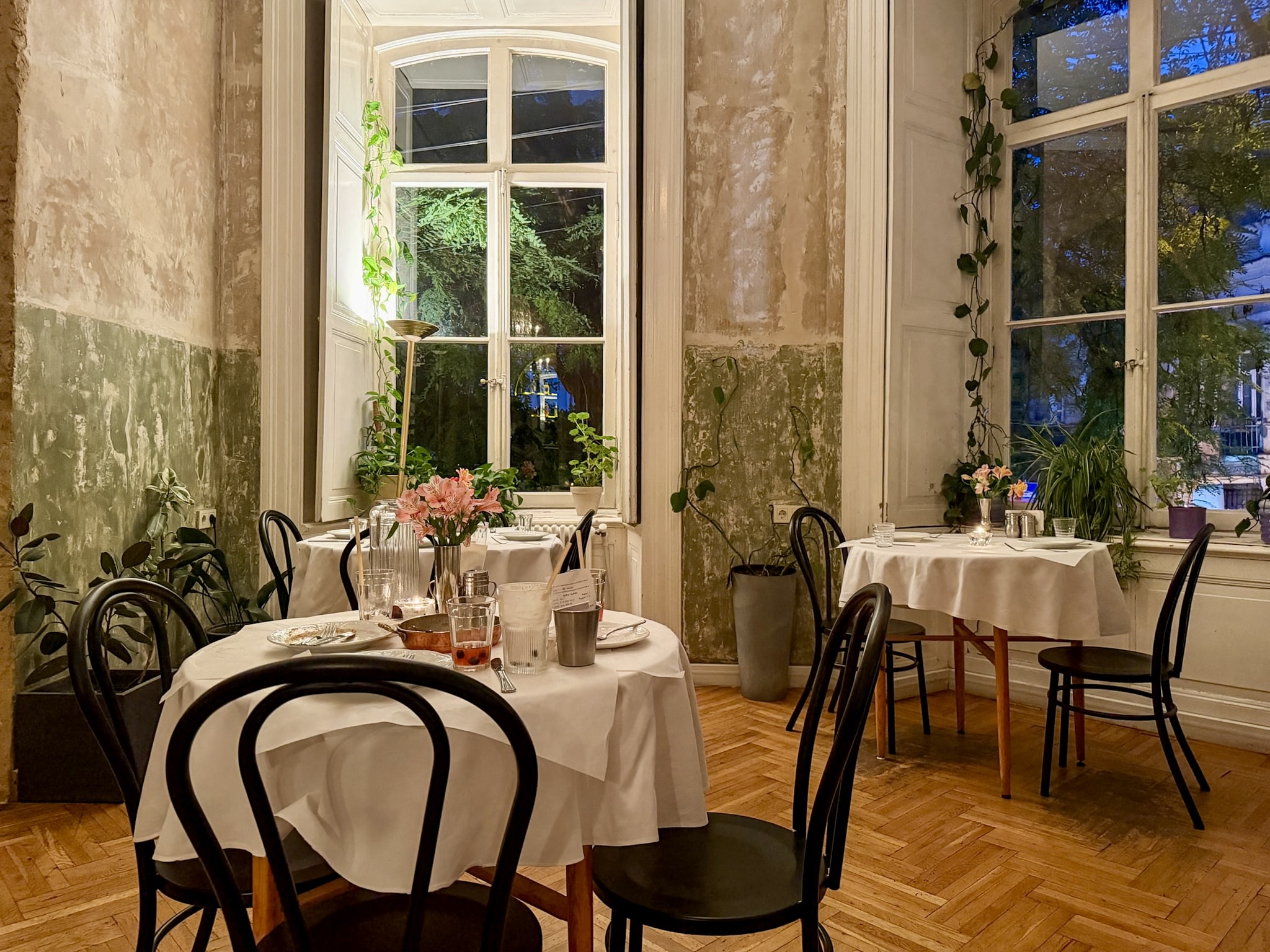
Best things to do in Tbilisi, from sulfur baths and Soviet landmarks to museums, churches and day trips, all based on time spent in the city.
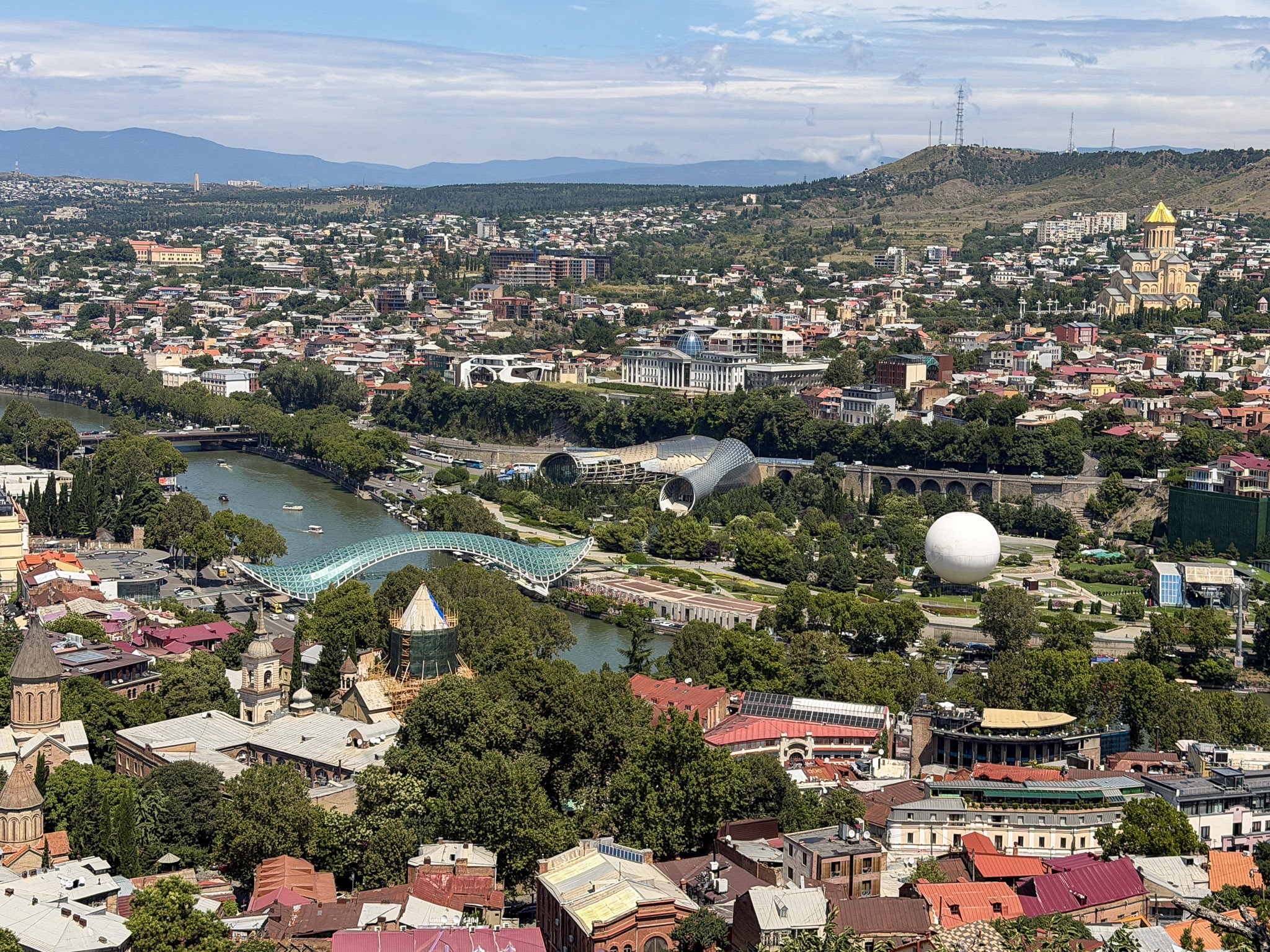
My impression of Tbilisi in those first hours of exploring it, which is more or less what people commonly say about the place anyway, was that it’s definitely rough around the edges, unpolished, a city with incredible charm sitting in a state of slight decay.
While all that may be true, it only took me just a few more hours here to realize how one-of-a-kind this city is, how unique its culture, history, language and food are, and how much there actually is to see and do.
I wrote this guide to the best things to do in Tbilisi, based on my recent trip there, also with the goal to get people to stop underestimating this city, and actually give it the time it deserves. Places of worship, monuments, museums, neighborhoods, and nightlife: here’s everything in the Georgian capital genuinely worth experiencing.
Best Things To See & Do in Tbilisi
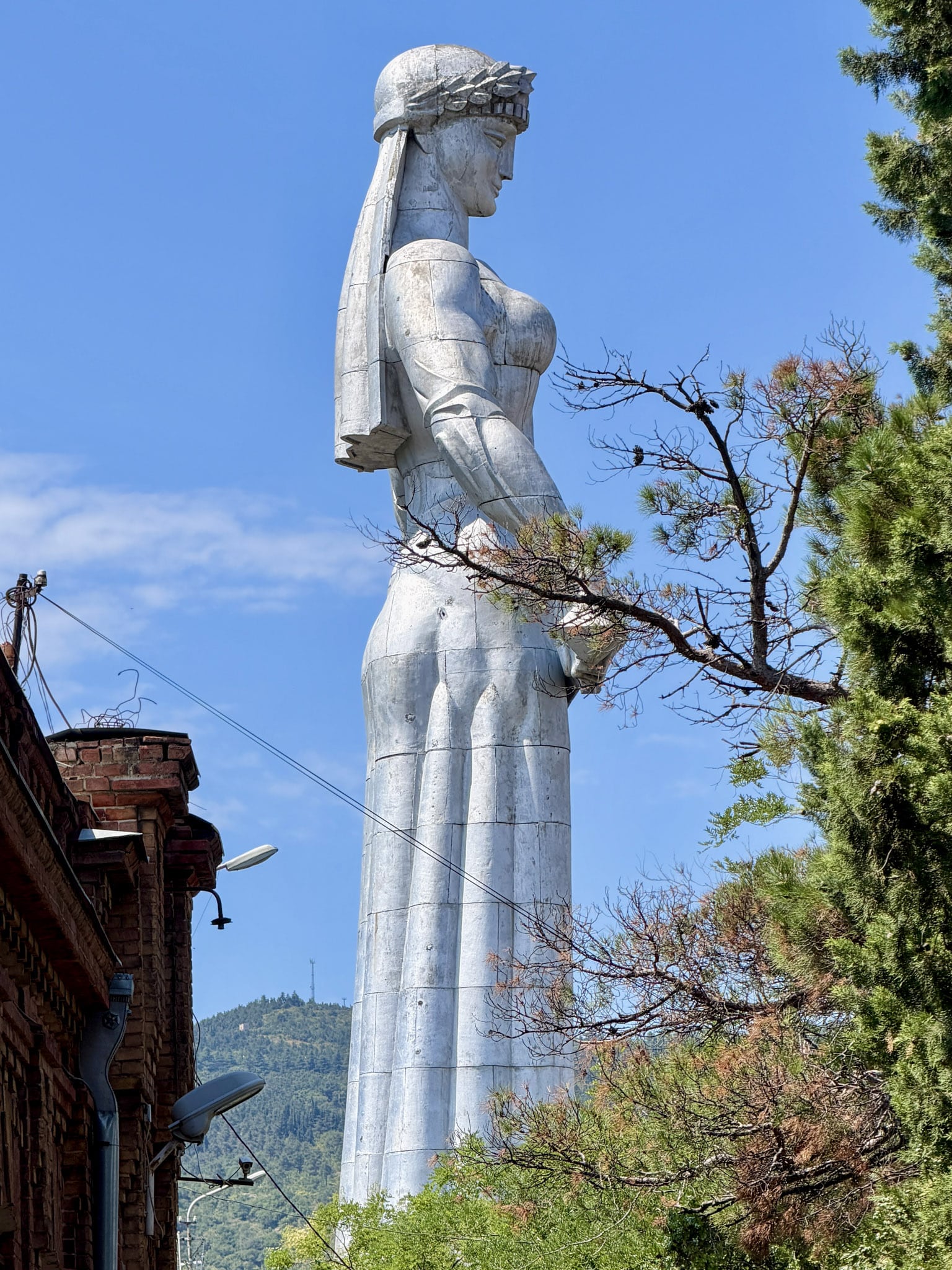
1. Mother of Georgia
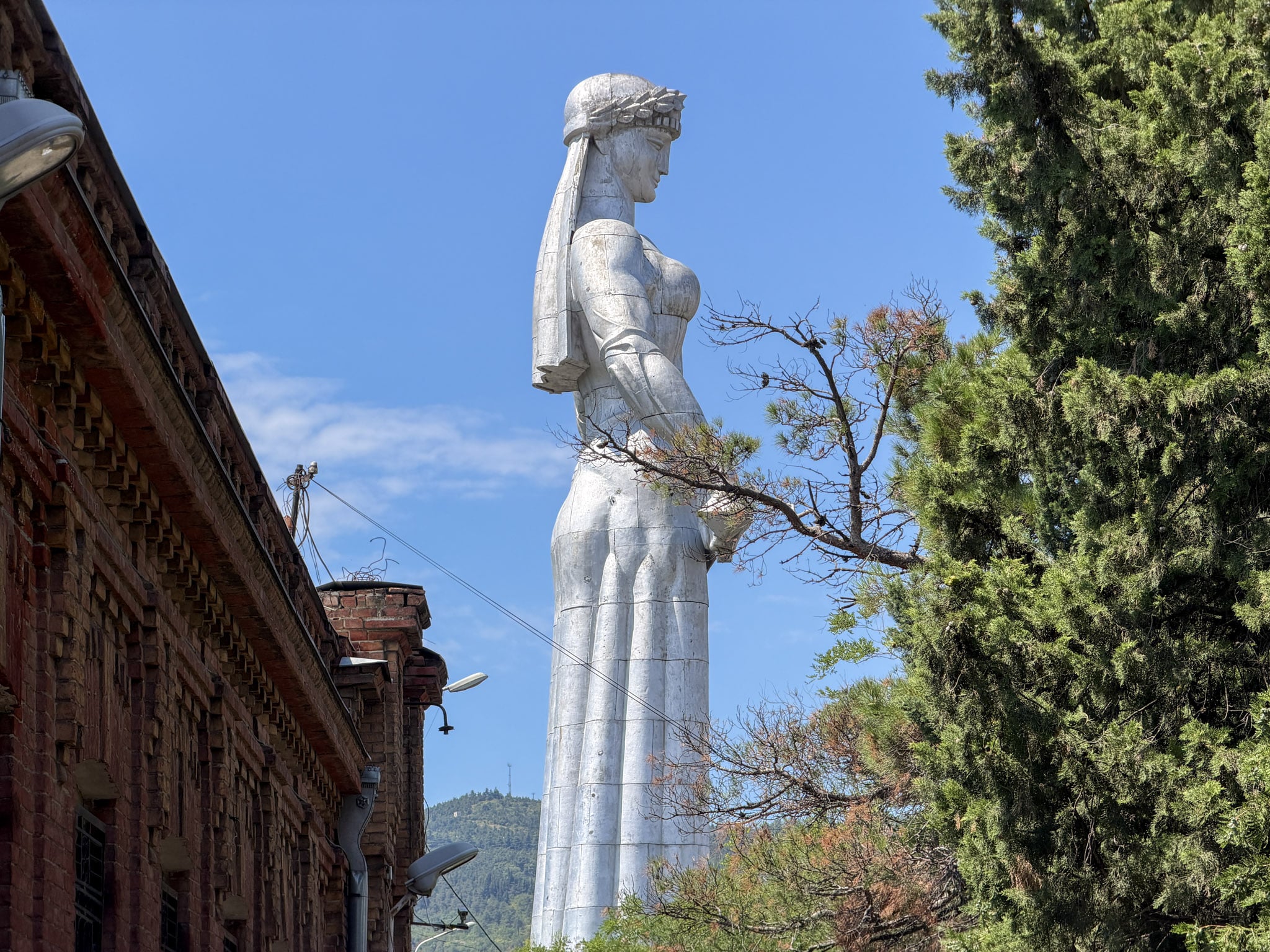
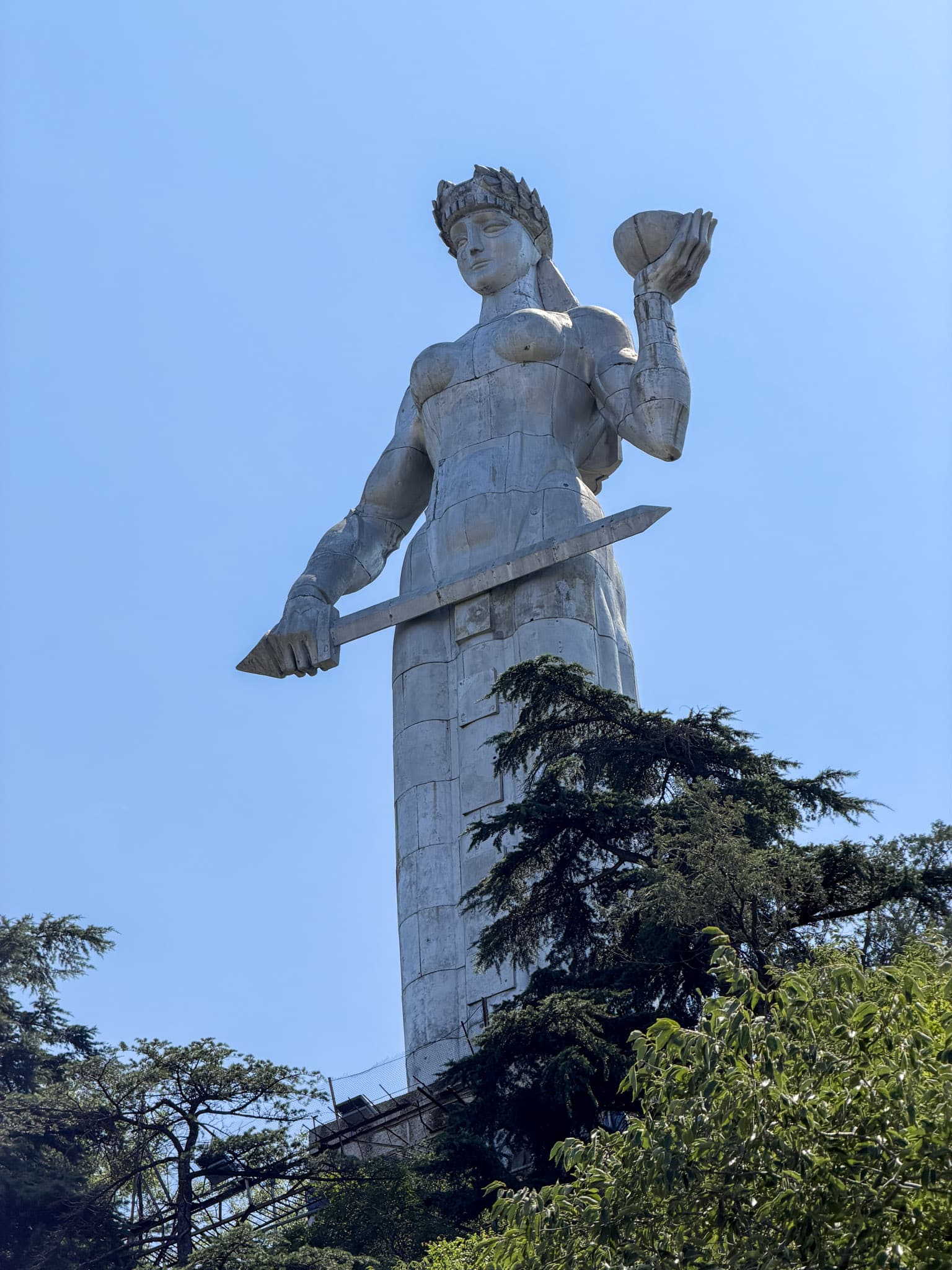
Twenty meters of aluminum standing on top of Sololaki Hill, one hand holding out a bowl of wine, the other a sword. Wine for whoever comes as a friend, sword for whoever doesn’t. She’s been up there since 1958, when Tbilisi turned 1500, and locals call her Kartlis Deda more often than Mother of Georgia.
There are two ways up. On foot, the Betlemi Street Stairs climb from near Meidan Bazaar through the old Betlemi neighborhood, past the Lower Betlemi Church and then the Upper one, before reaching the viewpoint at the statue’s feet. It’s the route I came down after visiting the statue, about 120 steps in total, steep in a few sections. Or skip the climb and take the cable car up from Rike Park instead.
Good to know:
- The statue and viewpoint area are free to visit, no ticket needed
- Cable car is 2.5 GEL one-way, paid with a MetroMoney card (costs 2 GEL to buy, reloadable, also works on Tbilisi’s regular public transport). A round trip is charged as two separate one-way fares
- Cable car runs roughly 10:00 to 22:00, weather permitting, sometimes suspended in high wind
- Narikala Fortress, which you'll see near the statue, is closed for restoration with no confirmed reopening date
- The Betlemi stairs are a real climb in parts, wear proper shoes for it
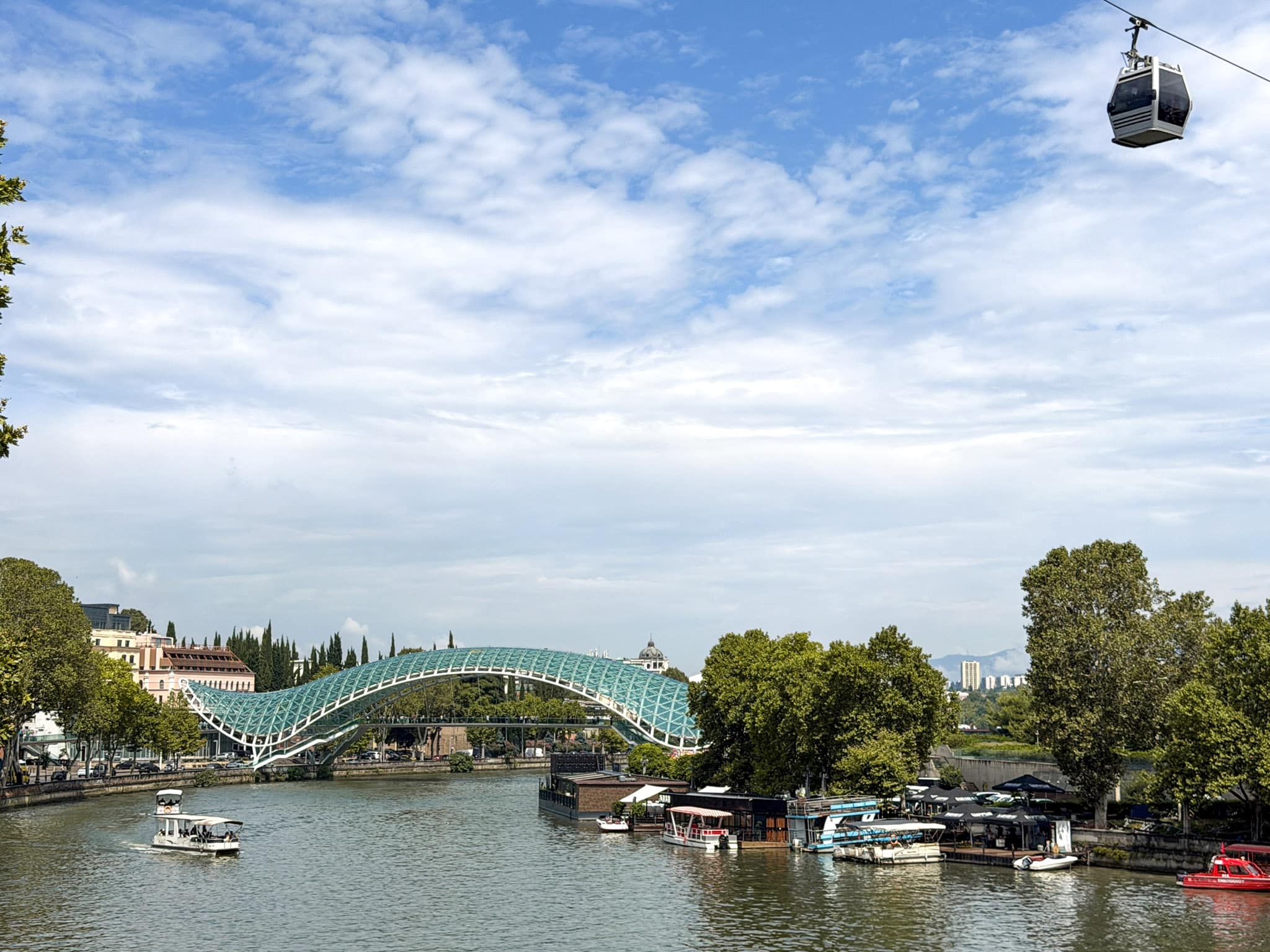
2. Bridge of Peace
A 150-meter arc of steel and glass over the Mtkvari river, connecting Rike Park to the edge of Old Town. It opened in 2010, designed by an Italian architect, actually built in Italy and shipped to Tbilisi on trucks to be assembled on site. I crossed it on my way up to Mother of Georgia. It’s a simple, pleasant walk, river on one side, the curve of Old Town rooftops on the other.
- It's free to cross obviously, no ticket needed
- The glass canopy lights up with LEDs about 90 minutes before sunset, so an evening crossing looks completely different from a daytime one
- The Rike Park cable car station for Mother of Georgia sits right at the Rike Park end of the bridge, useful if you’re combining the two
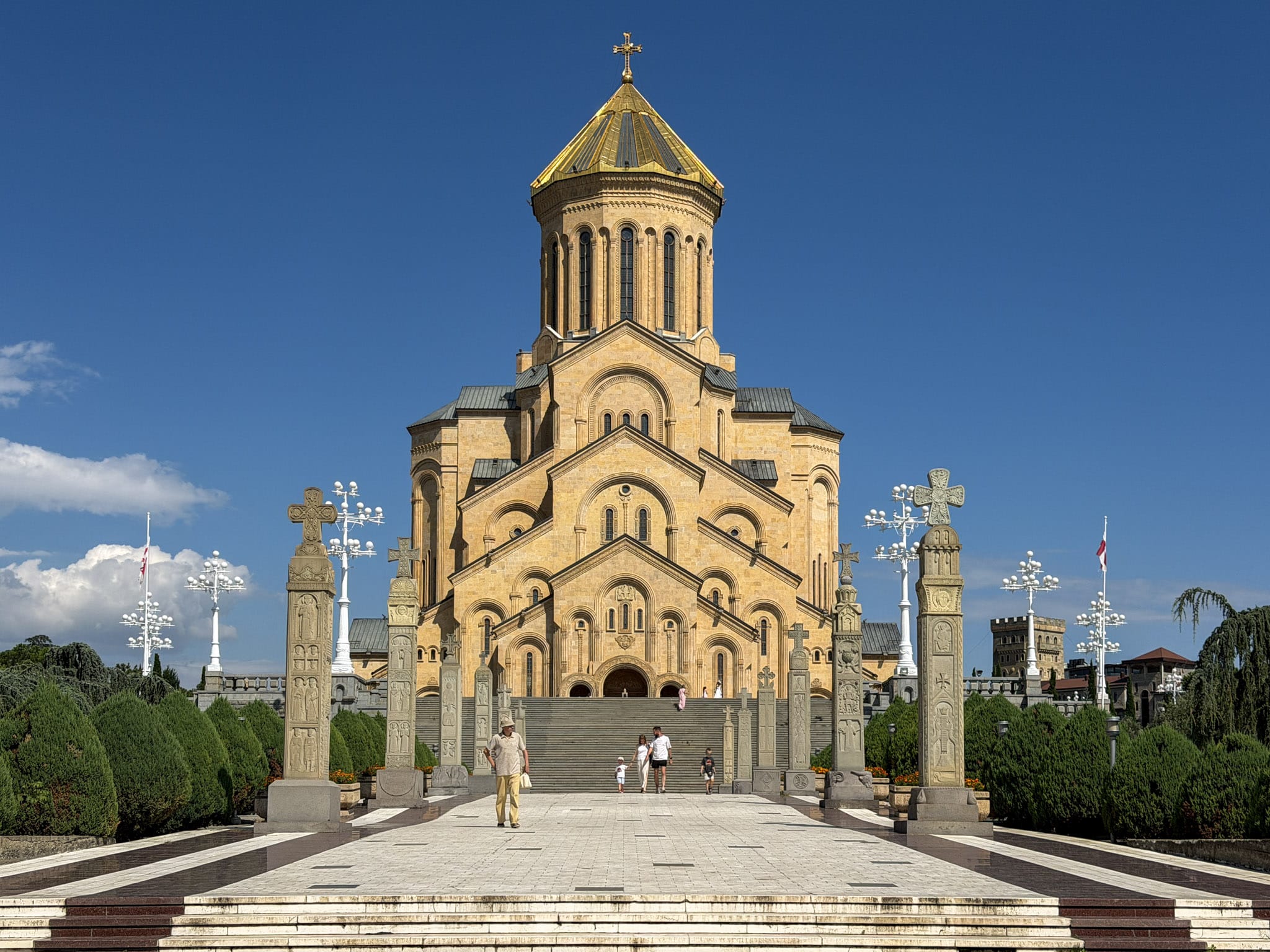
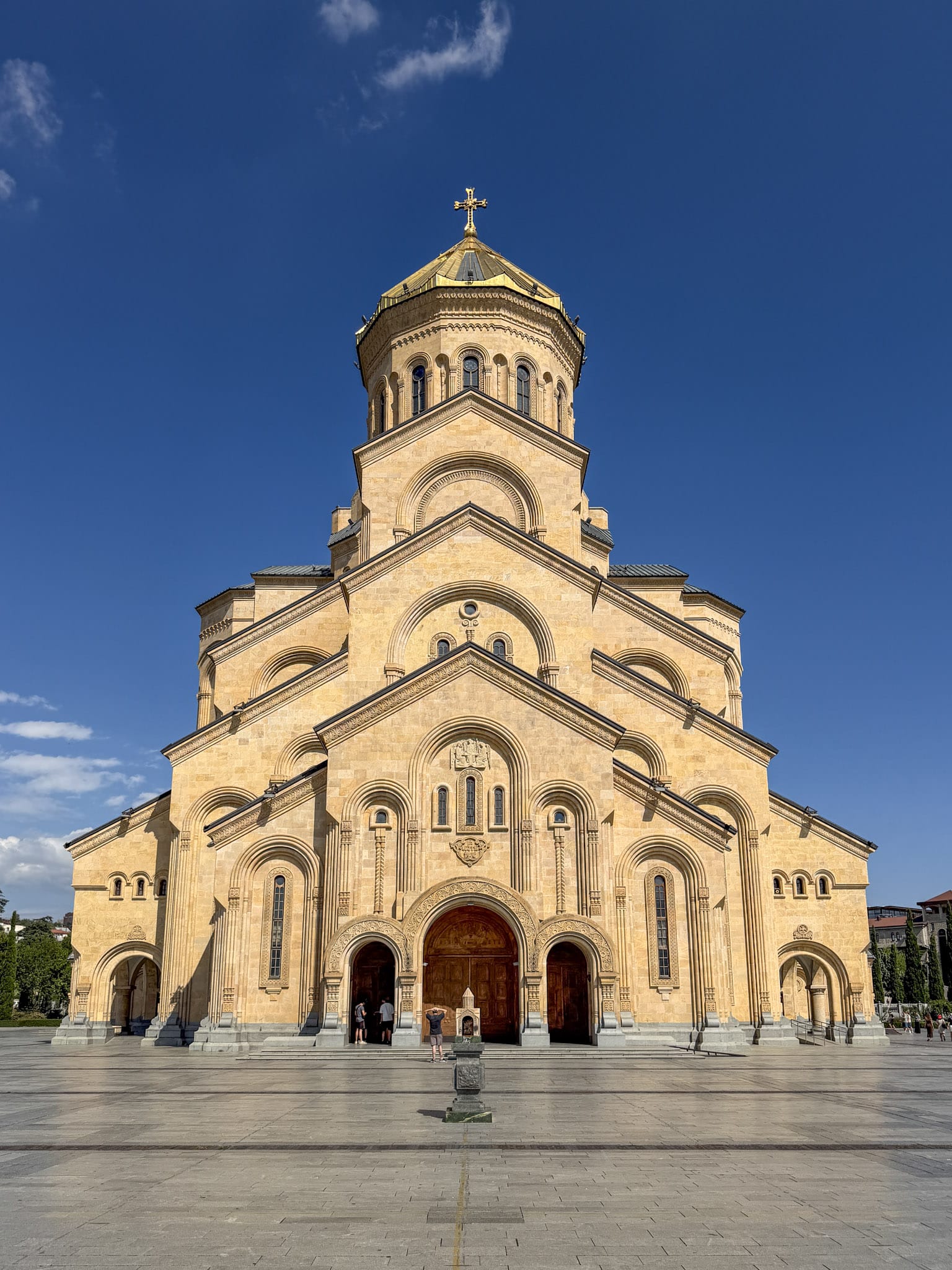
3. Holy Trinity Cathedral (Sameba)
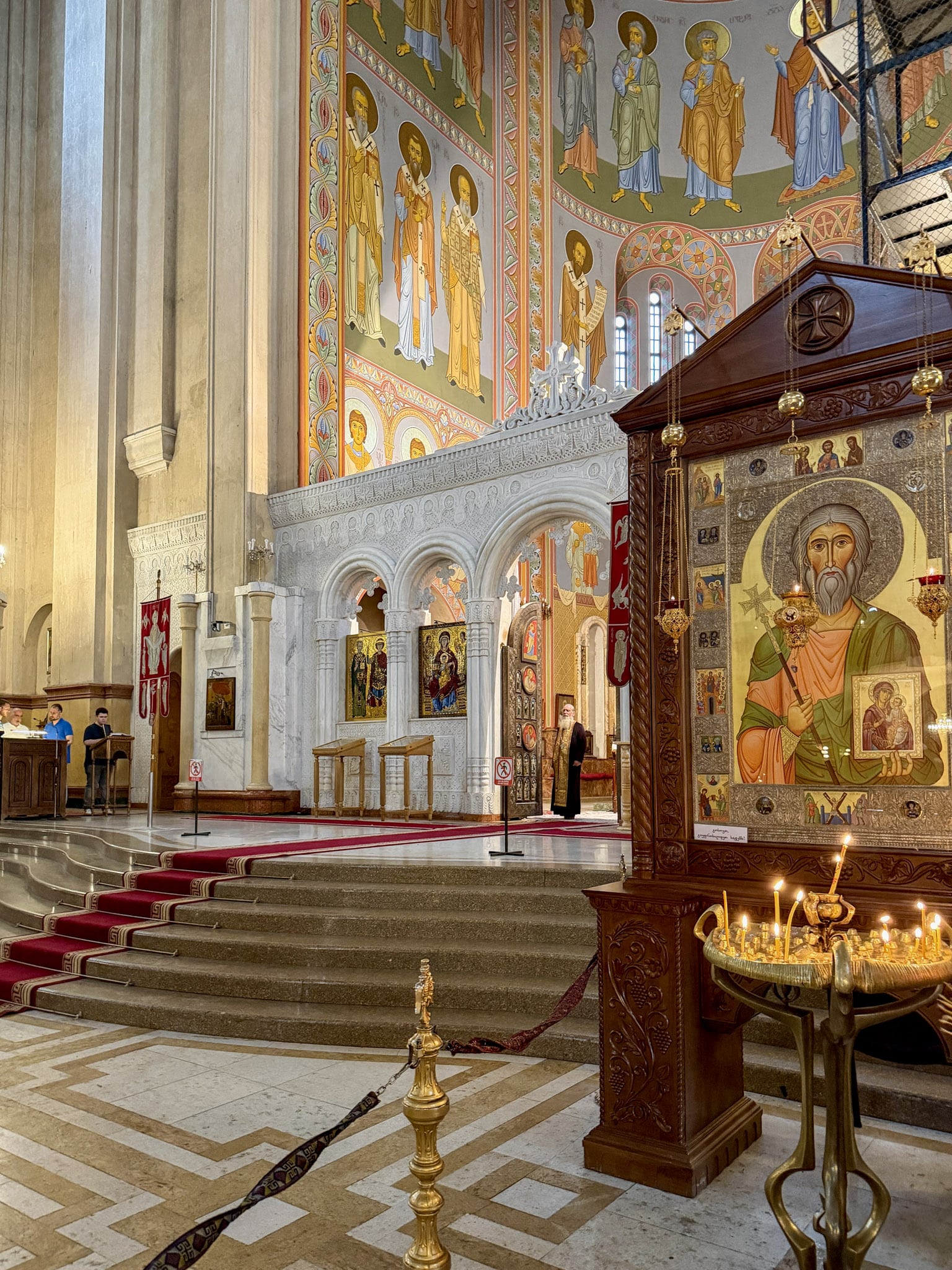
The biggest church in Georgia, a golden dome rising about 86 meters over the Avlabari district, finished in 2004 after almost a decade of construction. It’s stunning both outside and in, marble floors, high painted ceilings, though part of the interior still had scaffolding up when I visited.
The cathedral holds nine chapels in total, five of them two floors underground beneath the main church, a quieter, dimmer space that feels completely different from the main hall above. Inside, look for the Hope of Georgia icon near the altar, made of gold and set with precious stones, and for the freestanding bell tower on the grounds, home to nine bells, the largest of them weighing eight tons.
- It's free to enter
- Dress code enforced: shoulders and knees covered, women should bring something to cover their head, scarves and wraps are available at the entrance
- Open roughly 07:00 to 22:00 daily, though access can change during religious services
- The uphill walk from Old Town is tough, budget for a Bolt if you’d rather skip it
4. Meidan Bazaar
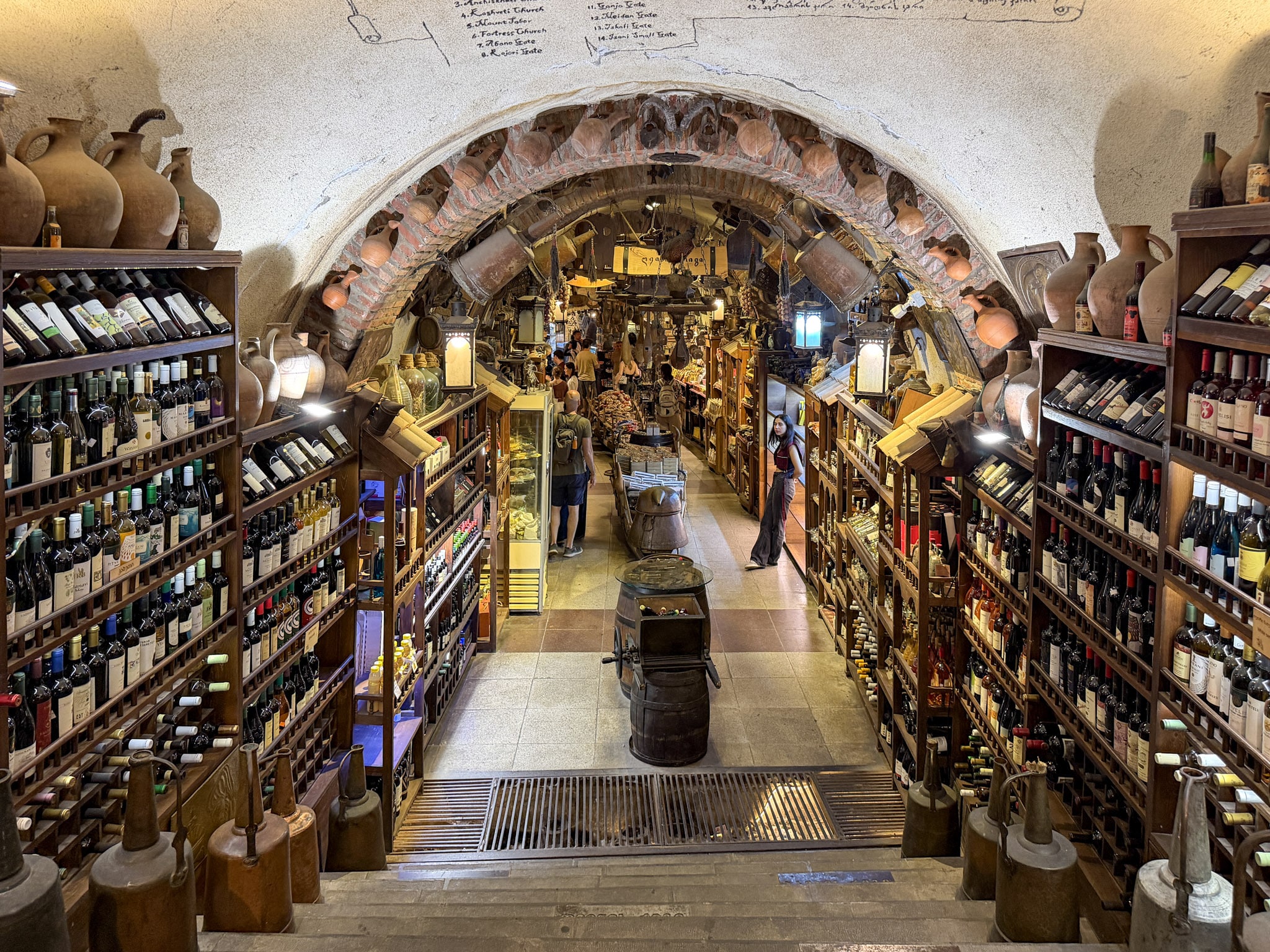
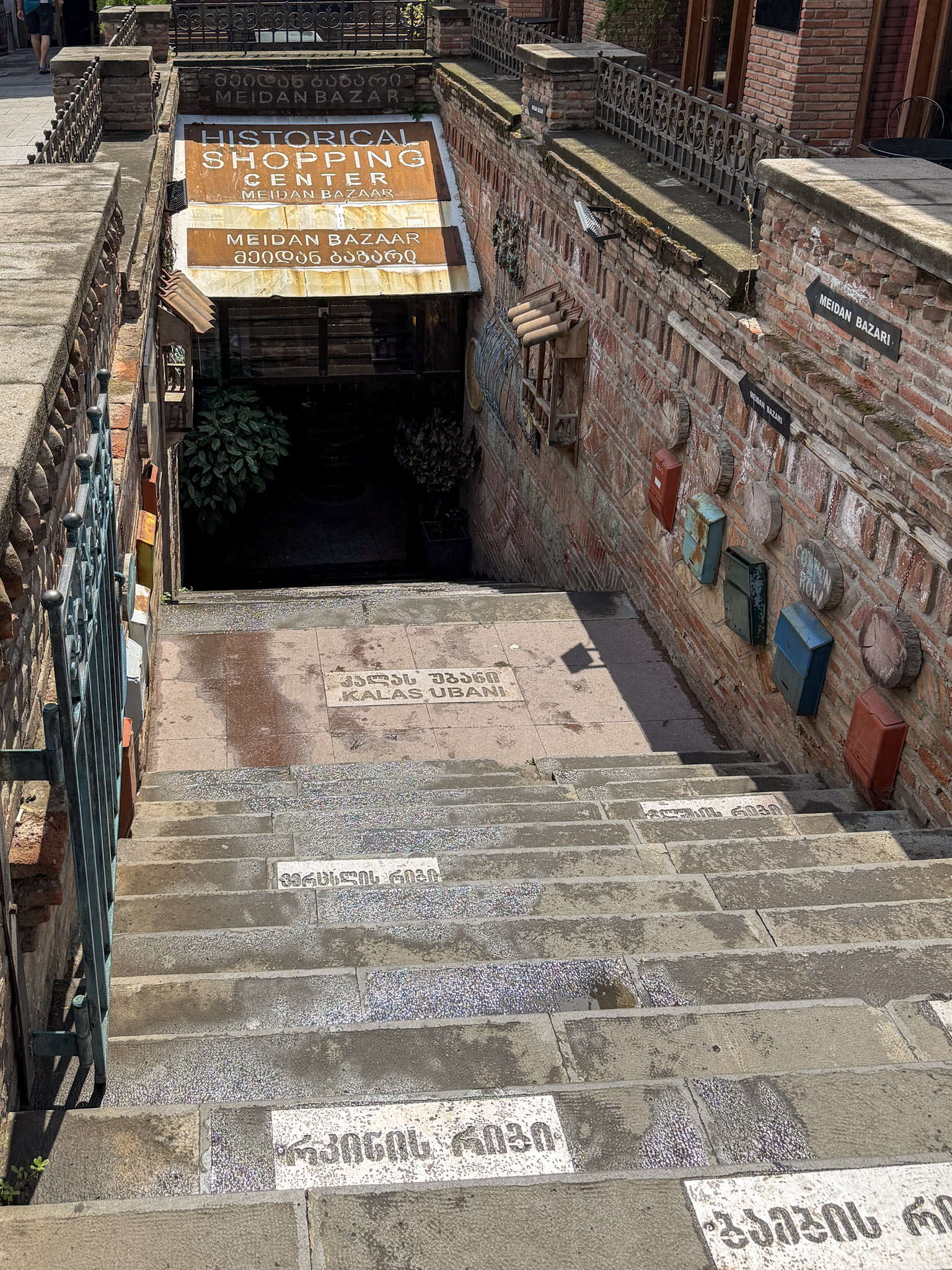
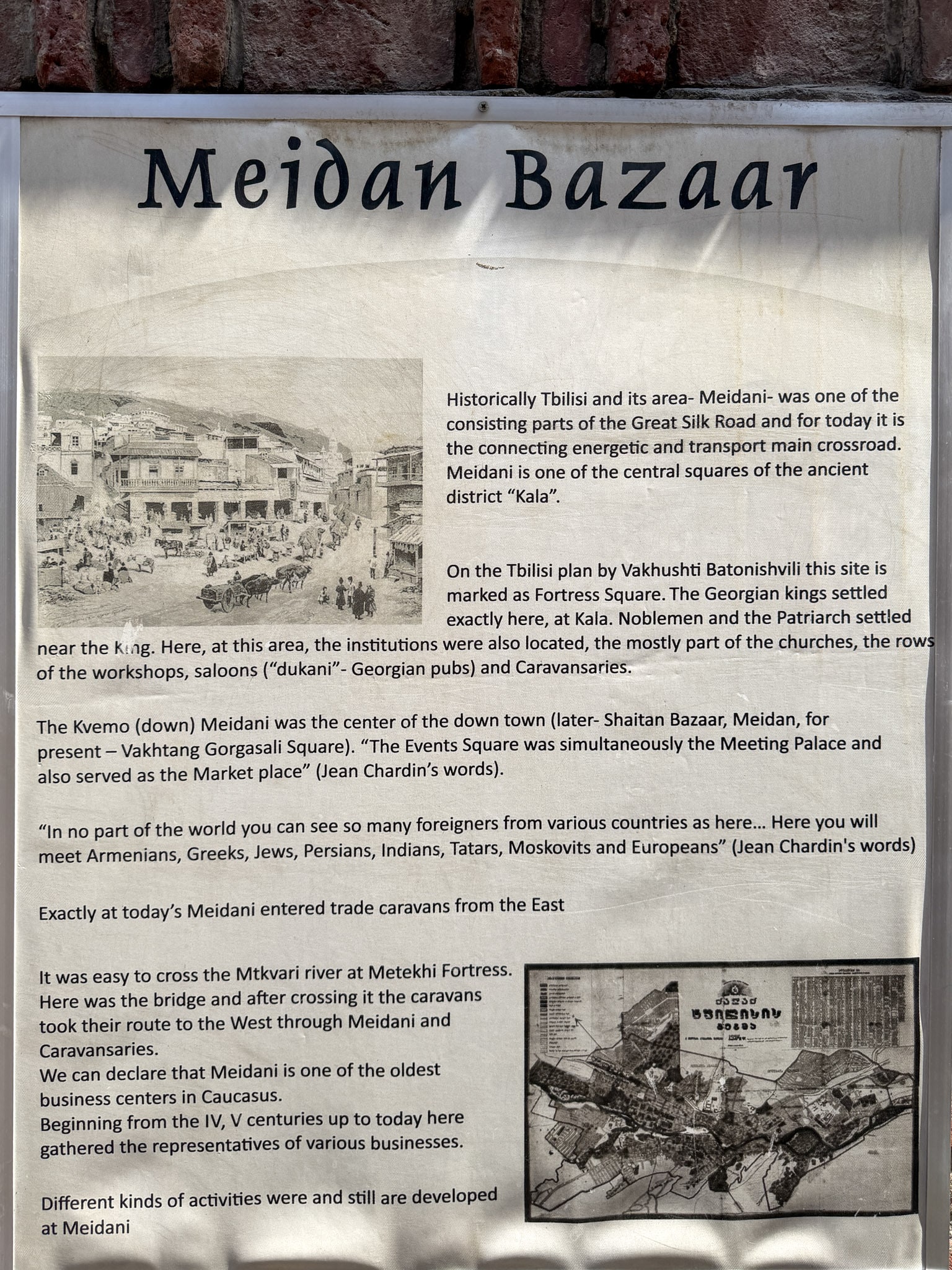
An underground market built into the space beneath Meidan Square, right near Metekhi Bridge. People have been trading on this spot since at least the 4th or 5th century, sitting on a Silk Road route that pulled merchants in from across the region, a French traveler passing through in 1673 even wrote about how many different nationalities he found doing business here.
None of the original stalls survive today. What’s there now is a modern underground bazaar built to evoke that same history, with stone arches, tunnels, and dim lighting.
Look up before you start browsing: right at the entrance there’s a hand-drawn ceiling map showing the defensive walls of medieval Tbilisi, one of the nicer small details in the whole place. There’s also a small underground museum tucked in among the shops, with archaeological finds from Old Tbilisi.
- Free to browse
- Open daily, roughly 10:00 to 22:00
- Prices aren’t always marked and bargaining is common
- Best stops for souvenirs: Georgian wine, churchkhela, honey and jam, ceramics, handmade textiles
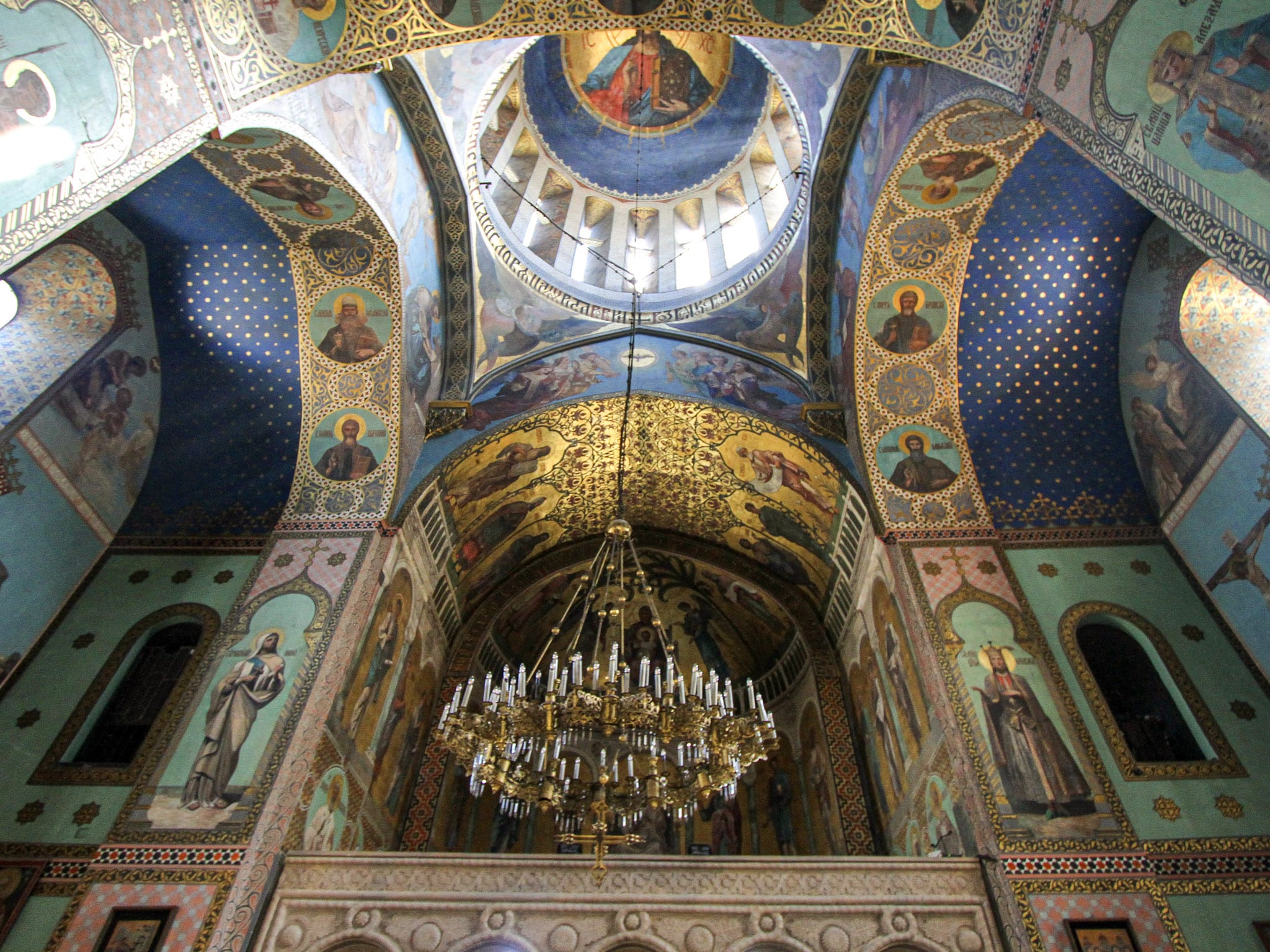
5. Sioni Cathedral
A two-minute walk from Meidan Bazaar, tucked into Sioni Street in the oldest part of town. The current building mostly dates from the 12th century, but there’s been a church on this spot since the 6th or 7th century, rebuilt more than once after the city was sacked. Inside, look for the cross displayed behind a bronze grille near the iconostasis, a replica of the cross of Saint Nino, the woman credited with bringing Christianity to Georgia in the 4th century. The real cross, said to be made of grapevine branches bound with her own hair, is kept elsewhere in the cathedral out of sight. Sioni was also the seat of Georgia’s Patriarch for centuries, until that role moved to Sameba Cathedral in 2004.
As for the other places of worship, it's free to enter, and dress code applies here too: shoulders and knees covered.
6. Abanotubani’s Sulfur Baths
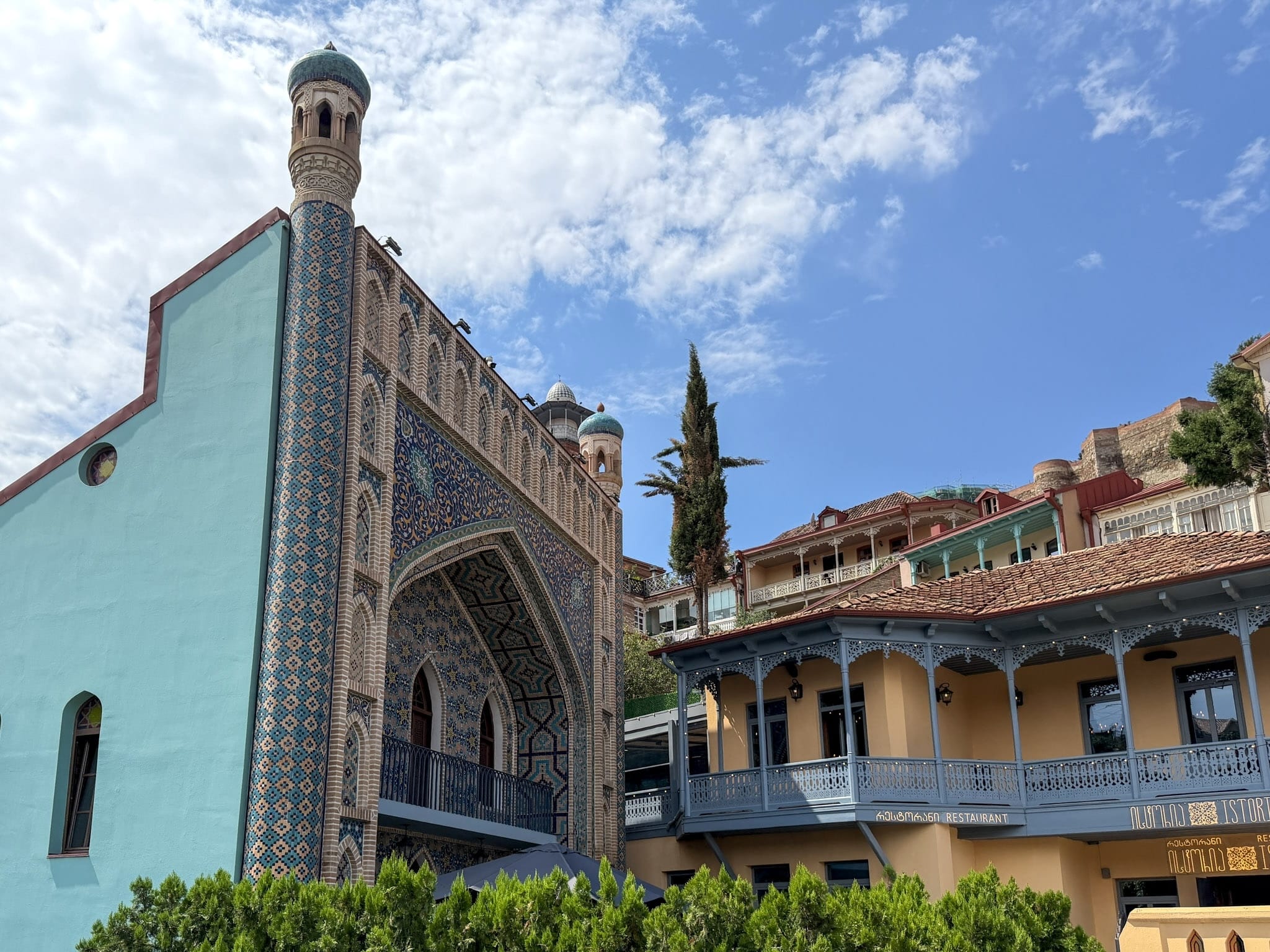
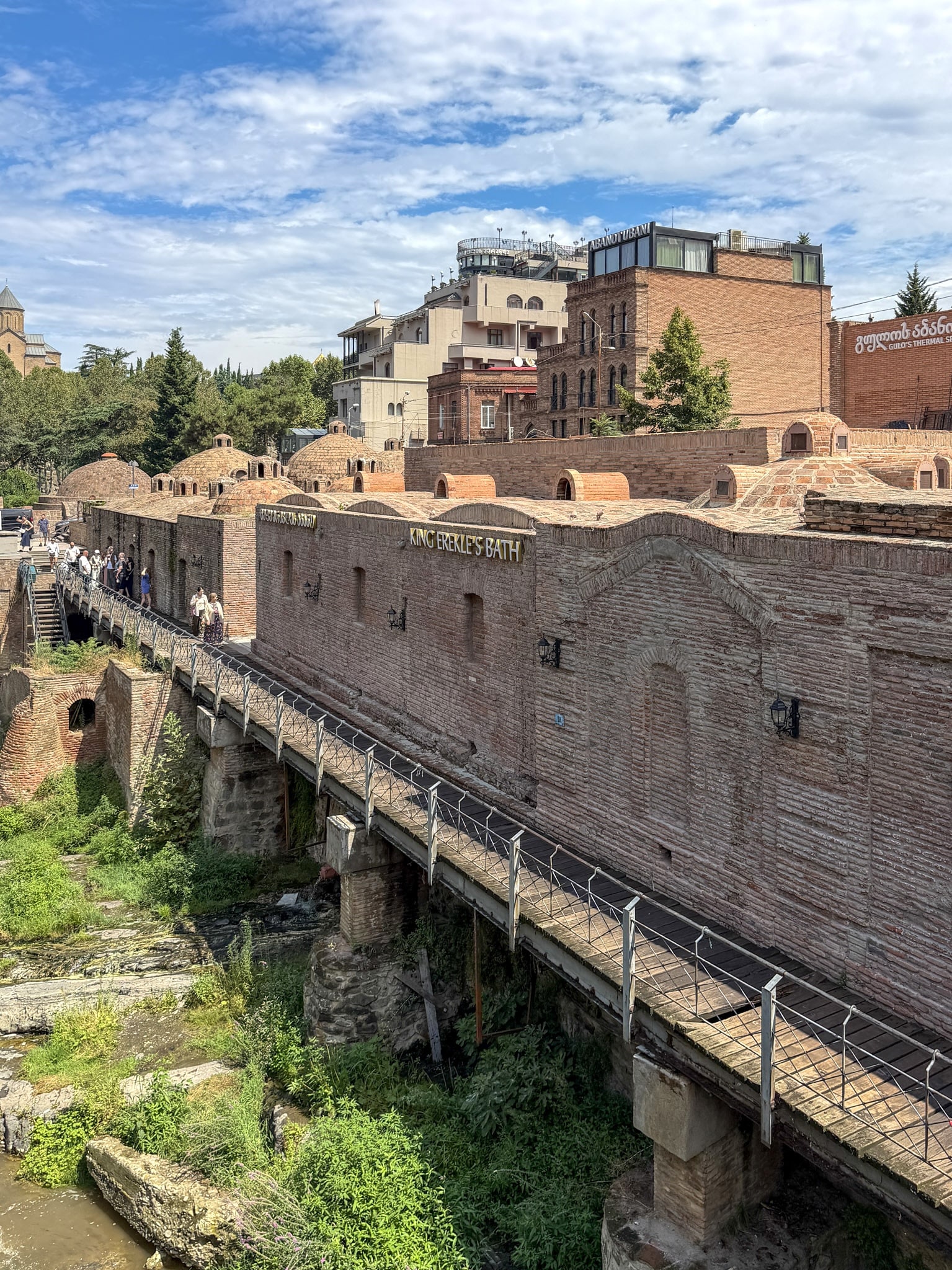
Abanotubani means “bathhouse district,” a cluster of brick domes sitting at the foot of Narikala, built over natural sulfur springs that come out of the ground somewhere around 37 to 42°C.
Legend has it this is where Tbilisi itself began: King Vakhtang Gorgasali was out hunting in the 5th century when his falcon fell into one of these hot springs, and the discovery led him to found the city right here.
The most photographed of the bathhouses is Chreli Abano, with a blue and cream tiled facade that looks more Persian mosque than Georgian bathhouse. If you don’t necessarily want to experience a sulphur bath (I didn’t try it either), even the exterior is worth the stop.
If you want to try them:
- Public communal baths run roughly 10 to 20 GEL per person, cheapest way to try it
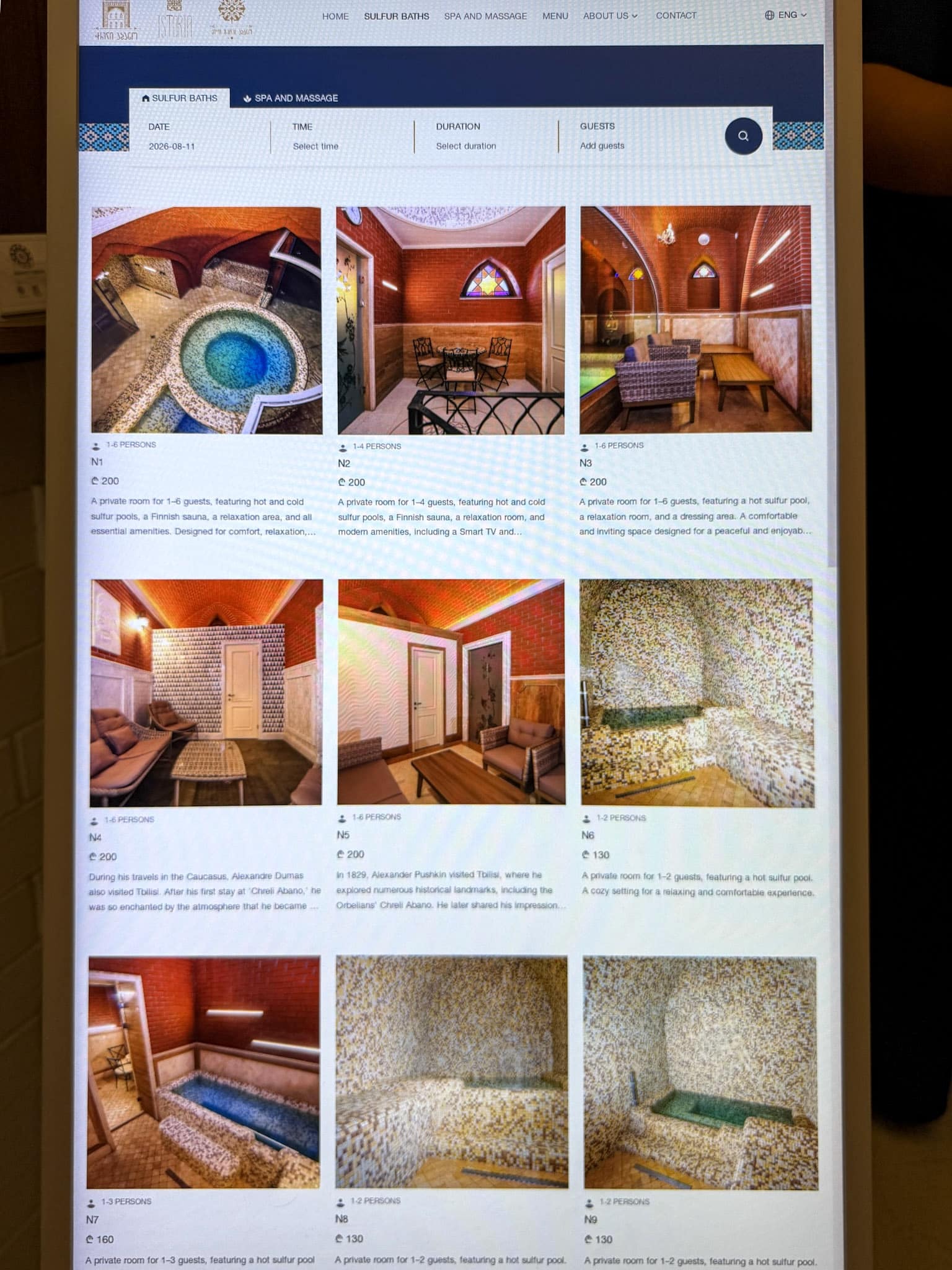
- Private rooms are priced per room, not per person, typically 60 to 200+ GEL per hour depending on the bathhouse and room size, so it’s worth splitting between two or more people
- Chreli Abano specifically takes bookings through its own website, worth reserving a few days ahead for weekends
- Early morning, before the tour groups arrive, is the quietest time to go
- Walking through Abanotubani and looking at the domes and facades from outside costs nothing
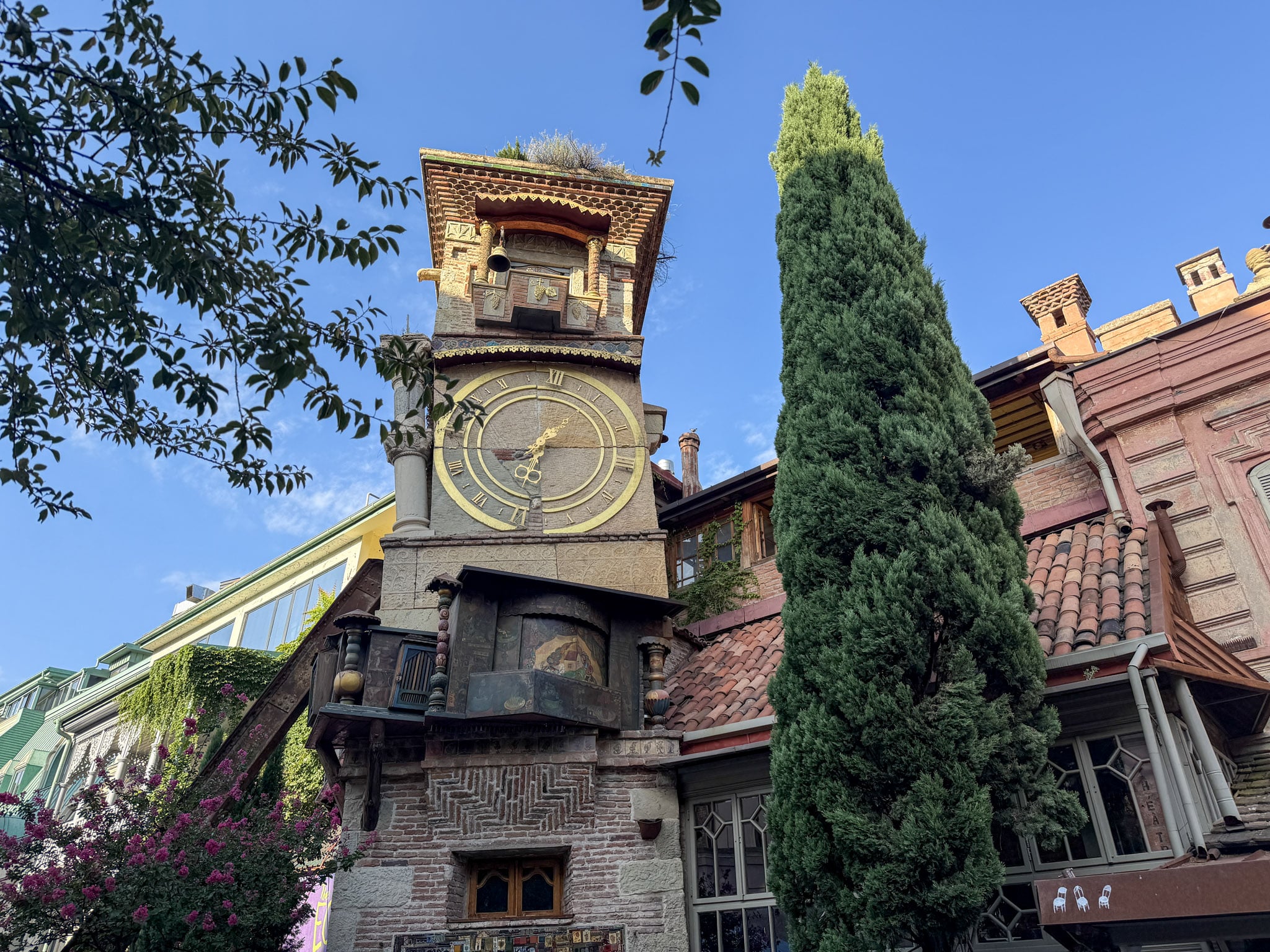
7. The Clock Tower
A deliberately crooked tower built in 2010 by Rezo Gabriadze, the Georgian puppeteer and artist, right next to his own marionette theatre. He built it leaning on purpose, using reclaimed bricks and tiles from old, abandoned buildings around the city, more of an art piece than a functioning clock.
Every hour a small golden angel steps out to strike the bell. Twice a day, at 12pm and again at 7pm, a short puppet show called “The Circle of Life” plays out in a lower window, two puppets moving through meeting, marriage, and old age in just a few minutes. It’s brief, but it draws a crowd every single time.
8. Anchiskati Basilica
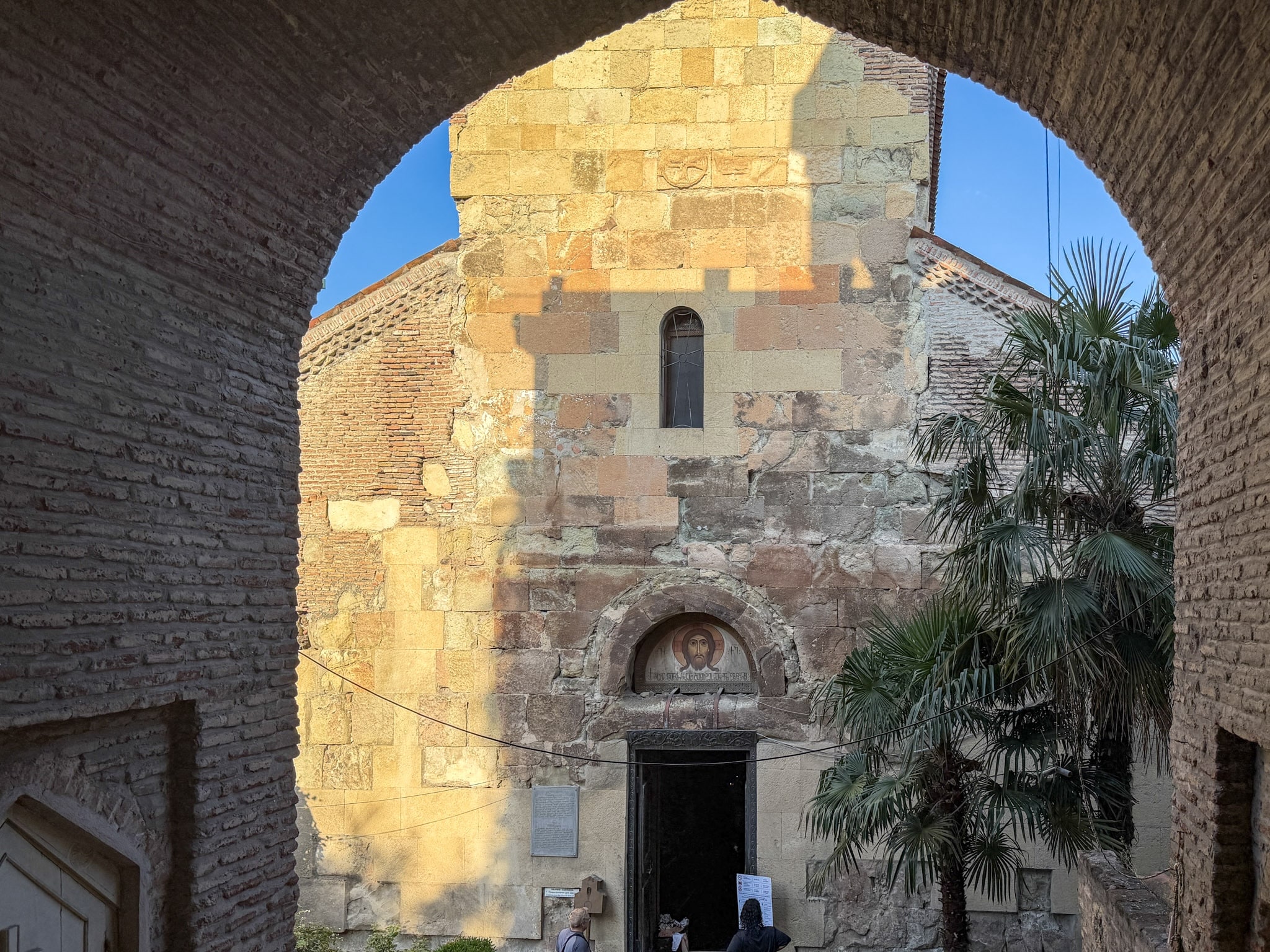
The oldest surviving church in Tbilisi, built in the early 500s by King Dachi, son of Vakhtang Gorgasali, the king who founded the city. It was originally dedicated to the Virgin Mary.
The current name came later, in the 1600s, when a treasured icon was moved here from a monastery near the Ottoman border to keep it safe from invasion; that original icon now sits in the Georgian National Museum, with a copy left behind in the church. Most of the interior frescoes date to a 17th century restoration, not the original construction.
During centuries of Arab rule, this was reportedly the only church in the city still allowed to ring its bells, which earned it the nickname Church of the Bells.
Good to know:
- Free to enter
- Stoles are available at the entrance if you need to cover up
9. Visit One of Tbilisi’s Museums
For a city this size, Tbilisi has an unusually strong lineup of museums, and it would be a shame to skip them entirely.
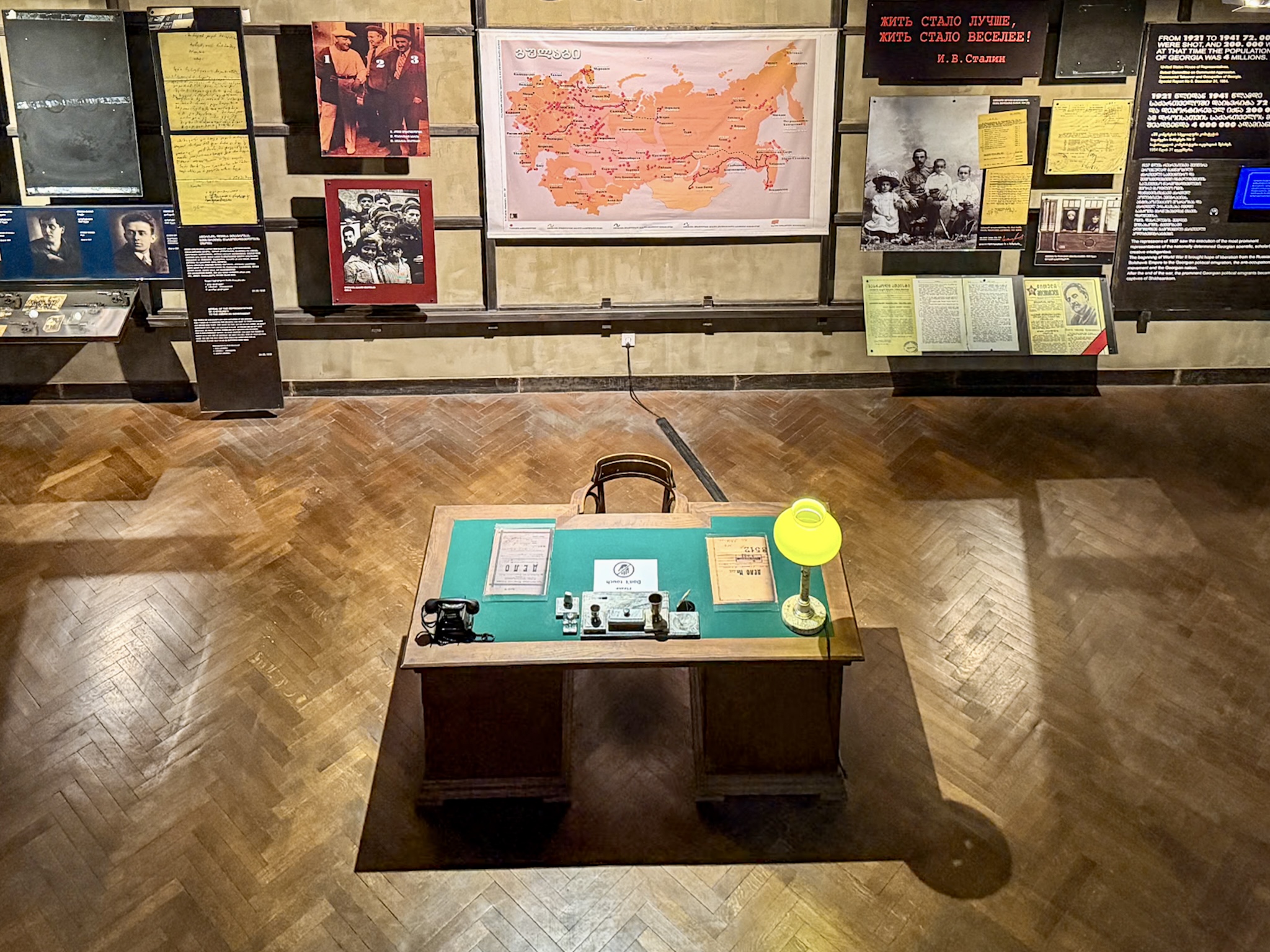
If you only add one to your list, make it the Georgian National Museum, prehistory all the way through the Soviet occupation, with the Soviet-era rooms being the hardest hitting part of the whole visit. It gives you the clearest overview of the country in a single stop. It's 40 GEL per person, extra for guided tour or audio guide
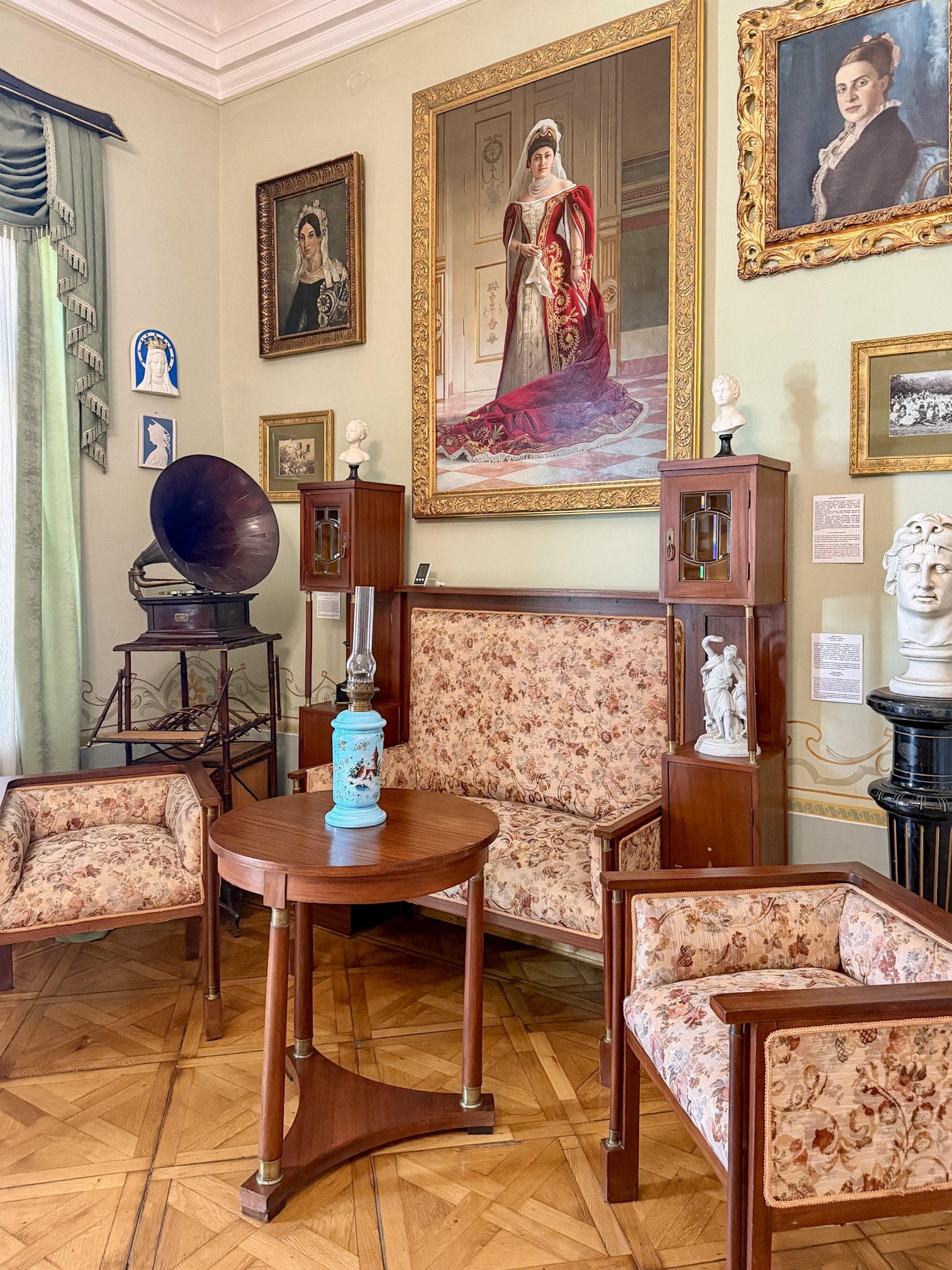
If you love museums enough to add a second, pick based on what you’re after. Go for the Art Palace if you want something visually stunning, a palace originally built as a gift out of love, with everything from royal costumes to important paintings, plus a secret room in the attic. It's 10 GEL entry per person.
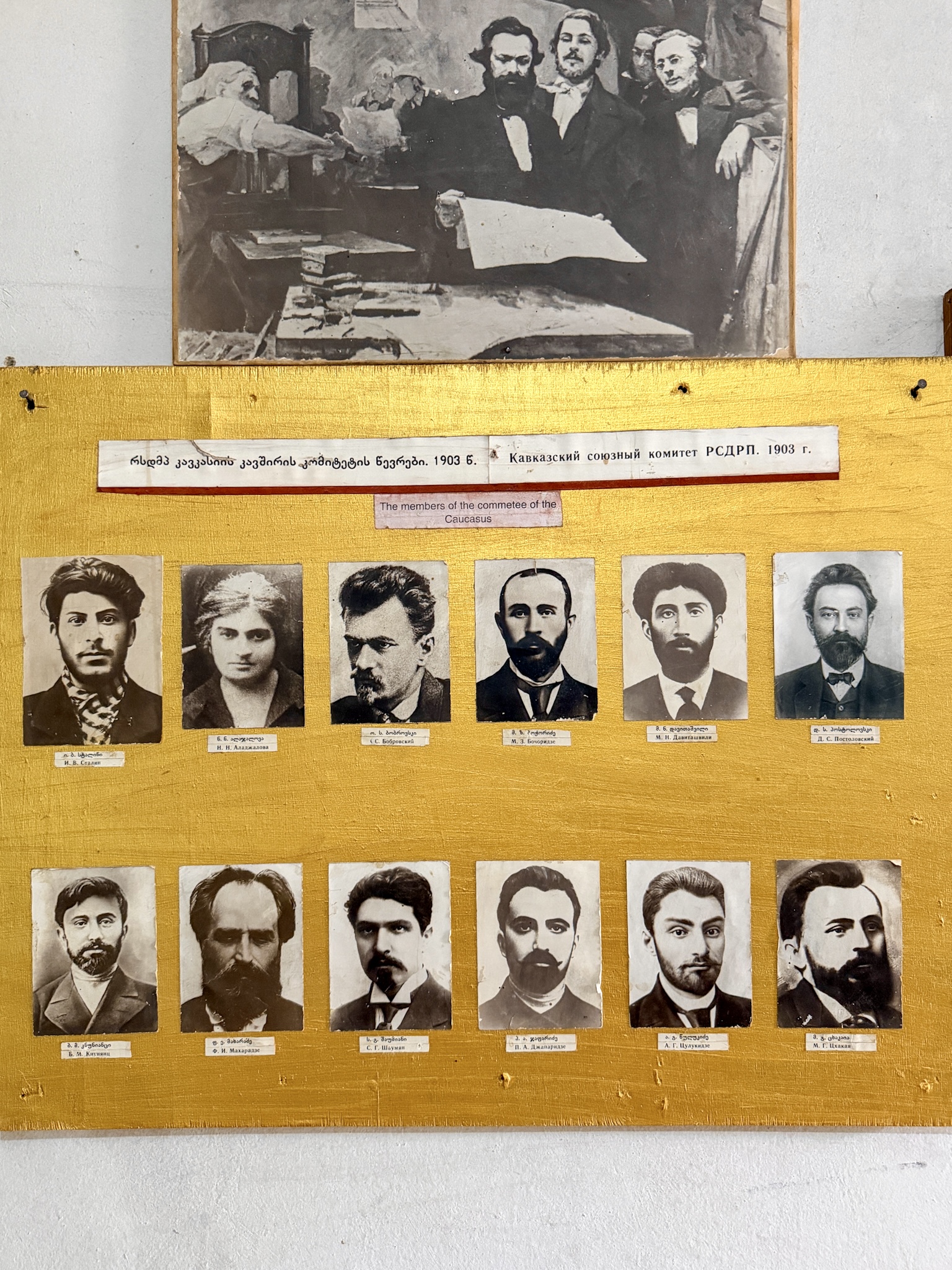
Or, go for Stalin’s Underground Printing House instead if you’re drawn to the odder, less conventional side of history. You’ll find inside a secret press hidden below an ordinary-looking building, used by Stalin to print banned material back when Georgia was part of the Russian Empire.
For a full ranking of all five of Tbilisi’s best museums, including the Wine Museum and the Open Air Ethnography Museum, I covered those separately.
10. Mtatsminda Park
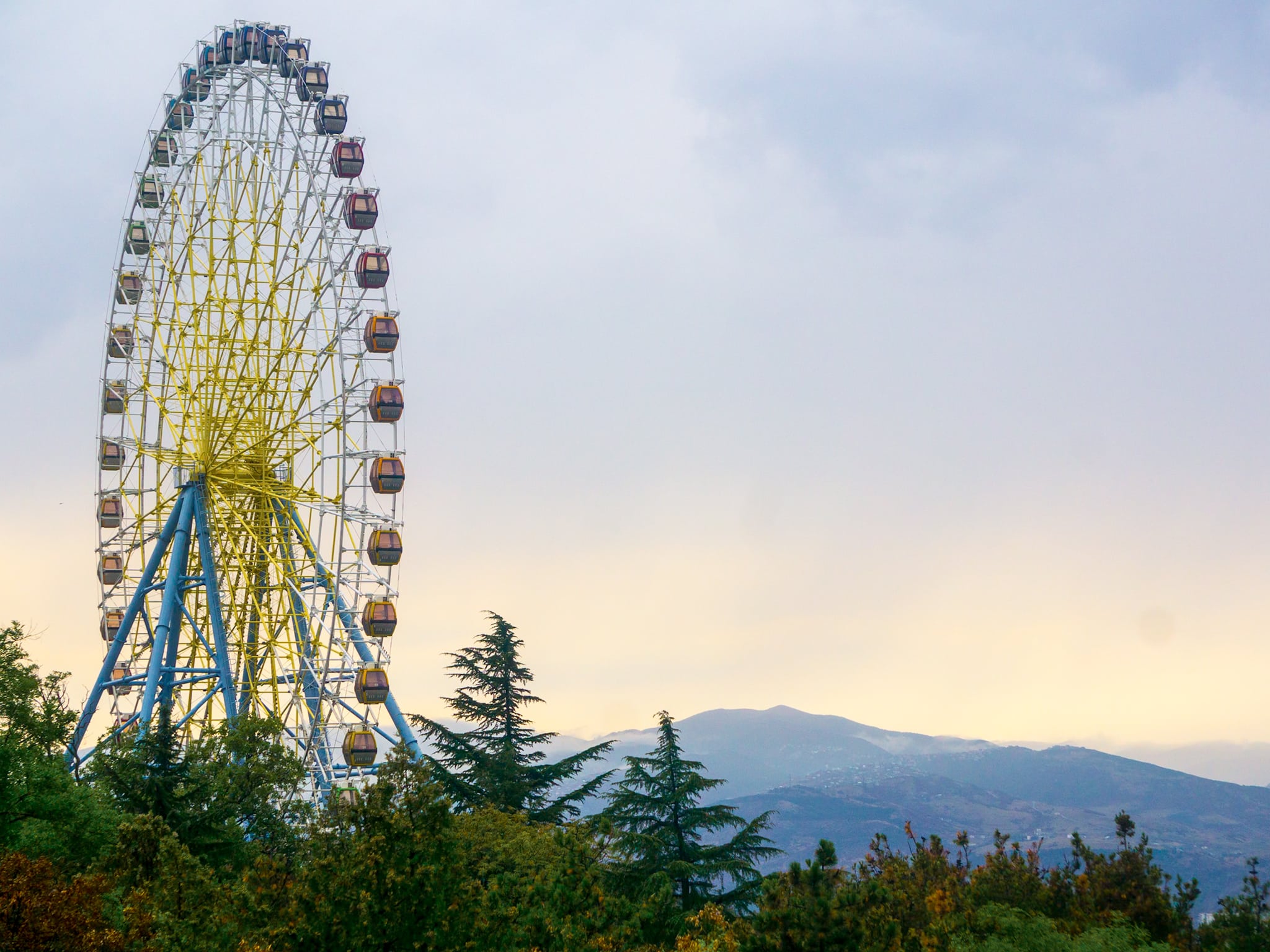
Mtatsminda Park sits at the top of the funicular line, and it's more a kids’ amusement park than anything else, with Ferris wheel, roller coasters, a whole zone of rides for younger visitors.
I went up mostly for the view, which is genuinely wide, the whole city laid out below with the mountains behind it. If you’re not traveling with kids, the ride up and the view at the top are probably the better reason to go than the park itself.
Some useful info:
- Park entrance is free, individual rides and attractions are paid separately
- Funicular: 12 GEL one-way, plus a one-time 2 GEL reusable card, departs from Chonkadze Street, and the ride takes 5 minutes
- The Tbilisi TV Tower at the top is a recognizable landmark but currently closed to visitors
11. Dry Bridge Flea Market
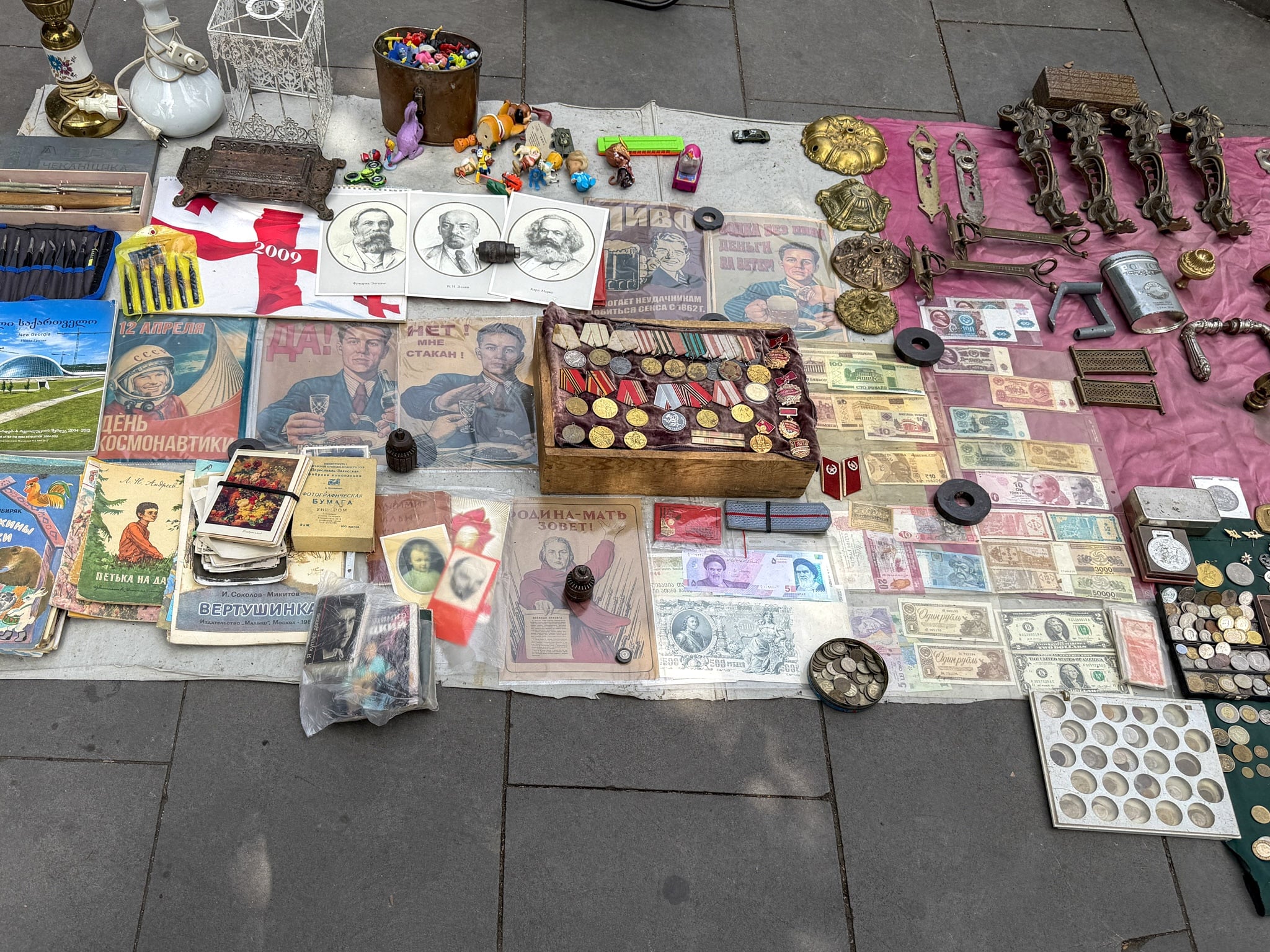
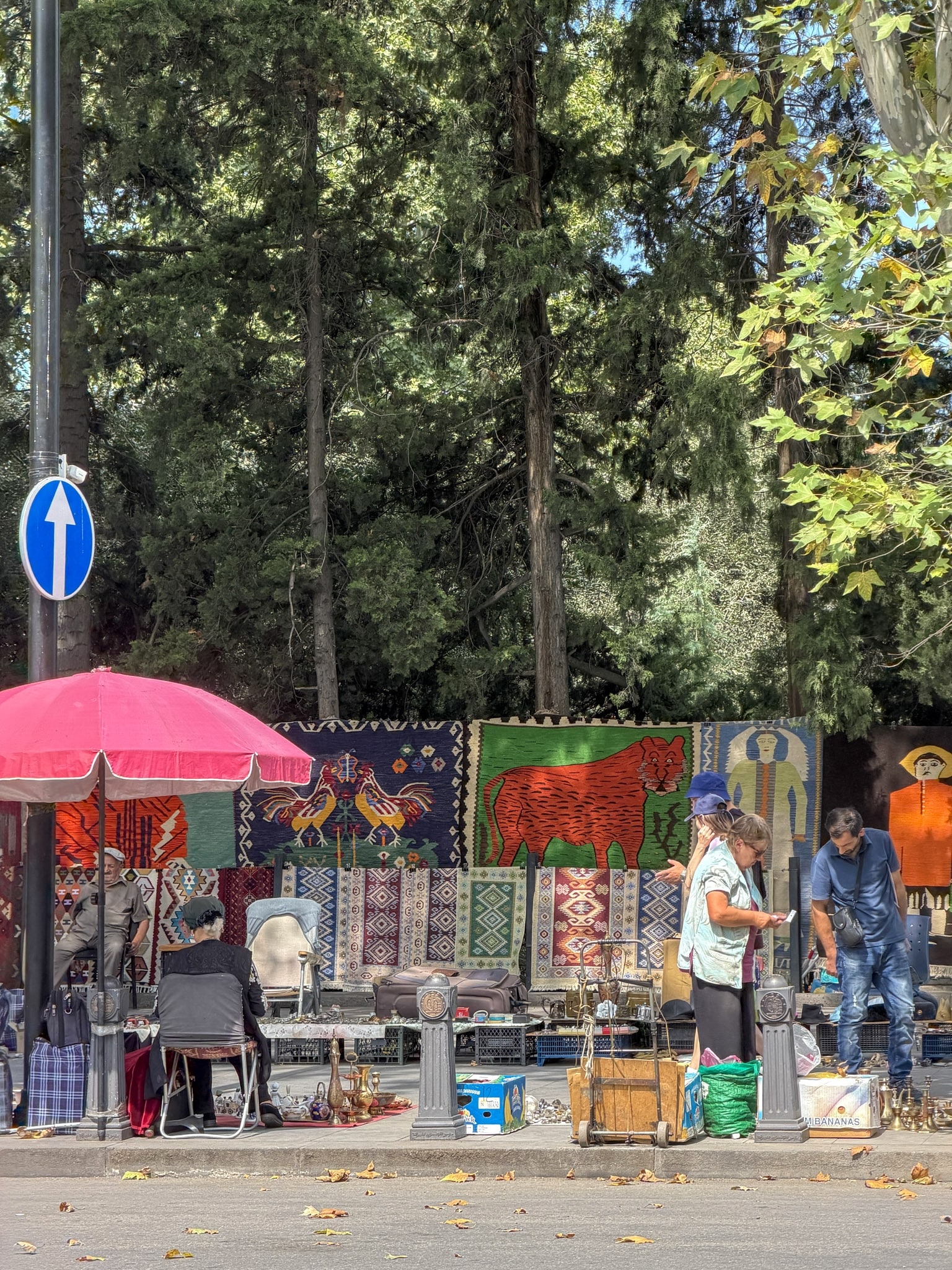
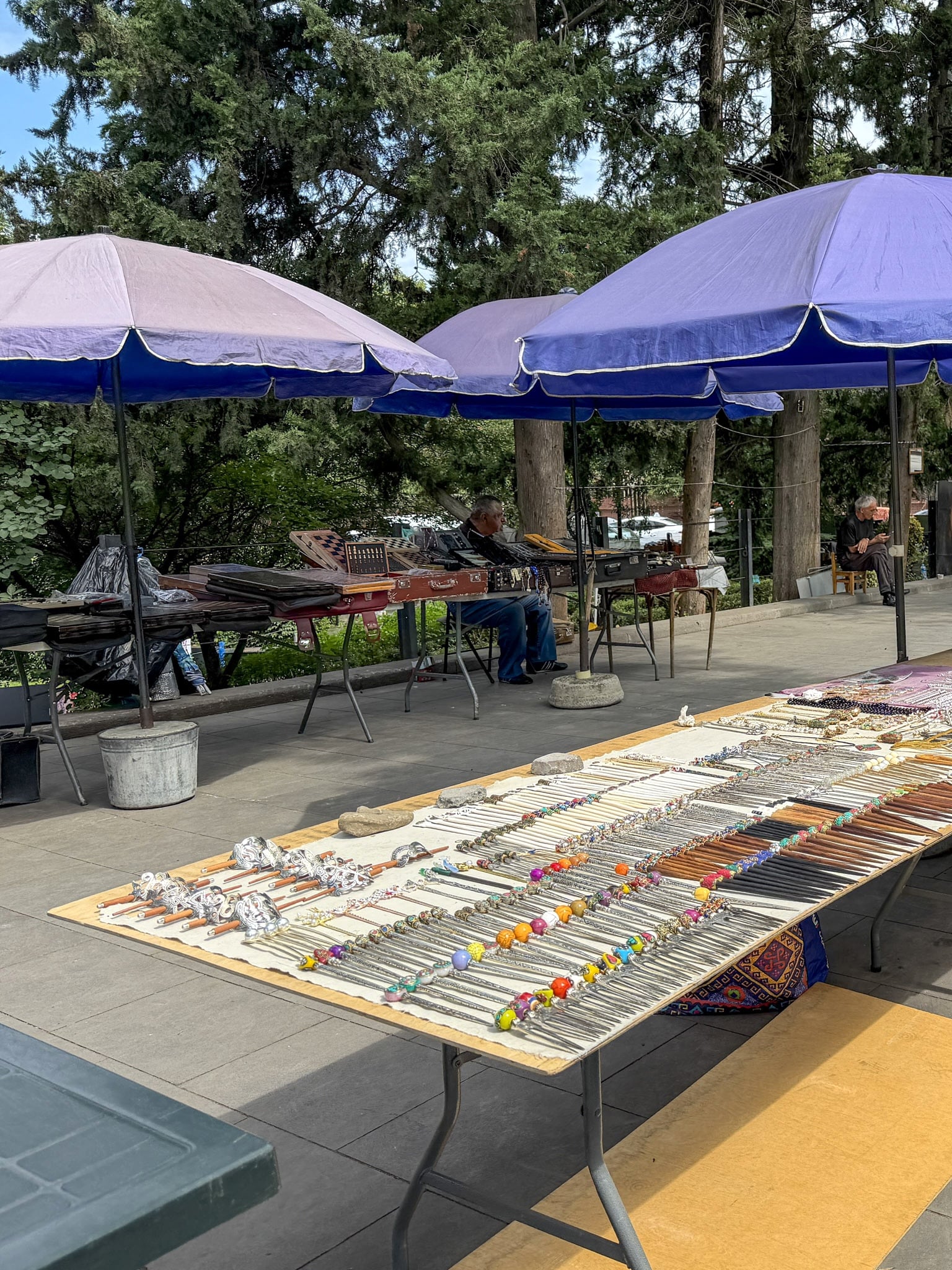
The market spreads across the bridge itself and spills into the parks on either side, one stretch is Soviet memorabilia and household junk, the other is handmade crafts and artwork. It got started in the early 1990s, right after the Soviet Union fell apart, when people started selling their own belongings just to get by. That history is still visible in what’s on the tables: old military medals, propaganda posters, vinyl records, cameras, alongside felted wool, wooden crafts, and paintings, some of them decent reproductions of Pirosmani, Georgia’s best known painter.
Good to know:
- Free to browse
- Open roughly 10:00 to 17:00 daily, but it’s outdoors, so it can shut down in bad weather
- Cash only, vendors usually don’t take cards
- Bargaining is expected, and prices tend to start higher for tourists
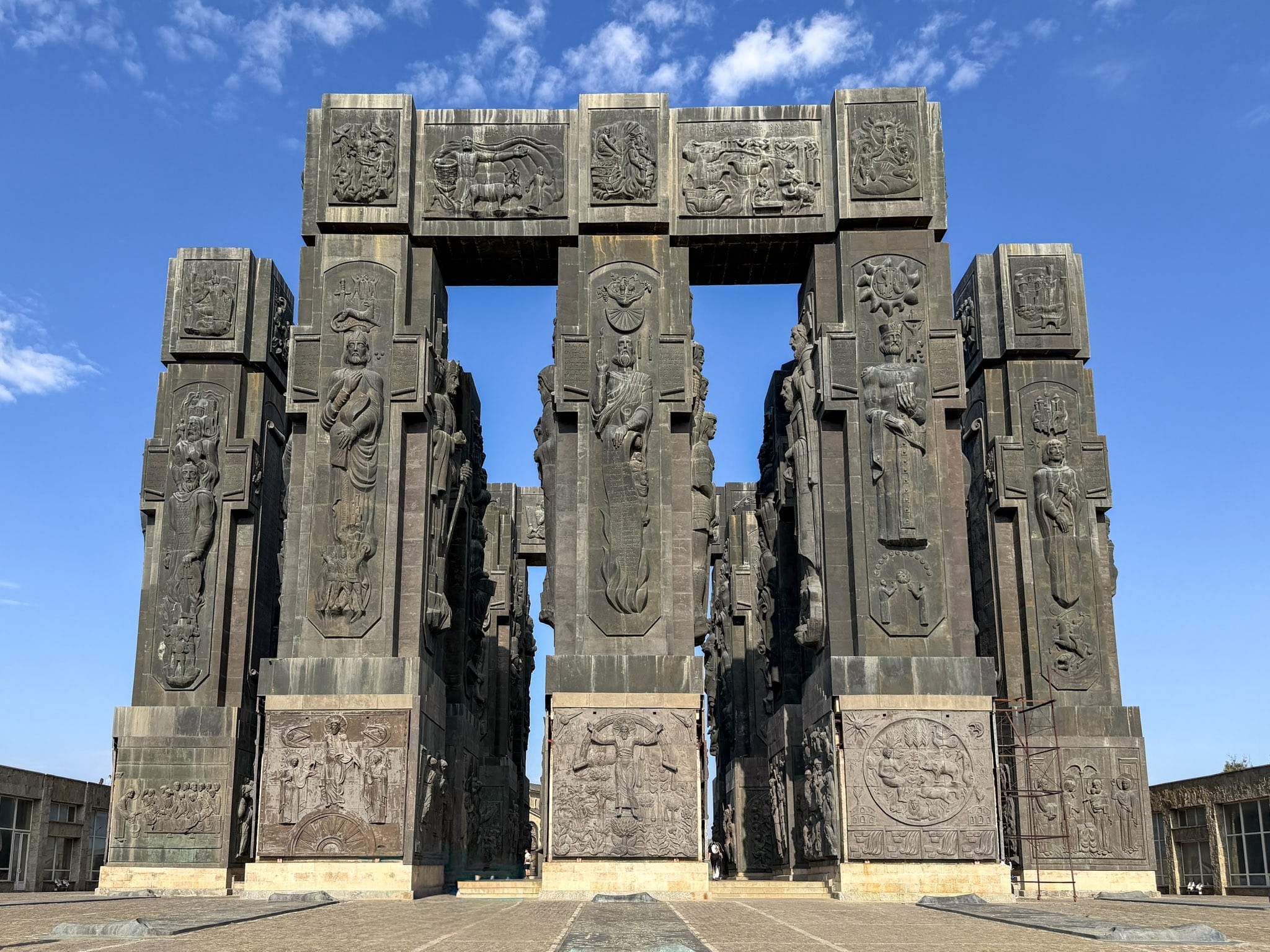
12. Chronicle of Georgia
Sixteen bronze and stone pillars, some over 30 meters tall, standing on a hilltop above the Tbilisi Sea, built by sculptor Zurab Tsereteli starting in 1985. The lower halves show scenes from the life of Christ, the upper halves show Georgian kings, queens and national heroes, walking between them is basically walking through 3,000 years of Georgian history and 2,000 years of Christianity condensed into bronze. It was never finished, as funding dried up when the Soviet Union collapsed. I spent around 24 GEL on a Bolt to get there, and found a ride back just as easily, though the signal drops out in a few spots up there.
Good to know:
- Free to visit, no ticket
- Best reached by Bolt, expect around 20 to 25 GEL and 25 minutes one-way from central Tbilisi
- No reliable public transport goes directly there, plan for a car both ways
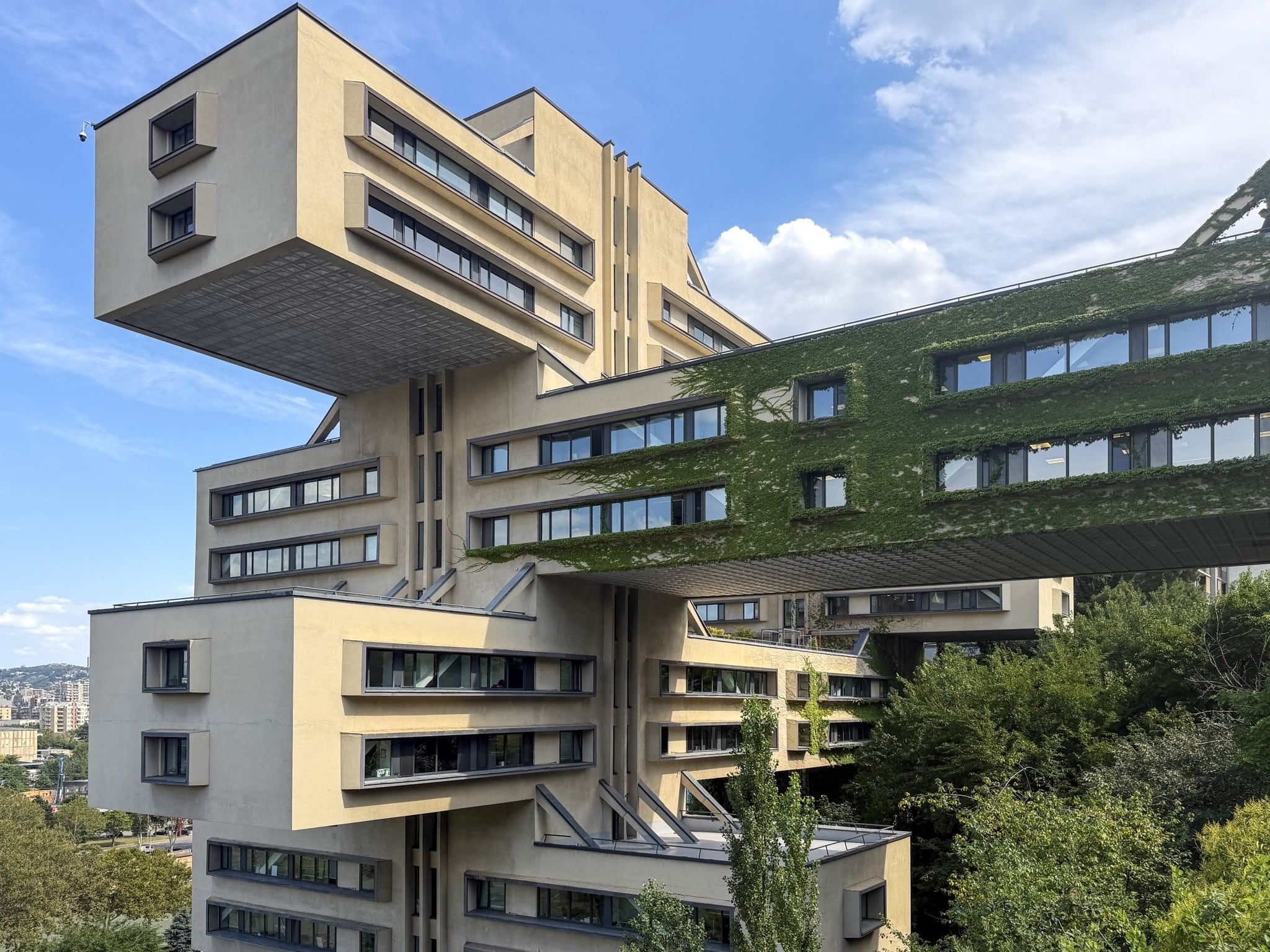
13. See Tbilisi’s Brutalist Side
Brutalism architecture gets a bad reputation, all raw concrete and hard angles, but Tbilisi has some of the most striking examples left standing anywhere, with buildings that look more like sculptures. At least two of them are worth seeing even on a quick pass through the city, and they show two completely different sides of the style.
The Bank of Georgia headquarters is the polished version, a stack of massive concrete blocks that seem to defy gravity, catching the light differently depending on the time of day. You can’t go inside, it’s a working office building, but the exterior alone is reason enough to stop. The Nutsubidze Skybridge is the rougher experience by comparison, three residential towers connected by a covered walkway on the 14th floor, still fully lived in by families and students despite looking worn down from street level. There’s an elevator up if you feed it a 20 tetri coin, though walking up suits the place better anyway.
-
-
For five more buildings like these, from a former archaeology museum to a Soviet-era library, I covered the full list separately in my guide to Tbilisi’s brutalist architecture.
-
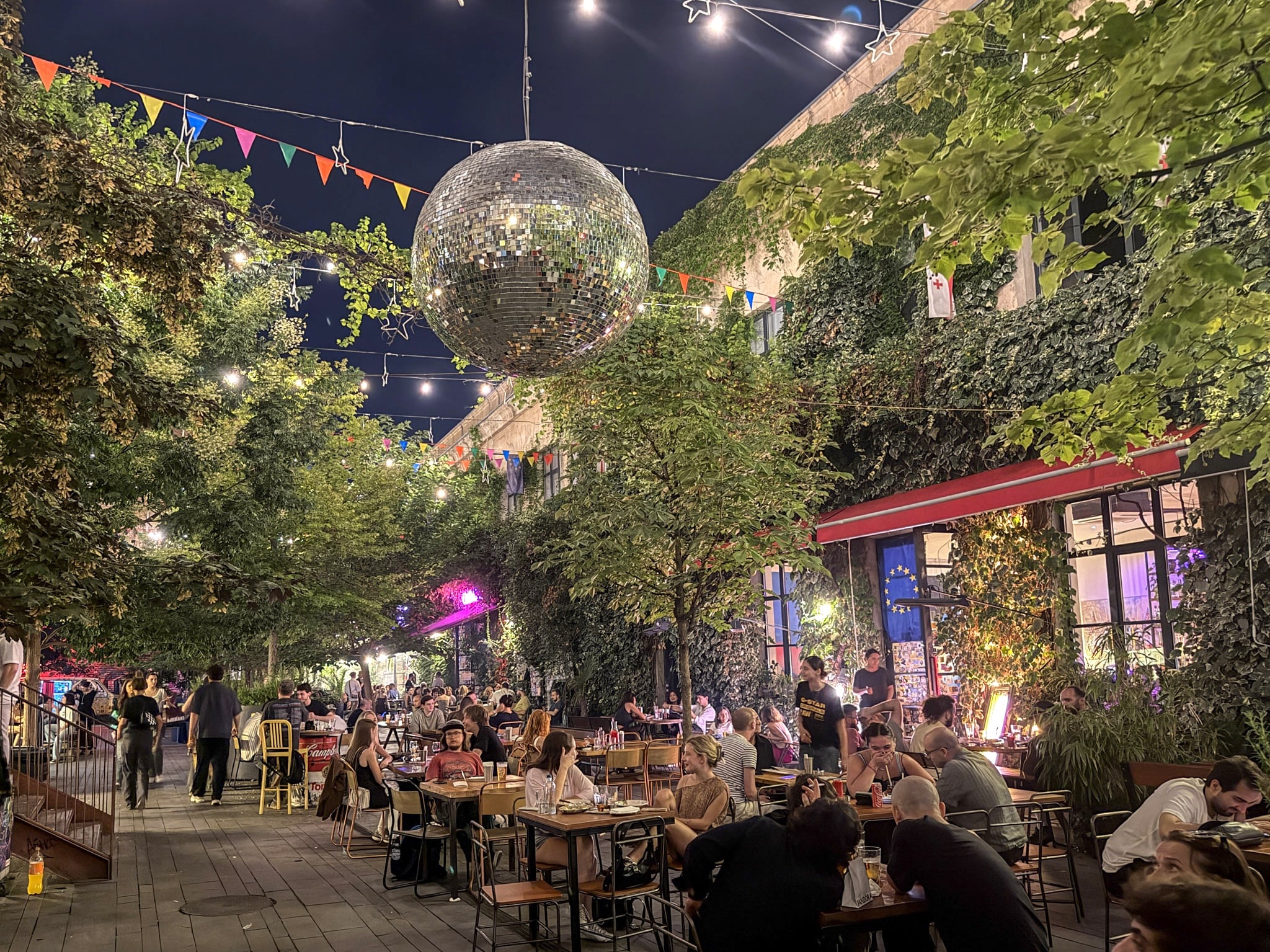
14. Fabrika
A Soviet sewing factory called Nino once employed up to 2,000 workers here, then sat empty for decades after the USSR fell apart. It reopened in 2016 as something completely different, bars, cafés, art studios and shops wrapped around a big open courtyard, with a hostel upstairs. I went in the evening, walked through the main building, and ended up in the courtyard for a drink.
It’s genuinely one of the best evening stops in the city, string lights, a disco ball, people everywhere. It's located in the Marjanishvili district, about an 8 minute walk from Marjanishvili metro station, and it's free to enter.
-
- Looking for restaurants, too? I put together a separate guide to the best Georgian restaurants in Tbilisi, the ones worth booking a table for.
15. Take a Day-Trip
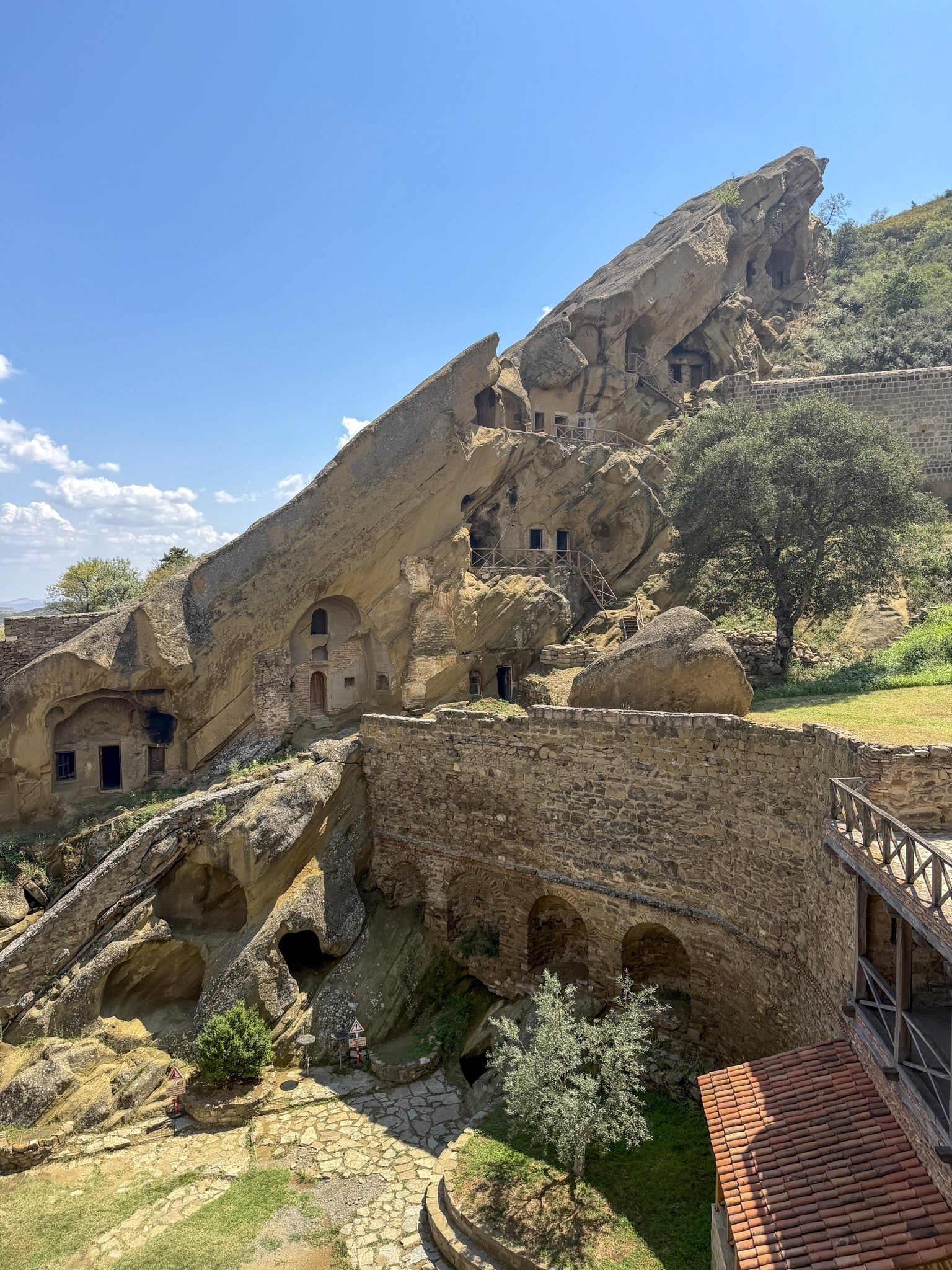
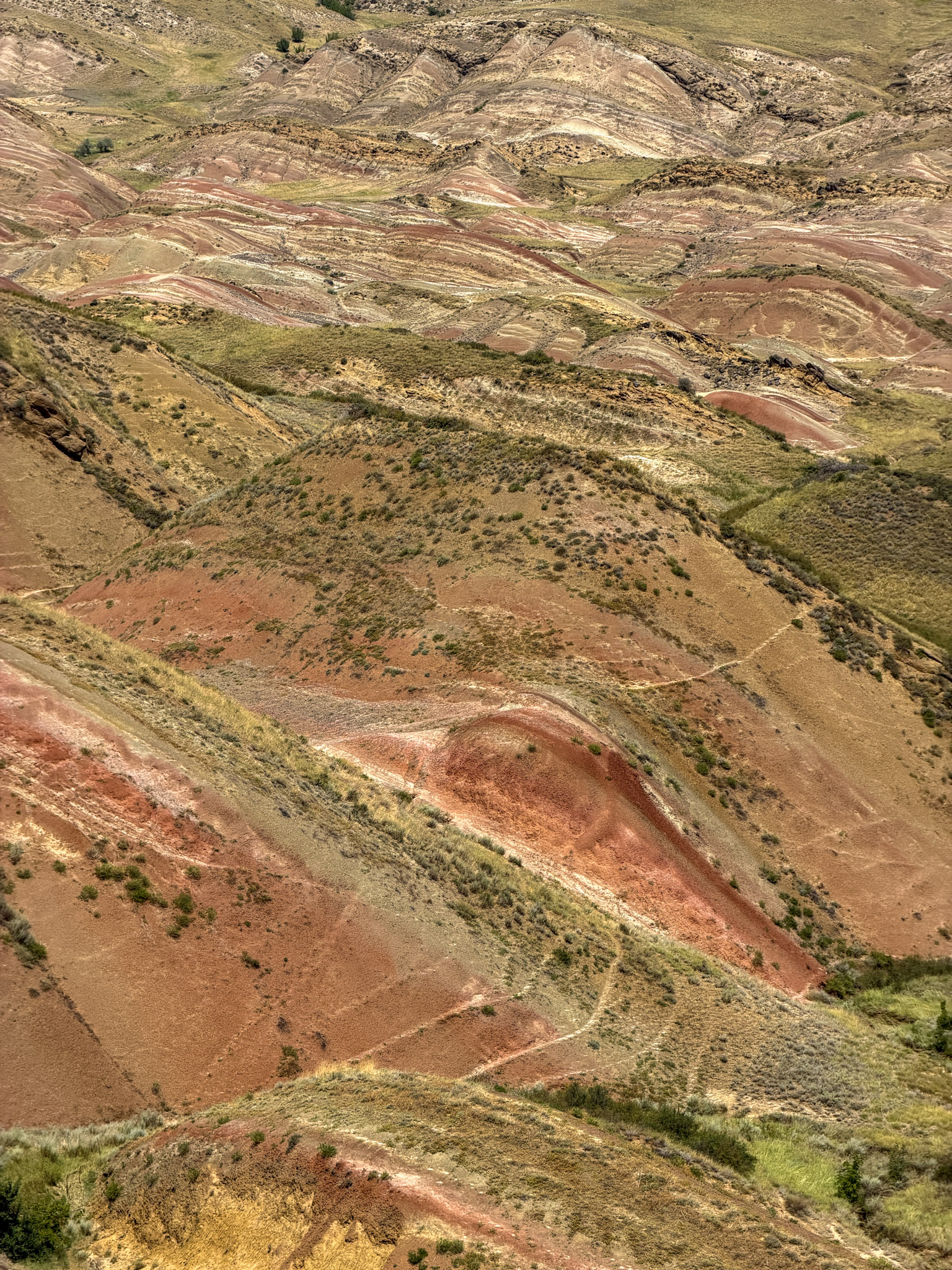
If you have an extra day, David Gareja and the Rainbow Mountains are the trip I’d send you on first. You get to see and hike striped, colorful, otherworldly hills, paired with a cave monastery cut into the cliffside. I covered the whole thing, tour options versus renting a car, in a separate guide.
Mtskheta and Ananuri work well together as a second option. Mtskheta was Georgia’s capital for centuries before Tbilisi, and it’s where the country adopted Christianity as its state religion back in the 4th century, the Svetitskhoveli Cathedral in the town center is considered the country’s holiest site. Ananuri is a fortress complex further up the Georgian Military Highway, towers and a small church sitting right on the edge of the Zhinvali reservoir.
-
-
If you're interested in the David Gareja monastery & rainbow mountain tours, I've covered the full logistics, tour options versus self-drive, in this dedicated guide.
-
-
- Not sure how to fit all this into a few days? I sequenced the best of it into a 3-day Tbilisi itinerary, optimized by area so you're not crossing the city back and forth.
Keep reading: