I spent 90 minutes inside the Georgian National Museum in Tbilisi. Here’s everything you need to know about it and what you should see, from the Colchis gold to the Soviet Occupation Hall.
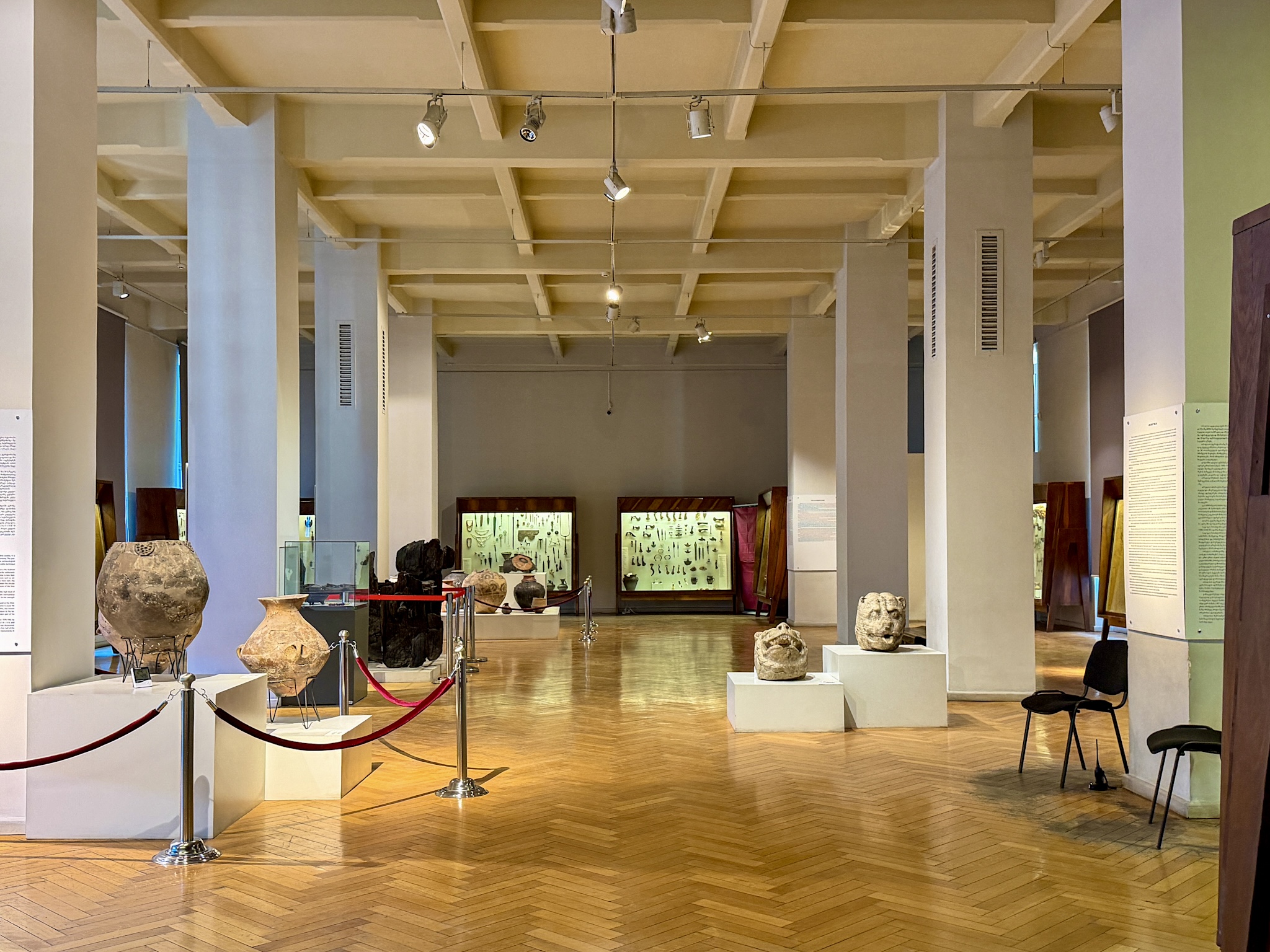
I visited the Georgian National Museum on a particularly rainy day in Tbilisi, looking for a place to learn something and also dry off. I wasn’t sure how much time I’d need going in, but I soon discovered that the museum covers a lot of ground. It starts from Georgia’s earliest history up to the twentieth century, during Soviet Occupation.
Some parts stuck with me more than others, and I’ll get into which ones below.
How To Visit the Georgian National Museum: Tickets, Hours, and Location
The museum sits on Rustaveli Avenue at number 3, in the same stretch of central Tbilisi as several other major sights. It’s open Tuesday through Sunday, from 10am to 6pm, and closed on Mondays.
A ticket for foreign visitors, as of 2026, costs 40 GEL. That single ticket covers the entire museum, now including the Treasury sections.
Based on my experiences, you don’t need to book ahead. I bought my ticket at the counter on arrival and didn’t wait at all. The information panels next to each exhibit are in Georgian, Russian and English, and they were detailed enough to get through the museum without a guide or audio guide.
Still, I’m sure an audio guide could provide even more context. I'm not linking the official website as I would normally do, because it's mostly in Georgian and price information is not updated at all.
-
-
if you’re planning to hit more than one museum while you’re in the city, I ranked all Tbilisi's five best museums here, starting with this one.
-
Things to See Inside the Georgian National Museum
Stone Age Georgia and the Dmanisi Skulls
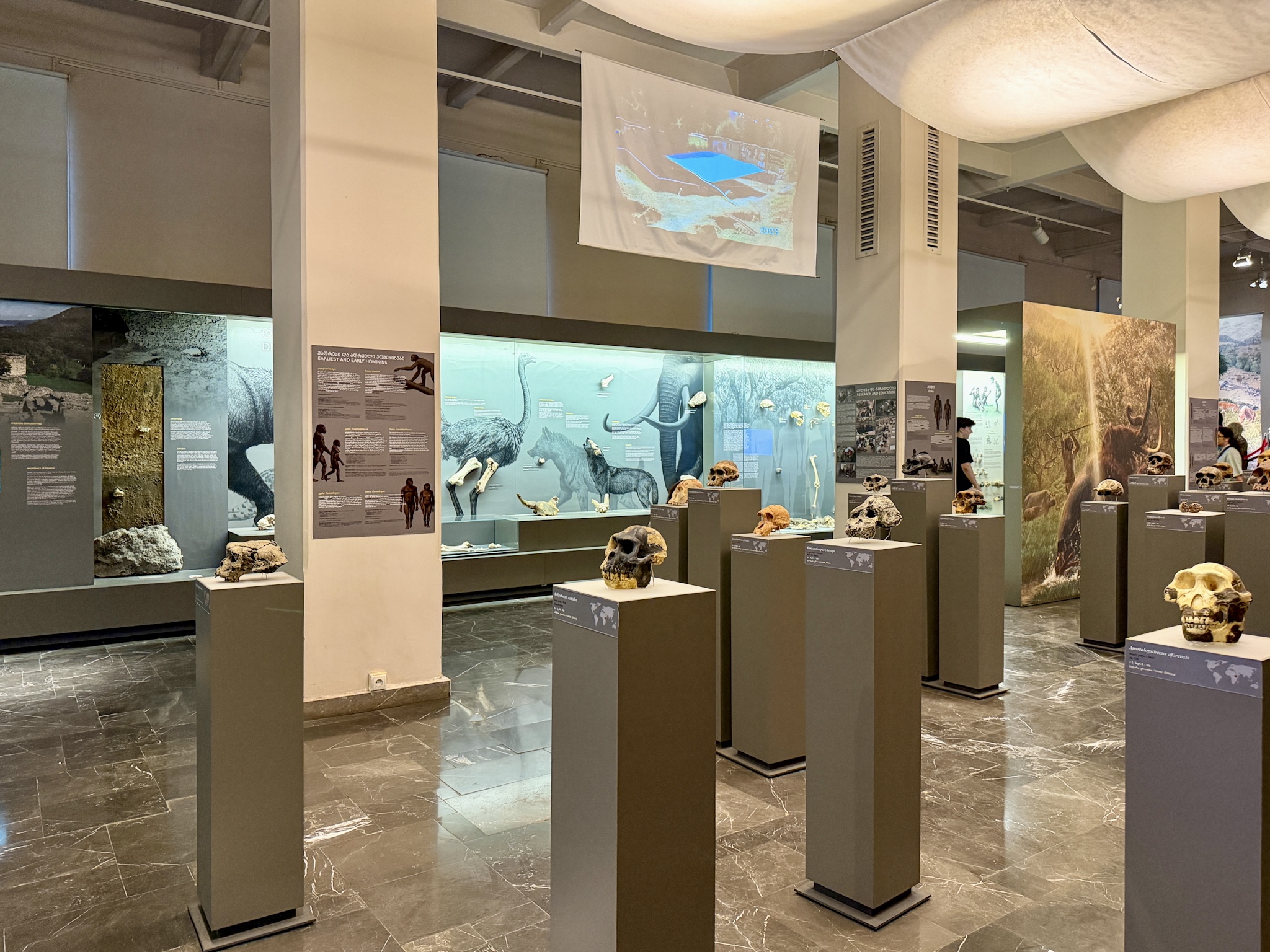
The first room deals with human evolution. Skulls are set out on individual pedestals across the space, some found in Georgia and some brought in for comparison from Africa and Asia, tracing how far back people were living in this part of the world. The most significant of these are the Dmanisi finds, two skulls known as Zezva and Mzia, discovered at a site south of Tbilisi and dated to around 1.8 million years old, among the earliest evidence of humans outside Africa found anywhere.
Caucasus Biodiversity
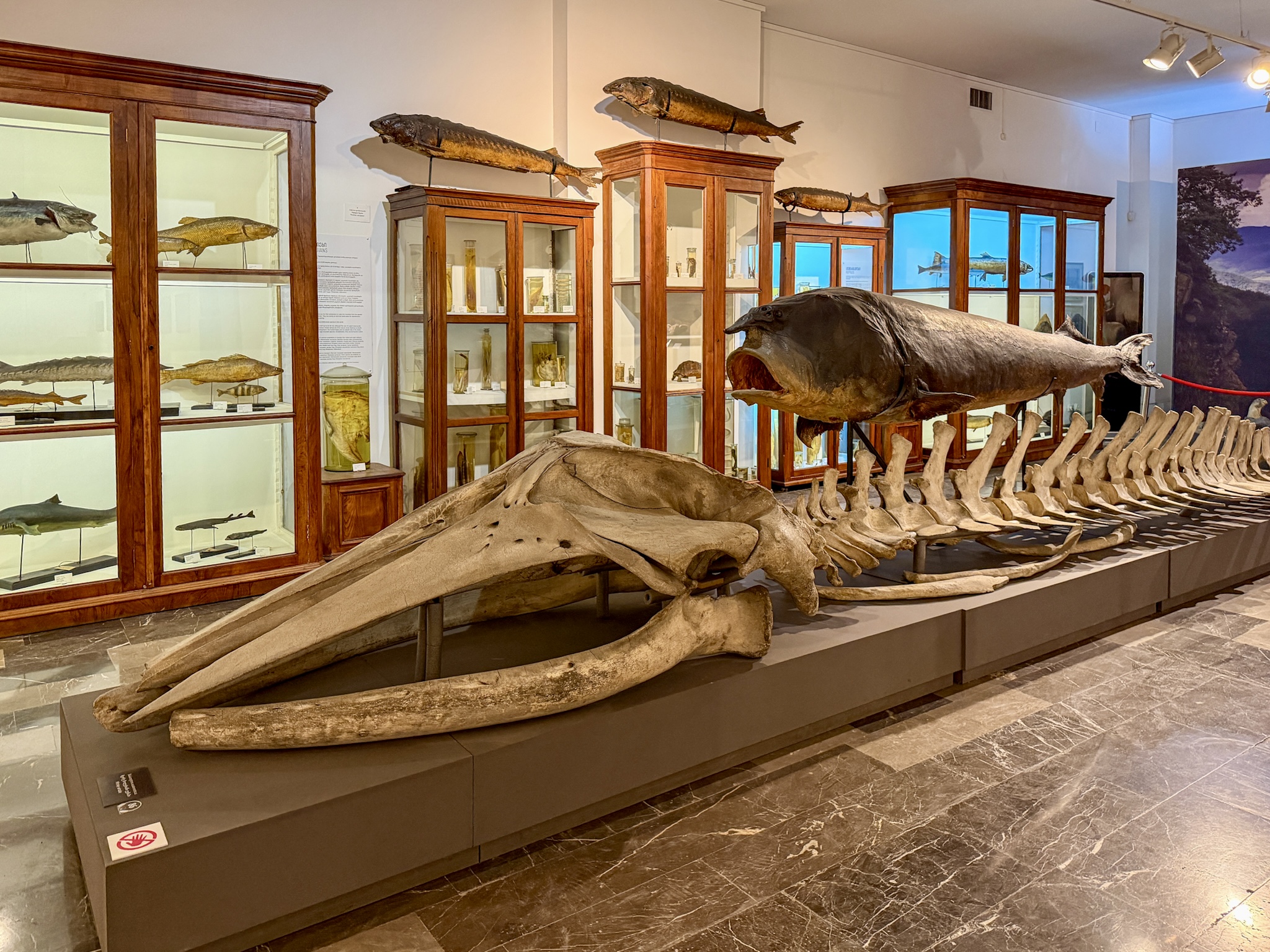
Past the Stone Age hall, the museum moves into a room dedicated to the region’s biodiversity. Minerals and rocks from across the Caucasus sit alongside taxidermied birds and mammals, with fish and reptiles preserved in glass cases and jars. A large map, made in partnership with National Geographic Georgia, marks out which species live where in the region, including bears and tigers, plus several that are now extinct or endangered.
The whale skeleton is the centerpiece, laid out on a raised platform in the middle of the room, with taxidermied sturgeon mounted above the surrounding display cases.
The Archaeological Treasury
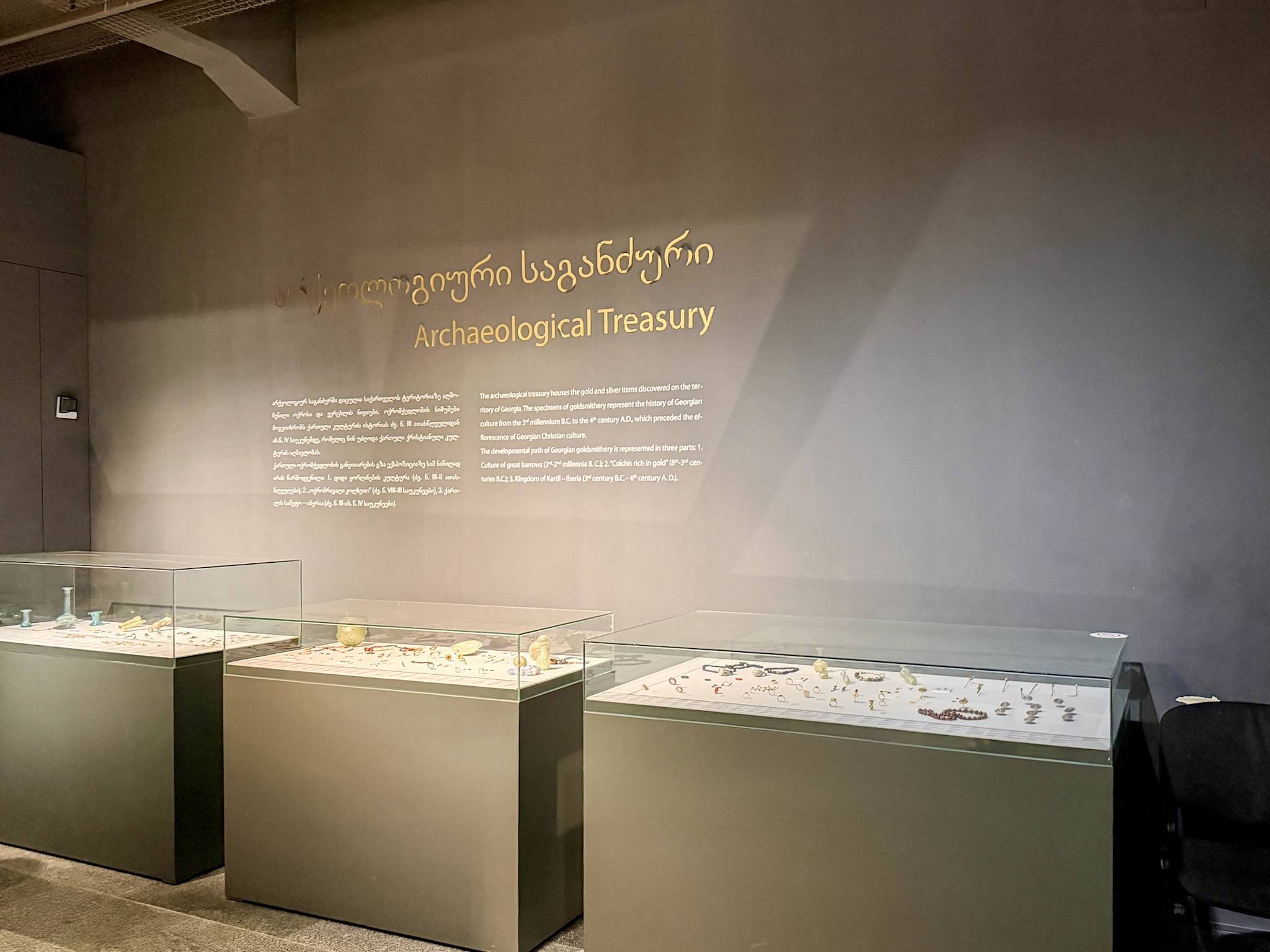
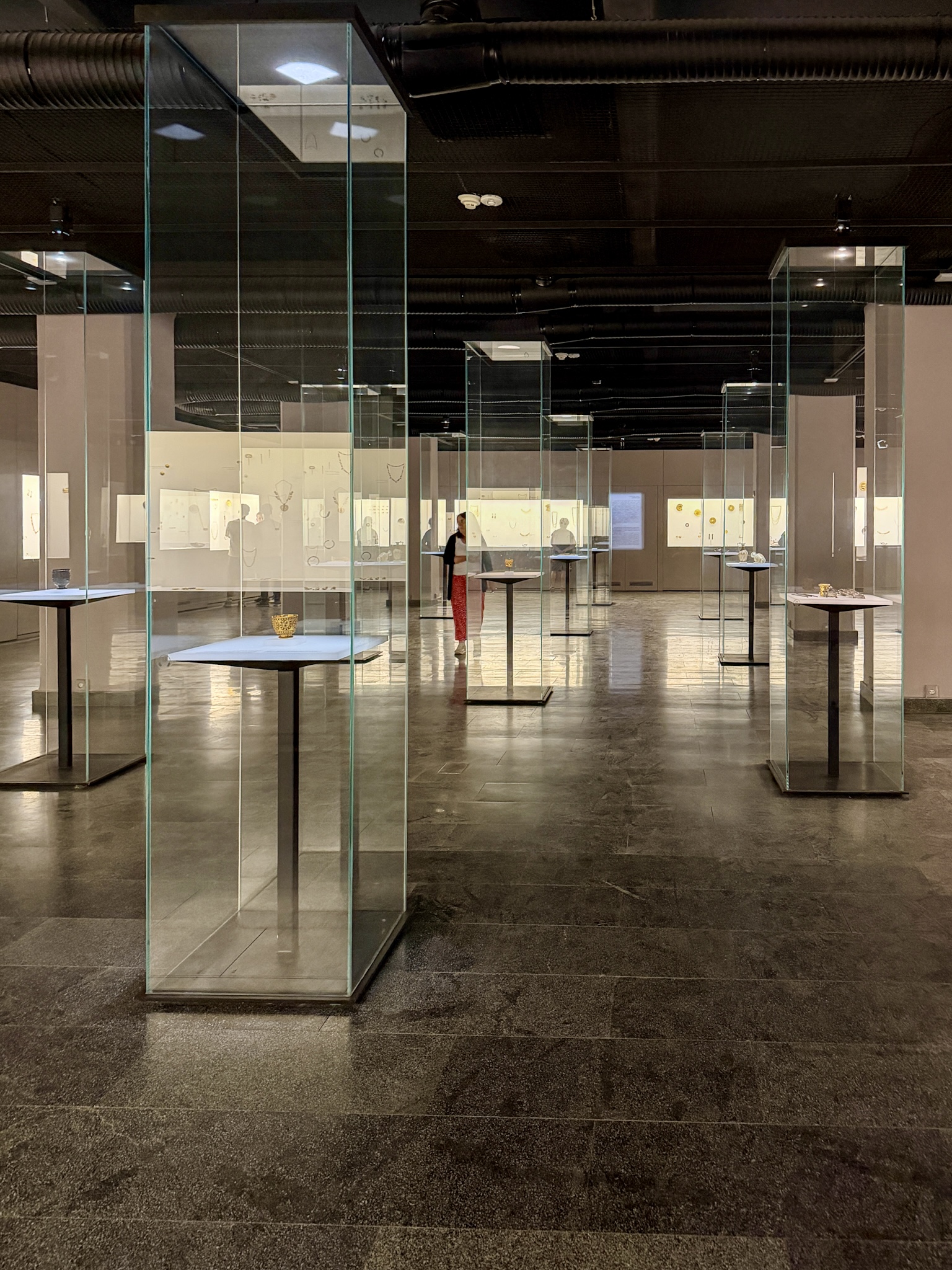
Down in the basement, the Archaeological Treasury holds the museum’s gold and silver collection, spanning from the 3rd century BC to the 4th century AD. The pieces come mostly from burial sites in Kakheti, Kartli, and Trialeti, and together they trace three phases of Georgian goldsmithing: the early barrow culture, the wealth of ancient Colchis, and later the Kingdom of Kartli-Iberia.
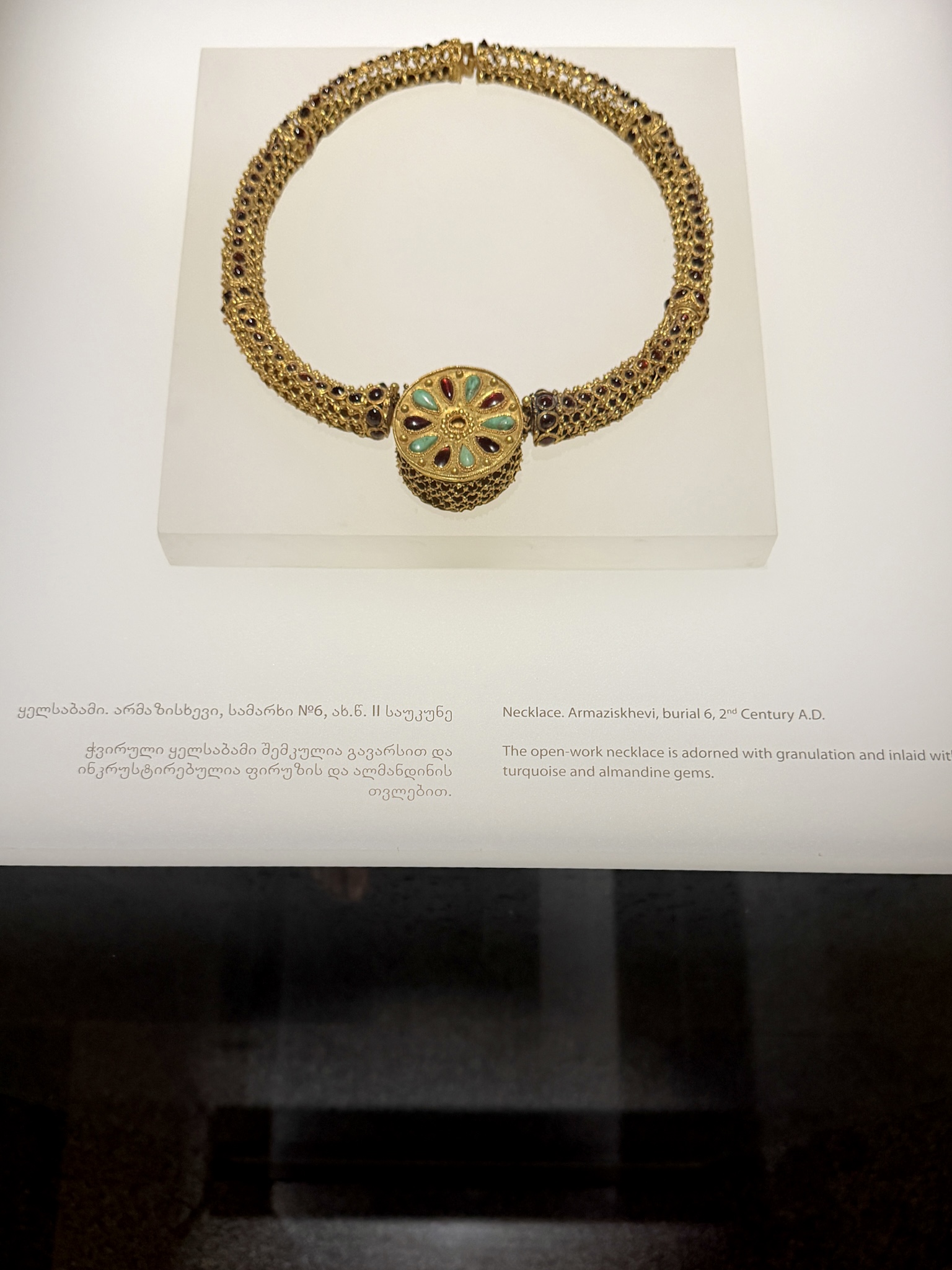
One necklace stood out among the cases: a piece from a burial at Armaziskhevi, dated to the 2nd century AD, worked in fine granulation and set with turquoise and almandine. I’ll say plainly that the jewelry as a whole didn’t leave much of an impression on me, but it’s worth walking through.
The Medieval Treasury
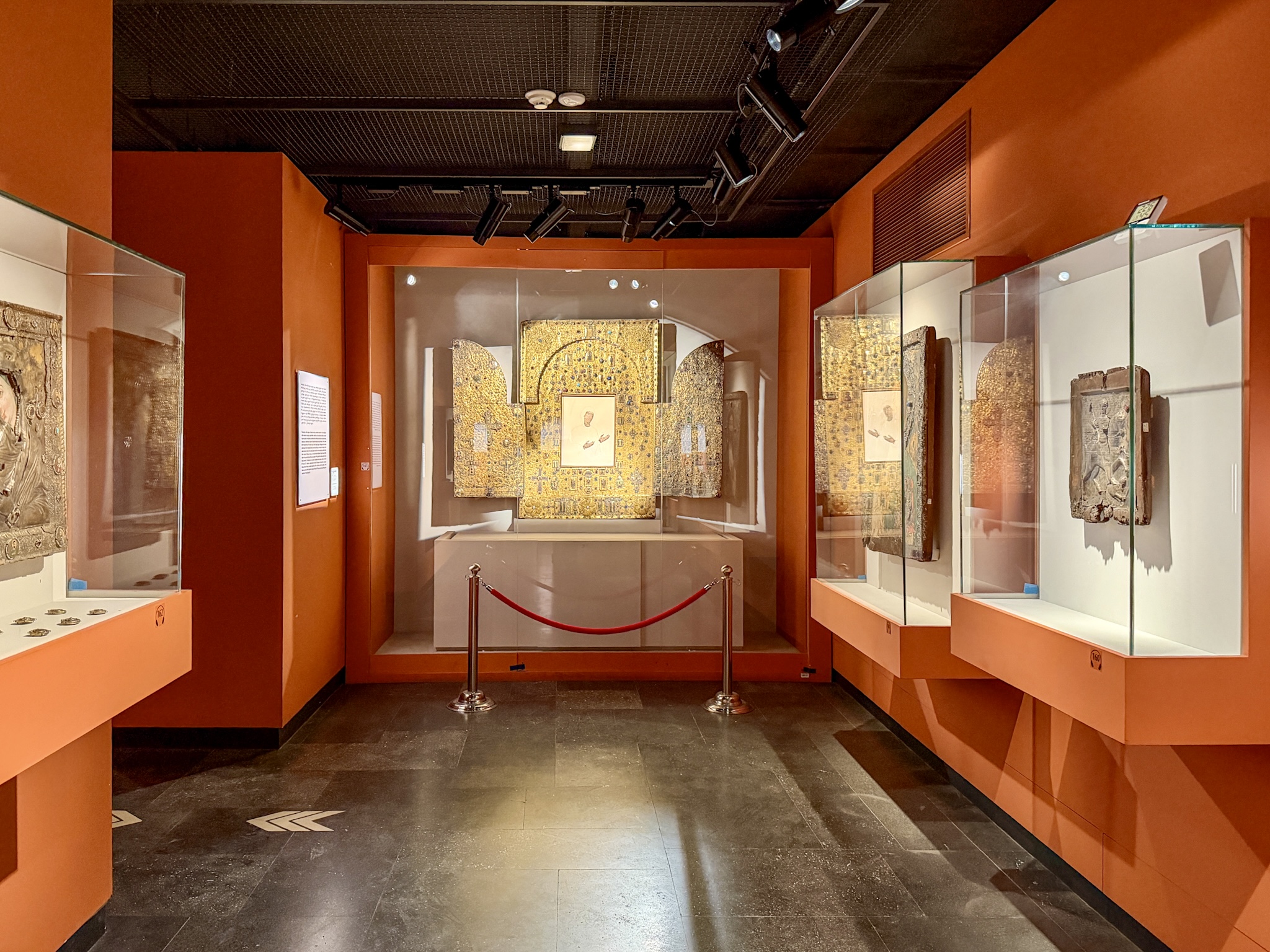
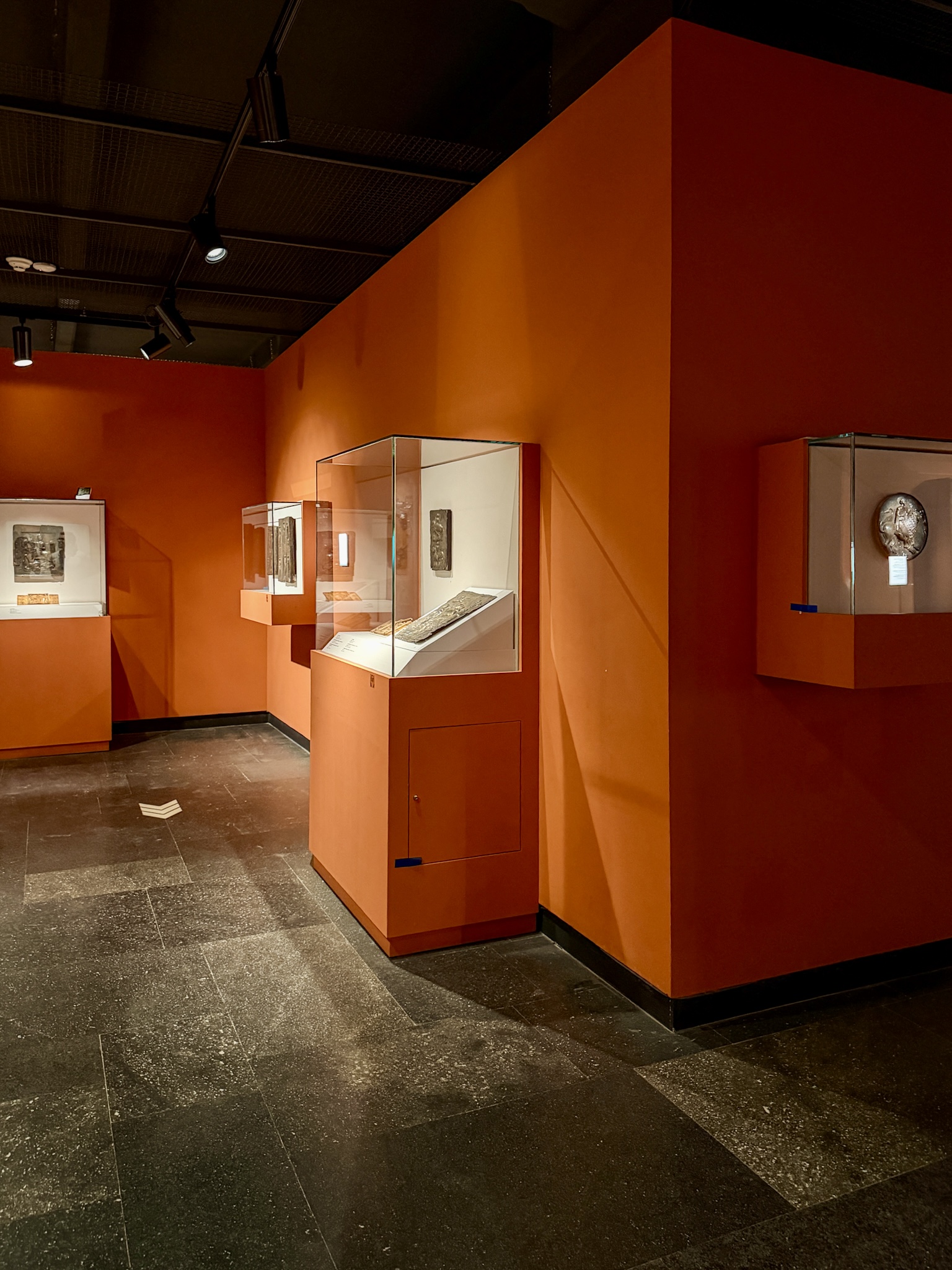
Past the archaeological gold, the museum continues into a section of medieval ecclesiastical treasures: icons, crosses, and gold religious art. It’s presented under the name “Treasury of Shalva Amiranashvili State Museum of Fine Arts” tied to Georgia’s other major art institution.
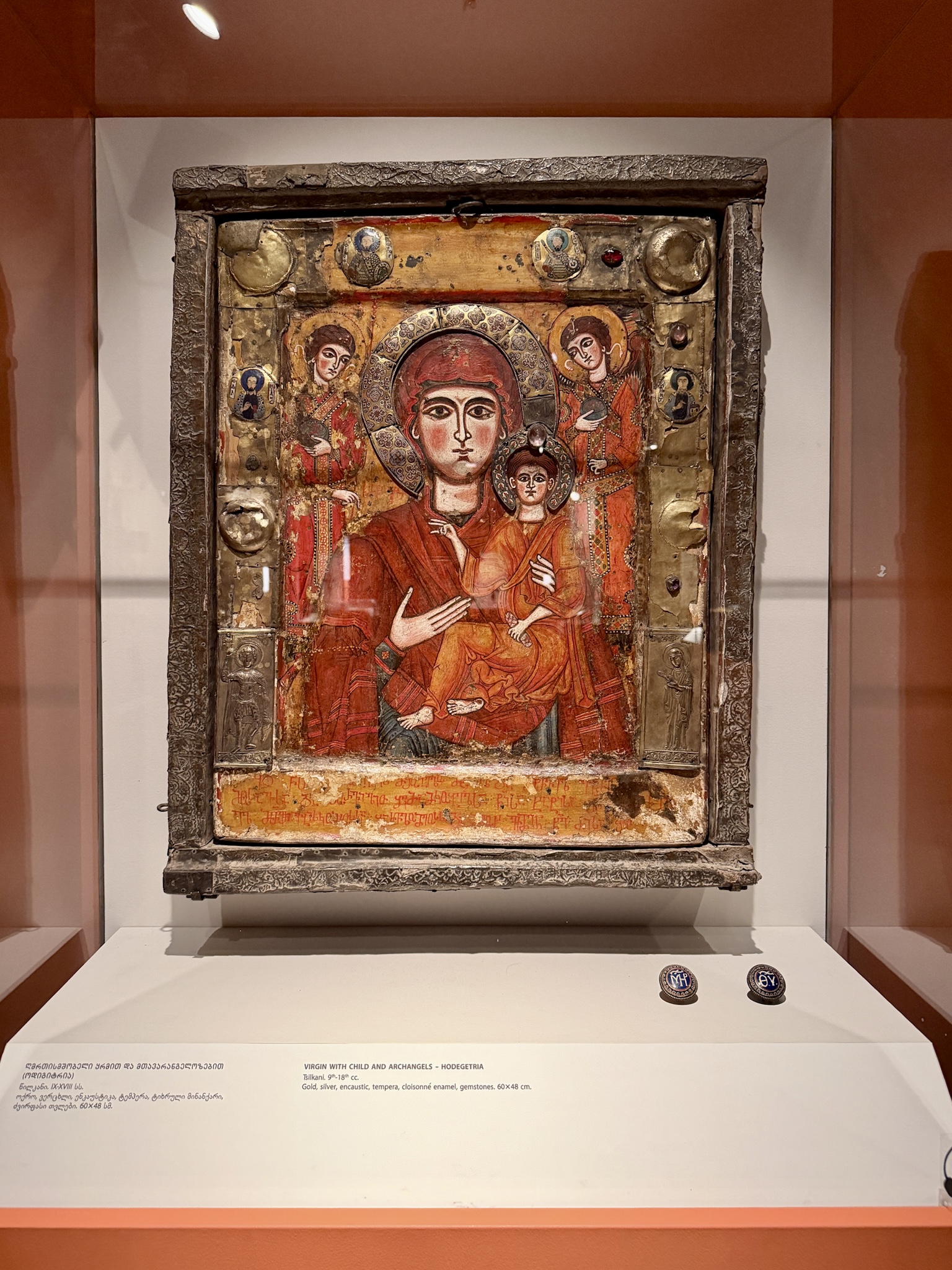
The single icon that stopped me was a Virgin with Child and Archangels from Tsilkani, dated broadly to the 9th through 18th centuries, worked in gold, silver, and cloisonné enamel with a painted panel at its center. The room around it holds a run of similar pieces in glass cases, framed by walls in a deep orange that make the gold stand out more than the white walls upstairs do.
The Museum of Soviet Occupation
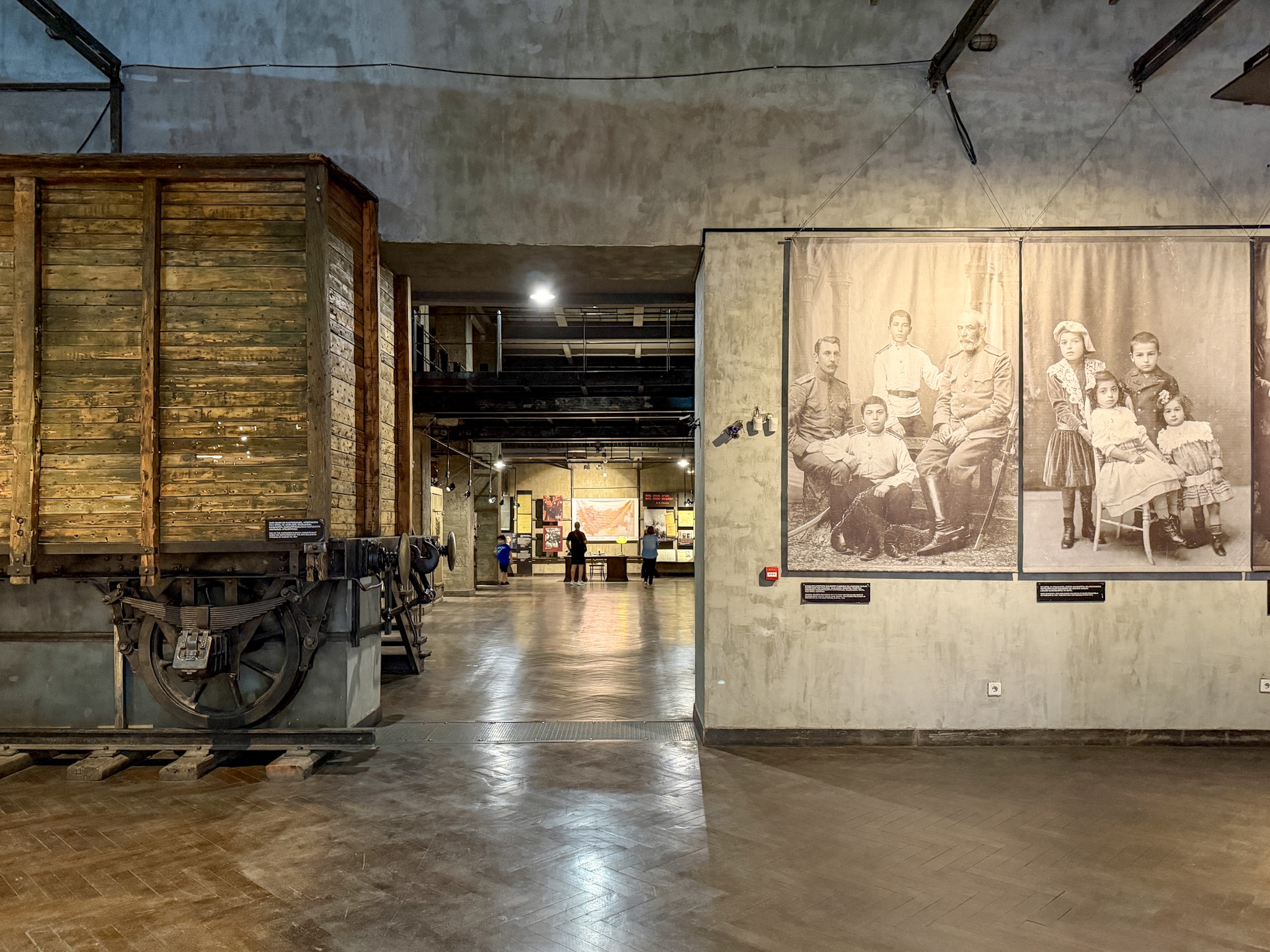
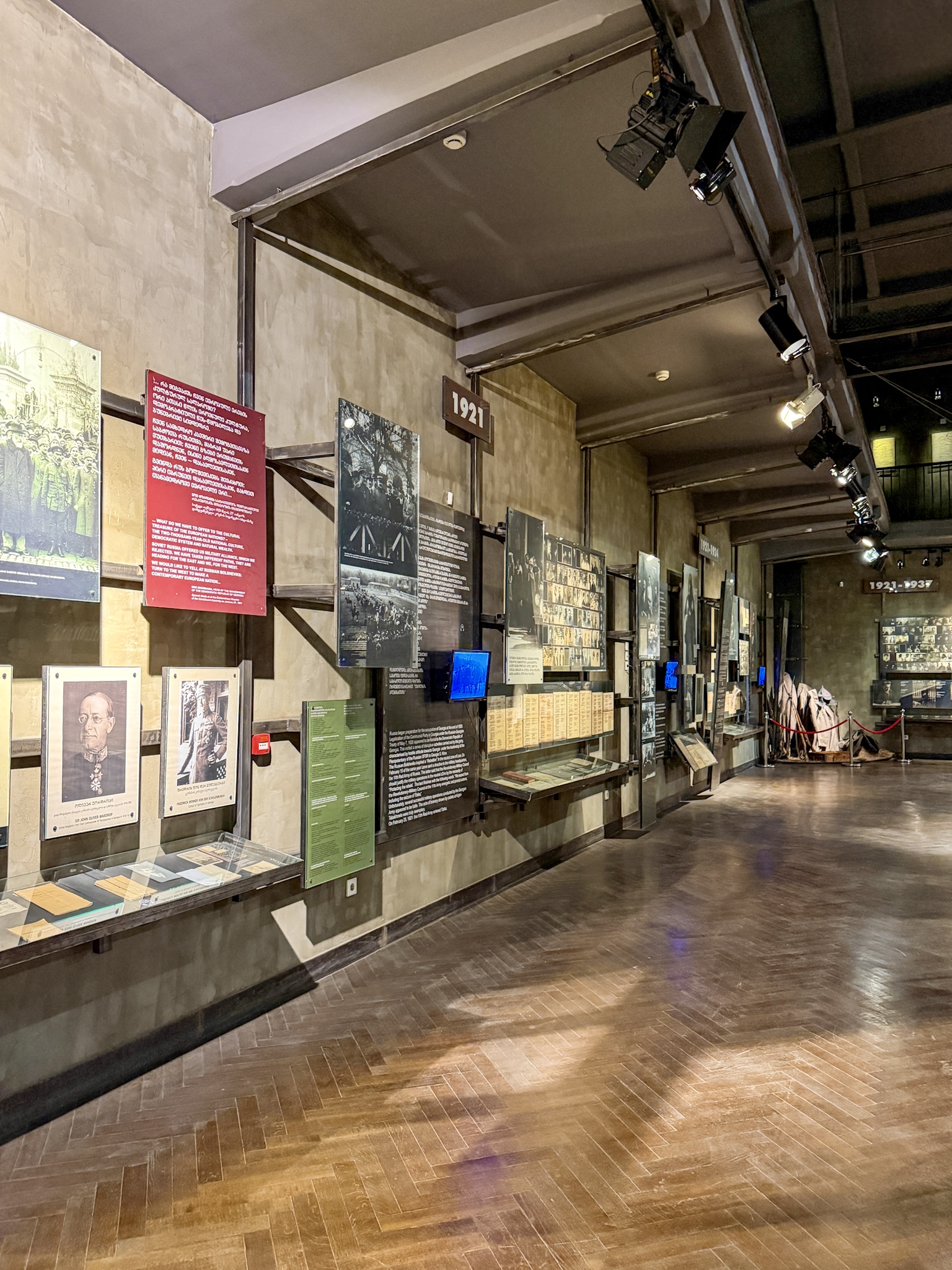
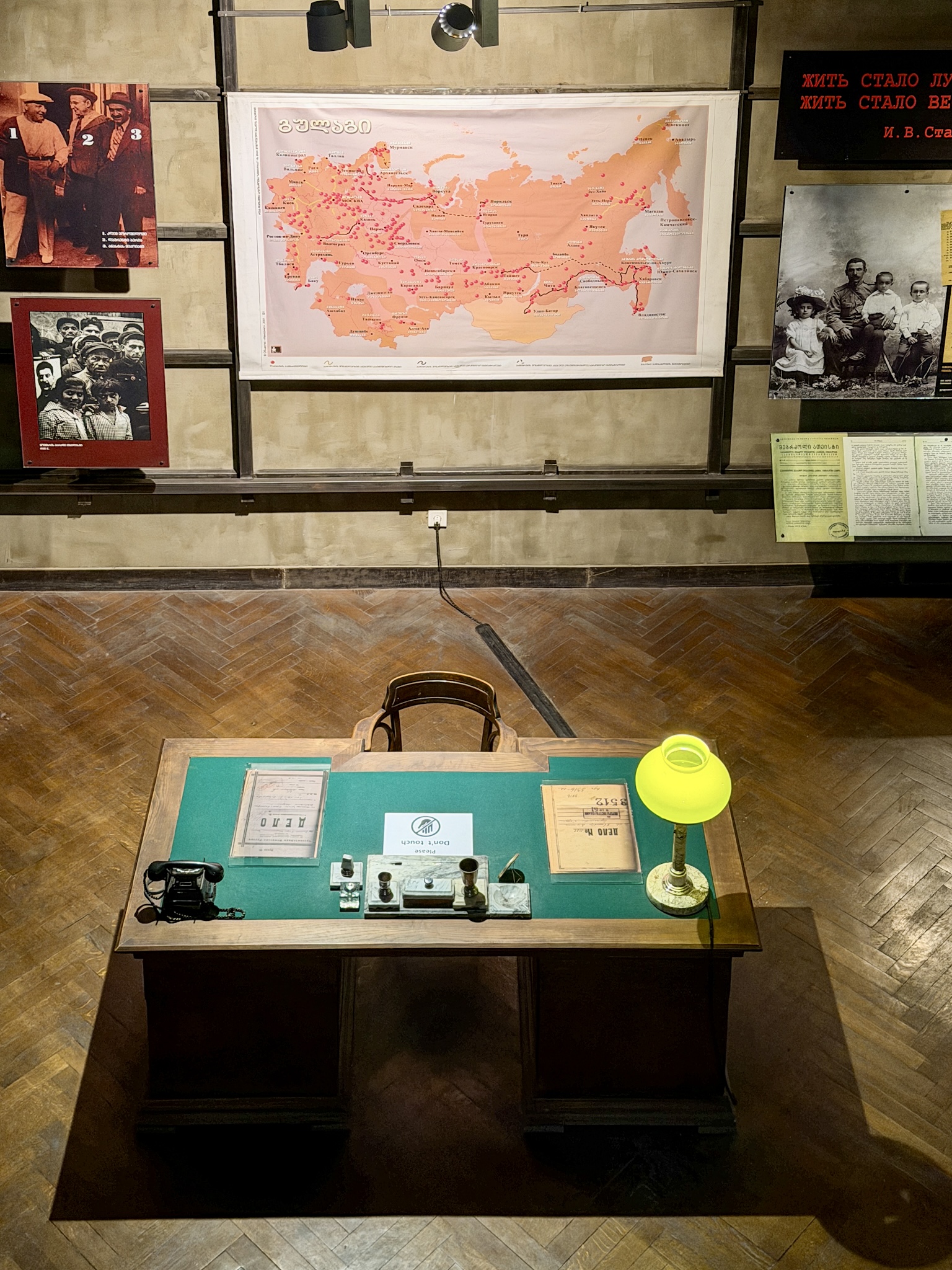
The Soviet Occupation Hall sits on the top floor, and it’s arranged chronologically, starting in 1921 with the Red Army’s invasion of independent Georgia and running through to 1991. Along the way there are archival documents, a reconstructed Soviet officer’s desk with a green blotter and a yellow lamp, and a wall map of the USSR marking out the network of gulags across the country. One line from Stalin is printed large on a wall panel: “Life has become better, life has become more cheerful”.
For me, this was the part of the museum that stayed with me the most, more than anything in the Treasury. The black-and-white family photographs hung along the walls, ordinary people photographed before their lives were upended, did more to bring the weight of that period home than any of the documents or maps.
The single object I keep coming back to is the wooden train carriage on display, the same type used to transport and execute participants of the 1924 anti-Bolshevik uprising.
-
- If this period of Georgian history interests you, there's another site in Tbilisi you could visit: the underground press where Stalin printed illegal materials in his early years. It's a rougher stop than this museum, and the guide there talks about Stalin with not-so-veiled admiration, but it's a real, preserved piece of that same history. I wrote about it here: Visiting Tbilisi's Underground Printing Museum: Stalin's Secret Press.
Tips For Your Visit & What to Prioritize
- The cloakroom isn’t optional if you’re carrying a backpack or anything bigger than a handbag. It’s free.
- The basement halls, where both Treasuries sit, are kept fairly dim to protect the gold and the pigments on the icons. Photos are allowed in the permanent exhibits (no flash, no tripods), but don’t count on your phone camera doing great down there.
- If you’re cutting it close to closing time, know that ticket sales stop 30 minutes before 6pm, and staff start clearing the halls about 10 minutes before that. Build in a real buffer if you want the full experience.
- There’s no printed floor map at the entrance. The layout still makes sense as you go though: prehistory near the entrance, the Treasuries down in the basement, and the Soviet Occupation Hall up on the top floor.
Also, and this is just my personal opinion, but if you don’t have the full hour and a half to spare, I’d put the Stone Age hall and the Soviet Occupation Hall at the top of the list. Those were the two sections that absolutely held my attention start to finish, as they were so unique and detailed.
The Archaeological Treasury is worth a walk-through if you have the time, but the jewelry didn’t leave much of an impression on me personally, so it’s the first thing I’d cut if I were pressed.
Is The Georgian National Museum Worth Visiting?
Yes, and I’d go further: it’s close to essential if you want any real context for the rest of a Georgia trip. Between the Stone Age hall and the Soviet Occupation Hall, you come away with a working sense of both how old this country is and what it went through in the last century, and that context ends up shaping how you look at everything else you see afterward, from the old Tbilisi up to Kazbegi and Svaneti.
It also works well as a rainy day plan. I went on one of the wetter days I had in Tbilisi and paired it with the Art Palace, and the pace of the museum suited that kind of day fine. Nothing about it requires good weather or a lot of walking outdoors.
-
-
If you want more culture, art and less crowd, the Art Palace is one of Tbilisi’s most underrated museums, and a lot cheaper too.
-