I’ll bring you inside Tbilisi’s Art Palace: a 19th-century mansion built for love, packed with royal costumes, paintings, and a secret room most visitors miss.
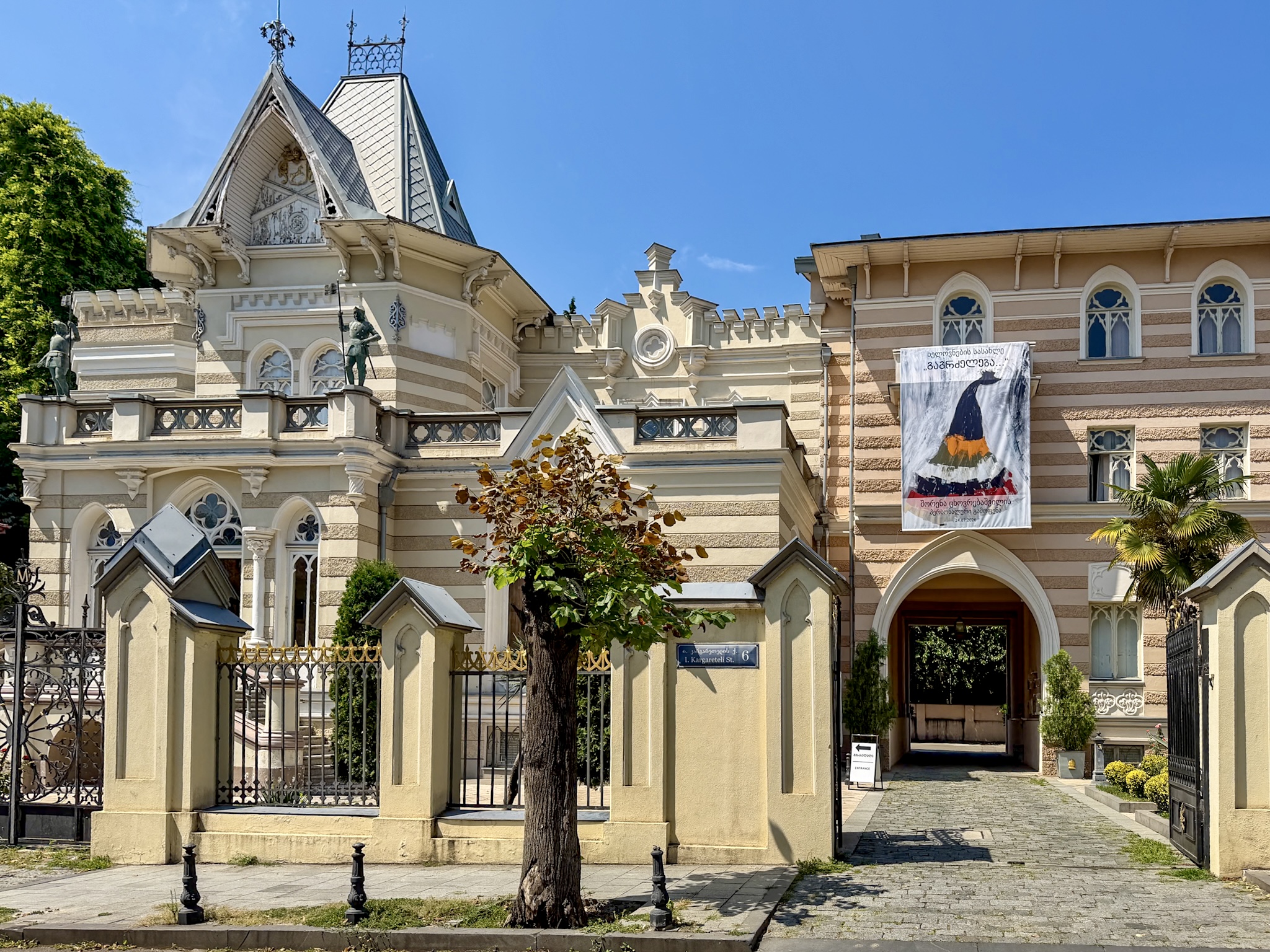
I visited the Art Palace in Tbilisi on a rainy afternoon in August and had almost the whole place to myself. It’s won awards and has a loyal following on TripAdvisor, yet most visitors never make it past the National Museum. But behind that Gothic facade on Kargareteli Street is a full tour of exceptional art, interesting objects, royal costumes, a music room with a grand piano, and a secret love room upstairs most visitors don’t even get to.
Here’s what I saw, and what’s worth knowing if you're also planning to visit.
Practical Info for Your Visit
The museum sits in Chugureti, on Kargareteli Street, a short walk from Fabrika if you’re already in that part of town. It’s officially open from around 10:30am to 5:30pm, closed on Mondays like most museums in Tbilisi. It’s still worth double-checking before you head over rather than assuming either schedule.
Entry runs 10 GEL as of our August 2026 visit, up from just 2 GEL a few years ago, though still cheap compared to the National Museum. Photos are allowed throughout, just without flash. Budget at least an hour, more if you want to see everything slowly or catch a guide.
There’s no reliable way to book a guided tour online ahead of time. Your best bet is asking at the ticket desk when you arrive, or arranging a private guide through a local tour operator beforehand if you want to guarantee one. Either way, go in knowing you might be reading the (few) room signs yourself.
The Art Palace Built for Love
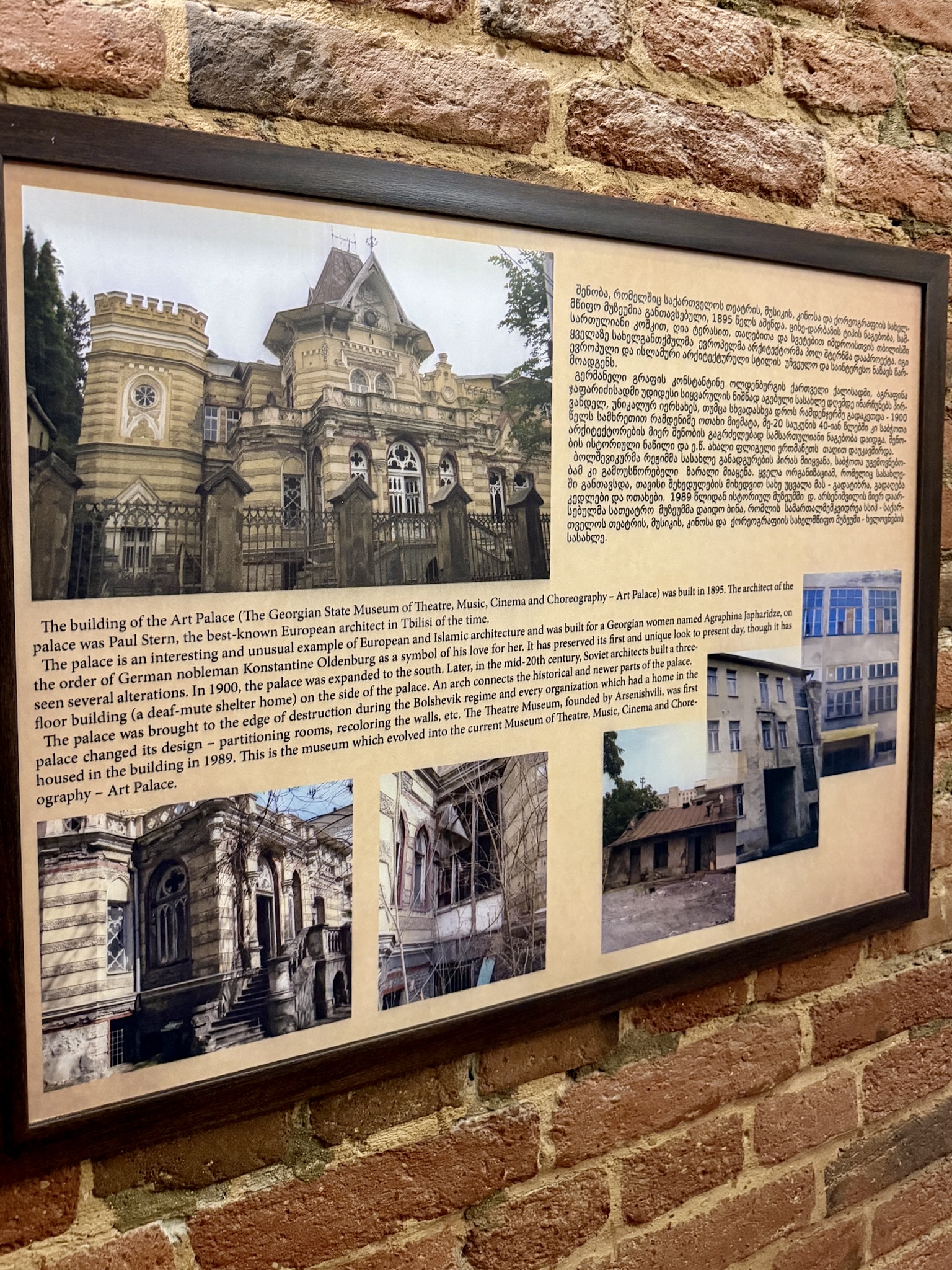
The building itself is reason enough to stop by. It went up in 1895, designed for Prince Constantine Oldenburg, who commissioned it as a gift for Agraphina Japaridze, a Georgian noblewoman he fell for after meeting her in Kutaisi (she was already married at the time, which apparently didn’t slow either of them down). They eloped to Tbilisi, and Oldenburg built her a palace to match the gesture: turrets, a steep tiled roof, pointed Gothic arches mixed with Islamic-style detailing on the windows. It doesn’t look like anything else on the street, or honestly anywhere else in Tbilisi.
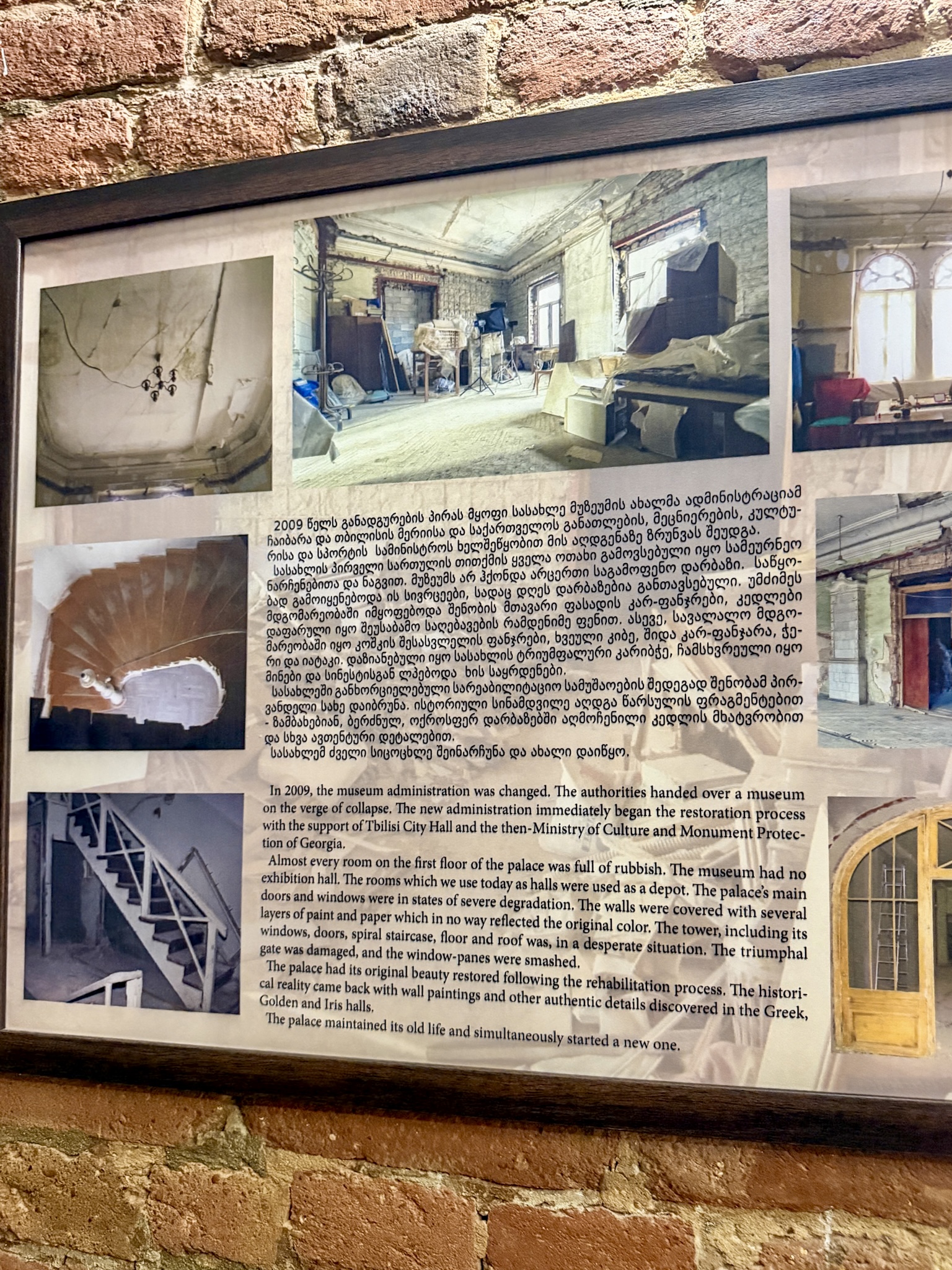
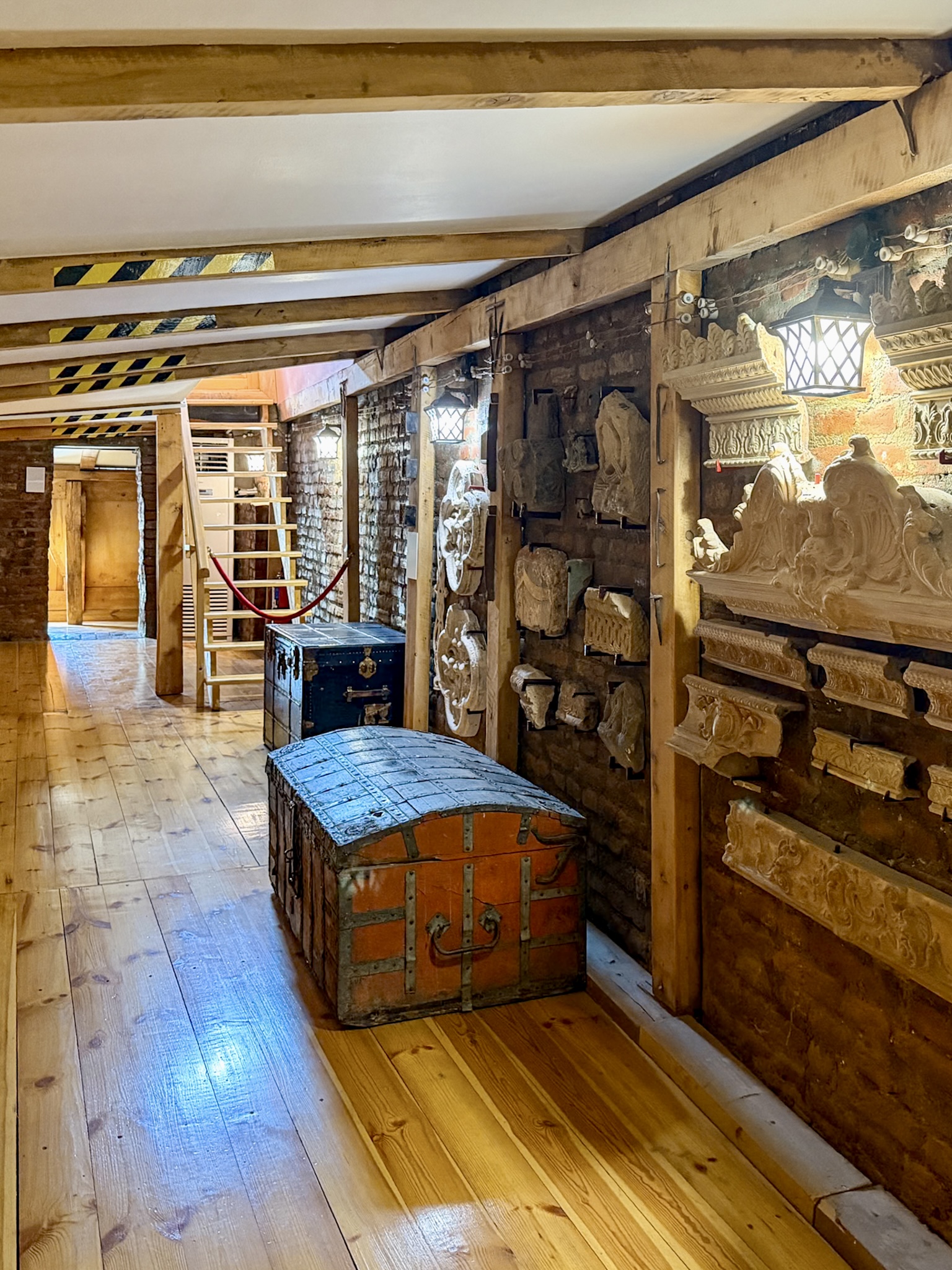
The building became a museum in 1927, when theatre historian David Arsenishvili moved his collection in. It came close to disappearing altogether recently: by 2009, the roof leaked, the windows were smashed, and most of the collection was sitting in a damp cellar. The restoration that followed is the reason you can walk through gilded rooms today instead of construction scaffolding.
Best Things To See in the Art Palace
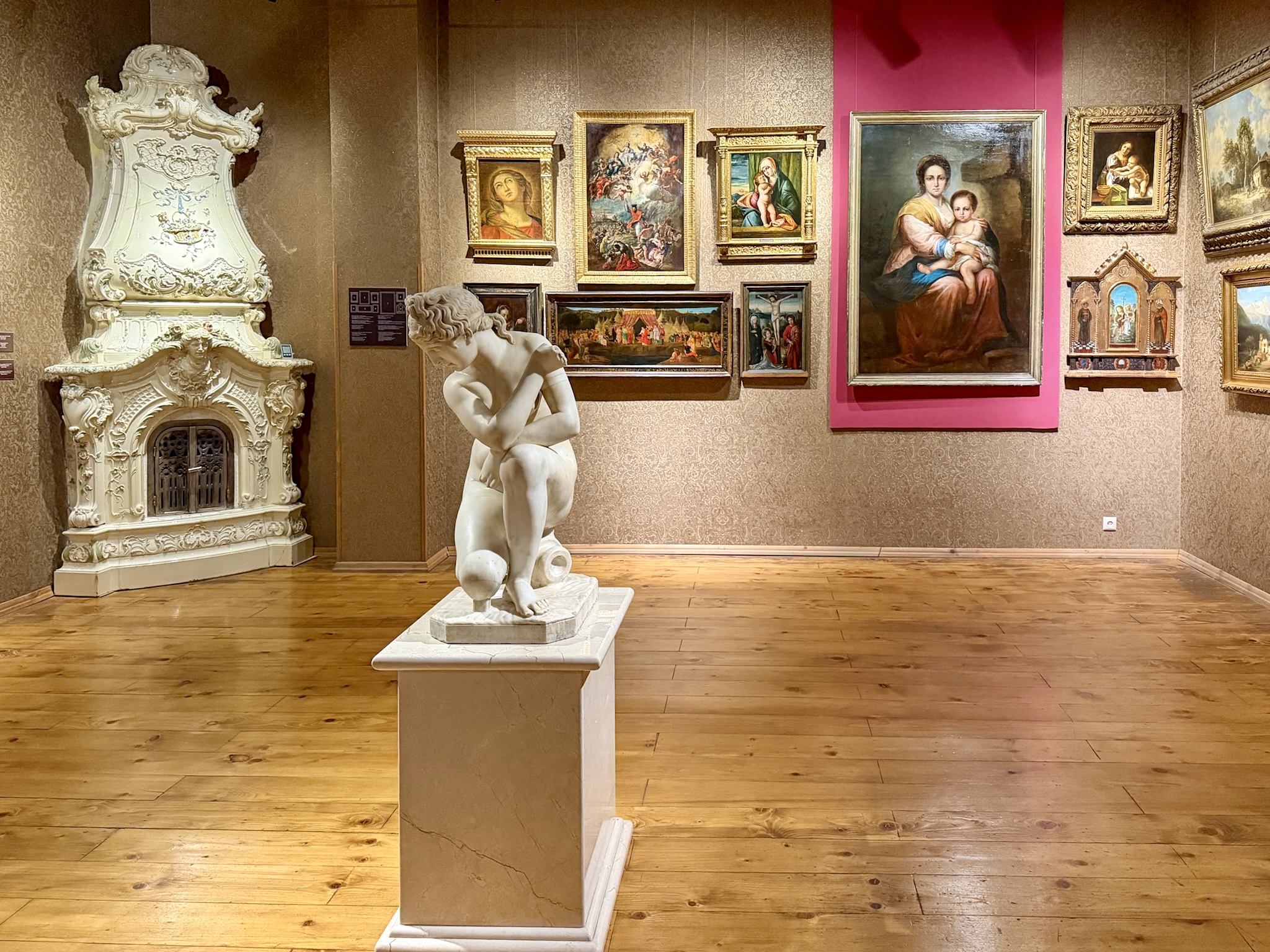
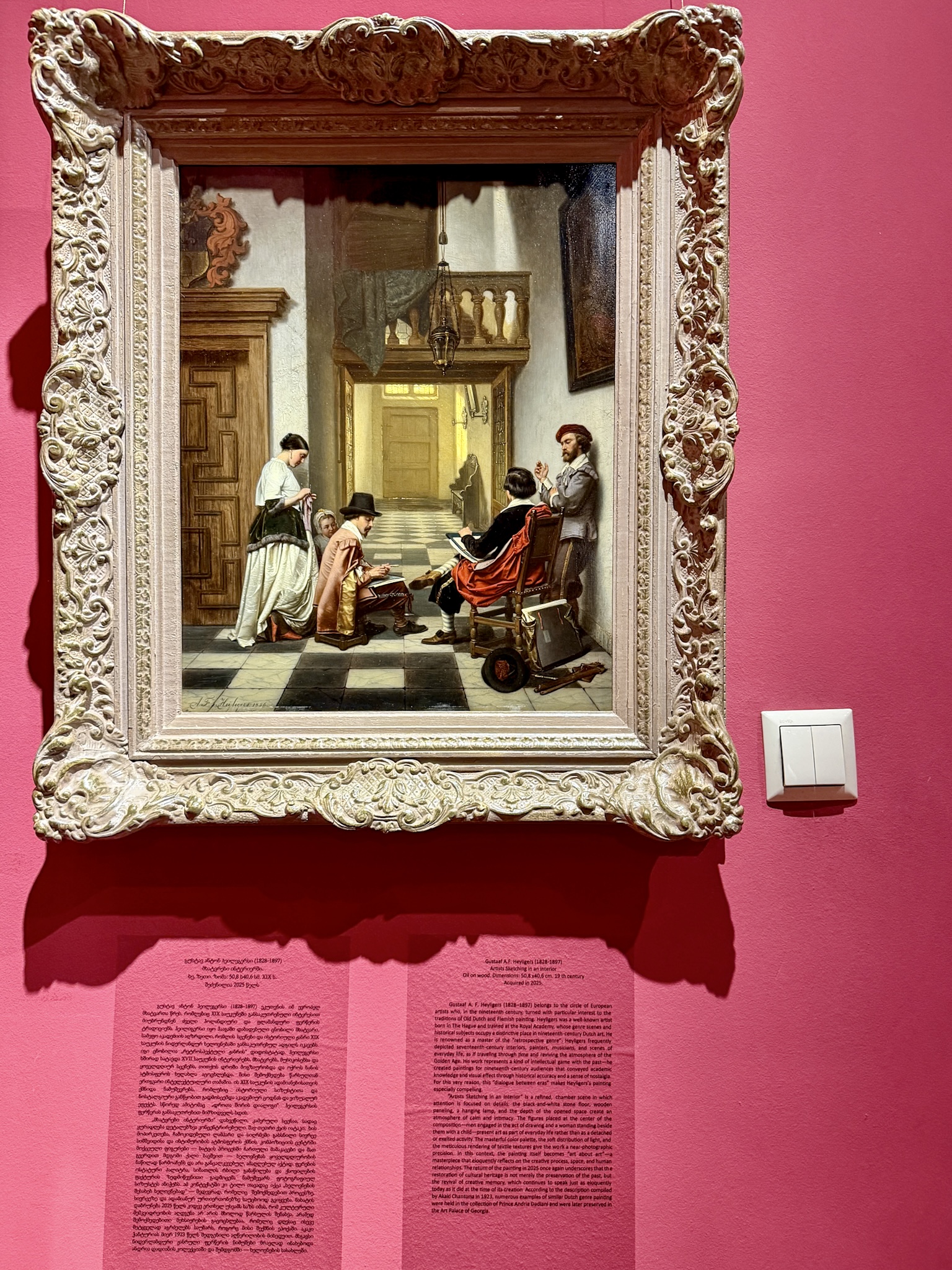
The first room on the ground floor is where we stopped the most.
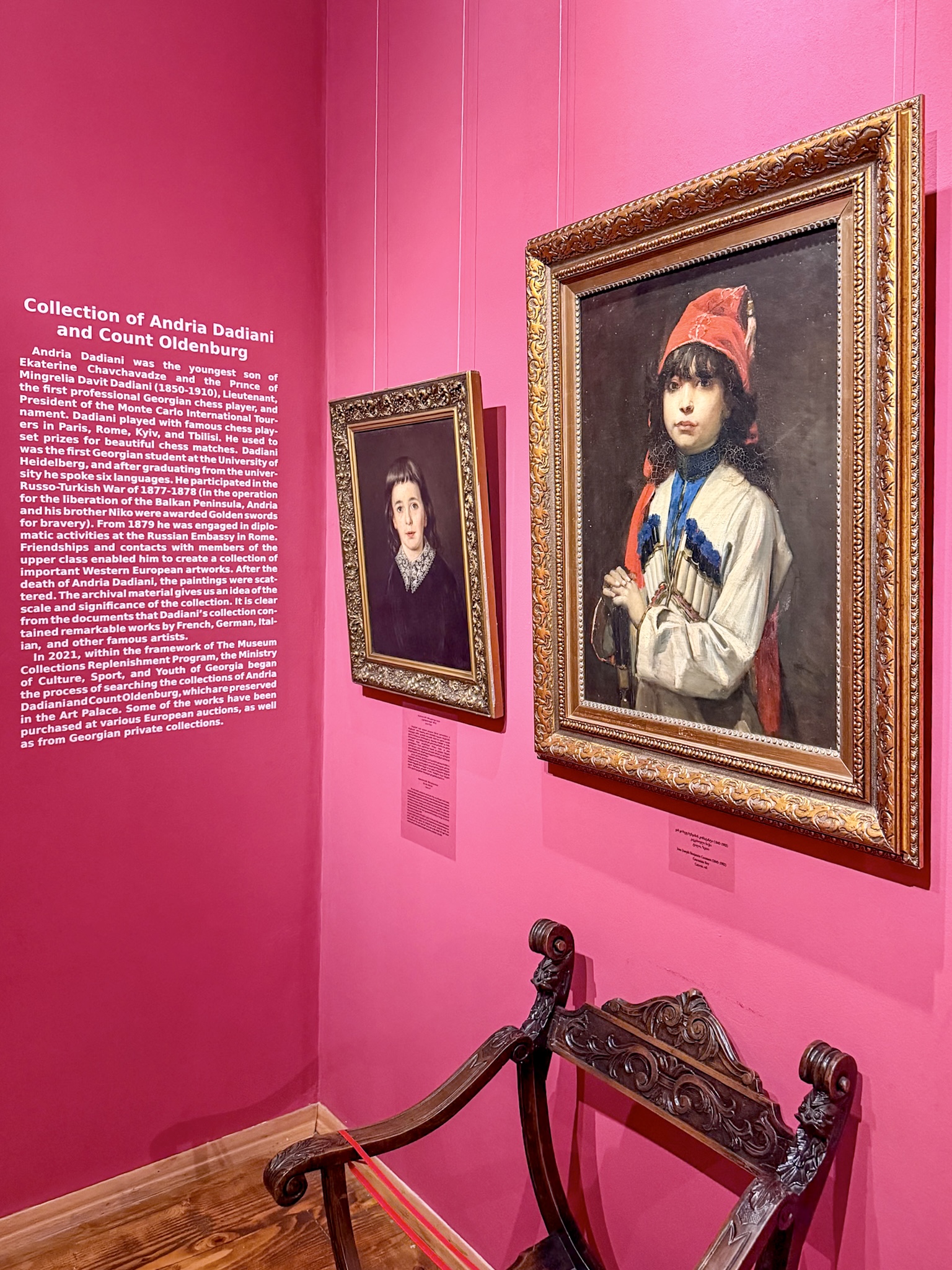
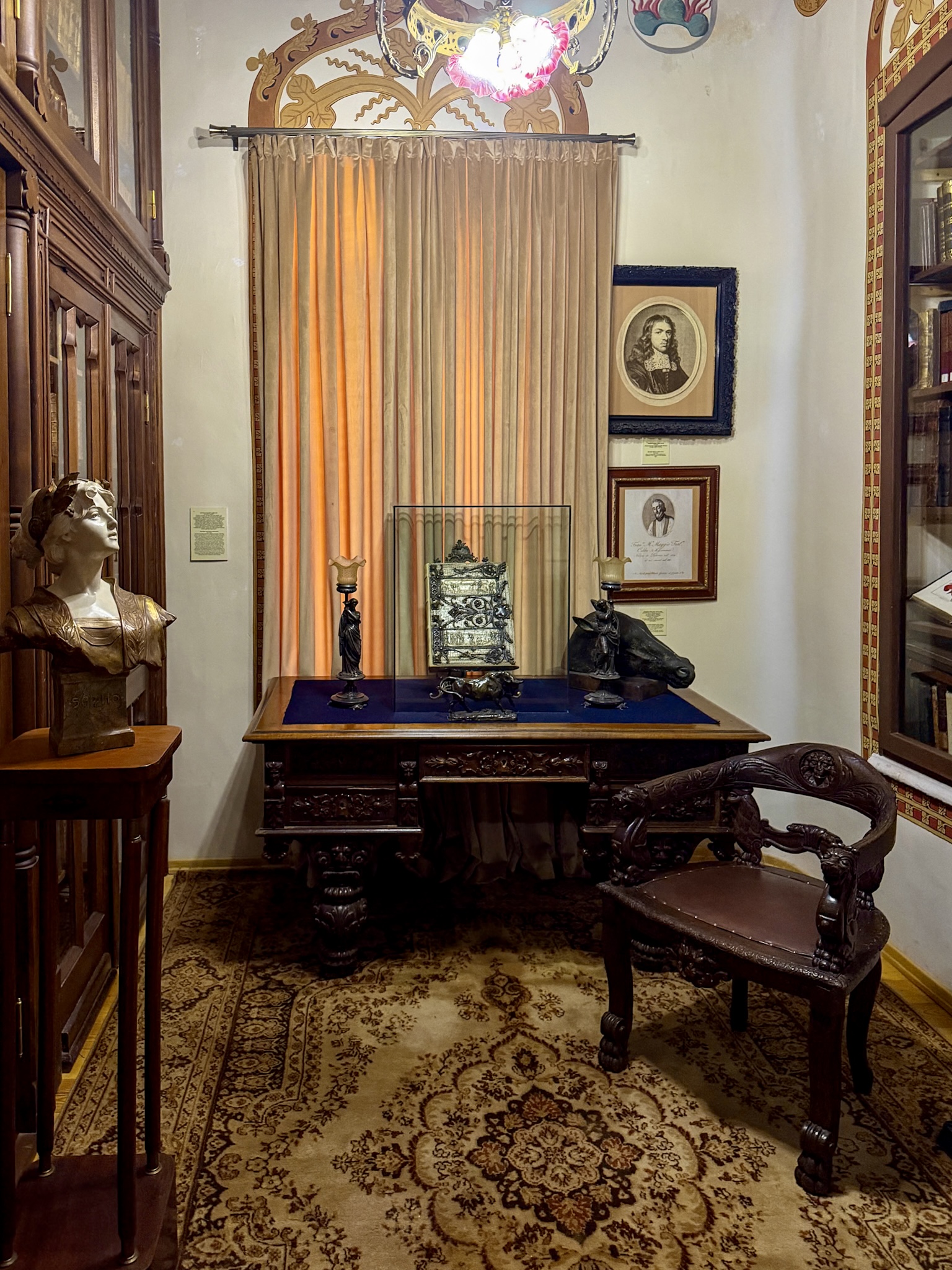
They hold a chunk of the Dadiani-Oldenburg collection, put together by Andria Dadiani, a Georgian aristocrat who spent time at the Russian Embassy in Rome and picked up European art through friendships with the upper class there. There are many beautiful examples, but one that stuck with me was a warm, intimate Madonna and Child, attributed to the school of Leonardo da Vinci.
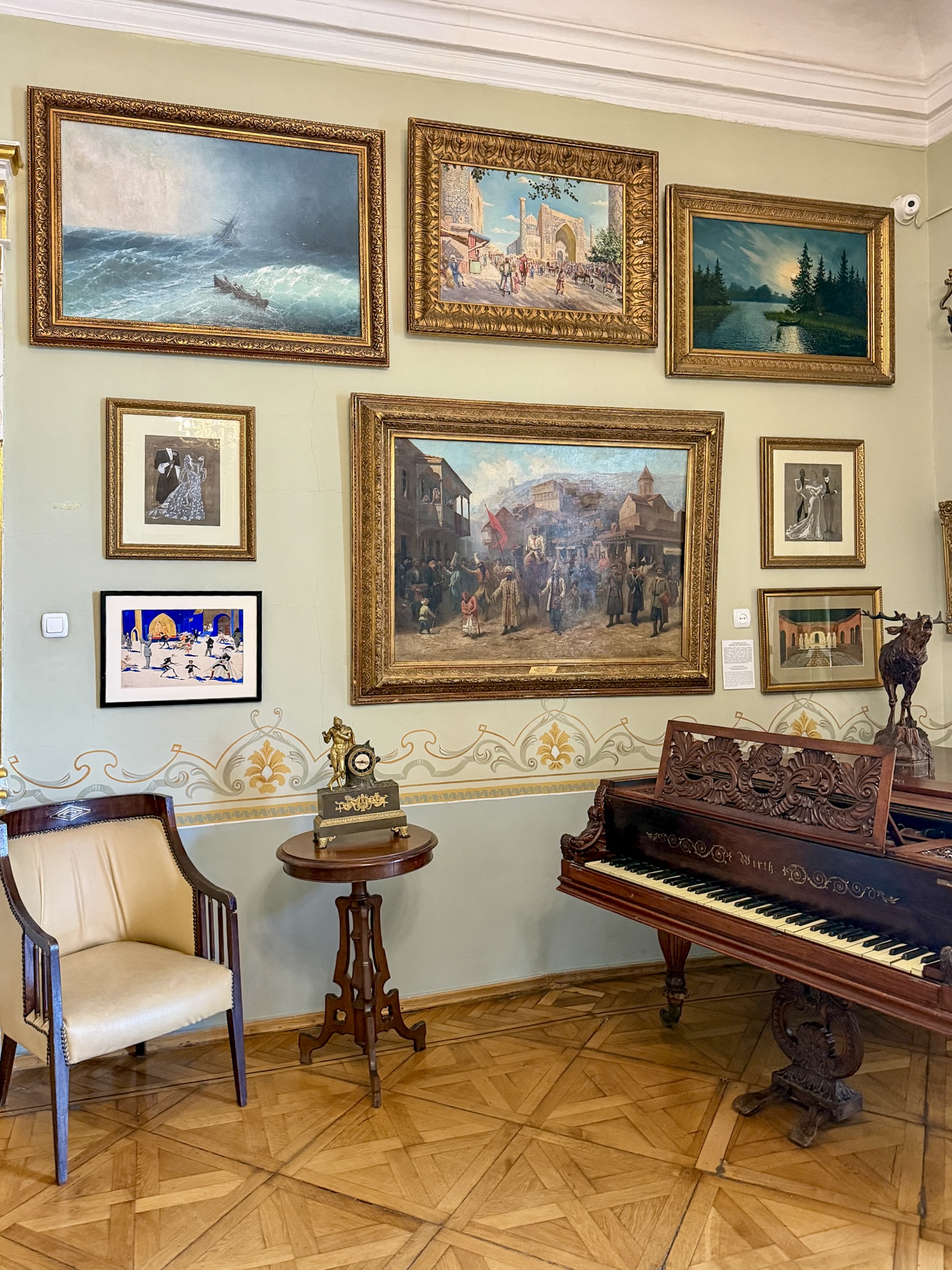
A few rooms over, look for “Samarkand” by Richard Zommer, a German-born painter who spent decades documenting Central Asia and the Caucasus before Soviet authorities repressed him in the 1930s for being part of Tbilisi’s German community. His street scene of a Registan-style madrasa sits near a moody, storm-tossed seascape and a large genre painting of a procession through old Tbilisi, camel included. None of the labels on these gave us much beyond a name and a date, so don’t expect wall text to do the work for you here.
Costumes, Jewelry, and Theater Relics
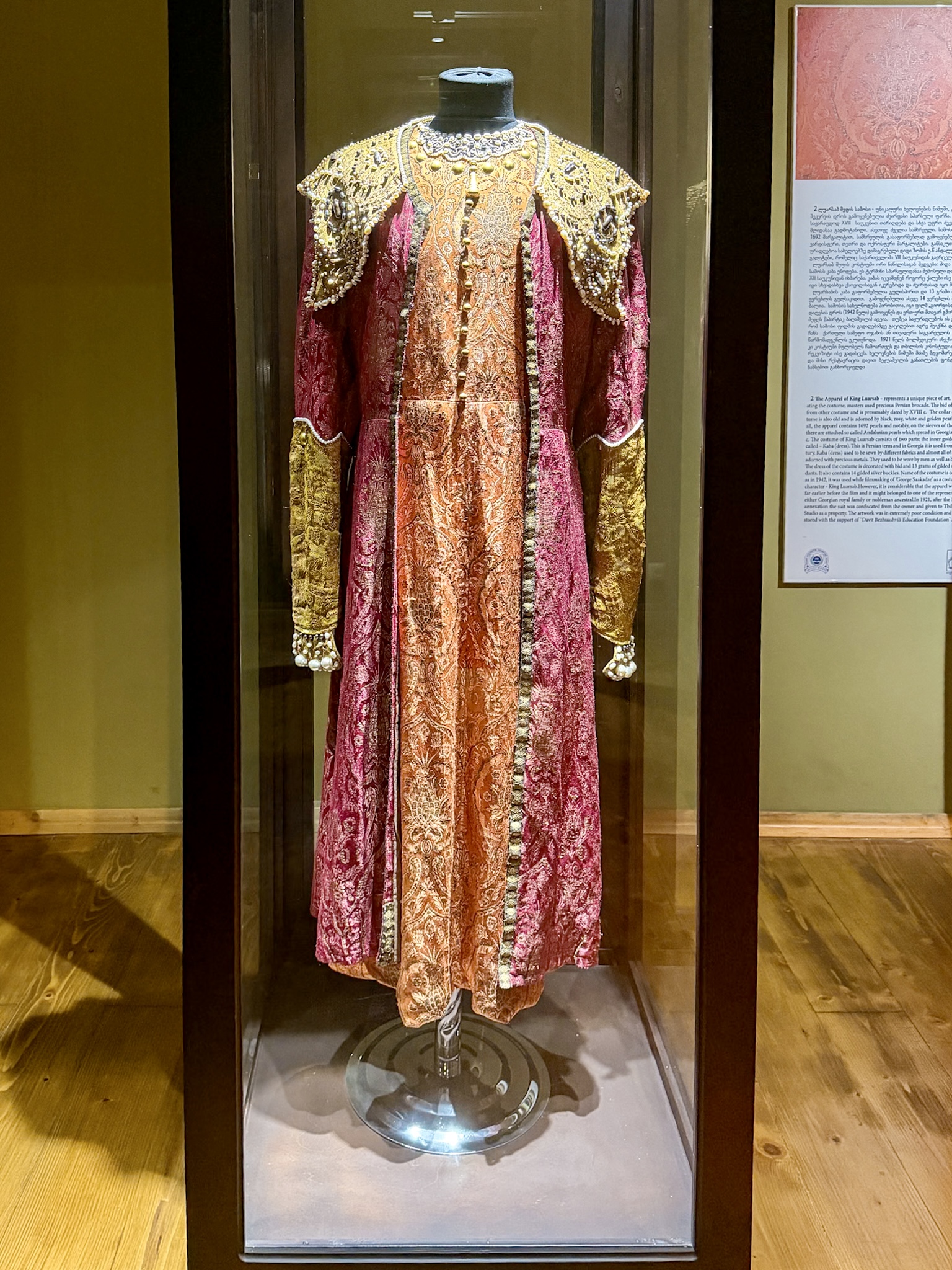
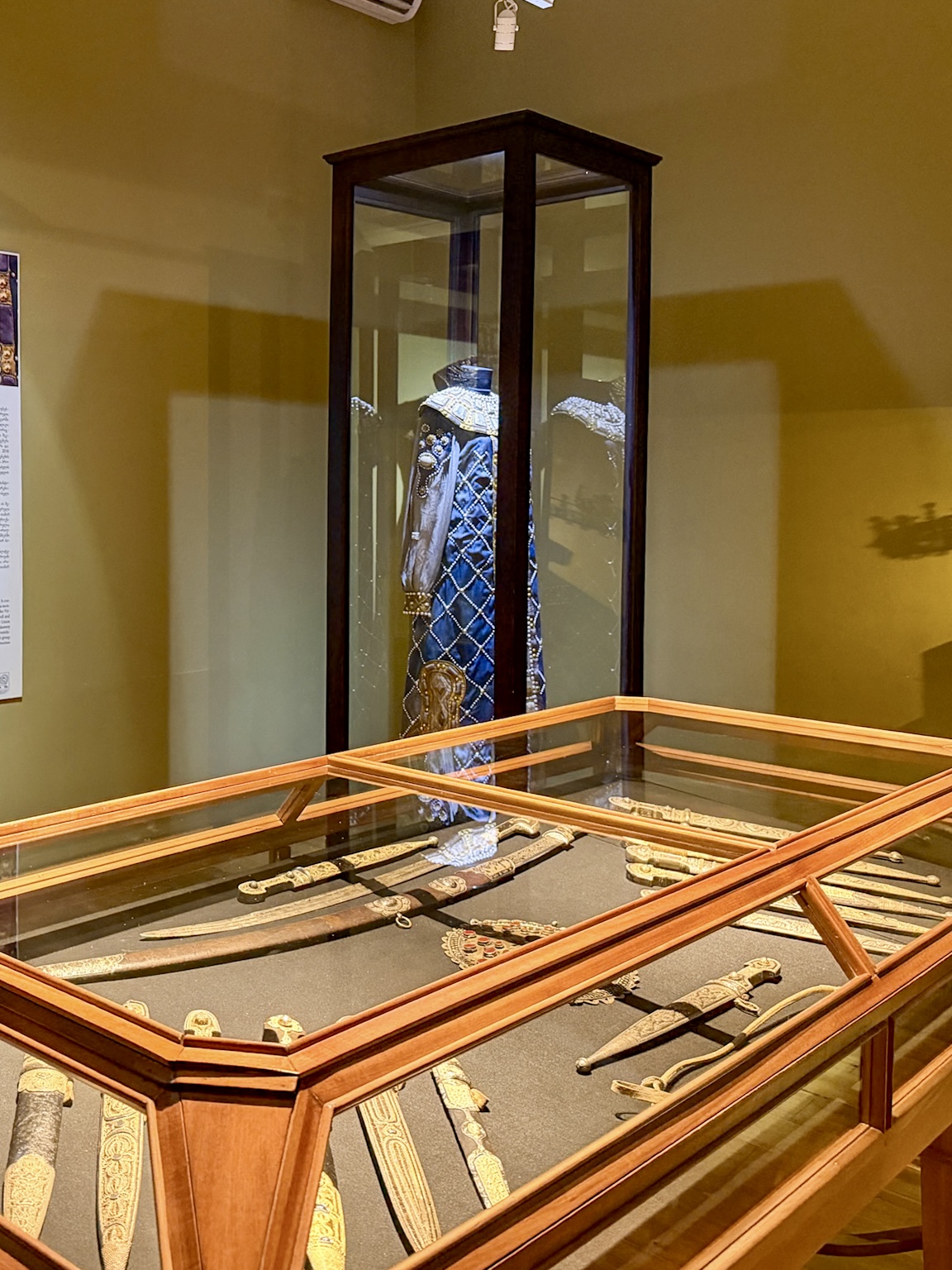
One vitrine holds what’s labeled as the apparel of King Luarsab, a Persian-brocade robe in burgundy and gold with over a thousand pearls sewn into it, later reused as a film costume and restored after sitting in poor condition for decades. Next to it, a case lays out ceremonial swords and daggers with worked silver handles, the kind of thing you’d expect behind glass at a much bigger institution.
Look for Petre Otskheli’s set and costume sketches too. He designed for Georgian theatre in the 1920s and 30s before being executed during the Stalinist purges at 34, and the museum holds 362 of his works, more than anywhere else. It’s a small, quiet way to run into one of the more painful chapters of Georgian art history.
The Period Rooms
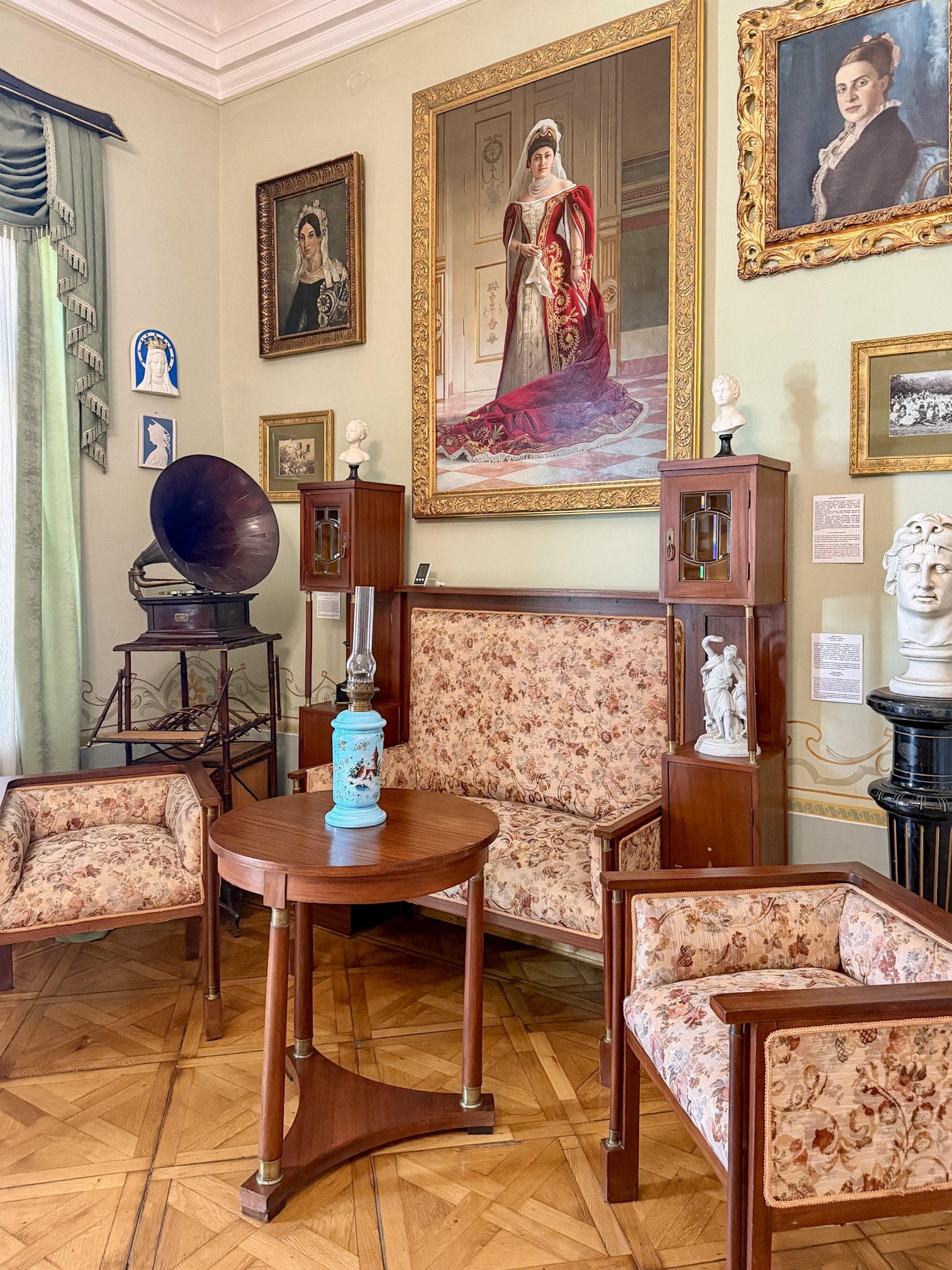
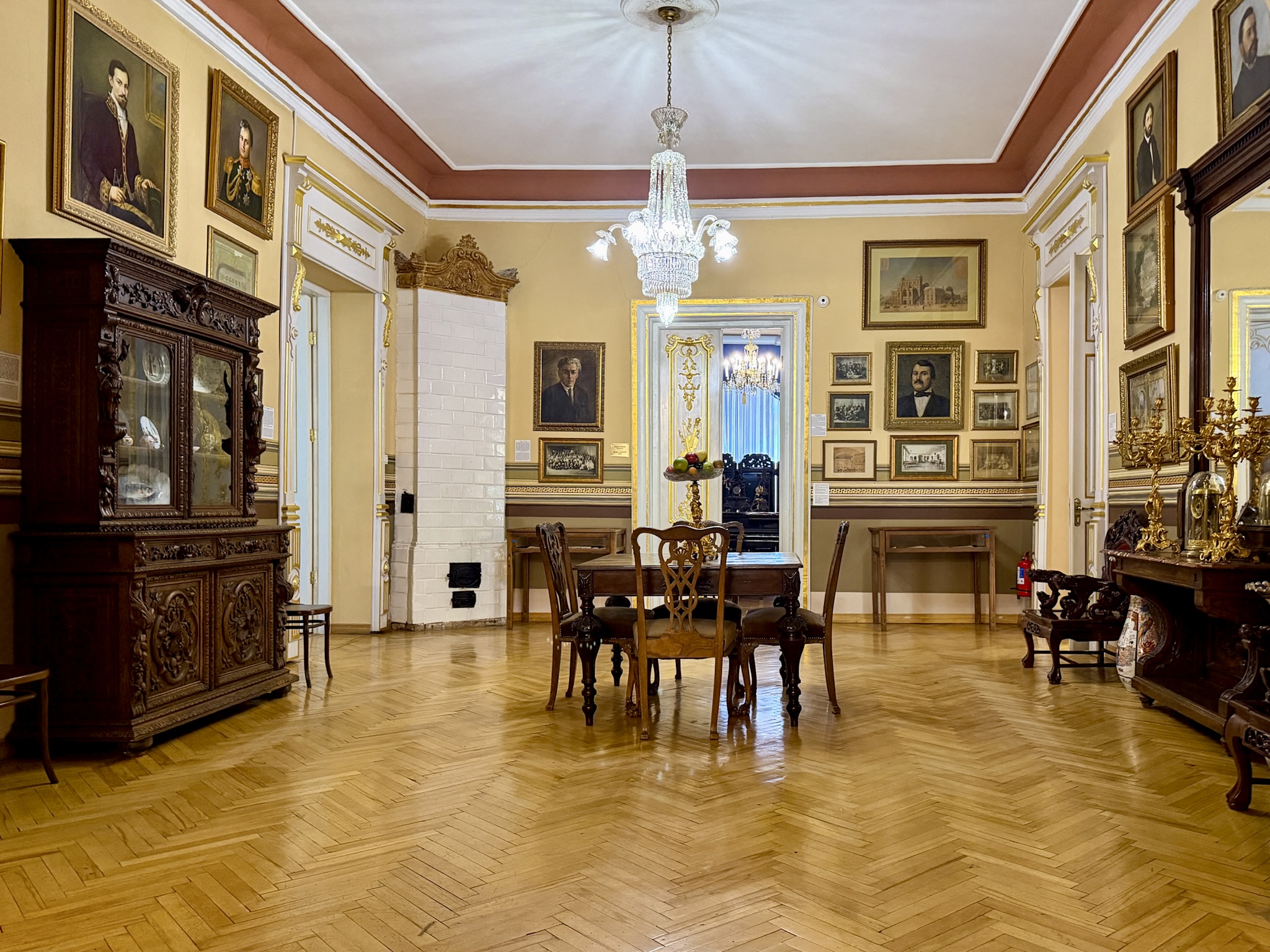
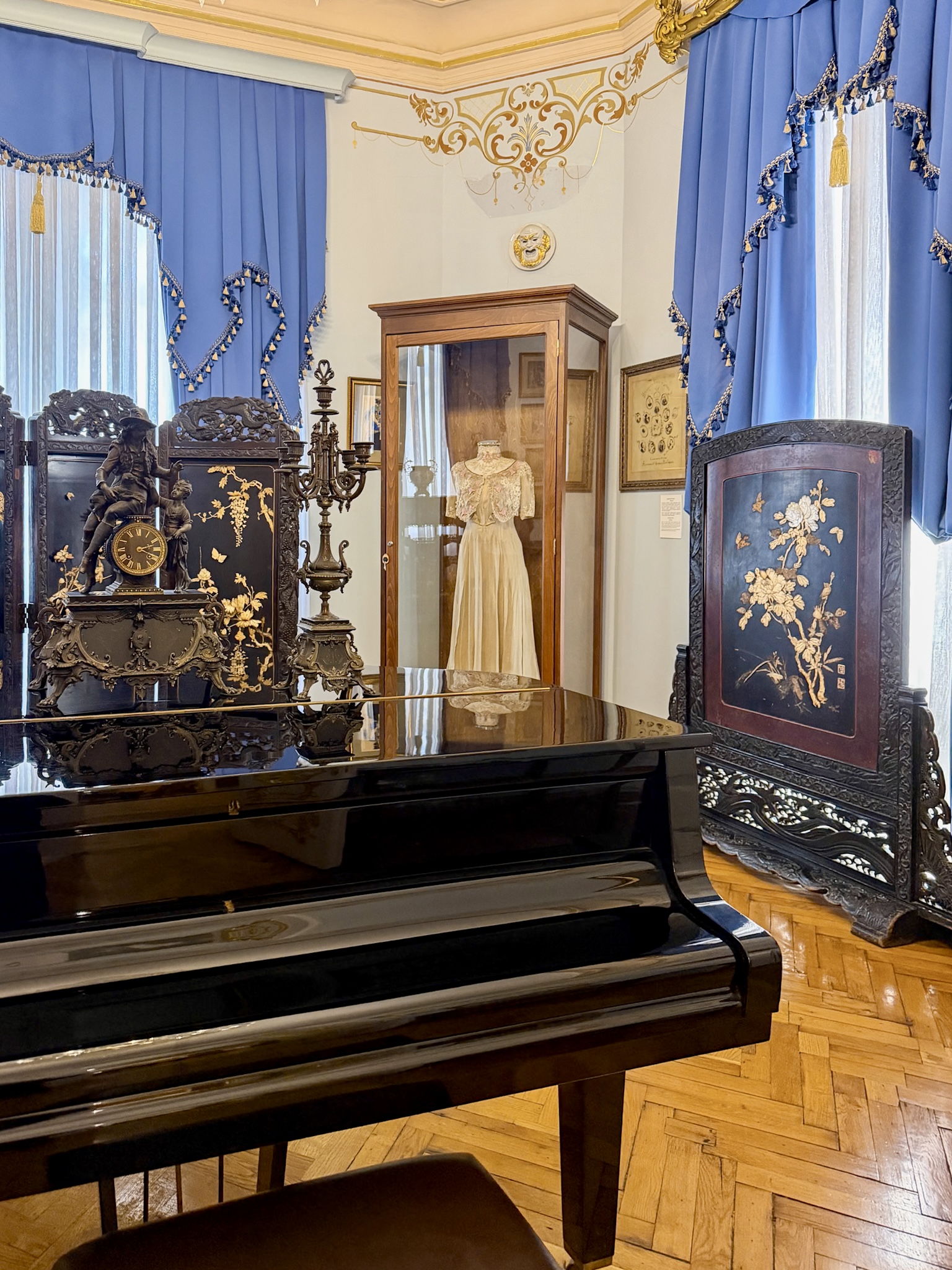
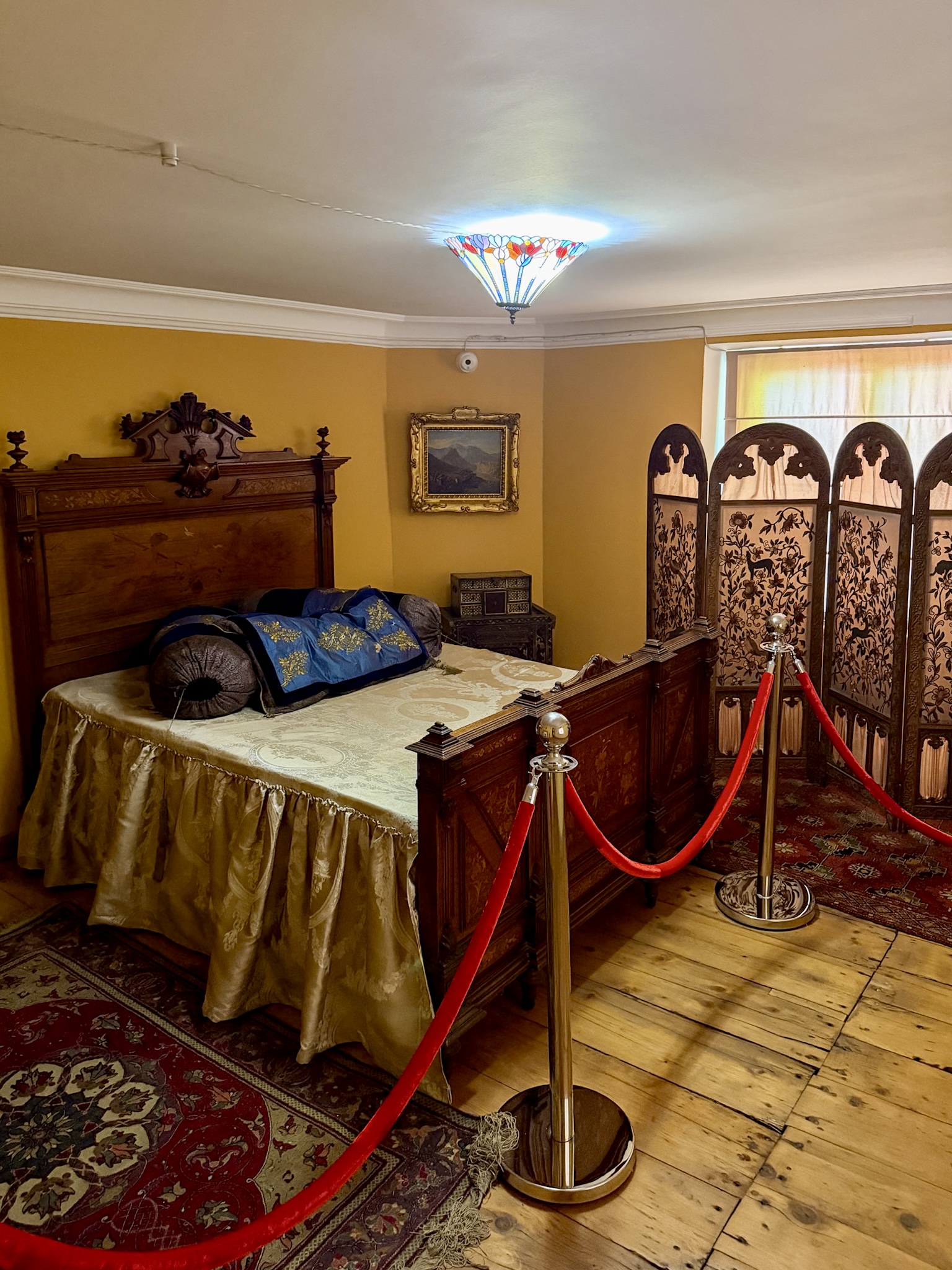
If you keep walking straight, the palace stops being a museum for a minute and turns back into a house. The music room has a black grand piano, folding screens lacquered with mother-of-pearl birds and flowers, and blue velvet curtains heavy enough to mute the street outside. A parlor holds a working gramophone from another century, floral armchairs, and a wall of family portraits stacked frame to frame the way old European houses used to hang them. The dining room has its original parquet floor and a chandelier that still lights up.
The Secret Room at the Art Palace
Past all the rooms, a narrow wooden staircase leads up into the attic, tight enough that you’ll want to go single file. It opens into what staff and visitors alike call the “secret love room,” supposedly built by Oldenburg as a private space for him and his wife, tucked away from the rest of the household. It’s warm up there! There’s a sign at the bottom of the stairs to help you find it, but lots of people walk right past it.
My Final Take of The Art Palace: Worth a Visit or Not?
Most people planning a Tbilisi trip only budget time for one big museum, and the National Museum wins that slot by default, but it’s not because the Art Palace has less to offer.
The museum picked up a Best Museum in Georgia award at the 2025 International Travel Awards, and its TripAdvisor reviews run consistently glowing. I think it’s a case of a museum that impresses everyone who actually walks in but doesn’t come up when people are making their shortlist.
The one real downside I found was the lack of labeling and descriptions. Most rooms have a name and a date next to each piece and not much else, no general introduction, so unless you already know Georgian art history, a lot of context goes missing. We asked about a guided tour on the way in and were told to check back at a specific time, which didn’t work with our schedule that day. If getting the full story matters to you, ask at the ticket desk for a guided tour.
But overall, I would say yes, the Art Palace is worth a visit. It won’t take up your whole afternoon, it’s a five-minute detour if you’re already near Fabrika, and you’ll walk out having seen more than you expected for 10 GEL.
-
-
Pair it with our guide to the National Museum of Georgia if you want the country's ancient and Soviet-era history to go with this, or check my full ranking of Tbilisi's best museums if you're trying to figure out which ones to add to your itinerary.
-