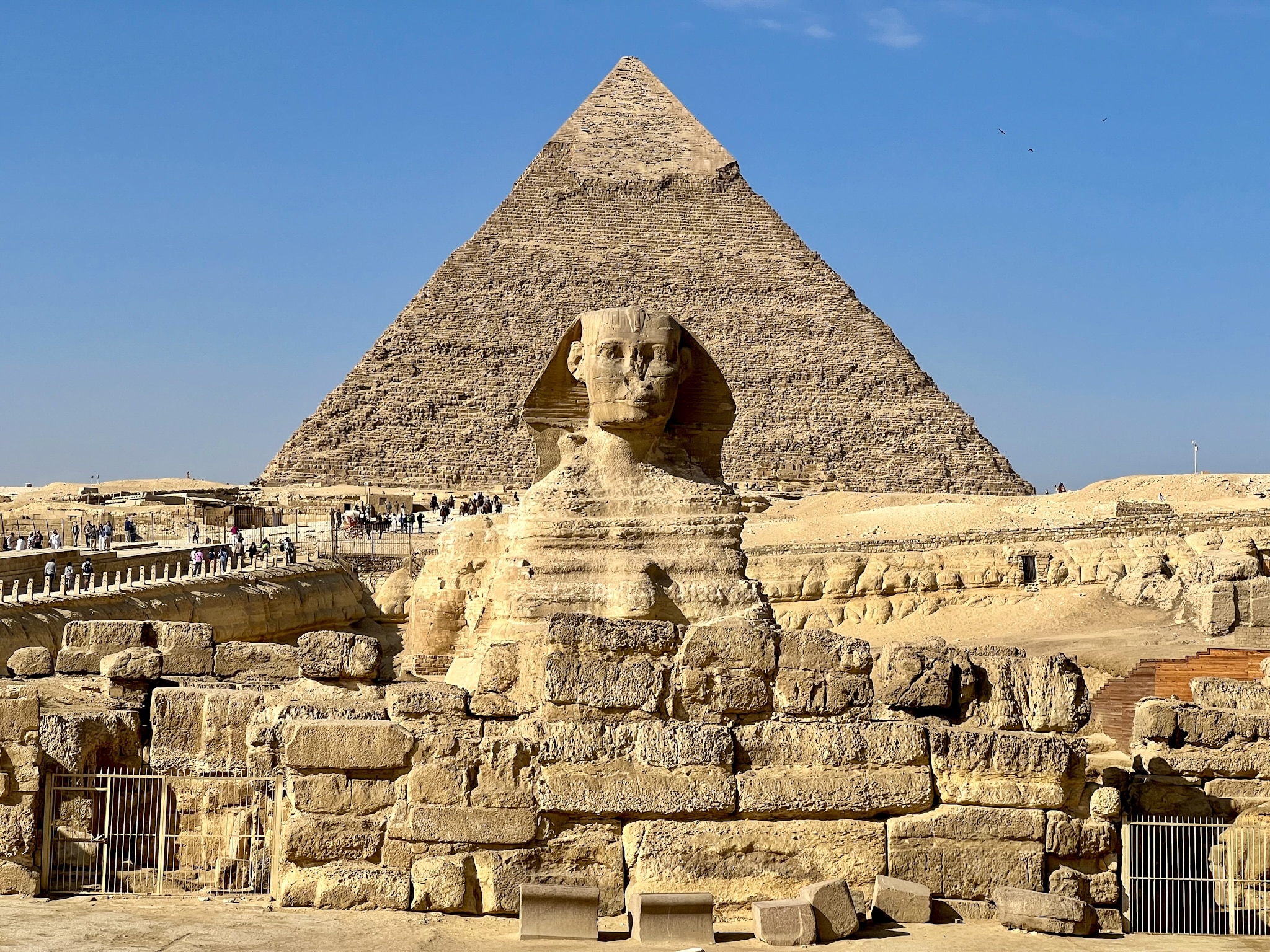
A practical look at Egypt independent travel, from checkpoints and permits to trains, pricing gaps, safety, and which experiences still require agencies.
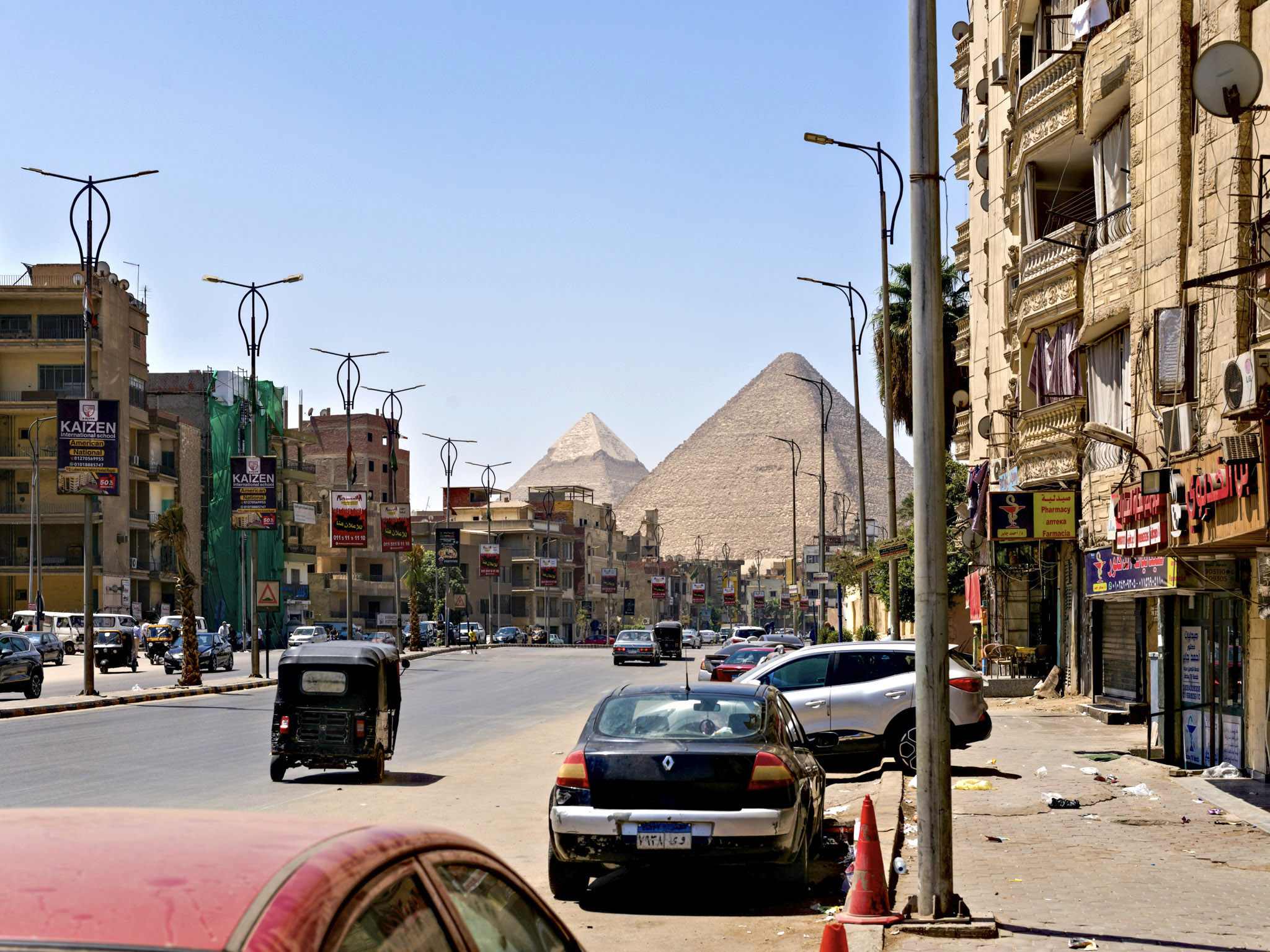
Traveling independently in Egypt isn’t forbidden or openly discouraged by authorities. On paper, Egypt looks manageable for seasoned travelers used to planning trips on their own: trains connect major cities, roads span the country, hotels are everywhere, and the main archaeological sites are well mapped and heavily visited. Nothing suggests that moving independently should be especially complex.
And yet, once you’re there, things start to blur: random permit requirements, repeated checkpoints, transport complications, pricing uncertainty with incessant negotiation discussions; rules are only vaguely implied, and while information exists, they change depending on who you ask, where you are, and how you’re traveling.
The truth is Egypt’s tourism ecosystem is optimized for intermediated travel, meaning guides, drivers, cruise operators, and organized transfers quietly absorb a long list of logistical and administrative frictions that independent travelers end up facing directly.
Here we’re looking at where independent travel in Egypt runs into its limits in day-to-day practice, so you can decide how independent you actually want to be.
The Missing Rulebook
Independent travelers usually expect to find a centralized, authoritative set of practical guidelines before arrival. In Egypt, that expectation is wrong. Information is unevenly published, spread across unrelated sources, and often only partially verifiable.
For opening times and accessibility, the situation is uneven. Major sites such as the Grand Egyptian Museum, the Giza Plateau, and the most famous temples in Luxor publish clear daily hours and last-entry times. The same clarity disappears outside the main circuit. Wadi al-Hitan in Fayoum, despite being a UNESCO World Heritage Site, does not have consistently published official opening hours on Egyptian government tourism portals. Visitors rely on tour-operator pages, which frequently omit hours or list different timings. The same applies to White Desert National Park, where access hours and on-site availability are not documented through a single official source.
Travelers planning to drive also expect clear, official guidance on access conditions for highways, checkpoints, natural reserves and remote areas. In practice, Egypt does not maintain a unified, visitor-facing portal, so there is no national reference that clearly states which areas or sites are freely accessible, which are seasonally limited, or which require coordination or permits in advance. For desert locations and oases in particular, this information is only bundled into tour descriptions.
Visitors also look for site-specific visiting rules, such as dress codes, photography restrictions, or seasonal limitations. These rules are mostly known by locals, and even then, you’ll find that they are frequently bypassed by travelers escorted by local guides willing to tip the right personnel. For monasteries, desert sanctuaries, and local cultural sites, travelers can barely rely on third-party descriptions.
The result is a lack of reference. Independent travelers in Egypt are often able to go where they plan, but only after piecing together information from promotional sites, private operators, and informal sources.
Permits, restricted areas, and the gray zone
For some destinations in Egypt, autonomous travelers cannot verify in advance whether access is fully unrestricted, conditionally allowed, or subject to informal authorization.
A clear example is Siwa Oasis. Siwa is a well-established tourist destination, reachable by paved road and regularly visited. However, official Egyptian tourism portals do not publish any explicit statement clarifying whether independent access by private car is always permitted or whether prior coordination is required. Travelers typically rely on third-party guides, hotels, or local drivers to confirm access shortly before departure.
The same applies to Bahariya Oasis and overland routes between Western Desert oases. These routes are widely used by tour operators, yet there is no public, visitor-facing reference explaining whether independent travel along the same roads is treated identically, conditionally, or differently. No official source specifies when permits apply, who issues them, or whether individuals can obtain them without an intermediary.
This uncertainty is not limited to desert travel. Independent travelers also struggle to find authoritative guidance on which routes are considered ordinary intercity travel and which are treated as special cases, even when both connect well-known destinations.
Even in cases where permit requirements are stated, such as for passing through the Sinai tunnel to reach the Sinai Peninsula and Saint Catharine by car, independent compliance is not straightforward, as there is no public online system for foreign travelers to apply on their own. Permits for those areas are typically obtained through tour operators.
Checkpoints as a planning variable
Police and military checkpoints are a routine part of intercity travel in Egypt, including on roads commonly used by tourists. Their existence is explicitly acknowledged as a normal feature on highways and routes between cities.
What is missing is procedural guidance. No Egyptian tourism authority publishes a traveler-facing explanation of how checkpoints operate in practice, no list of roads where checkpoints should be expected, no indication of frequency, and no guidance on how to properly go through them.
Official foreign guidance confirms identity checks, but stops short of specifics. The UK Foreign Office and the U.S. Department of State both note routine checks on roads, yet neither publishes a checklist stating which documents are always required for passengers versus drivers, or whether copies are acceptable. Vehicle documentation is not clearly addressed in any tourist-oriented source.
There is also no standardized description of what happens at a checkpoint. Official sources do not explain what questions are typically asked, how long stops usually last, or under what circumstances travelers may be delayed, redirected, or asked for additional information.
What is not documented but is observable on the ground is that organized travel vehicles are routinely processed differently. Based on recent firsthand experience, vehicles operated by recognized drivers and accompanied by licensed guides are directed through preferential lanes or waved quickly, while independent vehicles are handled individually.
Getting around by car on your own
Driving in Egypt is legally permitted for foreign visitors, but the details are difficult to assess before arrival and materially different from most destinations.
License requirements are simple but often misunderstood.
Foreign visitors are allowed to drive in Egypt using either an International Driving Permit (IDP) accompanied by their home license, or in some cases their national license alone, depending on the rental agency. This requirement is stated by major international rental companies operating in Egypt, but it is not clearly summarized on any Egyptian government tourism portal.
Driving rules exist, but enforcement is inconsistent.
Egypt has a formal traffic code, but day-to-day driving does not follow right-of-way rules:
- Lane discipline is largely absent. Vehicles routinely stop, merge, or reverse without warning. Pedestrians cross multilane roads freely. Informal microbuses and taxis dominate traffic flow in an aggressive way. Traffic lights barely exist, and when present, are often ignored. Horns are used as primary signaling.
- Street lighting is inconsistent outside major arteries, especially at night. Signage is limited, sometimes only in Arabic, and often positioned too late to allow safe lane changes.
- Road conditions can change abruptly, including unmarked speed bumps, construction zones, or damaged surfaces, without advance warning.
All these conditions are widely reported by foreign drivers but are not described in practical terms by official travel sources, so you may not understand how truly stressful and risky it is to drive in Egypt until you’re actually there.
Parking is informal at best.
Outside hotels and a few regulated facilities, parking is usually unmanaged. Travelers rely on informal attendants who claim control over street parking and set prices on the spot, usually requiring higher payments from tourists. There is no official guidance on where parking is permitted, how much it should cost, or whether payment is mandatory.
Intercity driving adds uncertainty rather than clarity.
Highways connect most major destinations, but travel times are difficult to predict. Independent drivers must account for traffic congestion at city exits, roadworks that are not publicly announced, and delays caused by checkpoints. No official source provides realistic travel-time estimates or route-specific guidance for private drivers.
Trains between cities
Trains are often presented as the most reasonable alternative to driving. They connect Cairo with Alexandria, Luxor, Aswan, and other major cities, and they are widely used by locals and tourists alike. In theory, this looks like the most predictable way to move around the country. In practice, it comes with its own set of constraints.
There is an official operator, but not a tourist-facing system.
Intercity rail services are operated by Egyptian National Railways. The authority maintains an official website and publishes timetables, but the information is not organized around foreign travelers’ needs. Schedules are available, yet they are subject to frequent changes, and there is no clear statement explaining how reliable individual services are or how often last-minute adjustments occur. Third-party sites like “EgyTrains” exist to fill that gap but are not official.
Online booking technically exists, but with limits.
Egyptian National Railways offers online ticketing, for Egyptian nationality only, reservation for other nationalities is currently highlighted as under construction. Some trains may also appear unavailable online while still being sold at stations. There are some websites that can book foreigner fares for trains in Egypt, but they may still require manual checks or adjustments on the day of travel. For this reason, most independent travelers prefer booking trains directly at the stations, where ticket offices for tourists can usually be found.
Ticket classes matter
Not all trains are functionally equal for visitors. Air-conditioned services, newer rolling stock, and specific classes are typically recommended to foreigners, while others are implicitly discouraged. Autonomous travelers must work out which trains are considered acceptable through hotel advice, third-party booking sites, or on-the-ground trial and error.
Stations add another layer of friction.
Major stations in Cairo, Luxor, and Aswan are busy, crowded, and not always intuitive for first-time users. Platform changes, boarding procedures, and last-minute announcements are rarely communicated in English. Tourists are often reliant on station staff or other passengers for basic confirmation, which expose them to scams, even when holding valid tickets.
Compared to driving on your own, trains remove the stress of traffic and road conditions, which is why it’s considered the best option for independent travel in Egypt between major cities. While I mostly agree, they are not the frictionless solution they appear to be. The gap between published information and real-world operation is real.
Price uncertainty and negotiation
At Egypt’s most visited sites, prices are clear. Entry fees are posted, tickets are standardized, and payment happens through official channels. Step outside that core circuit, and things change.
Official pricing stops at the gate.
Major museums and temples publish fixed entrance fees. The moment a visit involves transport, access to a secondary site, or a “service” rather than a ticket, prices are rarely documented anywhere official. Travelers are left without a reference point to distinguish between a legitimate charge or a fee that was made-up for you on the spot.
Transportation is especially tricky as scams are frequent.
Outside ride-hailing apps and hotel-arranged transfers, taxi fares are almost never fixed. Meters are unused, and there is no public fare table travelers can consult. Prices are negotiated on the spot and can vary significantly based on language, perceived experience level, or simply willingness to walk away. The most frequent issues reported by independent travelers are transactional, and common patterns include:
- being quoted one price, then told it was “per person” or “one way” only after arrival
- being charged extra for services initially offered as a courtesy, such as basic explanations, or access to viewpoints
- being redirected to “official” shops, parking areas, or secondary entrances that add fees
- even through Uber, it’s not unusual for a driver to contact you through the chat to request extra payments in cash
Informality blurs the line between service and obligation.
Parking attendants, guards, and self-appointed helpers often position themselves as mandatory intermediaries. Payment is implied, and declining can feel socially awkward. Again, the issue is not hostility, not usually at least, but the absence of clearly published rules.
For independent travelers, the result is constant low-level negotiation which is mentally taxing and difficult to budget around. This is where Egypt’s lack of published standards is felt most immediately, and where organized travel often feels easier because prices are decided in advance.
Accommodation and the reliability gap
Booking accommodation independently in Egypt is the norm, and normally recommended, even if you plan to rely on guides or agencies for transport or excursions. The friction here is not access, but verification. The gap between what is advertised and what is delivered is often wider than online listings suggest.
Online reviews are unevenly reliable
Properties often have:
- a small number of reviews clustered in short timeframes
- good ratings that are driven by initial hospitality, or full-on requested on the spot by hotel staff in exchange for small benefits
- little separation between owner, staff, and reviewer ecosystems
Photos are frequently aspirational rather than descriptive.
Heavy editing is common. Wide-angle lenses exaggerate room size, lighting is optimized to hide wear, and exterior photos may be outdated or selectively framed. This is not limited to budget properties, even mid-range hotels often look significantly better online than in person, especially in terms of maintenance and surrounding context.
Airbnbs require extra scrutiny.
Short-term rentals are where expectations and reality diverge most often. Common issues reported by Egypt independent travelers include:
- being shown one apartment and given another on arrival
- listings that represent a building or category rather than a specific unit
- pressure to accept additional paid services after check-in, such as cleaning, transport, or “assistance”
These situations are rarely unsafe, but they complicate arrival and undermine planning, especially late at night or after long travel days.
International chains and established hotels offer more consistency in terms of check-in, payment, and room allocation. However, even here, expectations need adjustment.
Safety concerns
Safety issues in Egypt are not usually about violent crime or physical threat. They are about persistent pressure, especially in tourist-facing environments, and the mental fatigue that comes with managing it.
Vendors are the primary source of friction.
At major sites, in markets, and around transport hubs, unsolicited offers are constant. Sales tactics often rely on escalation rather than clarity: a greeting turns into a pitch, which turns into walking alongside you, which turns into insistence. This behavior is normalized locally, but it can be exhausting for travelers who are not used to continuous negotiation.
Male teens amplify the pressure in some areas.
In certain tourist zones, groups of teenage boys or young men act as informal intermediaries, offering directions, “help,” or access. The interaction is usually framed as friendly assistance, but payment is expected later, often at a price that feels arbitrary. The problem is persistence, not escalation. Most interactions stay verbal and non-threatening. What wears travelers down is repetition. Being approached dozens of times a day forces constant vigilance, especially when traveling alone.
Independent travel increases exposure.
Travelers moving on their own are more visible and less shielded. Organized groups are generally left alone, guides act as buffers and barriers, and drivers handle negotiations out of sight. These dynamics rarely appear in official safety information because they are not crimes and not emergencies, but they shape daily experience more than isolated safety incidents.
Experiences that cannot be accessed without agencies
Some experiences in Egypt are not just easier when organized. They functionally do not exist outside an agency or licensed operator framework.
Nile cruises are the clearest example.
Unlike hotels, Nile cruises are not sold as independent inventory with transparent, standardized booking systems. There is no official, centralized platform where travelers can browse ships, compare cabins, or book directly in the way they would a hotel or train. Most vessels are sold through tour operators or agencies, often bundled with transport, guides, and site visits. Independent Nile cruising does not exist.
Desert experiences are structured around authorization
Desert travel in Egypt is not organized as open-access tourism. Trips into desert areas are typically routed through licensed operators who handle coordination with local authorities, drivers familiar with approved routes, and vehicle requirements. These experiences are sold as complete packages because individual components cannot be separated easily.
In each case, the barrier is not cost or skill, but system design. These experiences are structurally tied to agencies, not because travelers are discouraged from doing them independently, but because the independent version simply does not exist.
What you can easily visit in Egypt on your own
Not everything in Egypt is opaque or difficult to plan independently. Some experiences are clearly structured and easy to verify in advance, even for first-time visitors.
One example is the Grand Egyptian Museum in Giza. Opening days, daily hours, last-entry times, and ticket categories are published through a single official ticketing system. Entry rules are standardized, queues are managed on site, and visiting independently does not require any mediation beyond buying a ticket online and showing up with an Uber.
The same applies to the Giza Plateau under the new access and transport system. Entry points, internal shuttle routes around the Pyramids, and ticket prices are clearly defined. While the experience itself is busy, the logistics are explicit: visitors know where to enter, how to move inside the complex, and what services are optional. Also vendors are not allowed inside anymore, which makes the entire experience feels more pleasant.
In Luxor, the main archaeological sites function similarly. Temples such as Karnak and Luxor Temple publish official opening times, enforce standardized ticketing, and are designed to accommodate large volumes of independent visitors without requiring guides or pre-arranged transport. Independent access is routine, and you only need to negotiate with taxi drivers (Uber is currently unavailable in Luxor).
Urban sightseeing in Cairo also somewhat falls into this category. Major museums, central neighborhoods, and widely visited landmarks operate on predictable schedules and are easily reachable using taxis or Uber, with no special rules beyond normal entry procedures. For site like Saqqara, however, which is about 30 mins away, a tour guide with a driver is still recommended, especially if you want access to less known sites like the Serapeum.
All considered, in my experience, independent travel in Egypt makes sense for visiting Cairo and its primary attractions, and possibly for a few days in Luxor, provided it is reached directly by flight.
-
- For the full rundown of where these fit into a first trip, see my guide: A 10-Day Egypt Itinerary: Cairo, Luxor, Nile Cruise & Red Sea.