How to visit Skrova Island on a day trip from Svolvær: taking the free ferry, fitting in a kayak tour, the most beautiful beaches and the Høgskrova hike, plus a map of the island.
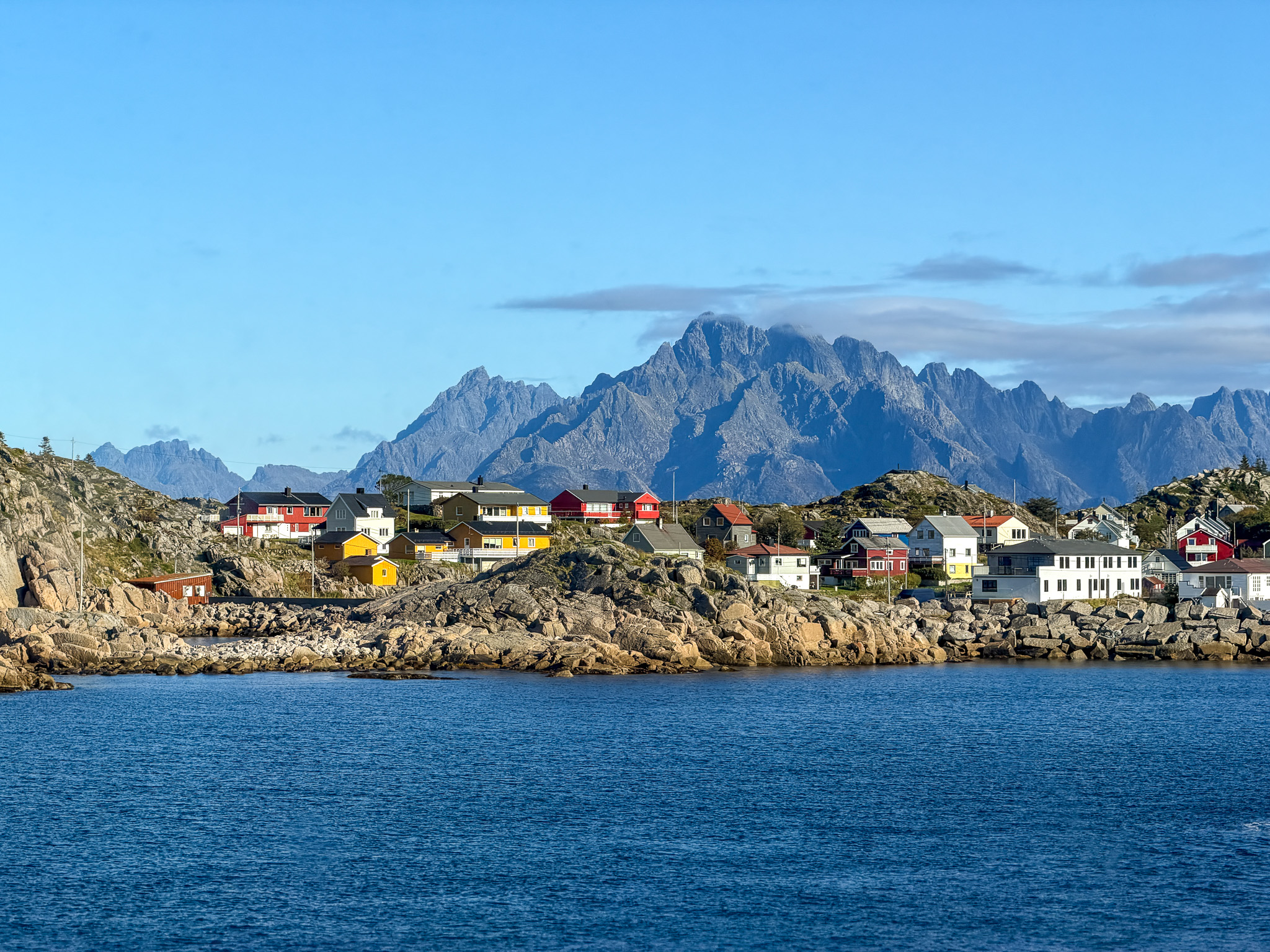
Skrova Island is a small cluster of islands in the middle of Vestfjorden, about half an hour by ferry from Svolvær. People call it the Hawaii of Lofoten, and the nickname has a practical origin: Skrova gets less rain and more sunshine than anywhere else in the archipelago.
I spent a full day there in early September. The plan was built around a kayak tour and some beach hopping, and I stayed on until the evening ferry, which brought me back to Svolvær at sunset.
Just under 200 people live here. There’s one shop, a few places to eat and some white sand beaches about half an hour’s walk from the harbor. The ferry is free, though it doesn’t leave from central Svolvær, and with only a few sailings a day you have to plan the day around it.
My personal take: go for the kayaking, or for the hike up Høgskrova. Those two are what make the crossing worth it.
Stays Near the Skrova Ferry in Svolvær
The ferry to Skrova leaves from Svolvær, so if you want to stay nearby, I’d book something on that side of Lofoten. These are the places I’d pick, and my guide to where to stay in Lofoten has the full list.
- Lofoten Apartments: I slept here, in Hopen, a short drive from Svolvær. Sea-view apartments with a kitchen, free parking and a barrel sauna on the water.
- Thon Hotel Svolvær ⭐⭐⭐⭐⭐: right on the harbor in the center, with breakfast included. Easy if you’d rather not cook.
- Svinøya Rorbuer ⭐⭐⭐⭐⭐: red fishermen’s cabins on a small island linked to Svolvær by a bridge.
Skrova Island Quick Facts
- Location: a group of small islands in Vestfjorden, about 9 km (5.6 mi) southeast of Svolvær. The main island is roughly 3 by 2 km (1.9 by 1.2 mi).
- Getting there: there's a free car ferry from the Svolvær ferry terminal, about 30 minutes. There’s also a paid express boat from the center of Svolvær. More details in the next chapter.
- Time needed: I’d give it a full day. A half day can work when the ferry times line up.
- Cost: the ferry was free when I went. Walking and hiking is obviously free. My three-hour kayak tour was about $127 per person.
- Highest point: Høgskrova, 258 m (846 ft).
- Good to know: Skrova has one shop, a few restaurants and no car rental, but you won’t need a car to get around.
- Worth it if: you want to kayak or hike, or both.
If you’re short on time, the Skrova map below puts the best things to do on Skrova in one place: a typical kayak route, the walk to Hattvika Beach, the Høgskrova hike and the tunnel. The small box in the corner shows the free ferry from Svolvær.

How to Get to Skrova From Svolvær
There are two ways to reach Skrova from Svolvær: the free car ferry and a paid express boat. I took the ferry, and it’s the one I’d recommend for a day trip.
a) The Free Skrova Ferry
- Best for: any plan, but especially for a day trip
- Where it leaves: the Svolvær ferry terminal, located a little outside the center. Search Svolværveien 91 on Google Maps for the exact location (boats to the Trollfjord and the express boat leave from a different harbor in town, so it’s easy to go to the wrong pier!)
- Time: about 30 minutes. Skrova is the first stop.
- Cost: free for foot passengers.
- Parking: there’s a large free lot right in front of the ferry. I left my car there for the whole day.
- Without a car: the walk from the express boat pier in the center takes about 17-20 minutes.
I took the 10 a.m. ferry and was on Skrova at 10:30. The boat has big windows, a small cafeteria and restrooms, so I spent most of the crossing inside, watching Svolvær get smaller. The village and its lighthouse come into view a few minutes before you dock.
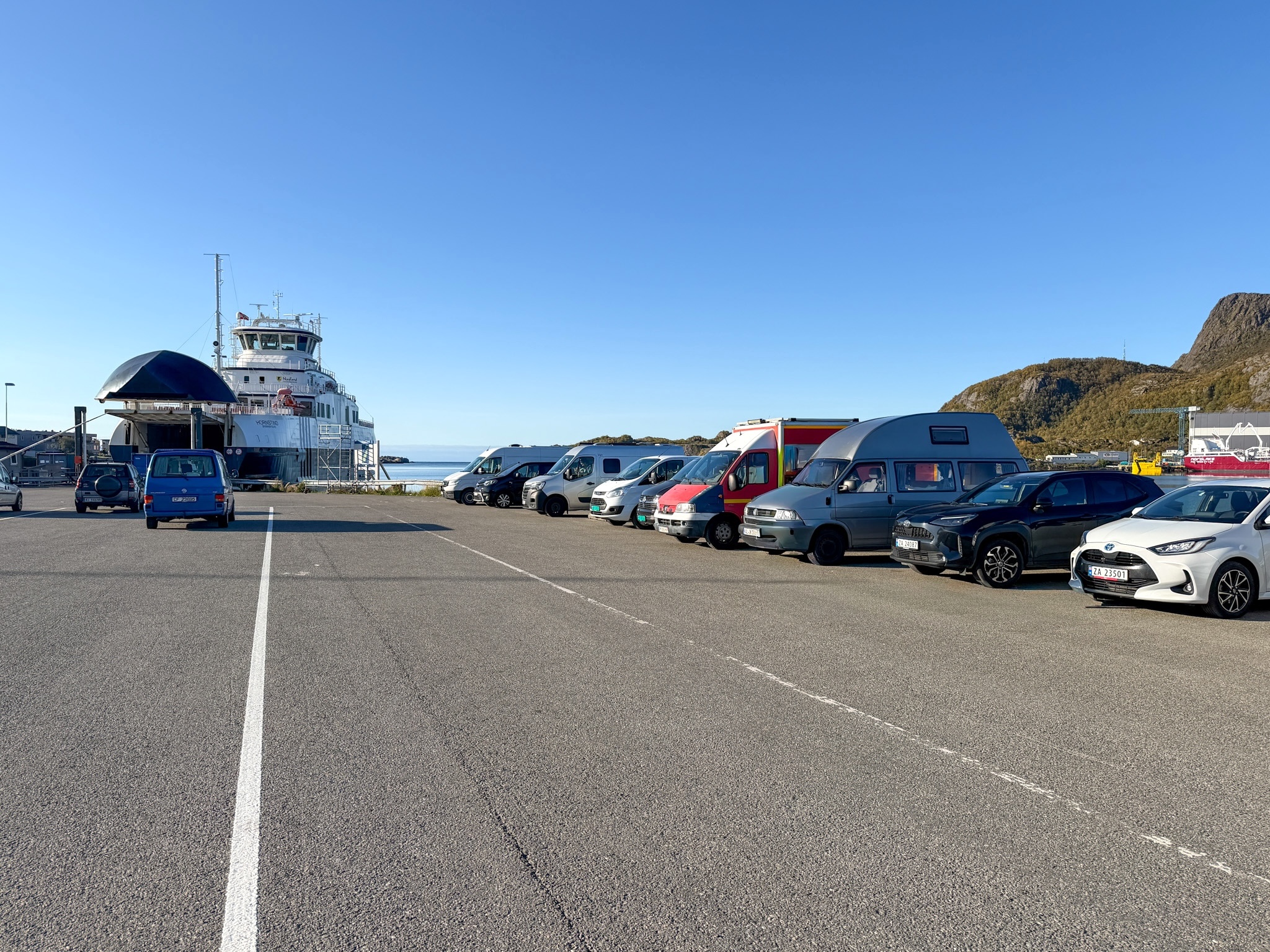
Free parking at the Skrova ferry in Svolvær
The free parking lot at the Svolvær ferry terminal, where I left my car for the day
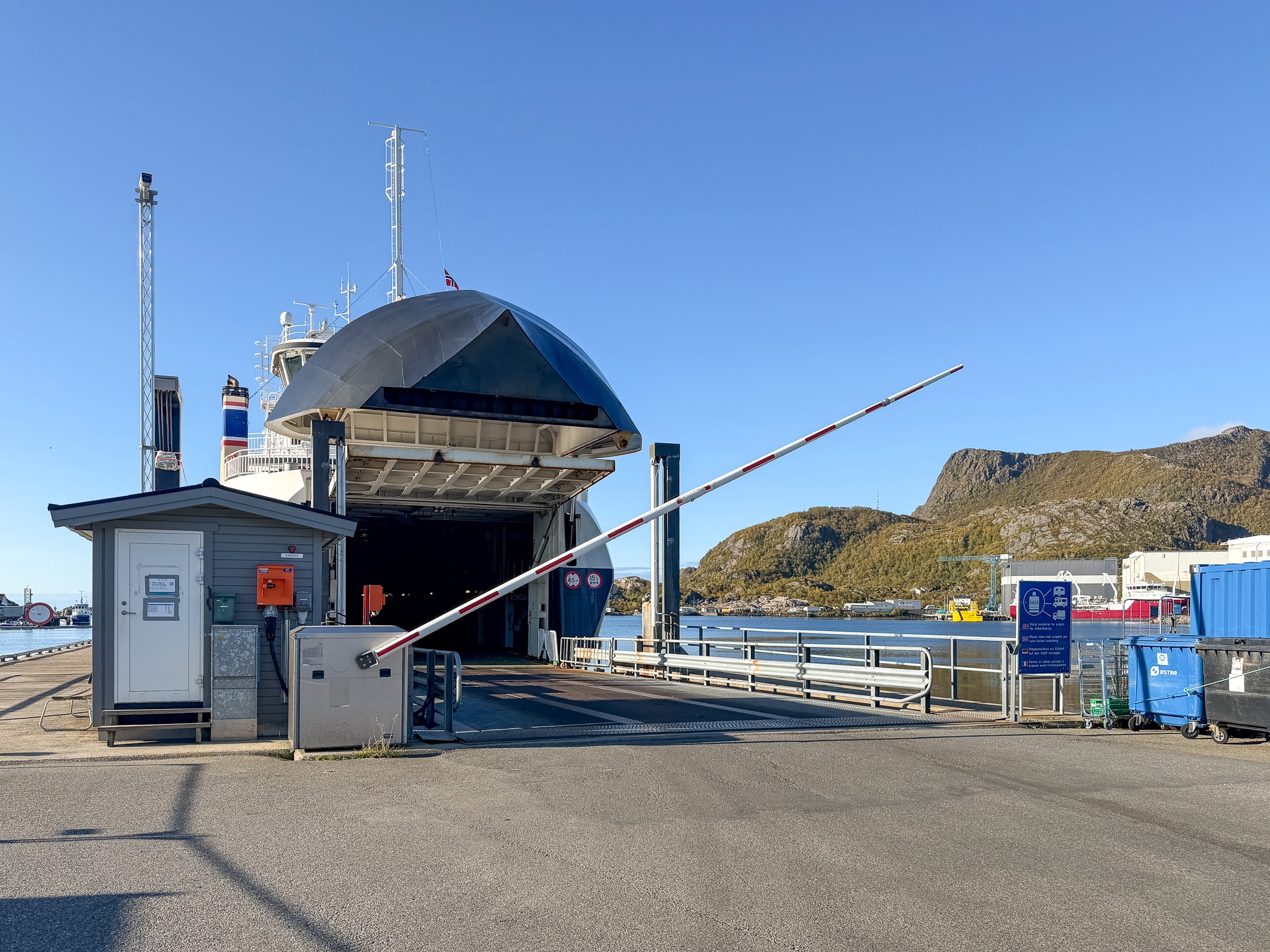
Svolvær ferry terminal for Skrova
The boarding gate at the Svolvær ferry terminal, a few minutes outside the center
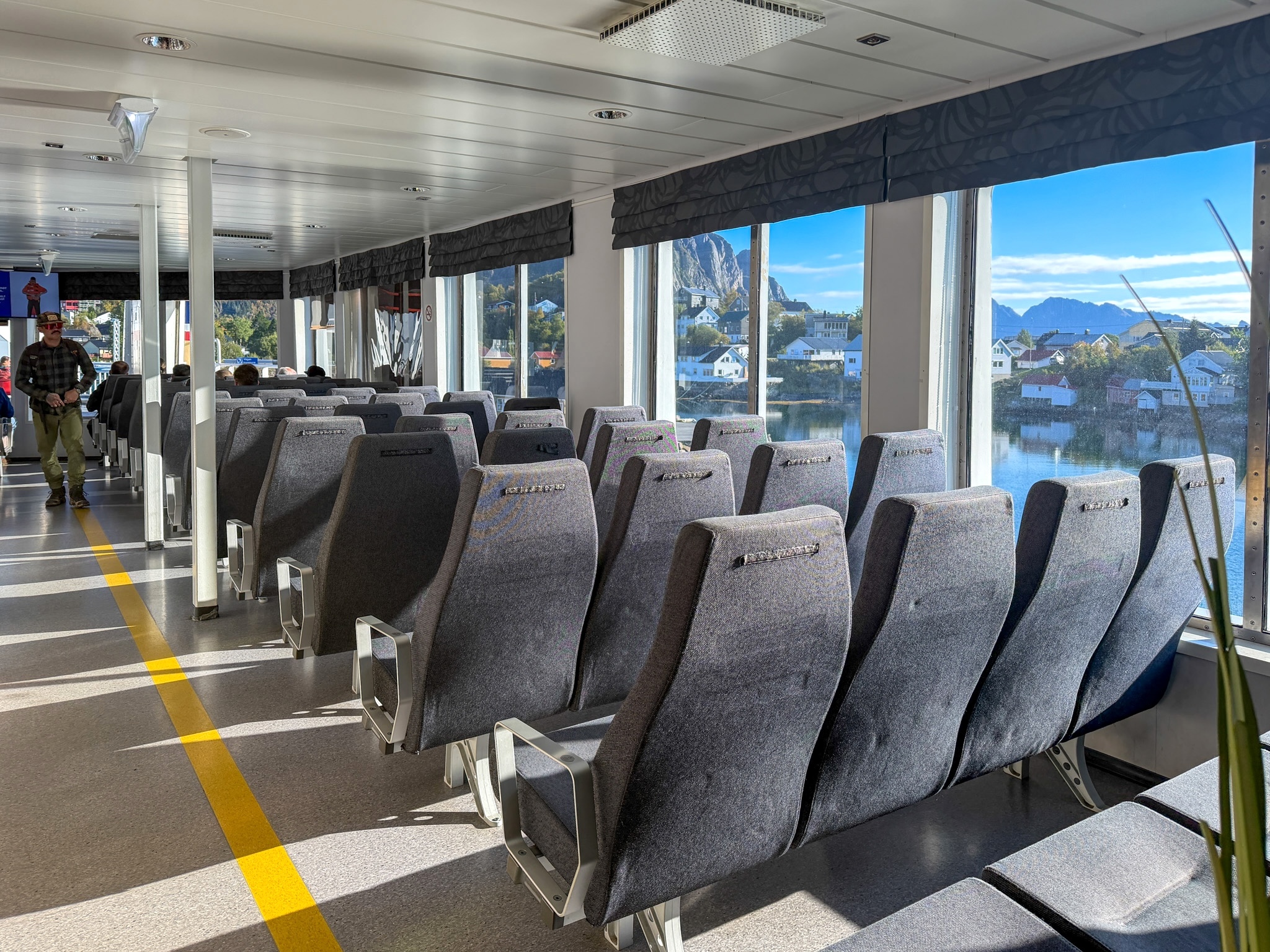
Inside the Svolvær to Skrova ferry
Inside the ferry to Skrova, with windows on every side
b) Express Boat From Svolvær or Bodø
- Best for: anyone heading to Skrova straight from Bodø on the mainland.
- Where it leaves: the express boat pier in central Svolvær, or the express boat terminal in Bodø.
- Time: about 10 to 15 minutes from Svolvær, about 3 hours and 10 minutes from Bodø.
- Cost: 77 NOK per adult from Svolvær and 487 NOK from Bodø, according to the Reis app.
- How to book: buy the ticket in the Reis app. Skrova is an on-request stop on this route, and the app books the stop automatically when you pay.
I didn’t take the express boat, the free ferry was much more practical for my kayak tour timing.
Planning Your Day Around the Ferries
The ferry runs a few times a day, and the schedule changes with the season and between weekdays and weekends. Check the times for your exact date in the Reis app before you go.
If you book a kayak tour, keep in mind that mine took about three and a half hours from meeting point to meeting point. When you need to catch a specific ferry back, tell the guide when you book. They know the timetable and can tell you whether it works or not.
Things to Do on Skrova Island
Skrova is small enough to cover on foot, and most of what’s worth doing sits within an hour’s walk of the ferry quay. I kayaked, walked to the beach and went through the tunnel. The hike and the lighthouse are also worth exploring.
Guided Kayak Around the Skerries
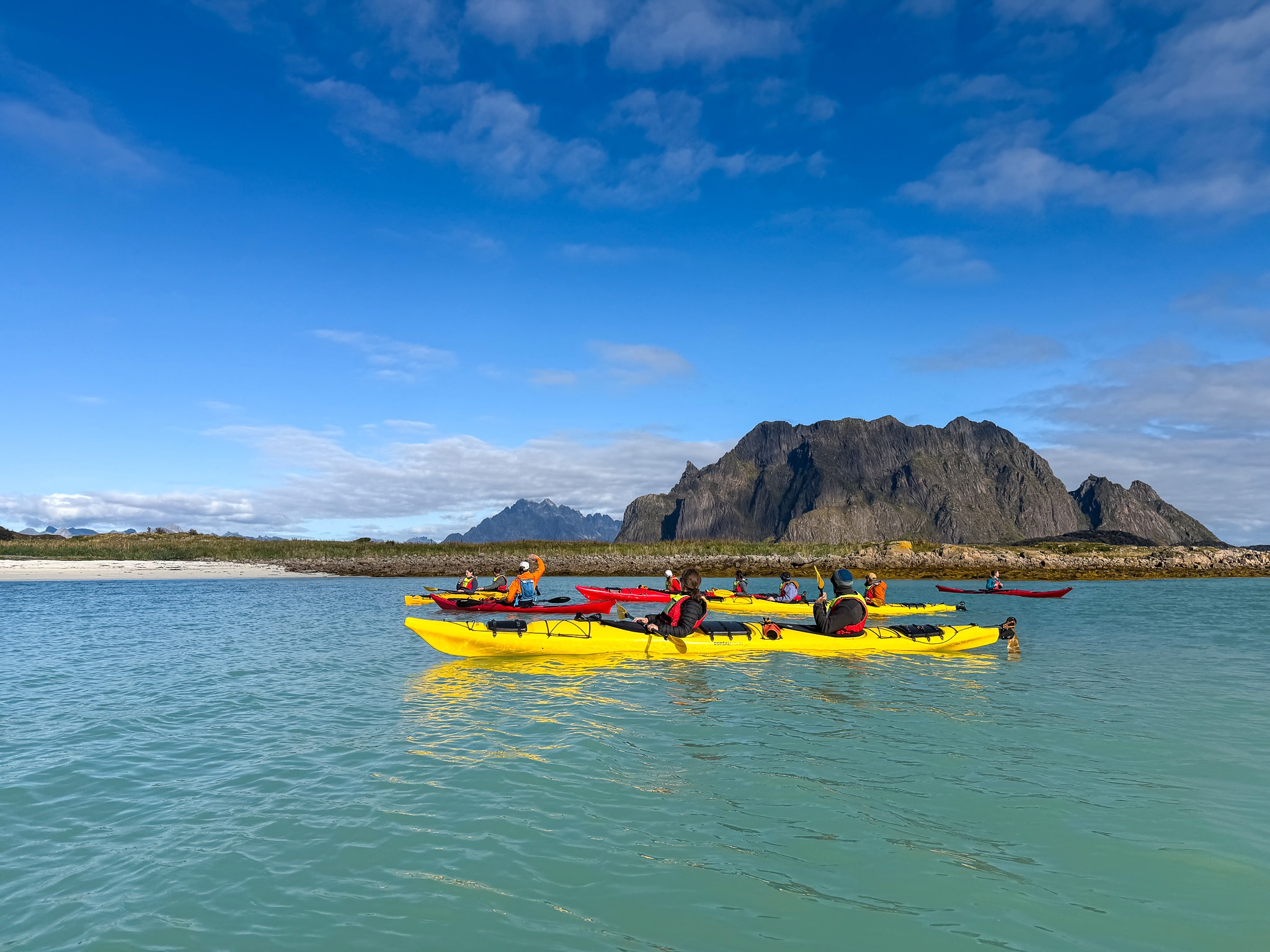
This was the reason I came, and it ended up being my favorite part of the day. The guided kayak tour started from a small dock near Skrova Rorbuer and followed narrow channels between the islets, past Remøya and Hattvika, to Sandøyhalsen, where the water turns a pale turquoise over white sand. That color is where the “Hawaii” nickname comes from.
I booked with Skrova Kayak for about $127 per person. The tour lasted three hours in double kayaks, and I had never been kayaking before. All the details, plus every other kayak tour in the islands, are in my guide to kayaking in Lofoten.
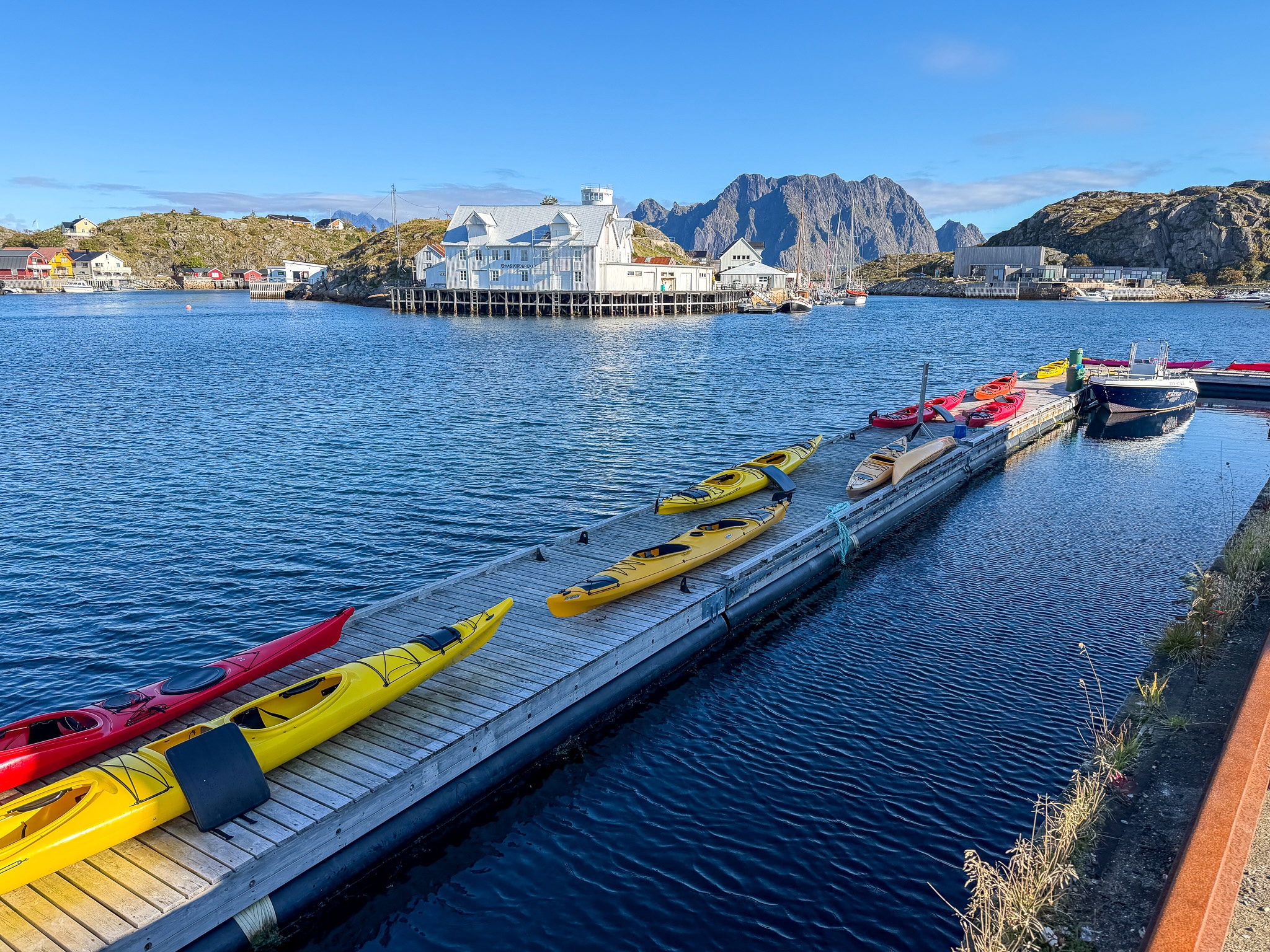
Double Kayaks on the Dock, Skrova Lofoten
Double kayaks waiting on the dock on Skrova
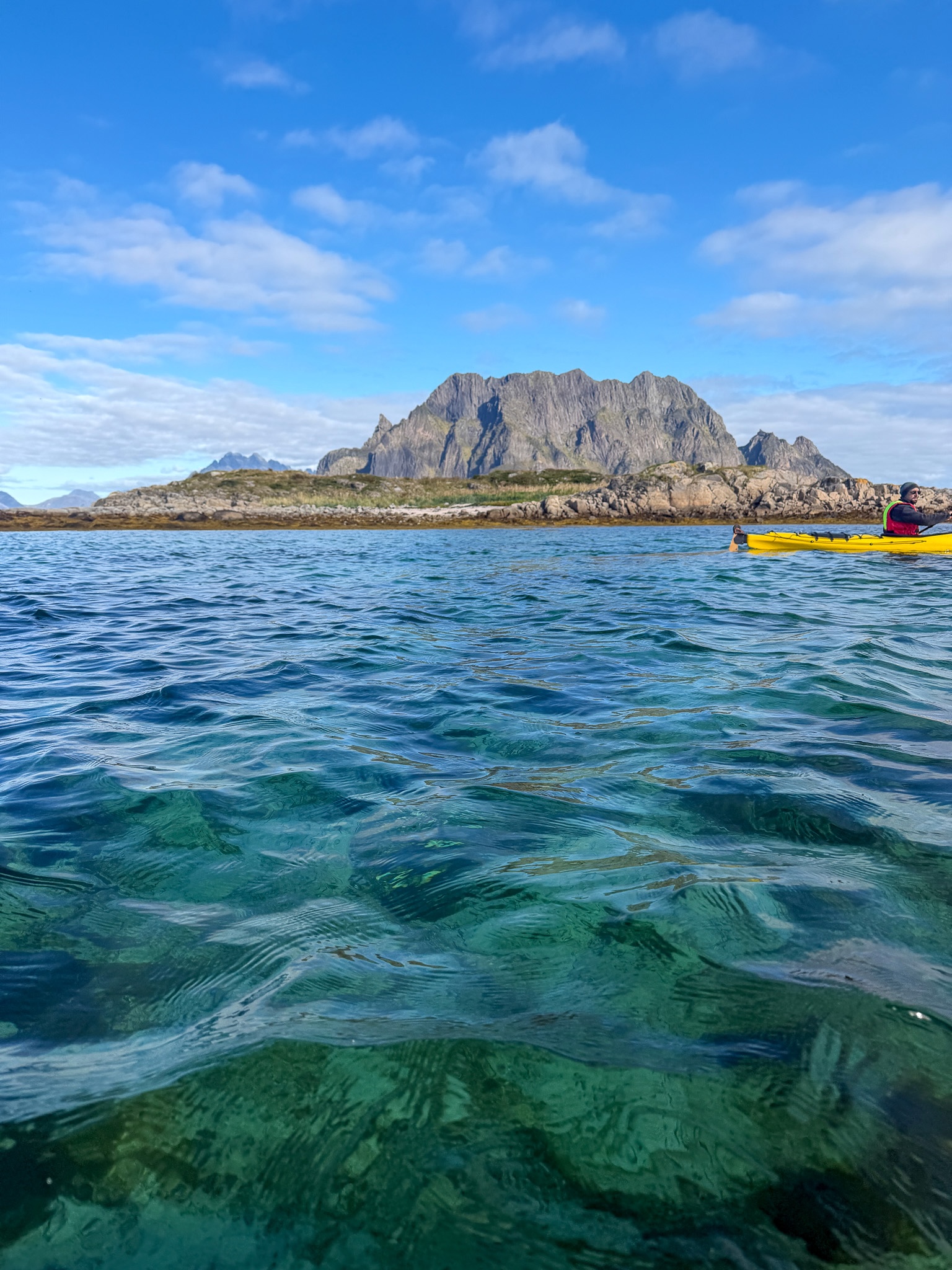
Kayaking on Skrova Island
Paddling off Skrova, with Ramnøya and Litlmolla islet in the background

Kayaking on Turquoise Water Near Sandøyhalsen
A kayak over the shallow water near Sandøyhalsen
Walk to Hattvika, Remøya and Sandøyhalsen Beaches
Hattvika is the easiest beach to walk to. It took me about 30 minutes from the harbor along a gravel track through the middle of the island. The sand is white, there are a couple of houses behind it, and in early September I had it almost to myself. I went in the water. It was very cold, so I only went in up to my legs. There’s no changing room or shelter, so wear your swimsuit under your clothes and bring a towel.
Remøya sits just north of Hattvika. It’s smaller, more sheltered. There’s also a small glamping site there.
Sandøyhalsen has the clearest water I saw on Skrova. I reached it by kayak, where the tour ended, so I can’t tell you about getting there on foot.
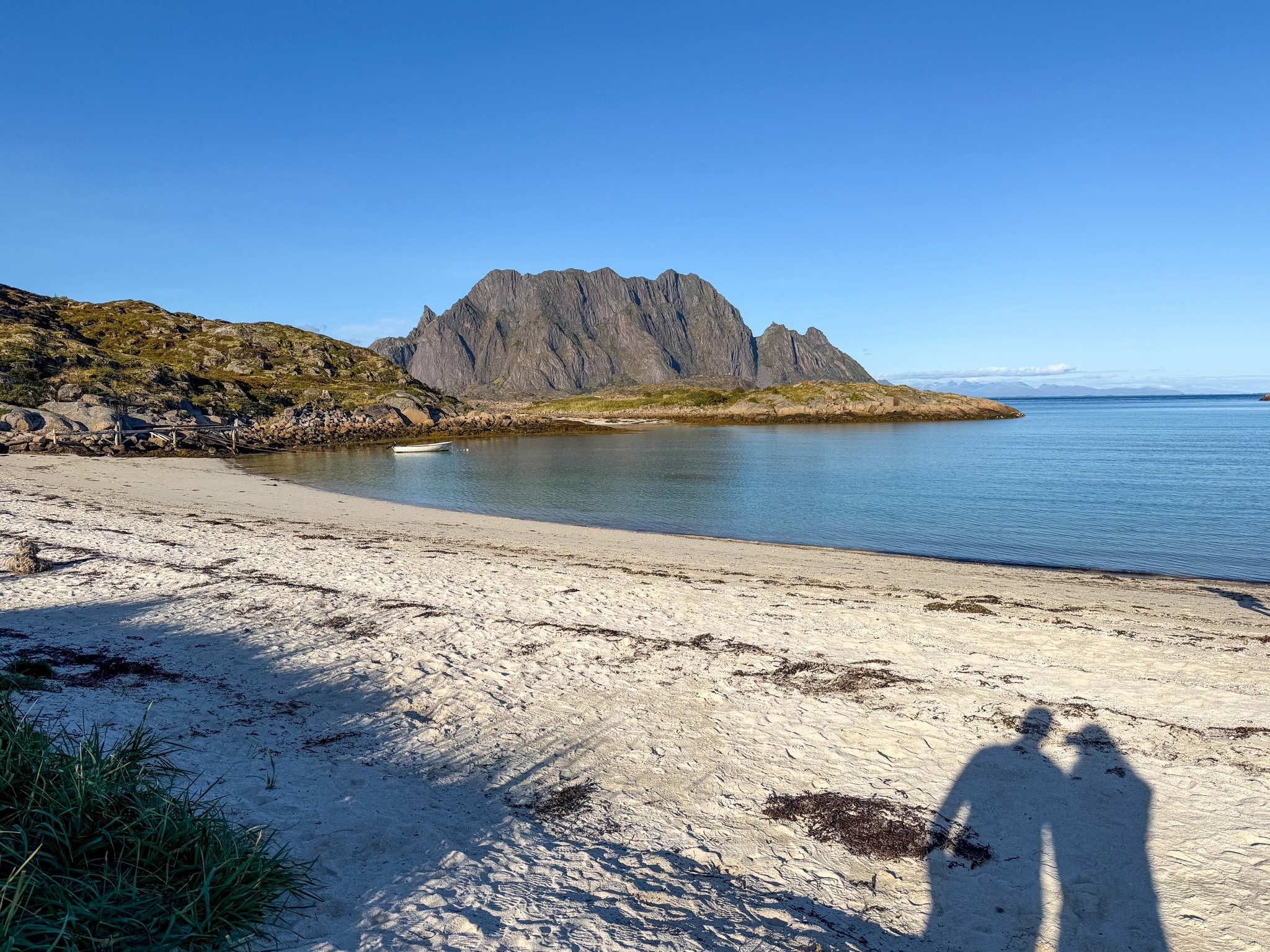
Hattvika Beach on Skrova
Our shadows on Hattvika Beach, about 30 minutes on foot from the harbor
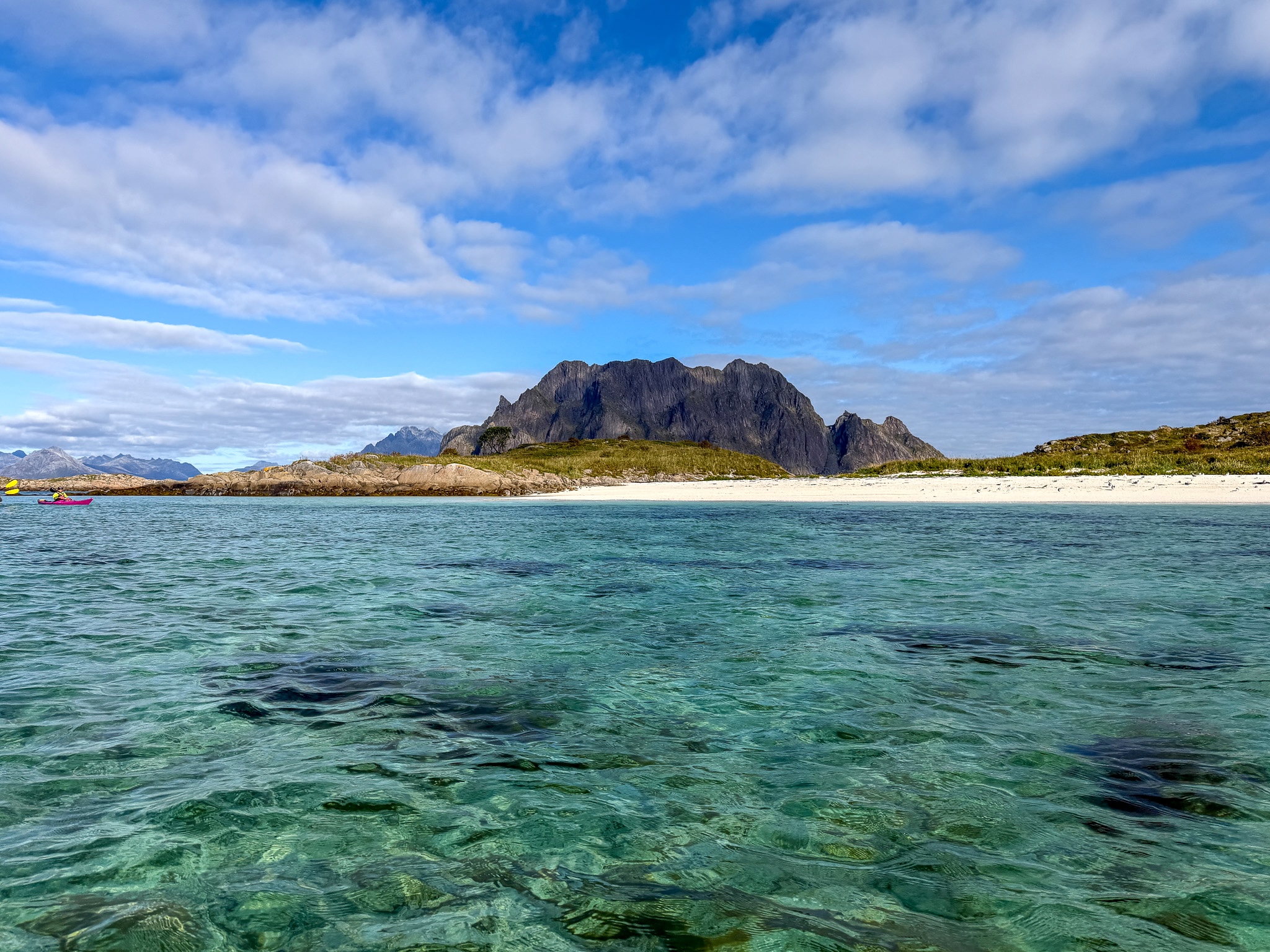
Sandøyhalsen beach on Skrova
Sandøyhalsen from the kayak, where the water is at its most turquoise
Hike Høgskrova
At 258 m (846 ft), Høgskrova is the highest point on the island, at the top of the mountain locals call Skrovafjellet. I didn’t make it up there, but I’d plan it for a return trip. From the top you see the whole chain of Lofoten mountains on one side and the mainland on the other.
- The quickest way is up and back from the village, about 2.9 km (1.8 mi) and an hour in total.
- Alternatively, go for the loop instead: up to the summit, down to Hattvika Beach, then back to the quay on the gravel track. It’s about 4.9 km (3 mi) with roughly 300 m (980 ft) of climbing, and it’s on the map above. There's one steep, loose section with ropes at the tricky points, plus it can get very muddy, so wear proper hiking shoes. I would classify the hike as moderate-to-hard.
I passed a trail board with all the island’s paths marked in color. The red one goes to the beach, and the yellow one goes up to the summit.
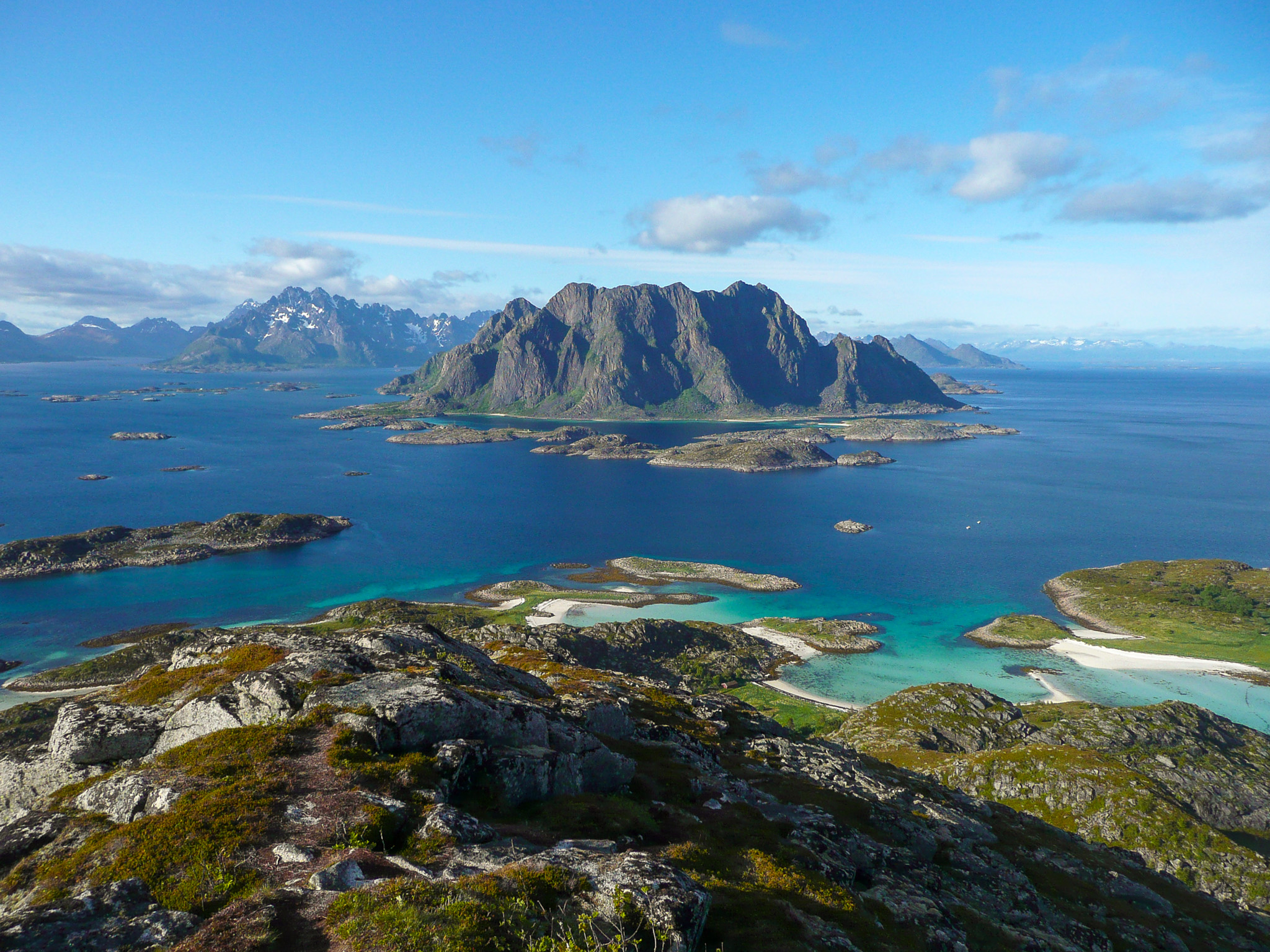
View from Høgskrova summit on Skrova
The view from the top of Høgskrova, with Litlmolla across the water. Photo: Gavotin, CC BY-SA 3.0, via Wikimedia Commons
The Skrova Tunnel Photo Exhibition
On Kuholmen, the small island across the harbor, a short pedestrian tunnel has been turned into a gallery. Blue lights run along the walls, and the photos on display tell the story of Skrova over the past century. I walked through it on my way to the kayak dock, and I stopped more than once to take pictures. It’s free and takes ten minutes.
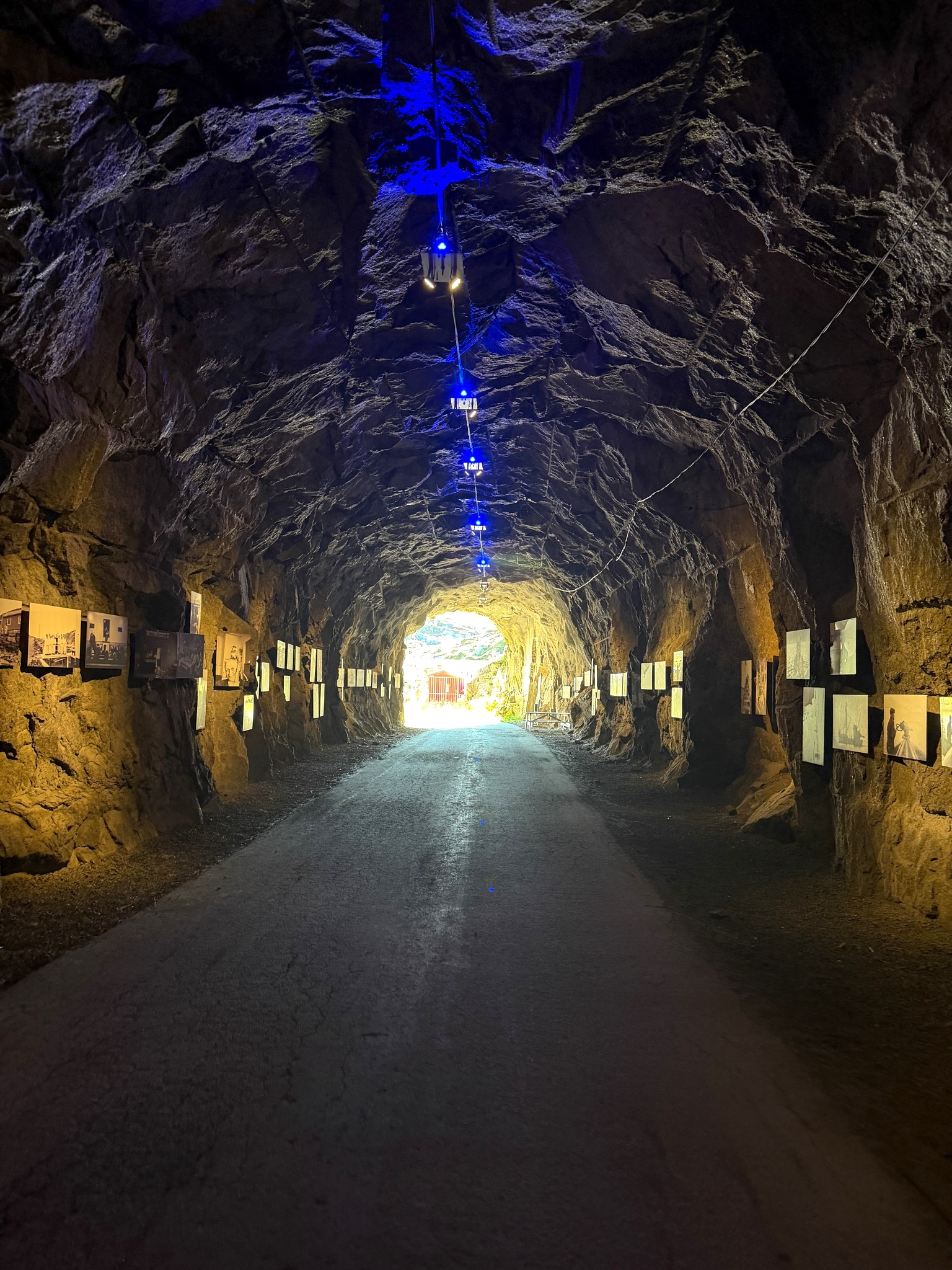
Skrova tunnel photo exhibition
The Skrova tunnel, lit in blue, with photos of the island’s history on the walls
Skrova Lighthouse
Skrova lighthouse stands on Saltværsholmen, a rocky islet off the southwest corner of the group. The tower is cast iron, red with two white stripes, and it was first lit in 1922. It was the last lighthouse in Nordland county with full-time keepers, until 2005. I only saw it from the ferry, and that’s how most people see it, because it’s on its own islet. Arriving from Svolvær, look to the left as the boat approaches the village.
A Little Whaling History
For a long time, Skrova was the biggest fishing village in Lofoten. It got its trading rights in 1760, and fishing and whaling kept it busy through the 1970s and 1980s. It’s still one of Norway’s main whaling stations, processing about half of the country’s whale meat. Just under 200 people live here today.
If you want the stories behind it, a local company runs a 90-minute cultural walk through the village. I didn’t do it, but it’s an easy add-on if your ferry leaves late.
My Day Trip to Skrova Island: How I Planned It
I went in early September, with the kayak tour booked a few days ahead, once the forecast looked calm. This is how the day went, and it’s a plan that works well if you’re mixing kayaking and a walk.
- 10:00: free ferry from the Svolvær ferry terminal. I parked in the lot in front of it.
- 10:30: arrival in Skrova. The kayak guide was already waiting at the quay, and we walked about 15 minutes to the base, through the tunnel.
- 11:00 to 14:00: safety briefing, then three hours on the water.
- Around 14:30: fish and chips (299 NOK) and a cinnamon bun at Heimbrygga, sitting outside by the harbor. The Coop is two minutes away if you’d rather grab something cheaper.
- Afternoon: walk to Hattvika Beach, a swim, a slow walk back.
- Evening: ferry back to Svolvær, just as the sun was going down.
Looking back, I wouldn’t change much. The afternoon on the beach felt long in a good way, and I never had to rush for a boat. On some days, though, the timetable lets you do the trip in half a day: an early ferry out, the kayak tour, and a ferry back after lunch.
With a car parked in Svolvær, that leaves the rest of the day free for somewhere else.
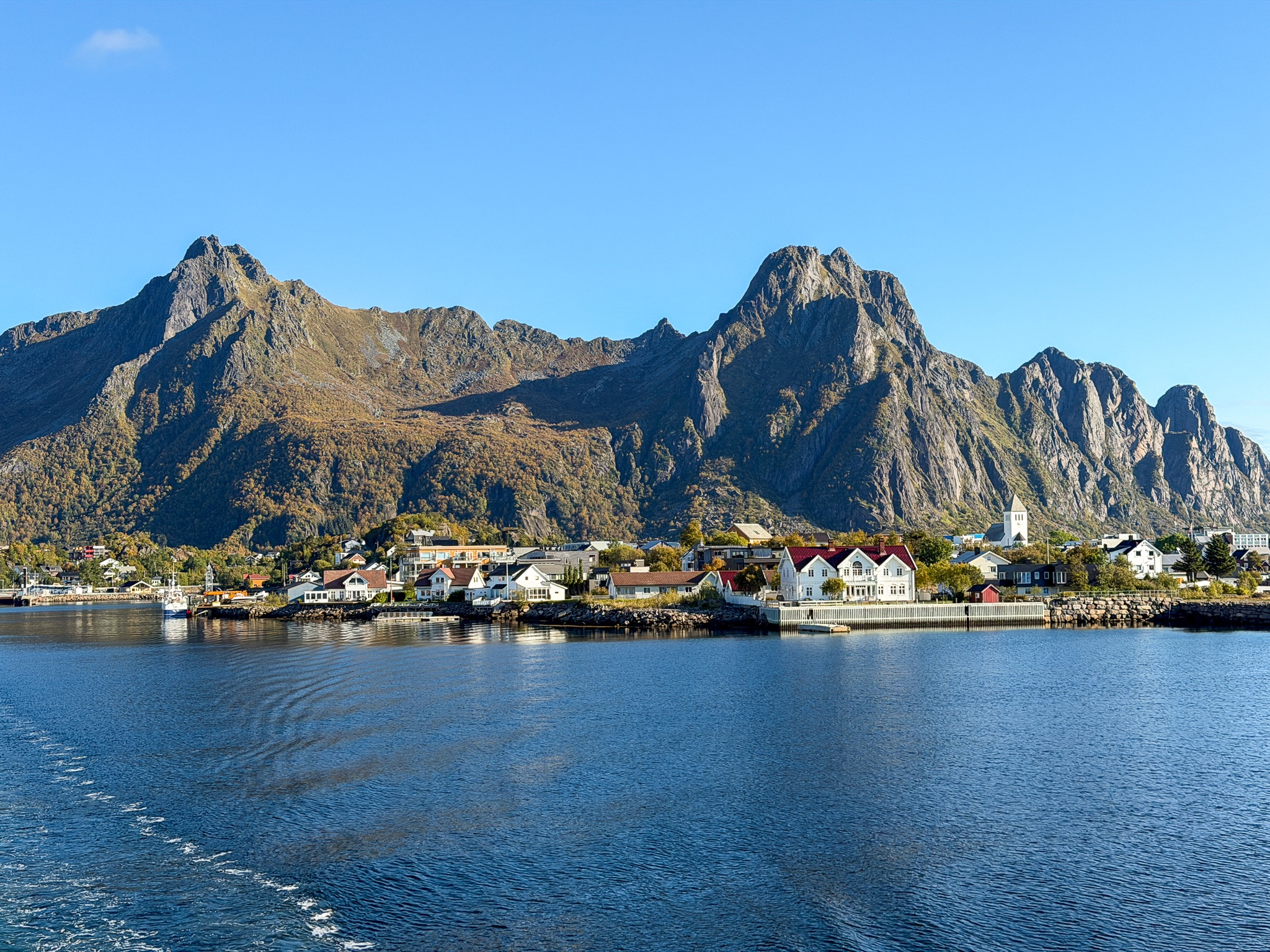
Leaving Svolvær on the Skrova ferry
Pulling out of Svolvær on the morning ferry to Skrova
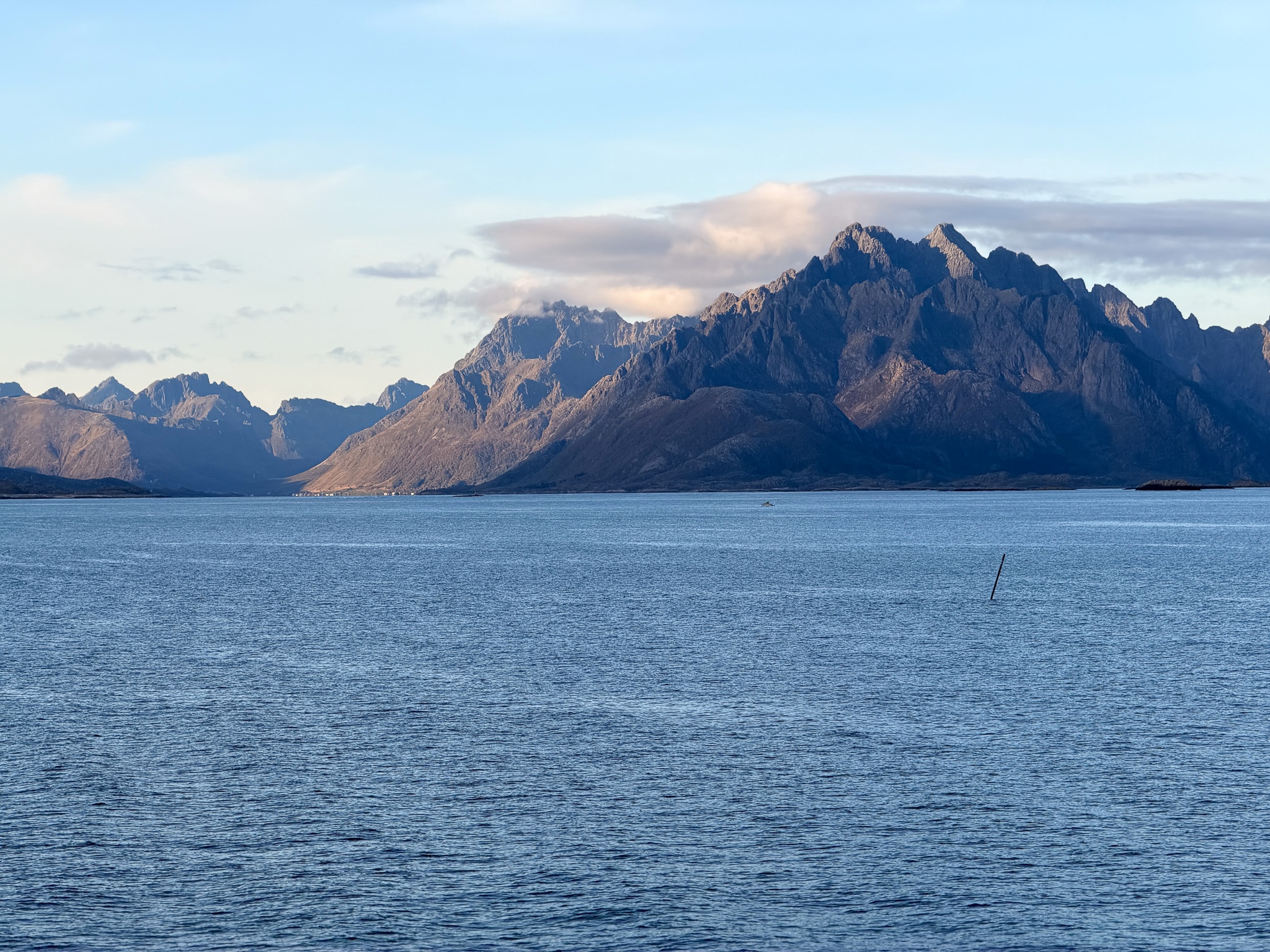
Sunset from the Skrova ferry
The evening ferry back to Svolvær, right at sunset
Where to Eat on Skrova
There aren’t many places to eat on Skrova, and opening hours shrink outside summer. I’d check them before you go, or bring a snack just in case.
Heimbrygga is where I had lunch after kayaking. It sits right by the ferry quay, in an ochre wooden building of about 200 years, with a terrace on the water. I ordered fish and chips at 299 NOK each and a cinnamon bun, and ate outside looking at the harbor. The fish was very good. Heimbrygga also rents rooms and runs Skrova Flavours, a three-course dinner built around local fish, which I didn’t try.
The Coop is about two minutes’ walk from Heimbrygga. It’s the island’s only supermarket and the cheaper option for a picnic on the beach.
There’s also a pub on the island, and the Fotobrygga gallery serves local food, according to Visit Lofoten. I didn’t eat at either. For the rest of the islands, I’ve put together my guide to the best restaurants in Lofoten, with what I ordered and paid in each place.

Heimbrygga on Skrova
Heimbrygga, the old yellow wharf house next to the ferry dock on Skrova.

Fish and chips at Heimbrygga
My fish and chips and a beer on the terrace at Heimbrygga.
What to Bring for a Day on Skrova
You’ll spend most of the day outside, and there’s no easy way to pop back to your hotel for a jacket. This is what I’d pack.
- Swimsuit under your clothes and a small towel. Hattvika has no changing room or shelter. I just took off my pants, waded in up to my legs and dried off on the sand.
- Warm layers and a windproof jacket. Even on a sunny September day, the wind on the water was cold. Wool underneath worked best for me.
- Cap and sunglasses, especially if you're planning on kayaking or hiking. The kayak company asked for both in the booking confirmation. The light bounces off the water and the white sand.
- A refillable water bottle.
- Snacks. Heimbrygga and the Coop are both near the quay, so once you’re at the beach or on the trail, you won’t find anything else.
- Proper shoes if you’re hiking Høgskrova. The path to the beach is an easy gravel track. The climb to the summit is steep, loose and muddy in places.
If you’re kayaking, the tour gives you a waterproof bag for your phone. I’ve written more about layers for every season in the kayaking section of my guide to kayaking in Lofoten.
FAQ
Can you bring a car to Skrova?
Yes, the ferry from Svolvær carries cars. However, there's little to no parking in Skrova, which is why it is highly recommended to leave the car at the free lot in Svolvær. Skrova has only a few short roads, and everything to see and do is within walking distance of the quay.
Can you stay overnight on Skrova?
Yes. There are a few guesthouses, rooms at Heimbrygga and a small glamping site near Remøya Beach. I didn’t sleep on the island: a day was enough for me, and my base was in Svolvær. A night there would make sense if you want the evening light on the beaches, or if you’re arriving on the express boat from Bodø.
When is the best time to visit Skrova?
Summer, from June to August, has the most ferry and tour options, and the midnight sun runs from late May to mid-July in Lofoten. I went in early September, and the beaches were almost empty. From late August the nights get dark enough for the northern lights, which I’ve covered in my guide to the Lofoten northern lights.
Can you kayak on Skrova in winter?
Yes. Skrova Kayak runs a two-hour winter tour from about October to April, with a dry suit and a hot drink included. It’s for ages 16 and up. I only did the summer tour.
Check Out My Other Lofoten Guides
- Where to Stay in Lofoten: Best Areas, Hotels & My Experience
- How to Get to the Lofoten Islands: 4 Easy Routes + My Pick
- Renting a Car in Lofoten: Agencies, Parking & My Driving Tips
- Lofoten Northern Lights: Best Time, Places & Forecasts I Used
- Lofoten Islands Hiking: 5 Best Hikes, Trails Map + Tips
- Best Restaurants in Lofoten: Where to Eat by Area & My Bills
- Kayaking in Lofoten: 14 Best Tours by Area & My Experience
Keep reading: