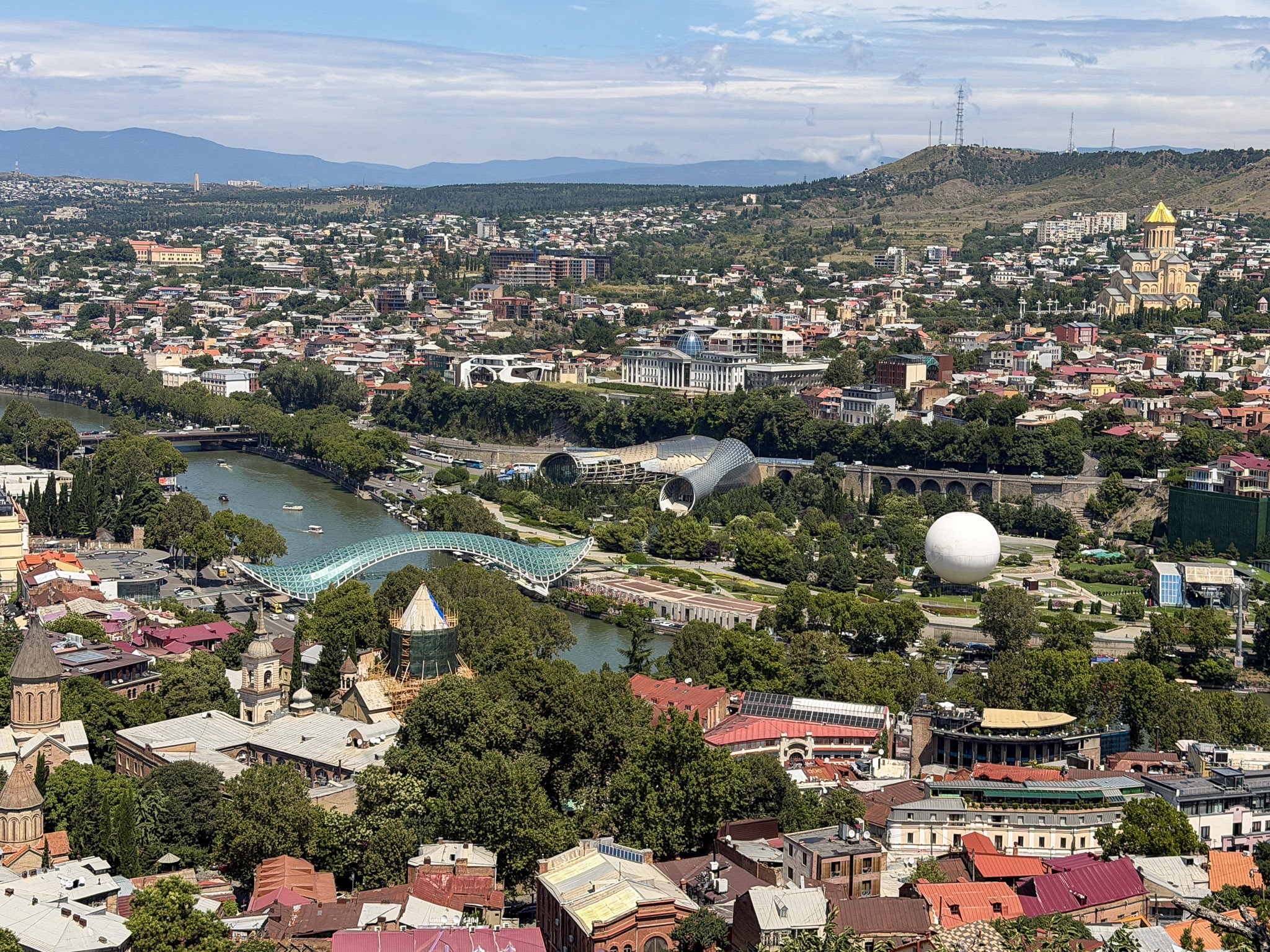
A visitor’s guide to Stalin’s underground printing house in Tbilisi based on my direct experience: how to get there, opening hours, ticket price, and what it’s really like inside.
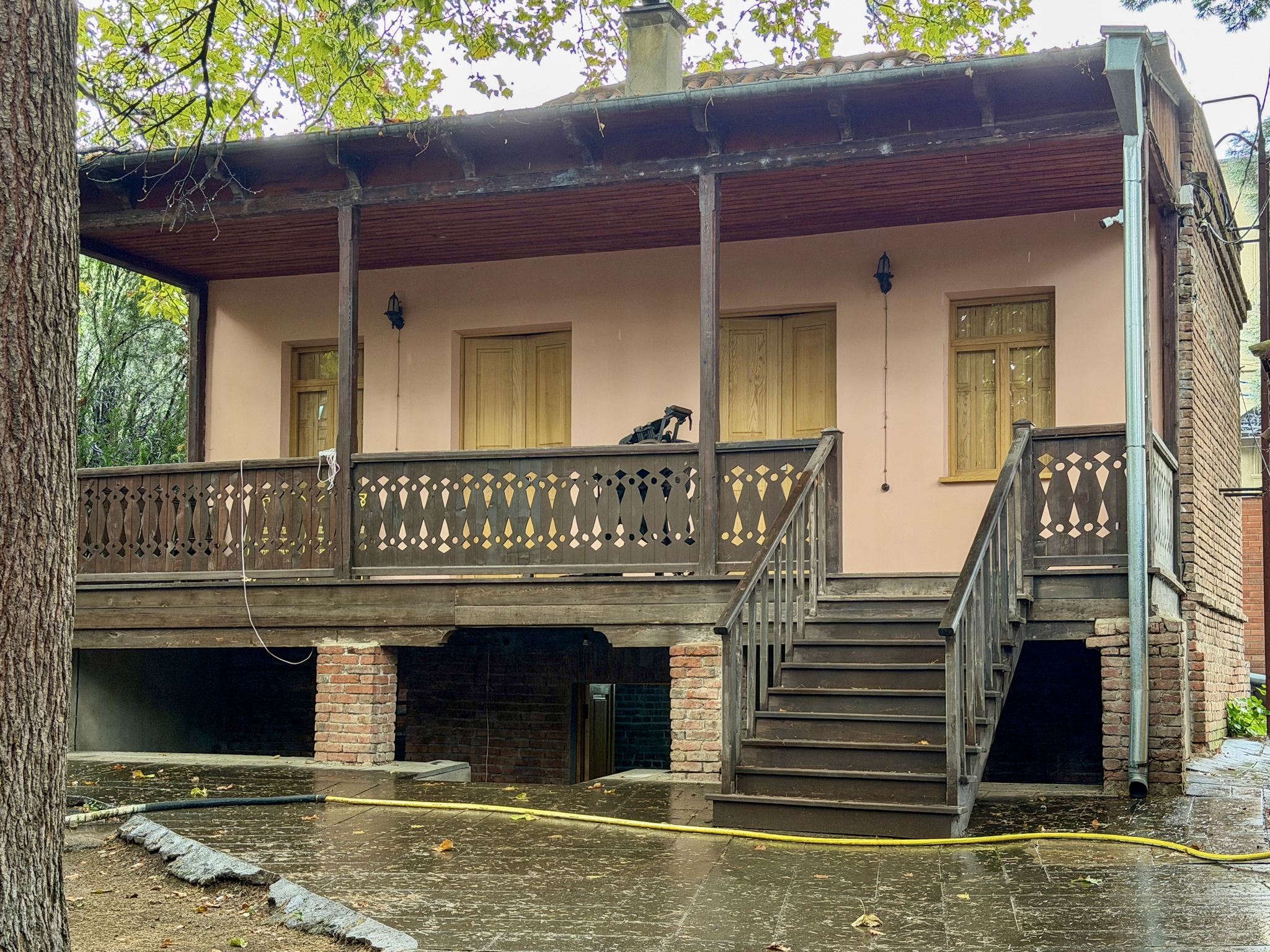
Tbilisi has a neighborhood called Avlabari full of quiet streets and old Soviet apartment blocks. Somewhere under one of those houses, Stalin printed illegal pamphlets for three years and the Tsarist police never found the place. That’s the short version of why the Stalin Underground Printing House exists as a museum today.
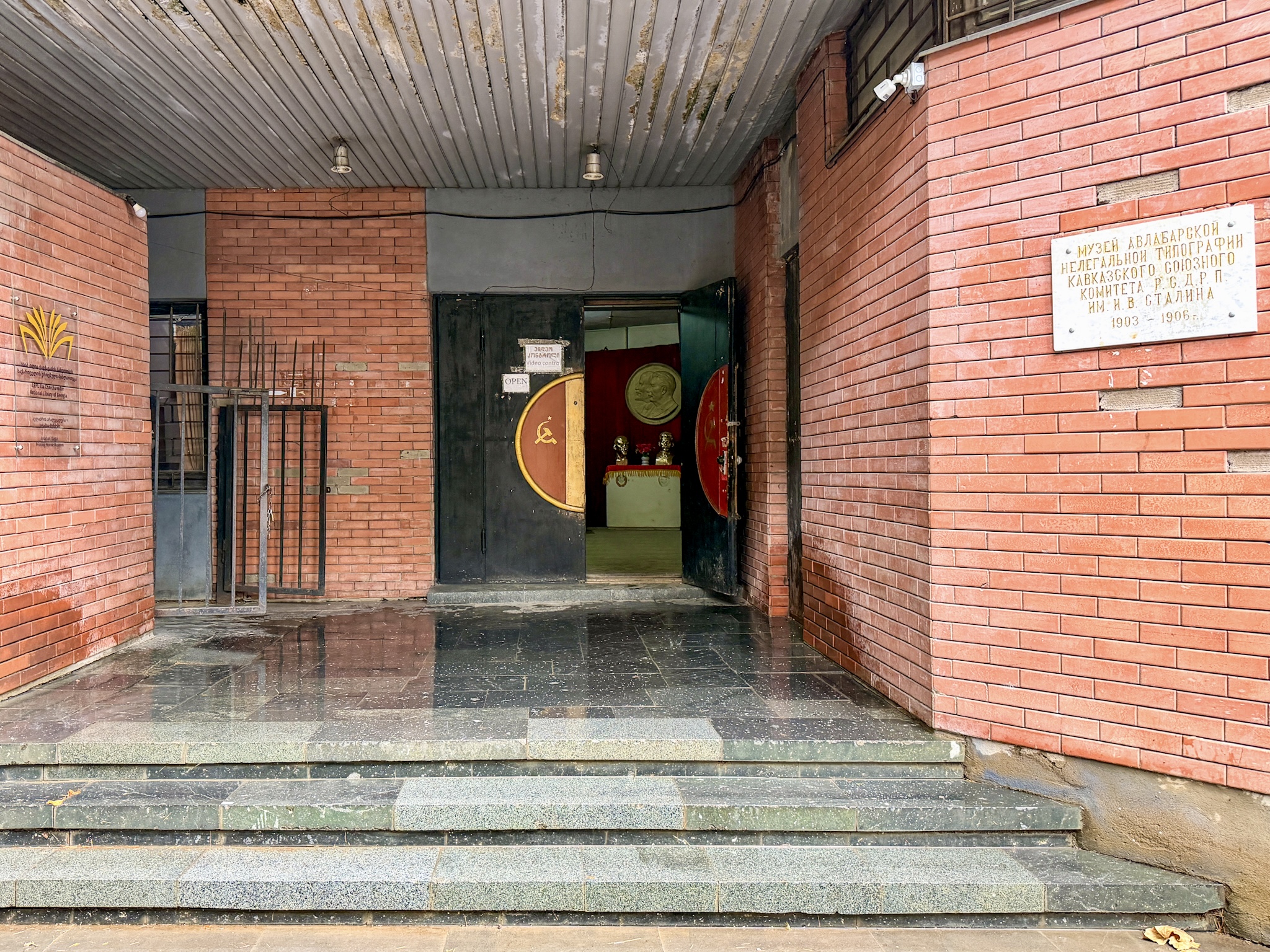
I got there in a Bolt. The building itself gives nothing away except a small plaque on the brick wall and a black metal door with a hammer and sickle painted on it. An older man opened up, asked for 10 GEL (about three dollars in 2026), and started giving me a tour.
Here’s what I found out, room by room: the story behind the press, what this (strange) visit is like, and everything you need to know if you want to go yourself.
What Is the Stalin Underground Printing House?
The place goes by a few names. Officially it’s the J. Stalin Underground Printing House Museum, though most locals just call it the Stalin Printing House or the underground printing house in Tbilisi. It sits inside what looks from the street like an ordinary residential compound.
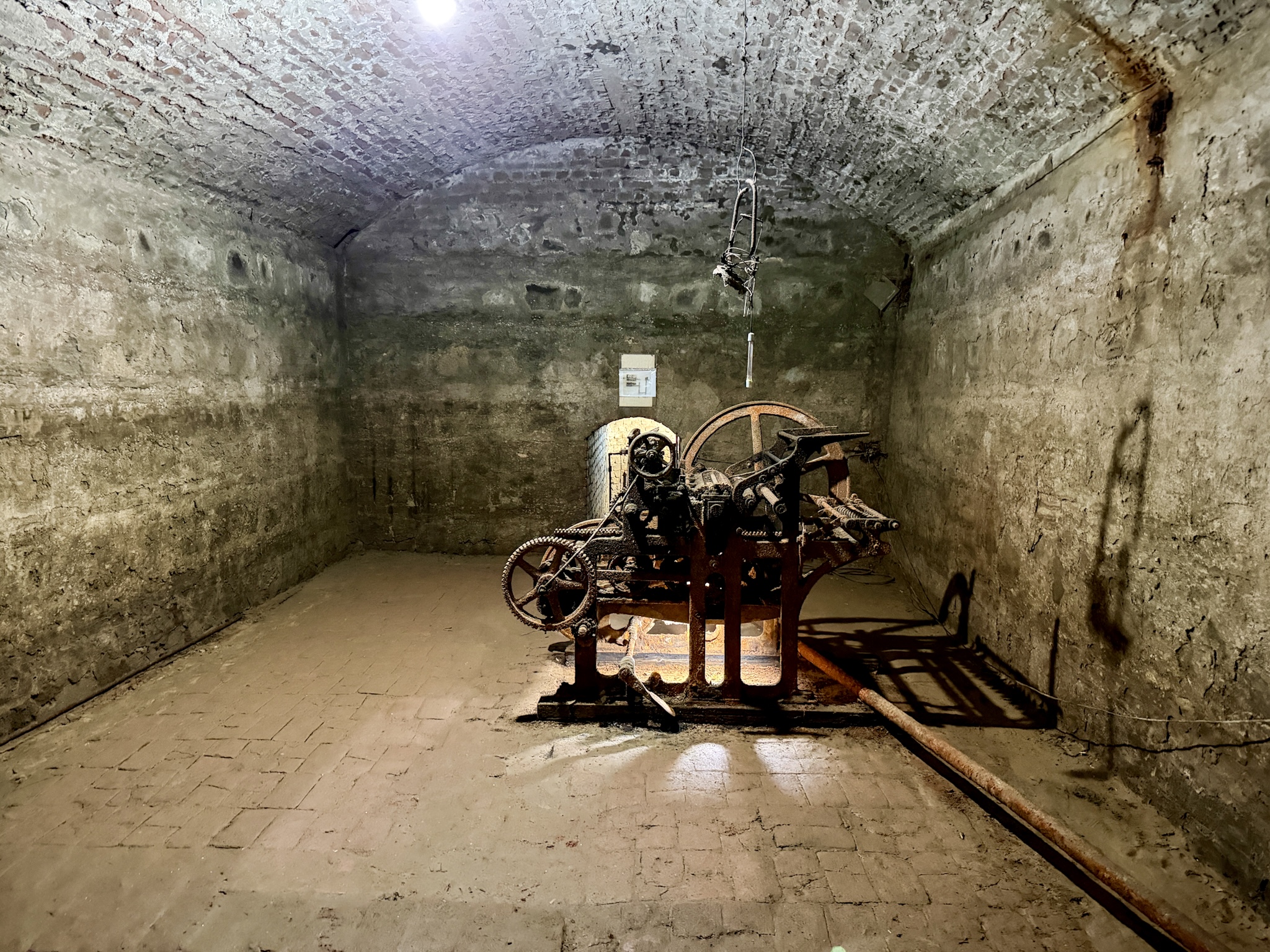
Under a wooden house that’s still standing today, there’s a secret chamber 15 meters below ground. It's now reachable by a narrow spiral staircase. Down there sits a German printing press from 1893, rusted solid now, the same exact machine that churned out revolutionary pamphlets between 1903 and 1906.
The whole compound is small: there’s the main building packed with photos, newspapers, and Soviet memorabilia, the wooden house standing above the hidden chamber, and the old well that revolutionaries once used to sneak in and out before the current staircase was built.
A caretaker walks you through all three, room by room, in a visit that takes under an hour. It’s not run by the city or by any national tourism board. The museum belongs to Georgia’s Communist Party and survives mostly on donations from visitors, which goes a long way toward explaining the state of the building.
How to Visit the Stalin Underground Printing House
Location and How to Get There
The museum sits at 7 Kaspi Street in Avlabari, on the east bank of the river, close to Sameba Cathedral and the Presidential Palace. There’s no real signage pointing you there beyond the plaque on the wall, but you don’t need it. I just typed the name into Bolt and got dropped right at the door.
If you’d rather take public transport, the closest metro stop is 300 Aragveli, on the same line that runs through the center, and it’s about a 10 to 15 minute walk from there.
Opening Hours and Ticket Price
Officially the museum runs Monday to Friday, roughly 10am to 6pm. However, this place has changed its hours more than once over the years, and there’s no website to check against. If you’re set on visiting, going sometime between late morning and mid afternoon is your safest bet, and it doesn’t hurt to have your accommodation call ahead the same day if you’re really worried about a wasted trip.
As for cost, I paid 10 GEL per person, which got me the half guided tour with the older man who runs the place. Some locals mention it being donation based instead of a fixed price, so it’s possible this changes depending on who’s working that day. Either way, bring cash.
Tips for Visiting
Budget around 45 minutes for the whole thing, more if you're very into Soviet memorabilia. The guide speaks limited English, but he leans on old photos and a printed handout to get his points across, so you won’t be totally lost even without Russian or Georgian. Wear shoes you don’t mind getting a little dusty, since the underground room and the staircase down to it aren’t exactly polished.
-
-
This place also made my list of the five best museums in Tbilisi, if you want to see where it lands against the others.
-
What to Expect Inside the Museum, Room by Room
The Office and the Communist Memorabilia
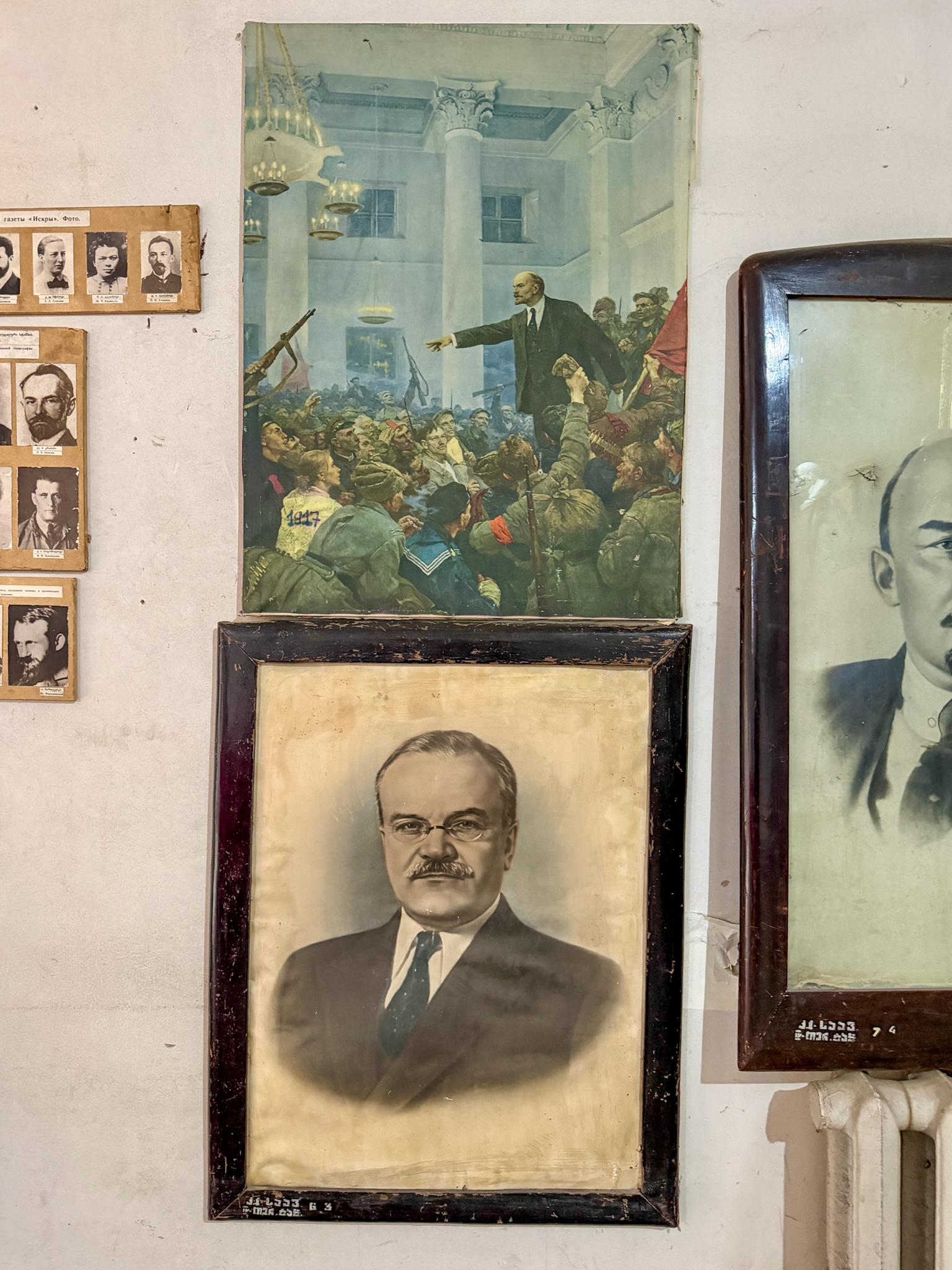
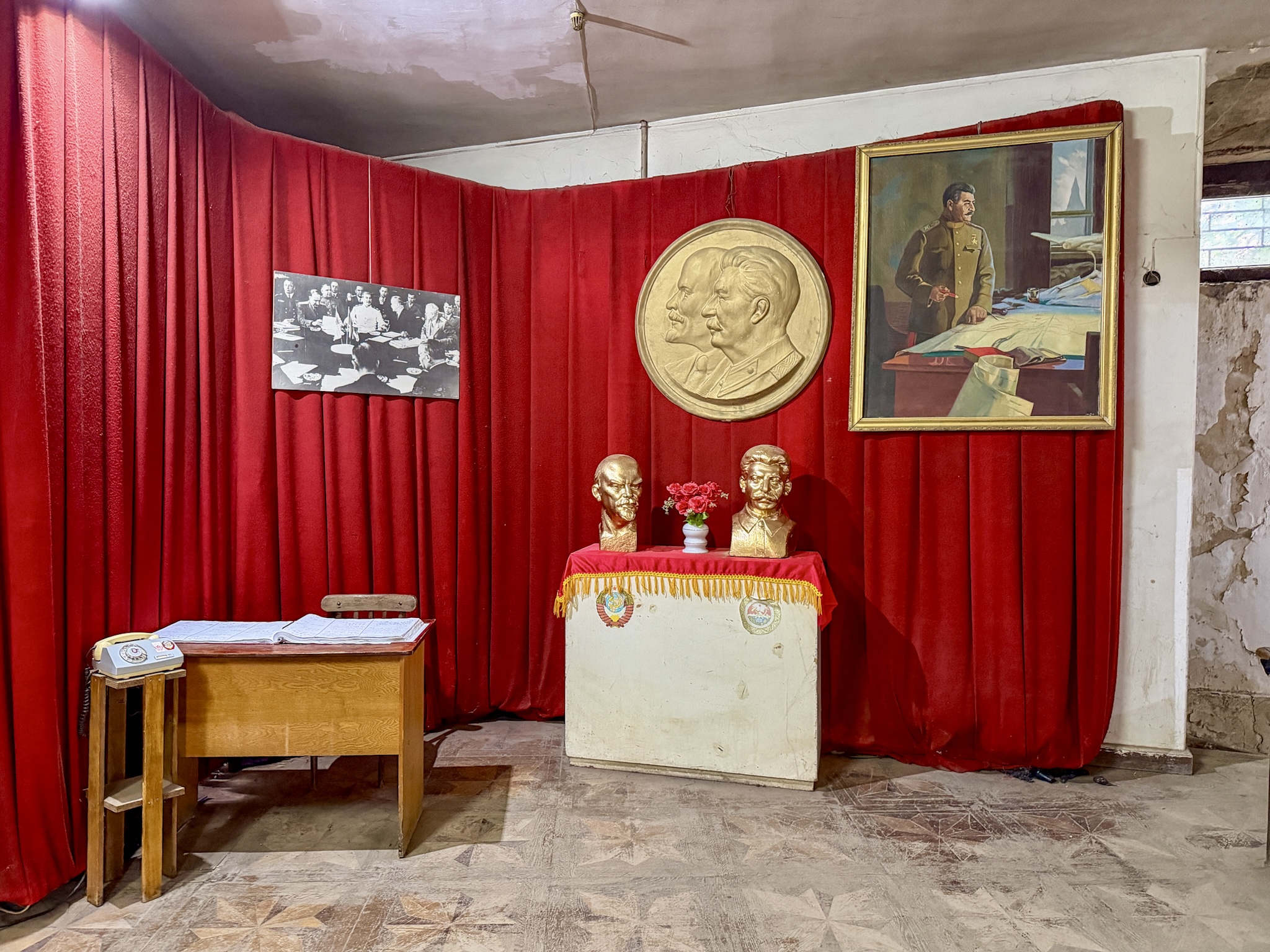
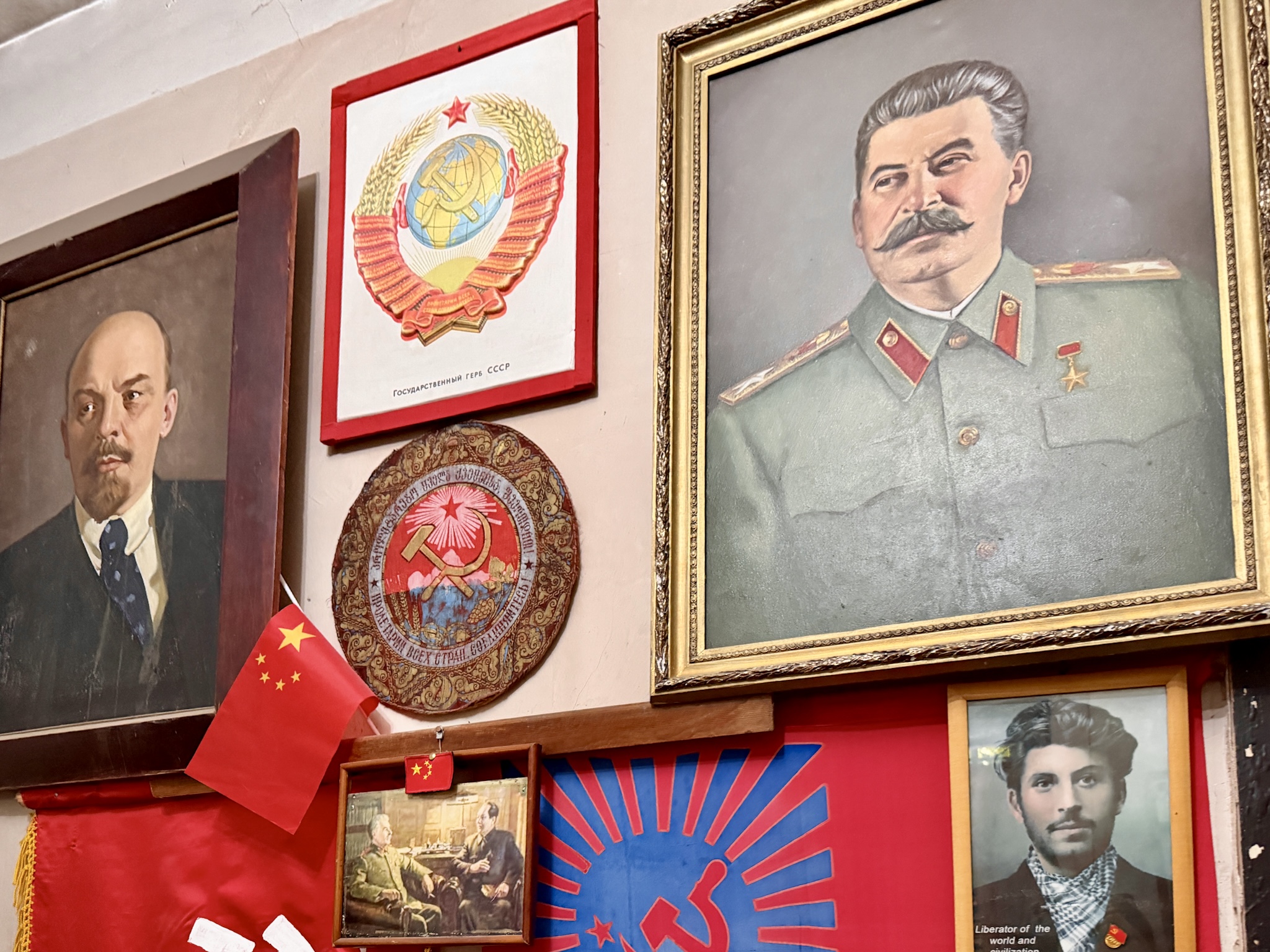
You start in a small office just past the entrance, with portraits of Lenin and Stalin everywhere you look. There’s a golden medallion with both their profiles side by side, a little shrine-like setup with two gold busts and a vase of flowers, an old rotary phone on a wooden desk with a guest book open next to it.
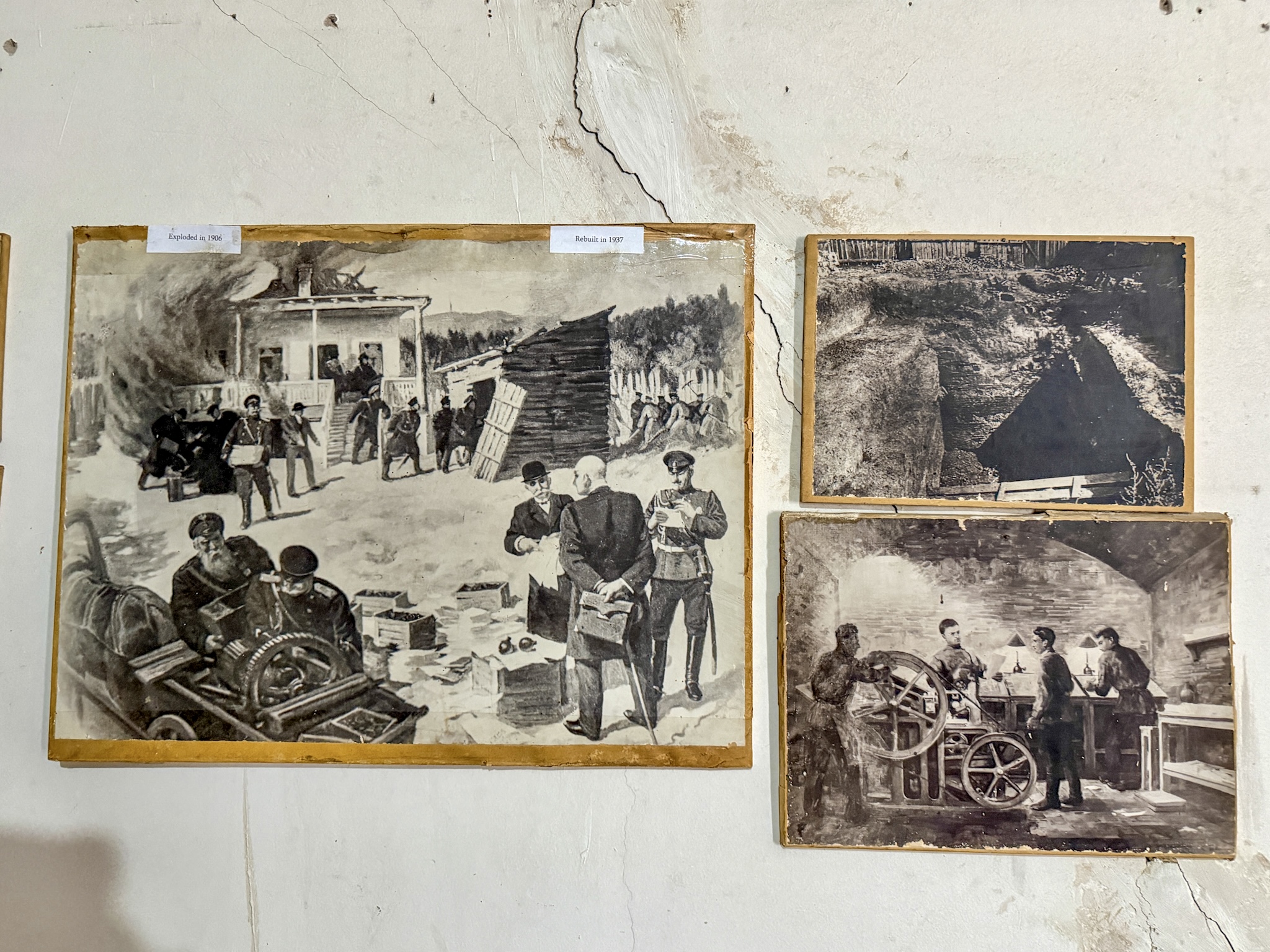
The guide runs the place with obvious pride. He’ll talk you through how the printing house was built and how it eventually got destroyed and rebuilt, using a mix of old photos and a printed English page. What he won’t bring up on his own is anything about what came after, the purges, the deportations, the millions of people who died under the man whose face is on every wall in that room.
One detail I noticed: a small Chinese flag pinned up next to the Soviet memorabilia. The museum apparently gets a steady stream of visitors from China, and it shows in the little touches like that one.
-
- For that fuller picture, the Soviet Occupation section inside the Georgian National Museum covers it in a much more neutral way, and the two visits are worth pairing.
Going Underground: The Well and the Printing Room
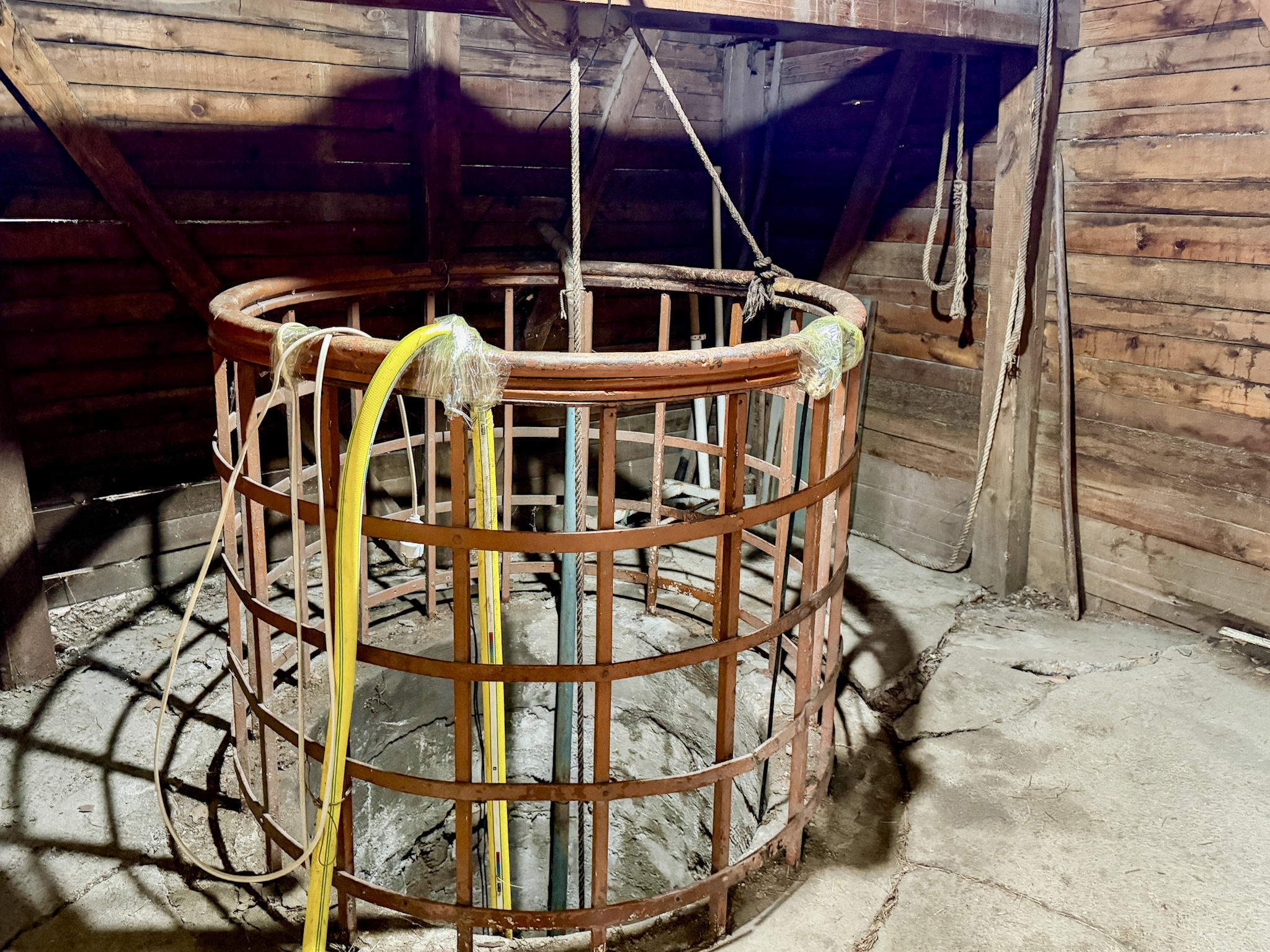
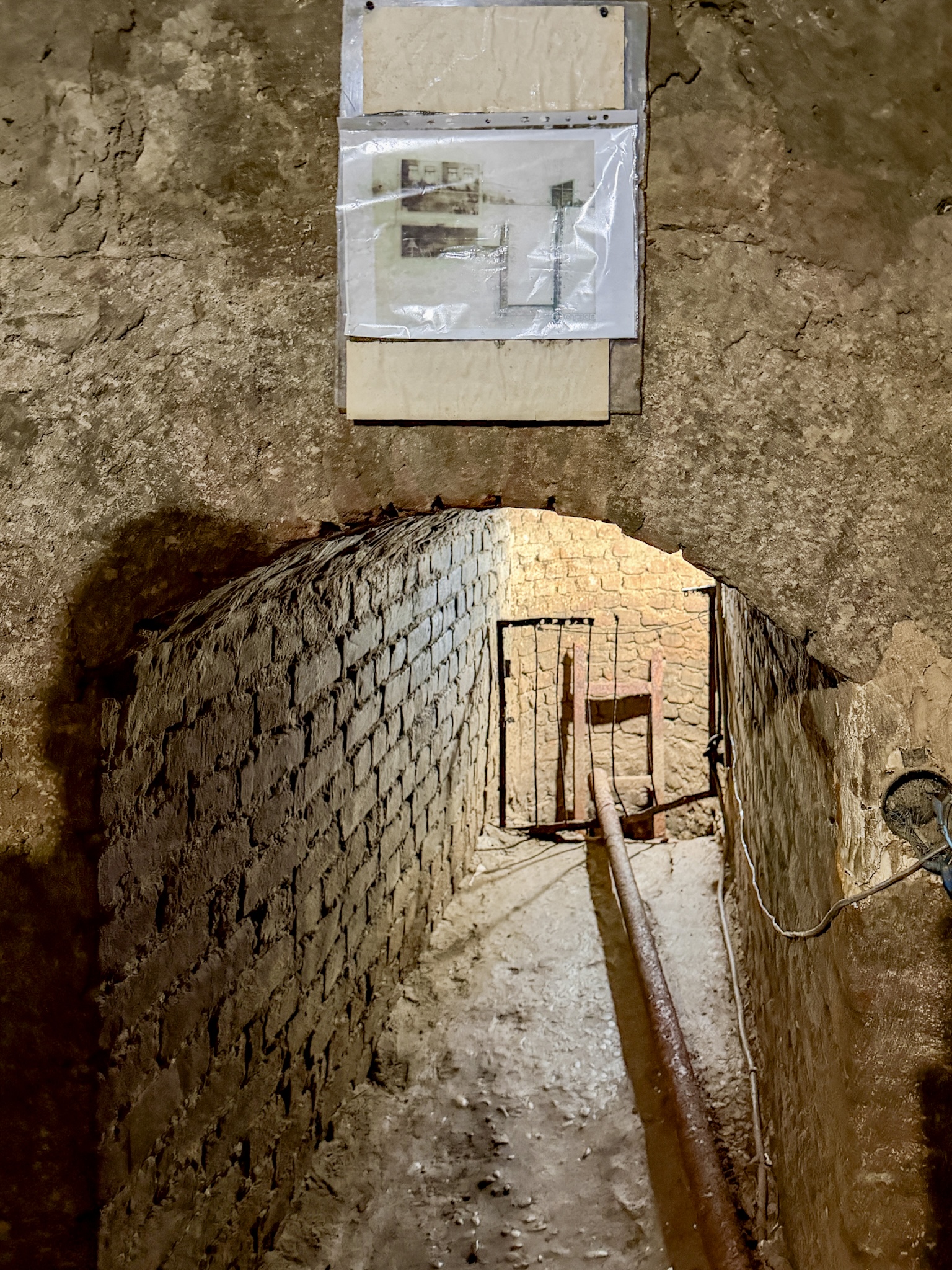
From the office, the guide points you to a small courtyard where the original well still sits, boxed in by iron. This was the only way in and out of the printing chamber back in 1903, a straight drop down before a side tunnel led sideways into the hidden room.
Nobody climbs down the actual well anymore. Instead there’s a narrow spiral staircase nearby that takes you underground the safer way, though “safer” is relative here. The metal is rusted through in places, and it wobbles a little as you go. Take it slow and hold the railing.
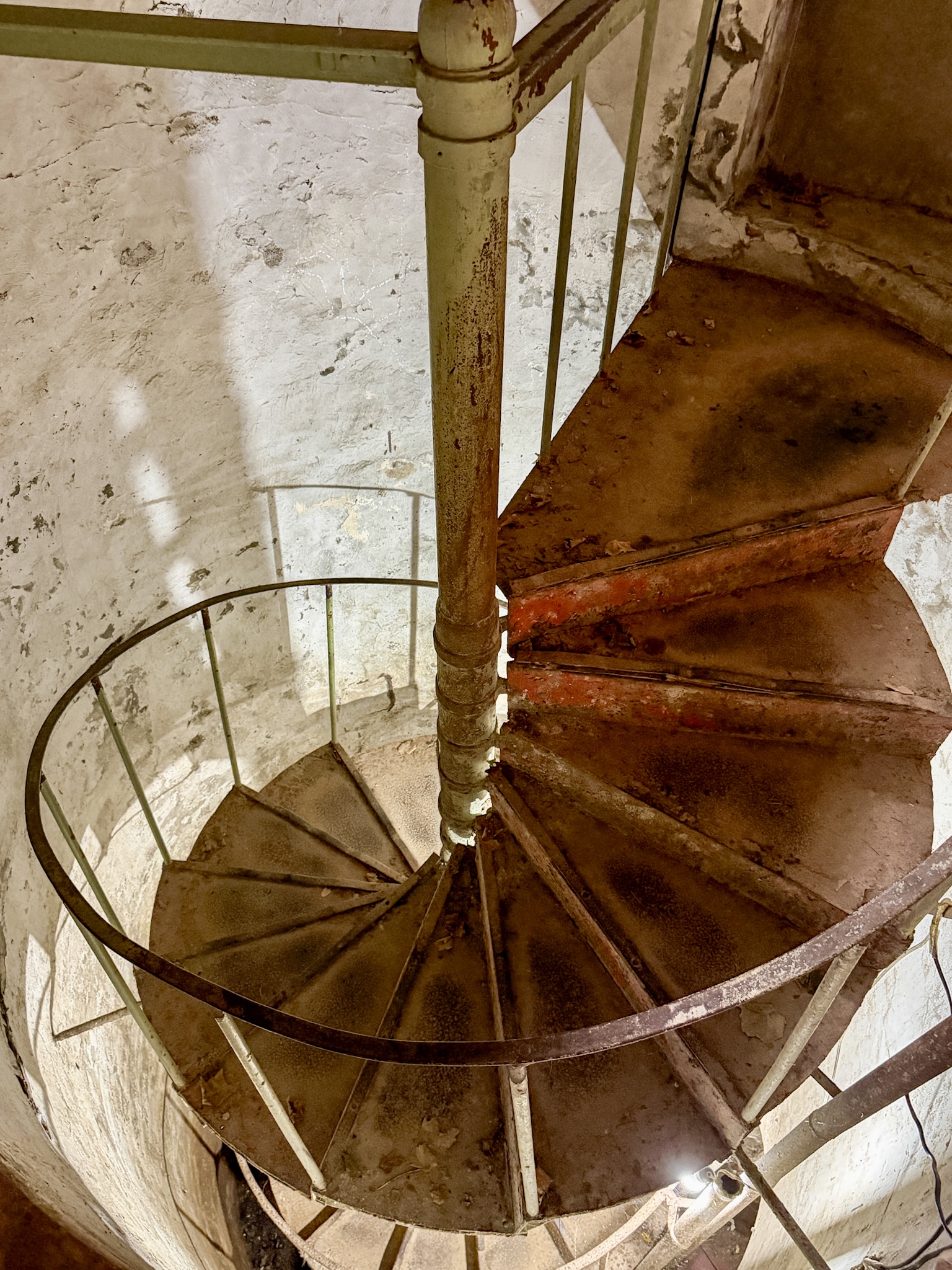
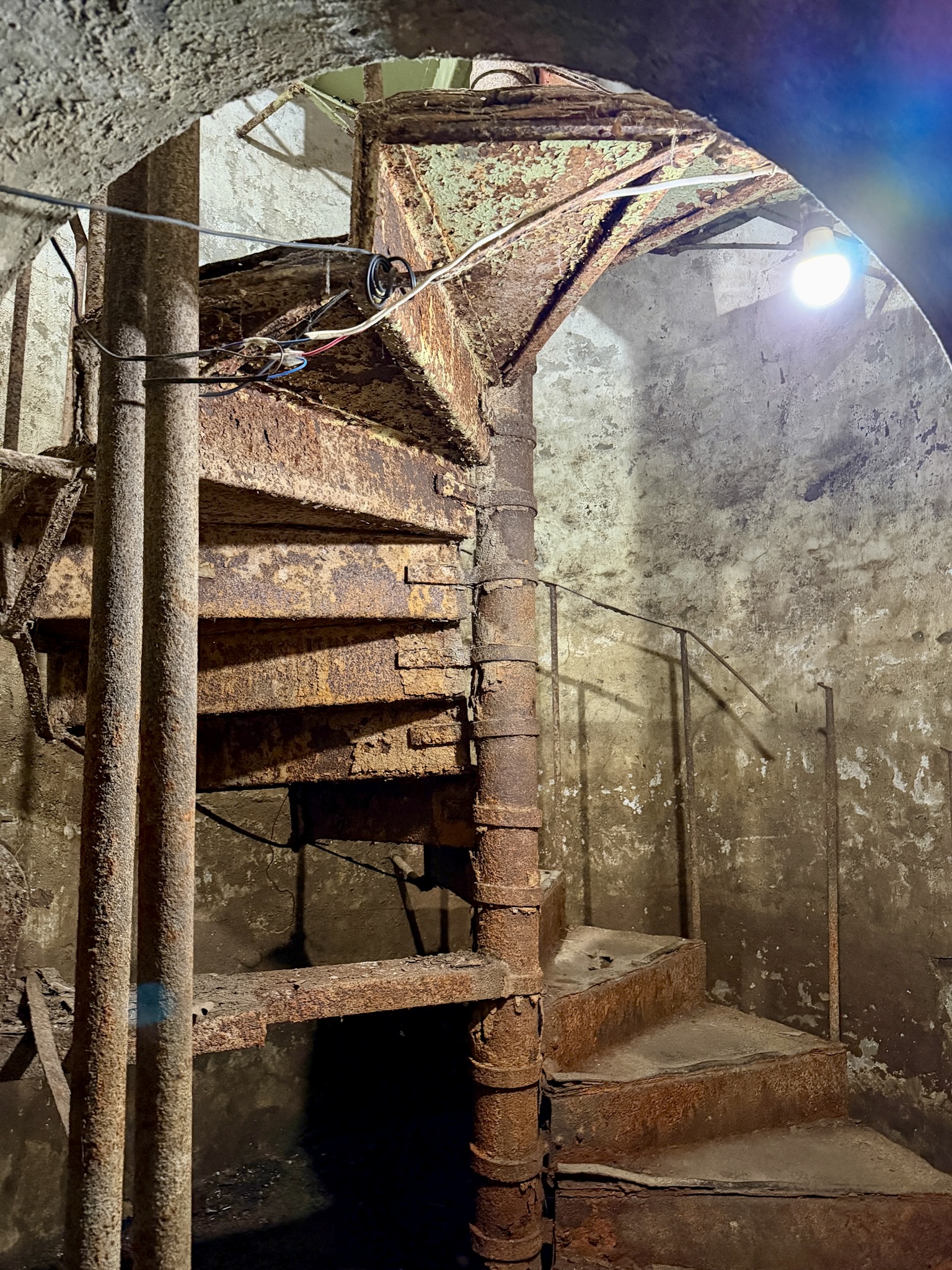
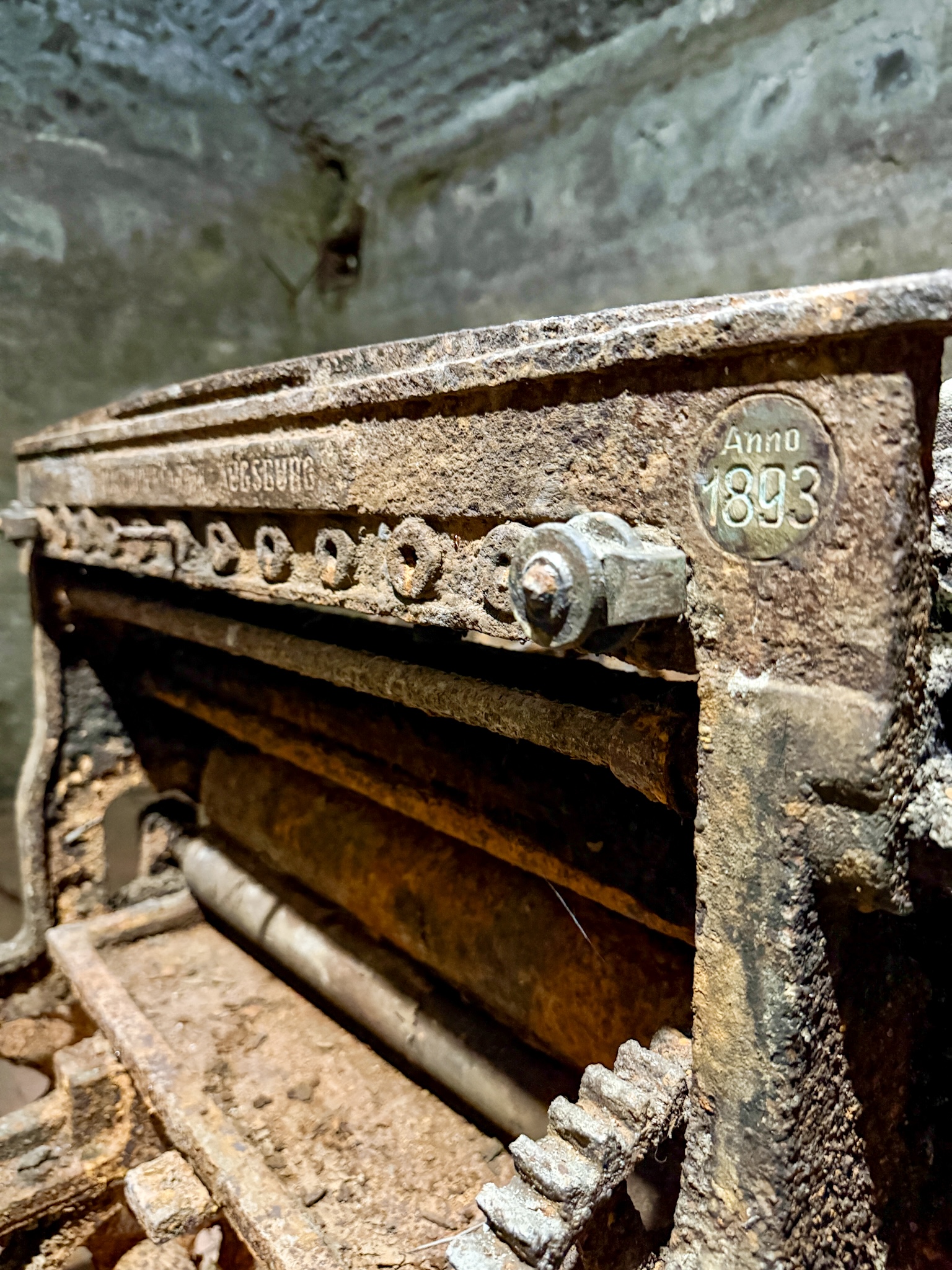
At the bottom, the air is damp and a little musty, dim except for a bare bulb, and it takes a second for your eyes to adjust. Then you see it: the printing press itself caked in a century of rust. A small plaque on the machine still reads Maschinenfabrik Augsburg and the year 1893. The whole trip down and back took me about a minute each way.
The Main Building and Its Archives
Back above ground, the rest of the visit happens in the main building, a structure packed floor to ceiling with photos, newspapers, and Soviet-era objects. Frames lean against each other in stacks, some newspapers are reproductions and some look original, and cracks run across several of the walls.
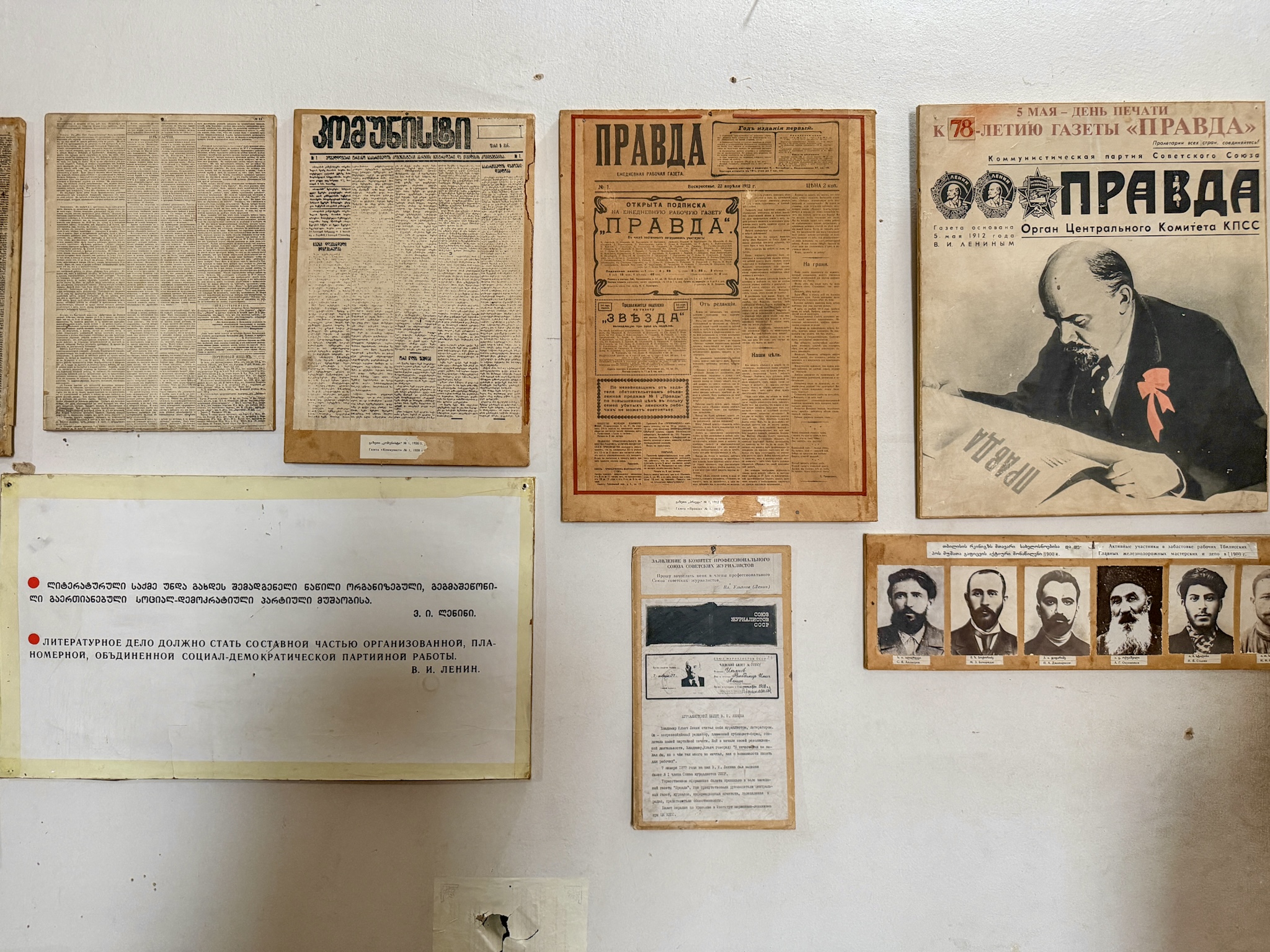
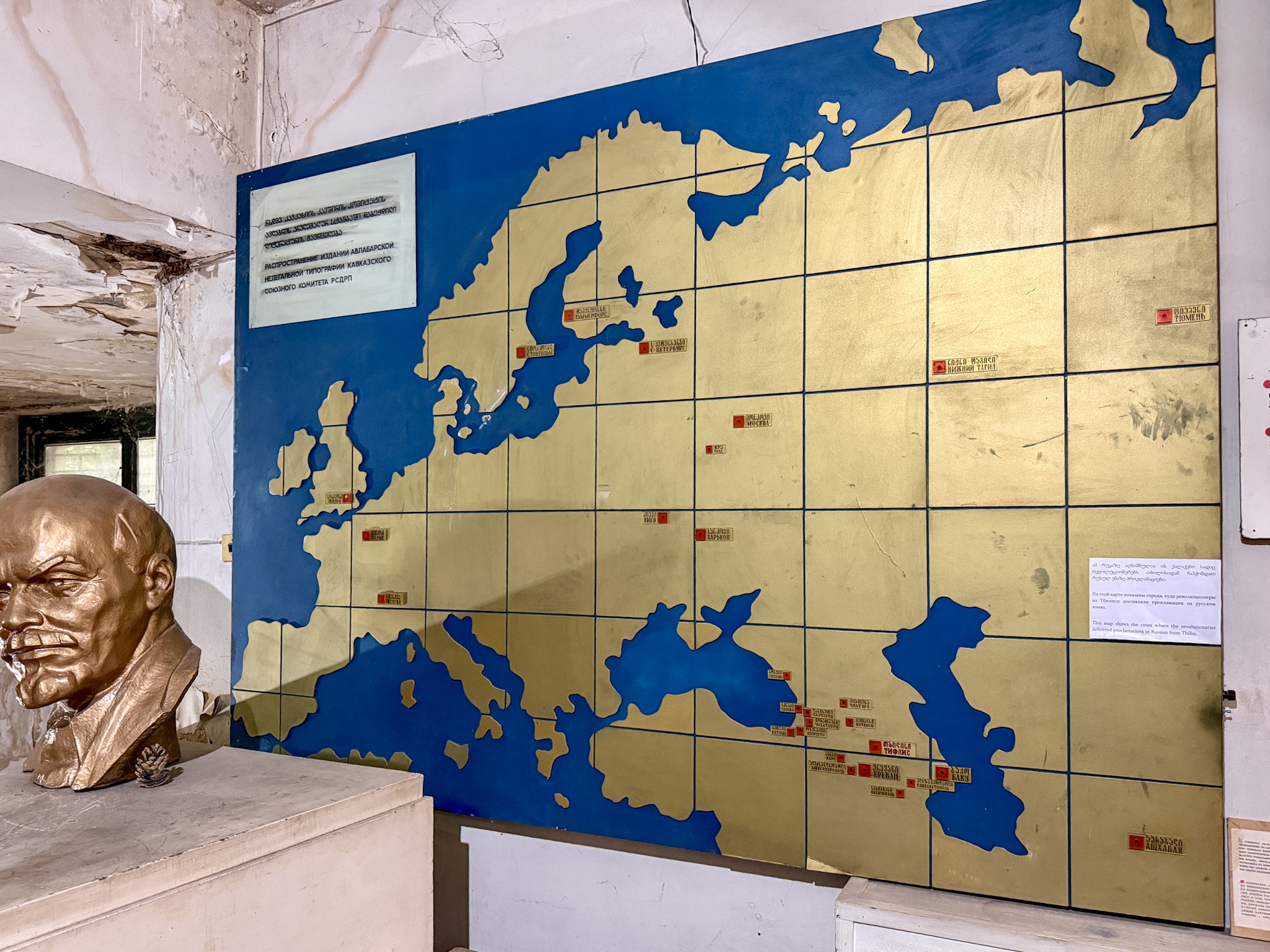
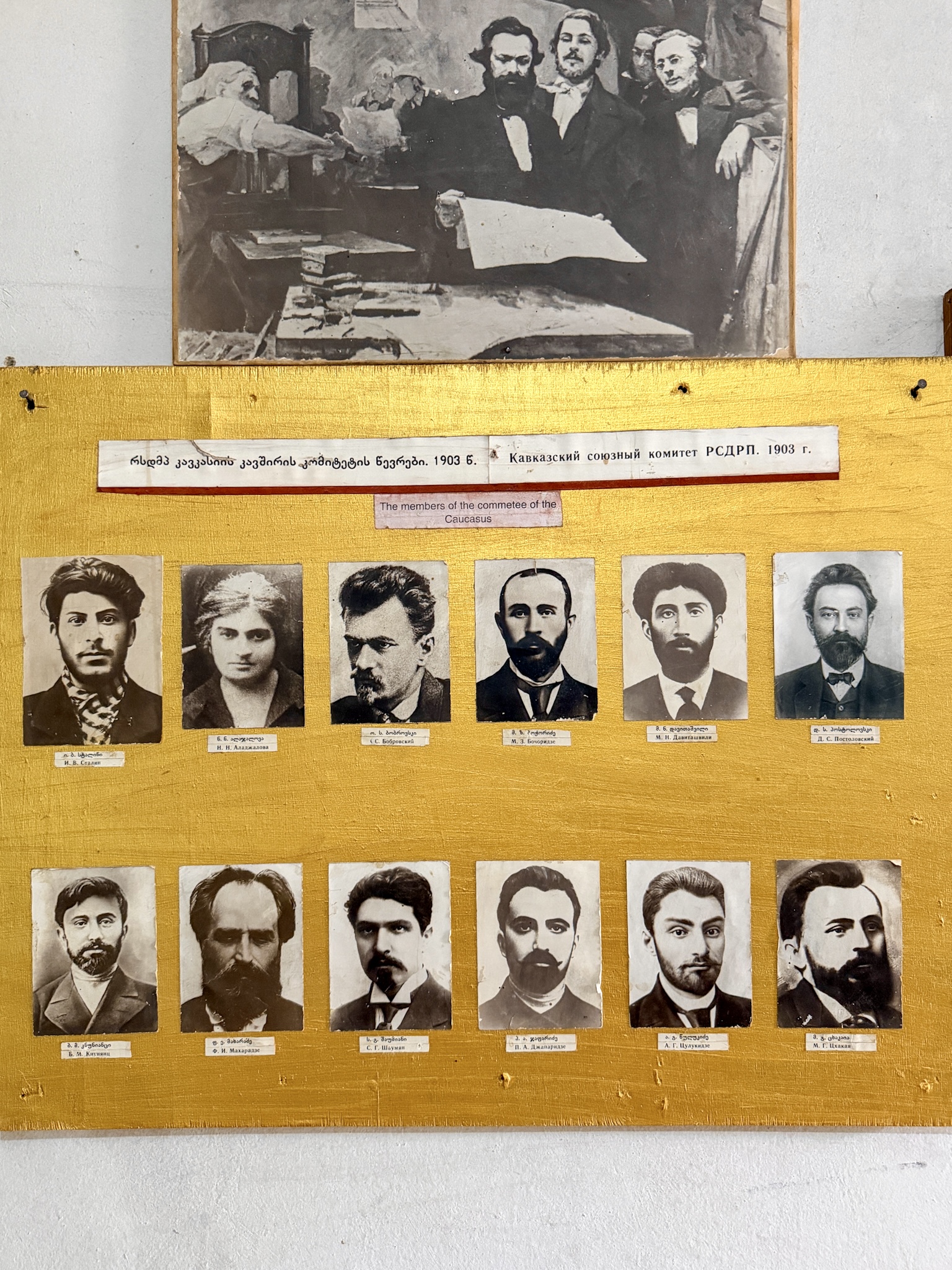
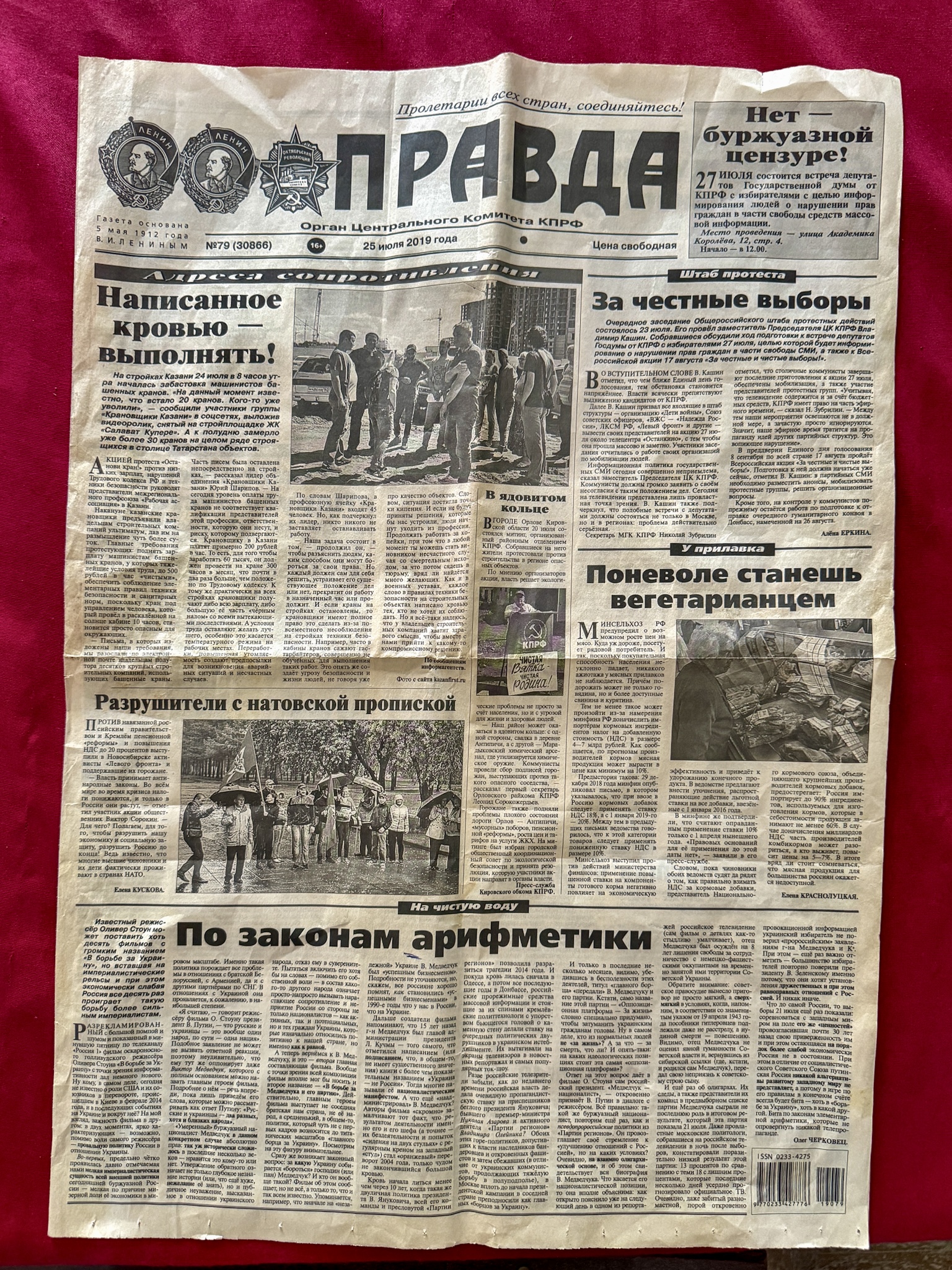
The single most interesting piece to me was a large tiled map of Europe on one wall, marking every city where the printing house’s pamphlets got distributed, from Moscow and Kiev all the way to Berlin and London. Next to it hangs a board with mugshot-style photos of the 1903 Caucasus committee members, Stalin included, all impossibly young and serious-looking. Elsewhere on the walls you’ll find full reproductions of Brdzola, the underground Georgian-language newspaper the press printed, plus later issues of Pravda going all the way up to a modern copy from the Russian Communist Party dated 2019.
The Full History of Tbilisi’s Secret Printing Press
If you want to know the complete history of the place before visiting, or you’re just simply curious, here’s what I gathered from the guide and from other resources and museums in Georgia.
The press itself came from Germany, built in 1893, smuggled into Tbilisi in pieces from Baku in 1903 after an earlier hideout there got shut down. A group of Bolshevik supporters lowered the parts down a well behind this ordinary-looking house in Avlabari, then dug sideways into a hidden chamber and put the machine back together.
Two women lived upstairs and kept watch from the porch. If a policeman walked by, they rang a hidden bell, and whoever was working the press downstairs went silent. For three years the place ran like that, printing pamphlets in Georgian, Russian, and Armenian that got smuggled out through the train station and sent across the region.
Stalin shows up in this story a bit later. He was writing articles for the pamphlets by 1904 or 1905, under pen names like Koba, and helped fund the operation with money from bank robberies around the city. But the press had already been running for a year by the time he got involved, and other people built it and kept it going. The guide will tell it like Stalin created the whole show, but he didn’t.
It all ended on April 15, 1906, when police raided the house on a tip, found the tunnel, and burned the place down. Decades later, once Stalin was running the Soviet Union, the site got rebuilt as a shrine to his early years, complete with a movie theater downstairs. In the 1970s it pulled up to 800 visitors a day. Then the USSR fell apart in 1991, the museum got abandoned, and some of the original artifacts reportedly got smuggled off and sold in Turkey.
What’s kept it alive since then is Georgia’s Communist Party, patching the place together on donations, with a surprising number of Chinese tourists still showing up because the story is apparently in their school textbooks.
Is It Worth Visiting?
Here’s the part I want to be clear about before you decide whether to go.
The guide walking you through this place isn’t giving you a balanced account. He’s a communist himself, running a museum that’s still tied to Georgia’s Communist Party, and the story stops cold in 1906. No purges, no gulags, no famine, nothing. You get the origin story and nothing else. If you don’t already know the rest, you’ll leave with a pretty one-sided picture of who Stalin actually became.
That matters, because this isn’t distant history for a lot of people. Georgia spent decades under Soviet rule, and plenty of families still carry what that meant, arrests, relatives who disappeared and never came back. A museum that talks about Stalin’s early years with this much warmth, without a single word about what came after, is obviously going to feel off to some visitors.
If you think that discomfort would outweigh the curiosity, skipping this one is a fair call.
If you do go, bring your own context with you, and keep in mind that showing up as a tourist and walking back out an hour later is a kind of distance not everyone connected to this history gets to have.
With that said, it’s still a piece of rare physical history, one of the only underground presses from that era anywhere that you can still walk into and see the actual machine sitting where it printed banned newspapers over a century ago. If you’re into Soviet history, or you just like tracking down the strange corners of a city most people never hear about, this is one of the more unusual things to do in Tbilisi. Just don’t go in expecting it to be a balanced take on what came next.