
A firsthand review of a 4-day Nile cruise from Luxor to Aswan. Early mornings, ancient temples, quiet sailing, and the strange feeling of watching Egypt pass by from a moving hotel.

A Nile cruise from Luxor to Aswan is one of those formats that sounds romantic and turns out to be mostly logistical, which is not a criticism. For four days, your hotel moves south, your meals are waiting when you get back, and temples appear at hours that feel suspiciously well chosen. You step off first to see insanely ancient temples, return for lunch, watch the river slide by, then repeat the process somewhere else entirely. It’s orderly, comfortable, and quietly satisfying in ways hard to describe. But I’ll try.
This is a firsthand review of how a Nile Cruise works once you’re actually on board.
What to Expect on a Luxor-to-Aswan Nile Cruise (Day-by-Day)
Day 1: Arrival in Luxor and West Bank Temples
I boarded the Tamr Henna boat in Luxor late in the morning. Check-in was quick, and the cabin looked exactly like the photos I had stared at for weeks.
The first impression of the boat landed fast. The interiors felt genuinely new, the result of a 2024 overhaul led by an Egyptian design studio, with a modern palette softened by hieroglyph-inspired patterns worked into walls.
All cabins opened directly onto the Nile, either through large panoramic windows or private balconies. The common areas were my favorite part. Lounges and the dining room faced the water, with wide windows that turned every meal into a moving view. You could sit anywhere and still feel connected to what was happening outside.
Lunch on the first day set the tone immediately: relaxed, well executed, and timed according to the planned visits. So by 2 pm, we were already back in a car with our guide and driver, heading toward the East Bank.

Luxor is split by the Nile into East and West Bank, and the distinction is just as practical as it is symbolic. The East Bank was where ancient Thebes carried out its public life, which explains why this is where the major temples are concentrated. These were places designed to be accessed repeatedly, seen by many, and navigated without ceremony.
The first stop was Karnak Temple, which isn’t a single temple but a sprawling complex expanded over roughly two thousand years. Each pharaoh added something, usually bigger than what came before, and the result feels like a beautiful, long-running architectural argument.
The hypostyle hall is the part everyone waits for, and it delivered. Traces of original color still cling to the upper sections, undoing the idea that ancient Egypt was ever meant to look beige.

A short drive later, we arrived at Luxor Temple, which felt very different despite being only a few kilometers away. It’s smaller, more compact, and embedded directly in the modern city, with traffic and everyday life brushing right up against its walls. Luxor Temple was mainly used for festivals and processions and was once connected to Karnak by an avenue of sphinxes.
One of its most disarming features is how visibly reused it is. Alexander the Great left his mark here among many, and a mosque was later built into the structure, which is why the site feels exceptionally layered.
We were back on the boat before dinner. The boat remained docked overnight, engines off, which meant a quiet night of excellent sleep. It’s an unglamorous detail, but one you end up valuing quickly, especially knowing the next day would start early.

Day 2 Luxor East Bank and Sail Toward Esna
On our second day, we crossed by car to the West Bank very early, arriving around 7:30, with the Colossi of Memnon serving their usual role as a visual warm-up. They’re impressive mostly because they’ve been standing there quietly for a very long time, now greeting traffic and tour buses with the same indifference. It’s not a long visit, and it doesn’t need to be.
By 8:00, we were inside the Valley of the Kings, which is where the early start really paid off. No lines, no crowd choreography, no sense of being pushed through.
The standard ticket includes several tombs. Among those, Tomb of Ramesses IV was my favorite. It’s direct, one long corridor, clear iconography, and wall scenes that read easily. It’s also one of the better-preserved examples of the Book of Gates. Tomb of Ramesses IX was smaller and more intimate, with tighter passages, while Tomb of Merenptah felt more ambitious, with deeper corridors and more complex funerary texts, even if parts of it are less visually intact.
From there, I added a few extras. Tomb of Tutankhamun is tiny and costs an extra 7 $, but it’s worth it simply because it’s, well, Tutankhamun. No long corridors, no dramatic buildup, just a small, functional space.

For 3 $, Tomb of Ramesses V and VI was to me the most beautiful in the entire valley. The ceilings are packed with astronomical scenes, and the colors are still sharp. It’s visually dense in a very satisfying way.
I also visited Seti I, the most expensive extra ticket at around 40 $, and the deepest tomb in the valley. It’s long, multi-sectioned, and atmospheric in a way the others aren’t, partly because the price naturally filters the crowd. You’re often alone or nearly alone inside. If you’re on a tight budget, you can skip it without serious regret. If you’re not, it’s one of the most memorable spaces in the valley.

From the Valley, we moved on to the Temple of Hatshepsut. Built directly into the cliffs, the temple is immediately legible. Hatshepsut ruled as a pharaoh in her own right, adopted full royal iconography, and then spent much of her afterlife being quietly erased by her successors. The irony is that her temple survived exceptionally well, and today it’s one of the most distinctive stops on the West Bank.
We were back on the boat by lunchtime, and the rest of the day was dedicated to sailing.

This was when the Nile and the cruise started feeling less like convenient connectors between sites and more like the whole point. My favorite stretch of the Nile came a couple of hours after leaving Luxor, some time before reaching the Esna lock. Dense green vegetation lined the banks, palms leaned toward the water, and behind them rose, a huge sandy mountain hill that caught the light beautifully.
At times, wild horses appeared along the shore, running parallel to the boat for a few seconds before disappearing again.
We passed through the Esna Lock around sunset. The boat slowed, others clustered nearby, and most people drifted up to the deck. By evening, the boat was moving steadily south. It was the first day that felt utterly complete without needing to check what came next.

Day 3: Edfu Temple, Kom Ombo
We reached Temple of Horus at Edfu in the morning, after a short transfer from the river.
Edfu is late, by Egyptian standards: built under the Ptolemies, it avoided centuries of reuse and dismantling, so what you see is mostly what was built. Inside, the reliefs were easy to follow without anyone translating every symbol, although the guide will do it for you.
Horus fighting Seth appears repeatedly, like a message someone wanted to make very sure got across. The sanctuary at the back was compact and dark, which made the whole visit feel contained and efficient.

By late morning, we were already back on the boat. The sailing stretch between Edfu and Kom Ombo was quiet and visually modest, so people read and napped. Occasionally, tiny boats approached selling scarves and souvenirs with impressive optimism.
We docked at Kom Ombo Temple in the afternoon and had enough time to explore without clock-watching. Kom Ombo is a double temple, split cleanly down the middle. One side for Sobek, the crocodile god. One for Horus the Elder. The symmetry is so strict it becomes the main attraction.
The most unexpectedly engaging part was the medical reliefs carved into the walls, actual surgical instruments rendered clearly enough to recognize. Nearby, the crocodile museum did exactly what it promised. Mummified crocodiles, calmly displayed, no further commentary required.
We returned to the boat as the sun dropped and the light softened. Dinner followed, conversation thinned out, and the day ended splendidly.

Day 4 Aswan Old and New: Philae and High Dam
We arrived in Aswan early, as usual. Aswan feels lighter than Luxor, less compressed by history, and more comfortable with the idea that not everything needs to be monumental.
The morning excursion began with Philae Temple, which is memorable as much for how it was saved as for what it is. The entire complex was dismantled and reassembled stone by stone after the construction of the Aswan High Dam, an operation so meticulous it’s hard not to admire it while standing there. The temple itself is elegant, compact, and easy to move through without fatigue.
We also stopped at the Aswan High Dam, a visit that works mainly as context. It’s not visually gripping, but it explains how the river is managed today. Without it, the Nile would still be seasonal and unpredictable. With it, the river becomes navigable, calm, and compatible with floating hotels.

By midday, we were back on the boat for lunch. At 16:00, we were picked up again for a felucca ride, which ended up being one of the simplest and most effective moments of the trip. Feluccas are traditional sailboats still used locally, and Aswan is one of the few stretches of the Nile where they make practical sense. The river widens, currents slow, and engine traffic drops compared to Luxor or Esna. The absence of an engine is also the only way to move quietly between the small granite islands and shallow banks south of the city.
The ride typically stays near the Elephantine Island area, weaving between low rocky outcrops and sandy islets shaped by the First Cataract. This landscape is geologically different from what you see further north.
Back on the cruise, the upper deck became the obvious place to be. Aswan dimmed gradually rather than all at once, lights appearing along the banks while the river stayed dark and calm.

Day 5: Disembarkation and Abu Simbel
Day five is, by design, a disembarkation day on Nile cruises, which is why most people tack on a day trip to Abu Simbel.
We checked out in the morning and left Aswan by car for Abu Simbel. The drive took about 3.5 hours each way, across a landscape that didn’t offer much distraction. It’s flat, and repetitive enough that you stop checking the time fairly quickly.
However, that commitment pays off the moment Abu Simbel appears. The temples arrive all at once, fully formed. Built by Ramesses II, the Great Temple was designed to intimidate on purpose, and it still does. Four colossal seated statues stare straight ahead, unbothered. Knowing that the entire complex was moved block by block in the 1960s to save it from floodingonly sharpens the effect.
Next to the Great temple is the smaller temple dedicated to Nefertari. Its symmetry is cleaner, the proportions calmer, and the fact that Nefertari’s statues are carved at the same height as Ramesses’ remains quietly radical. We had about 2 hours on site, which turned out to be enough.
By early afternoon, we were back in town, checked into our hotel, and officially done with moving parts.

Final Review of the Experience
Without brochure language, these are some practical takes you only get once you’re there:
The experience itself is extraordinary, full stop. Upper Egypt is one of the most historically dense places on the planet. Most of what you see was already ancient when Rome was still figuring itself out. Many of the temples and tombs date roughly 1500 BCE, meaning you’re walking through places that were built more than 3,000 years ago. The sites are also exceptionally well preserved, often to a degree that feels almost implausible once you’re standing there. It’s primordial history you can still read on walls, ceilings, and floors, often with colors intact. Seeing these places in sequence, connected by the legendary river that made them possible in the first place, gives the whole area an intensity that’s hard to grasp from photos or textbooks.
The boat can make or break the trip. Not in a precious way, in a basic quality of life way. A good boat means a quiet cabin, good (and safe) food, solid AC, genuinely comfortable bedding, and a deck you actually want to sit on for hours. A bad boat means you start fantasizing about land travel by day 2. Check out this guide if you need help with the selection of the best cruise for you.
The social mix is on the quieter side. This is not a party experience, generally. Most guests were couples in their late 30s to 50s, plus some older travelers, and the general tone was calm, curious, and early-to-bed. If you’re looking for nightlife or very young social energy, you’re unlikely to find it on a cruise.
Guides change what you take home. The big difference is continuity. When the same guide stays with you, you stop relearning the basics every morning and start building an actual mental map of what you are seeing. By day 2, temples stop being “big stone rooms with gods on them” and start becoming political statements, propaganda, and very expensive personal branding.
The walking is real (although worth it). The Valley of the Kings is not a museum stroll, you walk on exposed ground, then descend into tombs and climb back out, often via stairs, with heat doing its usual Egyptian hobby of making everything feel 20% harder. If someone has limited mobility or struggles with stairs, this is the part that can quietly turn the day into a grind. Edfu and Kom Ombo are easier days physically, but they still need attention.
Tipping is not a footnote, it’s a budget category. Drivers typically expect around 5$ per person per day, guides closer to 10$ per person per day, and that’s before crew, luggage handlers, and dining staff. Most boats suggest a pooled tip at the end, but in practice, additional daily tipping is normal. Do the math on the cash that you’ll think you need for tips, then double it, because running out here is the fastest way to make a smooth trip feel awkward.
Is a 4-Day Nile Cruise Worth It?
If you’re deciding between a Nile cruise, a private car with driver, or the train, the real question is: how much friction you’re willing to manage? Here’s a breakdown:
Nile cruise
- Time and movement: You unpack once. You move every day, but you never think about how. Transfers to temples are short, coordinated, and designed around sailing windows. You visit the major sites in a sequence that minimizes backtracking and crowd pressure.
- What you see while moving: Actual travel time between places is replaced by peaceful sailing, and you see the Nile properly. Villages, fields, palms, desert rising behind green banks.
- Friction level: Low. No hotel changes, no ticket juggling, no constant replanning.
- Cost: Roughly €900–1,600 per person for a mid to upper-range boat, excluding tips and optional tickets. Not cheap, but the price includes accommodation, meals, guide, transport, and coordination.
- Limitations? Fixed schedule. You won’t stop at lesser-known temples, as you usually see what the itinerary allows.
Private car
- Time and movement: Driving takes 5–6 hours end to end, often split across days. You pack and unpack multiple times, coordinate additional hotels. Nothing is difficult, but everything requires attention.
- What you see while moving: Mostly desert. The Nile appears occasionally, but it’s not the constant presence it is from the water.
- Friction level: Medium. You need a driver and a guide anyway, both for safety and for context. Without them, the experience degrades quickly.
- Big advantage over the cruise: Often cheaper than a cruise on paper, even when adding multiple hotels, a private driver, and a guide. Also: Freedom. This is the only option that lets you stop at less-visited temples and sites that cruises skip entirely. If you enjoy places where you’re alone or nearly alone, this matters. With a good guide, these stops can be extraordinary.
Train
- Time and movement: Direct trains take 3–4 hours, but most itineraries break the journey with a stop near Edfu or Esna, which means an additional hotel change and additional planning.
- What you see while moving: Trains are functional, not scenic. You see very little of the river.
- Friction level: Medium. You still need guides at each stop, plus hotels in multiple cities. The savings are usually real, but so is the effort.
- Big advantage over the cruise: Always cheaper than a cruise.
The short answer
A Nile cruise is absolutely worth it if you want a curated, visually rich experience where the Nile itself is part of the itinerary, not just something you occasionally cross. It’s also worth it if you want depth without exhaustion, and if you’re don’t feel strongly about visiting obscure temples or keeping a flexible schedule. Essentially if you want the best of Upper Egypt to unfold smoothly, without constant decisions or physical burnout, it’s one of the most effective ways to do it. A higher budget helps, too.
If you want control, spontaneous detours, or the satisfaction of stitching everything together yourself, the cruise format will feel limiting.
Is a Nile Cruise Safe?
Short version: yes, in the specific, unglamorous way that actually matters when you’re there.
A Nile cruise is one of the most controlled ways to move through Upper Egypt. You’re not navigating independently or improvising transport, and you’re almost never on your own in places where being alone would be inconvenient. Transfers are done with the same guide every day, sites are visited at predictable hours, and the boat itself acts as a fixed base.
But what people usually mean when they ask about Nile cruise safety is not only crime in the abstract, but friction. Vendors are persistent, sometimes aggressively so, especially around major sites and docks. That’s the part that requires patience. Being with a guide makes a noticeable difference, both in deflecting attention and in keeping things moving. I never felt unsafe, but I also never felt the urge to wander off alone, and that’s an important distinction.
On board, the environment is calm to the point of being uneventful. Boats are docked overnight, engines shut down early, and access is extremely controlled.
In practical terms, a Nile cruise is safer than trying to stitch together the same route independently, especially if you’re unfamiliar with Egypt. Not because Egypt is inherently dangerous (although it definitely can be), but because the cruise removes most of the variables that tend to cause stress.
And in a place where the history already demands a lot of your attention, that’s a trade most people are happy to make.
Keep reading:
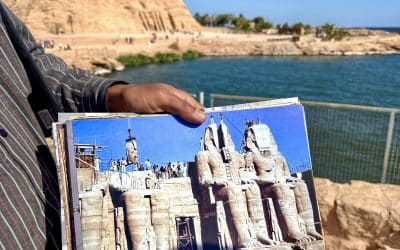
The Ancient Egyptian Temples That Had to Be Moved
Several ancient Egyptian temples were physically moved to survive modern dams. Here’s what was saved, what was lost, and how to read these famous sites today. [dssb_sharing_buttons icon_placement="icon" icon_width="fixed" alignment="left" icon_color="#000000"...
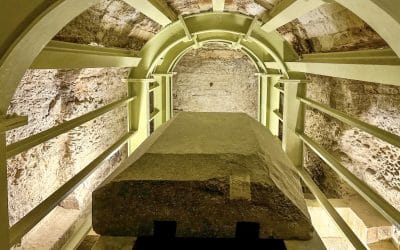
Inside The Serapeum of Saqqara: Photos, Theories, Visit
What to expect when visiting the Serapeum of Saqqara, from underground layout to granite boxes, Apis bulls theories, and practical advice. [dssb_sharing_buttons icon_placement="icon" icon_width="fixed" alignment="left" icon_color="#000000" use_custom_icon_size="on"...
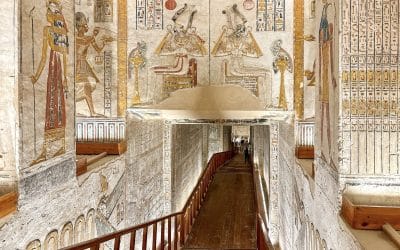
Valley of the Kings: Map, How to Visit & Best Tombs in 2026
A practical Valley of the Kings map and guide. Where it is, how to visit, tickets explained, and the most beautiful tombs to see first in Luxor, Egypt. [dssb_sharing_buttons icon_placement="icon" icon_width="fixed" alignment="left" icon_color="#000000"...