
A complete guide to the Caucasus mountains in Kazbegi, Georgia: the drive from Tbilisi, Gergeti Church, the best hikes, and who should (and shouldn't) go.
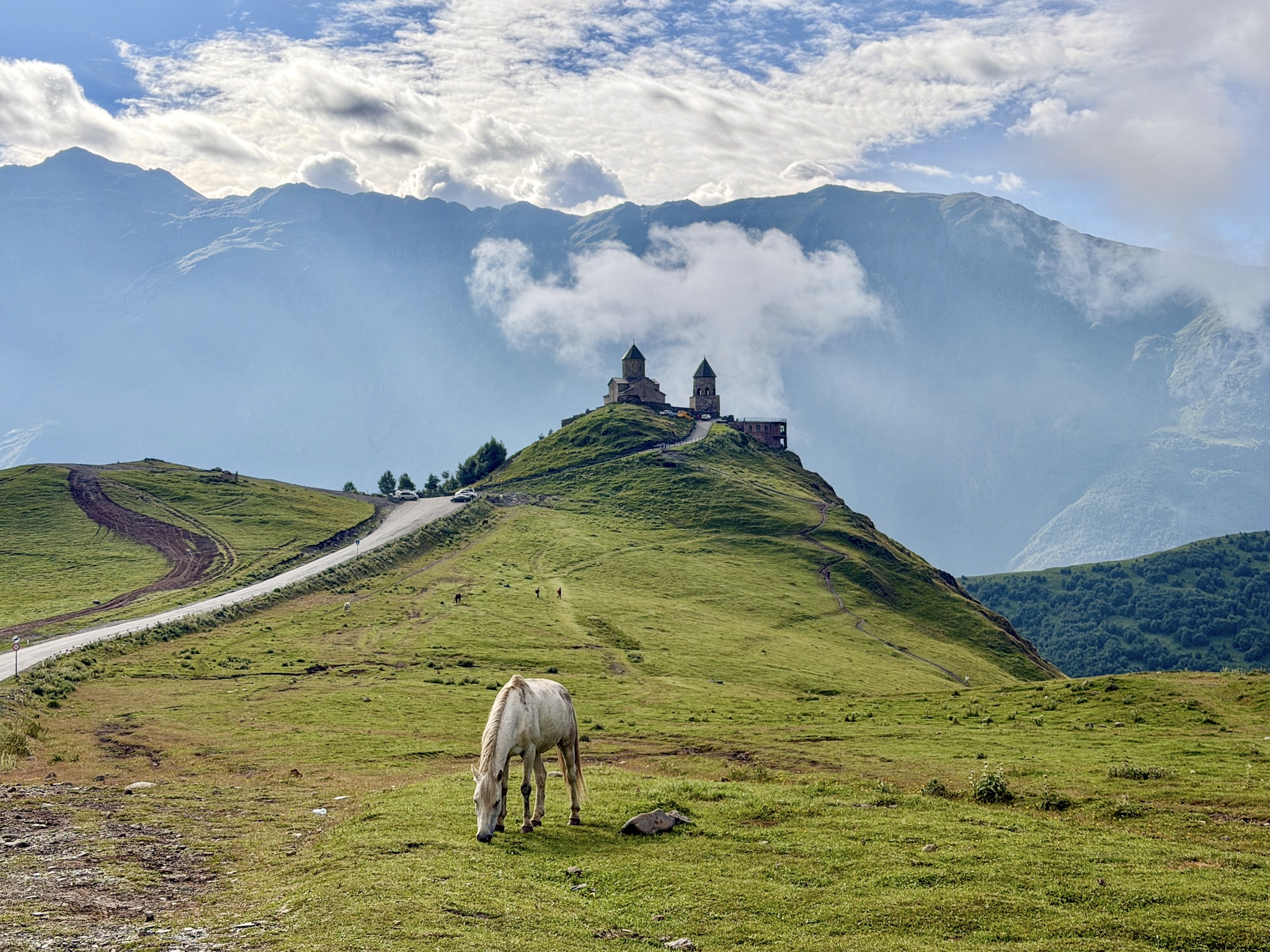
Kazbegi is a mountain area in the far north of Georgia, right below the main ridge of the Greater Caucasus. There's only one real town, Stepantsminda. Most people call the town Kazbegi too, so you'll see both names used for the same place.
The reason to come is the mountains. Mount Kazbek, a huge glaciated peak, towers right over the town, and the valleys around it are full of trails, old churches and stone villages. The town itself is a different story, but I'll get to that.
I spent several nights in Stepantsminda in August, driving up from Tbilisi in a rental car and hiking every day. This guide to the Caucasus mountains in Kazbegi covers where exactly they are, things you need to know, the best things to do once you arrive, and my honest take on who will love the place and who probably won't.
Things to Know Before Visiting Kazbegi
- Getting there: Stepantsminda is about 150 km north of Tbilisi on the Georgian Military Highway. By car it takes two and a half to three hours without stops. Without a car, shared minibuses called marshrutkas leave from Didube bus station in Tbilisi for around 15 GEL. They take about three hours and depart when they're full.
- Do you need a car? Realistically, yes. The main road and the drive up to Gergeti Trinity Church are paved, so a normal rental car is fine for those. Trailheads and sights are spread across different valleys, though, and local taxis are few and hard to book at short notice. The rough roads to the Truso Valley and Juta Village need a 4x4, or you can hire a local driver for those two days.
- When to go: June to September is the season. July and August are the warmest and most reliable months for good weather. From late October snow starts covering the trails above town. In winter, most hikes aren't possible, many guesthouses and restaurants close, and the road from Tbilisi can shut for snow.
- Money: bring cash in Georgian lari (GEL). Hotels booked online take cards, but many restaurants, guesthouses, drivers and car parks only take cash. We paid cash almost everywhere. Cash machines and currency exchange offices are around the main square in Stepantsminda.
Where Are the Caucasus Mountains in Kazbegi?
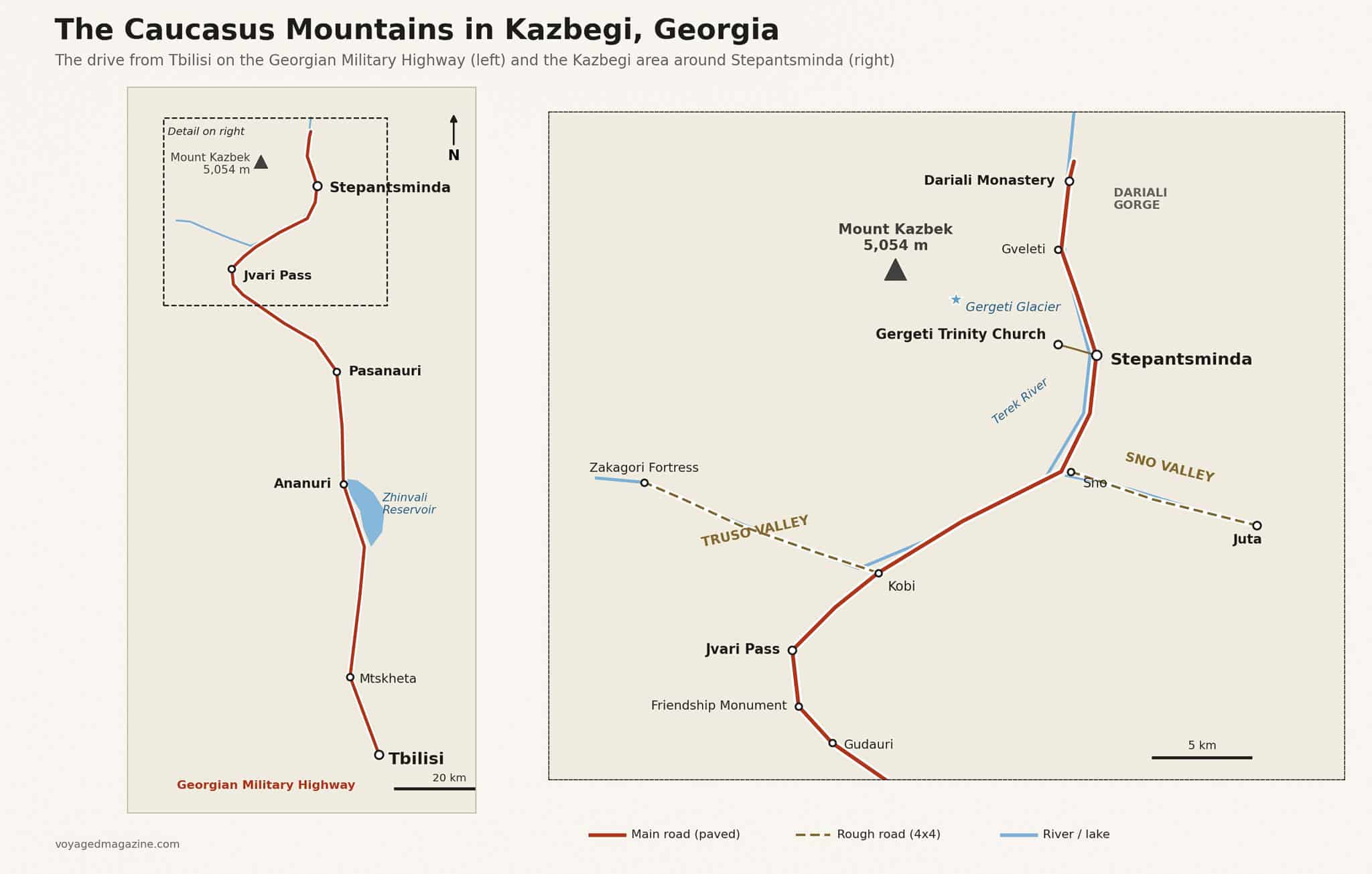
Kazbegi sits right in the middle of the Greater Caucasus, on the Georgian side, in the historic region of Khevi. Here's a map and full description of the region, from the mountain range down to the town.
The Range: the Greater Caucasus
The Greater Caucasus is a mountain range about 1,200 km long, running from the Black Sea to the Caspian Sea. For much of its length, it forms the border between Georgia and Russia.
On the Georgian side, the range covers the whole north of the country, and it's split into several separate mountain regions, each with its own valleys, villages and traditions. From west to east, the best known are Svaneti, Racha, Kazbegi, Khevsureti and Tusheti.
The Area: Kazbegi Municipality
Kazbegi is the one in the center. It's also the easiest to reach from Tbilisi, since the main road to Russia runs straight through it. Officially it's Kazbegi Municipality, a district that takes in the town of Stepantsminda and a handful of villages and valleys around it. It stretches:
- South to the Jvari Pass, the highest point of the road from Tbilisi.
- North to the Russian border, in the Dariali Gorge.
- West along the Truso Valley.
- East along the Sno Valley, which leads up to the village of Juta.
The Terek River runs through the middle of it all and flows north into Russia. Much of the land around Stepantsminda is protected as Kazbegi National Park.
The Peak: Mount Kazbek
Mount Kazbek is the peak you see in every photo of the area.
Height: 5,054 m, one of the tallest mountains in Georgia.
What it is: a dormant volcano, covered in glaciers on every side. One of them, the Gergeti Glacier, is the end point of the most popular hike in the area, which I cover in my Gergeti Glacier Hiking Guide.
The legend: this is said to be the mountain where Prometheus was chained for stealing fire from the gods, or Amirani in the Georgian version of the story.
Climbing it: reaching the summit is a real mountaineering expedition that takes several days, with a guide and proper gear. For most visitors, Kazbek is something to look at, from the town or from the trails below it.
The Town: Stepantsminda
Stepantsminda sits right at the foot of Kazbek, at about 1,740 m. It's where nearly everyone sleeps, eats and stocks up. The Soviets renamed it Kazbegi in 1925, and in 2006 it went back to Stepantsminda.
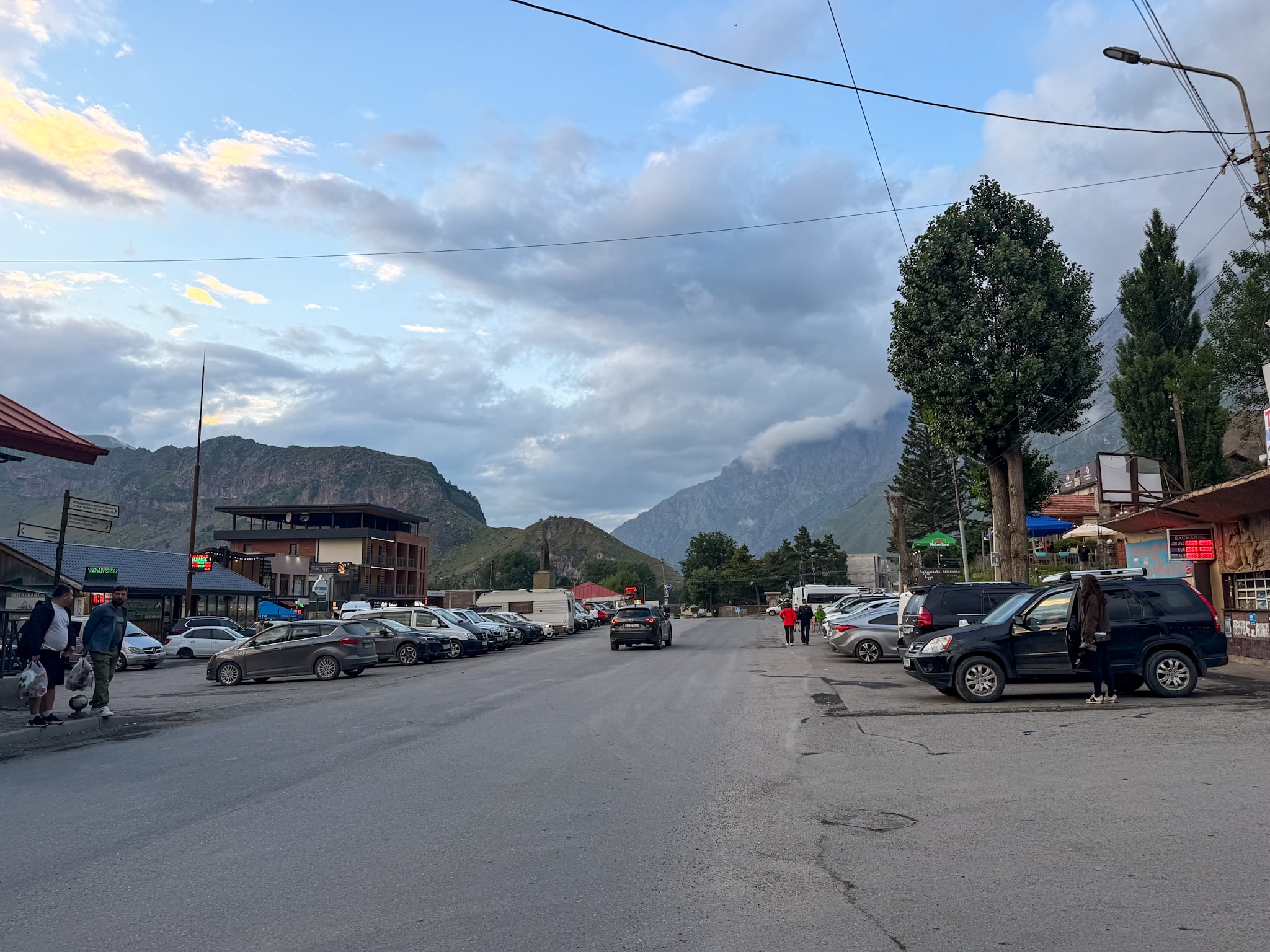
To be honest, the town itself isn't pretty. A few things to keep in mind:
- Many streets are unpaved, or so full of potholes that you drive around them in zigzags.
- New hotels and houses are going up everywhere, and some roads are being widened.
- Sidewalks come and go from one block to the next.
You don't come here for the town, you come for what's around it.
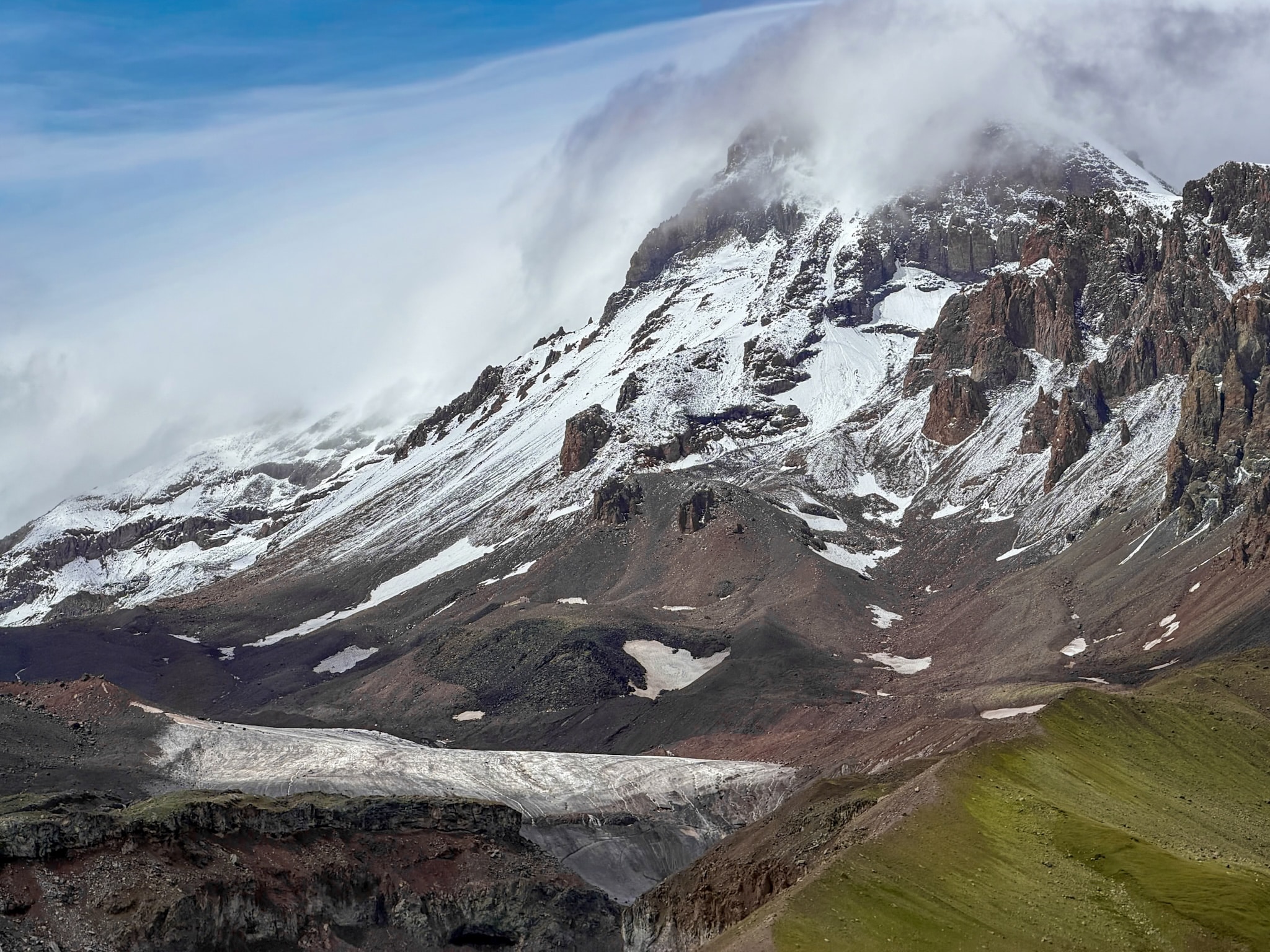
Gergeti Glacier & Mount Kazbek
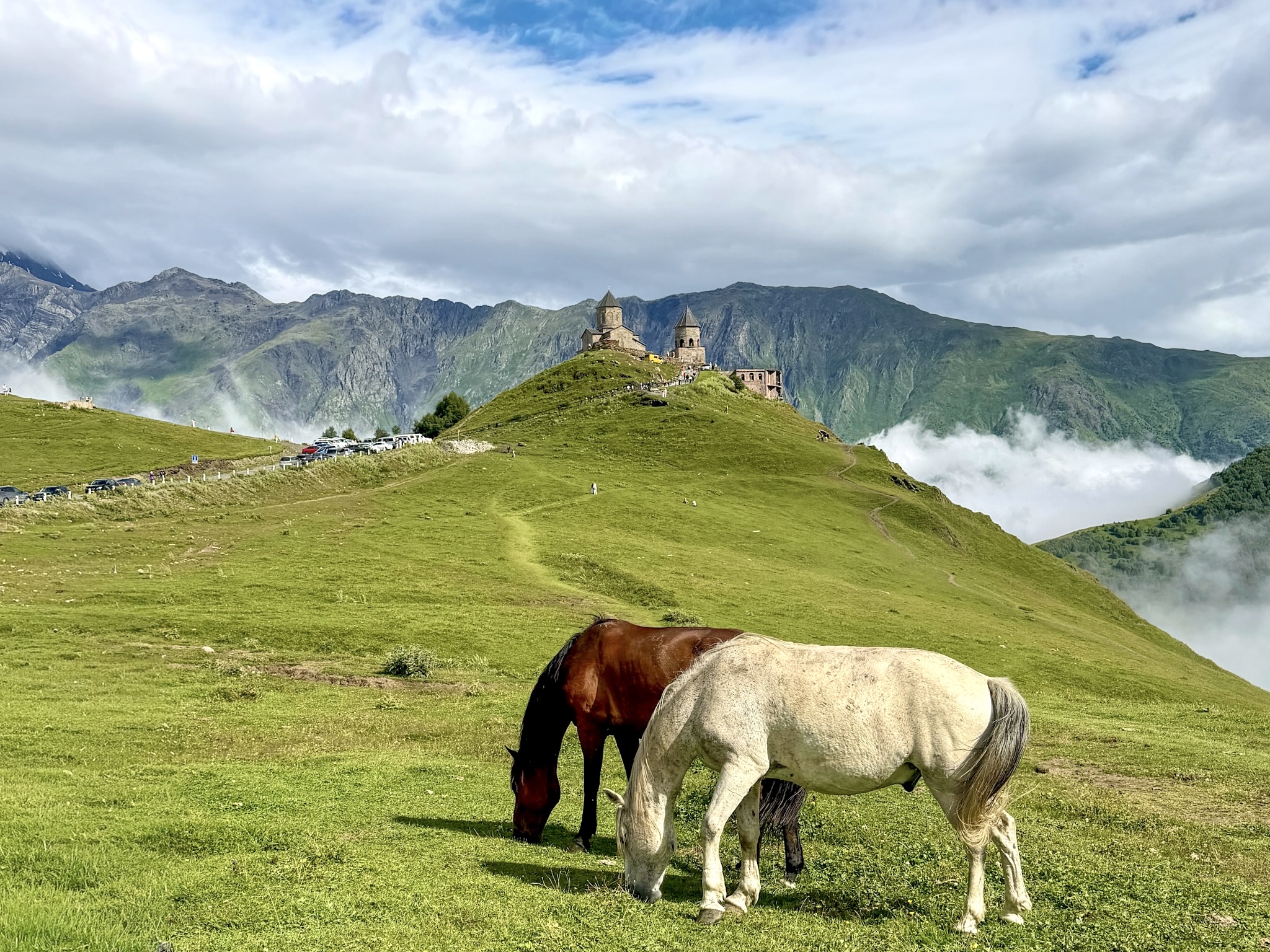
Gergeti Trinity Church
Stepantsminda Center & Main Street
Driving the Georgian Military Highway From Tbilisi
The only road to Kazbegi is the Georgian Military Highway, the main route between Georgia and Russia. Without stops the drive takes around three hours. With a few stops and lunch, it took us three to four. These are the stops worth making, in the order you reach them.
Ananuri Fortress
About an hour from Tbilisi, Ananuri is a 17th-century fortress with stone walls, towers and two churches, on the shore of the turquoise Zhinvali Reservoir. It's always crowded and lined with souvenir stalls, but a quick look inside the walls is worth it, especially the main church with its gilded iconostasis, the screen of painted icons in front of the altar. Entry is free. Parking costs 5 GEL, but the car park is tiny, so finding a spot takes luck or patience.
Pasanauri and the Friendship Monument
Pasanauri is the classic lunch stop, halfway to Kazbegi. Georgians say it's where khinkali come from, the big meat-and-broth dumplings you eat by hand. We ate at Guda. After the ski resort of Gudauri comes the Friendship Monument, a round Soviet viewing platform on the edge of a cliff, with a colorful mosaic inside and a big drop into the valley below. It's packed with tour buses, but it's one of the best viewpoints on the road.
Jvari Pass and the Travertines
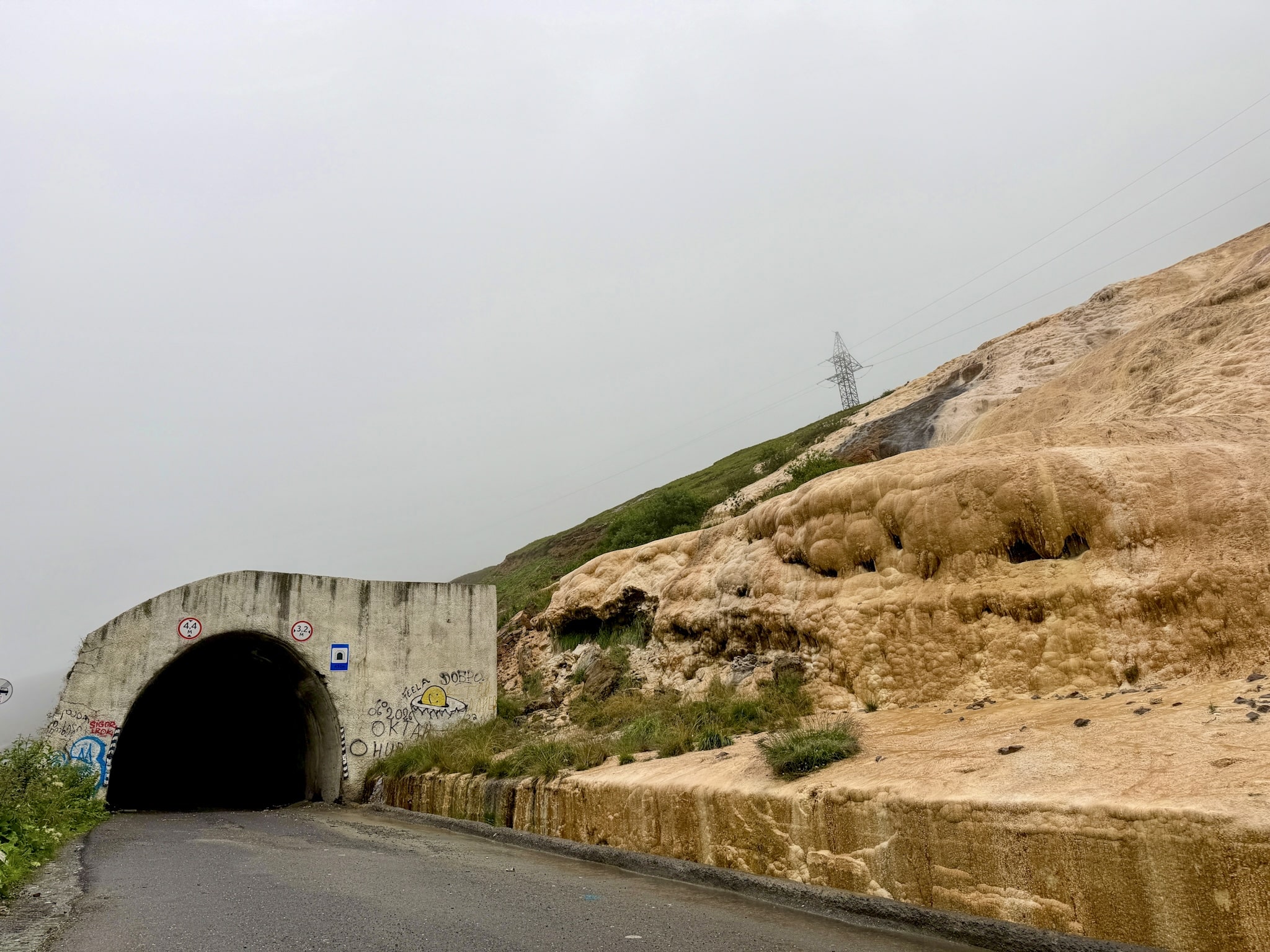
Just past the Jvari Pass, at about 2,379 m and the highest point of the road, orange and cream travertines spill down the slope right beside the asphalt. Mineral springs have built them up over the years. A little further, shortly before the village of Kobi, a waterfall pours into a patch of snow that was still there in mid-August.
What the Road Is Like
You'll find a few peculiar things along the way:
- Trucks: long lines queue toward the Russian border, often around Gudauri. Cars usually pass on the other lane, and we lost about ten minutes in total.
- Old tunnels: near the pass you'll see these narrow concrete galleries built against winter avalanches. You don't need to pass through them.
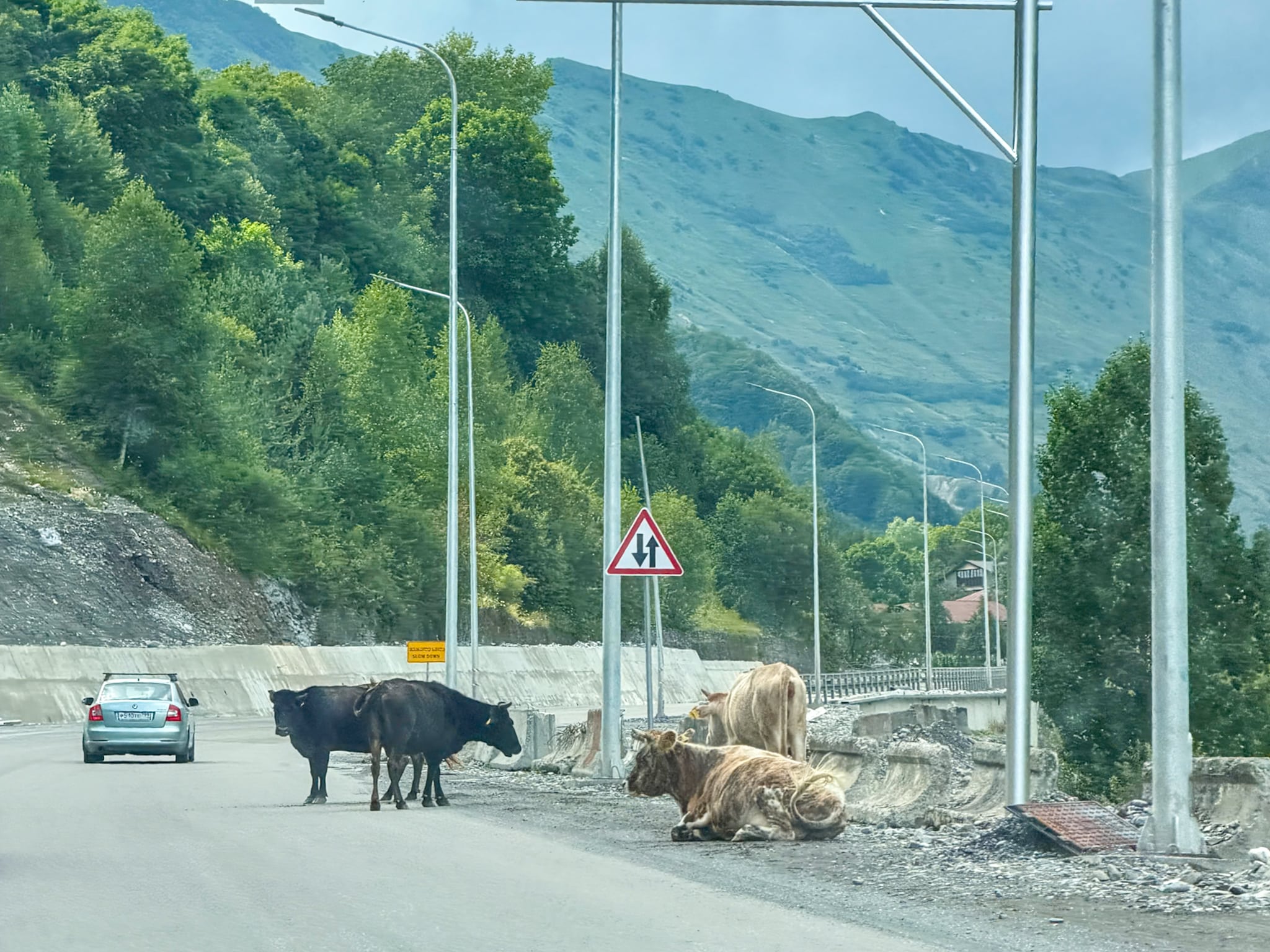
- Cows: they wander onto the road, even on bends, so pay close attention
- Fog: we drove up in full sun and back a week later in fog so thick we couldn't see a meter ahead at the pass. According to locals, it's quite common.

Ananuri Fortress
Cows on Georgian Military Highway
Old tunnels and travertines in Kazbegi
Best Things to Do in the Caucasus Mountains in Kazbegi
1. Visit Gergeti Trinity Church
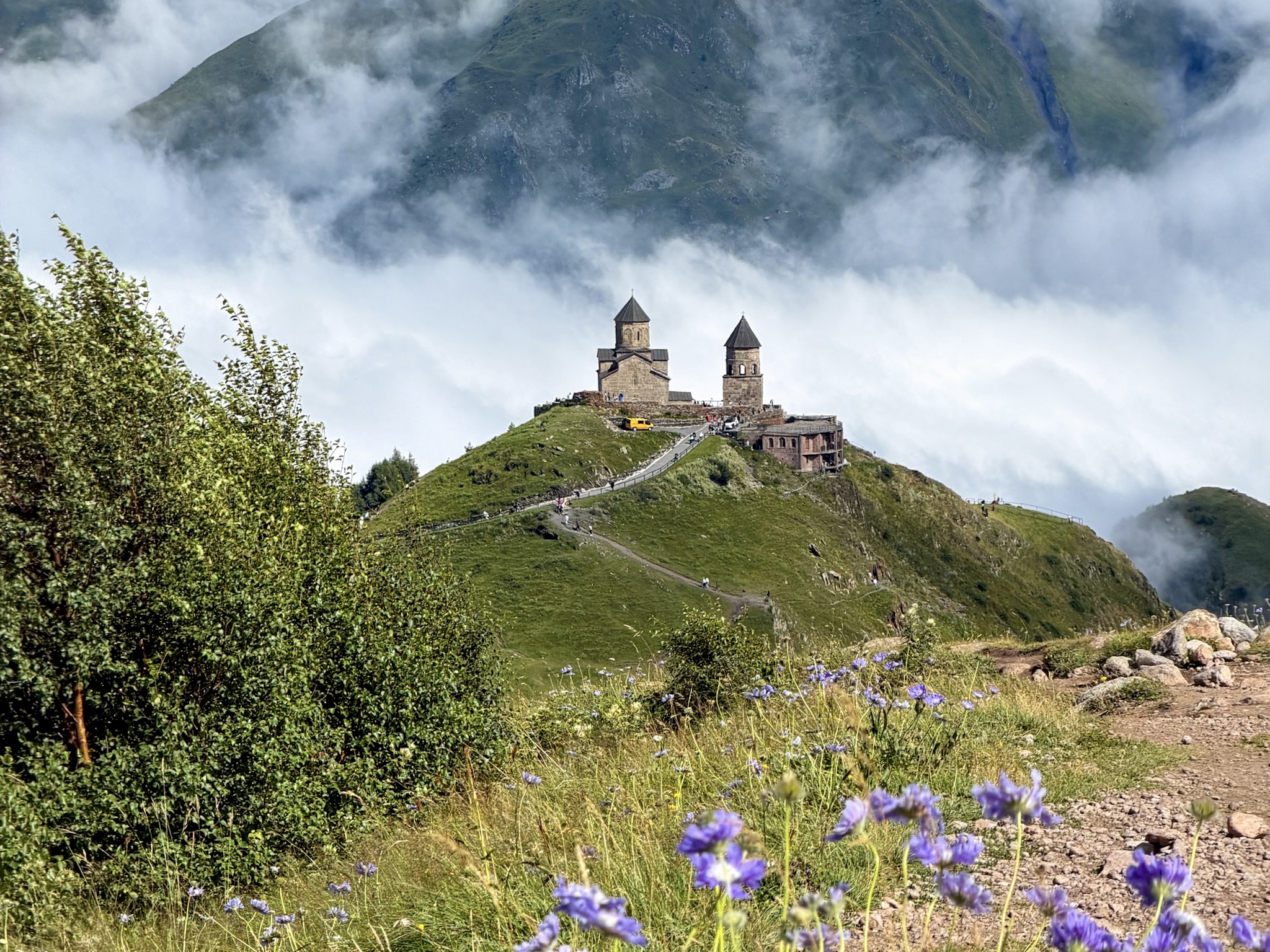
This small 14th-century stone church on a hilltop above Stepantsminda, with Mount Kazbek right behind it, is the image of Kazbegi you've probably already seen. A wide paved road now leads all the way up, with a car park right below the church, so any car can make it. You can also walk up from town, but with the new road it's not much of a hike anymore. There's a dress code: women need a skirt and headscarf, men long trousers. Both are handed out at the entrance.
2. Go on a Hike
Hiking is the main reason to come to Kazbegi, and the trails go from short walks to full-day climbs. These are the five I did, from my guide to the 5 best hikes in Kazbegi:
Gergeti Glacier: the classic. A long, steep full day up to a glacier on the slopes of Kazbek.
Truso Valley: an easy walk through a wide valley with mineral springs, abandoned villages and an old fortress.
Chaukhi Lake: from the village of Juta to a small lake below jagged rocky peaks.
Gveleti Waterfalls: a short walk to two waterfalls, a few minutes' drive north of town.
Arsha Waterfall: a quieter full-day 17 km walk you can start right from Stepantsminda, no car needed.
3. See The Sno Stone Heads
In a field in the village of Sno, on the road to Juta, stand a group of huge stone heads carved by local artist Merab Piranishvili. They show famous Georgian poets and writers. There's a small car park next to them, and it's an easy stop on the way to the Chaukhi Lake hike.
4. Visit The Dariali Monastery
About 12 km north of Stepantsminda, almost at the Russian border, this modern monastery stands in the Dariali Gorge, a deep, narrow canyon with rock walls on both sides. The buildings are new, but they're beautiful, and the view over the gorge is the real reason to go. It combines easily with the Gveleti Waterfalls, which are on the same road.
5. Explore Kazbegi Mountains Without Hiking
If you don't want to walk much, there are a couple of alternatives:
- Horse riding: locals offer rides on the trails around town.
- Truso Valley by 4x4: local drivers can take you through the whole valley by car. To me, though, walking it is what makes it special.
Beyond these, the options are limited. The church, Sno and Dariali can fill a day, but most of Kazbegi's best views are at the end of a trail.
Gergeti Trinity Church Kazbegi
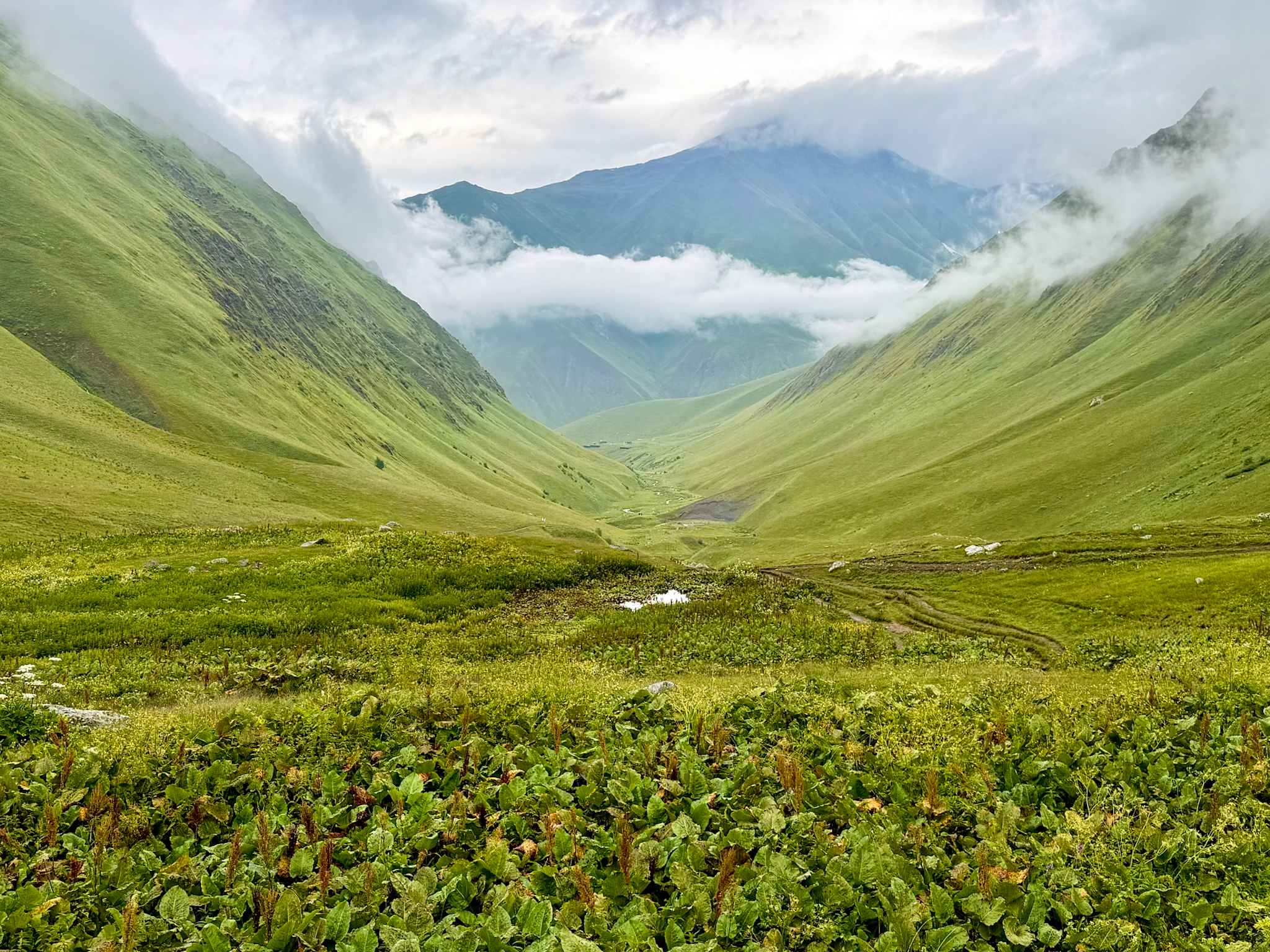
Chaukhi Pass Hike
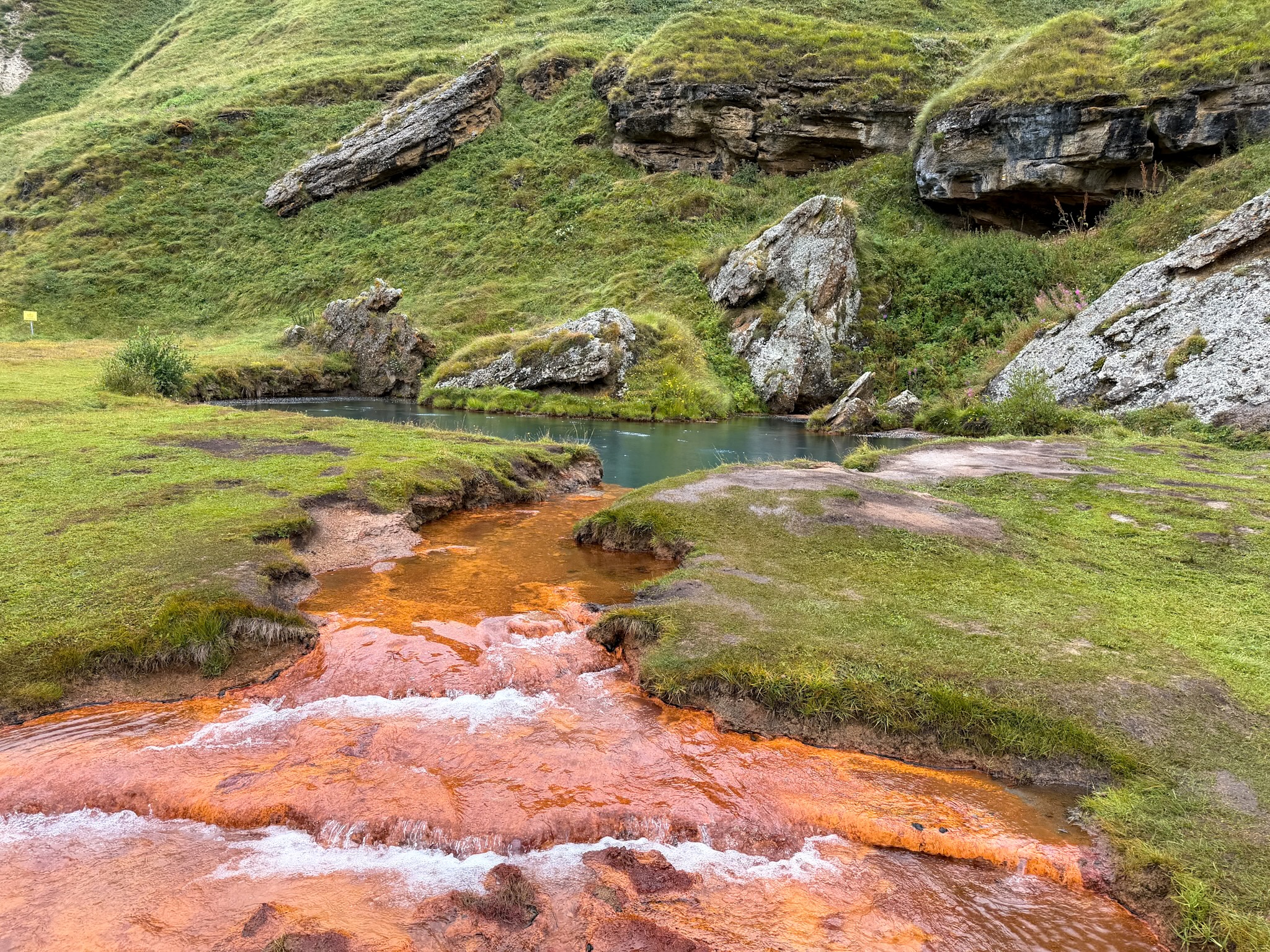
Abano Mineral Lake at Truso Valley
Is Kazbegi Worth It? Who It's For (and Who Should Skip It)
For me, yes. I liked Kazbegi a lot as a slightly adventurous hiking base: rough around the edges, not polished, and with huge mountains right outside town. But it isn't for everyone.
Kazbegi is worth it if:
- You're already in Tbilisi and want to see the Caucasus without a long journey, as this is the most accessible mountain region in Georgia.
- You like hiking. With two or three full days you can do the best trails in the area.
- You don't mind potholes, building sites and basic infrastructure in exchange for the views.
You might skip it if:
- You don't want to hike. Beyond the church, Sno and Dariali there isn't much else to fill your days.
- You're more into cities, history or wine. In that case I'd spend the time in Tbilisi, in Gori, or in the wine region of Kakheti instead.
- You want a pretty mountain village to stay in. Stepantsminda isn't one.
Best Time to Visit the Caucasus Mountains in Kazbegi
Kazbegi is a summer destination. The season runs from June to September, and here's what to expect month by month:
June: green and quiet, but snow can still block the higher trails until late in the month.
July and August: the warmest and driest months, with highs around 20°C. Every trail is open, and it's also the busiest time, so book ahead.
September: cooler and calmer, and usually still good for hiking.
October: the first snow arrives up high toward the end of the month, and the longer hikes start closing.
November to May: winter. Most trails are impossible, many guesthouses and restaurants close, and the Jvari Pass can shut for snow. If you're coming to ski, stay in Gudauri instead.
Whatever month you go, consider that the weather changes fast. Even in August we had full sun one day and thick fog the next. Mount Kazbek was hidden behind clouds for about half of our days, and the clouds usually built up in the afternoon. Mornings give you the best chance of a clear view, so plan the hikes and the church for early in the day.
Where to Stay and Eat in Kazbegi
Where to Stay
Almost all hotels and guesthouses are in Stepantsminda, and where you stay in town makes a real difference:
- With a car: the hillside behind the town center, facing Gergeti Trinity Church across the valley. It's quieter, and the right rooms look straight at the church with Kazbek behind. We stayed at the Lens Design Hotel here, next door to the better-known Rooms Hotel.
- Without a car: the town center, where the minibus stop, shops and most restaurants are all within walking distance.
- On a budget: family guesthouses start around $30 a night, often with homemade breakfast included.
I cover every area and my hotel picks for each budget in my guide on where to stay in Kazbegi.
Where to Eat
Most restaurants are in the center of Stepantsminda. I've tried a bunch of them, and these were my favorites:
- Maisi: modern Georgian cooking near the start of the Gergeti Trinity Church trail.
- Samani: a garden cabin on the main road, with classic Georgian dishes and the best value of the trip.
- Alpine Lounge: a hotel restaurant with Georgian classics and a good wine list.
Dinner for two usually came to 100 to 160 GEL. In July and August the good places fill up, so book a day ahead, by WhatsApp if you can. All the details, prices and what we ordered are in my guide to the best restaurants in Kazbegi.
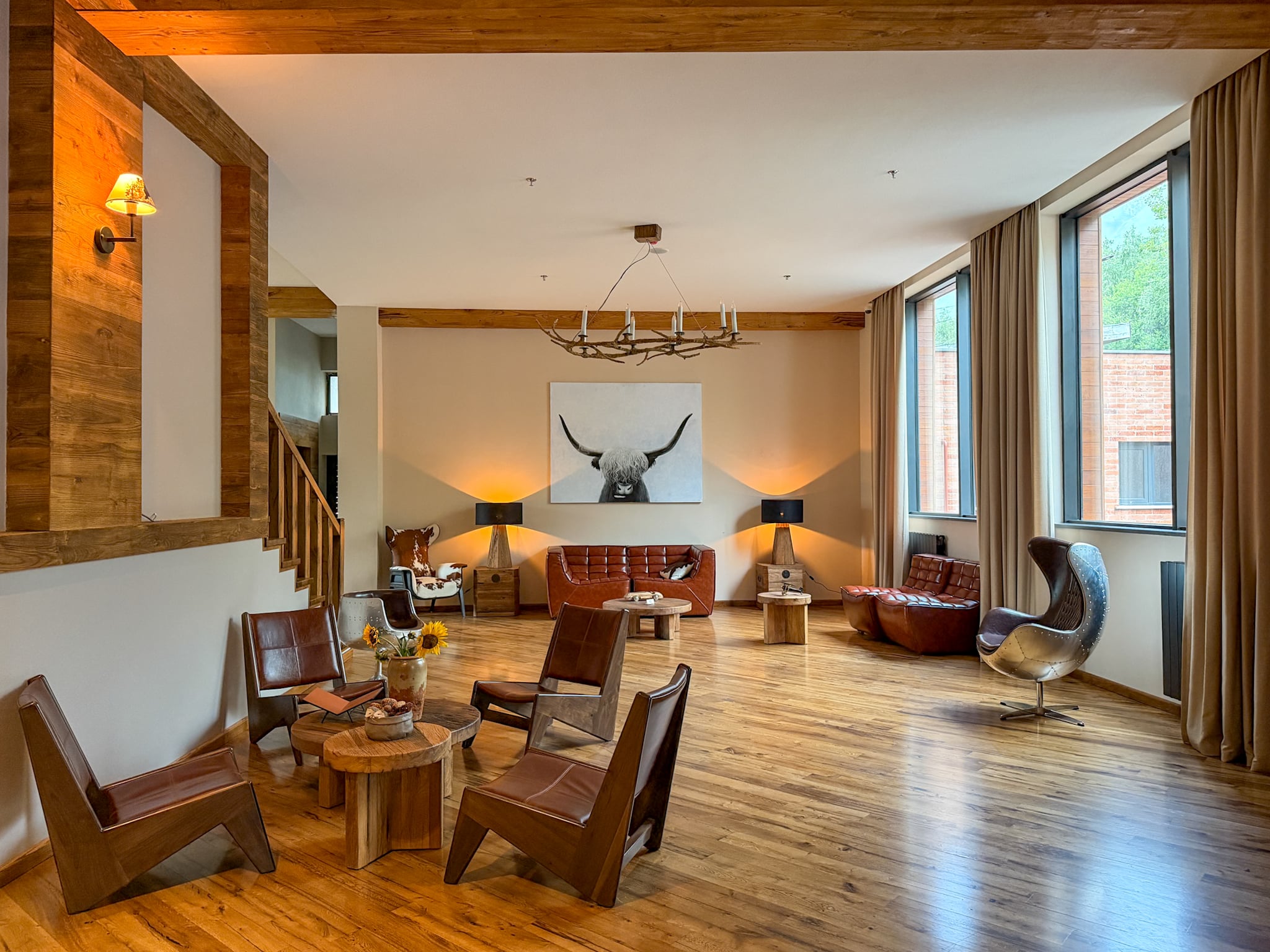
Lens Design Hotel Kazbegi
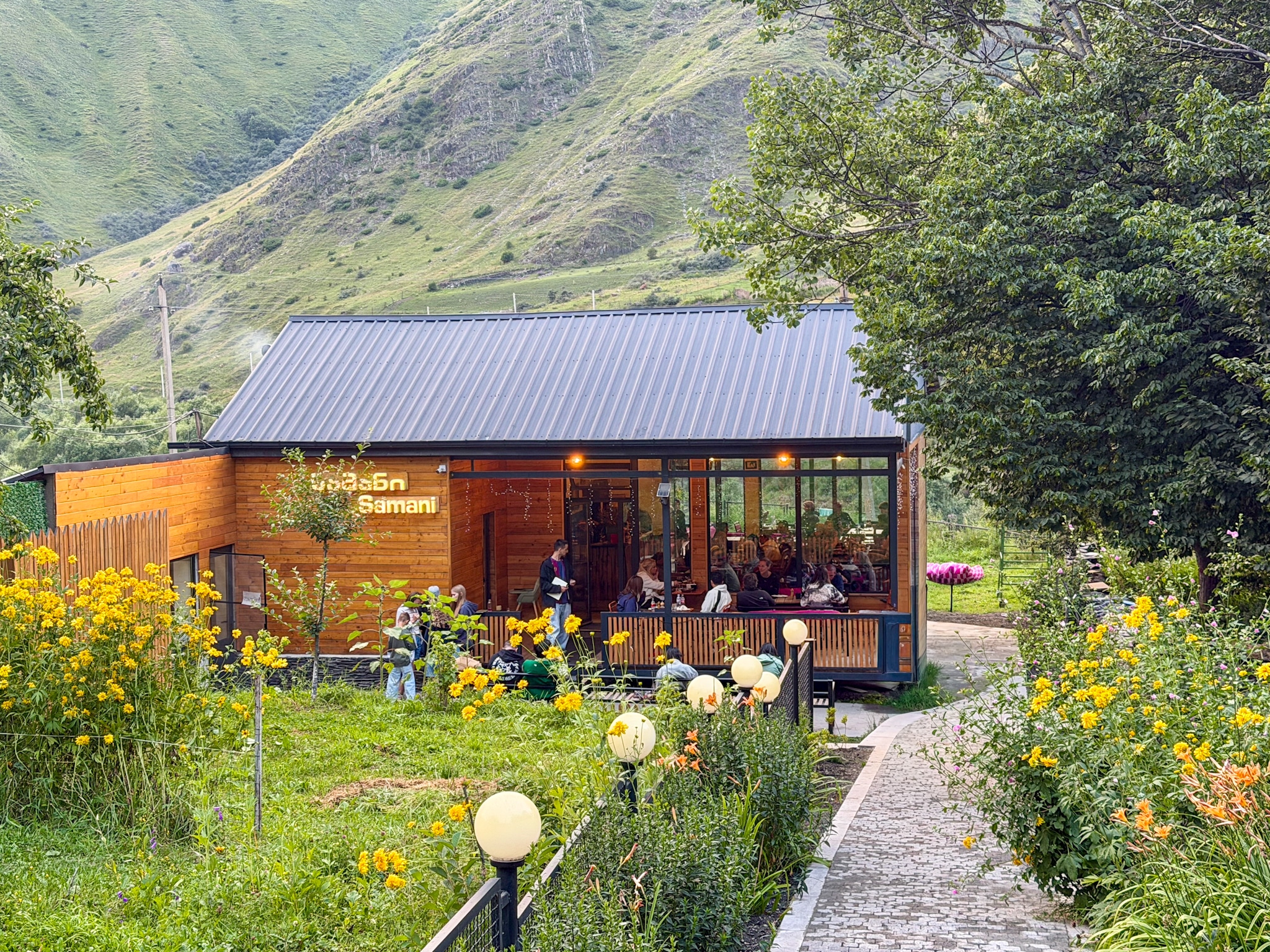
Samani Restaurant

Khachapuri & Kebab
FAQ About the Caucasus Mountains in Kazbegi
Is Kazbegi the same as Stepantsminda?
Almost. Stepantsminda is the town, and Kazbegi is the name of the wider district around it, which includes the side valleys and villages. Locals, drivers and booking sites use both names for the town, so you'll see them used interchangeably.
Is Kazbegi worth visiting?
Yes, if you like hiking or want to see the Caucasus without traveling far from Tbilisi. If you don't plan to walk much, there's less to do: the church, the Sno stone heads and Dariali Monastery fill about one day.
Can you visit Kazbegi as a day trip from Tbilisi?
You can, but it's rushed. With around six hours of driving there and back, you'll have time for Gergeti Trinity Church and maybe one quick stop on the road. To do any real hiking, stay at least three nights.
Do you need a 4x4 in Kazbegi?
Not for the main road from Tbilisi or the drive up to Gergeti Trinity Church, which are both paved. You do need one for the rough roads to the Truso Valley and Juta, or you can hire a local driver for those trips.
Can you see Mount Kazbek from Stepantsminda?
Yes, on a clear day it towers right over the town. Clouds often hide it, though. During our stay in August it was covered for about half of our days, usually from the afternoon, so mornings give you the best chance.
Will the altitude be a problem?
For most people, no. Stepantsminda is at about 1,740 m, and some visitors get a mild headache on the first day. If you're doing the Gergeti Glacier hike, which climbs much higher, keep it for your second or third day.
Can you visit Kazbegi in winter?
You can, but it's a very different trip. Most hikes are impossible, many guesthouses and restaurants close, and the Jvari Pass can shut for snow, sometimes for days. If you're coming to ski, stay in Gudauri, on the Tbilisi side of the pass.