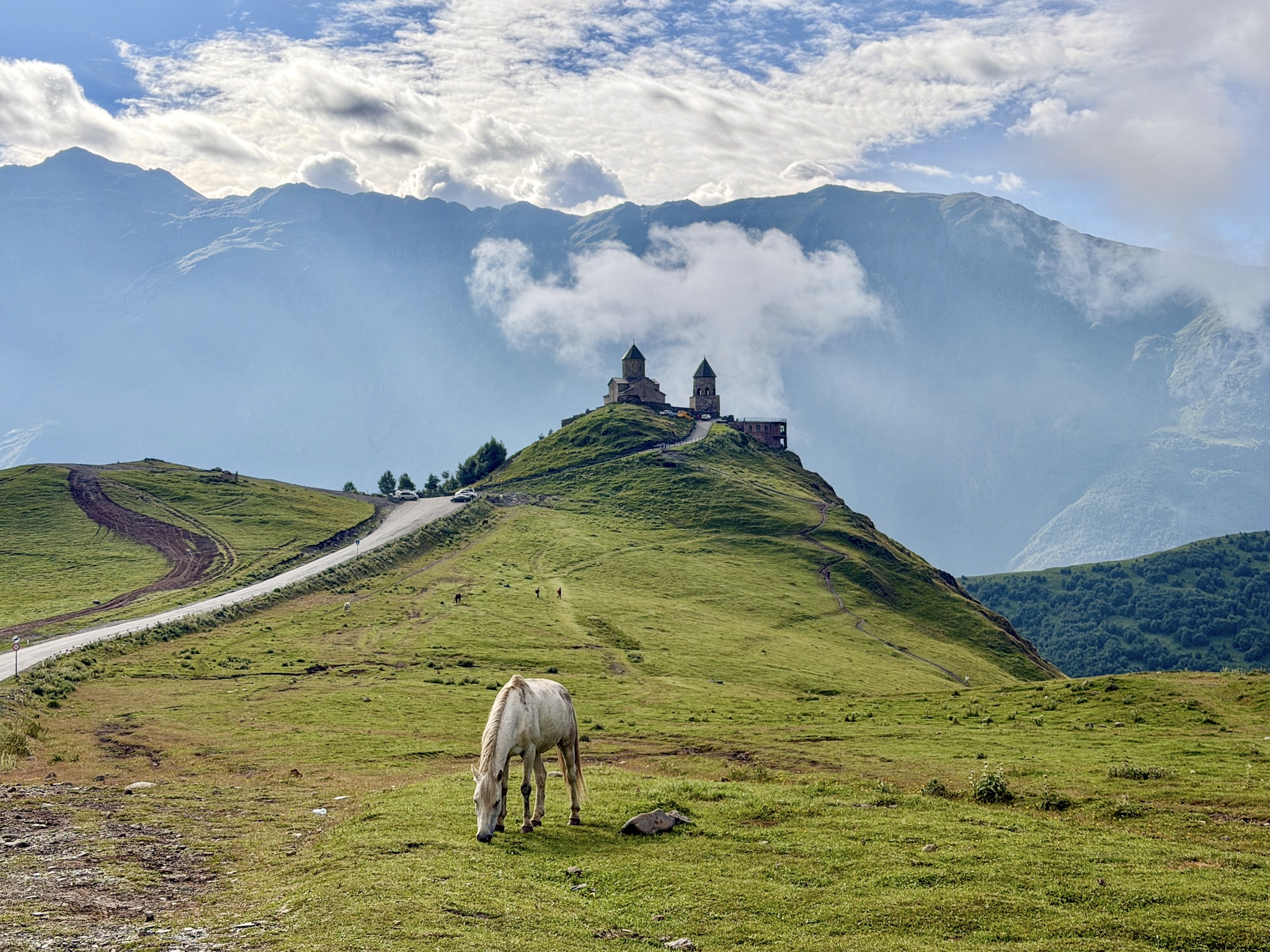
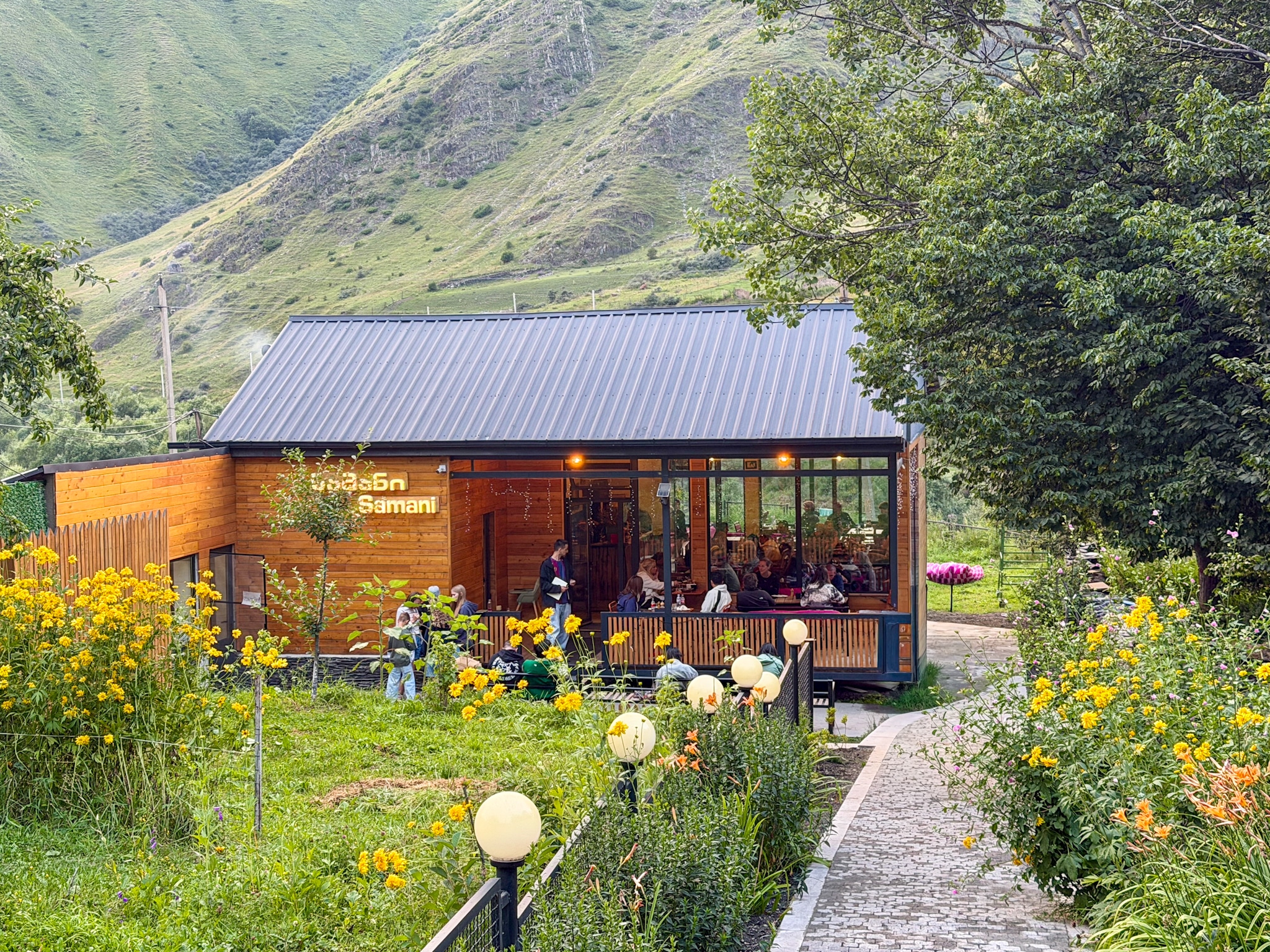
How to hike from Juta Village to Chaukhi Lake: the landslide on the road, taxi costs, the stop at Fifth Season, and the muddy trail in between.
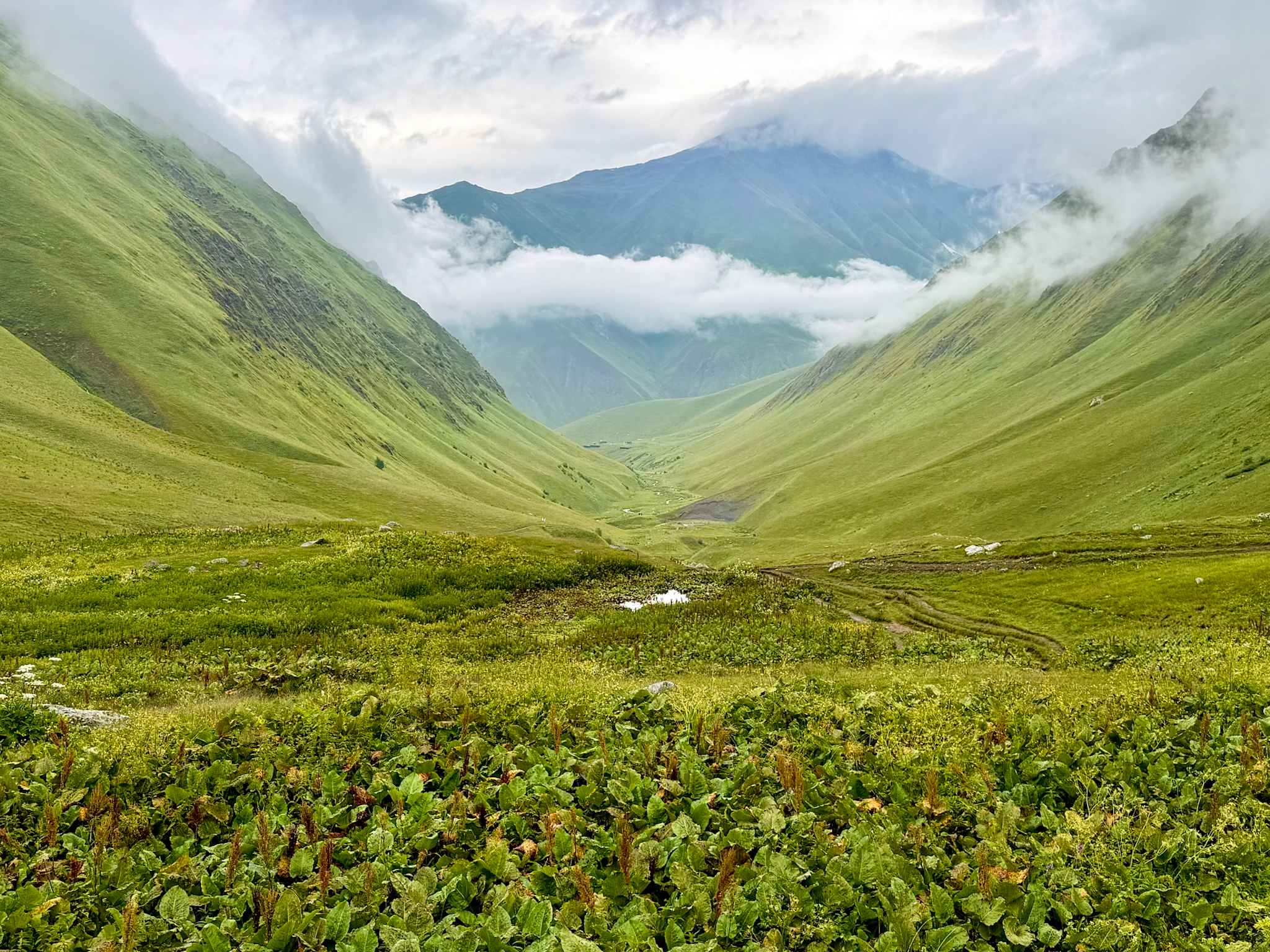
Chaukhi Lake sits below the jagged spires of Chaukhi Mountain, not far from Kazbegi.
The hike itself to get there from the trailhead, located in the Juta Village, is pleasant, short and easy. Both the Chaukhi Lake hike and the Chaukhi Pass hike are among the most beautiful trails you can find in Kazbegi.
However, getting to the trailhead in Juta Village is currently the hard part: a stretch of the road is closed by a landslide, and there are several things you need to keep in mind to get there. It changes how you plan the whole day, so this guide will start there.
Once you're on the trail, it's a muddy but straightforward walk past Fifth Season, a wooden guesthouse about forty minutes in, up to the famous small lake tucked into green hills.
Here's how to get there, what the hike involves, and even what's worth doing if you want to push on toward Chaukhi Pass.
-
- The Chaukhi Lake Hike is one of the most popular trails in the area, but it's not the only one! If you have time to see more, check out my guide to the 5 best hikes in Kazbegi
Chaukhi Lake Hike: Quick Trail Info
-
- Starting point: Juta Village, reached from Stepantsminda/Kazbegi via the Juta road (the last stretch past the landslide closure has to be walked or taxied, more on that below)
- Distance: about 8 km (5 miles) round trip from Juta village to Chaukhi Lake, or 12 km (7,5 miles) round trip if you get up to Chaukhi Pass
- Elevation gain: around 450 m (1,475 ft) to Chaukhi Lake or 660 m (2,165 ft) to Chaukhi Pass
- Highest point: 2,650 m (8,700 ft), at Chaukhi Lake or 3,338 meters (10,951 feet) at Chaukhi Pass
- Time: 4 to 6 hours round trip, depending on pace and stops. I did it in 4 hours, including a stop at Fifth Season and about 45 minutes at the lake
- Difficulty: easy to moderate terrain, no technical or exposed sections, but muddy throughout with one tricky river crossing near the lake
- Best season: June to September
- Alltrails GPS Trail Track
-
- Where to Stay: you'll need to stay in Stepantsminda, a short drive away (sometimes also called directly Kazbegi). Full list further down, but there are my favourite hotels in the area:
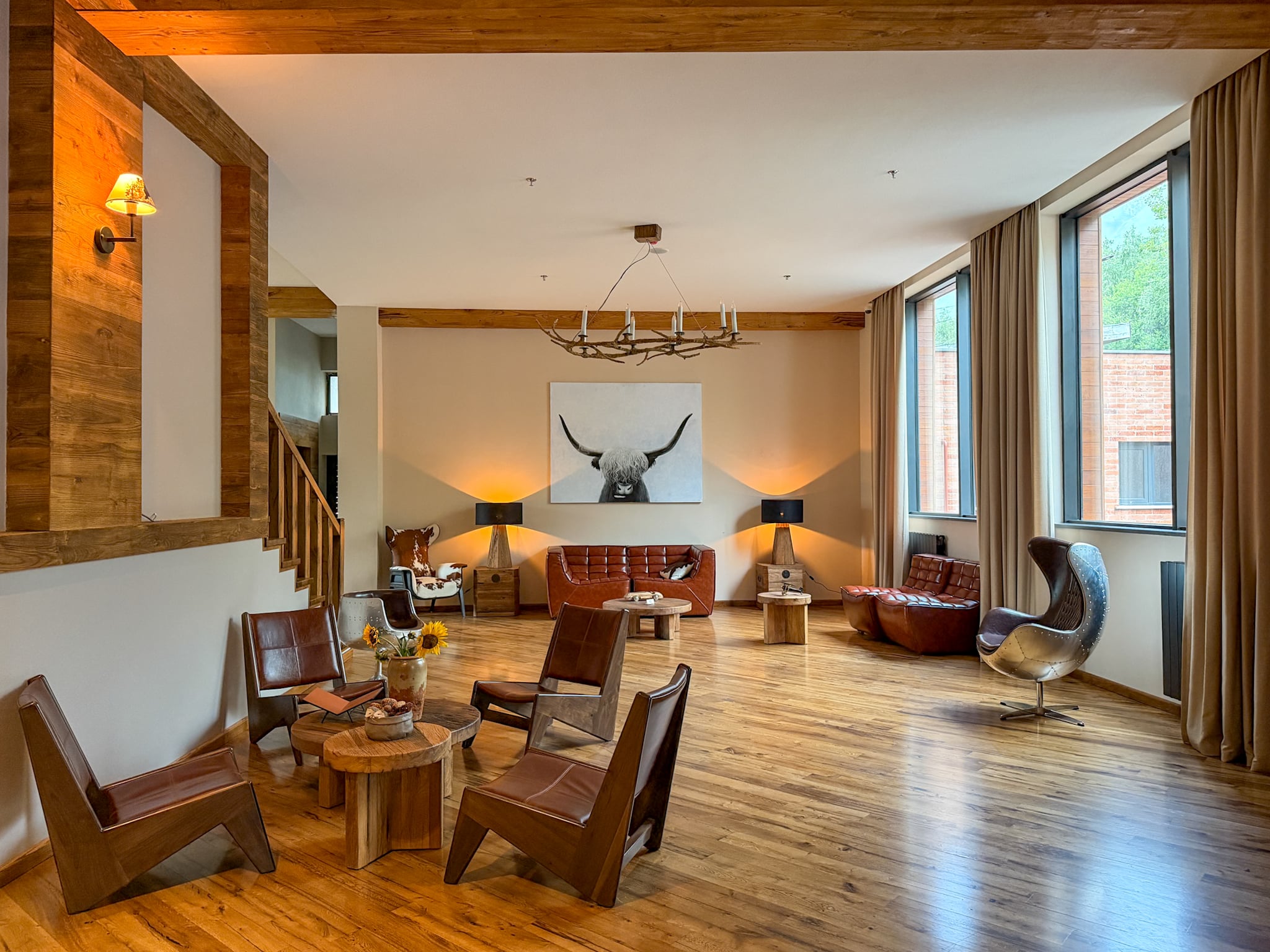
- Lens Design Hotel, a sleek modern stay where I spent the night before the hike
- Rooms Hotel Kazbegi, if you want something even more on the luxury side.
- Where to Stay: you'll need to stay in Stepantsminda, a short drive away (sometimes also called directly Kazbegi). Full list further down, but there are my favourite hotels in the area:
How to Get to Juta Village
Driving conditions from Stepatsminda to Sno Village
The drive from Stepantsminda toward Juta starts easy enough, sealed road all the way to the village of Sno. Right past Sno, there's a stone hillside lined with giant carved heads, faces of Georgian writers and historical figures done in granite by a local sculptor named Merab Piranishvili. He grew up in Sno, studied art in Tbilisi, and came back in the 1980s to start carving them by hand, one from a single block of stone. There are about six of them visible from the road now, including Shota Rustaveli and Saint George on horseback, and he's still adding more. Worth a two-minute stop if your driver isn't in a hurry.
After that, the road gets really bad. Not just bumpy, but actual craters, some full of water after rain with no way to see the bottom. We had a 4x4 and still scraped the underside more than once. Go slow.
Further up, the track narrows into a steep climb that runs close to a drop on one side. So you want a driver who's genuinely comfortable on narrow mountain roads.
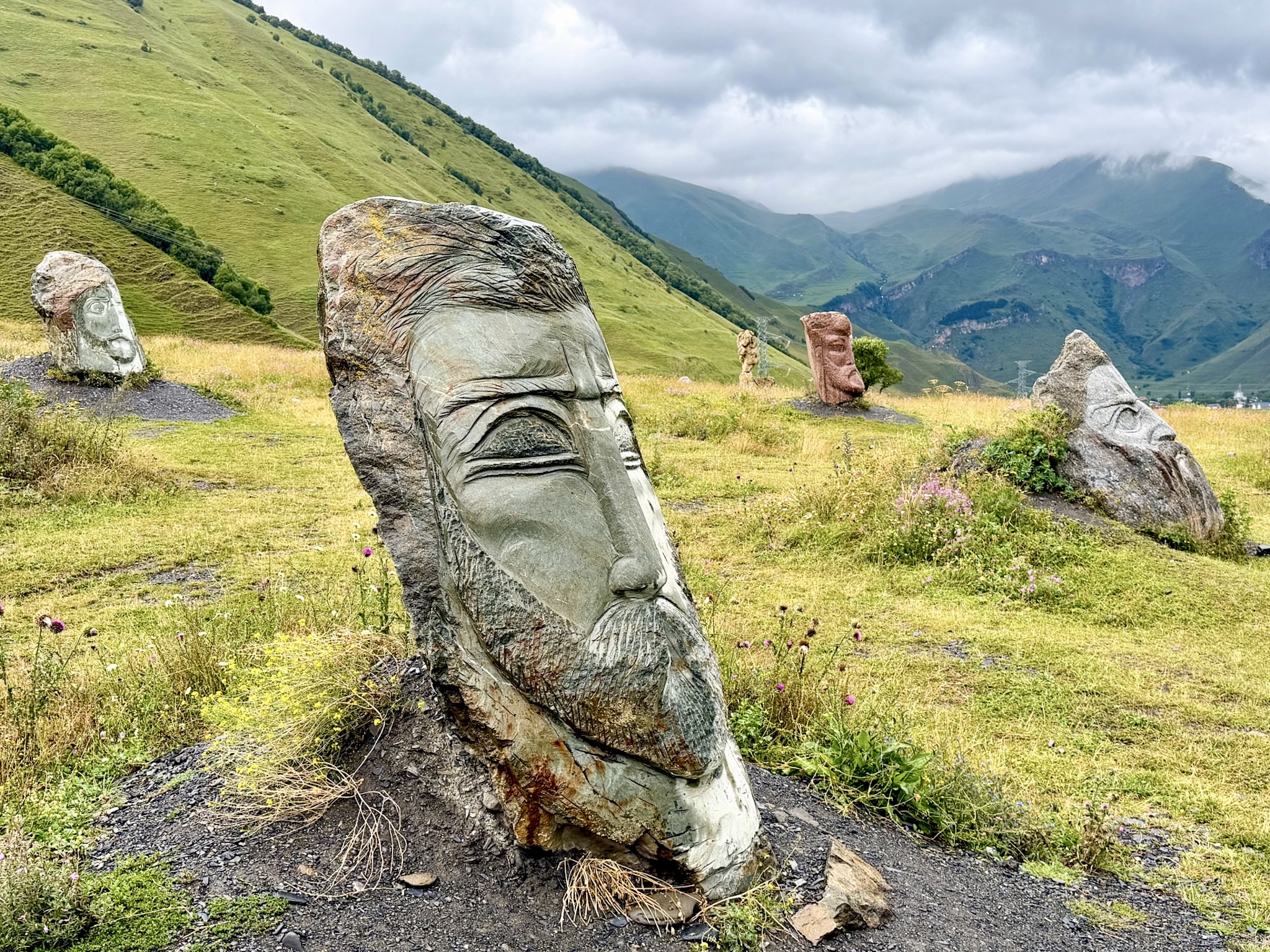
Sno Heads Statues
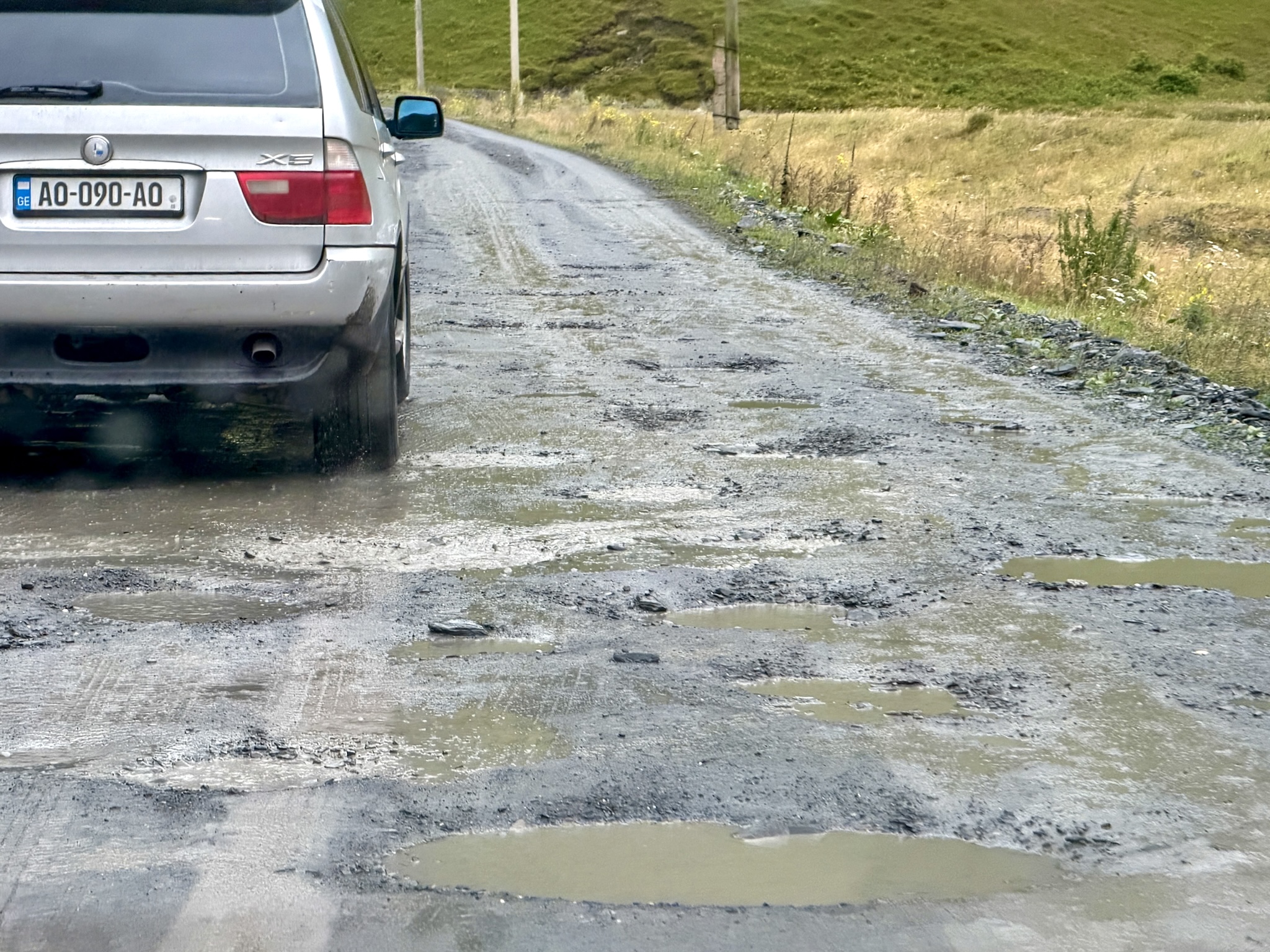
Road conditions after Sno

Road conditions approaching Juta landslide
The Landslide Section near Juta (Why You Can't Drive All the Way)
After that climb, you reach a point where a local man manages a small parking area, and this is where the road, officially, stops. The lot itself is tight, and turning a car around often means a few careful back-and-forth moves, another reason to leave the driving to someone who knows what they're doing.
A yellow sign spells it out in Georgian and English: landslide section, traffic prohibited. Past that sign, the remaining stretch has partly collapsed down the slope. What's left is a narrow track cut into loose rock, with a bent post and torn-out pipes marking where the ground gave way.
People can walk it, but nobody should drive it. I read some reviews suggesting to push past the operators barrier anyhow, and to drive on that section anyway, but I think that's insane. There's basically no room for four wheels on what's left, and if there were, it wouldn't hold.
Hopefully the government will fix this soon, but as for 2027, please do not drive on that section.
Parking, Taxis and Costs
Parking at the lot before the landslide costs 10 GEL for the day, or 20 GEL if you're staying overnight in Juta.
From there you've got two options for the last stretch into the village:
- walk it, about 45 minutes, or
- pick up one of the local taxis waiting just past the landslide, where the road turns decent again. The taxi runs around 40 GEL one way and takes ten minutes or less.
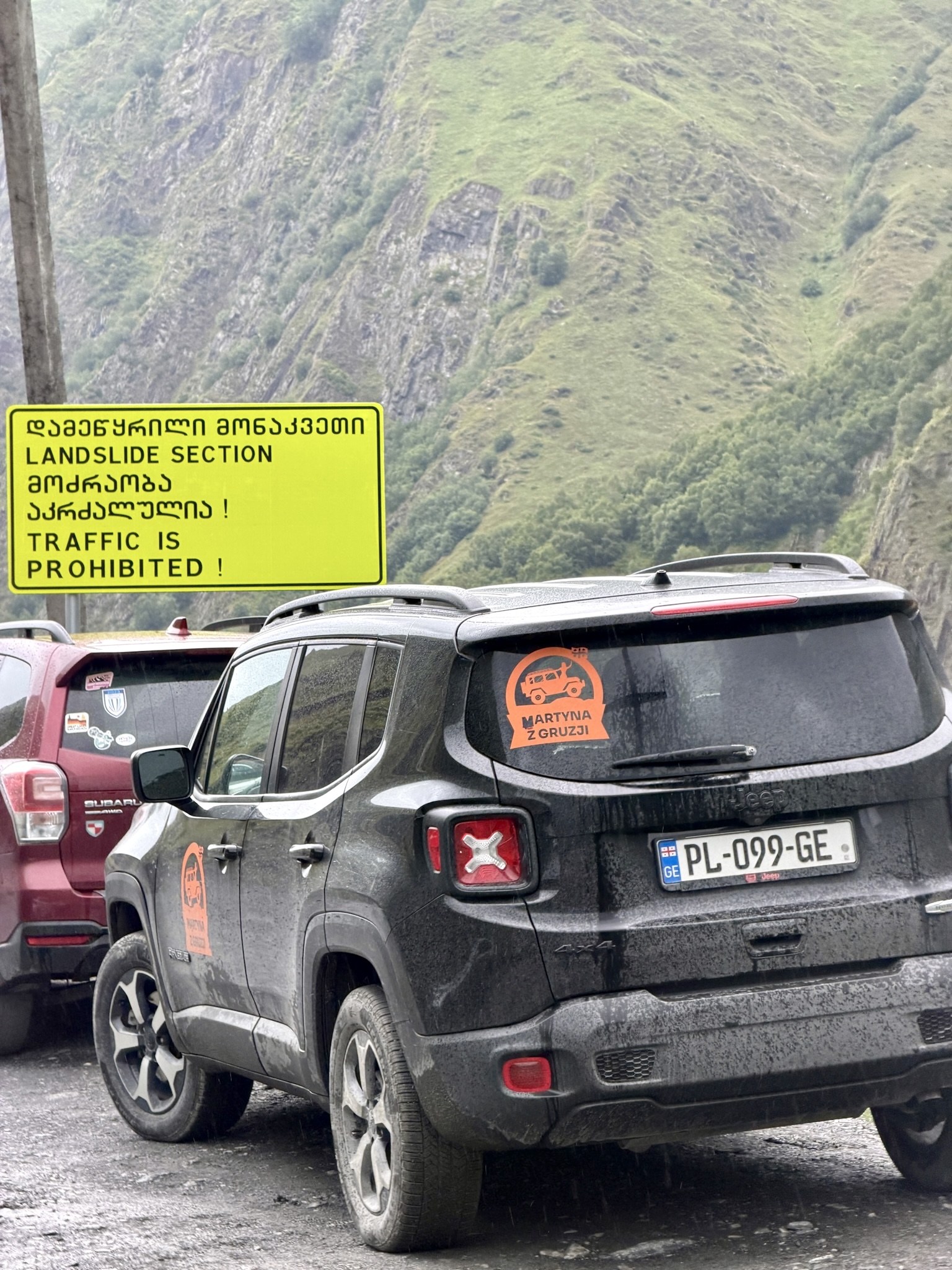
Juta Village Landslide Roadblock

Juta Village Landslide
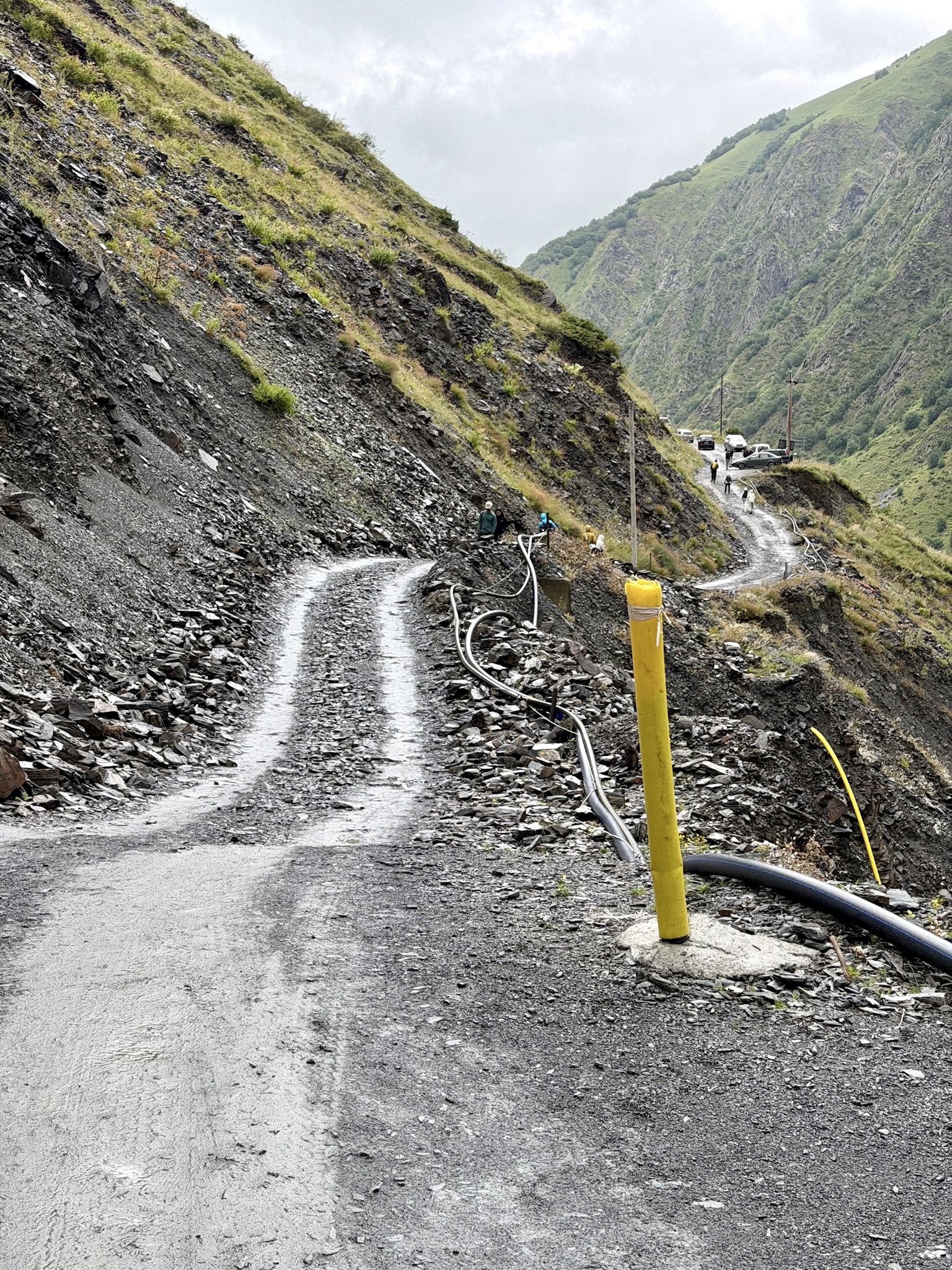
Juta Village Landslide Close Up
The Trail, Step by Step
Juta to Fifth Season (the steepest stretch)
From Juta, if you look around, you'll see a small sign hinting toward a trail, though it isn't particularly visible. Downloading an offline map before you start is worth the two minutes it takes, and if you're hiking in August, there will almost always be other people ahead of you to follow anyway.
The first stretch out of the village is the steepest part of the whole hike, a mix of muddy and rocky underfoot, climbing steadily through open pasture. It flattens out a little as you pass a small camping area, and a short walk past that is Fifth Season itself, about forty minutes in.
Fifth Season is the one proper building on this whole route, a two-story stone-and-wood guesthouse with big windows looking straight down the valley toward Chaukhi. It has a restaurant inside, tables made from thick slabs of wood, and an outdoor area with hammocks and lounge chairs scattered across the grass, a Georgian flag flying over it.
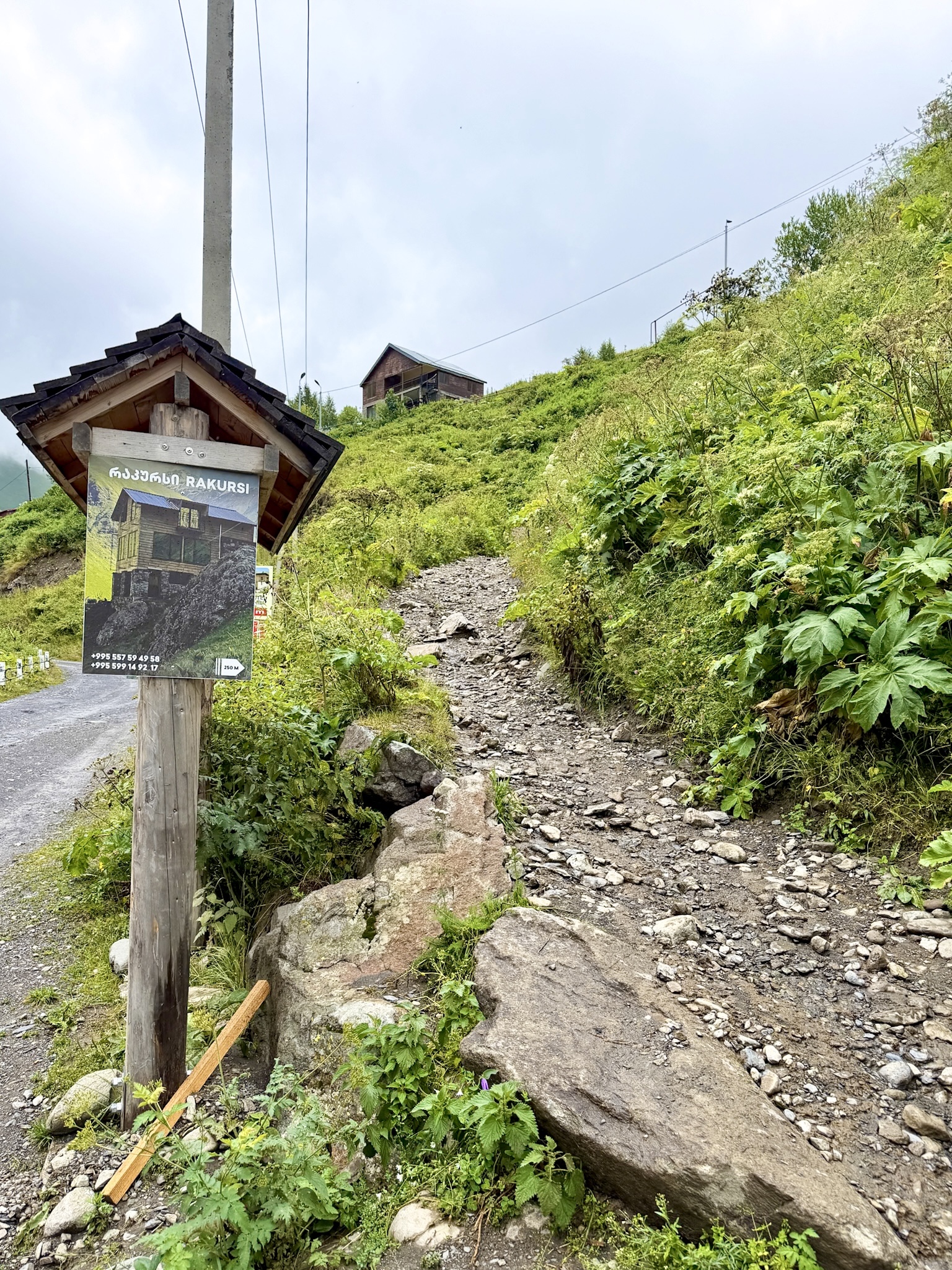
Chaukhi Lake Hike Trail Sign
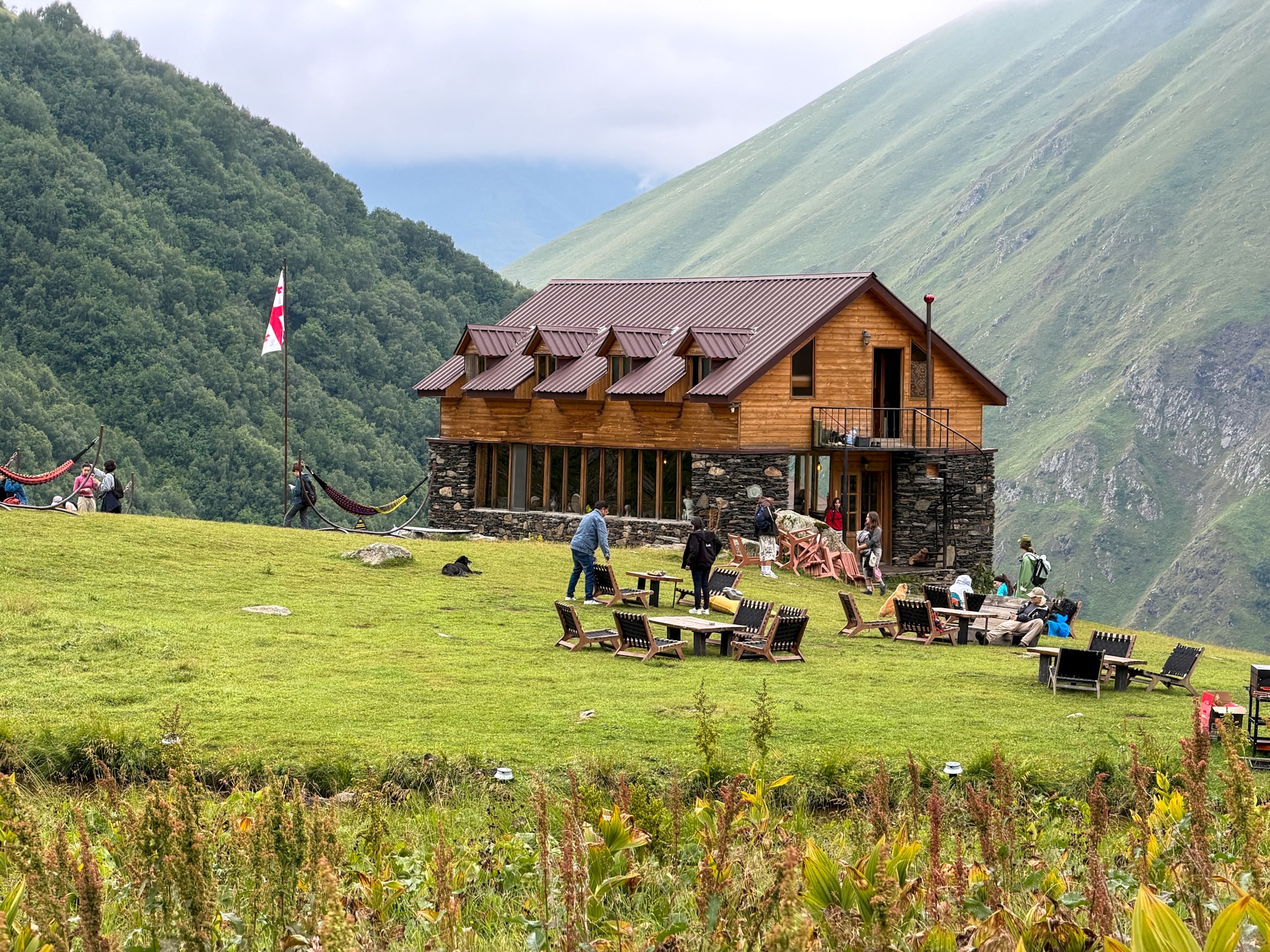
Fifth Season Hut
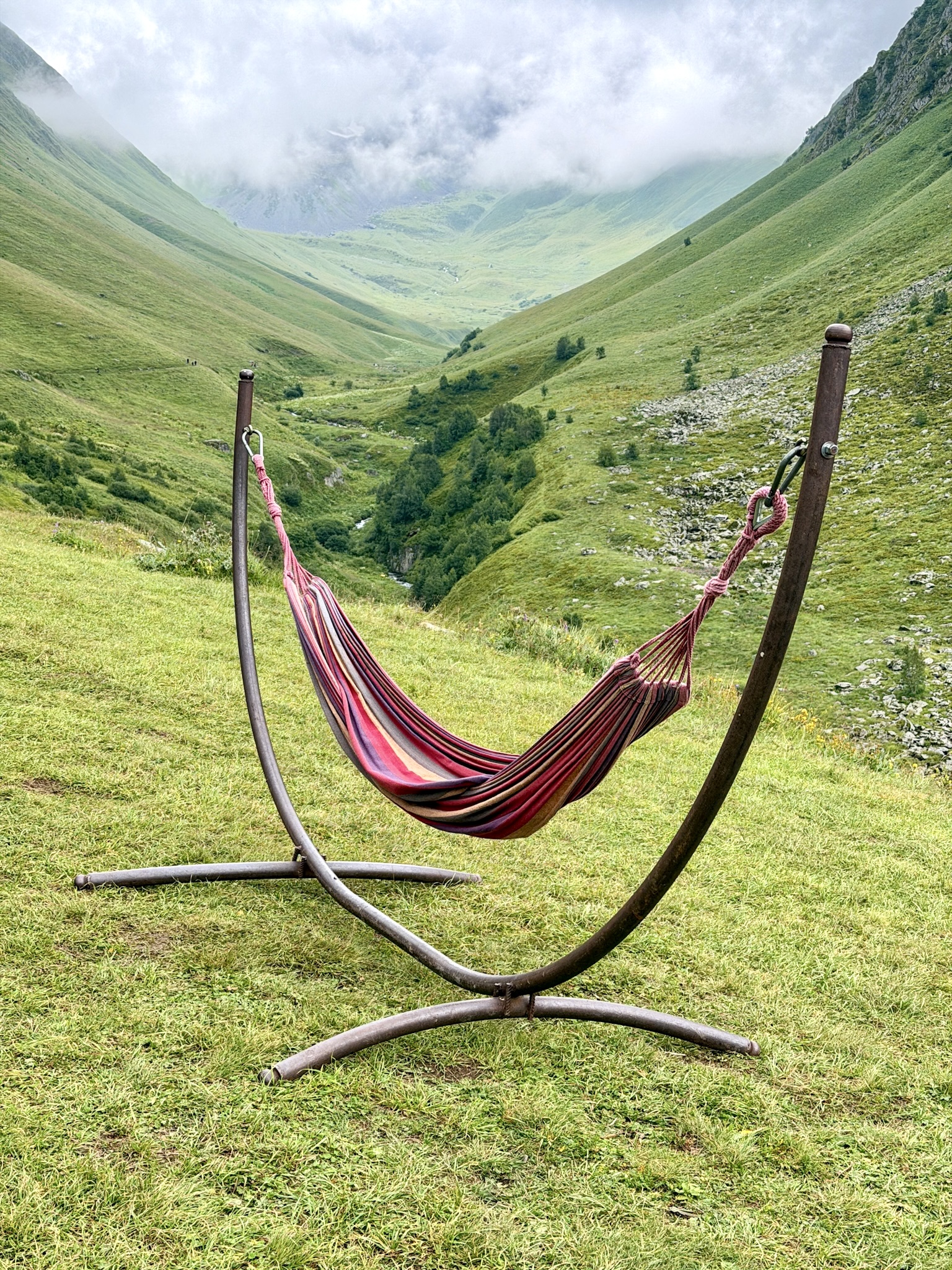
Fifth Season Hut View
Fifth Season to Chaukhi Lake (the broken bridge)
Past Fifth Season the trail eases up, a gentle climb cutting through grass and open ground toward the lake. At one point you'll hit a footbridge that's partly collapsed, bent and sagging over the river below. People still cross it, carefully, one at a time, testing their footing as they go. It holds, but treat it with respect.
From there it's a short stretch further to the lake itself.
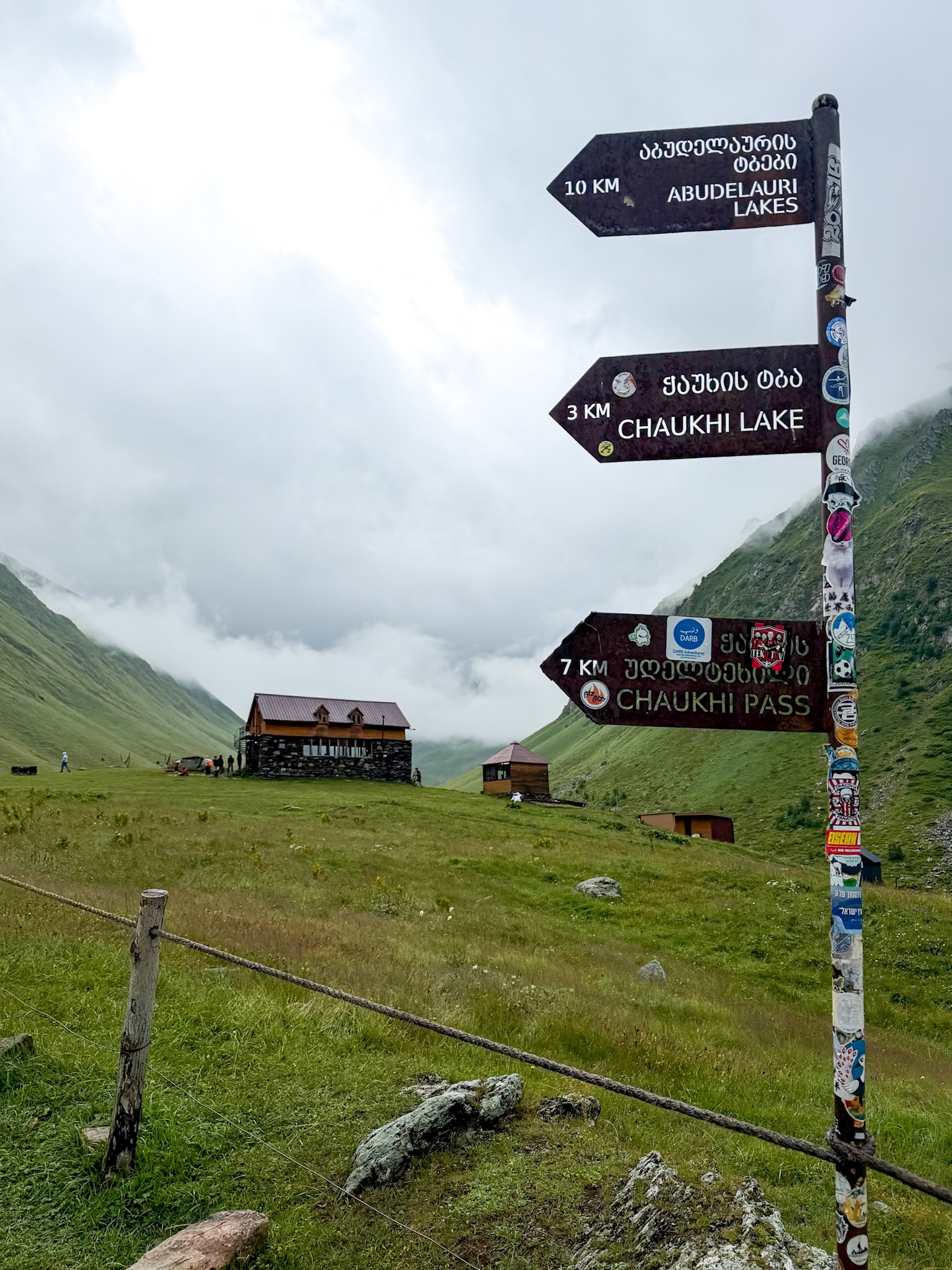
Chaukhi Lake Directions
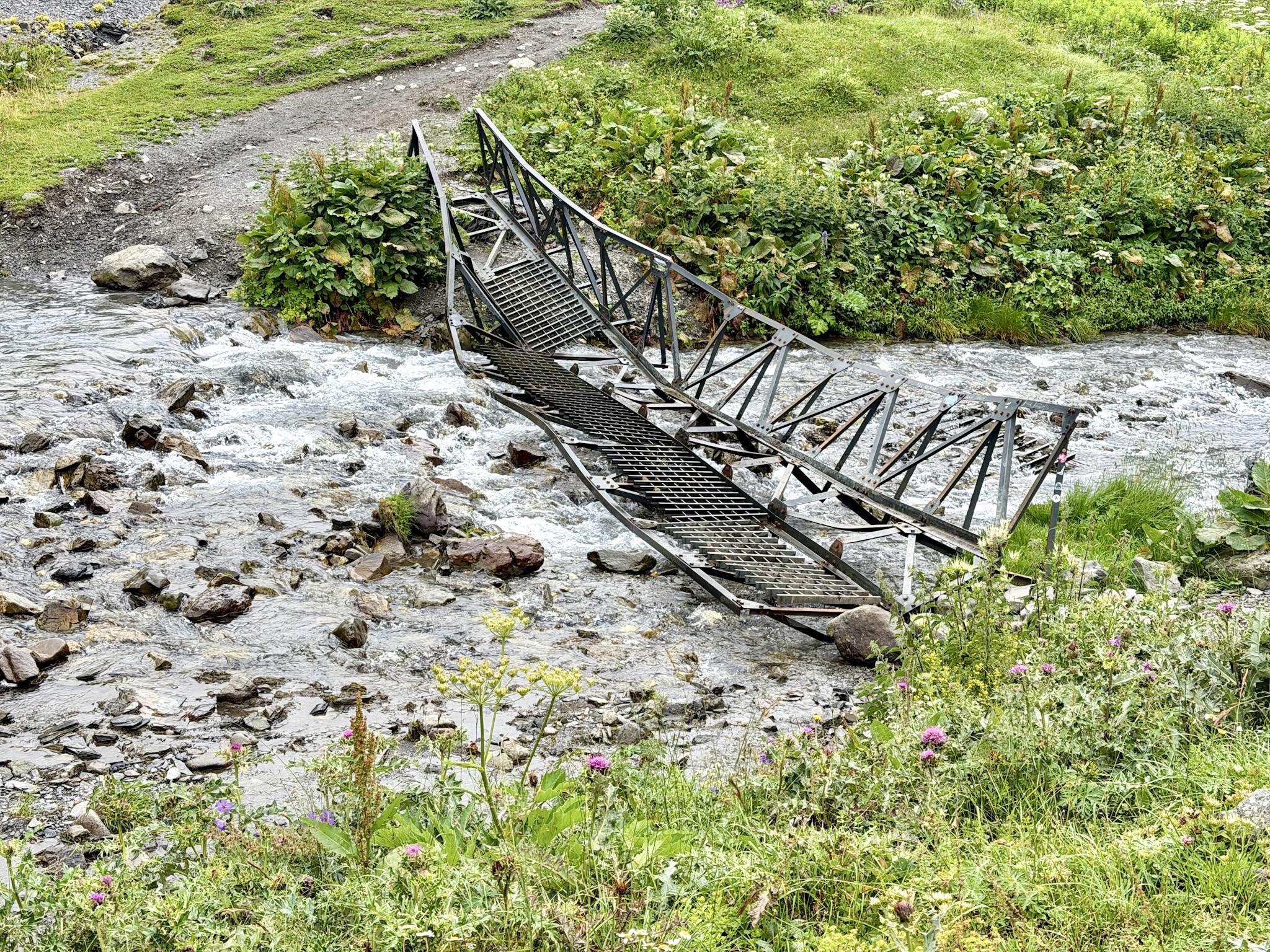
Chaukhi Collapsed Bridge
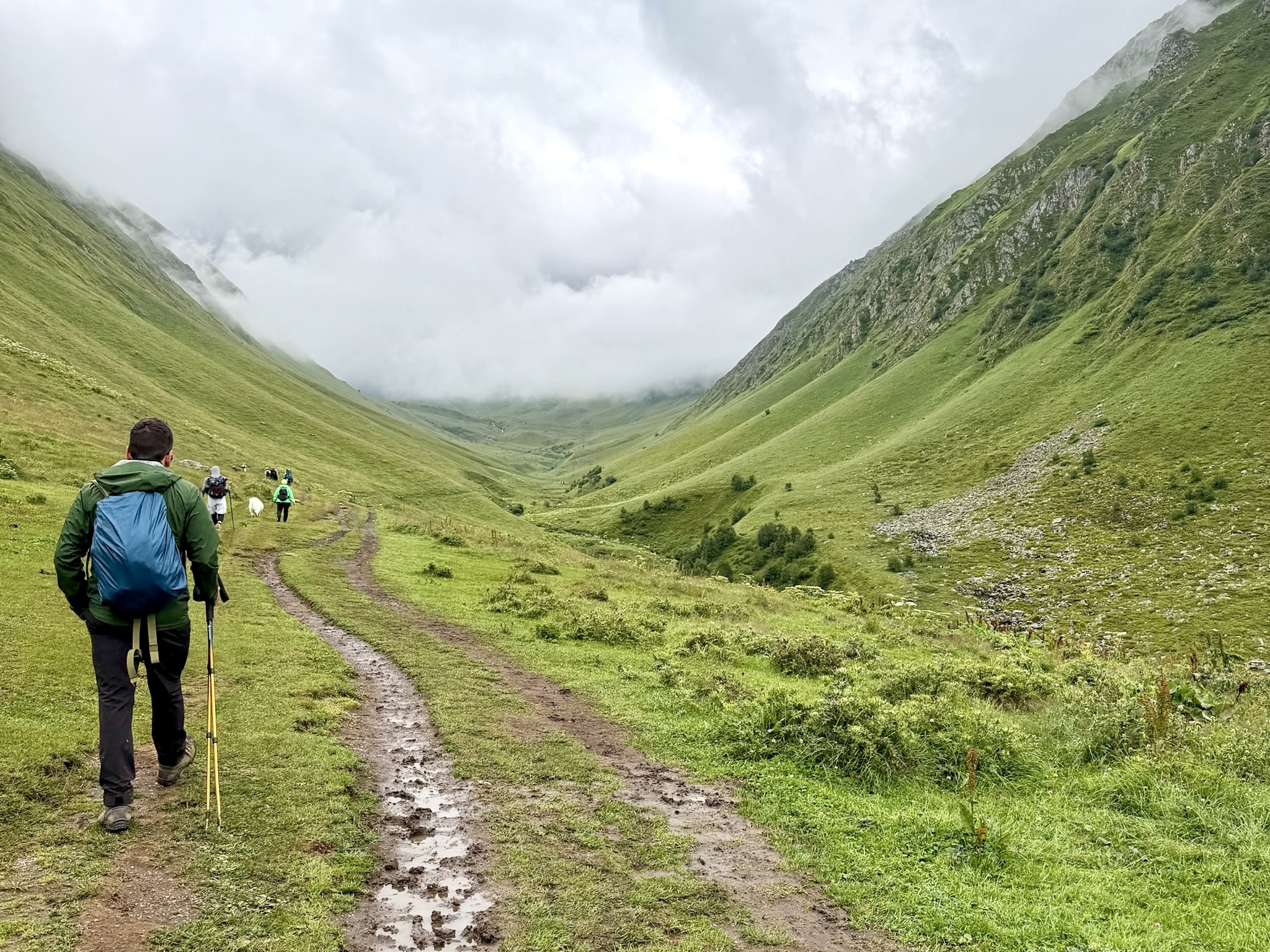
Chaukhi Lake Hike Trail
What Chaukhi Lake Actually Looks Like
We got to the lake at 11:45, about an hour and forty-five minutes after leaving Juta. It's small, more of a mountain tarn than what you'd picture as a lake, sitting in a dip surrounded by green slopes. The sky had been overcast with occasional light drizzle since we'd left the village, and by the time we reached the water, most of it was wrapped in cloud.
On a clear day you'd probably get a full view down to the far bank and the hills behind it. We didn't. The rain picked up not long after we arrived, heavy enough that we skipped continuing toward Chaukhi Pass and turned back instead. That's worth knowing before you go: weather here changes fast, and there's a real chance you won't get the postcard version of the lake.
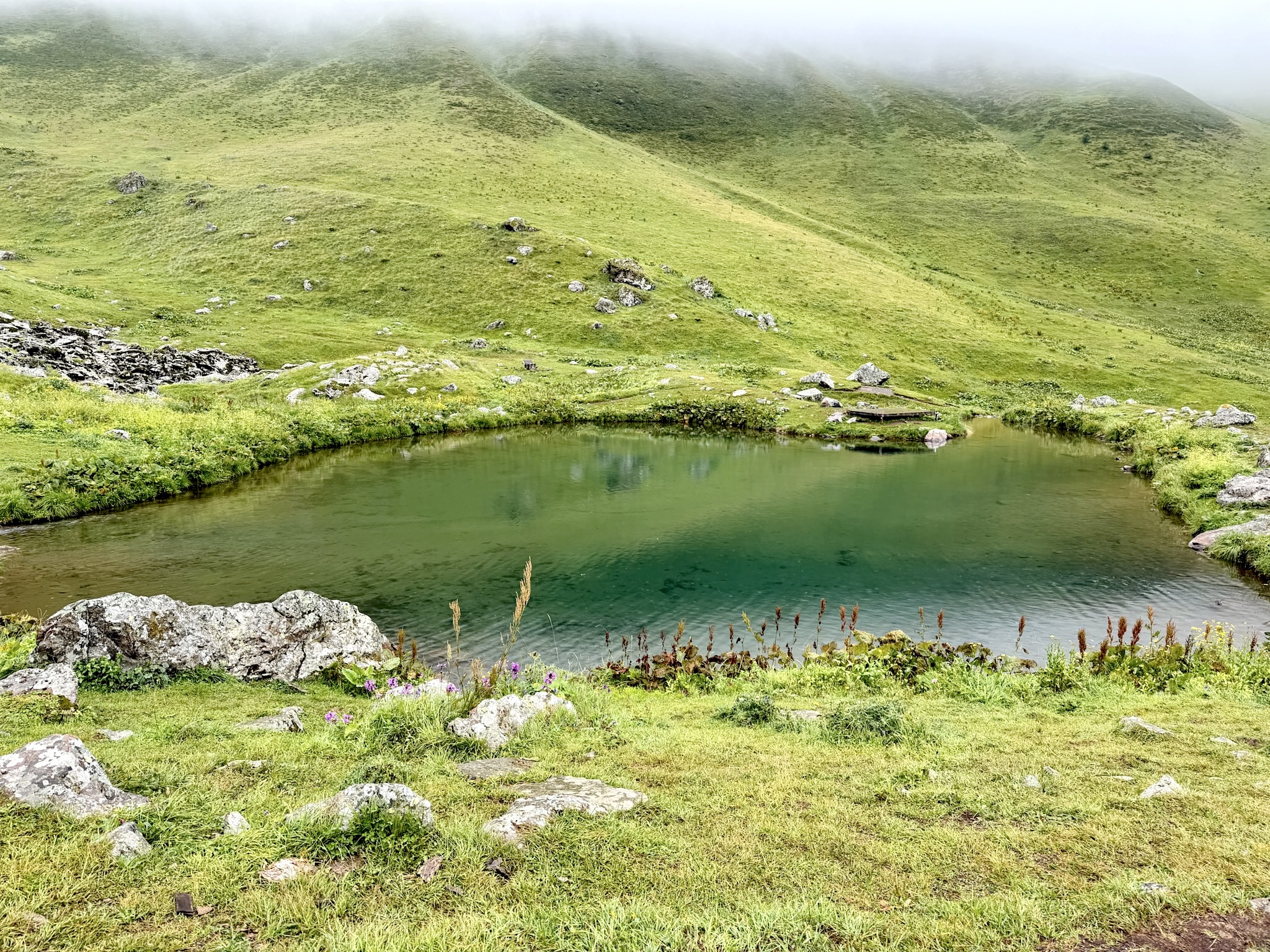
Chaukhi Lake Side View
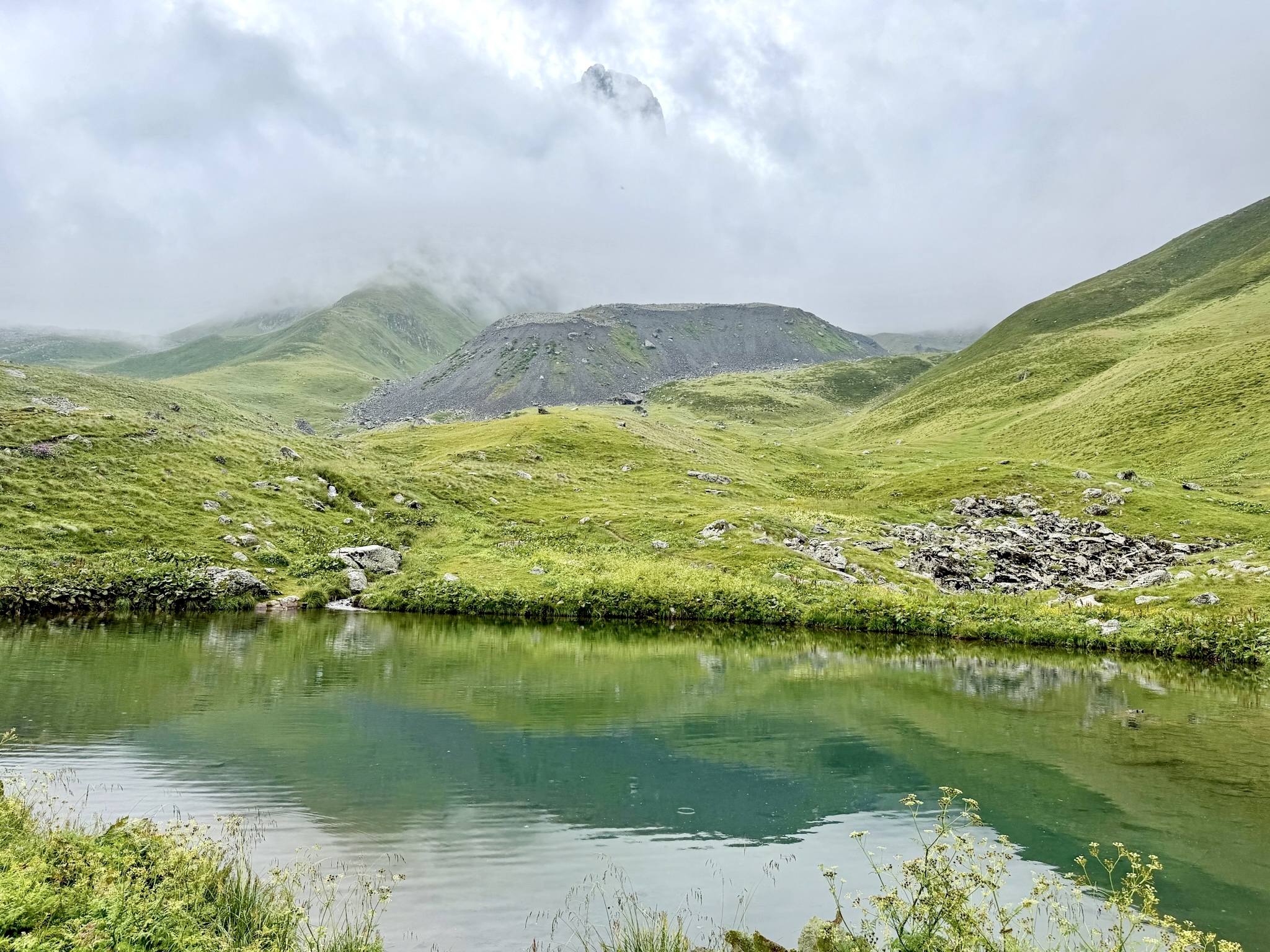
Chaukhi Lake Front View
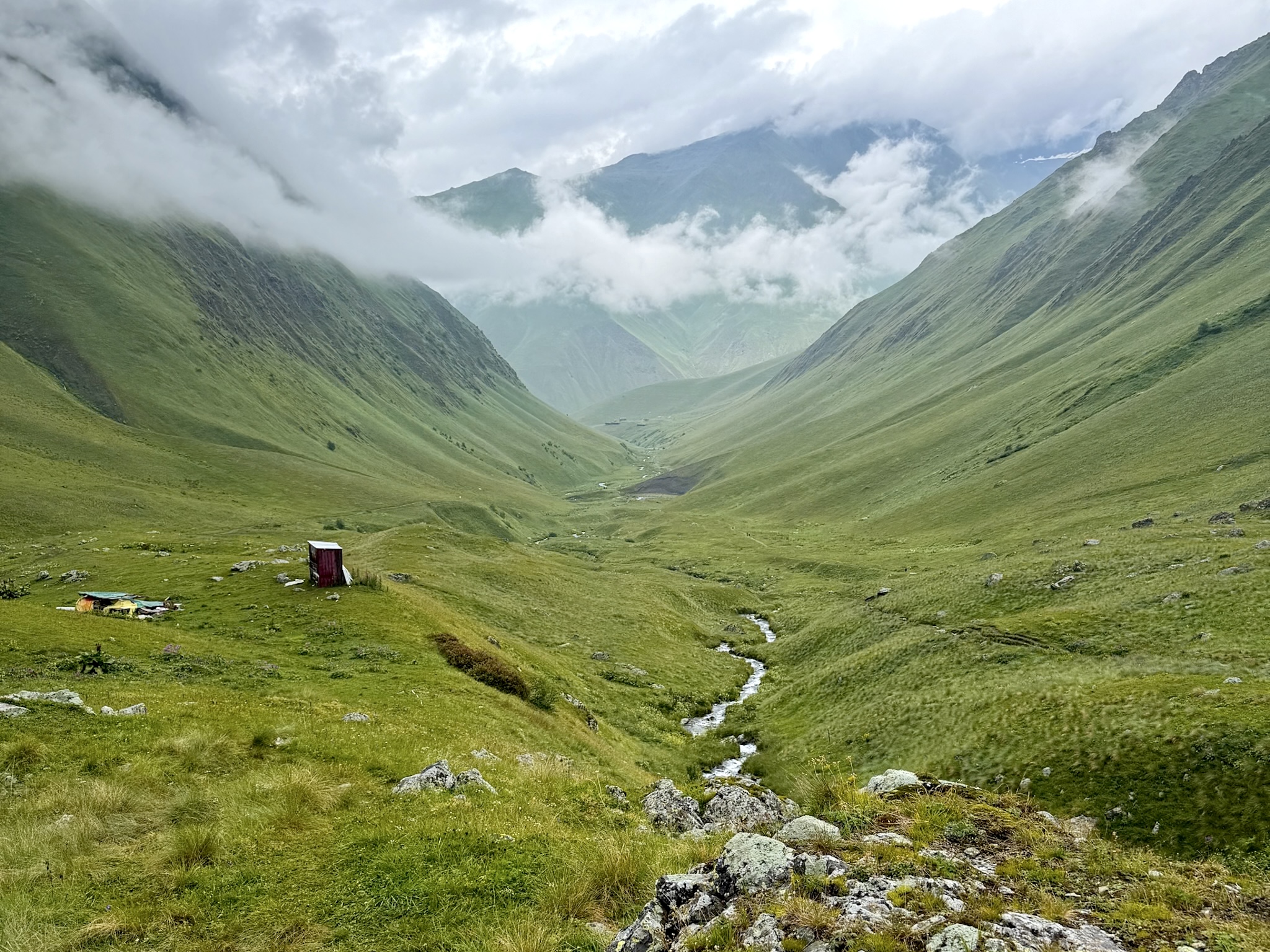
Chaukhi Trail from the Lake
Beyond the Lake: Chaukhi Pass and Abudelauri Lakes
From Chaukhi Lake, the trail keeps going. Push on to Chaukhi Pass and the whole hike grows to about 12 km round trip with 660 m of elevation gain, roughly two more hours of climbing each way past the lake.
Beyond that, for hikers with excellent stamina and lucky with the weather, the Abudelauri Lakes: three small lakes, each a different color from mineral runoff in the water. We didn't make it that far. If the sky is actually clear when you get there, it's a reasonable call to keep going.
On the way down, you don't have to retrace your steps exactly. A short distance past the lake, there's a spot to cross the river again and loop back a slightly different way. There's no bridge here, so you're wading across on foot, either barefoot or in waterproof boots that go high enough to keep you dry. The rocks underneath are slick, so take it slow, and poles help if you've got them.
Where to Stay for the Chaukhi Hike
- Staying in Stepantsminda is great for the hike to Chaukhi Lake and back. It's an easy day trip from there, and that's exactly how we did it: out in the morning, back at the lot by mid-afternoon, no rush involved. It's also a good base for many other hikes in Kazbegi. We stayed at Lens Design Hotel, a modern spot right in town, though Rooms Hotel Kazbegi is another solid option if you want something a bit more polished.
- Staying in Juta Village itself only starts to make sense if you're planning to go further, toward Chaukhi Pass and a bit beyond, especially at a slower pace than a straight there-and-back. In that case, Fifth Season is the obvious choice, the same guesthouse on the trail, with rooms as well as the restaurant. There's also KESANE Family Cafe Hostel, built partly over the river with a deck out back and horses available to rent, plus at least one campsite if you'd rather sleep under canvas.
- If you're going all the way to the Abudelauri Lakes, don't try to loop back to Juta the same day. It makes far more sense to keep going down to Roshka on the other side and sleep there, then walk back to Juta the next morning. Trying to do the whole thing there and back in one push turns into a very long day.
Whichever you pick, remember the parking rule from earlier: staying overnight in Juta bumps the fee at the lot before the landslide from 10 GEL to 20.
Practical Tips
What to Pack and Trail Conditions
Waterproof trail shoes aren't optional here, whatever the forecast looks like when you check it. The path is muddy for most of its length, and slippery in the sections near the river. We saw more people than we'd like in sandals, crocs, and white sneakers, and all of them were having a rougher time than they needed to. Trekking poles aren't required either, but they help a lot on the way down if it's been raining, and they're genuinely useful for the river crossing.
One more thing worth knowing: this trail gets a lot of foot traffic from grazing animals, so watch where you step on the ground.
Best Time to Go
June through September is the general window for this hike, with July and August offering the most stable weather and, as a result, the most people on the trail. We went in mid-August and still had rain roll in within a couple of hours. Pack a rain layer no matter when you go. Weather at this altitude shifts fast, and clear skies in Juta don't guarantee clear skies at the lake an hour later.
FAQ
Can you drive all the way to Juta Village?
Not as of 2026. A landslide has closed a stretch of the road a few kilometers before the village, and everyone, regardless of their car, has to walk through the damaged section, and then either take a taxi or keep walking after the damaged section.
Do you need a 4x4 to get to Juta?
Yes, for the road itself. The stretch after Sno has deep, water-filled potholes and a couple of steep, narrow sections, so a regular car isn't a good idea even before you reach the landslide closure.
How much does the taxi past the landslide cost?
Around 40 GEL one way. Parking at the lot before the landslide is 10 GEL for the day, or 20 GEL if you're staying overnight in Juta.
How long is the hike from Juta to Chaukhi Lake?
About 8 km round trip, with roughly 450 m of elevation gain. Most people do it in 4 to 6 hours, including time at the lake.
Is the Chaukhi Lake hike difficult?
No, not to the lake itself. The terrain is easy to moderate, with a steep muddy stretch right out of Juta and one tricky river crossing near the lake, but nothing technical.
Do you need hiking boots for this trail?
Yes. The trail is muddy for most of its length and slippery near the river, and regular shoes make the walk a lot harder than it needs to be.
Can you continue past Chaukhi Lake?
Yes. The trail keeps going to Chaukhi Pass, adding about 4 km and 200 m of extra elevation gain, and from there to the Abudelauri Lakes for hikers with a full day and good weather.
What's the best time of year to hike to Chaukhi Lake?
June through September, with July and August giving the most stable weather, though also the most people on the trail.
Where should you stay to do this hike?
Stepantsminda works fine for a day trip to the lake. If you're planning to go further toward Chaukhi Pass, staying overnight in Juta, at Fifth Season or one of the smaller guesthouses, makes more sense.
-
- If you're still planning the rest of your trip, from the drive up from Tbilisi to what to see beyond the trails, my complete guide to the Caucasus mountains in Kazbegi covers all of it
Keep reading: