Florence packs more art into a few square miles than most cities fit into their entire history, and everyone who plans to visit ends up asking the same question: which museums are actually a must-see? Here's my experience.

I spent time in Florence well beyond its museums (the architecture and the food took up plenty of it, too), but the museums are what I still think about most. The Uffizi gives you the Renaissance's greatest hits under one roof. The Accademia gives you Michelangelo's David. The Museo Leonardo da Vinci trades paintings for hands-on models of his inventions. Palazzo Pitti hands you the Medici family's actual home and their private art collection. The Bargello, quieter than the rest, is where the sculpture lovers end up.
There will be lines, and by the third museum, you'll probably feel the fatigue. So you need to plan around it and have a day-by-day strategy in mind, or select just a few you know you can manage. I can already say that, of these five, the Uffizi is the one I wouldn't skip under any circumstances: there's simply too much essential and iconic art under one roof.
For the others? Well, here's what to expect from the best museums in Florence.
1. Uffizi Gallery
Address: Piazzale degli Uffizi, 6, 50122 Firenze FI, Italy
Uffizi Gallery Website
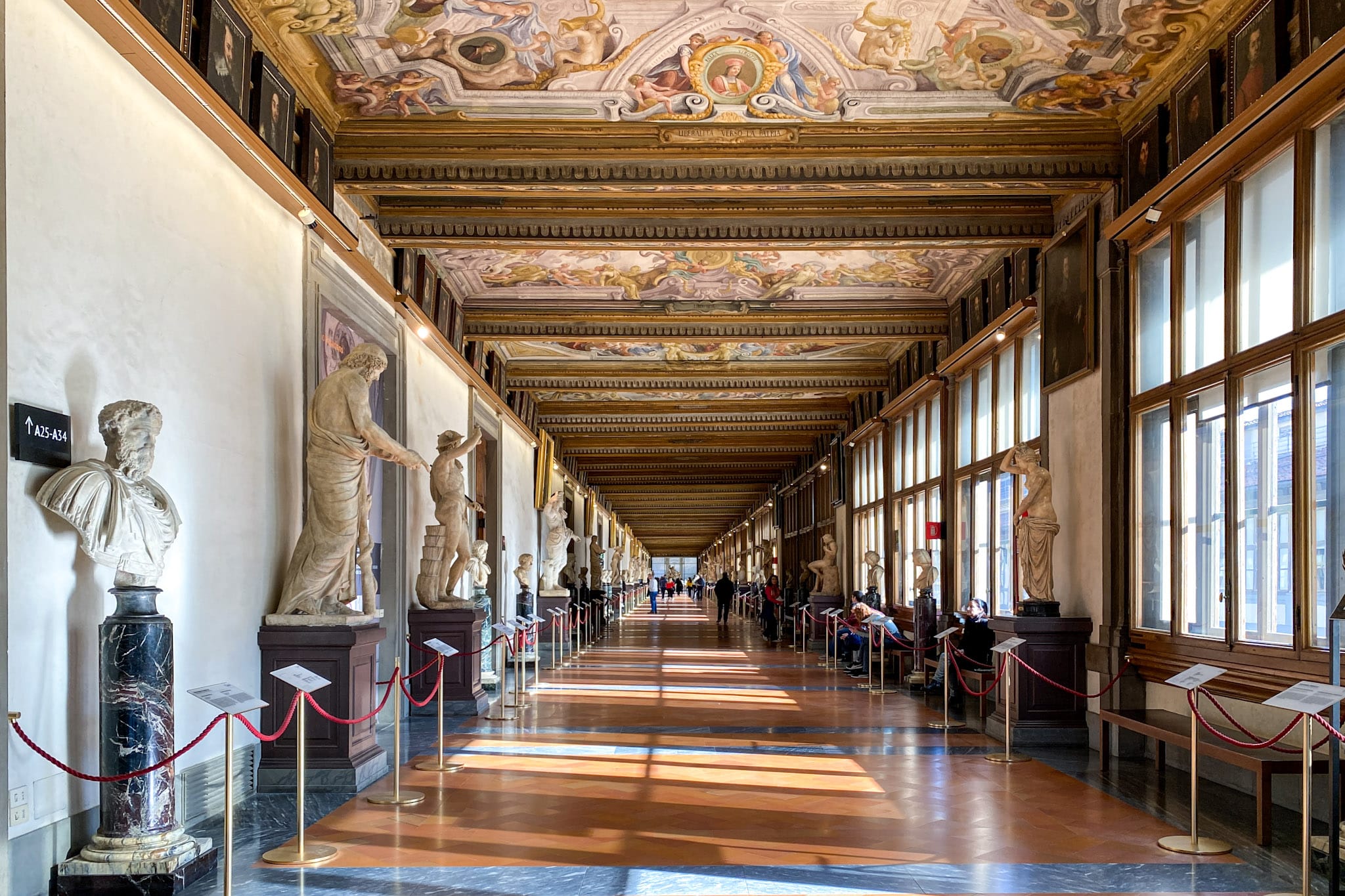
Iconic. Unmissable. You’ve heard of it, your neighbor has heard of it, and you’d better believe everyone who steps foot in Florence knows it’s the place to be. And with good reason. The Uffizi Gallery is where you go if you want to see the true heavyweights of Renaissance art. You step inside, and boom—you’re surrounded by Botticelli, da Vinci, Michelangelo, and basically every big name you’ve ever heard of from your high school art class. But in real life? They’re so much better.
Built in the 16th century by Giorgio Vasari, the Uffizi was originally just office space for the Medici family. Eventually, the family’s art collection grew so massive that it took over the space, and now we’ve got one of the best art galleries in the world.
Here’s the thing about the Uffizi: it’s massive. You could spend days here and still not see everything. So, do yourself a favor and make a beeline for the must-see works. Then, once you’ve picked your jaw up off the floor, wander the halls and see what else strikes your fancy.
What You Need to Know for Your Uffizi Gallery Visit:
The Uffizi Gallery is one of the busiest museums in the world, so booking your tickets in advance is an absolute must. You can do this easily online via the official Uffizi website or through authorized vendors. If you don’t book ahead, be prepared to wait in long lines, especially during peak tourist seasons (spring and summer). Tuesday to Thursday mornings tend to be the quietest, while weekends and afternoons are the busiest. The museum is closed on Mondays, so plan accordingly.
One more thing to know before you book: all Uffizi tickets are now nominative, meaning you'll need a photo ID matching the name on the reservation, and tickets can't be transferred to someone else.
If your visit falls between July 3 and November 20, 2026, look into the Vasari Corridor's special Friday evening openings (7–11 PM): the restored passageway connects the Uffizi directly to Palazzo Pitti across the Ponte Vecchio, and it only reopened to the public in December 2024 after eight years of restoration.
Why It’s a Must-See:
It’s the gallery. It’s not just the art—although, trust me, the art is everything—it’s the history, the vibe, the whole experience. You’re walking through the very halls where the Medici family collected the works that literally shaped the Renaissance. And honestly, there’s something humbling about standing in front of Botticelli’s Venus, knowing it’s been admired by kings, queens, scholars, and now you.


2. Galleria dell'Accademia
Address: Via Ricasoli, 58/60, 50122 Firenze FI, Italy
Galleria Accademia Website
The Galleria dell'Accademia is, quite frankly, where you go to have your “wow” moment in Florence. Why? Two words: Michelangelo’s David. You’ve seen pictures, sure. But nothing, and I mean nothing, prepares you for seeing David in person. At 17 feet tall, standing in that perfect Renaissance contrapposto, David is massive. And yes, Michelangelo was that good. The statue is flawless—every muscle, every vein, every tiny detail is chiseled to perfection.
But let’s not forget about the rest of the museum, which is often overshadowed by David. Before you reach him, you walk past Michelangelo’s unfinished Prisoners sculptures, which are almost as fascinating. These rough, partially completed works show figures trapped in stone, as though they’re fighting to break free. You can see the artist’s process, which feels almost intimate, like Michelangelo is giving you a peek into his studio.
The Galleria is small compared to the Uffizi, which is kind of a relief. You won’t get museum fatigue here, and once you’ve soaked in the sculptures, there’s a lovely collection of religious paintings waiting for you.
What You Need to Know for Your Galleria dell'Accademia Visit:
Again, advance booking is key, especially if you want to avoid waiting in line. You can get your tickets through the Accademia Gallery website. The early morning slots (right when the museum opens) or late afternoons are the least crowded times. The museum is closed on Mondays, so plan around that if you're aiming to pack in several museums in one trip. And don’t just rush to David—take some time to explore the rest of the collection
Why It’s a Must-See:
You cannot—cannot—miss seeing David. It’s Florence’s crowning glory, the epitome of Renaissance art, and, let’s be honest, it’s the statue that launched a thousand art history majors. There’s something about standing in front of it that makes you feel both small and part of something much, much bigger. And trust me, once you’re face-to-face with David, it’s an experience you’ll carry with you long after you leave Florence.


3. Museo Leonardo da Vinci
Address: Via dei Servi, 66R, 50122 Firenze FI, Italy
Museo Leonardo Da Vinci Official Website
Let’s switch gears for a minute. While the Museo Leonardo da Vinci doesn’t have world-famous paintings like the Uffizi or jaw-dropping statues like the Accademia, what it does have is hands-on, interactive fun. Yes, I said it—fun. If you’ve ever wondered how the mind of a genius like Leonardo da Vinci worked, this museum is your window into his world.
This museum is all about da Vinci’s inventions, and wow, was the guy ahead of his time. It is divided into sections based on his many interests—flight, war, hydraulics, anatomy—and you get to see models of his inventions brought to life. Ever wanted to play with a life-size version of da Vinci’s flying machine? You can here. Ever wondered what it would be like to launch one of his war contraptions? Go ahead, try it. Everything is interactive, which makes it a hit with kids, but honestly, it’s a blast for adults, too.
What You Need to Know for Your Museo Leonardo da Vinci Visit:
The Museo Leonardo da Vinci is smaller and more interactive, making it a great stop between the bigger museums. It’s a kid-friendly museum, so if you're traveling with family, this is a good break for them. You can buy tickets at the door, but during the peak season, it's better to book online through the official Leonardo Museum website. You can expect the museum to take about an hour to visit, and since it’s not too crowded, it’s a relaxed experience where you can explore at your own pace.
Why It’s a Must-See:
Because Leonardo da Vinci wasn’t just a painter. He was a scientist, inventor, and a guy who dreamt up things that wouldn’t become real for hundreds of years. It’s like stepping into the brain of a Renaissance mad scientist, and it’ll blow your mind. Plus, it’s a great break from the more serious art museums—here, you get to play.


4. Palazzo Pitti
Address: Piazza de' Pitti, 1, 50125 Firenze FI, Italy
Palazzo Pitti Official Website
Alright, let’s talk palaces. Because after all that art, you might need a change of scenery. Enter Palazzo Pitti—the Medici family’s grand palace, a stone’s throw from the Ponte Vecchio. This place is absolutely enormous, and it’s not just one museum—it’s several. You’ve got the Palatine Gallery, the Gallery of Modern Art, the Museum of Costume and Fashion, and let’s not forget the Royal Apartments, where the Medici family lived it up in Renaissance luxury.
The Palatine Gallery is where the magic happens. It’s an almost overwhelming collection of works by some of the biggest names in Renaissance art—Raphael, Titian, Rubens—but unlike the Uffizi, the paintings aren’t displayed in chronological order. Nope, they’re hung salon-style, floor to ceiling, like a game of art Tetris. It’s chaotic, but in the best possible way. You get to experience the opulence of the Medici family’s personal collection in their actual home.
Once you’re done inside, stroll through the Boboli Gardens—the palace’s sprawling backyard. With its sculptures, fountains, and unbeatable views of Florence, it’s the perfect place to take a breather.
What You Need to Know for Your Palazzo Pitti Visit:
Palazzo Pitti can feel like a day trip in itself, especially if you plan on exploring the Boboli Gardens. If you’re short on time, prioritize the Palatine Gallery. You can get a combo ticket that includes access to both Palazzo Pitti and the Boboli Gardens via the official website. Weekdays are quieter, and if you're visiting in the spring or fall, make sure to allocate time to explore the gardens when the weather is perfect. Don’t forget comfortable shoes—this place is massive!
Why It’s a Must-See:
Palazzo Pitti is where you experience the Medici family in all their lavish, art-loving glory. The Uffizi might be where their collection started, but Palazzo Pitti is where they lived surrounded by the finest art money could buy. It’s a little overwhelming, a little chaotic, and a lot fascinating. Plus, those Boboli Gardens are the cherry on top—if you need some fresh air after all that art, this is the place.


5. Bargello National Museum
Address: Via del Proconsolo, 4, 50122 Firenze FI, Italy
Barcello Museum Official Website
The Bargello National Museum is often overlooked by tourists racing to see the Uffizi or Accademia, but that just makes it feel more like a hidden gem. If you’re a sculpture fan, though, this is the place to be. Housed in a former medieval fortress, the Bargello is Florence’s sculpture mecca, featuring works by Donatello, Michelangelo, Cellini, and Giambologna. Think of it as the Renaissance’s greatest hits—Donatello’s David, Michelangelo’s Bacchus, Giambologna’s Mercury. These sculptures changed the game, and seeing them all in one place is a rare treat.
The museum’s rugged, fortress-like atmosphere also makes for a unique setting. Unlike the pristine halls of the Uffizi or the grandeur of Palazzo Pitti, the Bargello feels more intimate, like you’ve stepped back in time to a medieval Florence that was raw and powerful.
What You Need to Know for Your Bargello National Museum Visit:
The Bargello National Museum is one of Florence’s hidden gems, so it tends to be less crowded than other major attractions like the Uffizi and the Accademia. Mornings tend to be quieter, making it an excellent way to start your day before heading to busier sites. You can purchase tickets through the official website. As of 2026, the Bargello is open Tuesday through Sunday and closed on Mondays, so plan around that.
Why It’s a Must-See:
Because if you’re going to appreciate Renaissance art, you can’t skip the sculptures. The Bargello is home to some of the most important works in history, and the fact that it’s a bit off the beaten tourist path means you can enjoy it without the crowds. Plus, Donatello’s David is worth the visit alone. It’s a different vibe from the more famous Michelangelo David, but no less important. If you want to dive deep into the world of Renaissance sculpture, this is the place.


FAQs
Is there a cumulative ticket for Florence’s museums?
Yes! Florence has a few great options for museum passes, and the Firenze Card is probably the most popular. For a fixed price of 85€ (as of 2026), you get 72-hour access to over 70 museums, including the Uffizi, Accademia, Palazzo Pitti, Bargello, and many more. The best part? It lets you skip the lines. So, if you’re trying to fit this entire list into a few days, it’s worth the investment.
There’s also a Uffizi-Palazzo Pitti-Boboli Gardens combo ticket that costs €40 and gives you five days to explore these three gems.
When’s the best time to visit these museums?
Florence is pretty busy year-round, but if you want to avoid the worst of the crowds, aim for shoulder season (April-May or September-October). Early mornings and late afternoons are generally less crowded, and weekdays are always quieter than weekends.
Can I take photos inside the museums?
Yes, but with some restrictions. Most museums in Florence allow photography, but no flash. Some special exhibitions might have different rules, so it’s always best to double-check at the entrance.
How long should I spend at each museum?
It depends on your interest level, but here’s a general guideline:
-
Uffizi Gallery: 3-4 hours (there’s so much to see!)
-
Galleria dell'Accademia: 1-2 hours (David steals the show)
-
Museo Leonardo da Vinci: 1-1.5 hours (interactive fun)
-
Palazzo Pitti: Half a day if you explore everything, including the gardens
-
Bargello: 1-2 hours (sculpture lovers, this is for you)
Do these museums offer guided tours or audio guides?
Yes! Most of Florence’s big museums offer audio guides and guided tours, which are a great way to learn more about the art without getting overwhelmed. You can rent audio guides at the entrance, or you can join a guided tour for a more structured visit. I highly recommend a tour at the Uffizi, especially if you want to get the most out of your time there.