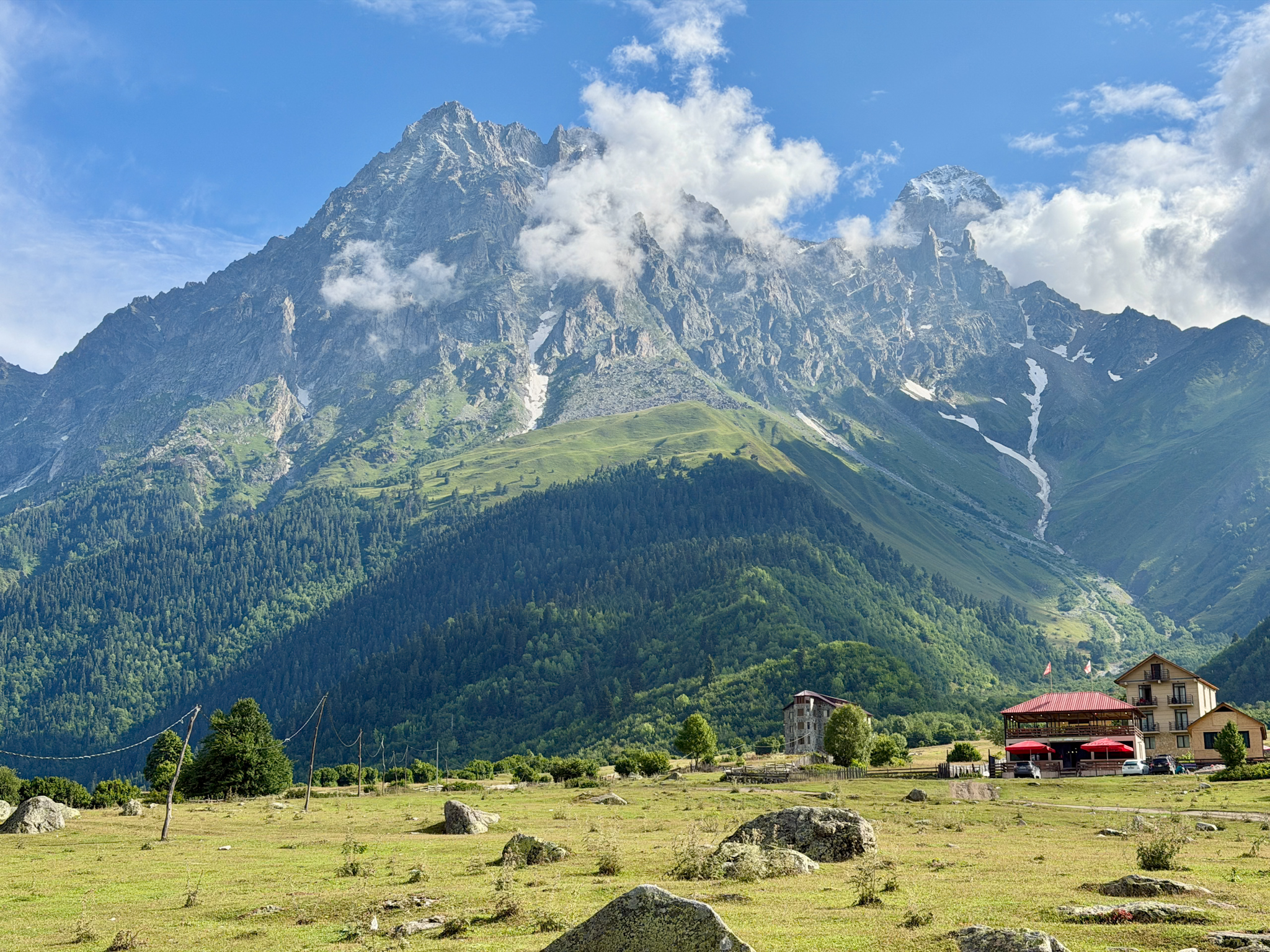
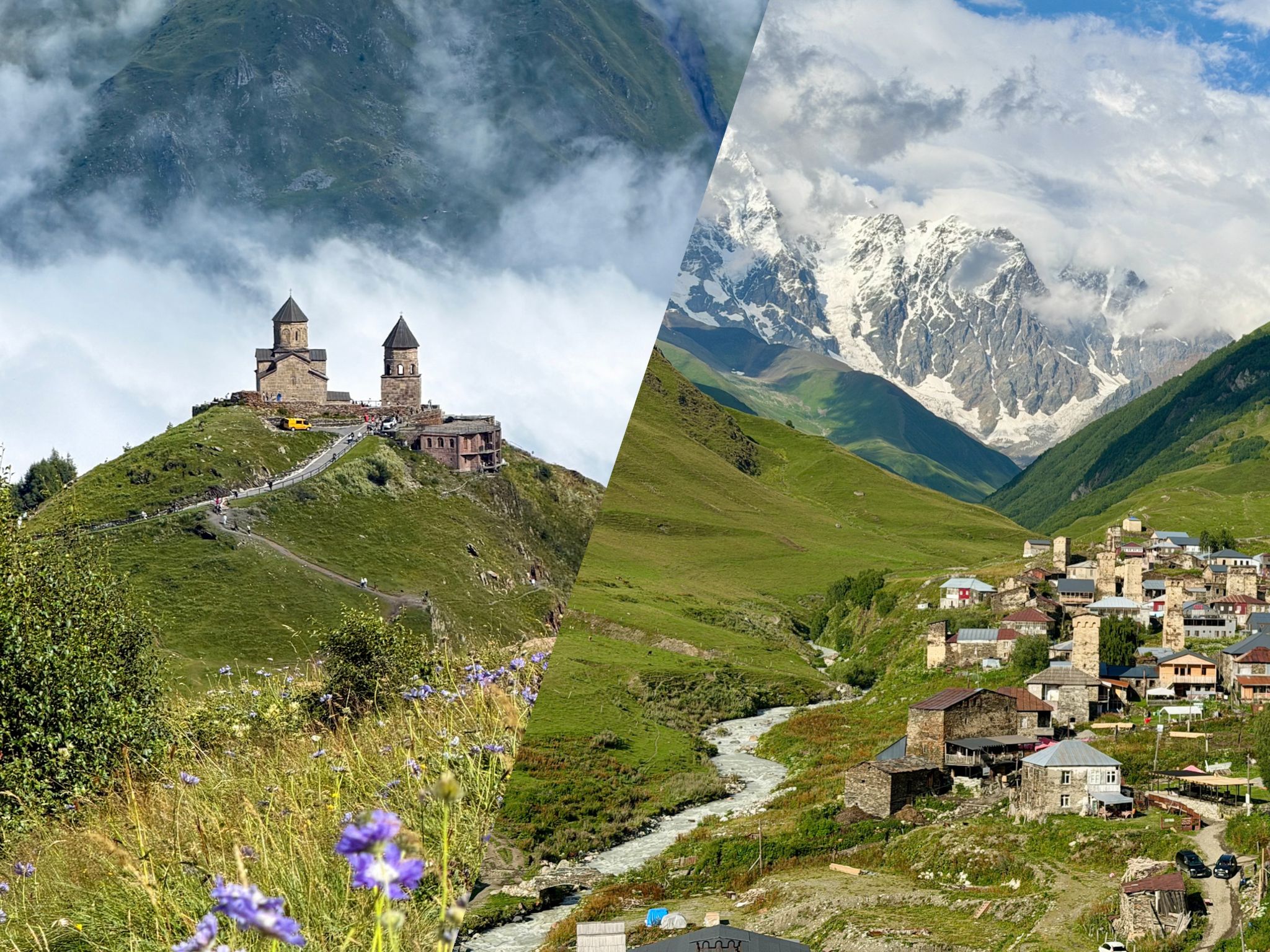
Ushguli Village sits at over 6,500 ft, right under Georgia’s highest peak, and it’s one of the highest villages in Europe where people still live all year. This is how to get there , and what to do in Ushguli once you arrive.

Ushguli is a cluster of four small villages at the far end of a valley in Svaneti, the mountain region in Georgia’s northwest. It sits at over 2,000 m (6,500 ft), right under Shkhara, the highest mountain in the country, and people live up here all year round.
This detailed guide is about how to get to Ushguli and what actually see once you're there. I came in over the Zagari Pass from Kutaisi, spent the day in Ushguli village and on the trail toward the Shkhara Glacier, then left on the road to Mestia.
Quick Info on Where Ushguli Is and How To Visit
- Location: Ushguli is at the top of the Enguri River valley in Upper Svaneti, in Georgia’s far northwest, about 45 km (28 mi) east of Mestia, the main town of the region.
- Altitude: Between roughly 2,060 and 2,200 m (6,760 and 7,220 ft). Each village sits a bit higher up the valley than the one before, which is why you’ll find different numbers online.
- The villages: Four of them, close together: Murkmeli, Chazhashi, Chvibiani and Zhibiani. They’re part of the Upper Svaneti UNESCO World Heritage Site, and walking from the first to the last takes about half an hour.
- Getting there: the only year-round road comes from Mestia, the main town of Svaneti, 45 km (28 mi) away, so most people sleep there and visit Ushguli for the day. In summer you can also drive in from Kutaisi, Georgia’s third-largest city, over the Zagari Pass, a high mountain road. I did both, more details below.
- Time needed for a visit: One full day is enough to walk around the villages and do athe nearby Shkhara Glacier hike, sleeping in Mestia.
- When you can go: June to September. In winter the road from Mestia can close for days after heavy snow, and the Zagari Pass doesn’t open at all.
- Cash and phone signal: Bring lari, the Georgian currency, in cash from Mestia, because there’s no ATM in Ushguli. Phone signal is patchy.
-
- Where to Stay: you can sleep in Ushguli, or you can stay in Mestia, a two-hour drive away, with more hotels and restaurants to choose from. These are my picks:
- Hotel Tekla in Ushguli ⭐️, a simple family-run guesthouse with its own restaurant, if you want to wake up in the village and don't mind really basic lodging
- Lahili Boutique Hotel in Mestia ⭐️⭐️⭐️⭐️, where I stayed during my days in Svaneti, if you prefer more comfort and plenty of places to eat nearby
- Where to Stay: you can sleep in Ushguli, or you can stay in Mestia, a two-hour drive away, with more hotels and restaurants to choose from. These are my picks:
Ushguli Village: The Four Villages, Explained
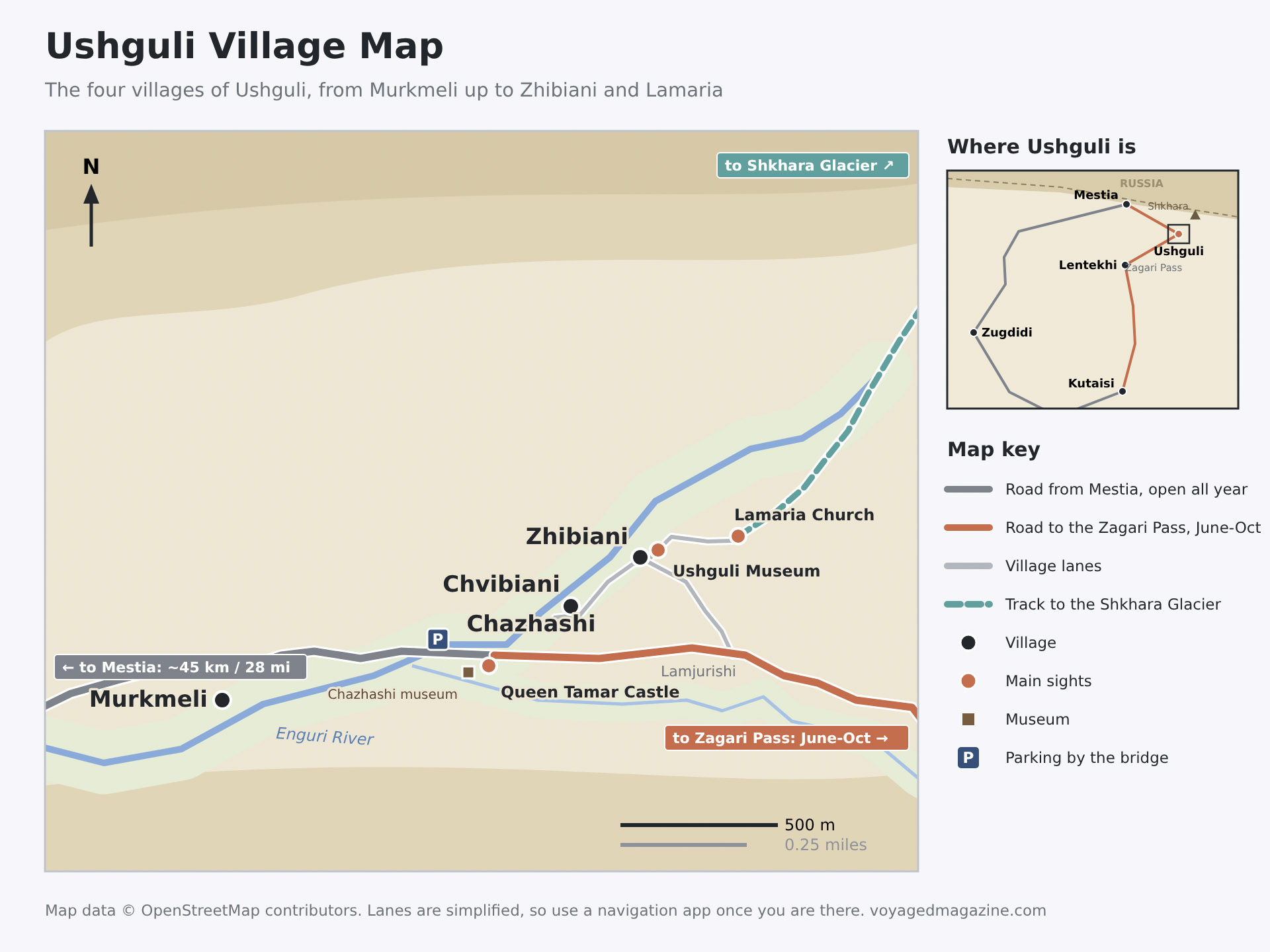
Ushguli isn’t one village, which confused me a bit before I went. It’s four small settlements strung along the river. Coming from Mestia, you pass them in this order:
- Murkmeli is the first and lowest. It’s small, with a handful of towers, some of them in pretty rough shape, and a couple of guesthouses. I only saw it from the car on the way out.
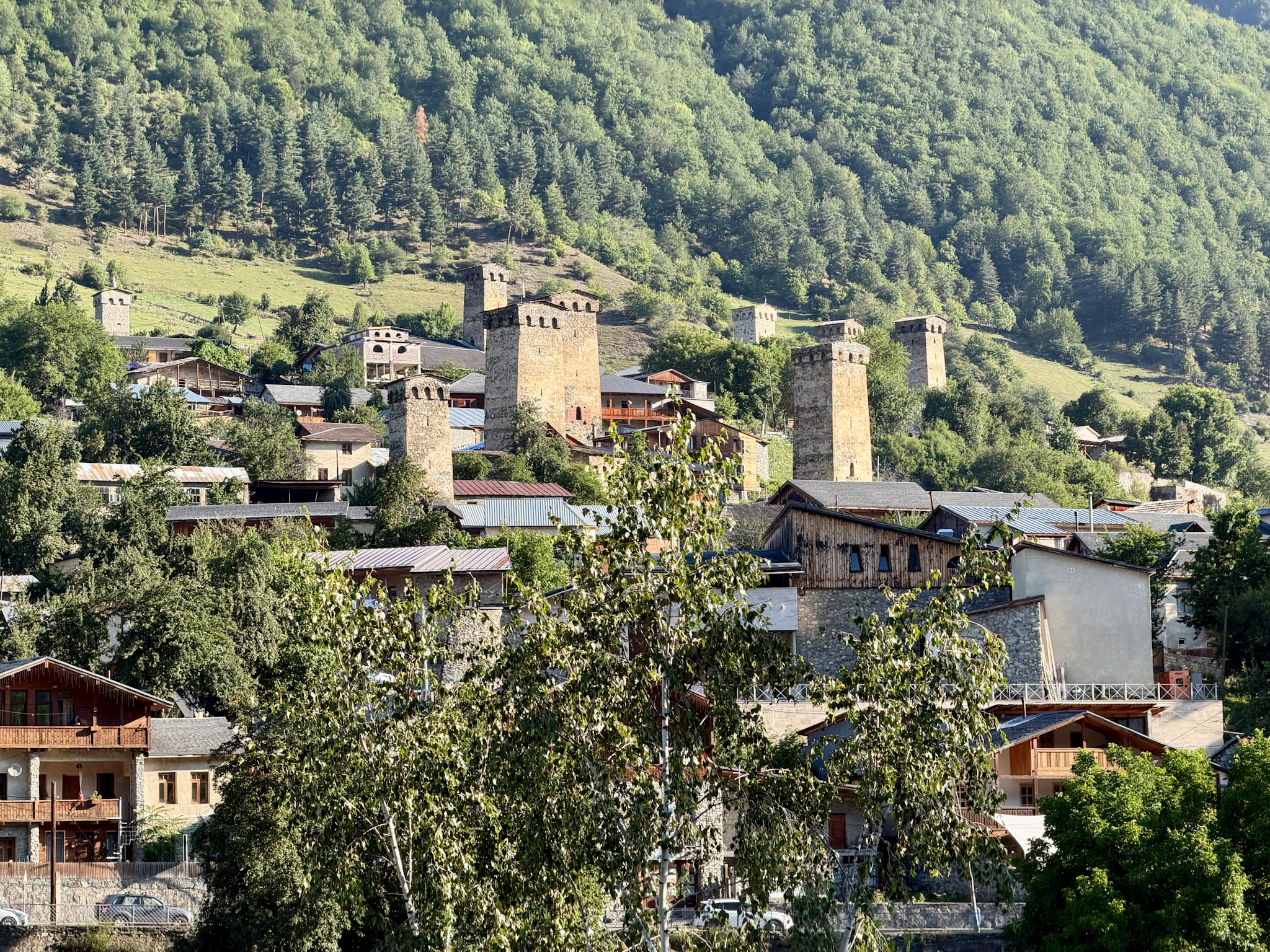
- Chazhashi comes right after, and it’s the one in all the photos. Most of Ushguli’s medieval stone towers are here, packed so tightly that the village has been protected as a museum reserve since the Soviet years. The car park is by the bridge at its edge, and this is where we spent most of our time, walking the gravel lanes and climbing the tower they call Queen Tamar Castle on the hill above the houses, .
- Chvibiani is the middle part, where most of the cafes and guesthouses are.
- Zhibiani is the highest. Lamaria Church stands on a hill at its far end, and the trail to the Shkhara Glacier starts just past it.
You’ll also see the name Lamjurishi on Google Maps, a handful of houses on the road toward the Zagari Pass. Some guides count it as a fifth village.
The whole loop around Chazhashi took us about 1 hour of walking and exploring. It was quiet, just a few other tourists.
What to Do in Ushguli
Everything in Ushguli is close together and on foot.
1. Walk Chazhashi’s Svan Towers
The towers are why Ushguli is famous. The Svans, the people of Svaneti, built them between roughly the 9th and 12th centuries. Each family had one next to the house, to hide in during raids or feuds. They’re three to five floors tall, with the door a few meters off the ground. You climbed in with a ladder and pulled it up behind you.
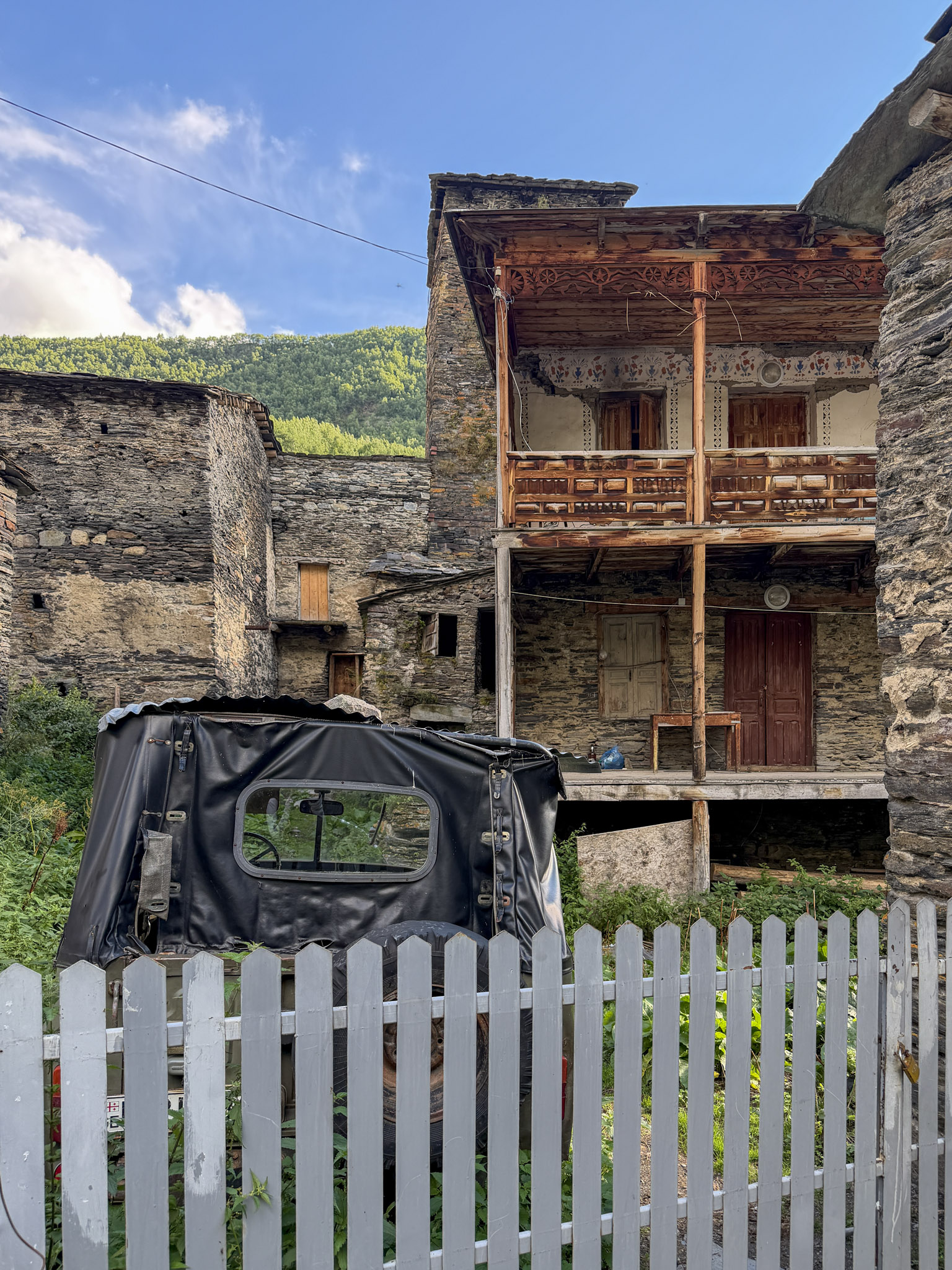
Chazhashi has the most still standing. There’s no set route, you just wander the gravel lanes. Some towers are plastered and topped with little arches, others are bare dark stone, a few are half collapsed.
Most towers belong to families, so don’t climb one unless it’s clearly open to visitors.
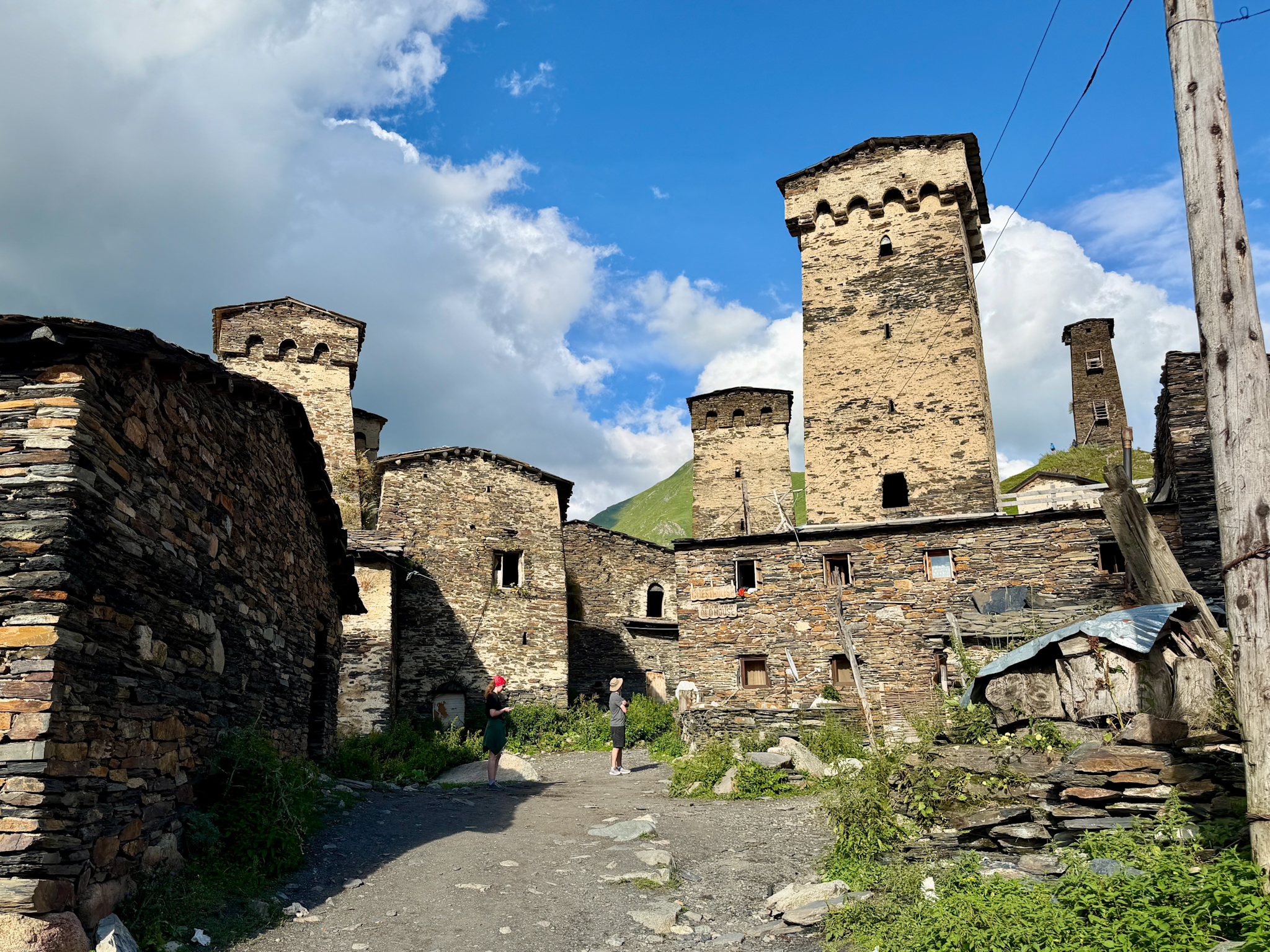
Street in Chazhashi
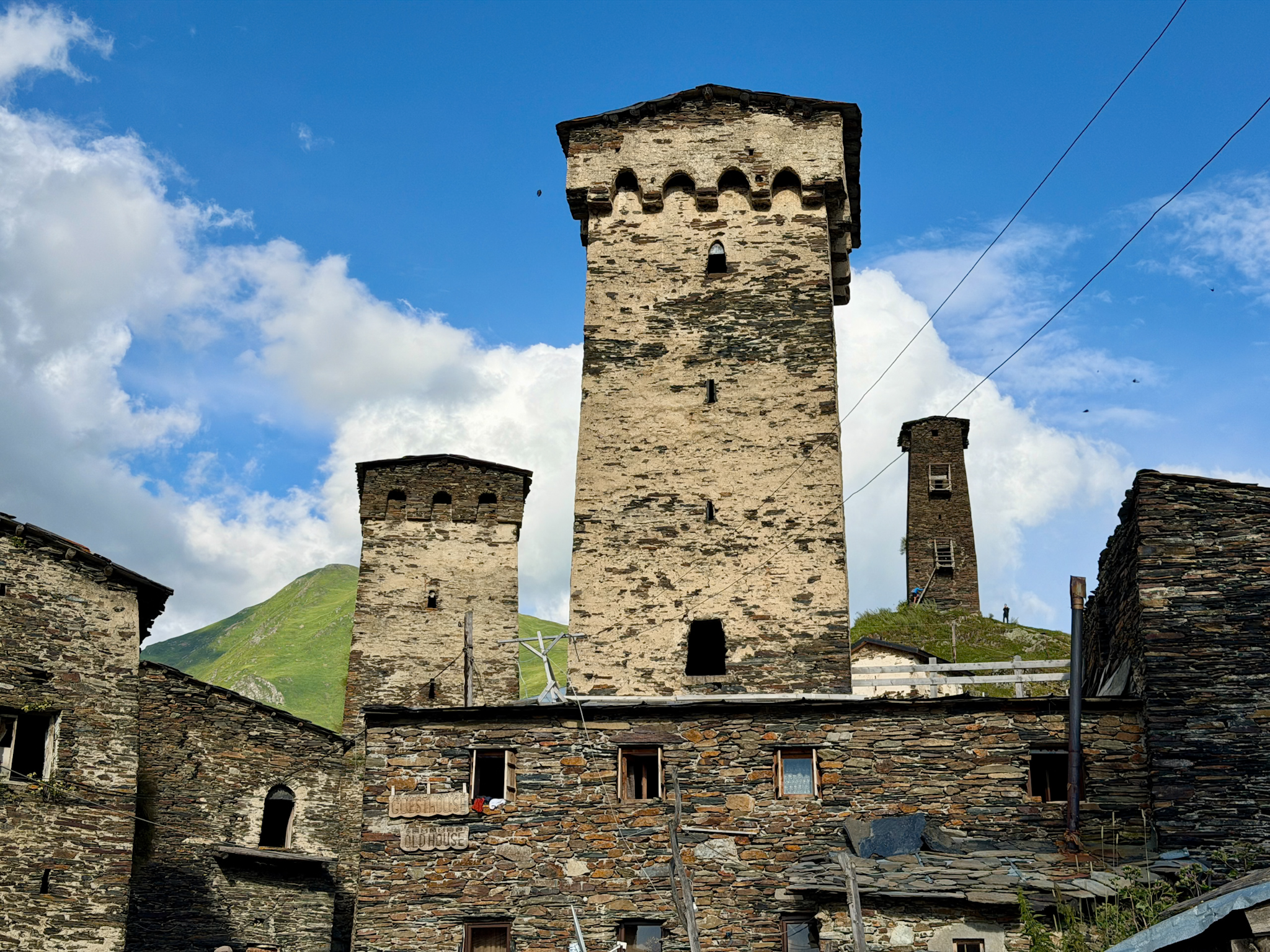
Svan Tower
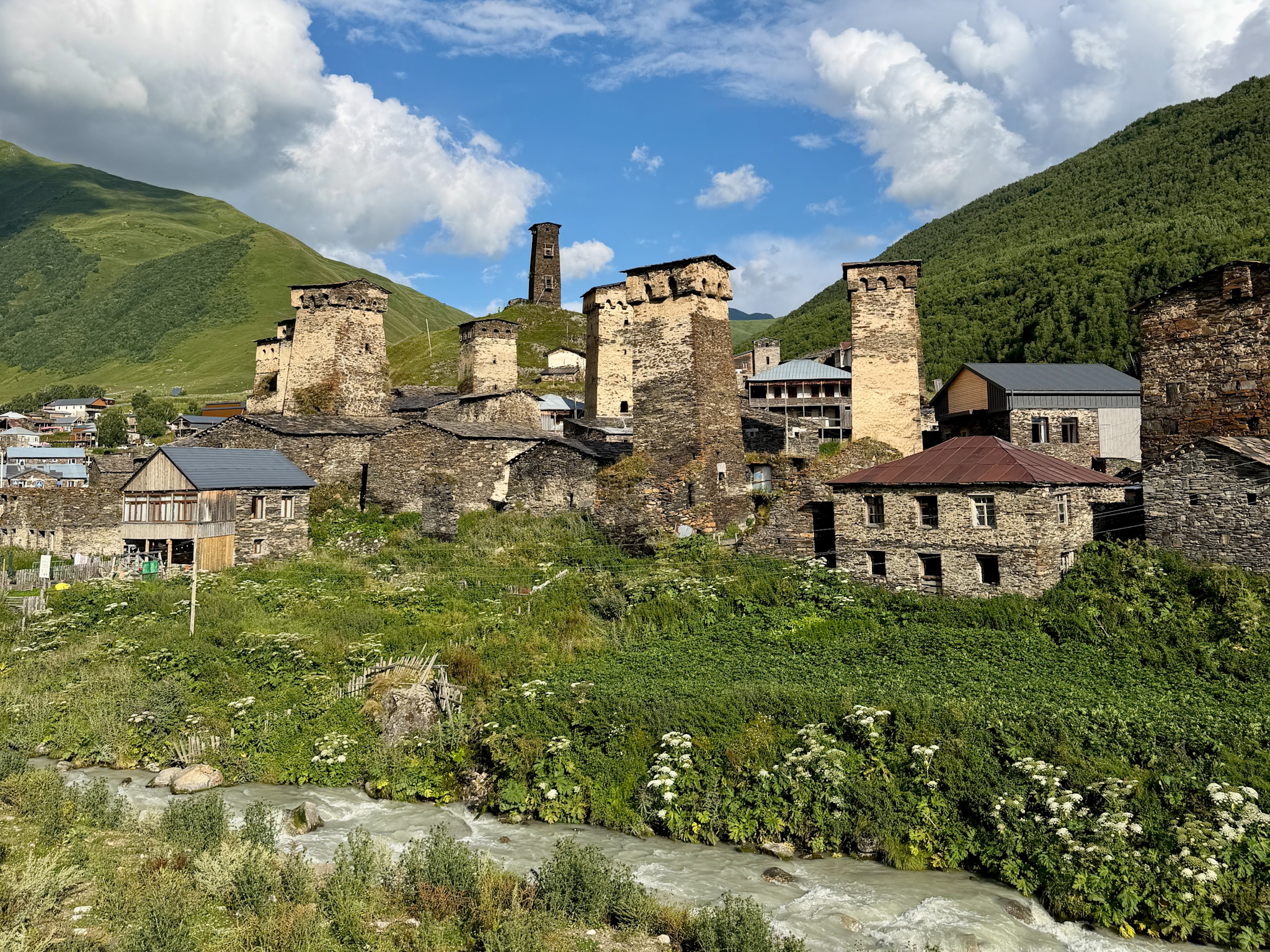
Chazhashi’s Svan Towers
2. Climb the Tower at Queen Tamar Castle
On the small hill above Chazhashi there’s a lone dark tower next to a ruined wall. On Google Maps it’s called Queen Tamar Castle, but online you’ll also find it as Tamar’s Tower or fortress, and the naming is a mess. Tamar was the queen who ruled Georgia in its golden age, around 1200, and legend says she spent time here.
You can climb it, and it’s free. Our Georgian guide suggested it but told us to be careful with the stairs, and she was right. Inside it’s dark, three levels connected by wooden ladders just leaning against the stone. Some rungs are missing, so you have to stretch and pull yourself up.
At the top two small wooden balconies stick out from the wall. The view goes down the valley toward Mestia, over the rooftops of Chazhashi.
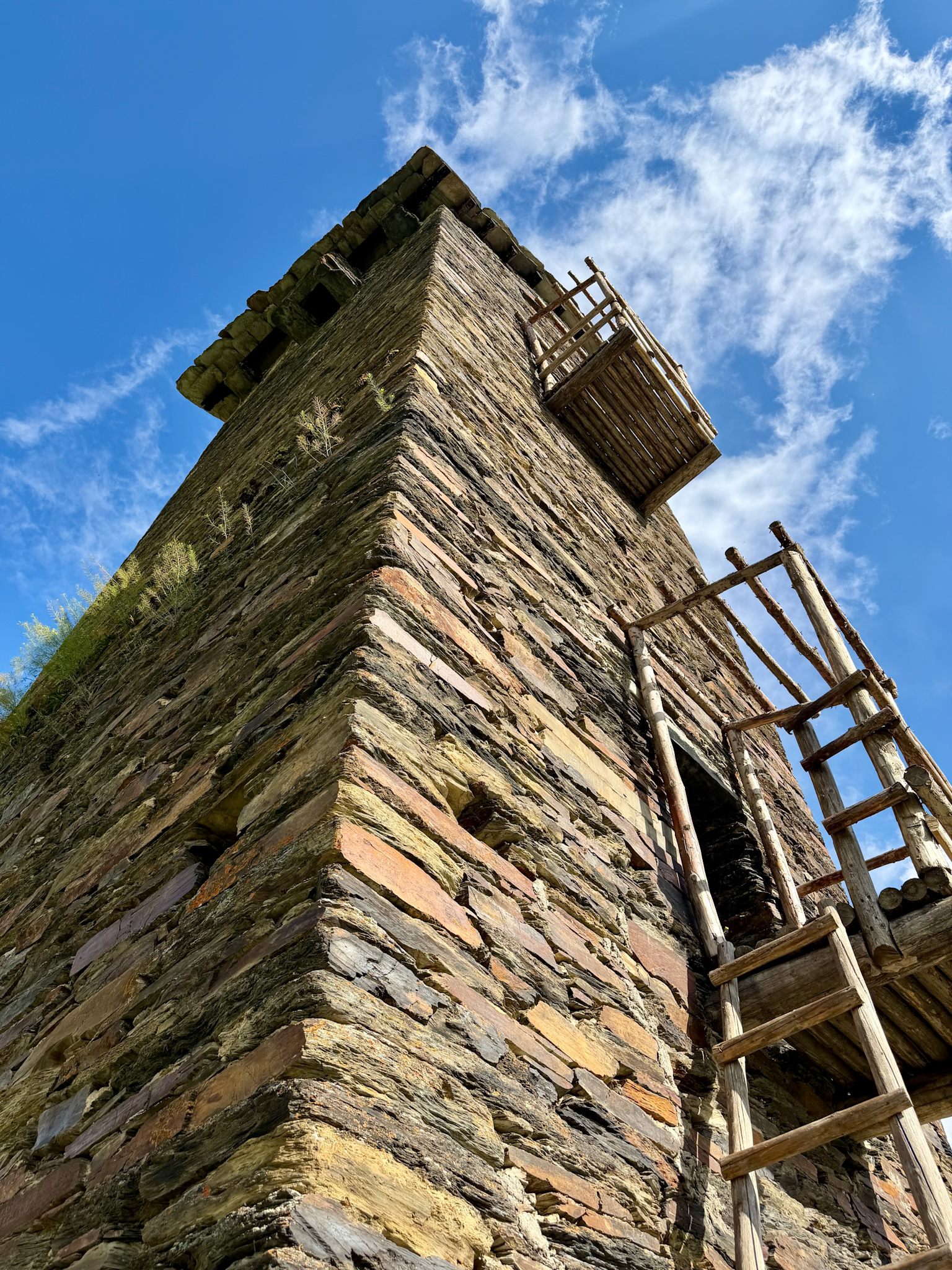
Queen Tamar Castle from below
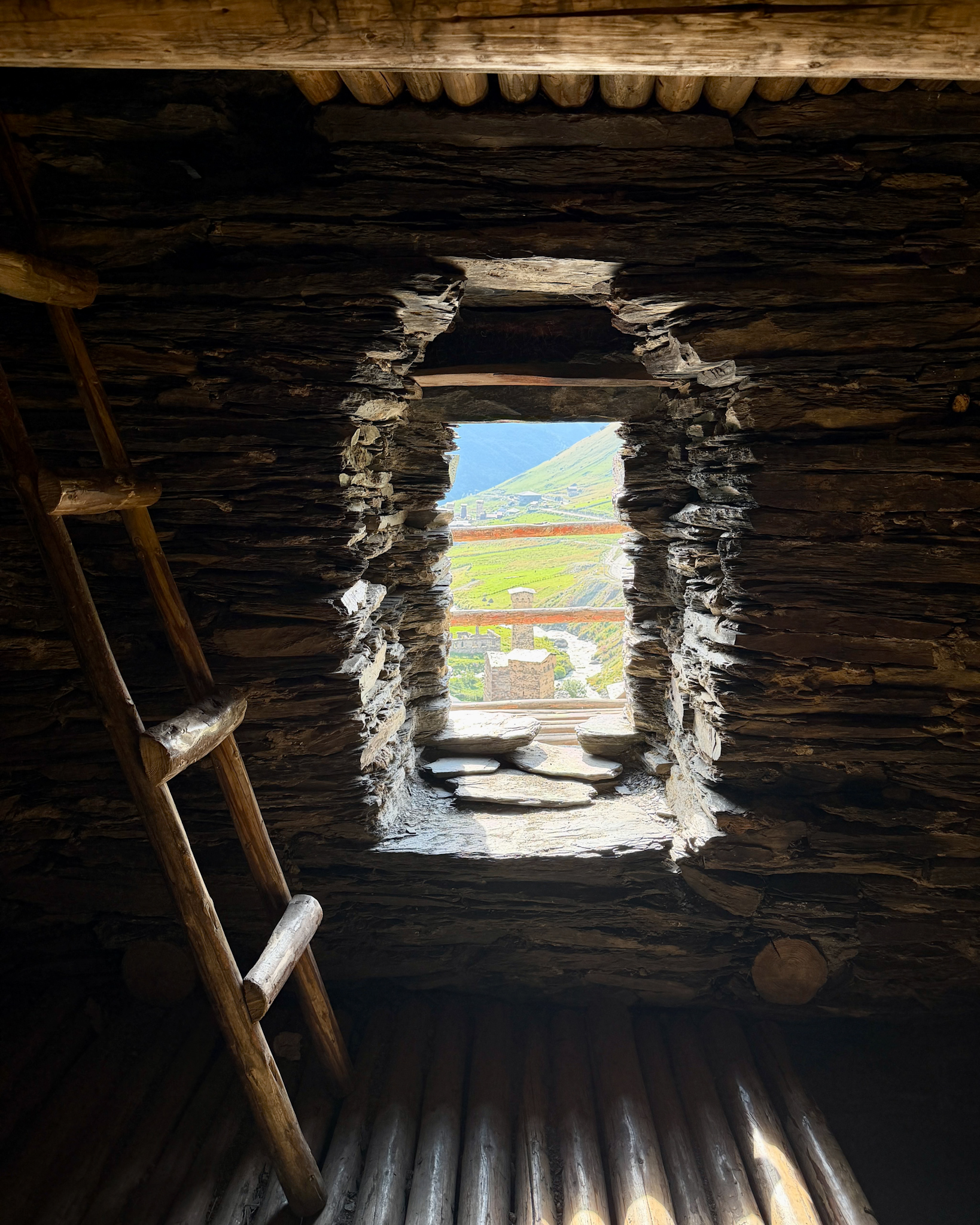
Inside Queen Tamar Castle Tower
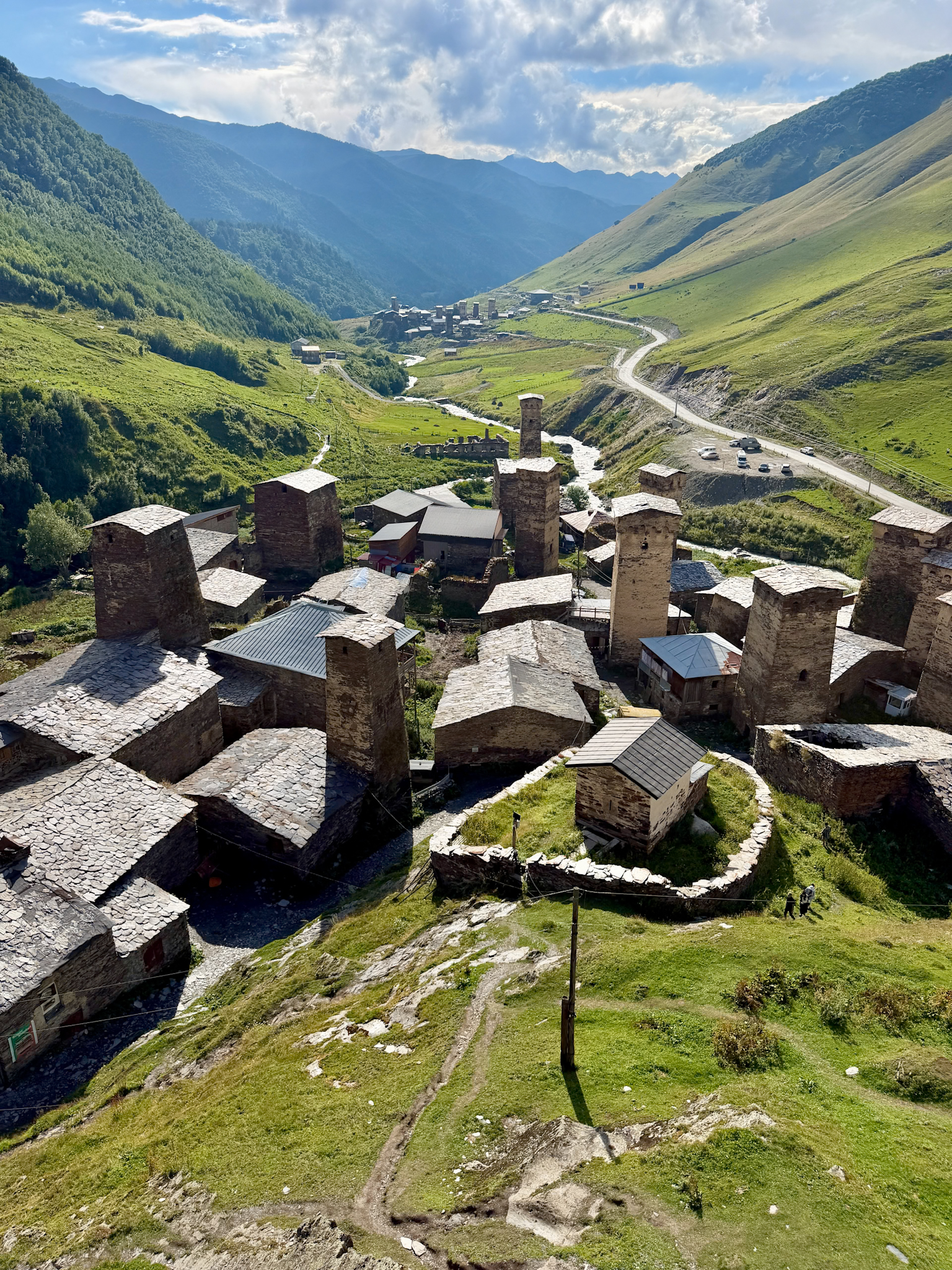
View from Queen Tamar Castle balcony
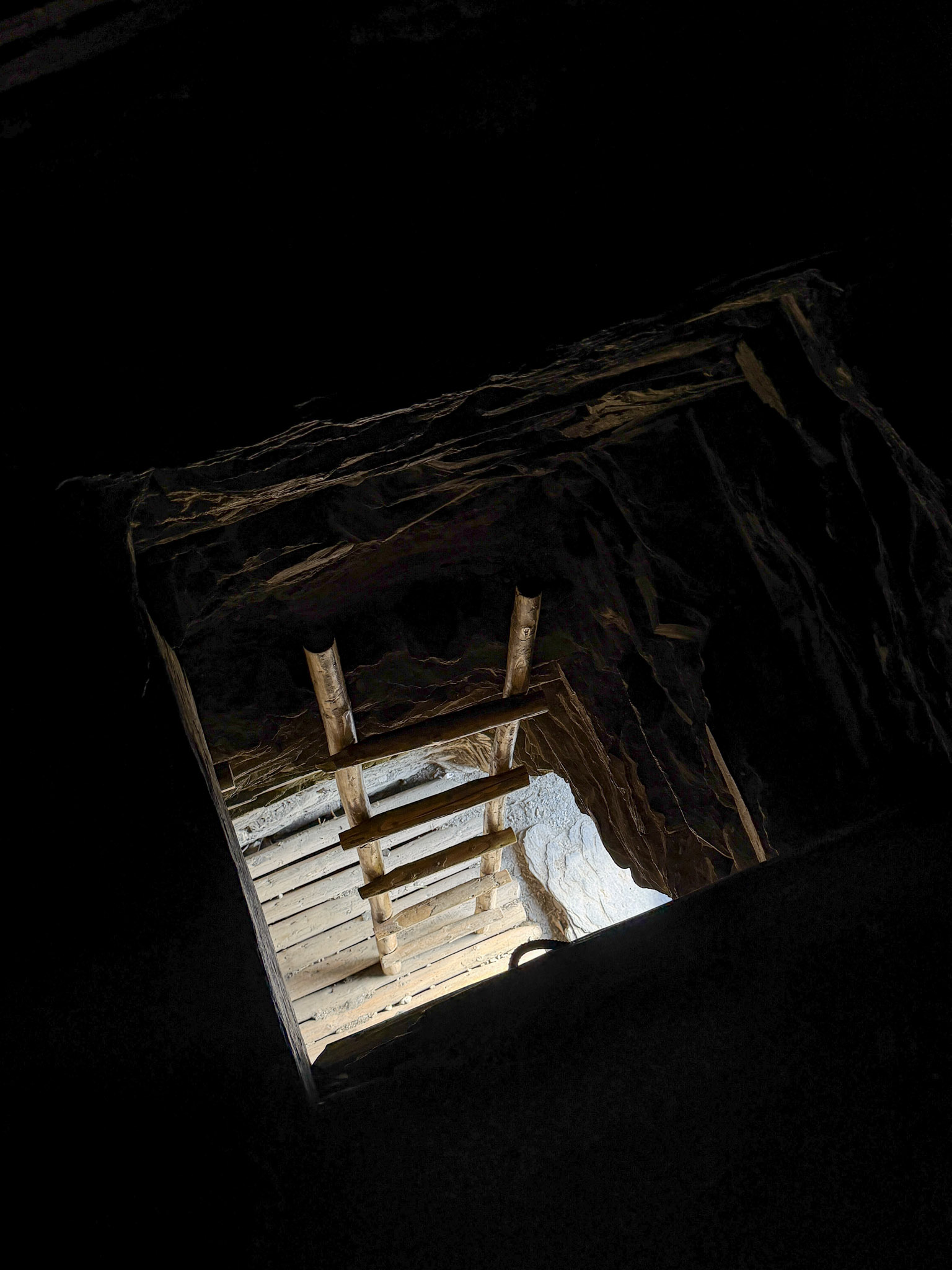
Queen Tamar Castle Tower Inside Stairs
3. See Lamaria Church (and Why It May Be Closed from 2026)
Lamaria is the small stone church on the hill at the far end of Zhibiani, with its own tower and Shkhara right behind it. It’s around a thousand years old, and the name is what Svans call the Virgin Mary. Before Christianity, Lamaria was a local goddess of fertility, and the two figures blended into one.
Inside there are faded medieval frescoes, but I didn’t see them. When we drove up in August 2026, the courtyard was open but the church itself was locked. Our guide explained why.
That summer, new rooms for the nuns were being built inside the monastery walls without a permit. Georgia’s heritage agency stopped the work, and a dispute between local residents and the church followed. The nuns left, and the church is now often closed.
The walk around the courtyard and the view are still worth the short drive or climb up. Ask your hotel or guide before you go whether the inside is open. If it is, cover your shoulders and knees, and women should cover their hair.
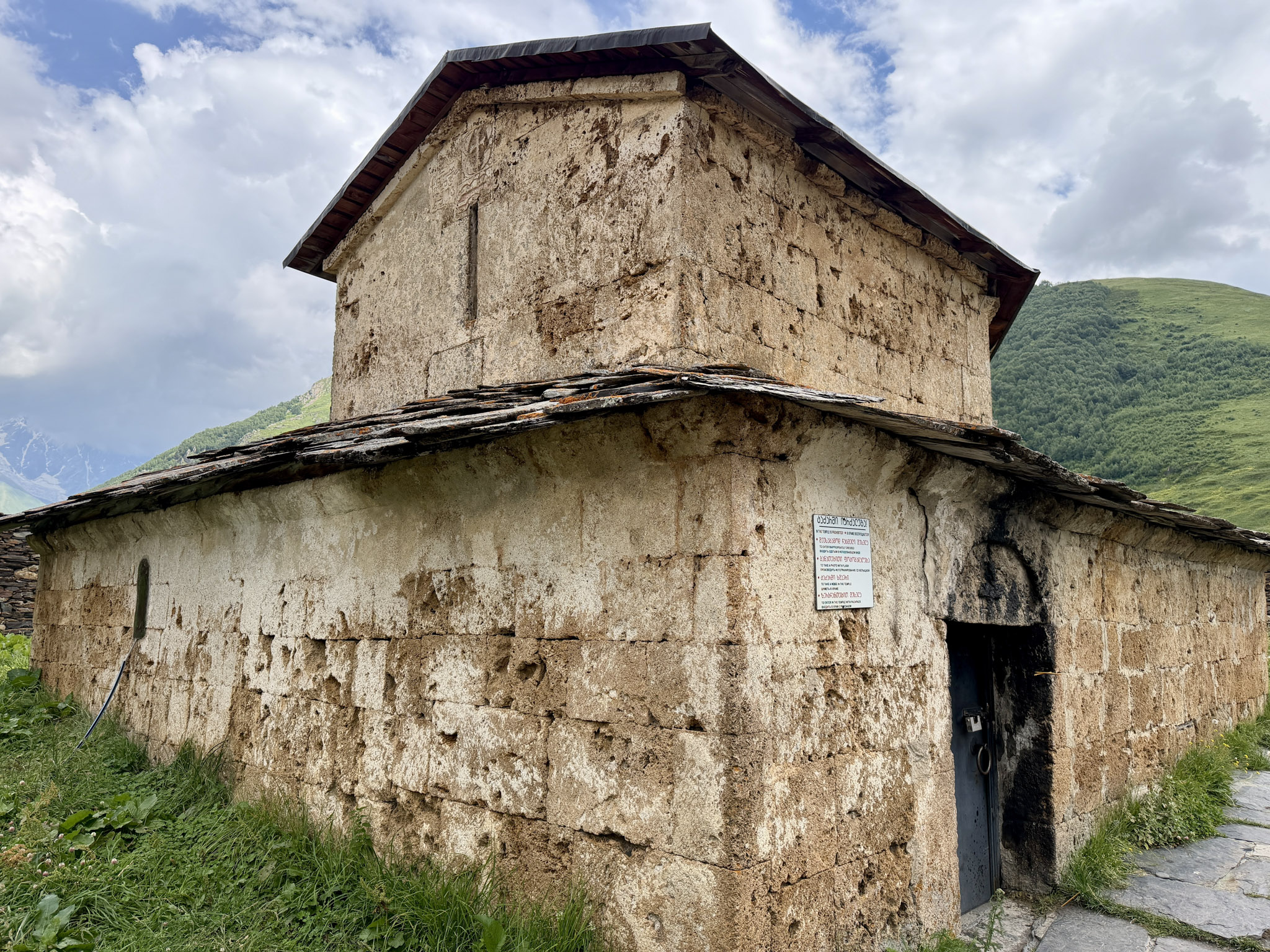
Lamari Church, Ushguli
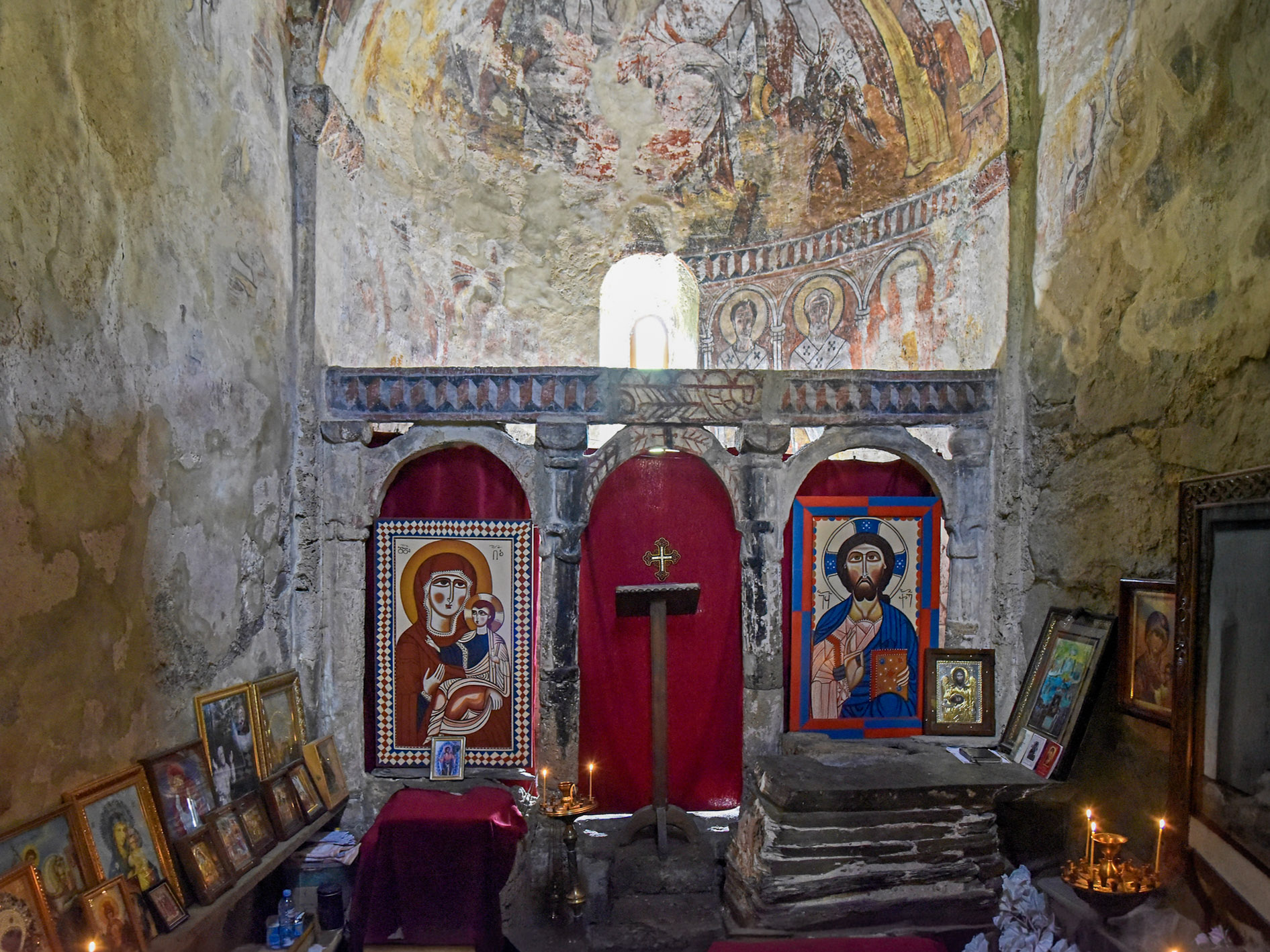
Inside Lamari Church (as seen by past visitors)
4. Ushguli’s Museums (and All Those “Museum” Signs)
Ushguli has two museums you’ll find on Google Maps. Ushguli Museum, in Chvibiani, is set up like an old Svan family home, with tools, furniture and wood carvings. The Chazhashi museum, in a tower near Queen Tamar Castle, keeps old icons and crosses from Ushguli’s churches.
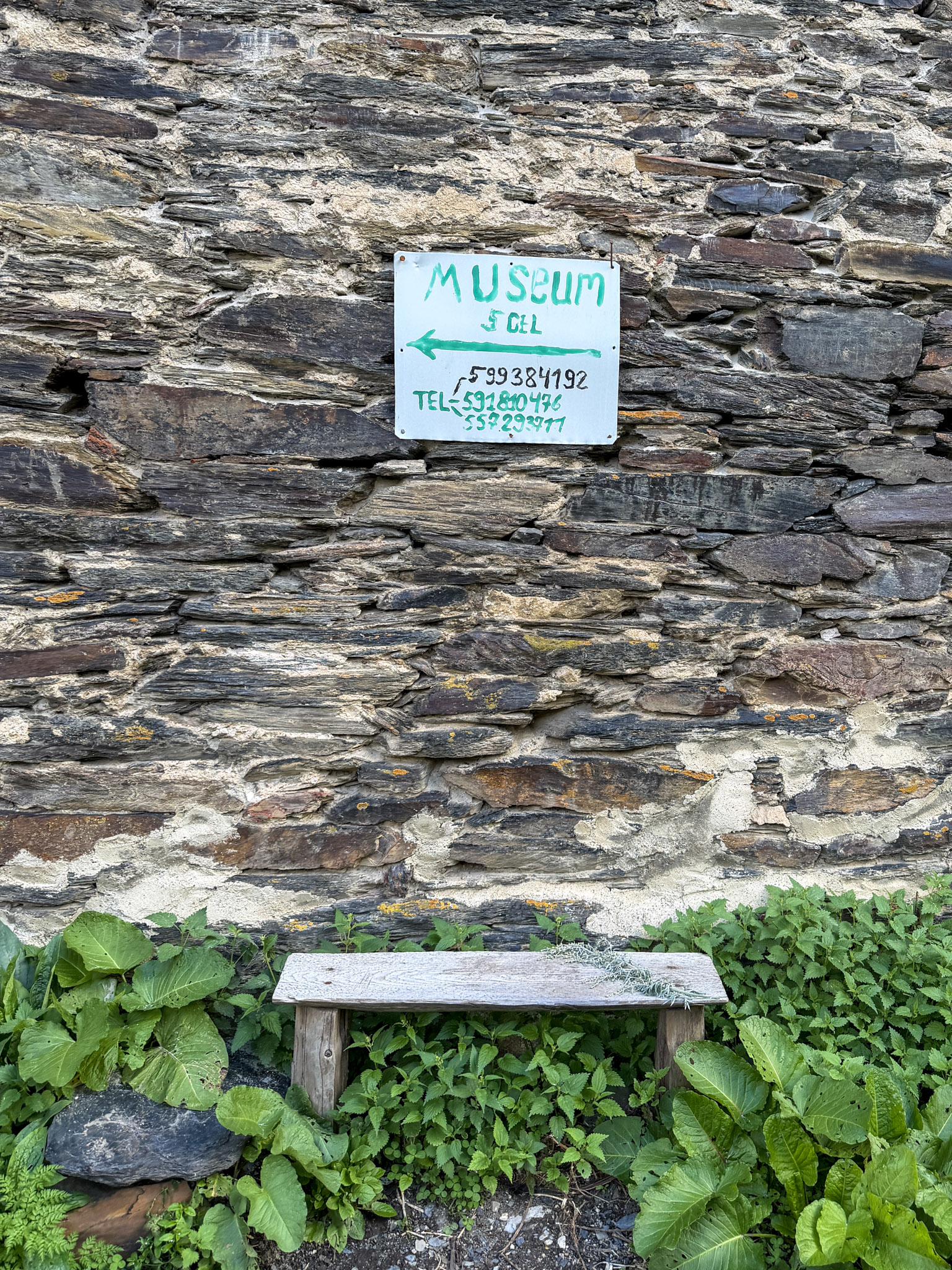
Walking around, you’ll see a lot more “museum” signs than that, often handwritten on a board by a front door. They’re families showing their own houses and objects to visitors, which is fine, they live off tourism up here. The price on the sign isn’t always the price you’re asked, though, and most charge somewhere between 5 and 20 GEL, cash only.
5. Hike to the Shkhara Glacier
The trail starts past Lamaria and follows the Enguri River up the valley to the glacier under Shkhara. You can do it two ways:
Full route from Ushguli: 19.8 km (12.3 mi) round trip, 542 m (1,778 ft) of elevation gain, most of a day.
Short route: a 4x4 takes you up the dirt road to the car park by the Shkhara Glacier Restaurant, and you walk the last part. About 4.5 km (2.8 mi) round trip, under 300 m (984 ft) of gain.
We did the short one, and it fit easily into the same day as the village. Route, trail conditions and photos are all in my guide to the Shkhara Glacier hike.
-
- Shkhara Glacier is just one of the many hikes worth doing around Svaneti. For the full ranking with the other four, see my guide to the 5 best hikes in Svaneti
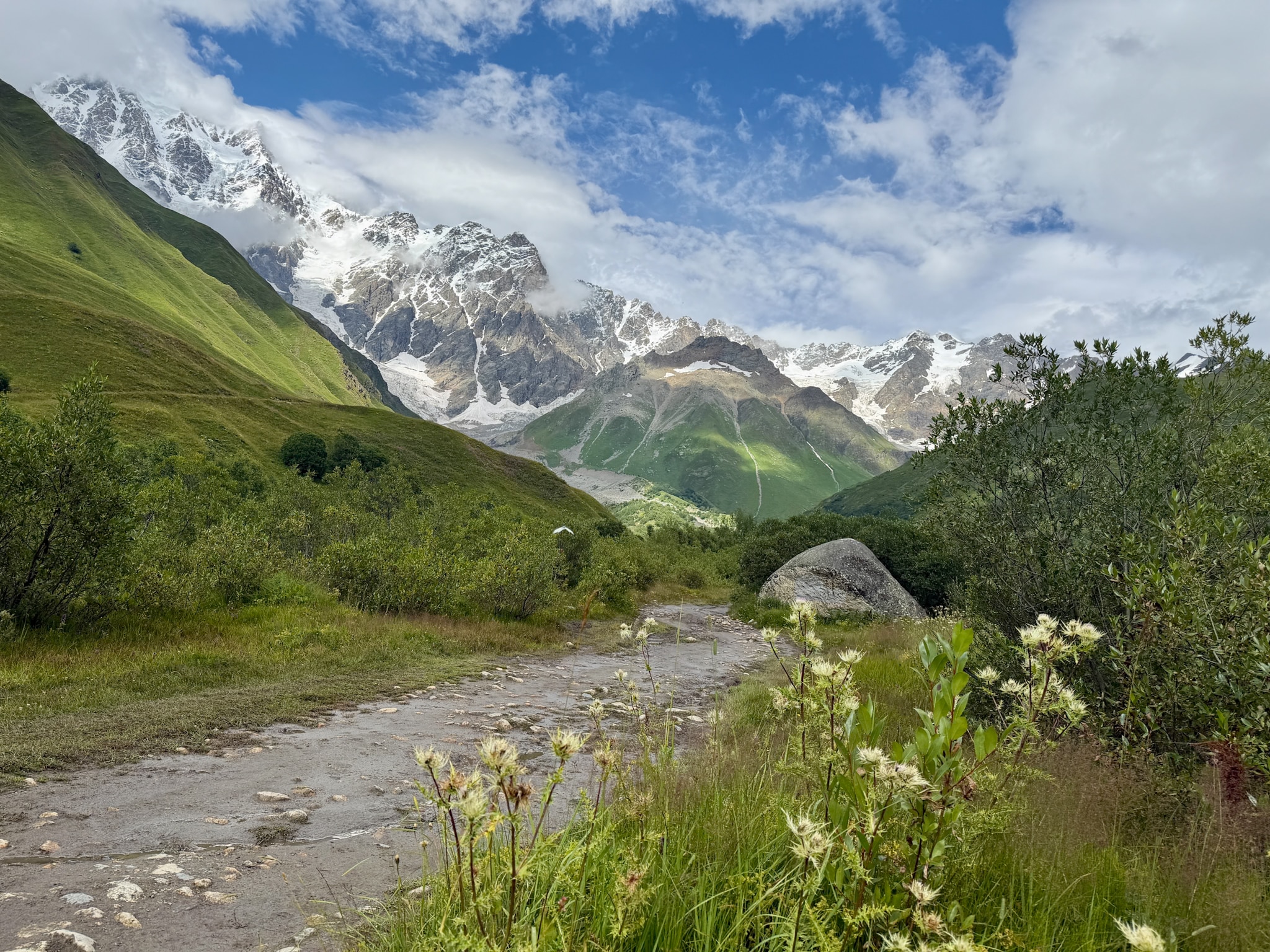
Shkhara Glacier Trail
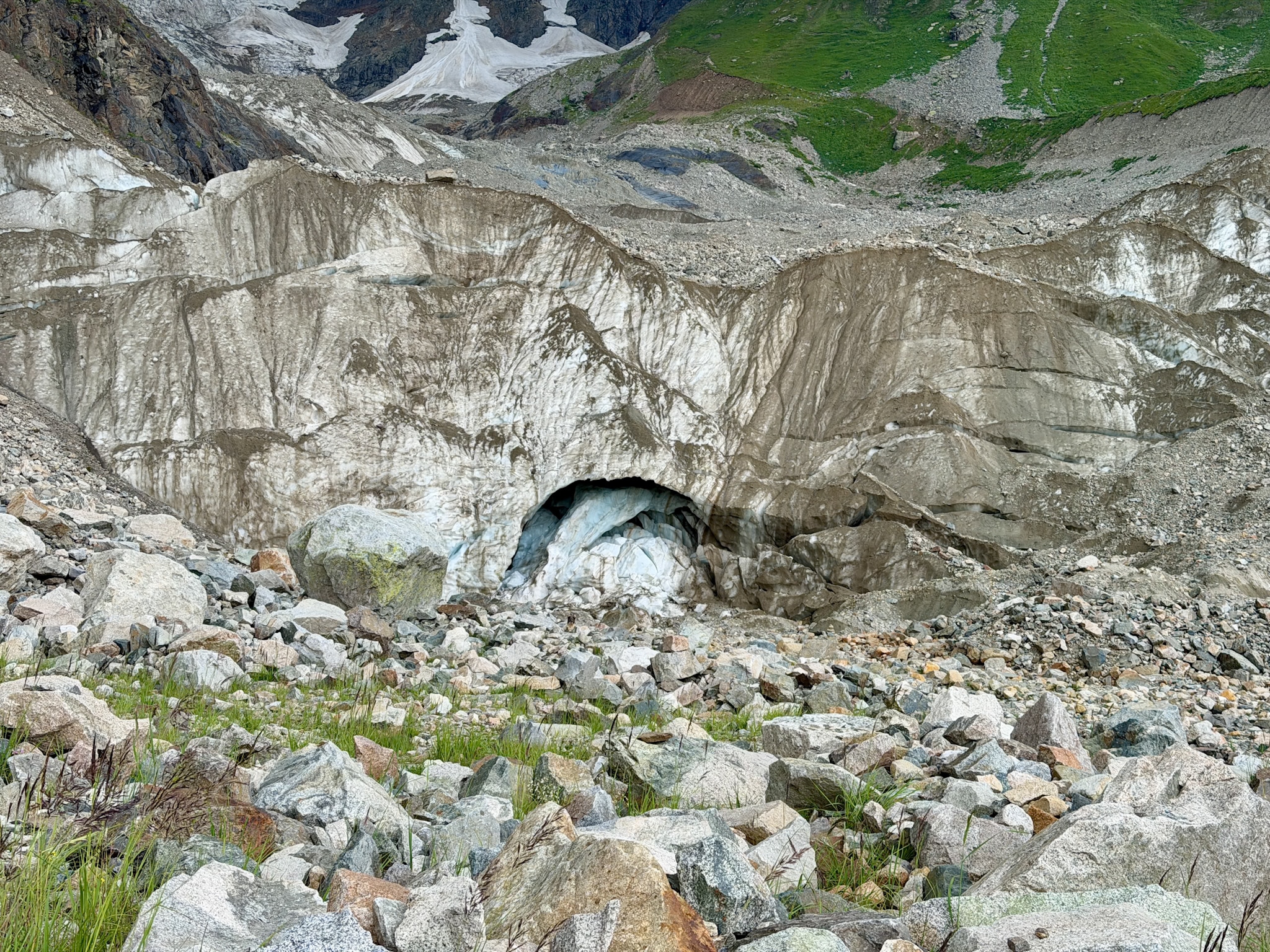
Arrival at Shkhara Glacier Hike
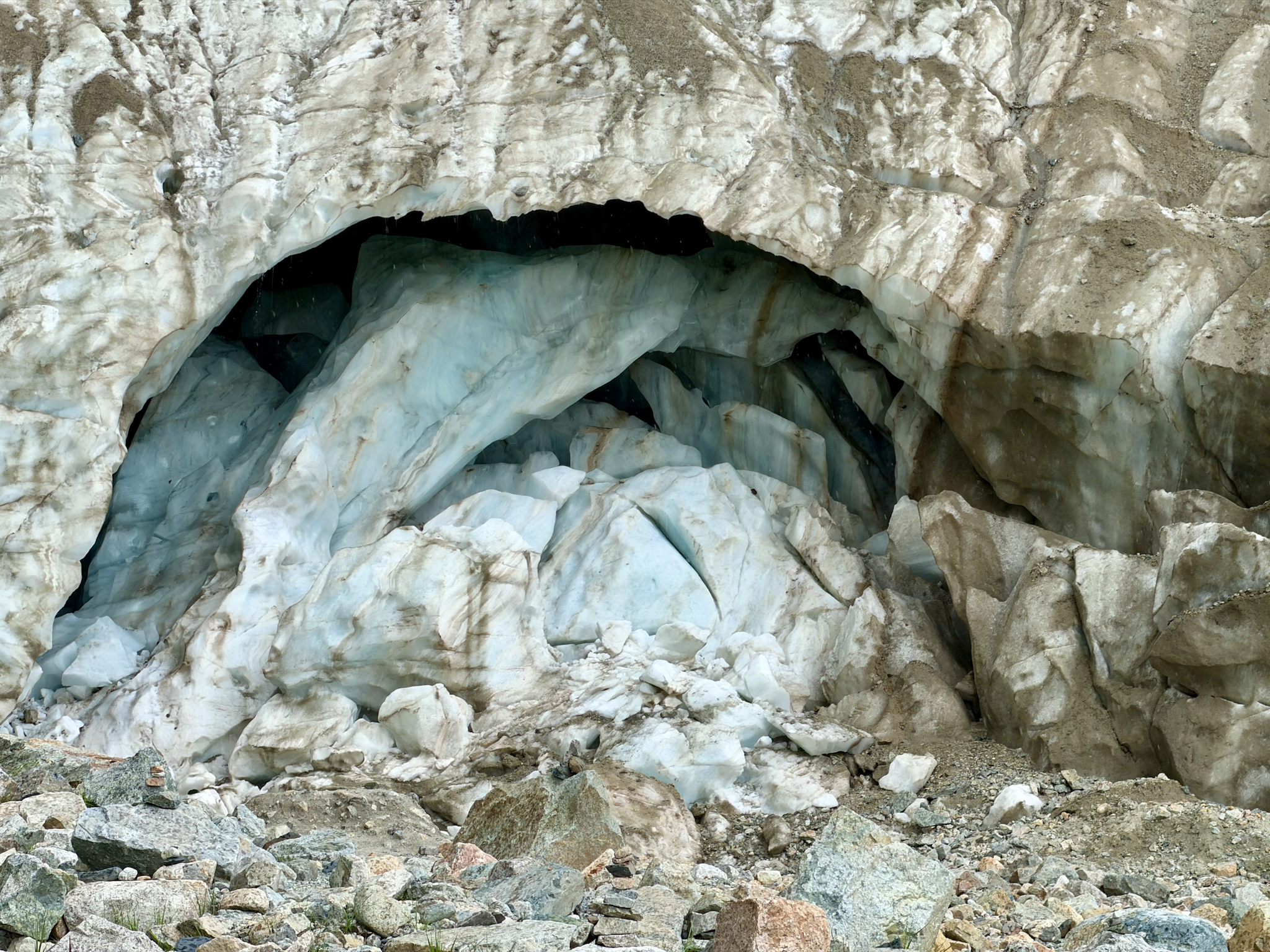
Shkhara Glacier Close Up
How to Get to Ushguli
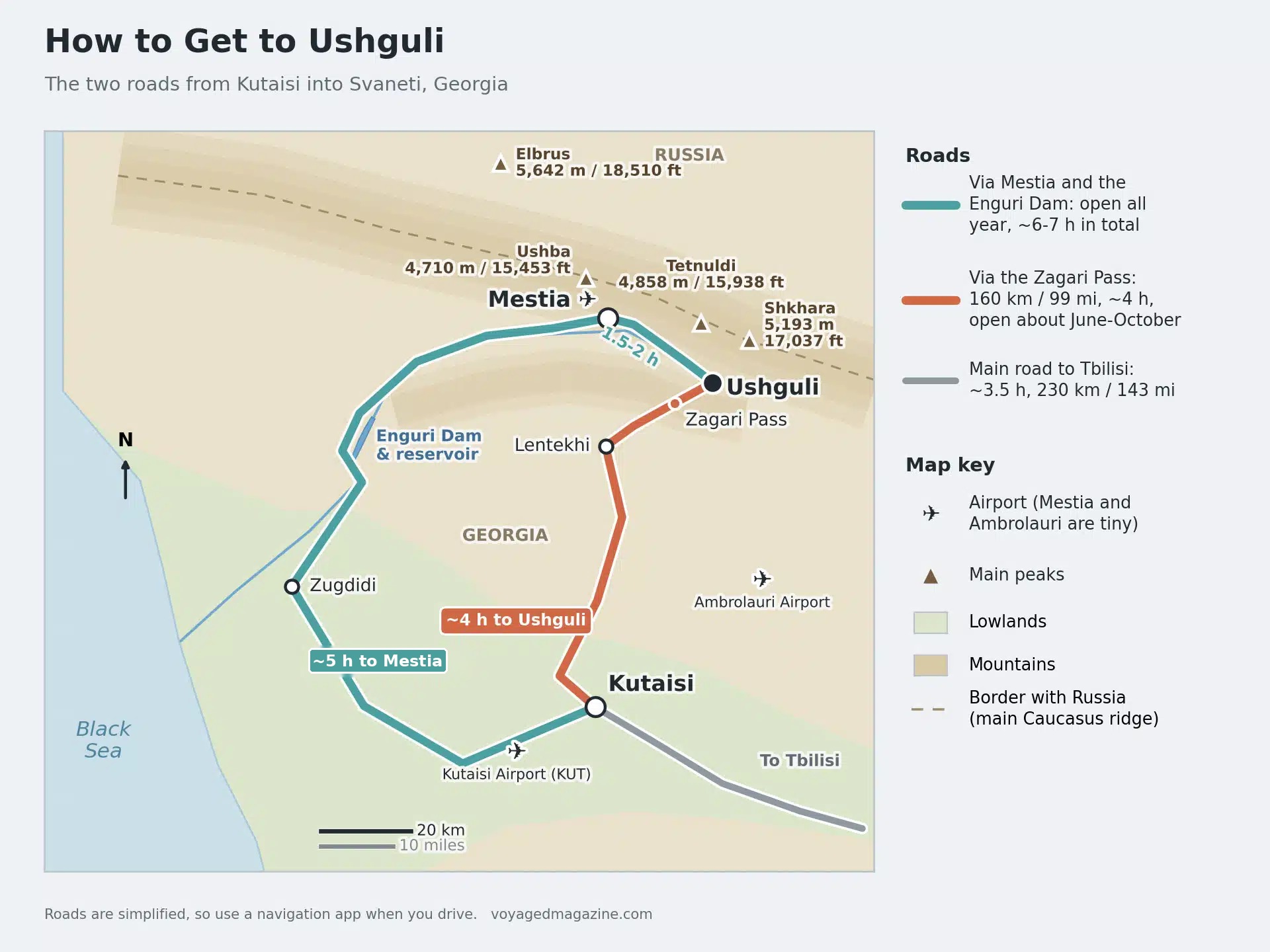
There are two roads into Ushguli. One comes from Mestia and is open all year. The other comes from Kutaisi over the Zagari Pass and is open only in summer. I arrived on the second and left on the first, and that loop is what I’d suggest if you have a car or a driver.
Thare are also other options, the map below clarifies the situation a bit more.
From Mestia
The road is 45 km (28 mi) long and now almost all paved or concrete, with a few short gravel stretches.
By car
Best for: anyone already driving around Svaneti.
- Time: about 1.5 hours one way
- Cost: just fuel
- Where to book: rental companies sometimes don’t allow Ushguli in their contracts, so ask before you sign. A 4x4 is essential.
By shared van
Best for: travelers on a budget without a car.
- Time: about 1.5 hours each way, with 3 to 4 hours in Ushguli while the driver waits
- Cost: about 40 to 70 GEL per person round trip, depending on the season
- Where to book: vans leave in the morning from Seti Square, Mestia’s main square, or your guesthouse can reserve a seat the day before
By day tour
Best for: first-timers who want stops along the way and someone to explain what they’re seeing.
- Time: about 6 hours in total
- Cost: around 35 to 55 USD per person
- Where to book: this day tour from Mestia to Ushguli
My pick is the day tour if you’ve never been, and the shared van if you just want the ride.
From Kutaisi Over the Zagari Pass
This is how I came in. The road climbs from Kutaisi through the Lentekhi valley to the Zagari Pass, at 2,620 m (8,596 ft), and comes down into Ushguli from the east. It’s mostly paved now, and open roughly June to October.
There’s no public transport on this road. You need your own car, a private driver, or a tour. We did it on the first day of my 3-day Svaneti tour with Megobari, which went on to Mestia that evening. Time: about 4 hours by car, more with photo stops
From Tbilisi
By car: you first get to Kutaisi and then Mestia (by car, by train and minibus). As mentioned above, in summer you can also drive to Kutaisi, and take the Zagari Pass road directly to Ushguli.
By a small plane: from an airport near Tbilisi to Mestia, and then continue from there.
All those options are in my guide on how to get to Mestia.
Ushguli Day Trip or Overnight?
A day was enough for the walk around Chazhashi, the tower, Lamaria and the short glacier hike. That evening we drove to Mestia, which has more hotels and restaurants and is a better base for the other hikes in the area. We stayed at the Lahili Boutique Hotel ⭐️⭐️⭐️⭐️, and the rest of my picks are in my guide on where to stay in Mestia. So, personally, I preferred Ushguli as a day-trip.
Sleeping in Ushguli makes sense in two cases:
- if you want to do the full glacier hike from the village and still have time for the rest, or
- if you’re finishing the four-day trek from Mestia, which ends here and is described in my guide to hiking in Svaneti.
Places to stay in Ushguli are mostly simple family guesthouses, often with shared bathrooms and dinner included.
When to Visit Ushguli
- June: the roads are open, but it rains often and there can still be snow higher up the valley, so trails get muddy.
- July and August: the warmest and busiest months. I was there in mid-August. It wasn’t cold, I didn’t feel the altitude, and the village was still quiet.
- September: probably the best month. The weather is usually stable and there are fewer people.
- October: a gamble. The first snow can arrive early, the Zagari Pass closes, and many guesthouses shut for the season.
- November to May: the road from Mestia is kept open, but avalanches close the last stretch to Ushguli for days at a time. Only go in winter with a local driver who checks the conditions that morning.
Tips Before You Visit Ushguli
- Fill up in Mestia. There’s no gas station in Ushguli or along the road from Mestia, and the Zagari Pass road is long and empty.
- Download offline maps. Signal drops in the lanes and disappears completely up the valley, so save the area on Google Maps before you leave Mestia.
- Bring snacks and water if you’re hiking. There are a few family cafes serving Svan food, like kubdari, a bread stuffed with spiced meat, but hardly any shops.
- Ask before photographing people or courtyards. Many lanes run right past people’s front doors.
FAQ
Is Ushguli the highest village in Europe?
It’s one of the highest villages in Europe where people live all year, but not the highest. That title usually goes to Bochorna, in Georgia’s Tusheti region, at about 2,345 m (7,694 ft), where one permanent resident was registered in 2014.
What does the name Ushguli mean?
It’s often said to come from the Georgian words for “fearless heart”. It’s a popular explanation more than a proven one, but it fits a valley that was hard to reach for centuries.
Are the Svan towers in Ushguli different from the ones in Mestia?
They’re the same kind of tower. Mestia has plenty too, plus a tower museum where you can see the inside of one set up as it used to be. Ushguli has fewer people around, and more towers packed into one small village under the mountains.
Can you visit Ushguli from Kazbegi or Tbilisi in a day?
No. Ushguli is a full day’s drive from Tbilisi, and Kazbegi is even farther. If you’re planning both mountain regions, I explain how to combine them in Kazbegi or Svaneti.
Is Ushguli worth it if you don’t hike?
The village itself, yes. The towers, the climb up Queen Tamar Castle and Lamaria only need short walks. The rest of Svaneti is mostly about hiking, though, so think about whether the long drive to get here is worth it for a single day of sightseeing.
Keep reading: