A city carved into limestone and still, somehow, lived in after nine thousand years. It gets a fraction of the attention it deserves. Consider this your essential guide to Matera, Italy's best-kept secret (at least for now).
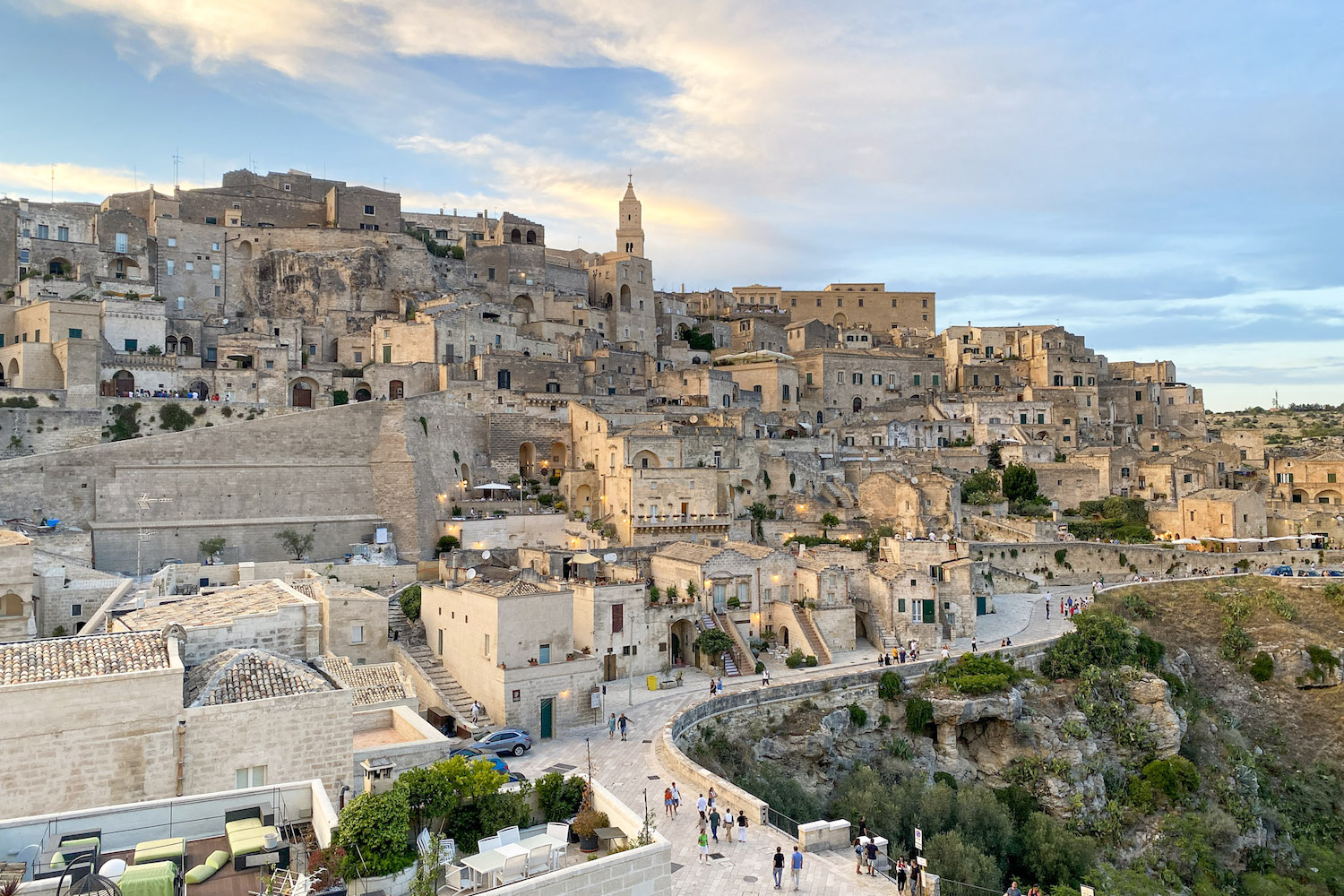
Matera sits on the far edge of Basilicata, right where the region meets the high heel of Italy. People have lived here since the Paleolithic era, and the city’s long history is visible in the way the Sassi developed over time. Matera has moved through periods of growth, decline and renewal, eventually returning to international attention in 2019 when it was named the European Capital of Culture.
That recognition helped put the city firmly on the map for travellers moving through Apulia or Southern Italy. When I visited, what stood out was how the historic centre still functions as an active district rather than a preserved attraction, a detail that makes exploring it far more interesting than expected. This guide brings together the practical information you need to plan your visit: what to see, where to stay and how to make the most of your time in one of Italy’s most peculiar destinations.
Getting Oriented: Matera’s Location
Map: Matera’s Position in Italy
Before planning the journey, it helps to understand Matera’s geography.
Matera sits in the sun‑baked heart of Southern Italy, in the region of Basilicata. It lies right on the border with Puglia, the same region that draws travelers to Bari’s seaside bustle, Alberobello’s iconic trulli, and the dramatic cliffs of Polignano a Mare.
In practical terms, Matera is a relatively easy hop from major hubs: about 40 miles from Bari, and roughly 150 miles from Naples and the Amalfi Coast. That makes it surprisingly accessible for a destination that feels worlds away from the usual tourist circuits. Below, you’ll find a map of Matera to pinpoint its exact location and get a sense of how it fits into the Southern Italian landscape.
How to Get to Matera
Step 1: Arriving in the Region (Airports & Major Hubs)
Bari Karol Wojtyła Airport (BRI): this is the closest and most convenient airport for Matera, with frequent flights and easy onward transport. Most visitors start their journey here. Other airports that work, depending on your itinerary:
- Brindisi Airport (BDS), farther, but manageable
- Naples Airport (NAP), longer transfer, though some direct long‑distance buses make it viable
If you’re already traveling within Italy, major hubs such as Bari Centrale, Naples, Rome, or Milan also serve as practical starting points for the final leg.
Step 2: Continuing to Matera (All Transport Options)
1. Direct Buses from Bari Airport
For a seamless arrival, the direct airport shuttles are hard to beat. Several companies including Flixbus, Terravision, and Omio through Sita Sud, run direct Bari Airport to Matera routes in roughly 75–90 minutes for less than 7€.
Buses depart from just outside the arrivals terminal, and tickets are easy to purchase online or at the airport.
2. Train via Bari Centrale (FAL Railway)
Matera isn’t connected to Italy’s national rail network, but the connection through Bari is reliable. This is slighly more complicated than just getting a direct bus, but in case you need a different approach, this is how you do it:
Step 1: Reach with taxi Bari Centrale A major Trenitalia hub with high‑speed and regional links from across the country.
Step 2: Transfer to the FAL Train The Ferrovie Appulo Lucane (FAL) station sits just outside Bari Centrale, across Piazza Aldo Moro. Do note that FAL trains don’t run late at night and have reduced service on Sundays, so checking the timetable is essential.
3. Long‑Distance Buses from Other Cities
If you’re already on the move within Italy, you can reach Matera directly from several major cities. Routes operate from Rome, Naples, Milan (including overnight services), Bologna, Florence, Brindisi Bari (city center). Flixbus, Terravision and Omio are again the main operators. These buses are often direct and surprisingly efficient.
4. Driving to Matera
A rental car offers the most flexibility, especially if you plan to explore Basilicata or continue into Puglia. However, it's important to know that Matera’s historic districts, the Sassi, are a restricted‑traffic zone (ZTL). You can’t drive into the old town, but several private garages just outside the ZTL offer shuttle services and pick‑up and drop‑off. This makes staying in the Sassi entirely manageable, even with a car.
5. Private Transfers
For late arrivals, groups, or travelers who prefer a smooth door‑to‑door experience, private transfers operate from Bari Airport, Bari Centrale, Brindisi, and Naples. It’s the most comfortable option, and often the quickest.
Best Things To Do in Matera, Italy
For such a tiny town, Matera offers a remarkable collection of things to see and do, ranging from cultural to gastronomical.
1. Explore the 'Sassi' districts
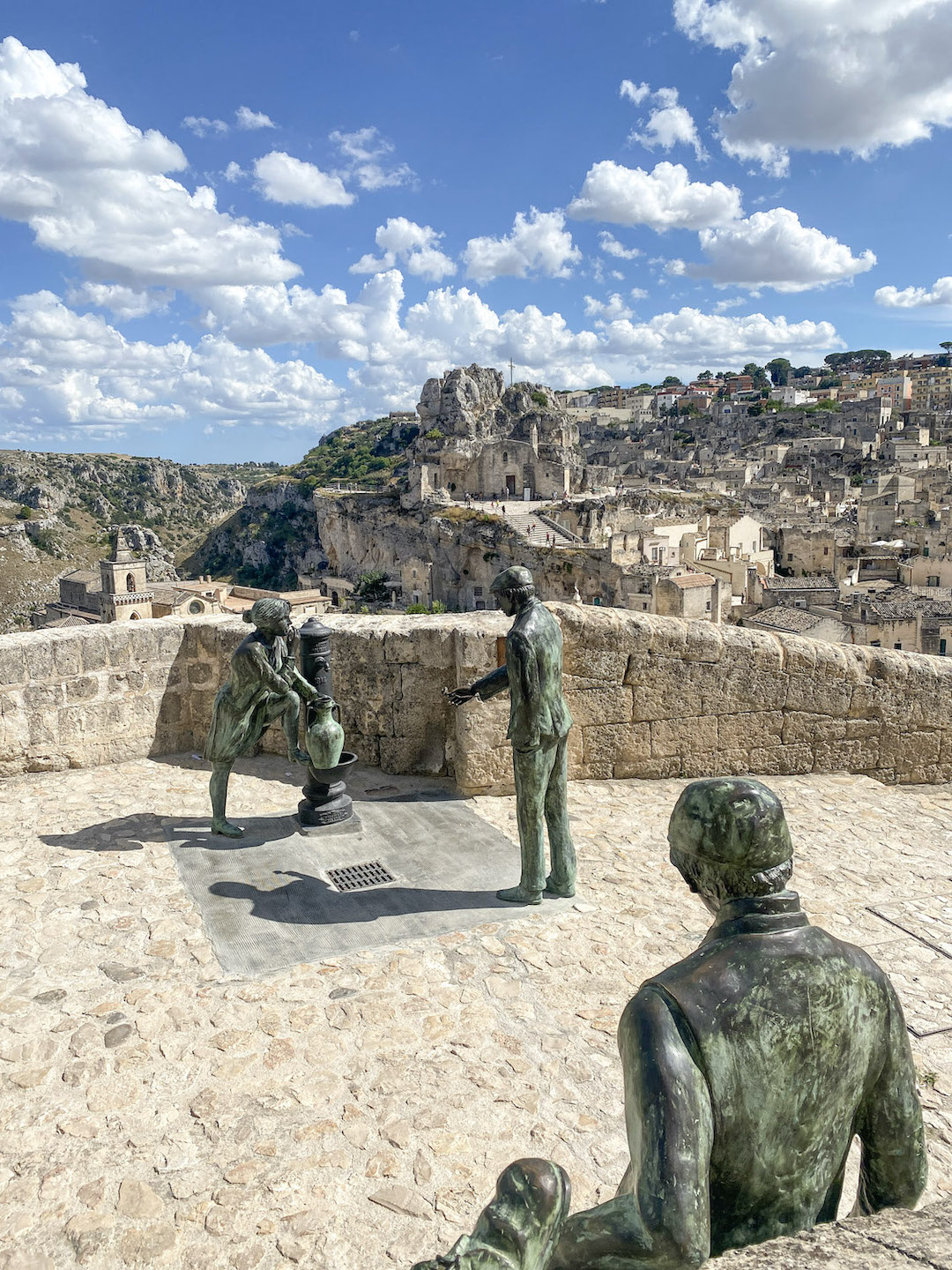
If there’s one experience that defines Matera, it’s wandering through the Sassi, the city’s two ancient cave districts: Sasso Caveoso and Sasso Barisano. Together, they form a sprawling network of more than 1,500 cave dwellings, carved into the soft limestone over the course of 9,000 years. This is one of the oldest continuously inhabited urban settlements in the world, and you feel that weight of time the moment you step into the alleys.
The best way to explore is simply to walk. The Sassi aren’t designed for logic, they’re a vertical tangle of staircases, terraces, and stone lanes that seem to fold into one another. Getting lost is part of the experience, and it’s often how you stumble upon the most atmospheric corners.
Many caves have been restored and repurposed into boutique hotels, wine bars, and design-forward restaurants, but plenty remain untouched. To understand that story properly, start at Casa Noha, a former family home turned cultural center. A 25‑minute multimedia installation walks you through Matera’s rise, collapse, and rebirth to becoming a UNESCO World Heritage Site in 1993.
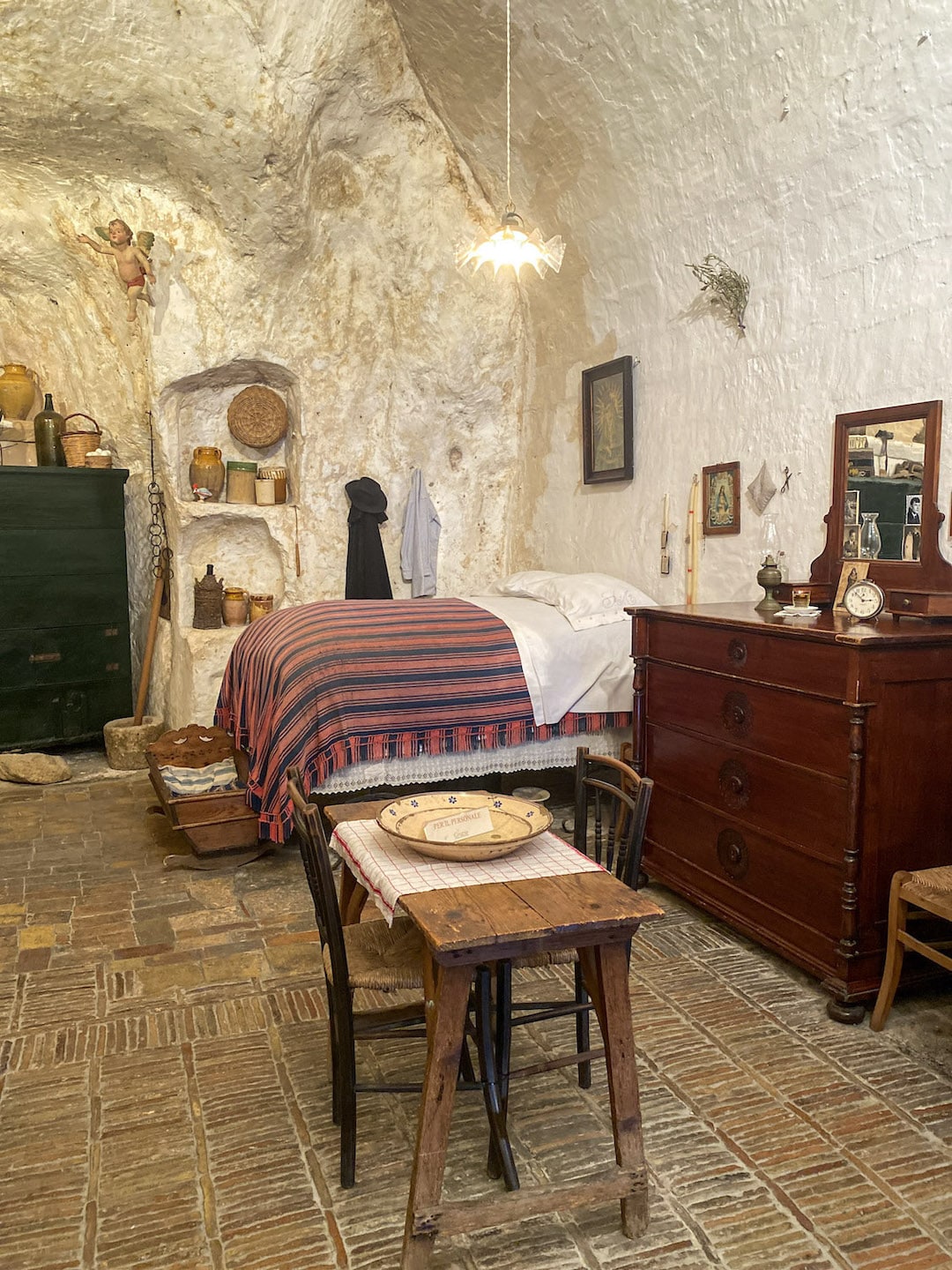
Then head to Casa Grotta in Vico Solitario. It’s a reconstructed 18th‑century cave dwelling that shows how a typical family (often six to ten people) lived in a single chamber alongside their animals. It’s one of the clearest, most tangible windows into Matera’s past.
Worth adding if you have a bit more time: Palazzo Lanfranchi, Matera's National Museum of Medieval and Modern Art, reopened after a full renovation with new rooms dedicated to painters Carlo Levi and Luigi Guerricchio. It sits right in the historic center and rarely gets the crowds the Sassi do.
2. Visit The Rupestrian Churches
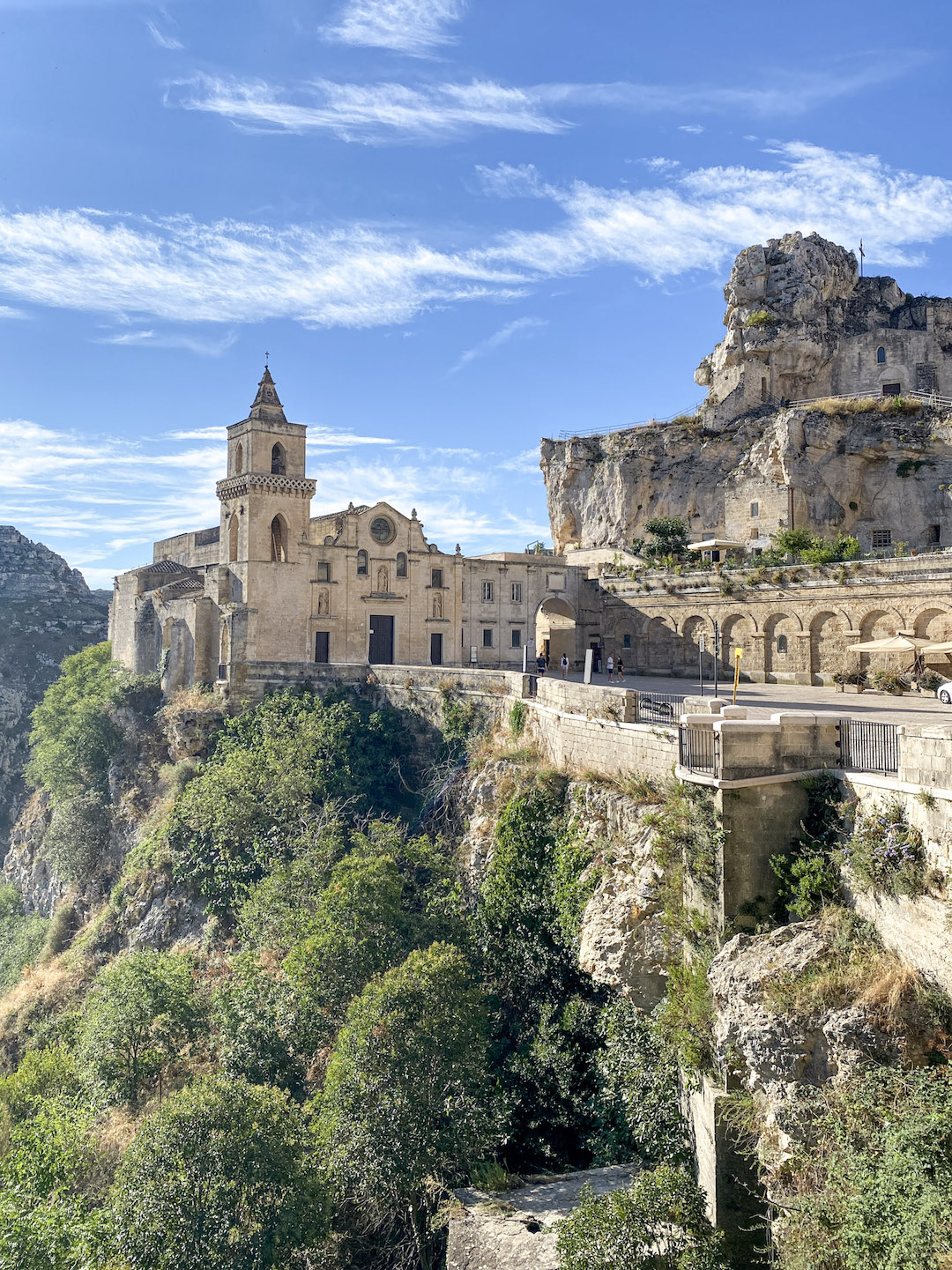
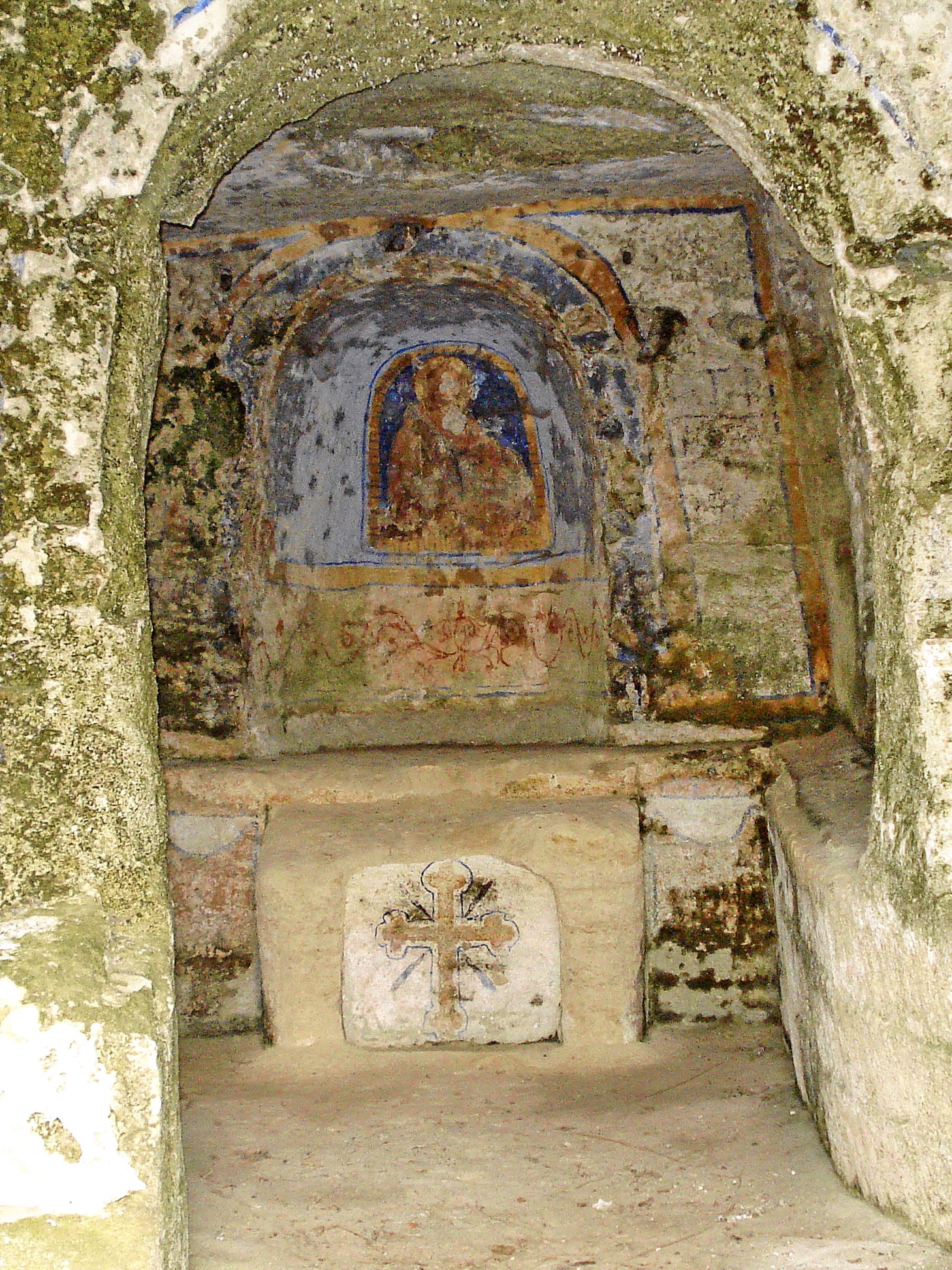
One of the most surprising things about Matera is how many churches aren’t built on the city, but carved into it. These are the rupestrian churches, cave sanctuaries excavated between the 8th and 13th centuries by monks fleeing persecution during the Byzantine era. More than 150 of them survive in and around Matera, making this one of the largest concentrations of rock‑cut religious sites in Europe.
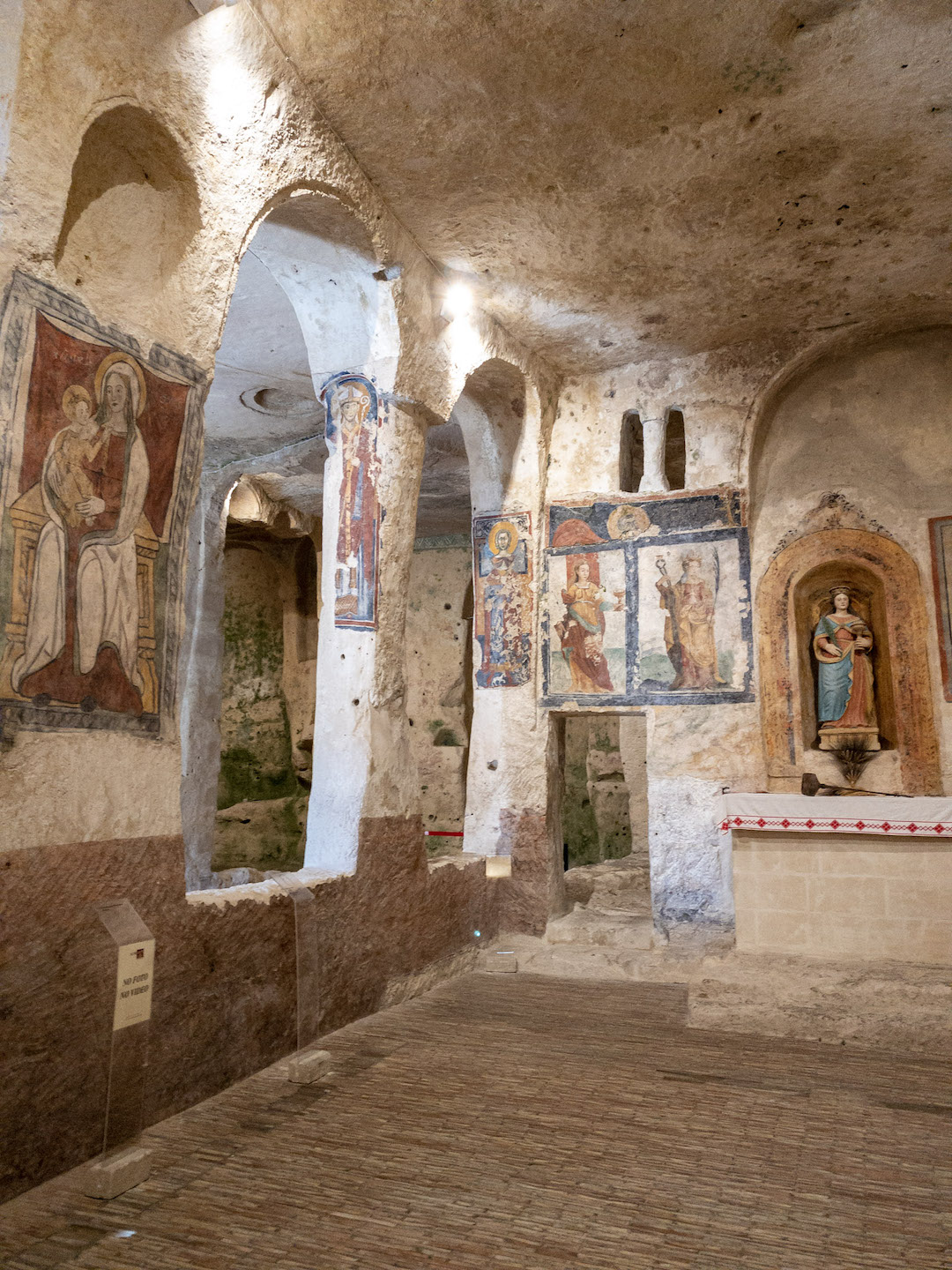
Inside, you’ll often find faded but still extraordinary frescoes: deep blues made from lapis lazuli, ochre halos, and Byzantine‑style faces that have somehow survived centuries of humidity, smoke, and abandonment. Many churches were later expanded, reused, or rediscovered only in the last few decades, which adds to the sense that Matera’s history is still being unearthed. A few highlights worth seeking out:
- Chiesa Madonna delle Virtù & San Nicola dei Greci (Sasso Barisano). These two interconnected cave churches form one of the most atmospheric complexes in the Sassi. The interiors stretch across multiple chambers, with frescoes dating back nearly a thousand years.
- Chiesa di Santa Maria d’Idris. Perched dramatically on top of a rocky spur above Sasso Caveoso, this church is half‑carved, half‑constructed, and offers one of the best views over the district. Its fresco cycle includes works from the 12th and 15th centuries, a reminder of how long these spaces remained active.
3. Cross the Canyon to Murgia National Park
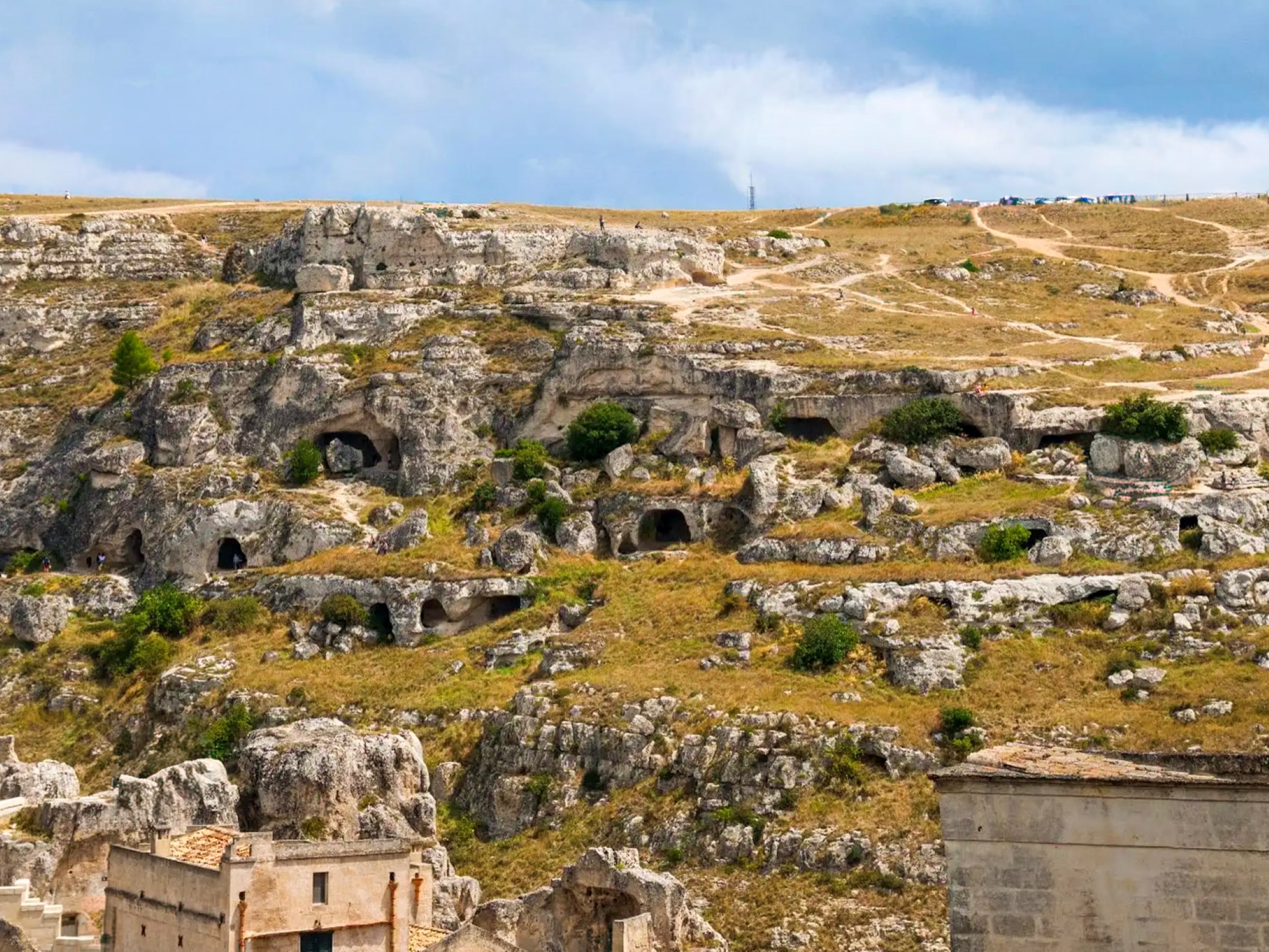
One of the most rewarding things I did in Matera was leaving the city entirely, or at least, crossing the canyon that defines it. On the opposite side of the Gravina ravine lies Parco della Murgia Materana, a protected plateau where time feels strangely elastic. The landscape is raw and wind‑carved, dotted with wild thyme, limestone boulders, and prehistoric caves that predate the Sassi by millennia.
The walk from the Sassi to the Belvedere Murgia Timone viewpoint takes about 45–60 minutes, depending on how often you stop to take photos. The route includes a small suspension bridge and a short climb, but nothing too technical. From the top, Matera looks almost unreal, a honey‑colored city clinging to the cliff, with the cathedral spire rising above the caves like a compass needle.
This is also where several rupestrian churches hide in plain sight, some with frescoes from the 9th–12th centuries. If you’re visiting in summer, go early or late; the plateau heats up quickly, and the light at golden hour makes the Sassi glow.
4. Visit Matera’s Underground Cisterns
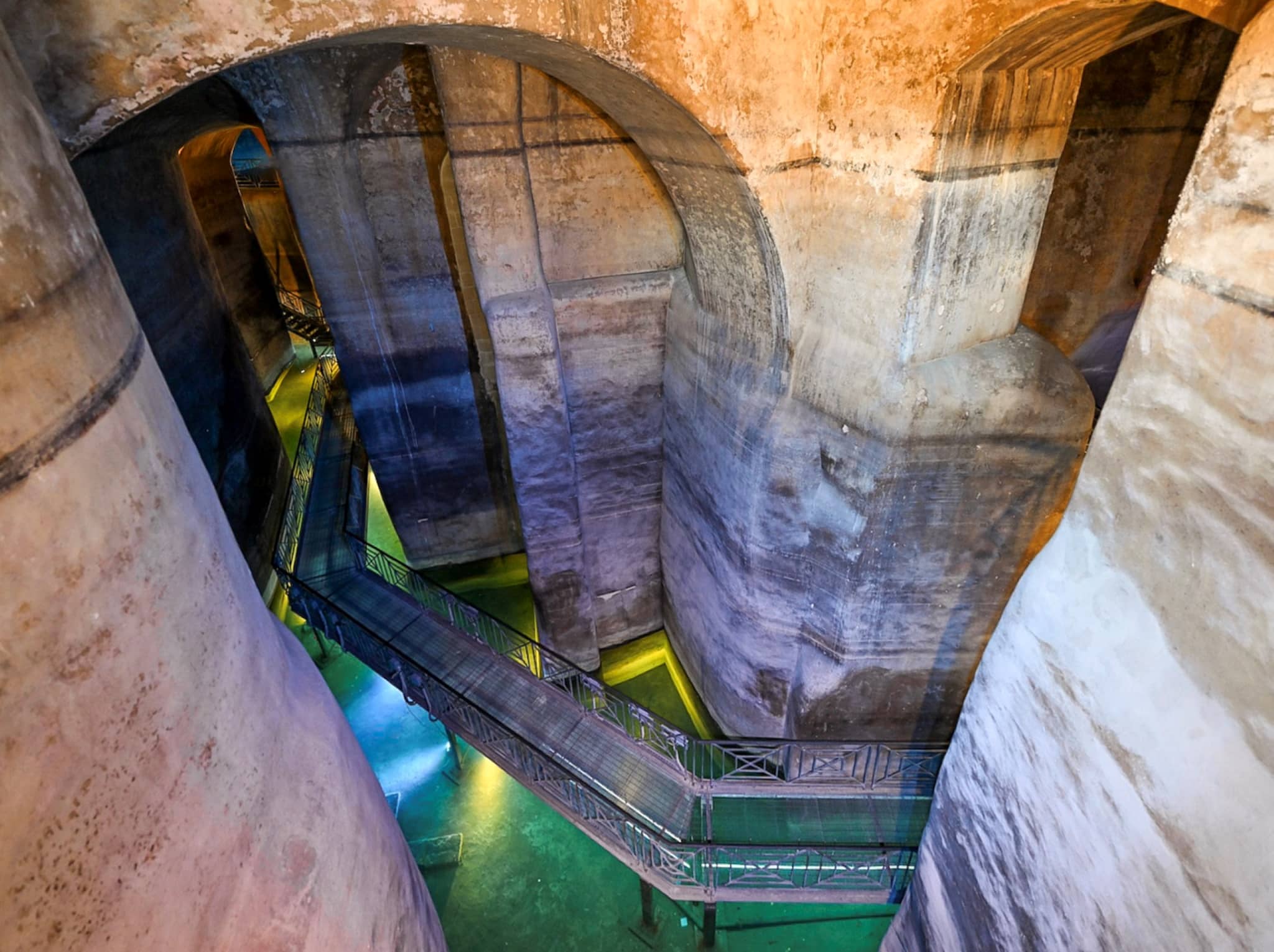
Matera’s history is carved into the cliffs and it also runs beneath your feet. The city’s ancient water‑collection system is one of the most ingenious in Europe, and you can see it up close at Palombaro Lungo, the massive underground cistern beneath Piazza Vittorio Veneto.
Built in the 16th century and expanded over time, the cistern once held millions of liters of water and supplied entire neighborhoods. Today, you can walk along metal walkways suspended above the water line and see the hand‑carved walls that once kept the city alive.
It’s a short visit, about 20 minutes, but it adds a fascinating layer to Matera’s story and helps explain how people survived in such a harsh environment for centuries.
5. Visit the Crypt of the Original Sin
If Matera’s cave churches are impressive, the Crypt of the Original Sin is something else entirely, a place that feels almost too fragile and too important to exist. Locals call it the “Sistine Chapel of the Rupestrian World,” and for once, the nickname isn’t an exaggeration.
The crypt sits about 10 km outside Matera, hidden in a ravine you’d never look at twice unless you knew what was inside. It was discovered by chance in 1963 by a group of farmers, and what they found was astonishing: a cycle of frescoes painted around the 9th century, depicting scenes from Genesis with a level of color and detail that shouldn’t have survived 1,200 years of humidity and neglect.
Visits are controlled with small groups, timed entries, and a short multimedia introduction that helps you understand the iconography before you step inside. The frescoes are vivid: deep reds, soft greens, expressive faces, and a serpent that curls across the wall with unsettling elegance. You only spend about 20–25 minutes inside the crypt, but it stays with you long after.
You’ll need a car or a guided tour to reach it, but it’s absolutely worth the detour.
FAQs About Matera
Where To Eat in Matera?
Matera’s food scene is deeply tied to its agricultural roots, and tasting your way through the city is as essential as visiting its caves. Start with Pane di Matera IGP, the city’s famous bread made from local durum wheat and natural yeast. Bakeries bake it in huge, horn‑shaped loaves that stay fresh for days — a tradition born from necessity when families baked only once a week.
For a full meal, look for restaurants set inside former cave dwellings. Many serve dishes like orecchiette with cruschi peppers, lamb cooked in clay pots, or cavatelli with chickpeas, all rooted in Basilicata’s rural cuisine. Restaurants I personally tried during my visit and highly reccomend:
- Trattoria del Caveoso (Sasso Caveoso, traditional) Approx. 35–50€ per person for a full meal without expensive wine. Classic Lucanian dishes in a cave setting, consistently busy and still very much a reference point in the Sassi.
- La Lopa (Sassi, traditional) Approx. 35–50€ per person. Family‑run trattoria with handmade pasta and slow‑cooked meat dishes; atmosphere is intimate, service unhurried, and it’s often recommended by locals for a “proper” Matera dinner.
- Baccus (Sassi, rustic‑modern) Approx. 35–50€ per person. A step up in presentation, with local ingredients treated in a slightly more contemporary way; good if you want something traditional but a bit more polished than a basic trattoria.
- Osteria al Casale (just outside the center, rustic). Approx. 35–50€per person. Generous plates, countryside‑style cooking (legumes, lamb, seasonal vegetables). Feels less touristy than many Sassi spots and works well when the historic center is packed.
- Vitantonio Lombardo Ristorante (Sasso Barisano, 1 Michelin star) Approx. 110–160 € per person for tasting menus, depending on length and wine. Matera’s destination restaurant, inside a dramatic cave space; highly creative reworking of Basilicata’s ingredients and usually booked well in advance.
If you want something more immersive, several local farms offer bread‑making workshops or olive‑oil tastings, usually lasting 1.5–2 hours. It’s a great way to understand Matera beyond the postcard views.
Where To Stay?
If you’re spending the night in Matera, the best way to understand the city is to actually sleep inside the Sassi. Many of the old cave dwellings have been restored into modern, atmospheric rooms that keep the original stone architecture but add the comforts you actually want after a day of climbing staircases.
Luxury cave hotels
- Sextantio Le Grotte della Civita (Approx. 300–600 € per night) One of Matera’s most iconic stays: minimalist cave rooms lit by candles, thick stone walls, and a monastic calm that feels almost cinematic. Breakfast is served in a former rock‑cut church. It’s the splurge that people remember years later.
- Sant’Angelo Luxury Resort (Approx. 250–450 € per night) A polished, design‑forward cave hotel spread across multiple restored dwellings in Sasso Caveoso. Rooms mix stone architecture with contemporary touches, and many have terraces overlooking the canyon.
- Corte San Pietro (Approx. 220–400 € per night) A beautifully restored cluster of cave rooms arranged around a quiet courtyard. The style is understated and warm, with thoughtful details and a strong sense of place. A good choice if you want luxury without the “showpiece” feel.
Mid‑range cave stays
- La Corte dei Pastori (Approx. 120–250 € per night) A small, family‑run property with one of the best shared terraces in Matera. The view over Sasso Caveoso is the reason people book — and the reason they stay longer than planned.
- Le Dimore dell’Idris (Approx. 120–220 €) per night A perfectly located cave hotel at the foot of the rock‑church of Santa Maria d’Idris. Rooms are simple but atmospheric, and you step out directly into one of the most photogenic corners of the Sassi.
- Locanda di San Martino Hotel & Thermae (Approx. 120–220 €) per night A reliable mid‑range option with a unique perk: access to a spectacular underground spa built inside a series of vaulted stone chambers. Rooms range from traditional cave suites to more conventional spaces.
Best Time to Visit Matera
Matera is technically a year‑round destination, but the city feels at its best in the shoulder seasons. From April to June and September to early November, temperatures usually sit between 18°C and 28°C, the light is beautiful, and the Sassi are busy without being overwhelming. These are the months when you can wander the staircases for hours without overheating.
August is the month to avoid if you can. Temperatures regularly climb above 35°C, the heat settles into the rock like an oven, and the narrow alleys trap the warmth well into the evening. Add the Ferragosto festivities crowds and the city can feel more exhausting than magical.
Winter has its charm, with crisp air, quiet streets, and noticeably lower prices, but days are short, temperatures hover around 5–12°C, and some smaller sites reduce their hours. It’s peaceful, just not the Matera most travelers picture. Rain is part of the equation too. Matera gets most of its rainfall between November and February, often in short, heavy bursts that make the stone steps slick. Spring showers are common but usually brief; summer is mostly dry.
Is Matera Worth Visiting?
If you’re the kind of traveler who gets restless with the usual Italian circuit (Florence, Rome, Venice, repeat) Matera hits differently, because it doesn’t resemble any other city. The scenery is dramatic, the architecture is ancient in a way that feels almost impossible, and the atmosphere is unlike the polished hill towns most travelers know.
Matera is absolutely worth visiting, and if you need a few hard facts to back that up, here are they are:
- It’s among the oldest continuously inhabited cities in the world. Archaeological research places human presence here at over 10,000 years, putting Matera in the same category as Aleppo and Jericho. This fact is supported by excavations in the surrounding ravines and early cave settlements.
- Its layout has made it a consistent film location. Matera has been used as a stand‑in for ancient Jerusalem in The Passion of the Christ (2004), Ben‑Hur (2016) and Mary Magdalene (2018). More recent productions like Wonder Woman (2017) and No Time to Die (2021) chose the Sassi for their distinctive topography and preserved historic fabric.
- It remains one of Italy’s few destinations that hasn’t been reshaped by mass tourism. Matera is better known than it used to be, but it hasn’t reached the saturation levels of places like Alberobello or the Cinque Terre. Early mornings are quiet, evenings feel local, and the city still operates at its own pace. With the amount of attention it receives each summer, that balance may change.
If you’re considering a trip, 2026 is a good year to go.
Is One Day Enough to See Matera?
Many travellers visit Matera as a day trip from Apulia, since the city sits roughly one to two hours away depending on where you start. With one full day, you can cover the historic centre on foot, visit several churches, and stop at the main viewpoints without rushing through everything.
What you won’t realistically fit into a single day are the experiences that require more time: a guided walk in the Murgia Regional Park, which involves crossing to the opposite side of the canyon, or a proper visit to the Crypt of the Original Sin, which deserves more than a quick look.
Two full days give you a better balance. You can explore the Sassi at a comfortable pace, visit the cave museums, cross to the Murgia, and still have time to enjoy the city in the early morning and evening, when it’s at its most atmospheric.
If, however, one day is all you have, you’ll still get a strong sense of Matera.