My guide to Tbilisi’s seven defining brutalist buildings, based on a day spent tracking most of them down, with directions and tips for each stop.
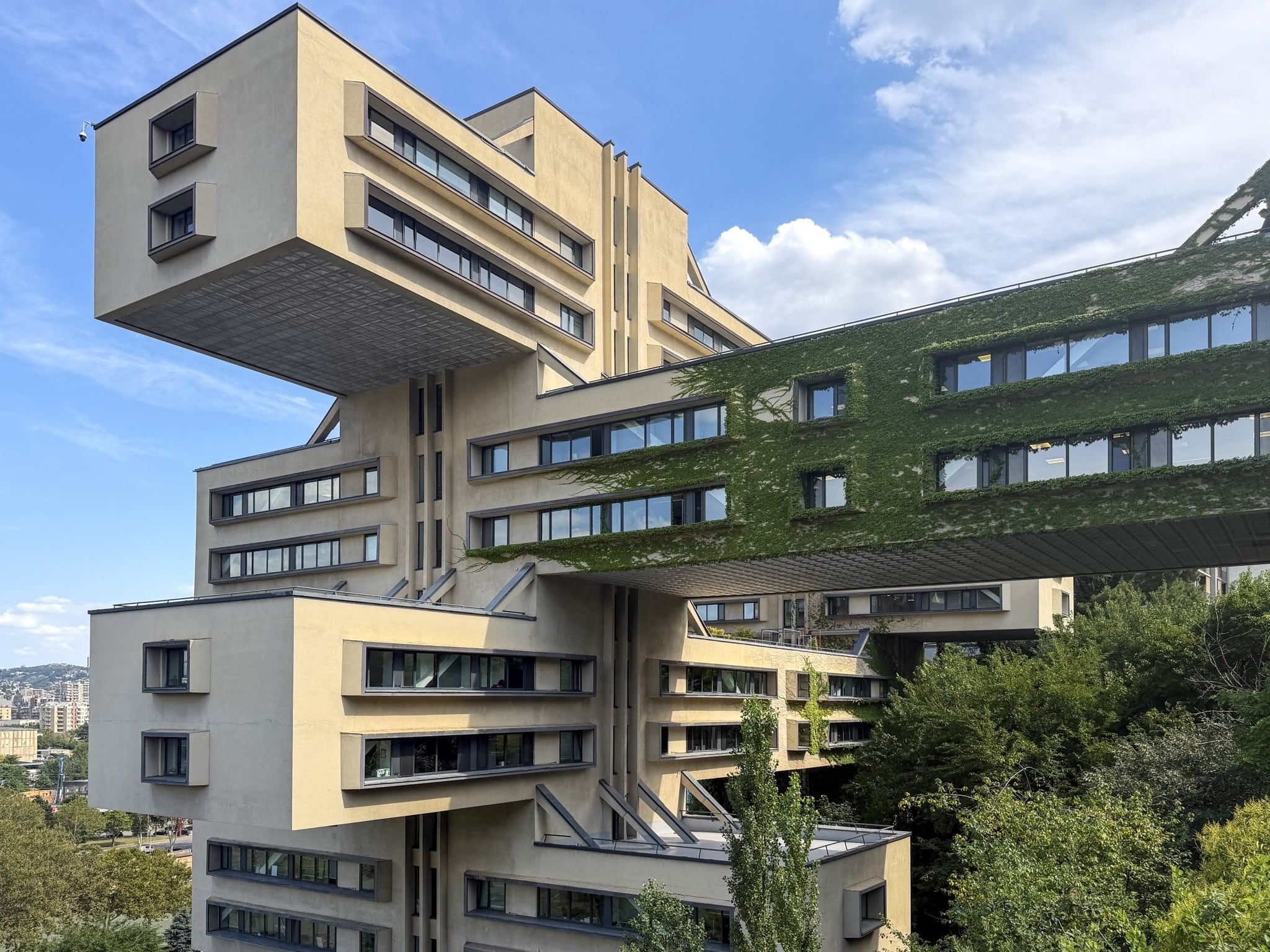
Tbilisi is covered in brutalist architecture, all this leftover Soviet-era concrete sitting heavy and blocky in the middle of otherwise ordinary neighborhoods. Brutalism took hold in Georgia in the last stretch of Soviet rule, when local architects grabbed onto the era’s obsession with raw concrete and pushed it into forms stranger than the standard blueprint elsewhere.
I spent a full day hopping between the best of Tbilisi Georgian Brutalism, though there’s plenty more scattered around the city than what made this list. These seven famous buildings are basically the ones that most represent the style in the country.
For each one I'll tell you: what it is, how to get there, and what it was like standing in front of it.
Why So Much Brutalist Architecture in Tbilisi? The Story
Brutalism means raw concrete, literally. The name comes from the French béton brut, a phrase Le Corbusier used for concrete left exactly as it came out of the mold.
A British critic picked up the term in the 1950s to describe buildings that put their construction on full display, rough concrete and exposed beams left as built, with nothing polished up. Many countries at the time needed cheap, fast reconstruction after the war, and concrete delivered both, so that’s where the style really took off before it spread into universities, libraries, and government buildings across Europe. And that’s the Western half of the story.
The Soviet Union got to a similar place by a different road. After Stalin died in 1953, Khrushchev pushed through a 1955 decree banning the ornate style of Stalinist buildings, the columns and spires and gold trim that had been eating up construction budgets. Concrete, cheap and fast to pour, became the new standard, first for housing, then for pretty much everything else. What came out of that shift gets called Soviet Modernism, or informally Soviet Brutalism.
Georgia caught onto this Brutalism later, mostly through the 1960s into the 1980s.
While Moscow’s version tended to stay boxy and repetitive, Tbilisi’s architects pushed further: buildings propped up on legs, three apartment towers stitched together by a bridge fourteen floors in the air, a bank shaped like an interchange. That state system here left room for local architects to get inventive, as long as concrete stayed the material and everything stayed massive.
The 7 Most Iconic Brutalist Buildings in Tbilisi, Georgia
1. Bank of Georgia (Former Ministry of Highways)
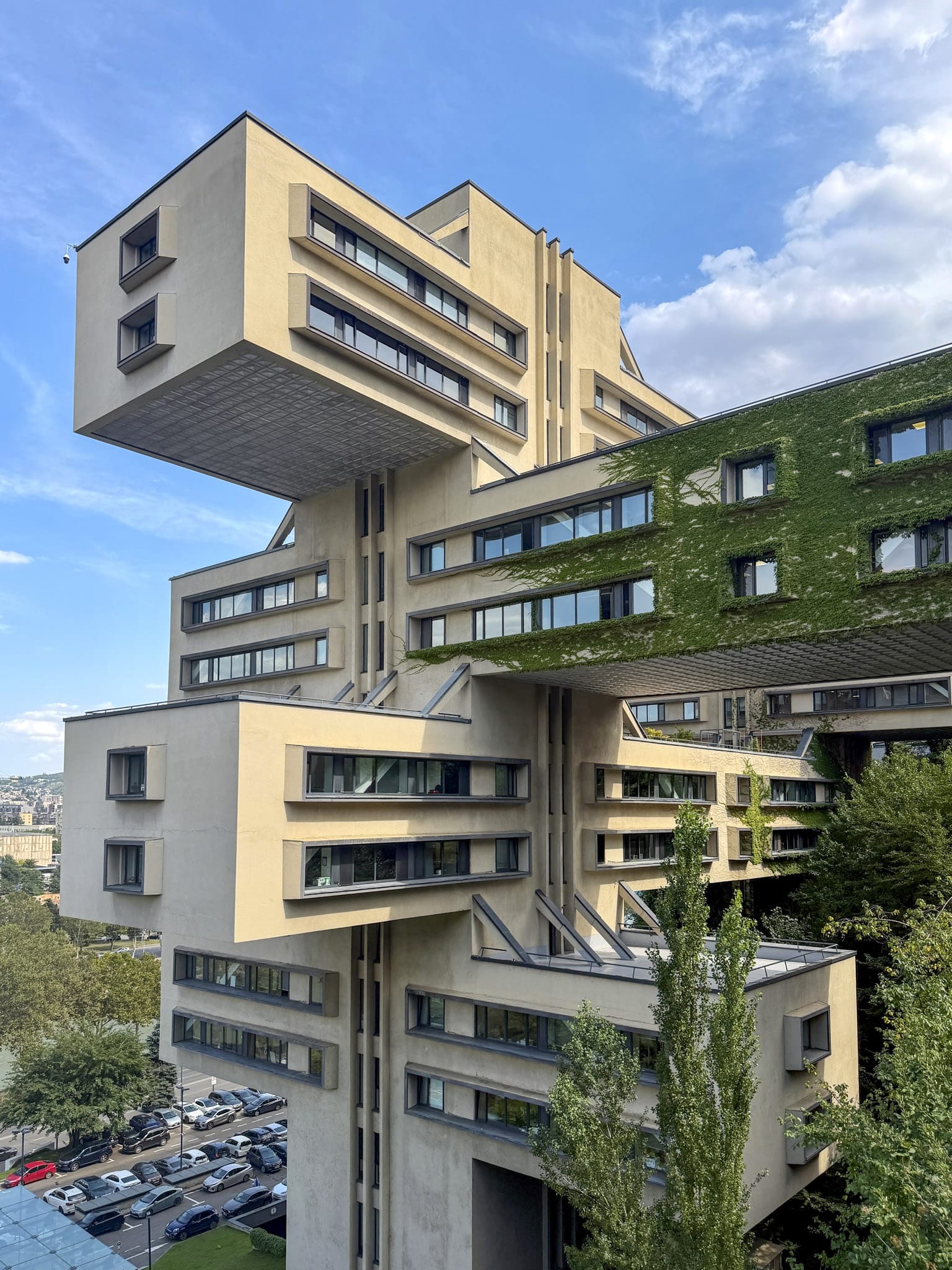
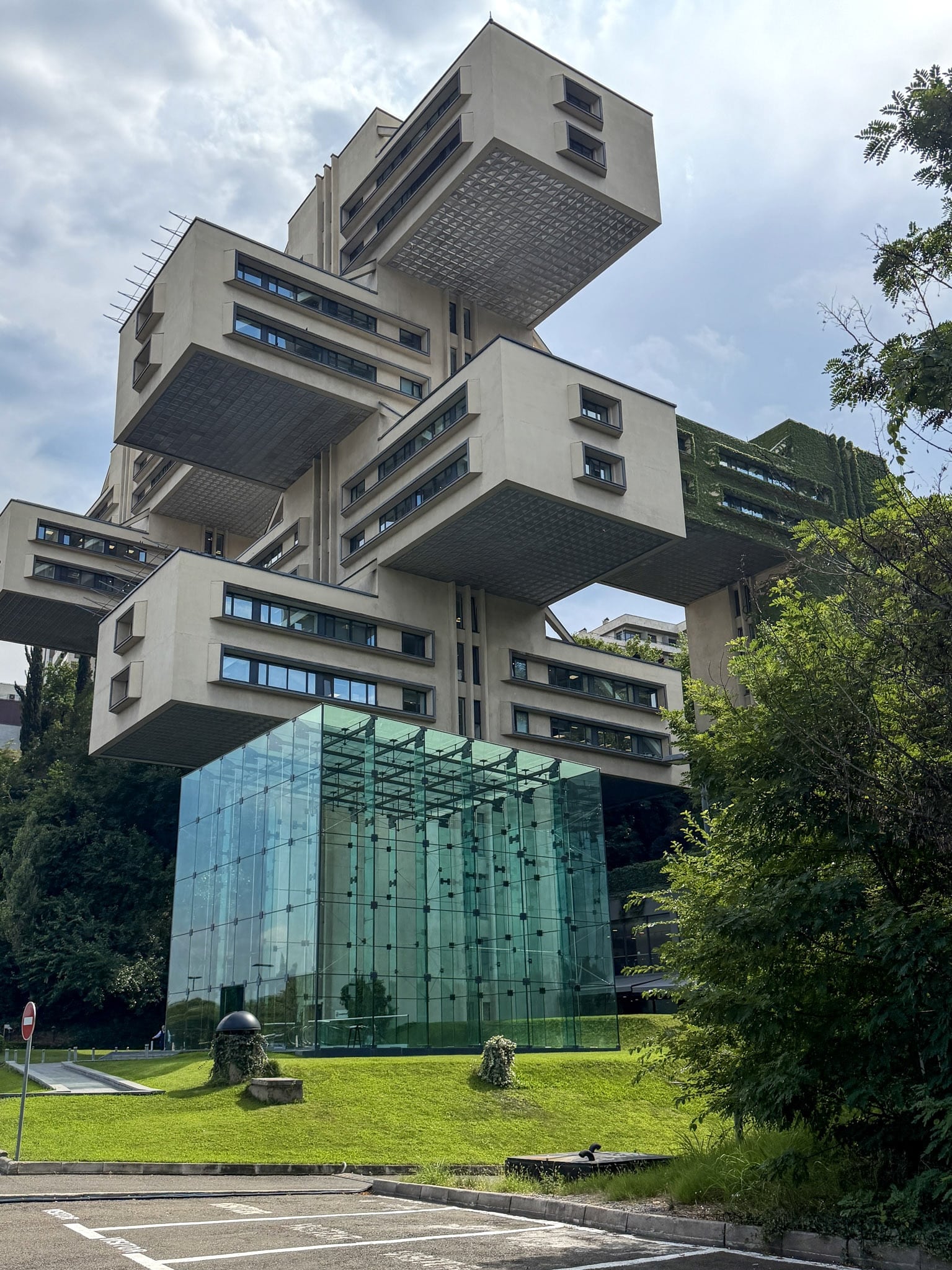
This is the one everyone photographs first, the building that shows up before anything else on basically every list of Tbilisi or Georgian Brutalist buildings. It went up around 1975 as the headquarters for the Ministry of Highway Construction, and the architect, Giorgi Chakhava, happened to be the Deputy Minister of Highway Construction at the same time. He was both the guy designing it and the guy paying for it, which probably explains how something this strange got approved in the first place. The design has a name, the Space City method, a concept Chakhava patented himself. The idea was giving as much of the ground back to nature as possible, and so instead of one wide building sitting on the hillside, you get five massive horizontal blocks stacked and interlocked, held up on three vertical cores. Because the whole thing sits diagonally on a hill like that, it actually connects to the street at two different heights, on two different roads. After the Soviet collapse the building sat empty for over a decade until Bank of Georgia bought it in 2007.
How to Get to The Bank of Georgia
I had my Bolt drop me on Iuri Gagarini Street, which puts you at the upper connection point, and that’s the angle worth seeing. From up there you’re roughly level with the middle of the structure, looking straight into how the blocks stack on top of each other. I walked down from there following the street around toward President Heydar Aliyev Avenue, where the building meets the road again down at the base. Some stretches of that walk don’t have a sidewalk, so pay attention.
You can’t get inside, it’s a working bank now, offices only. I half expected there might be some way to cut through the middle of it since the whole design is built around leaving space underneath, but there isn’t, not for visitors anyway. Seeing both sides means going the long way around on foot or by car.
2. Nutsubidze Skybridge
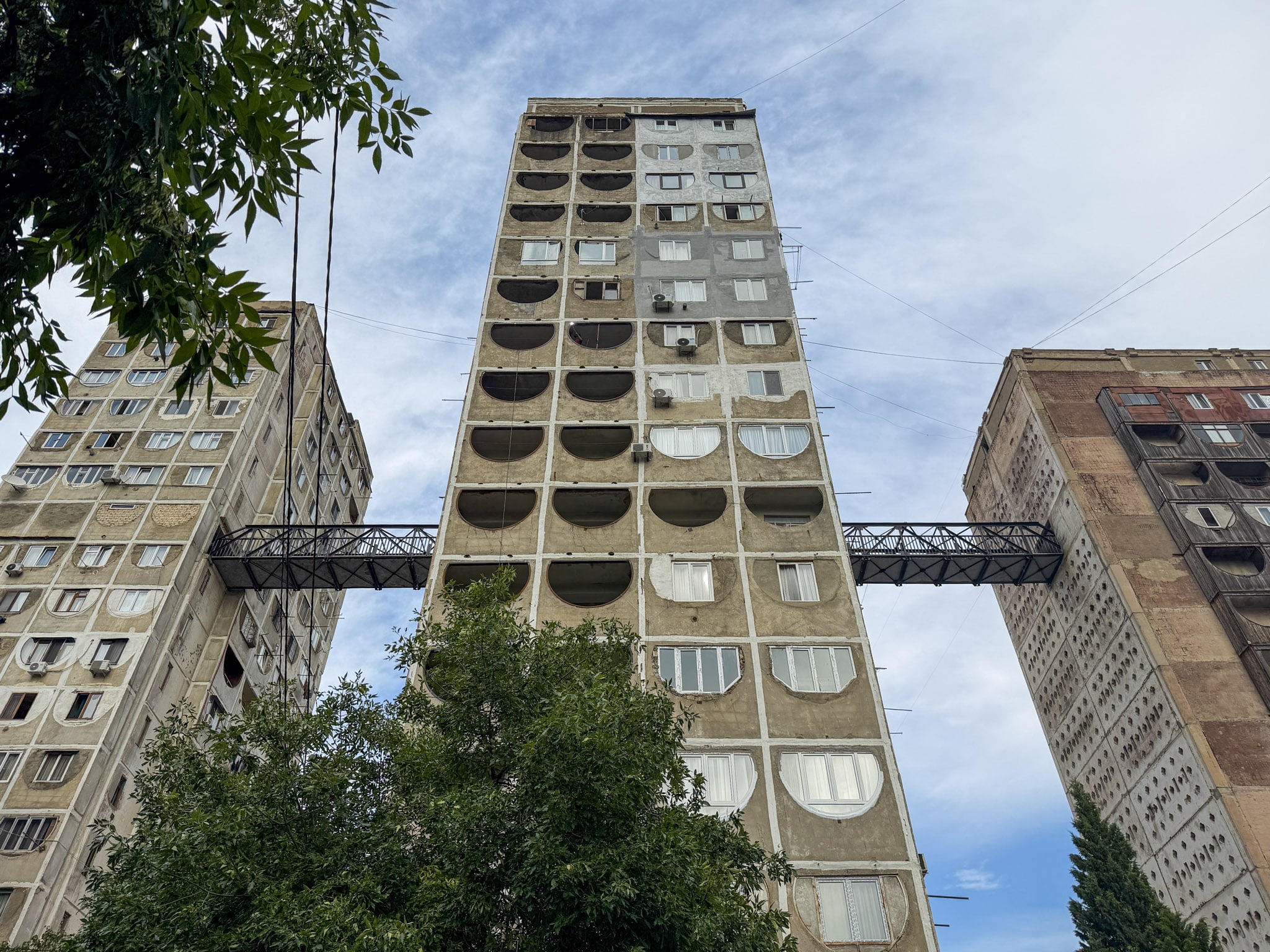
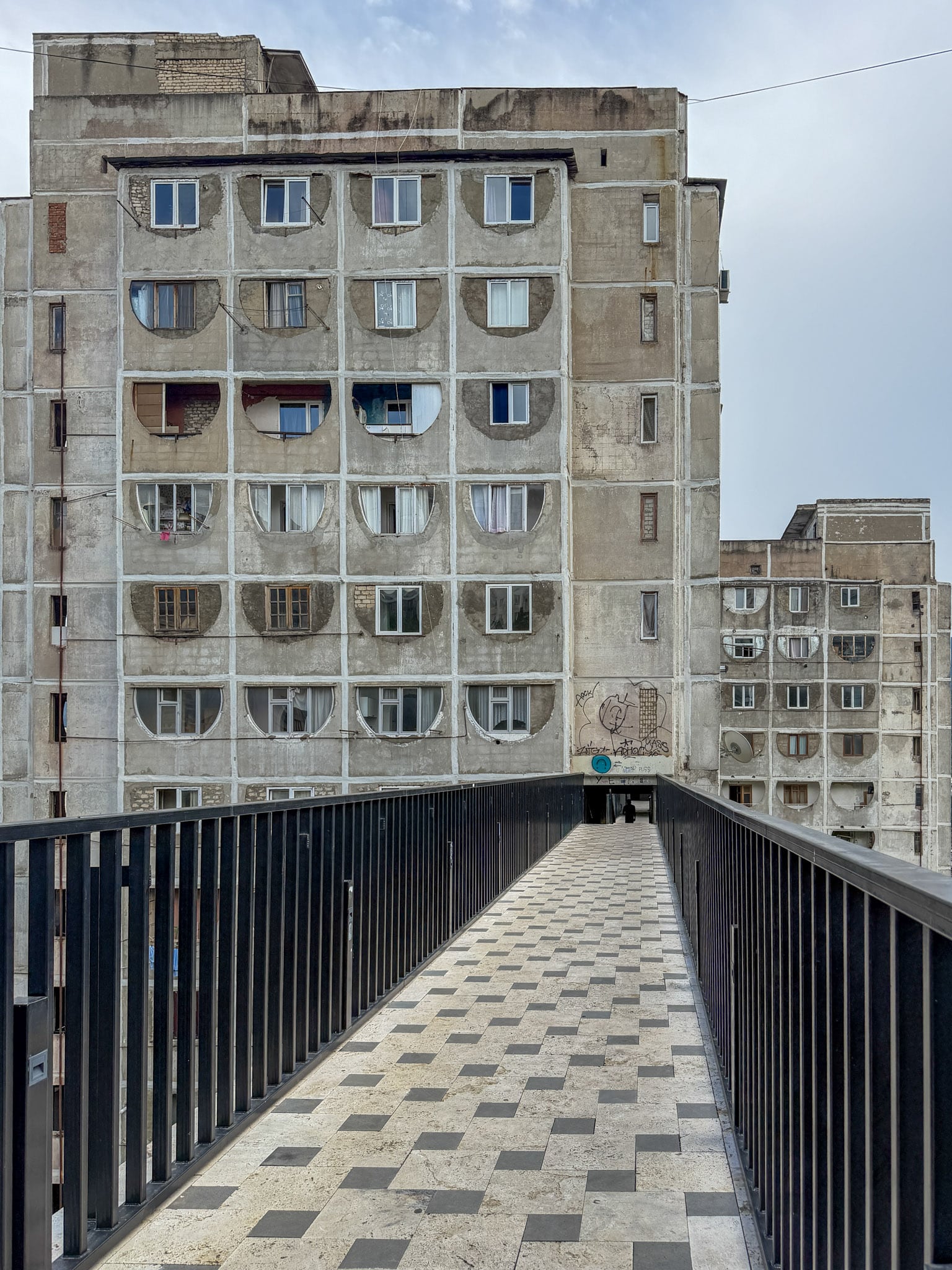
Three apartment towers on Tbilisi’s steep Nutsubidze Plateau, connected by metal bridges at the 14th, 12th, and 10th floors. Architects Otar Kalandarishvili and Gizo Potskhishvili designed it in 1974.
The famous skybridges weren’t just for show: the neighborhood’s only kindergarten sat on the highest street, so parents needed a fast way up and down with kids in tow. The plan was to build a whole network of these skybridges across Tbilisi, but money ran out after this one.
The neighborhood definitely looks sketchy at first, run-down, almost abandoned, hardly where you’d expect to feel comfortable walking through. But in reality it’s just an ordinary residential area of the city, families and students living their lives.
How to Get to the Nutsubidze Skybridge
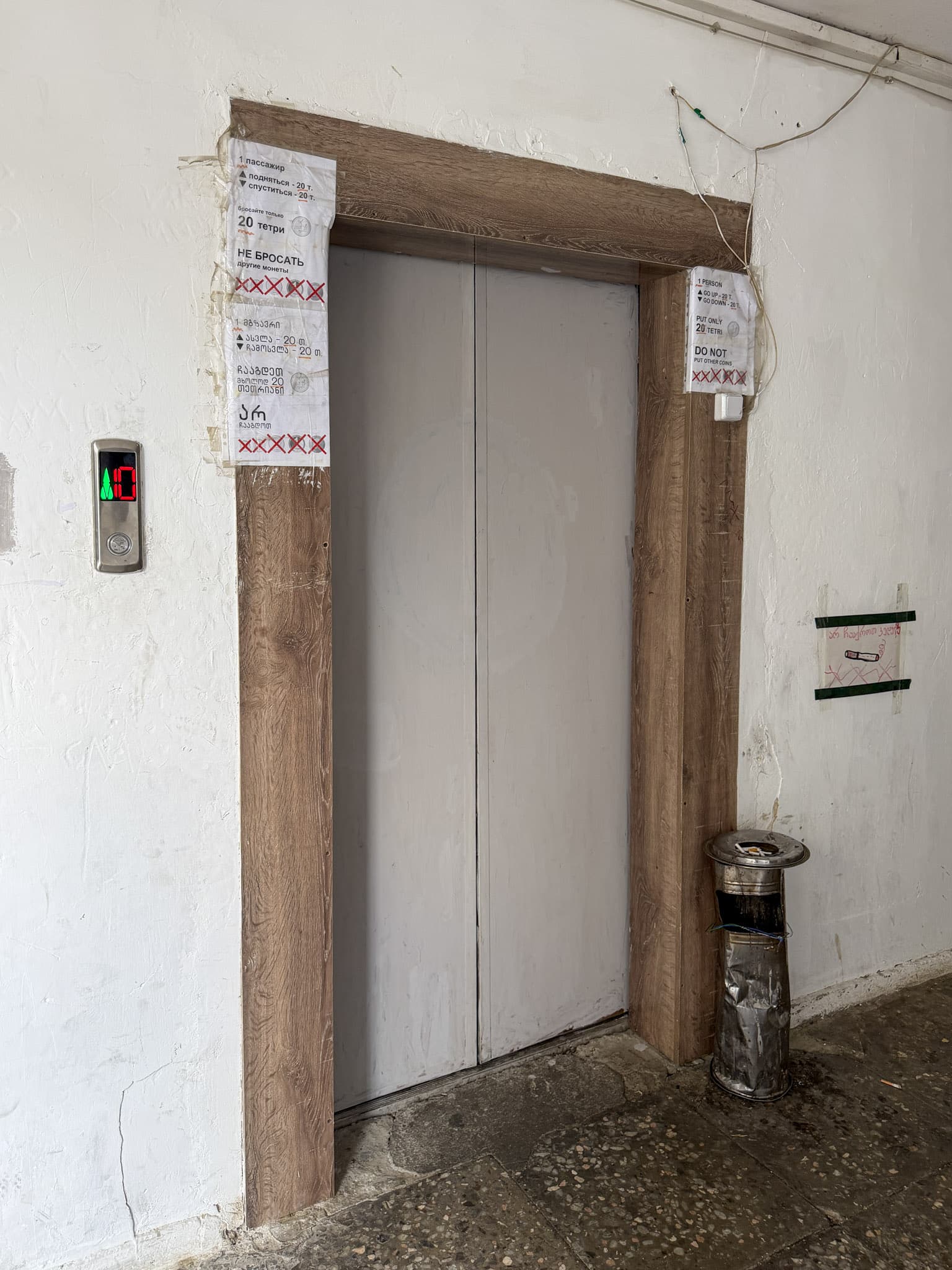
I visited on a cloudy day which made the experience even more moody. My Bolt dropped me at the exact pin Google Maps has for the skybridge, the upper entrance, right at the 14th floor. It took about 15 minutes and 15 LARI from the center of Tbilisi. I walked a bit inside, saw the elevator but skipped it, and walked down the street instead. While walking around the building you can notice all the balconies and details that residents have patched up over the decades in their own way, which is why the three towers look so different.
A few things worth knowing before you go:
- The elevator takes 20 tetri coins but it's not always reliable
- If you don’t want to use Bolt, you can get by subway Metro to State University station, then a short walk up
- People actually live here. Stick to the public bridges and elevator, skip private stairwells
3. Chronicle of Georgia
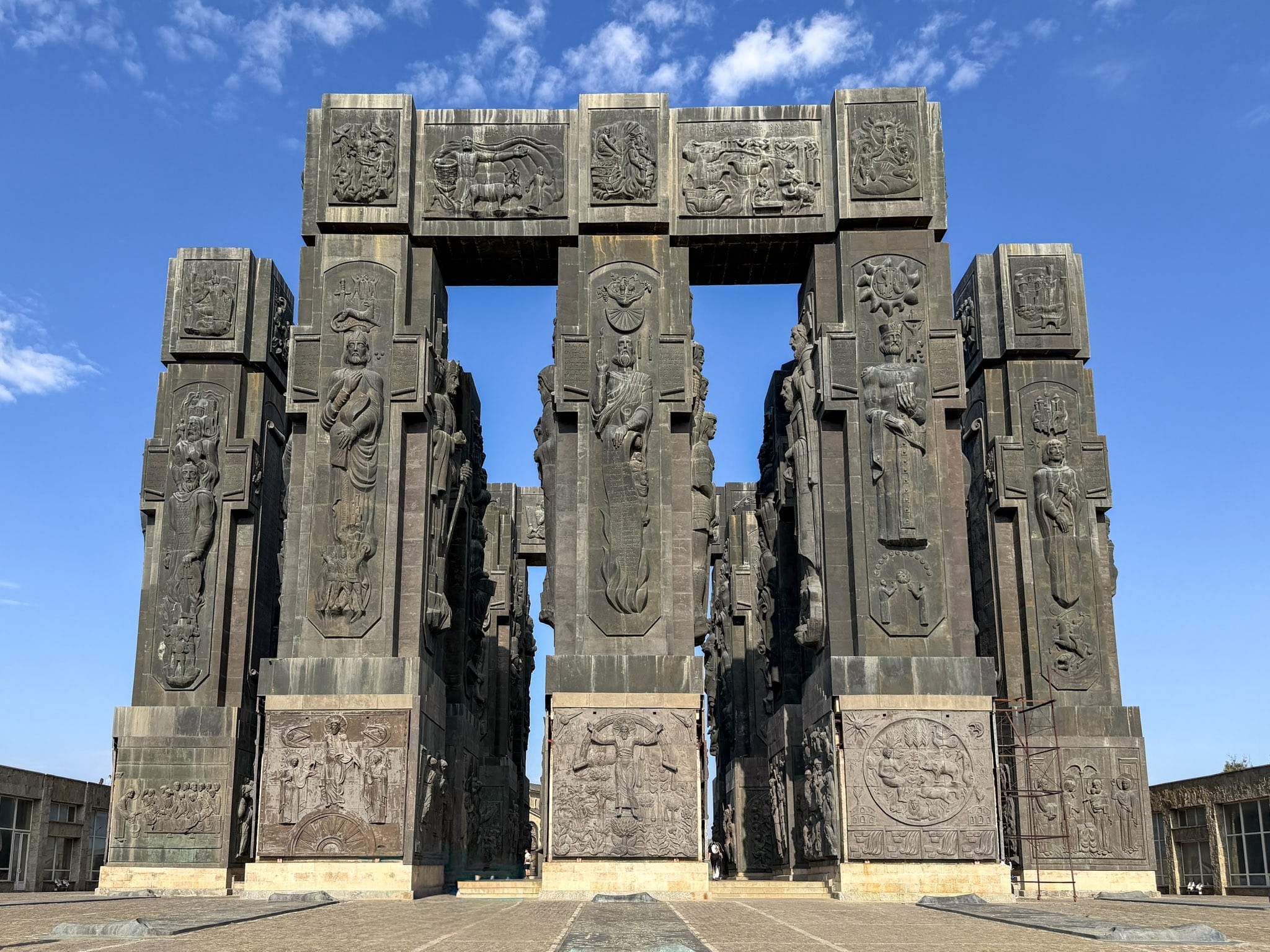
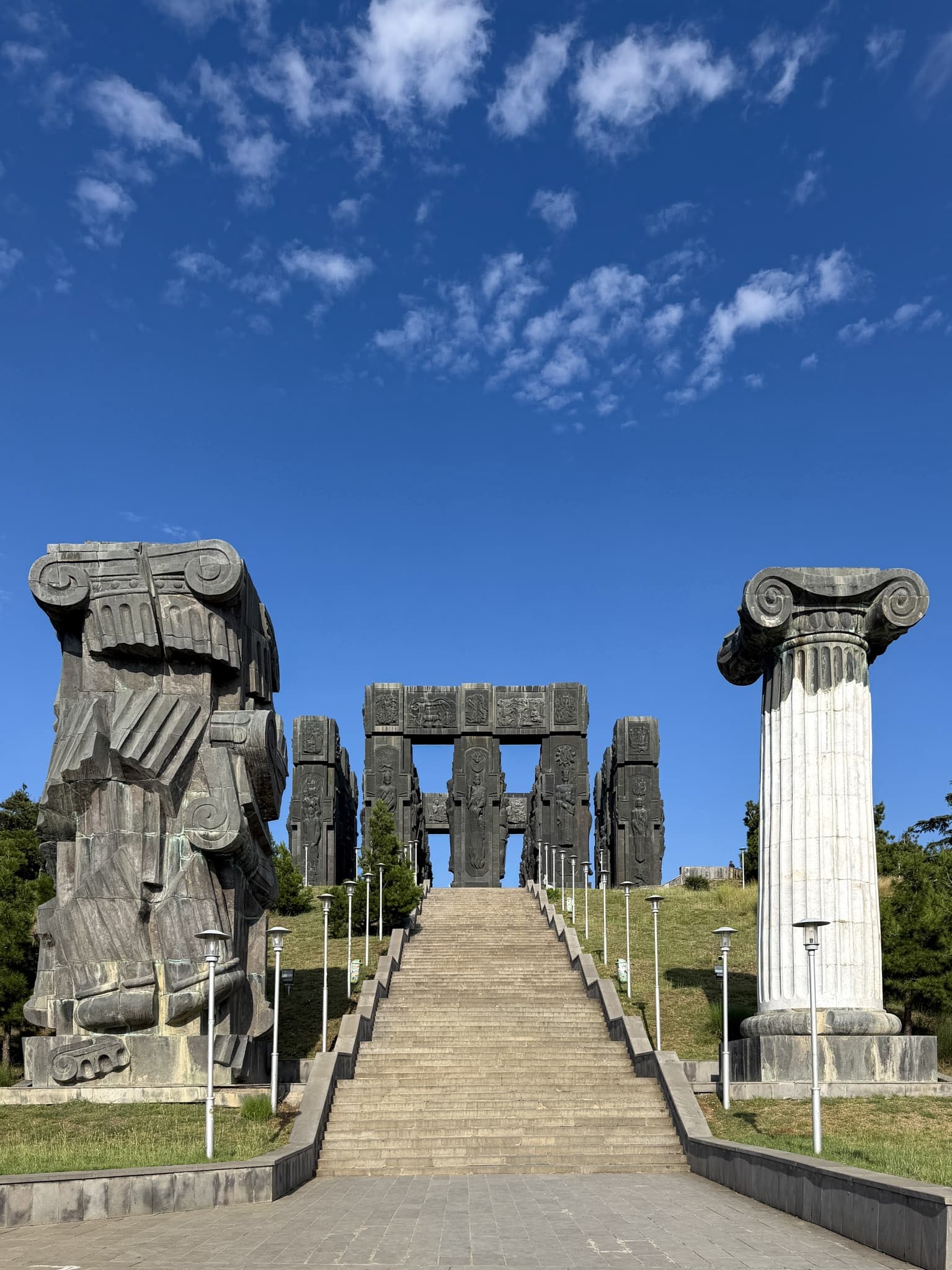
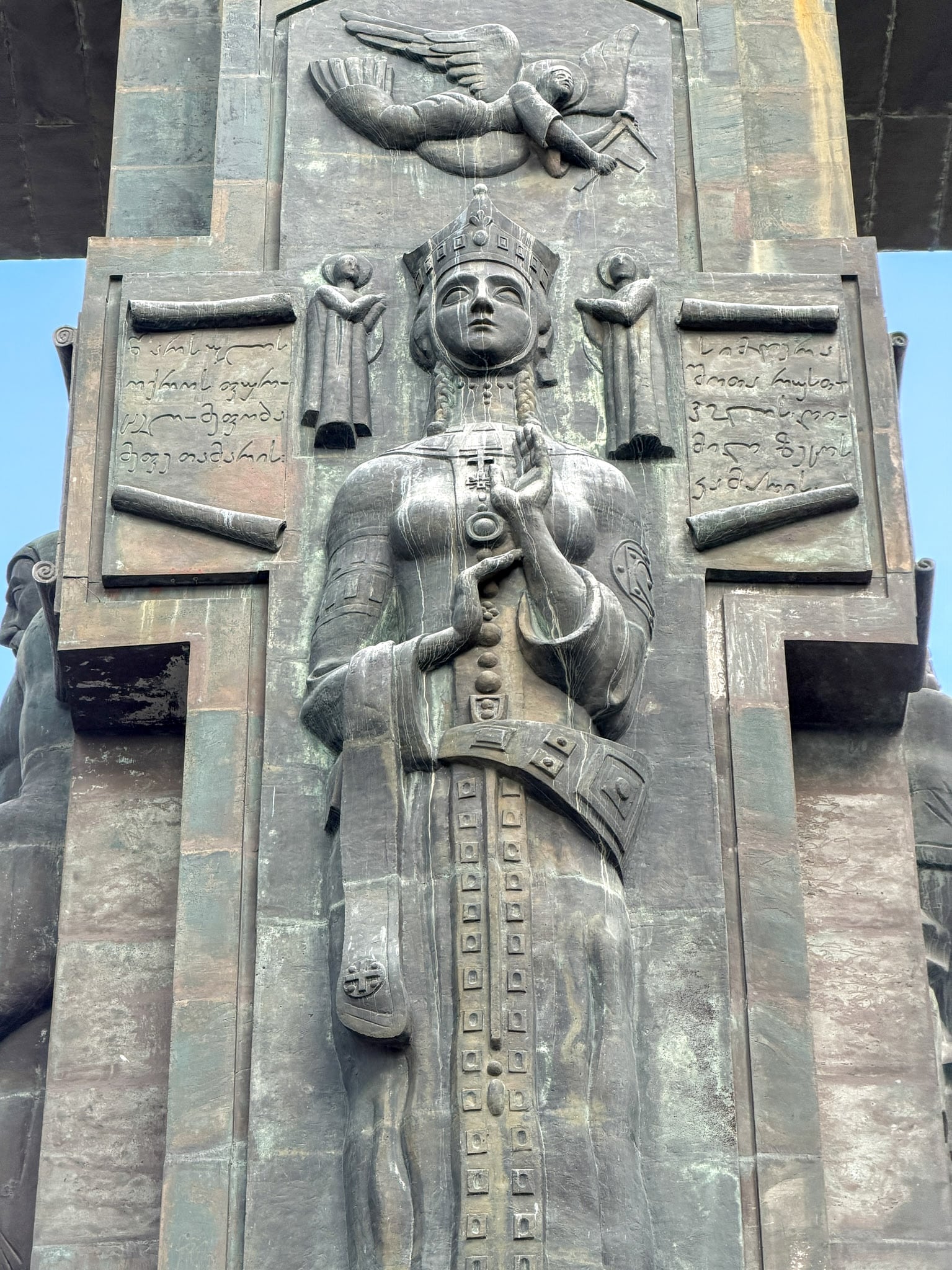
Sixteen bronze and stone pillars, thirty-five meters each, standing on Keeni Hill above the Tbilisi Sea. Zurab Tsereteli started building this in 1985, meant to mark 3.000 years of Georgian statehood and 2.000 years of Christianity in the country. Funds dried up somewhere around the Soviet collapse, and it’s stood in this partial state ever since, the upper sections of the pillars carrying kings and queens and historical battles, the lower tiers carved with scenes from the life of Christ.
This one gets a pass on the strict brutalism label since it’s a monument, not a building, carved stone and cast bronze rather than poured concrete. But it comes from the exact same decade and the exact same appetite for scale.
How to Get to The Chronicle of Georgia:
Getting there needs a bit more effort and time. My Bolt ride out was about 24 GEL one way, roughly 25 minutes from central Tbilisi. Worth it. I went in the late afternoon heading toward sunset. The reliefs on the columns pick up so much more once the light starts raking sideways across them, shadows filling in every carved line. I found another Bolt for getting back to the city without much wait, even though the signal cut in and out a couple of times up there.
-
-
This one was included on my list of the best things to see and do in Tbilisi, brutalism aside. Check out the full article!
-
4. Palace of Rituals
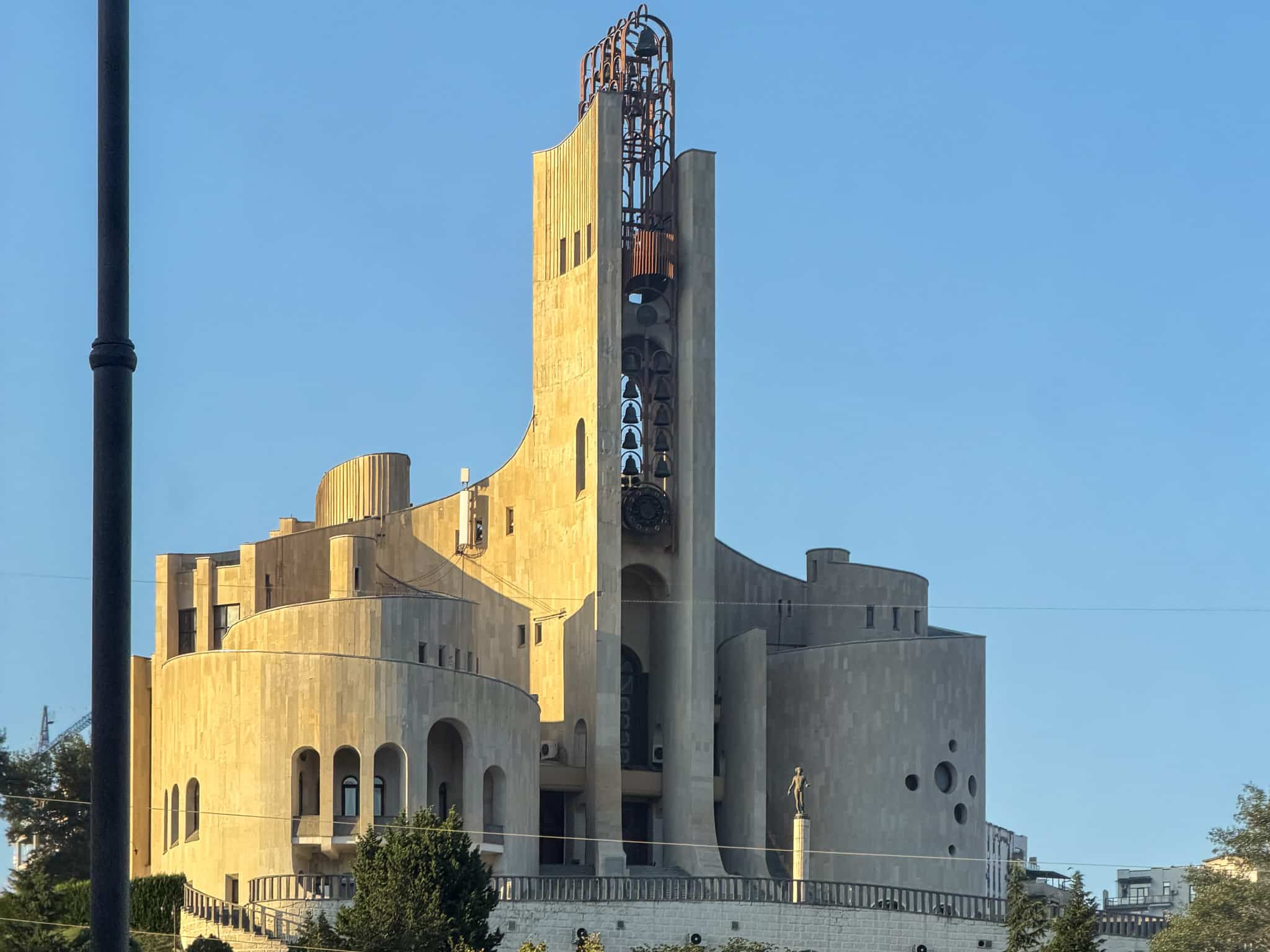
Officially the Wedding Palace, built in 1984 by architect Victor Djorbenadze, known to everyone in Tbilisi as Butsa. He spent years studying Georgian church architecture and folded all of it into a building meant to be secular, a state-sanctioned alternative to church weddings.
Soviet officials weren’t thrilled when frescoes, a bell tower, and soaring church-like interiors showed up in the plans anyway. Eduard Shevardnadze, running Georgia at the time, personally pushed the design through the committees objecting to it.
The building still splits the entrance in two, a spiral staircase on the left for the groom, one on the right for the bride. After the Soviet collapse it sat closed for years before businessman Badri Patarkatsishvili bought it as a private residence.
These days the inside is only accessible on guided tours, and by every account it’s worth booking: three floors of themed rooms, an antique car collection, and a garden, all inside a building most people only ever see from outside, like I did.
A fun fact: Margaret Thatcher watched a Georgian dance performance here in 1987, and Deep Purple’s Ian Gillan renewed his wedding vows in the building in 1990.
How to Get to the Palace of Rituals:
Easiest option is to use Bolt. Personally I was already in the area for Stalin’s underground printing house & museum, about fifteen minutes away on foot, and walked over to see the palace up close without going inside. If you’ve got more time than I did, go in, from what I’ve read the interior is even stranger than the outside, though I can’t vouch for that myself.
5. Tbilisi Sports Palace
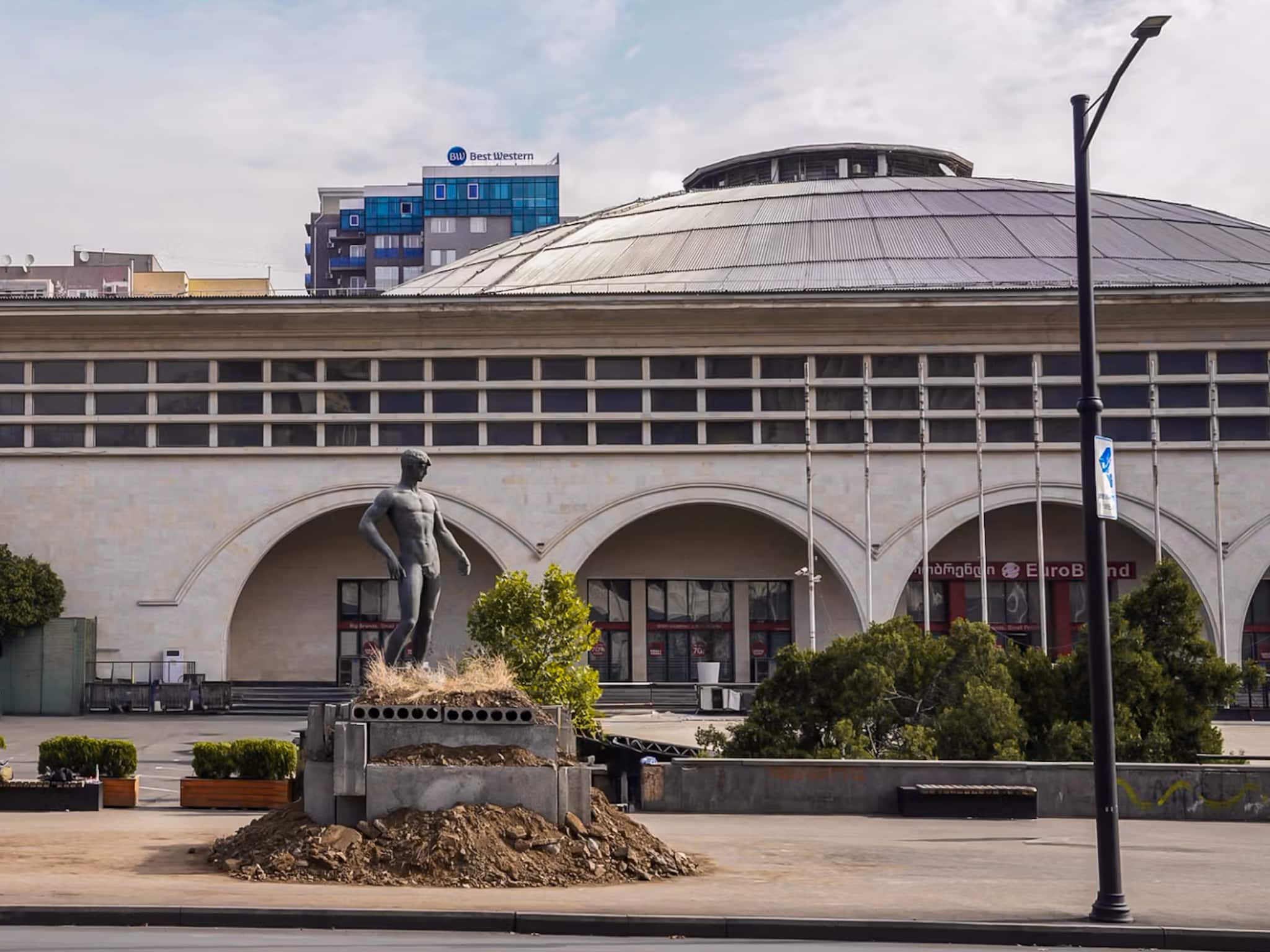
Architects Vladimir Aleksi-Meskhishvili and Yuri Kasradze started designing it in 1956 as a demonstration hall for the Spartak sports society. The building’s defining feature is its concrete dome, roughly 76 meters across, engineered by David Kajaia and one of the largest domes in Europe when it went up. For decades it held the title of largest basketball arena in the entire former Soviet Union, home court for BC Dinamo Tbilisi.
It still hosts basketball, handball, judo, tennis, and boxing, along with concerts.
Where Is It?
Located in Saburtalo, the same district as the Skybridge and Technical Library, worth keeping in mind when planning a route.
6. Former Archaeology Museum, Digomi
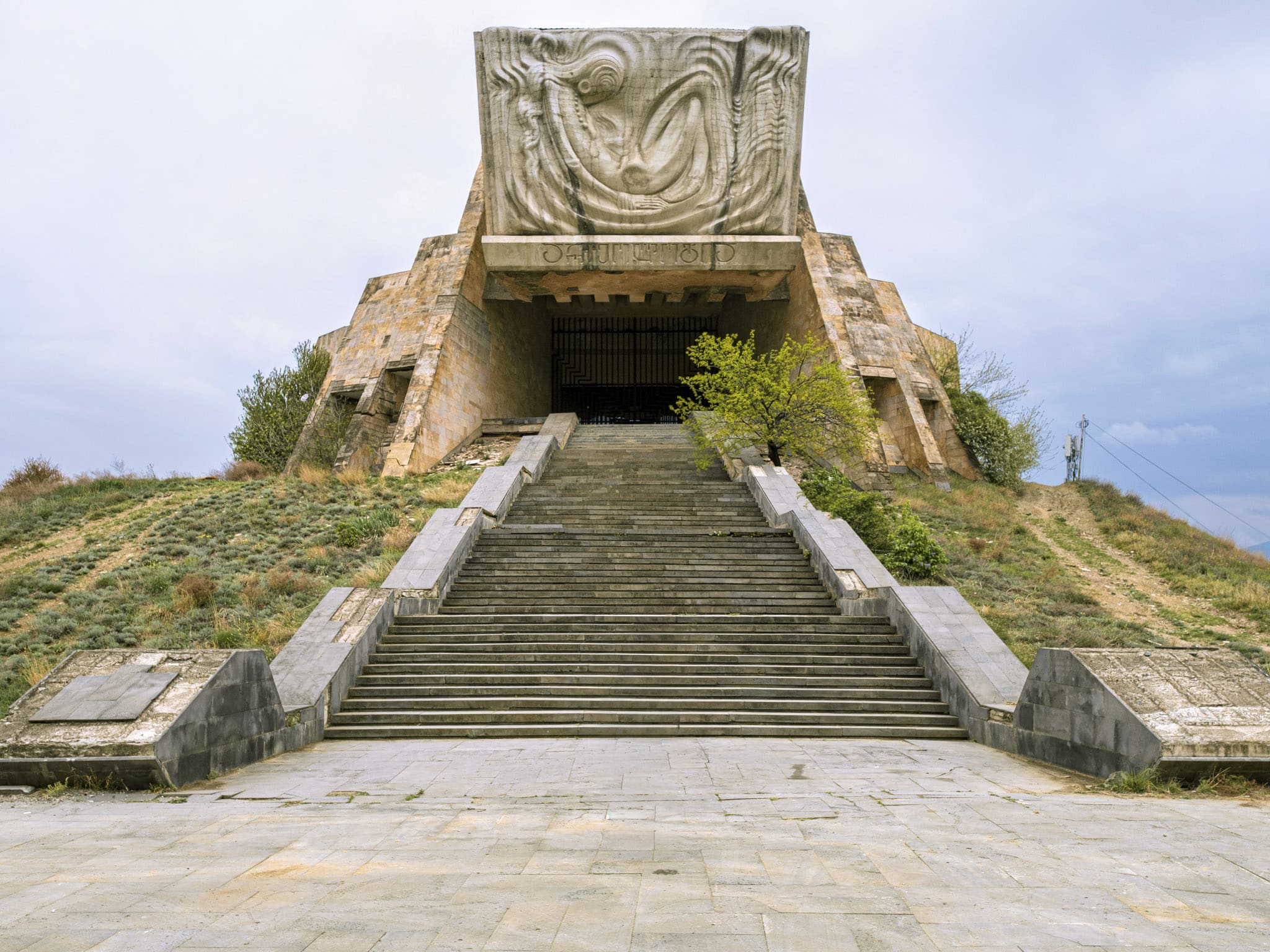
Completed in 1988, right before the Soviet Union came apart, this one was designed by Tbilisi’s chief architect at the time, Shota Kavlashvili.
The whole building reads as zoomorphic, crouched low on a hillside above the highway. Above the main entrance there’s a relief of a human figure curled into a fetal position, a reference to old Colchian burial customs from western Georgia. Much of the structure was built by repurposing three cylindrical water reservoirs already on the site, before a later plan to turn them into underground exhibition space was dropped.
The location sits close to the Treli burial mound, an archaeological site dating back to the second and first millennium BC, tied directly to what the museum used to display. The museum only operated for a short stretch before closing, with no clear official explanation for why.
How to See It
Personally I saw this one from the road, on a drive out of Tbilisi in a rental car. Pulled over, and took it in from outside.
The main building is closed to the public, so exterior viewing only. I saw some aggressive-looking stray dogs around the hill behind the museum, worth keeping in mind if you plan to walk the grounds
7. National Scientific Library (“Technical Library”)
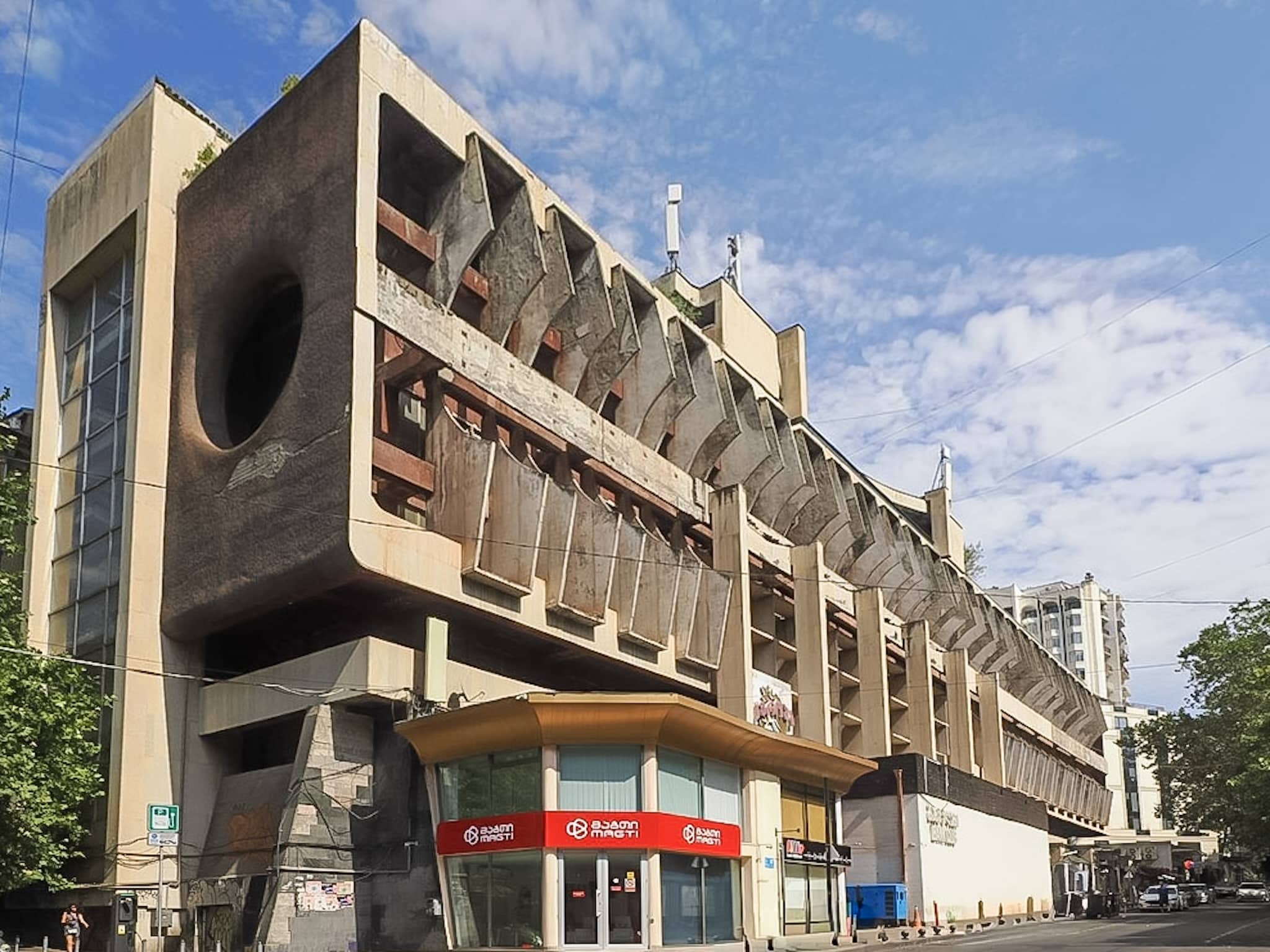
Most people who know this one call it by its nickname, the Technical Library, even though the official name is the National Scientific Library. Architect Gari Bichiashvili designed it in 1985, giving it a facade built from sail-shaped concrete fins that jut out at angles, with rounded portal openings cut into either end. From certain angles it looks like a ship run aground.
These days it’s part casino, part small businesses, with just one floor still functioning as an actual library, holding onto some of the original Soviet-era relief sculptures and a tapestry that have survived inside.
It’s definitely rough around the edges, whatever businesses moved in have done little maintenance plus their own changes that mess with the original design here and there, but it’s still genuinely one of the most interesting stops on this list to see in person.
How To See the Technical Library
I stopped here on the way back from the Skybridge, using Bolt. Alternatively, "Technical University" is the closest subway stop.
A DIY One-Day Brutalist Itinerary
You can realistically hit five of these seven buildings in a single day by hopping between them with Bolt or Yandex, the way I did.
- Start with the Bank of Georgia, it’s a bit removed from the rest, so it’s worth getting to it first.
- From there, head to Saburtalo for the Nutsubidze Skybridge.
- Stop at the Technical Library on the way back, the two pair naturally if you’re doing this by Bolt.
- The Tbilisi Sports Palace sits in the same general area as the Skybridge and the Technical Library, so it’s an easy add to that part of the day.
- Save the Chronicle of Georgia for last: it’s the farthest out, and going in the late afternoon means you catch the light hitting the reliefs at their best, which is exactly when I went.
The remaining two work better as detours than as part of a dedicated brutalist day.
- The Palace of Rituals sits close to Stalin’s underground printing press, so it makes more sense to pair the two if that’s already on your list.
- The former Archaeology Museum sits well outside the city center, toward Mtskheta, and fits naturally into a day when you’re already driving that direction, heading toward Kazbegi for example, rather than as a special trip on its own.
Guided Brutalist Architecture Tours in Tbilisi
Doing this by yourself works fine for most of these stops, with a little bit of planning and studying. However, guided tours work very well if you’re short on time or would rather have someone walking you through the history, instead of piecing it together from plaques (that, for most of these buildings, don’t really exist).
Several operators on GetYourGuide run broader Soviet architecture and urbex tours that string together multiple stops from this list in one outing, usually the Skybridge, the Chronicle of Georgia, and the Bank of Georgia, sometimes with a few extra buildings that didn’t make my ranking.
A few operators run evening or night versions too, and the concrete reads completely differently once the light changes. The Palace of Rituals is sometimes excluded, so it's better to double check.
Tips for Visiting Tbilisi’s Brutalist Buildings
- Don’t expect plaques, information boards, or visitor centers. Only the Palace of Rituals tour gives you that kind of framing. Everywhere else, you’re on your own for context, which is exactly why doing some reading beforehand, or bringing a guide, makes such a difference.
- Access changes without much warning. The Skybridge closed for renovation for months in late 2024, and its elevator sat broken for nine months back in 2022. What’s true about a building today might not hold up by the time you land in Tbilisi, so a quick search for recent google reviews is worth it before building your day around getting inside somewhere specific.
- Go late in the day if photos matter to you. Flat midday light makes raw concrete look gray and lifeless. The texture, the shadows, the carved details, all of it shows up better once the sun starts to angle in, the same reason I went to the Chronicle of Georgia at sunset.
- Several of these buildings are somebody’s actual home or workplace, not an open attraction. Photograph the architecture, not the people living their lives around it.
- Not everything survives. Some of Tbilisi’s best-known Soviet buildings are already gone, demolished in the years after independence. What’s on this list now isn’t guaranteed to still be standing in another decade, which is as good a reason as any to go see it now.
FAQ
What is brutalist architecture? Brutalist architecture uses raw, unfinished concrete left exactly as it came out of the mold, no cladding, no paint, structure fully exposed. The name comes from the French béton brut, meaning raw concrete.
Is Tbilisi’s brutalist architecture Soviet or post-Soviet? Soviet. Every building on this list went up between 1961 and 1988, all before Georgia’s independence in 1991.
Can you go inside Tbilisi’s brutalist buildings? Rarely. Most are private offices, residences, or closed to the public entirely. The Palace of Rituals is the exception, its interior only opens up through a booked guided tour.
What is the most iconic brutalist building in Tbilisi? The Bank of Georgia headquarters, the former Ministry of Highways building. Its stacked, interlocking concrete blocks appear on more lists of Tbilisi brutalism than almost anything else in the city.
How many days do you need to see Tbilisi’s brutalist architecture? One full day covers the core cluster by Bolt: the Bank of Georgia, the Nutsubidze Skybridge, the Technical Library, and the Chronicle of Georgia. The Palace of Rituals and the former Archaeology Museum work better as add-ons to other plans.
Is it safe to visit these buildings? Yes, though some neighborhoods, especially around the Skybridge, look rougher than they actually are. These are ordinary residential areas, not unsafe ones, just visually worn down in places.