My David Gareji and Rainbow Mountains day trip from Tbilisi, Georgia: the hike, the colors, the monastery, and if it’s worth it.
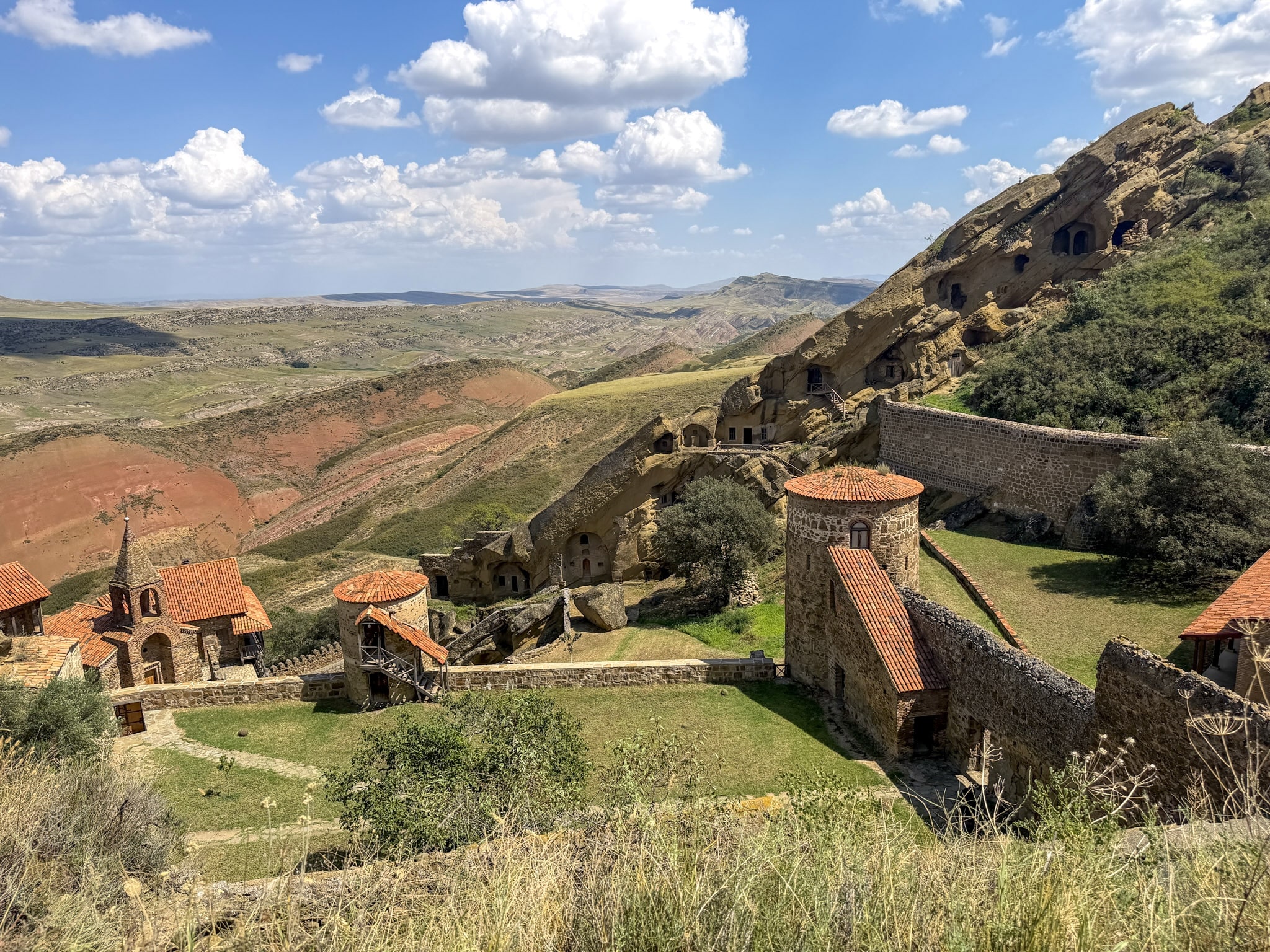
The David Gareja Monastery & Rainbow Mountain tours from Tbilisi pack two very different but equally amazing things into one day: a semi-desert monastery right on the border with Azerbaijan, and a stretch of hills striped in red, pink and green a short hike away.
I experienced the whole thing myself on a day trip from Tbilisi, and this is what the rainbow mountain hike, the monastery visit and the rest of the day were actually like, plus whether I think it’s worth booking. I'll also give you the info on the specific tour company I chose.
In short: What Are David Gareji and the Rainbow Mountains?
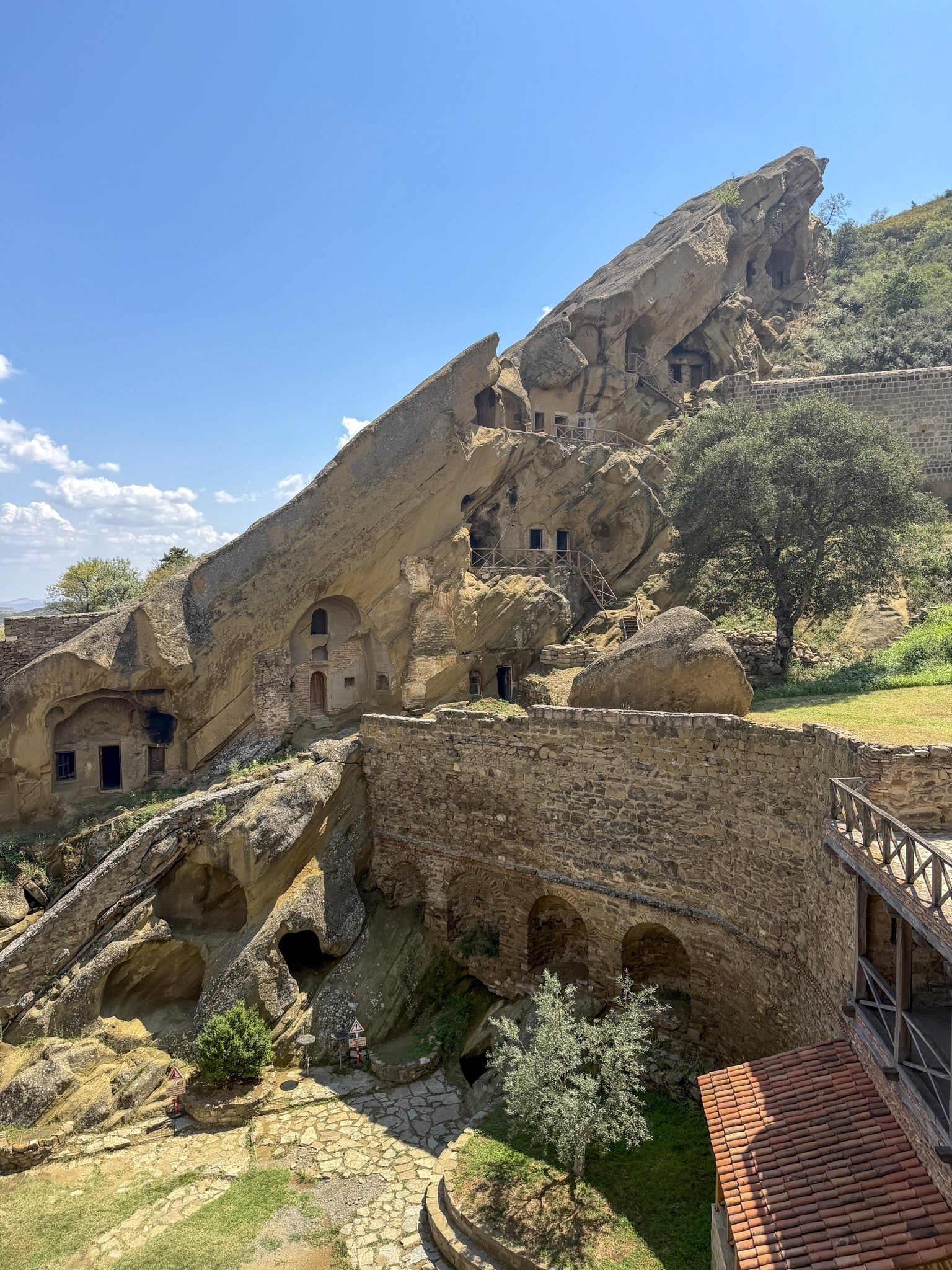
David Gareja, sometimes written as David Gareji too, is a cave monastery complex in the far southeastern corner of Georgia’s Kakheti region, very close to Azerbaijan. The complex dates to the 6th century, founded by David Garejeli, one of the Thirteen Assyrian Fathers who traveled from Mesopotamia to help establish Christianity in Georgia. He and the monks who followed him carved their cells straight into the sandstone hillside, crafting the incredible façades you can see today.
David Gareji usually refers to two specific monasteries within that larger complex: Lavra, at the bottom, and Udabno, higher up, connected by a ridge trail that runs along the actual border line. I’ll get into why that matters for visitors later on. For now, the short version is that Lavra is the one still open, and it’s the one this whole day trip revolves around.
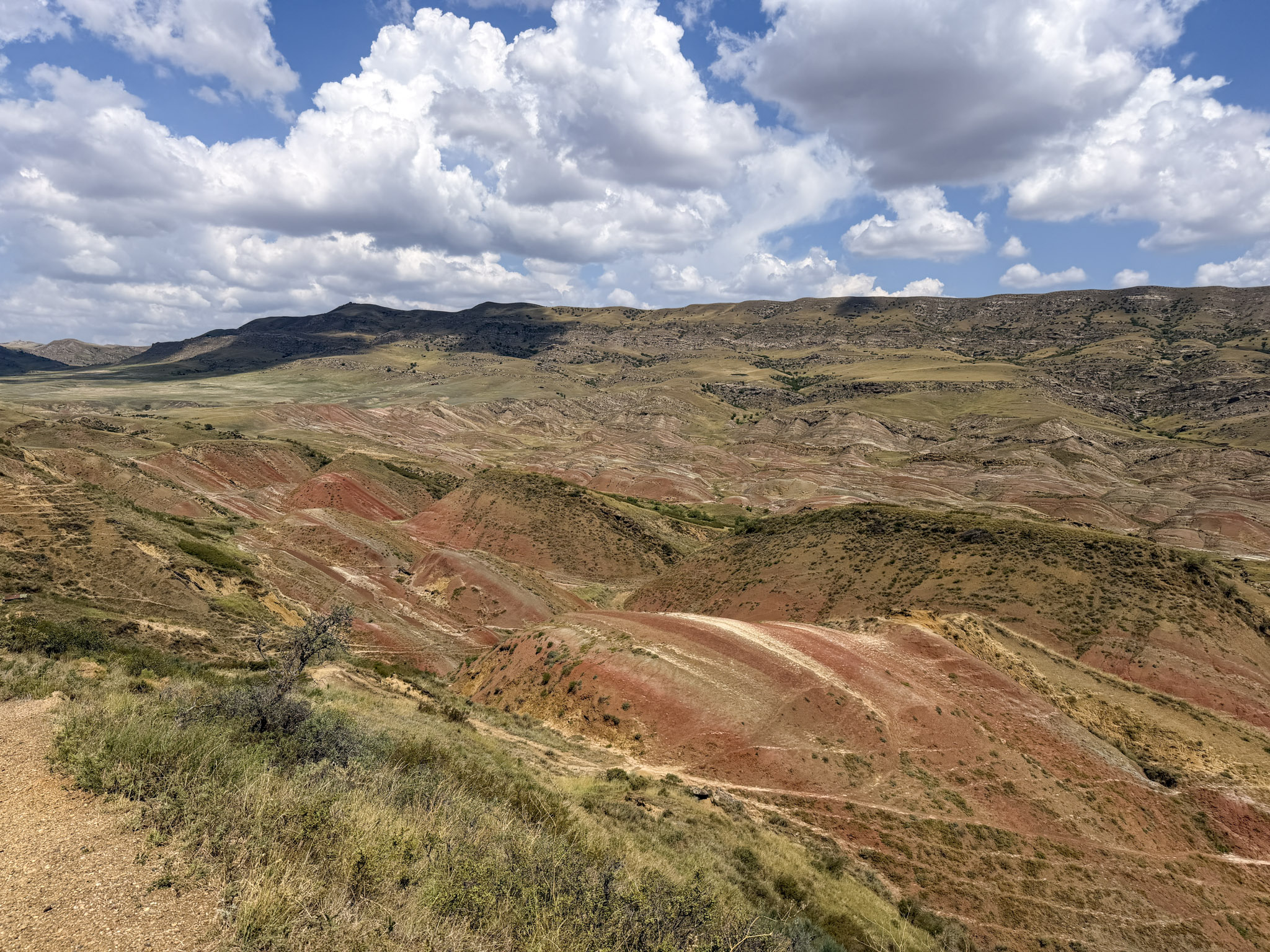
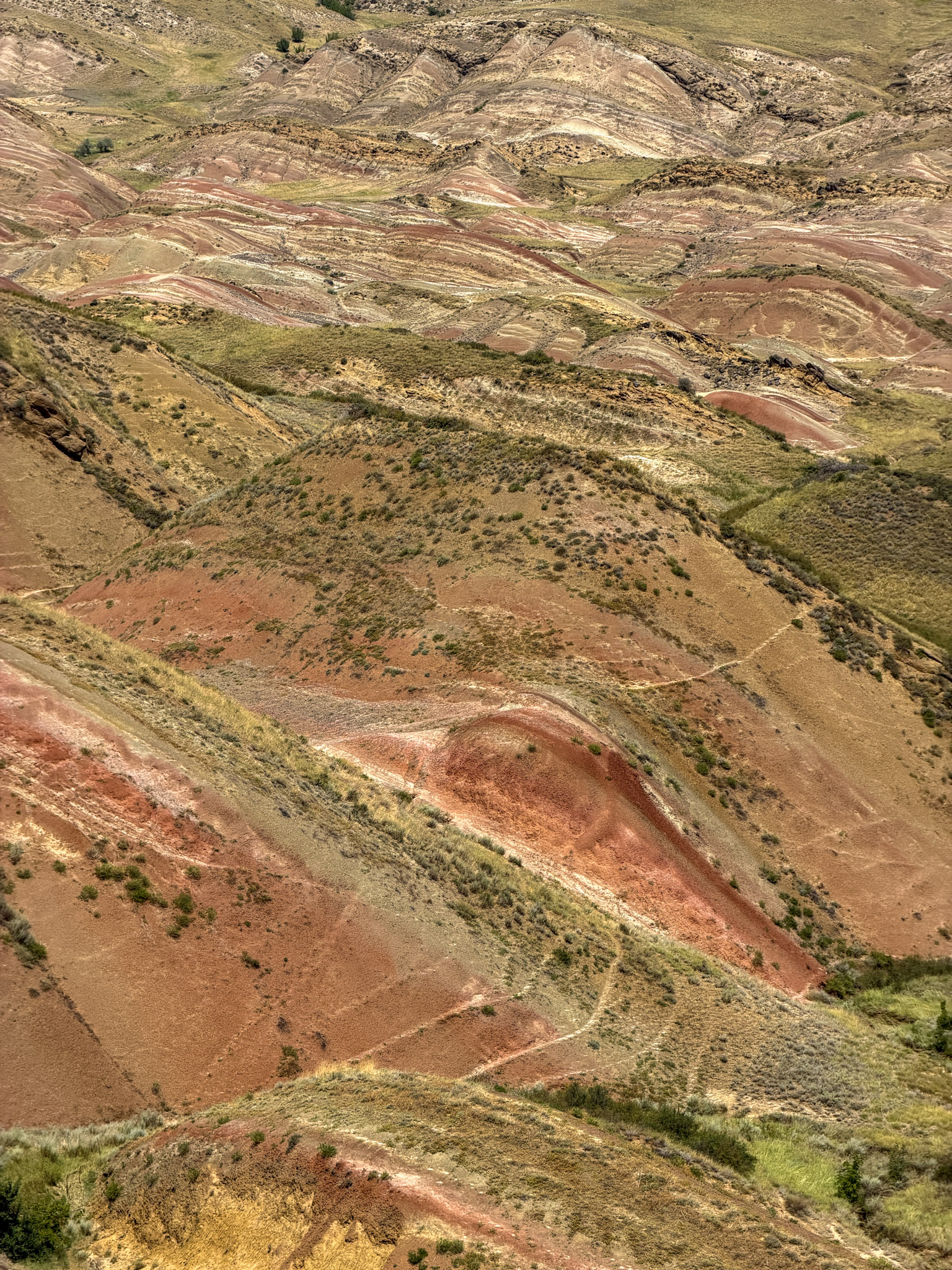
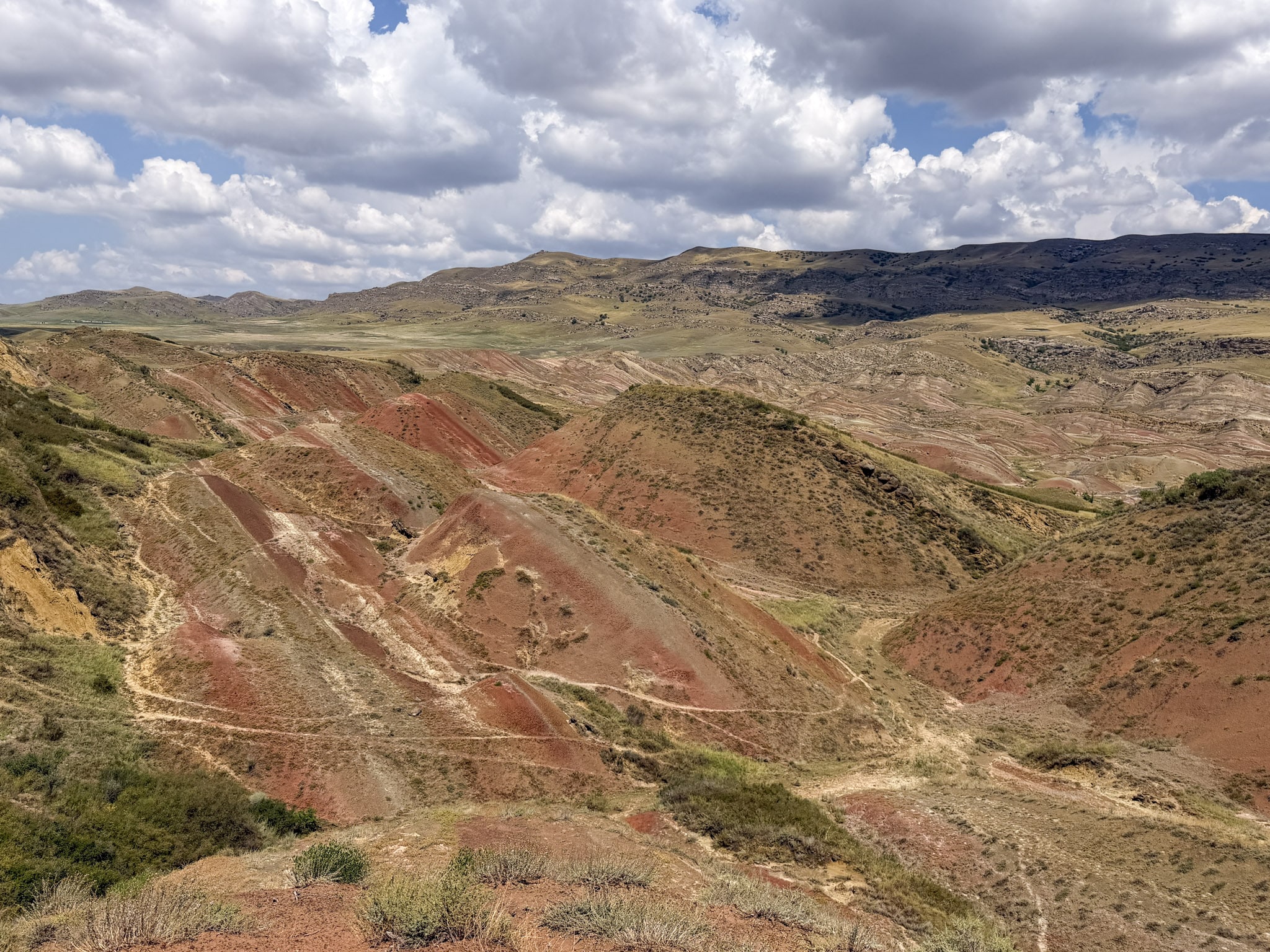
The Rainbow Mountains are the other half of the draw in this area: hills striped in red, pink, ochre and white, colored by minerals that oxidized inside the sandstone over millions of years.
You should know that there are two different spots that share the name. The smaller rainbow mountain sits right next to David Gareji’s parking area, which is also the one covered on almost every day tour. A second, larger stretch of the same kind of hills lies further northwest near the Mravaltskaro Reservoir, reached separately and usually only with off-road access. So when a tour listing describes “Rainbow Mountains & David Gareji,” it almost always means the smaller hills by the parking lot, not the Mravaltskaro ones. Just a heads up.
How to Visit: Tour, Shuttle or Self-Drive?
There’s no regular public transport running from Tbilisi to David Gareji, so getting there comes down to two options:
- self-driving. If you’d rather drive yourself, the road is paved almost the entire way now, running through Sagarejo and Udabno. Skip the older route through Rustavi, it’s unpaved and really does need a 4WD. A regular car with decent ground clearance is fine in dry weather, but the final stretch can turn to mud fast after rain, so check the forecast before you commit to self-driving.
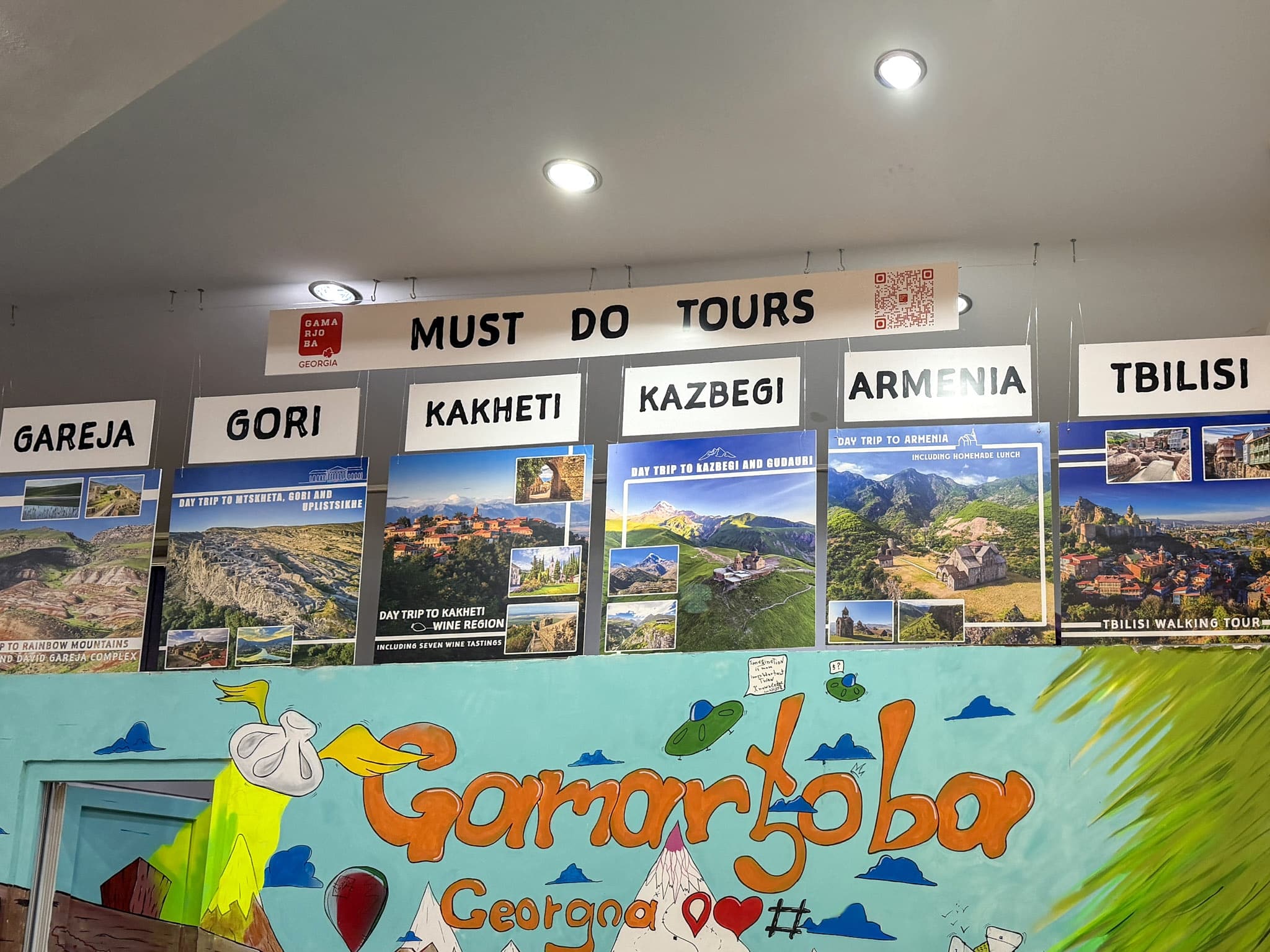
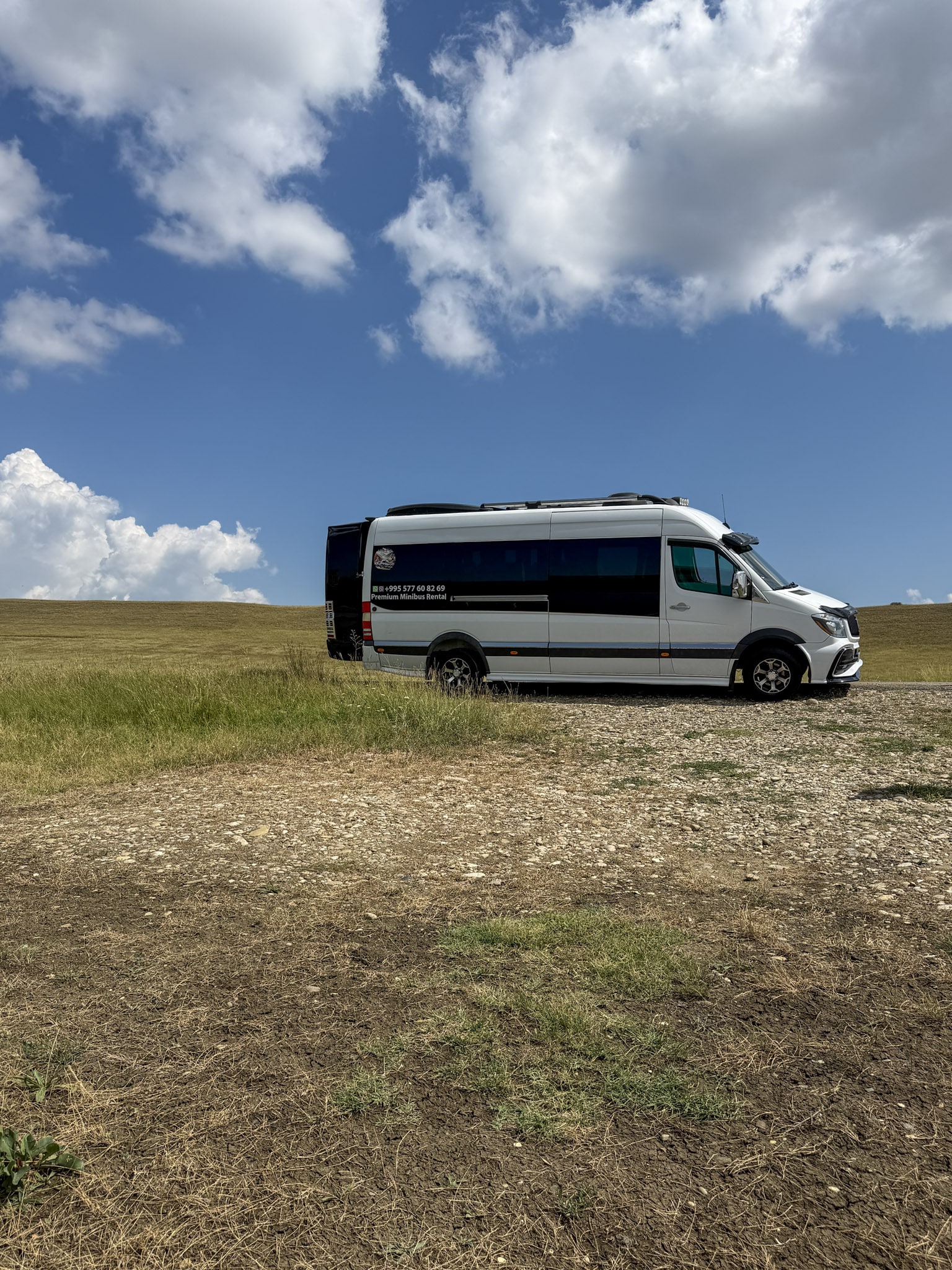
- organized day tour, either private or in a small group, which is what I chose. I booked through GetYourGuide with a company called Gamarjoba Georgia Tours, a small local agency with an office near Avlabari. I paid around 35€ per person. It’s the option that makes the most sense if you want context on what you’re looking at, without any of the hassle of getting there yourself. It’s also the one I’ll walk through in detail next.
There was once a third option, the Gareji Line shuttle. I'm still seeing some blogs mentioning this service, but in summer 2026, when I was there, the service was no longer operative. The official website is currently no longer updated, but you can keep checking it for a 2027 season, perhaps. It was a shuttle-only service with no guide included, leaving from Pushkin Park in Tbilisi around 10:45am. It used to run from May through October, with a cost around 40 GEL return per person.
-
-
This day trip is just one piece of a longer Tbilisi stay. If you’re mapping out the rest of your time in the city, my complete guide to the best things to do in Tbilisi covers where else to go.
-
A Review of My David Gareja Visit & Rainbow Mountains Hike
Getting There from Tbilisi
The meeting point was in front of Avlabari station at 9:45am, where a rep from the agency was waiting for our small group. From there it was a short walk to the office for check-in, a quick payment if you hadn’t already covered it through GetYourGuide, and then a little wait until our guide showed up around 10 to walk us to the van parked nearby.
There were ten of us total, and the van itself was genuinely comfortable, leather seats, plenty of legroom.
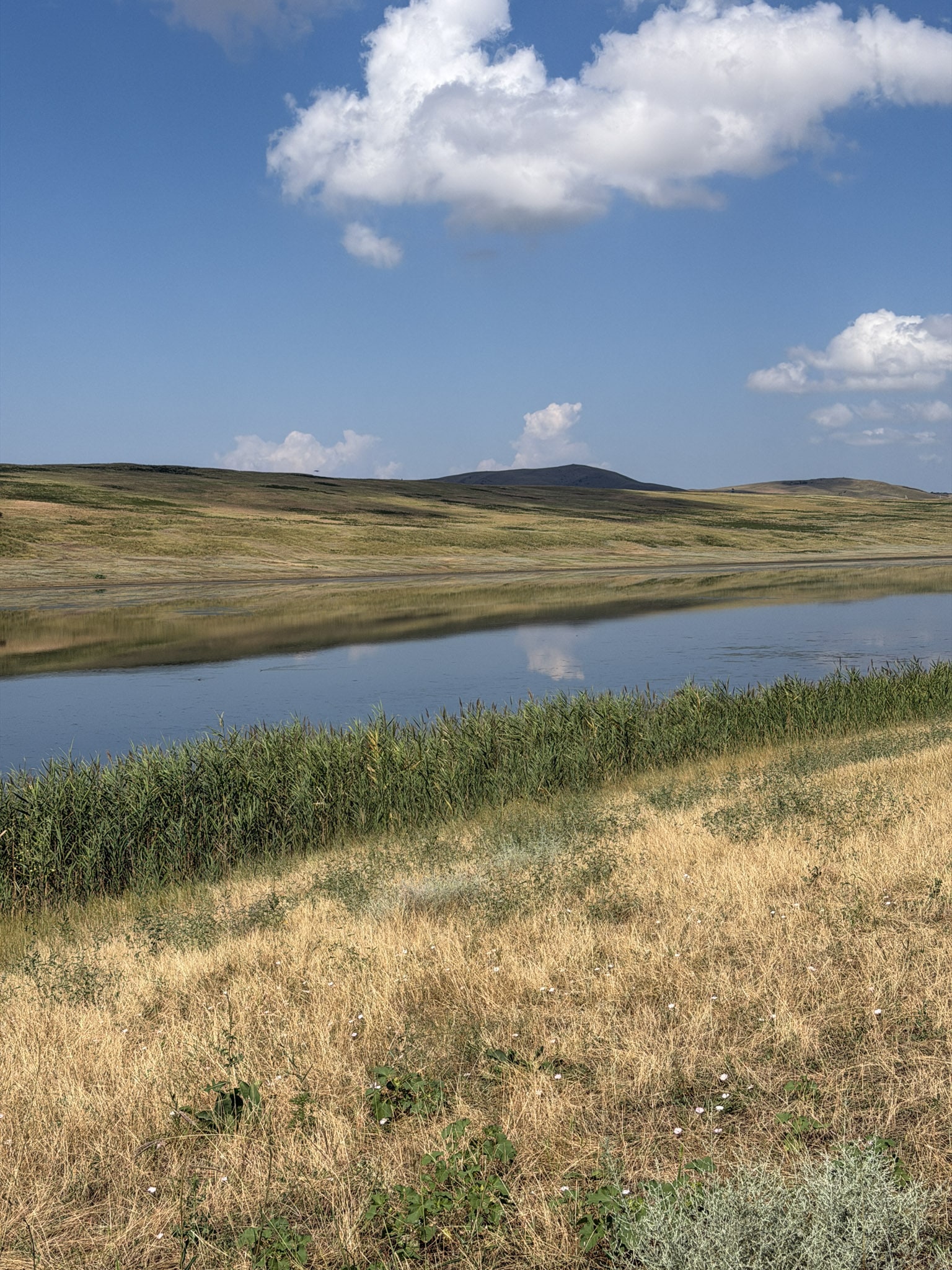
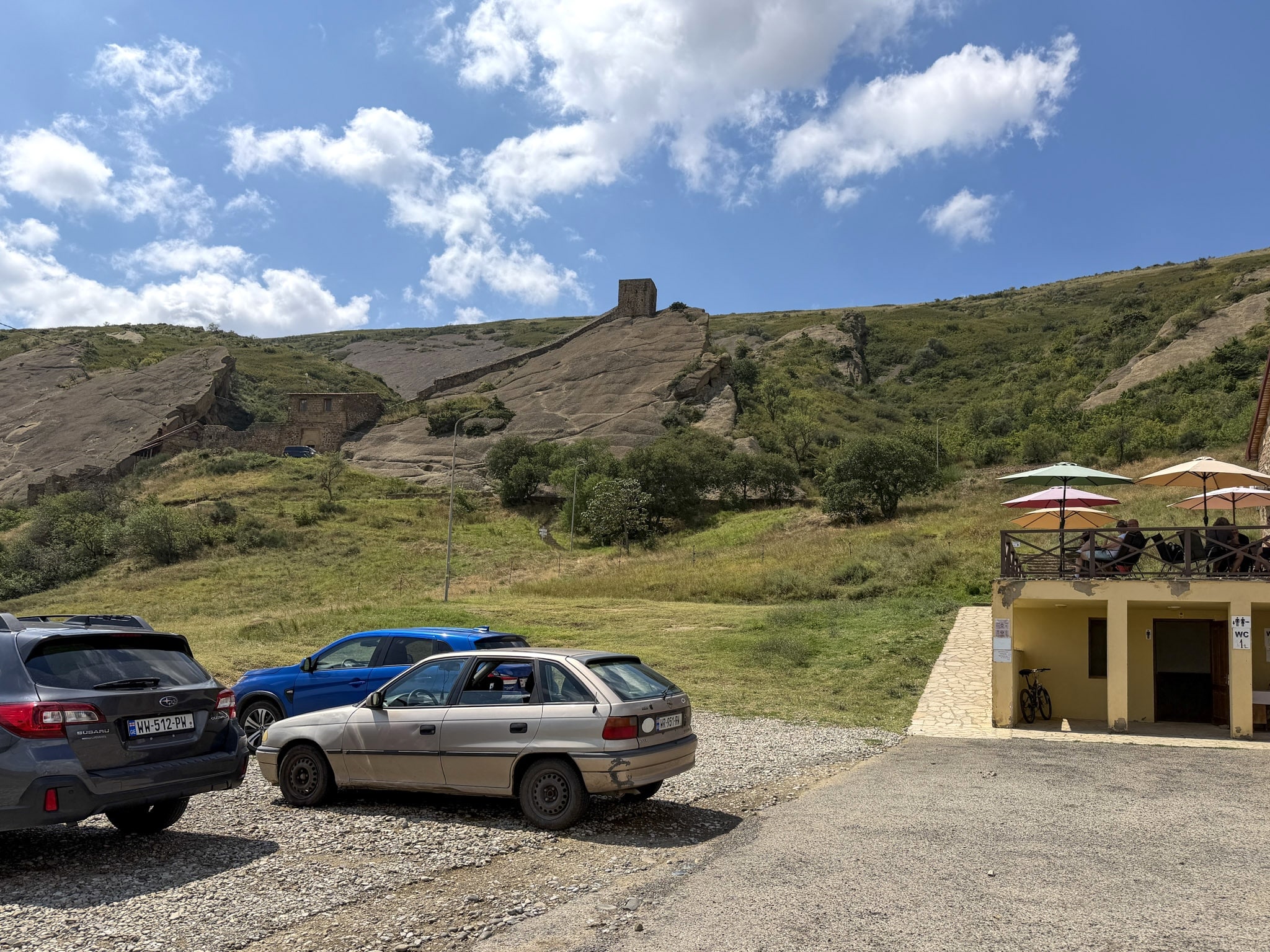
About thirty minutes in, we pulled over at a supermarket for a lunch run, since there’s nowhere to buy more serious food once you’re past this point. Another thirty minutes after that, a second stop at Kapatadze Lake, a small salt lake, mostly just a chance to stretch your legs and take in the view over the surrounding valleys. From there it was one more half hour to the David Gareji parking lot, which has a small shop and bathrooms, and where the actual hike starts.
Hiking the Rainbow Mountains of Georgia
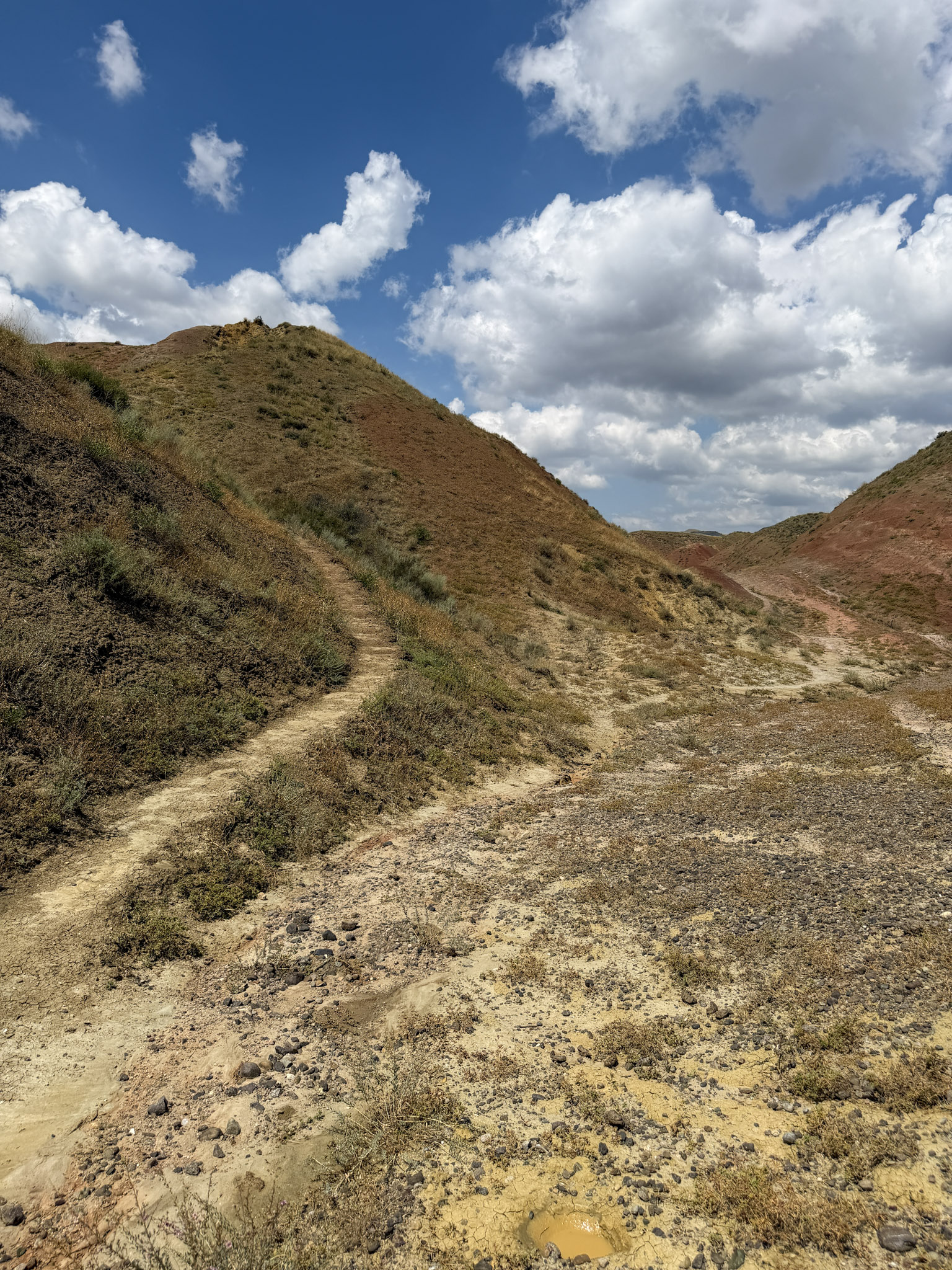
The hike itself takes about 40 minutes, looping through the hills before ending back in the parking area. The trail is easy if you already hike regularly, more walking with some ups and downs than any real climb, though if you’re not particularly active, you’ll want a baseline level of fitness going in. Our guide kept the pace slow and stopped often, both to point things out along the way and to let people catch their breath.
One thing worth knowing before you book: the hike depends entirely on the weather in the days before. The ground here is naturally soft, and it doesn’t take much rain to turn it into mud you can sink into past your ankles. If there’s been heavy rain in the last 24 hours, ask your guide or tour operator whether the hike is still happening before you commit to the day.
If it's raining, the rainbow mountains are still clearly visible from the parking area, but of course you'll miss the best viewpoints and close-up action.
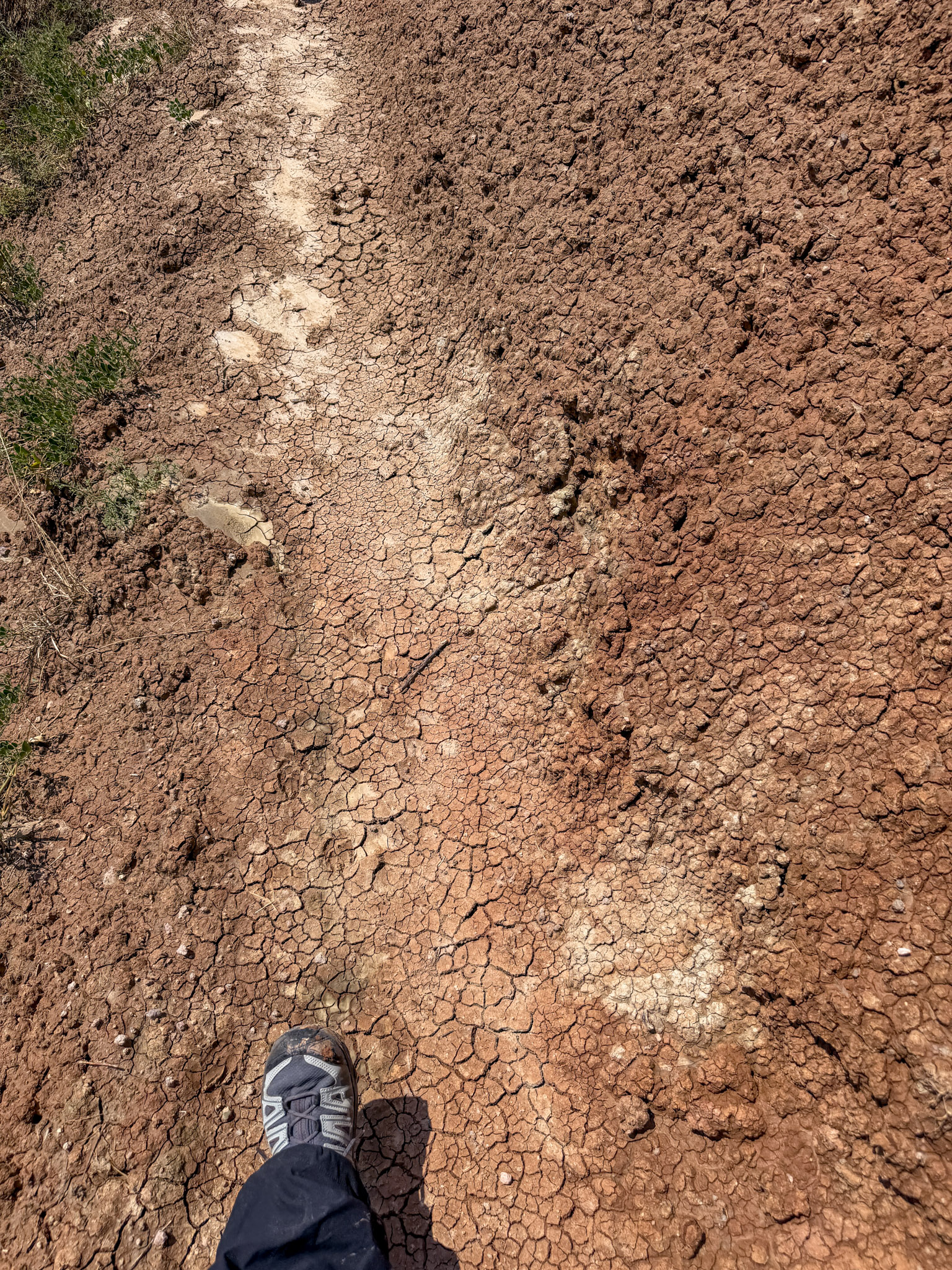
Are the colors of the Rainbow Mountains in Georgia actually vivid?
Whether the colors are actually real, or just heavily edited in photos, is one of the first things people asked me about these Georgian rainbow mountains. My answer: they’re real, genuinely vivid, but only with the sun out. Under full sunlight the reds and pinks are really strong. Cloud cover flattens everything though, turning the same hills a little dull.
I haven’t been to the larger set of hills further out near the Mravaltskaro Reservoir, so I can’t say whether the colors there are more or less saturated than what I saw here.
How does it compare to the famous Rainbow Mountains in Peru?
I’ve also hiked the Rainbow Mountains in Peru, and Gareji’s version is a notch less saturated by comparison. What it has going for it instead is that almost nobody else is out there. Peru’s site is known for getting crowded and for requiring a proper high-altitude trek to reach, while this one is a short walk from a parking lot, often empty enough that you can wander the hills on your own.
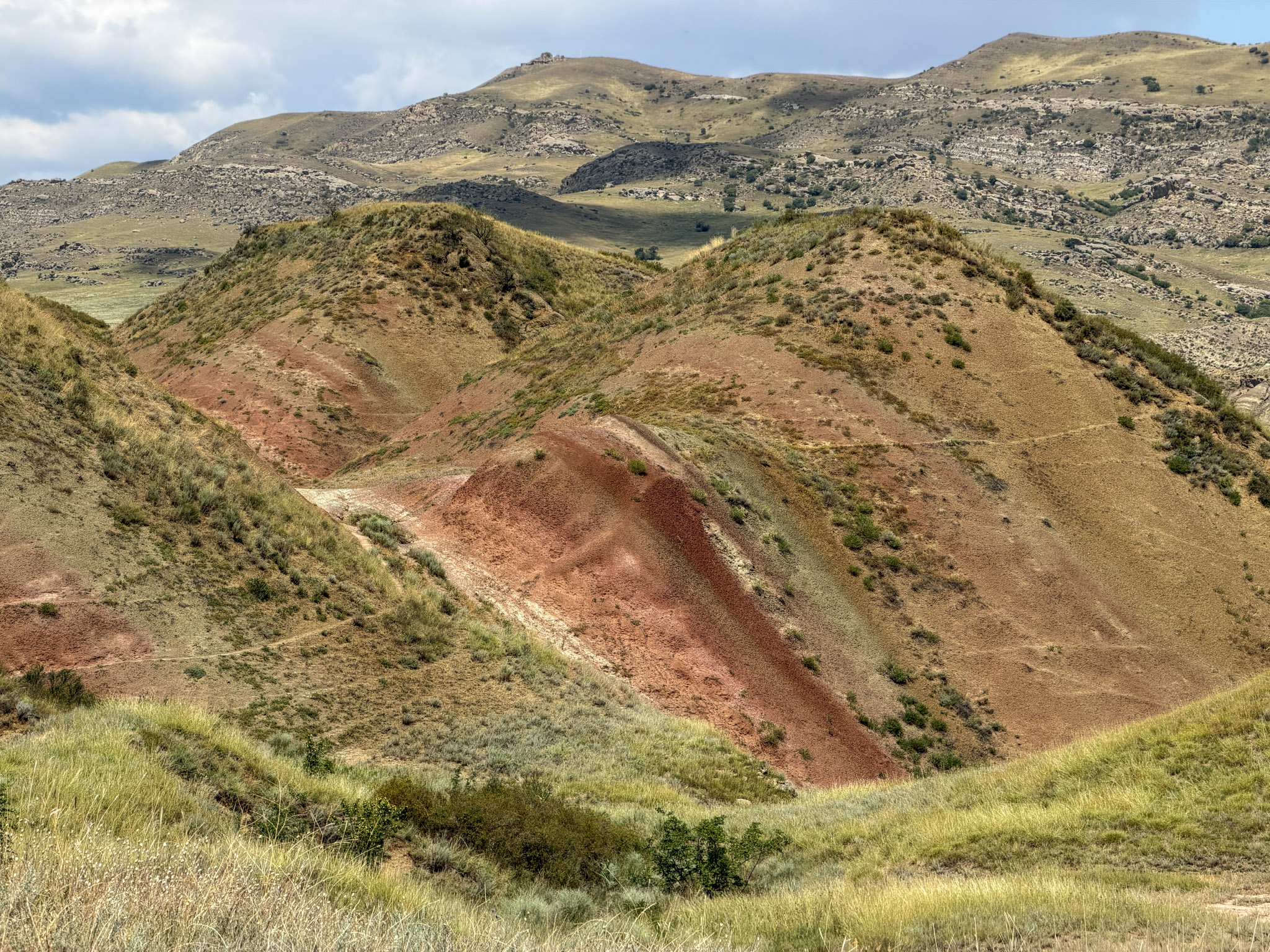
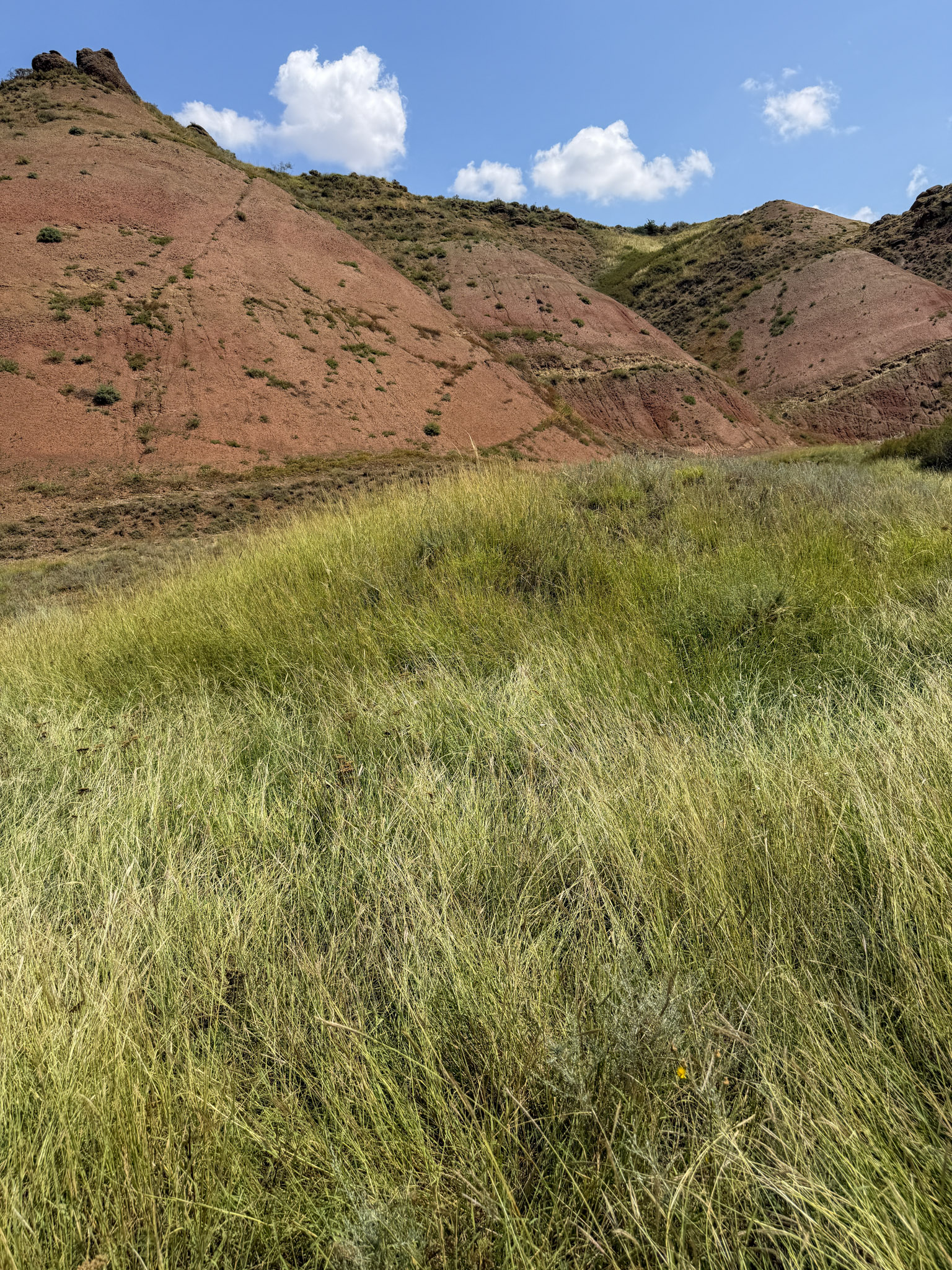
The David Gareji Monastery (Lavra)
We ate right there after the hike, working through whatever we’d grabbed at the supermarket earlier.
After lunch, our guide walked us through the Monastery in order: the outside first, then the walkways and passages connecting the different sections, and only at the end the inside of the church.
The Exterior
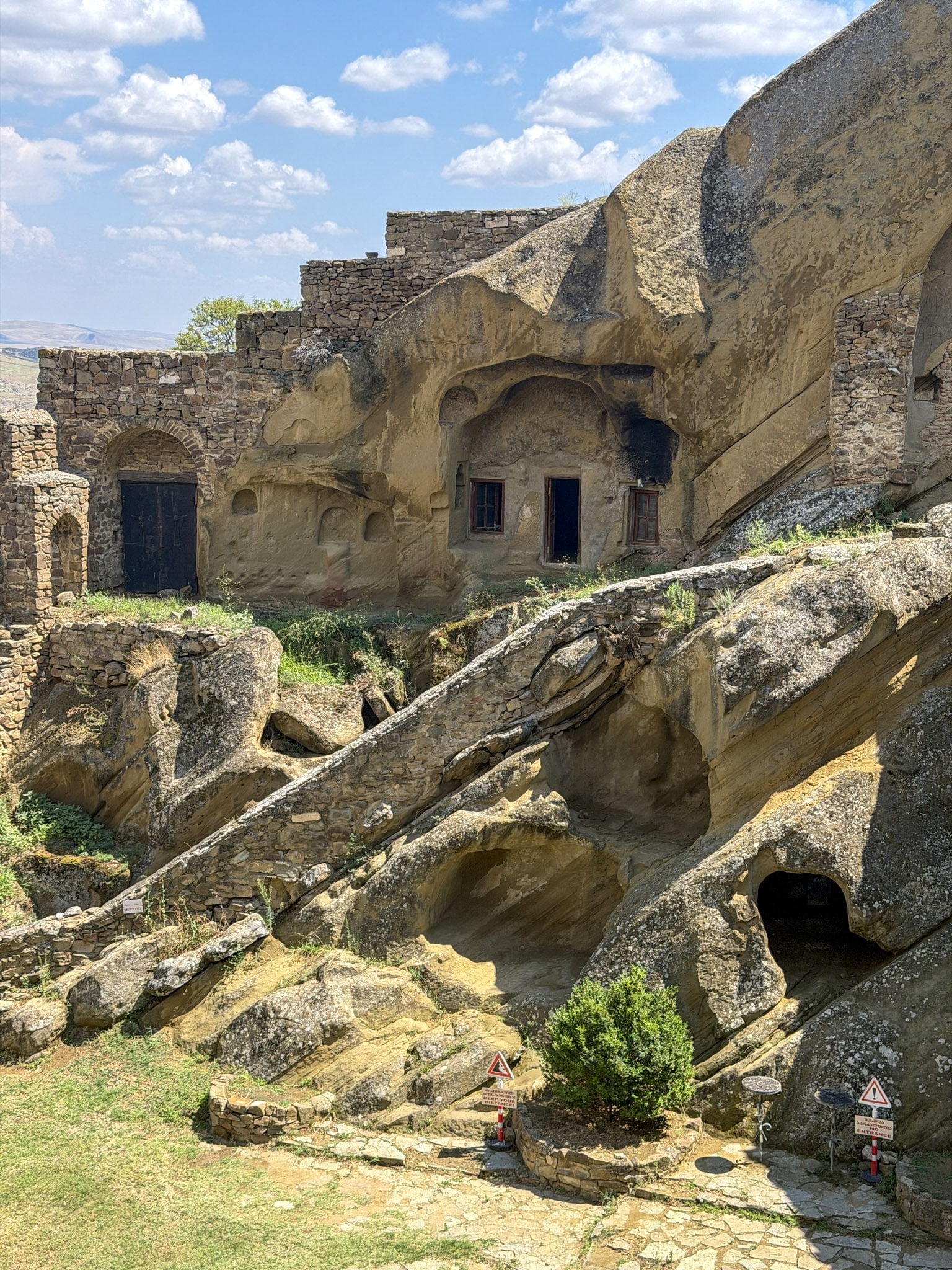
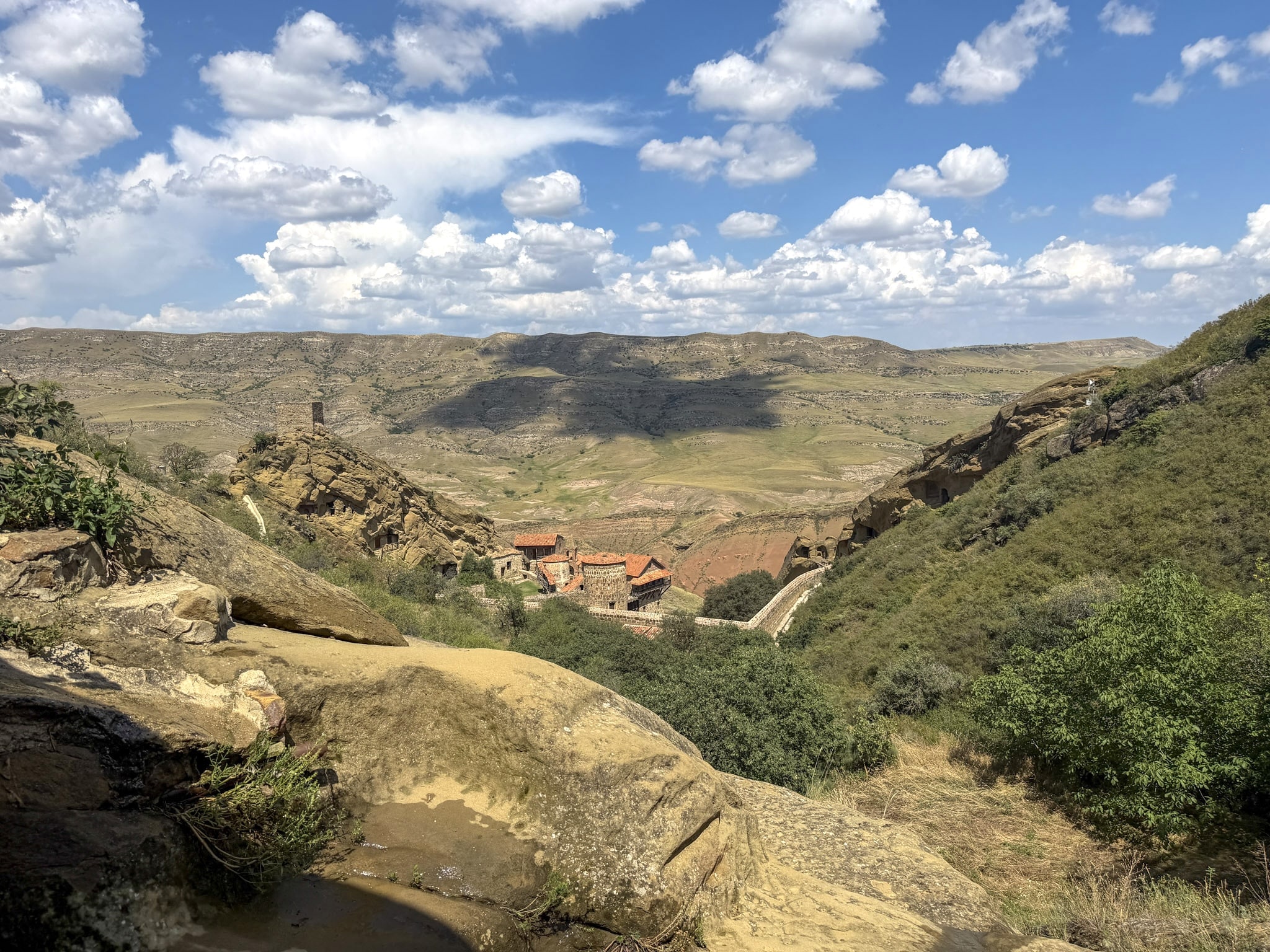
Lavra’s cells are carved directly into a wedge of sandstone jutting out from the hillside, with wooden balconies running along the cliff face to connect them. A stone watchtower sits above the main cluster of buildings, reached by a narrow staircase cut straight into the rock. Down in the yard, a row of engraved tombstones marks where past monks are buried.
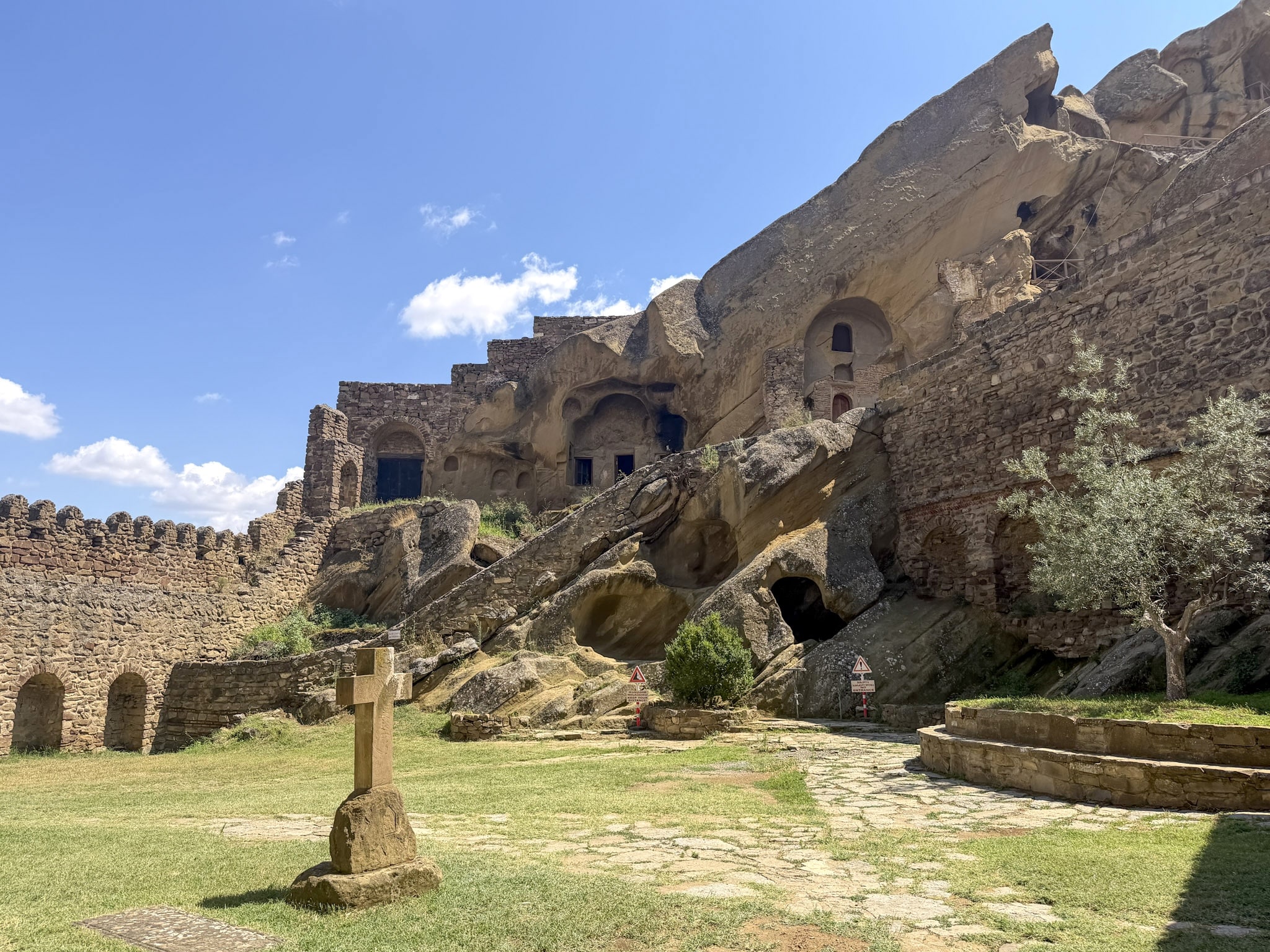
The Church
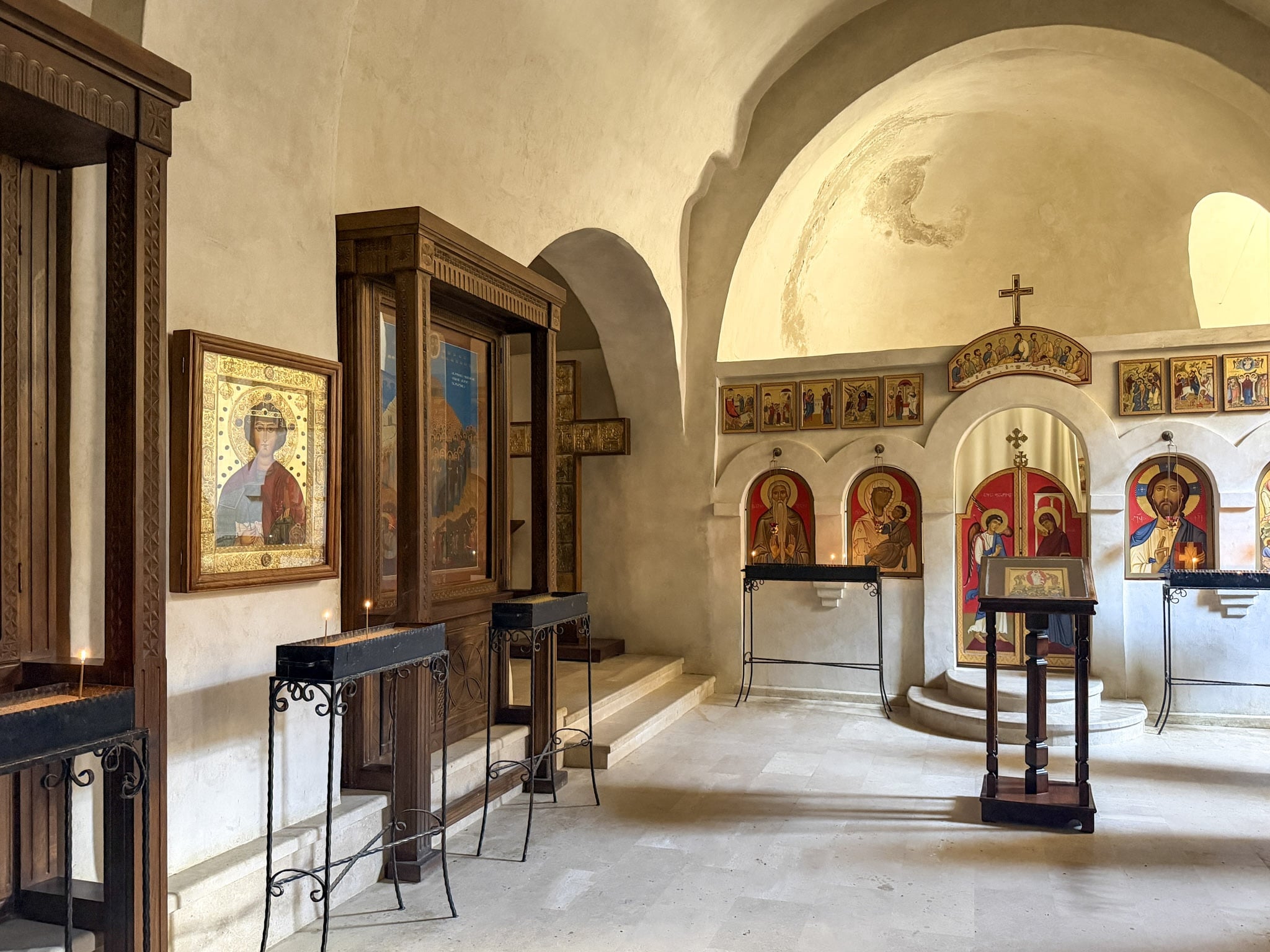
The church interior is covered in icons, several of them tied directly to what happened at this exact site. One large icon shows monks in rows climbing a hillside toward a small building at the top, soldiers waiting below, Christ looking down from above surrounded by rows of tiny crowns. This is the 6,000 Martyrs of David Gareji, the monks killed here by the Persian ruler Shah Abbas I on Easter night in 1616.
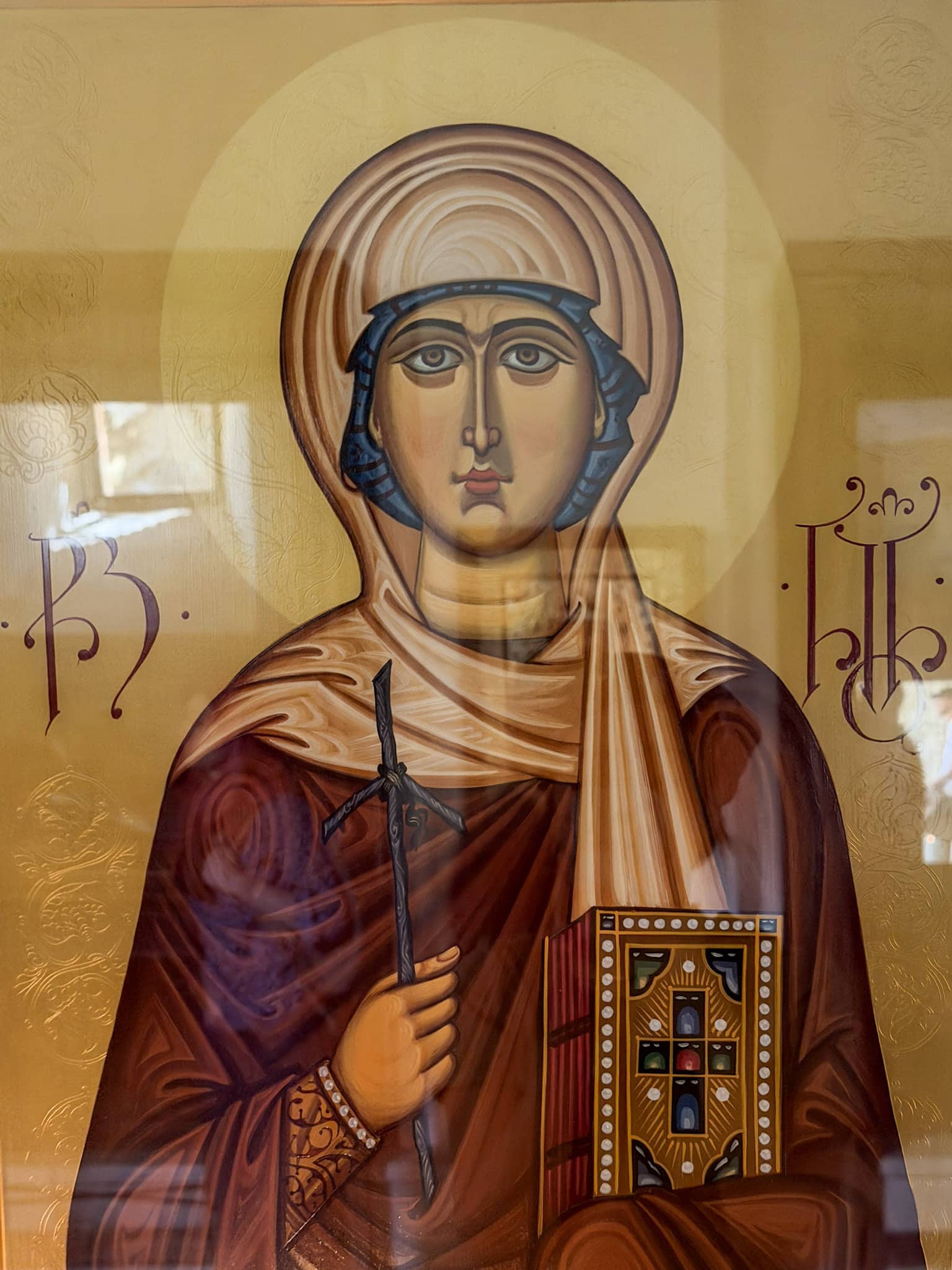
A few steps further in, a woman holds a cross and a book. That’s Saint Nino, the fourth-century evangelist credited with bringing Christianity to Georgia. Her cross gives her away once you know what to look for, because it bends at an angle instead of standing straight (as I was told by the guide, made from grapevine branches tied together with her own hair).
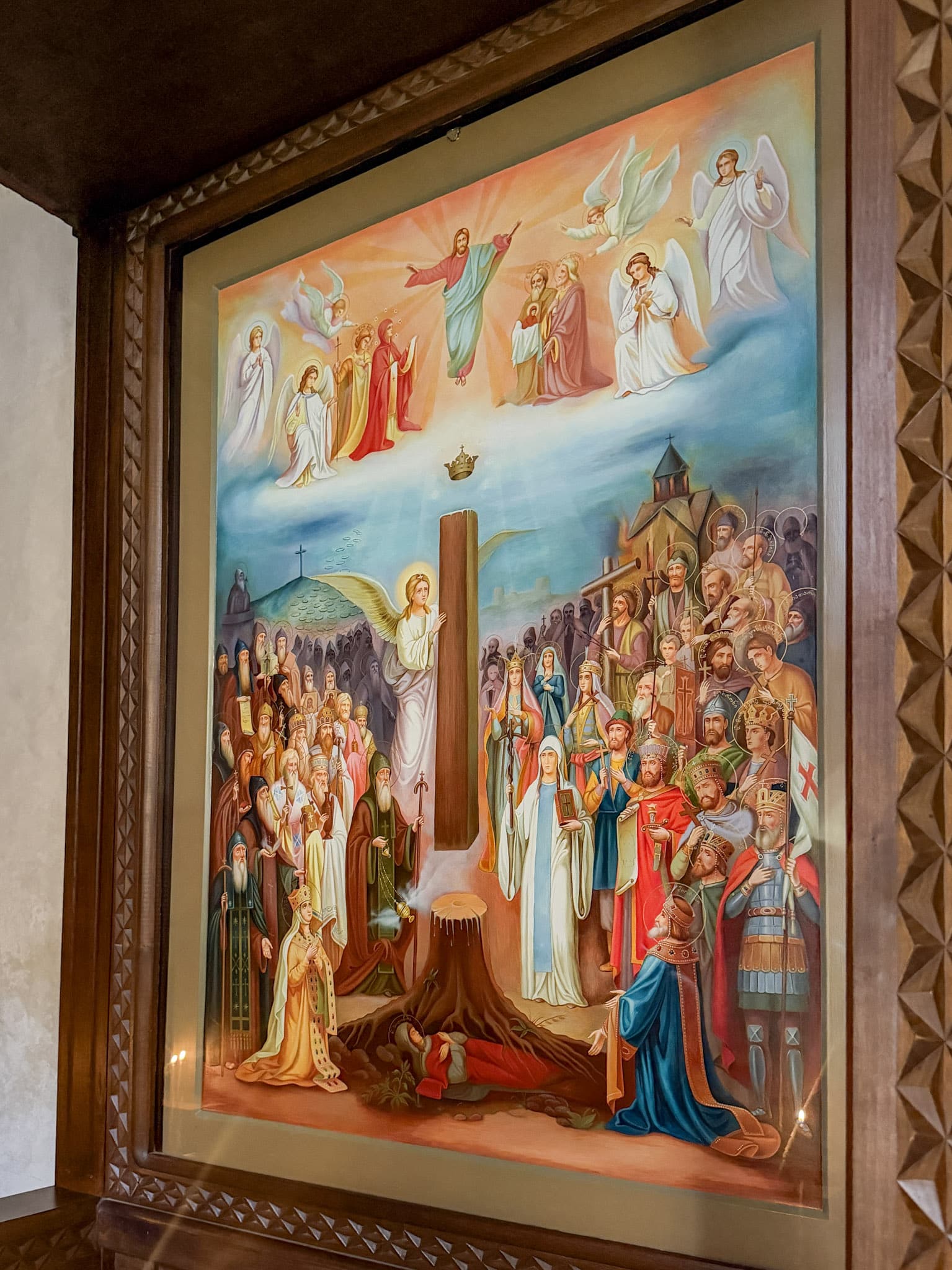
The wall behind the entrance holds “The Glory of Iveria” painted by Mikhail Sabinin in the 1880s, and it tells the legend behind Svetitskhoveli Cathedral in Mtskheta: Christ’s robe said to be buried at the roots of a cedar tree that later grew into the pillar the cathedral takes its name from.
The Climb to the Border and the Georgian Guards
From the monastery, a steep path climbs about 20 minutes further up the hillside, ending near a small spring close to where Georgia’s actual border with Azerbaijan runs.
The spring is fenced off and dry these days, more of a shaded resting spot at this point than an actual water source, so don’t count on filling up there. It’s easy enough to skip if you’d rather not add the extra climb.
A couple of Georgian guards were stationed near the top. Our guide explained they’re there mainly for security, making sure visitors know not to go past a certain point on the ridge. That point marks roughly where Udabno, the upper monastery connected to Lavra by a trail running along the border itself, has been off-limits since a territorial dispute between Georgia and Azerbaijan flared up in 2019.
We got as far as this lookout above Lavra and no further, not the ridge trail itself and not Udabno, since that section simply isn’t open right now.
After a while up there taking in the view, we headed back down to the van for the drive to Tbilisi, arriving back around 5pm.
Practical Tips for Visiting
A few things worth knowing on top of what I've covered above.
- Dress code: Lavra is an active monastery and the dress code is enforced. Men need long trousers, women need to cover their shoulders and wear something past the knees, plus a headscarf. Skirts and scarves were not available to borrow at the entrance the day I was there, so at least bring a headscarf just in case
- Watch for ticks and snakes: The guide told us that ticks were spotted in the high grass areas on the hike, and even in the monastery vicinity, although I didn’t notice any. Levant vipers turn up in the area, they’re venomous but not aggressive, so it’s mainly about watching where you step on the hike if you’re planning to detour from the main beaten path
- Bring small change: the bathrooms at the parking lot cost 1 GEL, and it’s worth having cash on hand for a donation or a snack from the nearby shop.
- Water: the spring near the border is dry and fenced off, so don’t count on it. There’s nowhere to refill once you’re past the supermarket stop, unless you wait for the final arrival at David Gareji, so bring enough for the whole day.
- Best time of year to visit: locals say spring (April, May) and early fall (October into the first weeks of November) tend to be the most comfortable. I visited in August, outside that window, and it worked out fine since we had a dry, sunny day.
- Check the border situation before you go: access near Udabno has changed more than once since 2019, depending on how things stand between Georgia and Azerbaijan. Worth a quick search closer to your travel date to confirm what’s currently open.
FAQ
How long does the whole day trip take? Around seven hours door to door. My tour picked us up near Avlabari at 9:45am and had us back in Tbilisi by 5pm, including the drive, the hike, lunch, and the monastery visit.
Is the David Gareji & Rainbow Mountains tour worth it? Yes, mainly because you get two very different experiences in one day: a working cave monastery with a genuinely interesting history behind its icons, and a uniquely colorful landscape a short walk away. The hike is manageable, and unlike more famous rainbow-striped hills elsewhere in the world, this one is not crowded at all. The only real caveat is weather.
Can you still visit Udabno Monastery? No. Udabno, the upper monastery connected to Lavra by a ridge trail along the Georgia-Azerbaijan border, has been closed to visitors since a territorial dispute flared up between the two countries in 2019. Guards stationed near the top stop people before they reach the trail. Only Lavra, the lower monastery, is currently open.
How hard is the Georgian Rainbow Mountains hike? It’s a 40-minute loop with some ups and downs, not a technical climb. Regular hikers will find it easy, but it’s doable for anyone without mobility issues, as long as you have proper hiking shoes. The one real obstacle is mud. The ground turns soft and slippery fast after rain, so tours sometimes adjust or skip this part if there’s been heavy rain in the previous 24 hours.
Are the Rainbow Mountains near David Gareji really that colorful, or is it edited in photos? They’re real, but only with the sun out. The photos you’re seeing in this article were shot by me with just an iPhone and I didn’t adjust the saturation. Compared to Peru’s Rainbow Mountain, the colors here are a notch less saturated, but this site is also far less crowded and much easier to reach.