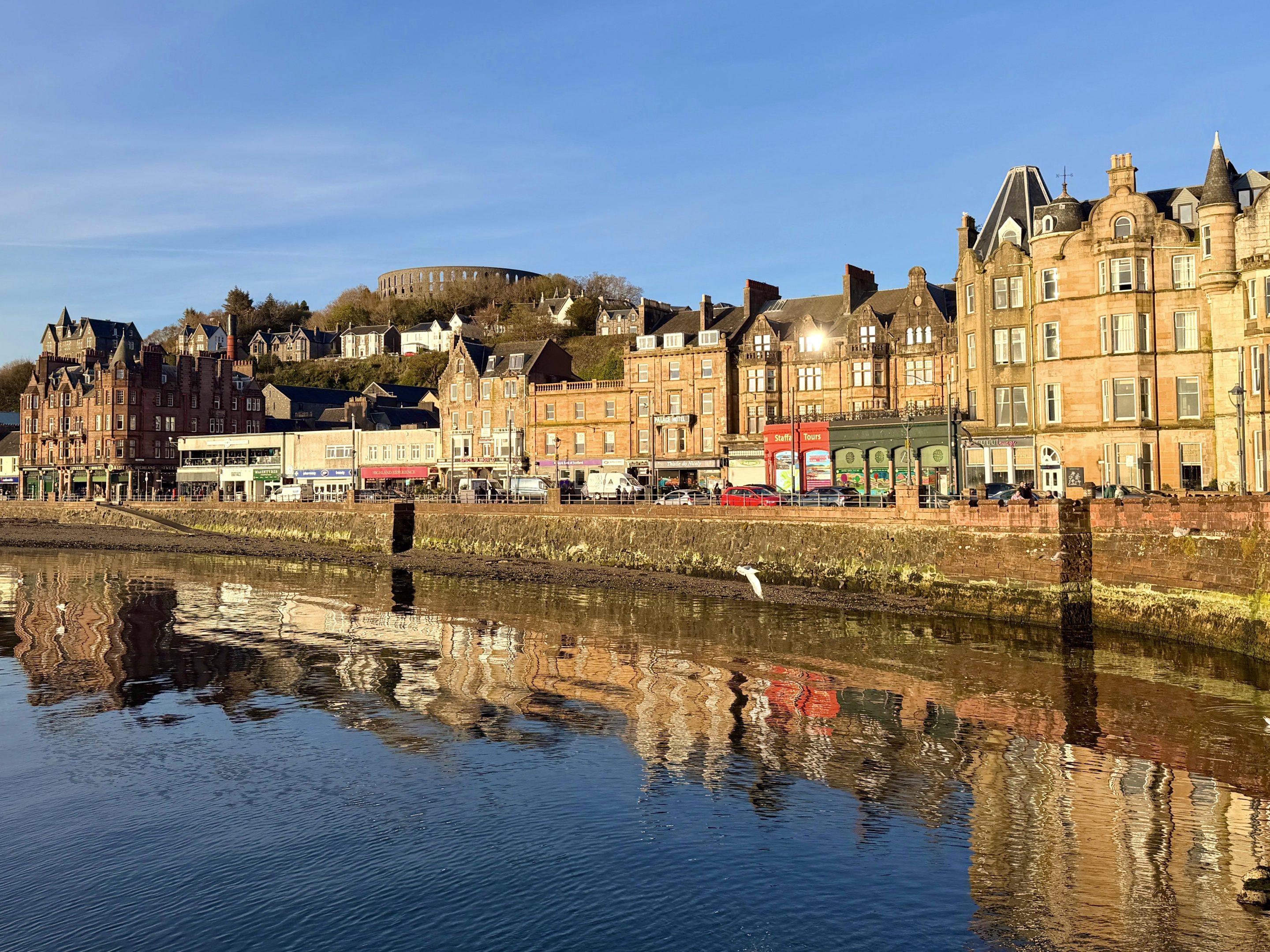
Are the Jurassic dinosaur footprints on An Corran Beach in Scotland real? A guide took me there during a tour of Skye, and I wasn't leaving without finding out.
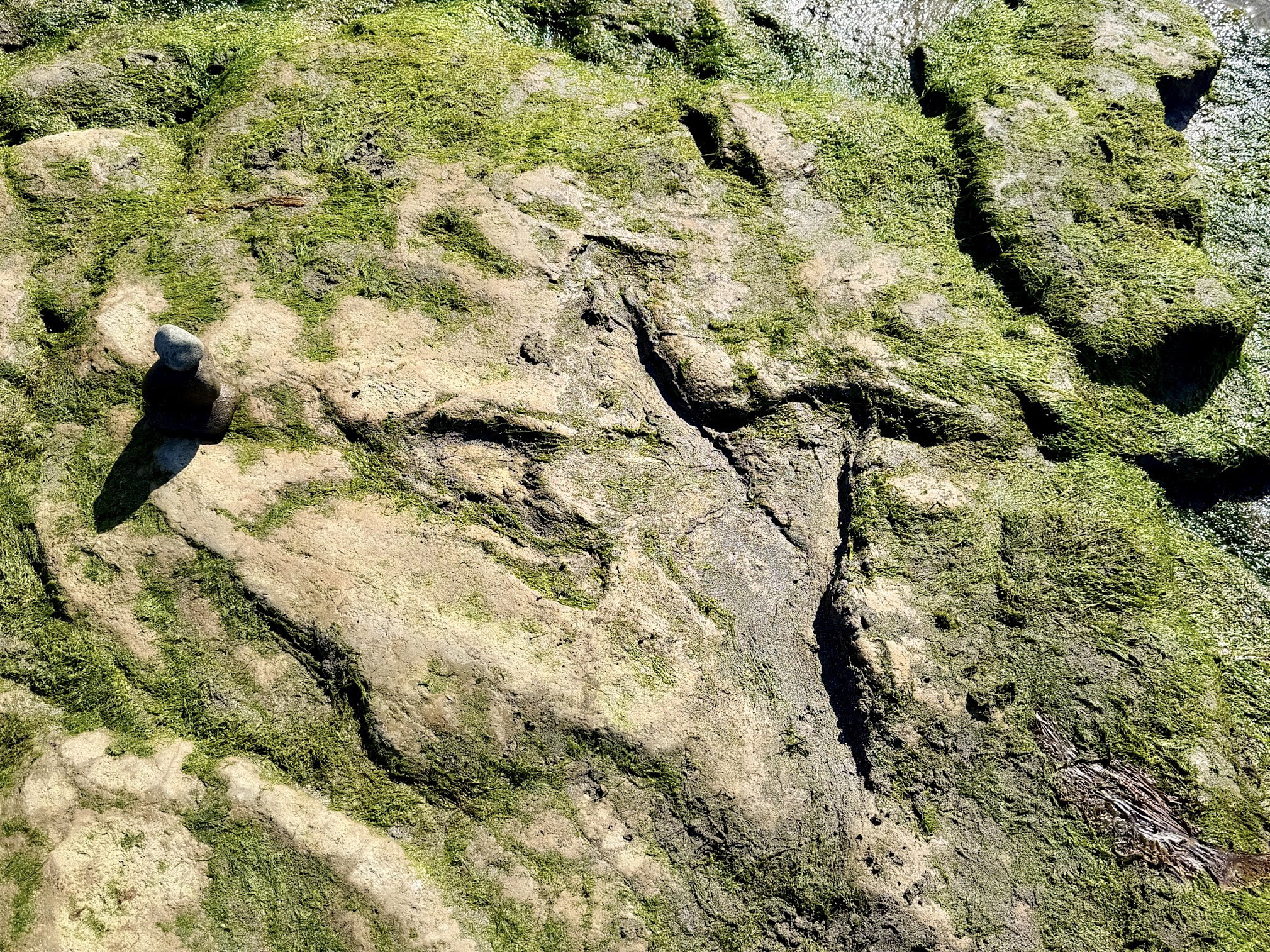
I was halfway through a tour of northern Skye when our guide casually announced a small and unplanned detour: a beach where dinosaurs had apparently left their footprints in the rock.
That is not the sort of sentence you ignore.
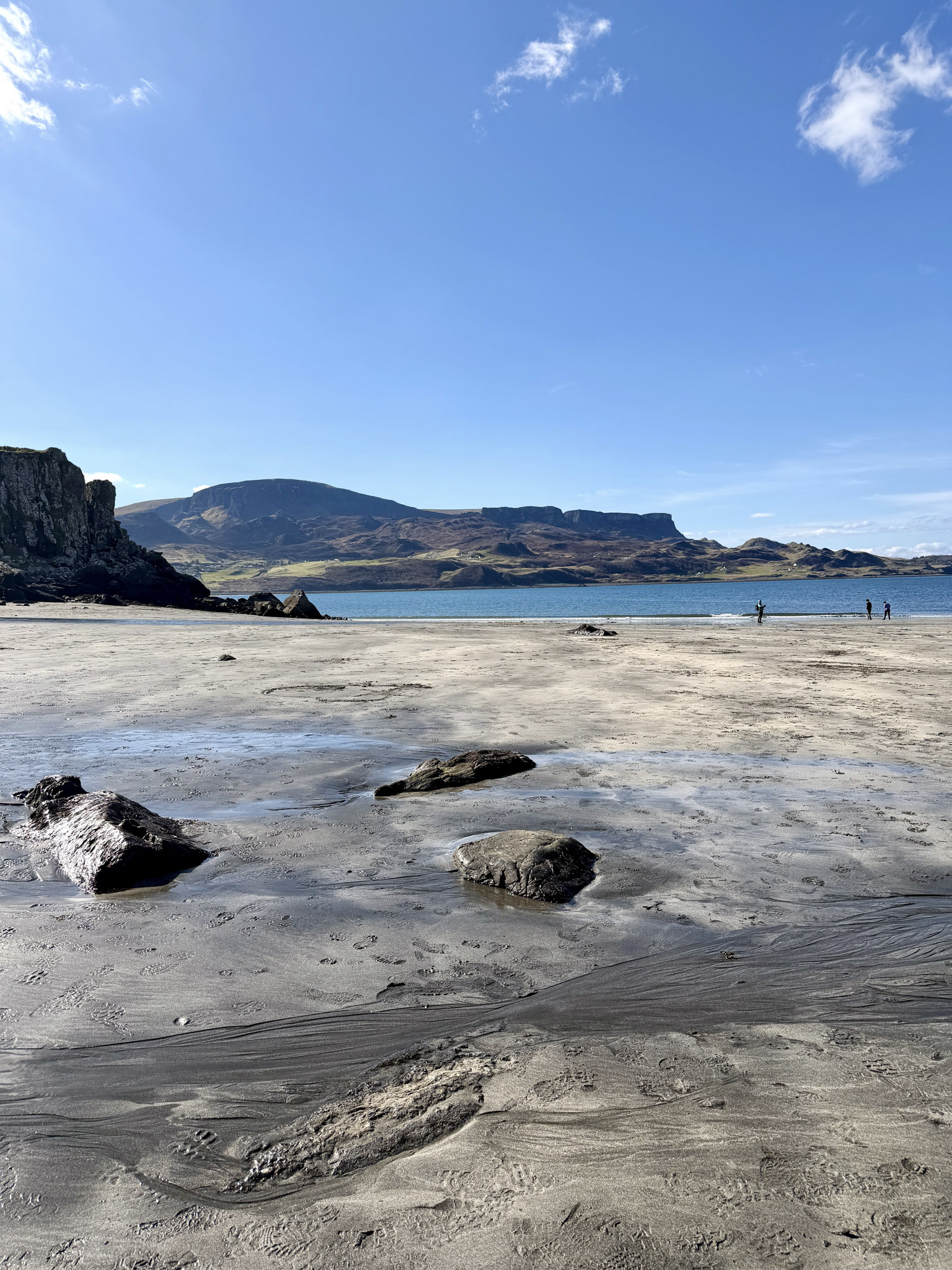
We pulled over, walked down to a beach called An Corran, and a few minutes later I was looking at tracks said to be around 168 million years old. And once I got home, I wanted to know exactly how real those Jurassic dinosaur footprints were.
The Backstory
Around 168 million years ago, the northern area of Skye was part of a shallow coastal environment of lagoons and mudflats. A dinosaur among many walked across soft sediment, leaving impressions that were later filled and buried beneath further layers. The sediment hardened into rock, and erosion eventually brought the surface back into view.
The footprints were discovered in more recent times and more or less by accident. In 2001, local resident Cathy Booth was walking her dog when she noticed the first one after shifting sand had exposed part of the rock surface. Researchers soon later documented the wider group.
Where Are These Dinosaur Footprints in Skye?
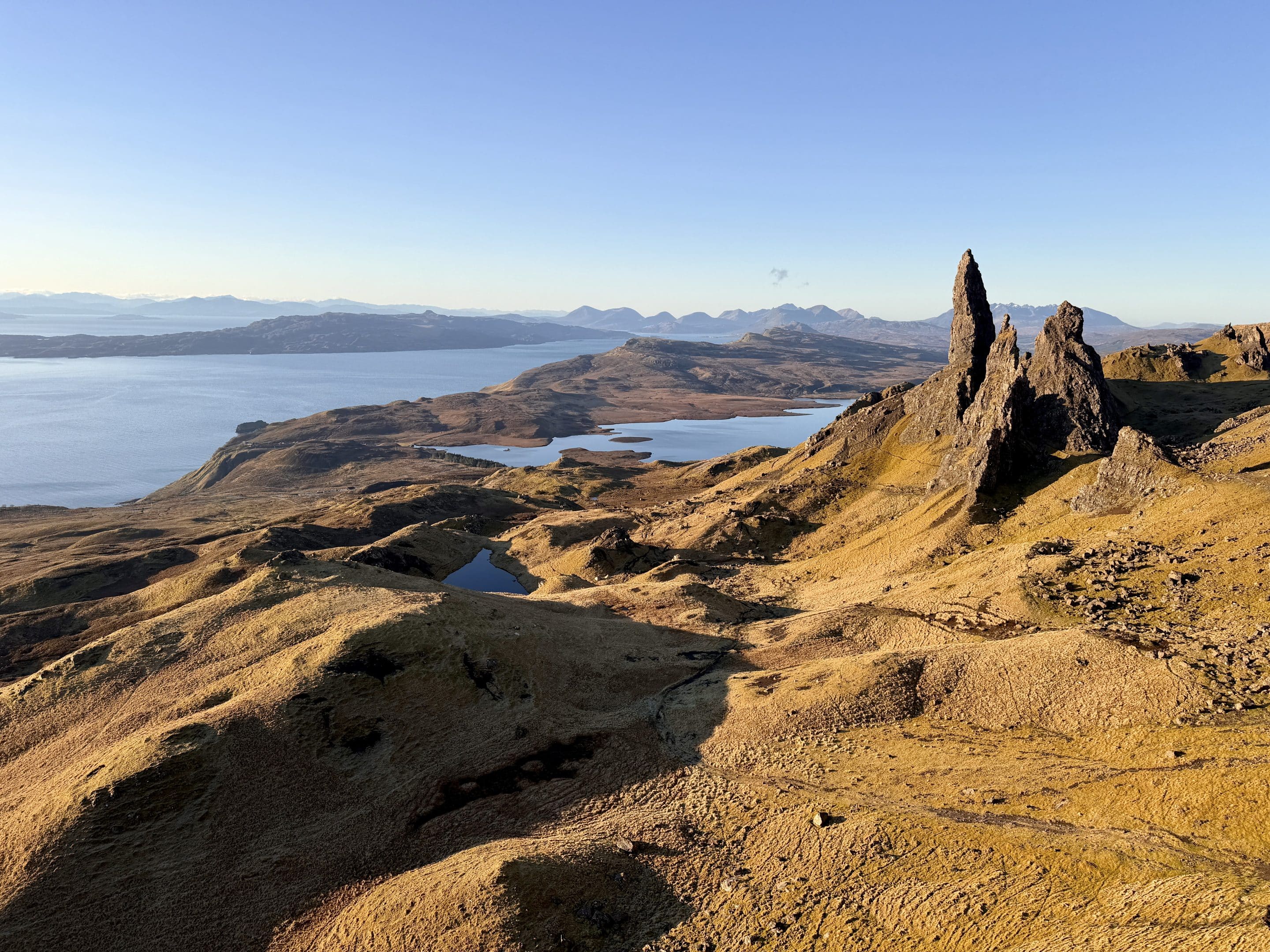
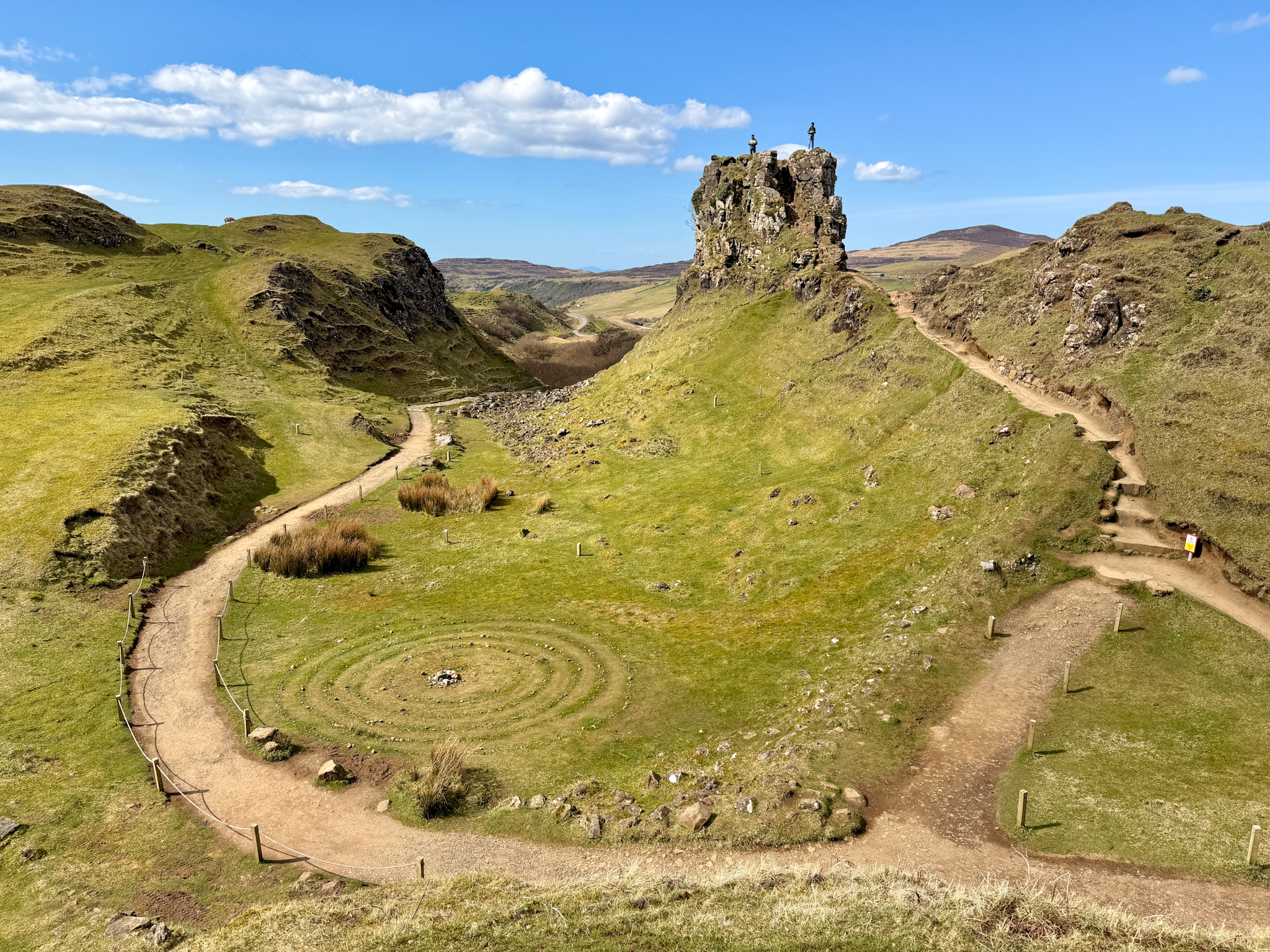
The footprints are located at An Corran Beach, just outside Staffin on the northeastern side of the Isle of Skye. This part of the island sits on the Trotternish Peninsula, the same stretch of coast as the Old Man of Storr, Kilt Rock and the Quiraing.
From Portree, the drive takes roughly 40 minutes along the A855. It is an easy stop to add to a day exploring northern Skye, especially if you are already heading towards the Quiraing or continuing around the Trotternish Loop.
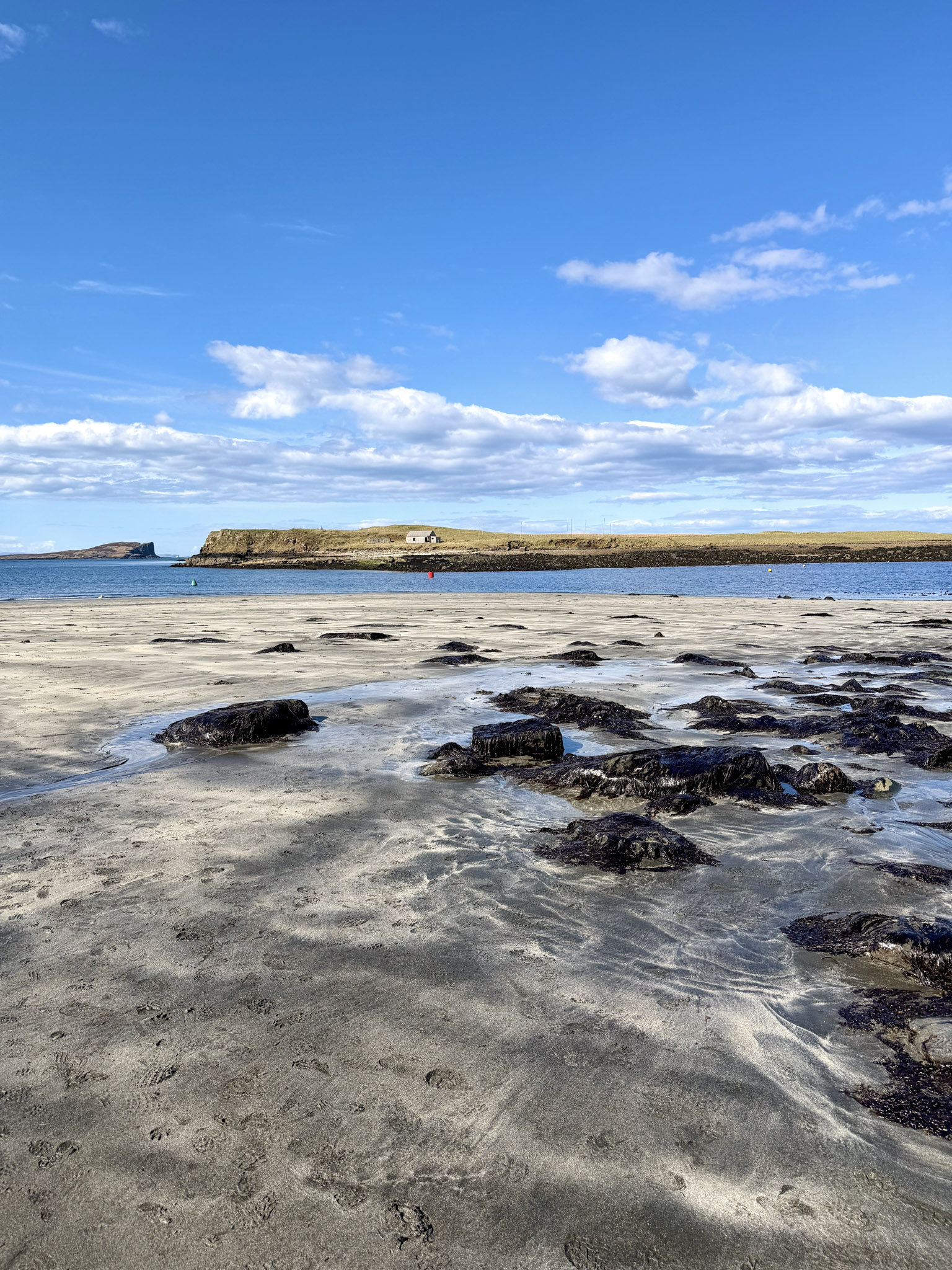
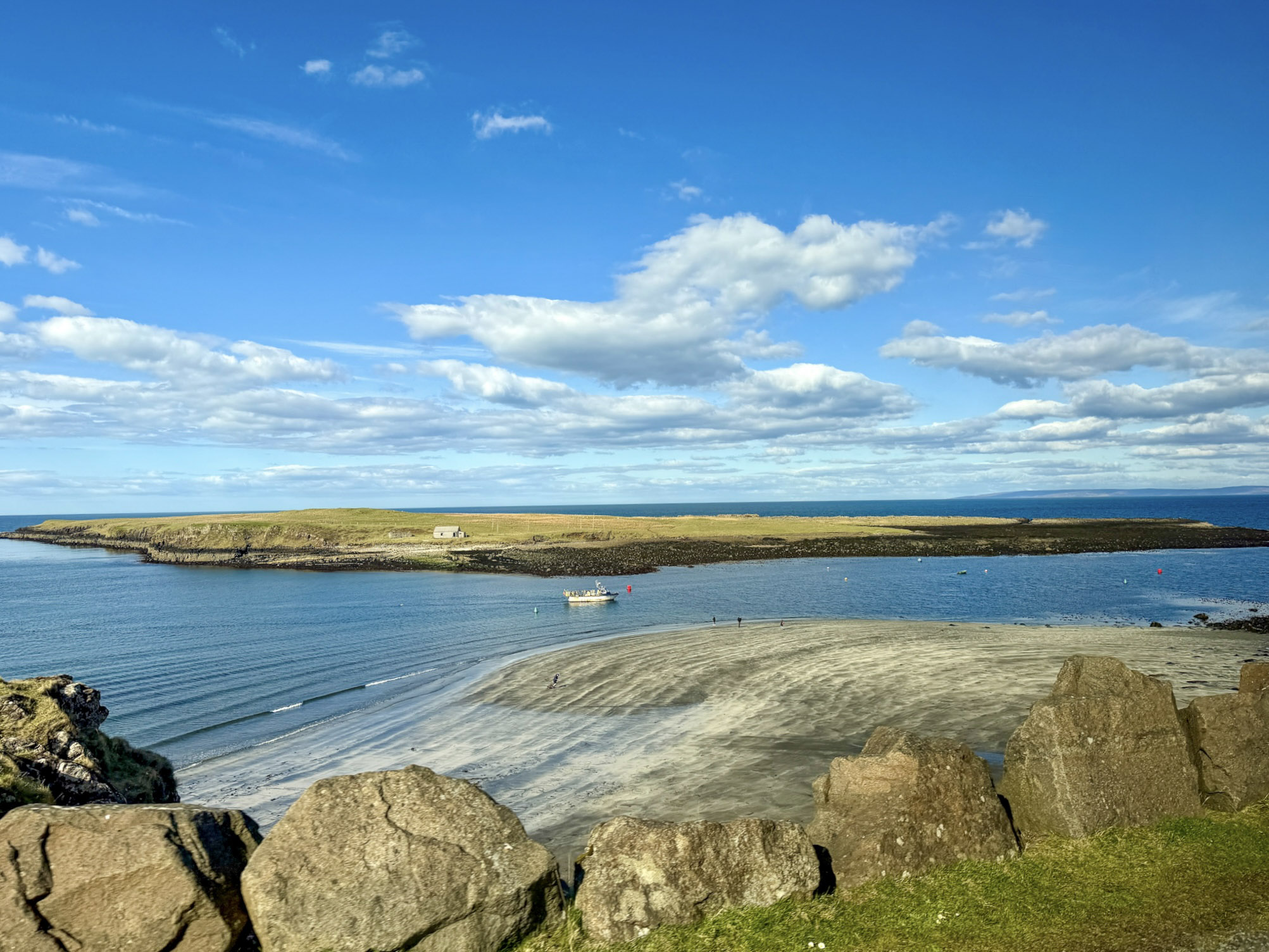
There is a small free parking area beside the road at the top of the slipway. From there, walk down the concrete ramp towards the beach. The footprints are not on the main sandy section: they are on the exposed rock platform to the right as you face the sea.
The walk from the car park takes only a few minutes, although the final rocks can be wet and slippery with seaweed. There are no facilities on the beach.
-
- Heading further around the Trotternish Loop after this stop? Here's the full route: 12 Best Things to Do on the Isle of Skye (+Map).
How to Spot the Footprints On the Beach
Finding the footprints was actually hard. I was there with a guide who knew exactly where they were, and we still had to spend a few minutes looking before the shapes began to stand out. They are not fenced off or painted with giant arrows, no sign is present. Instead, they're preserved exactly where they were discovered, on the flat rock platform exposed by the tide.
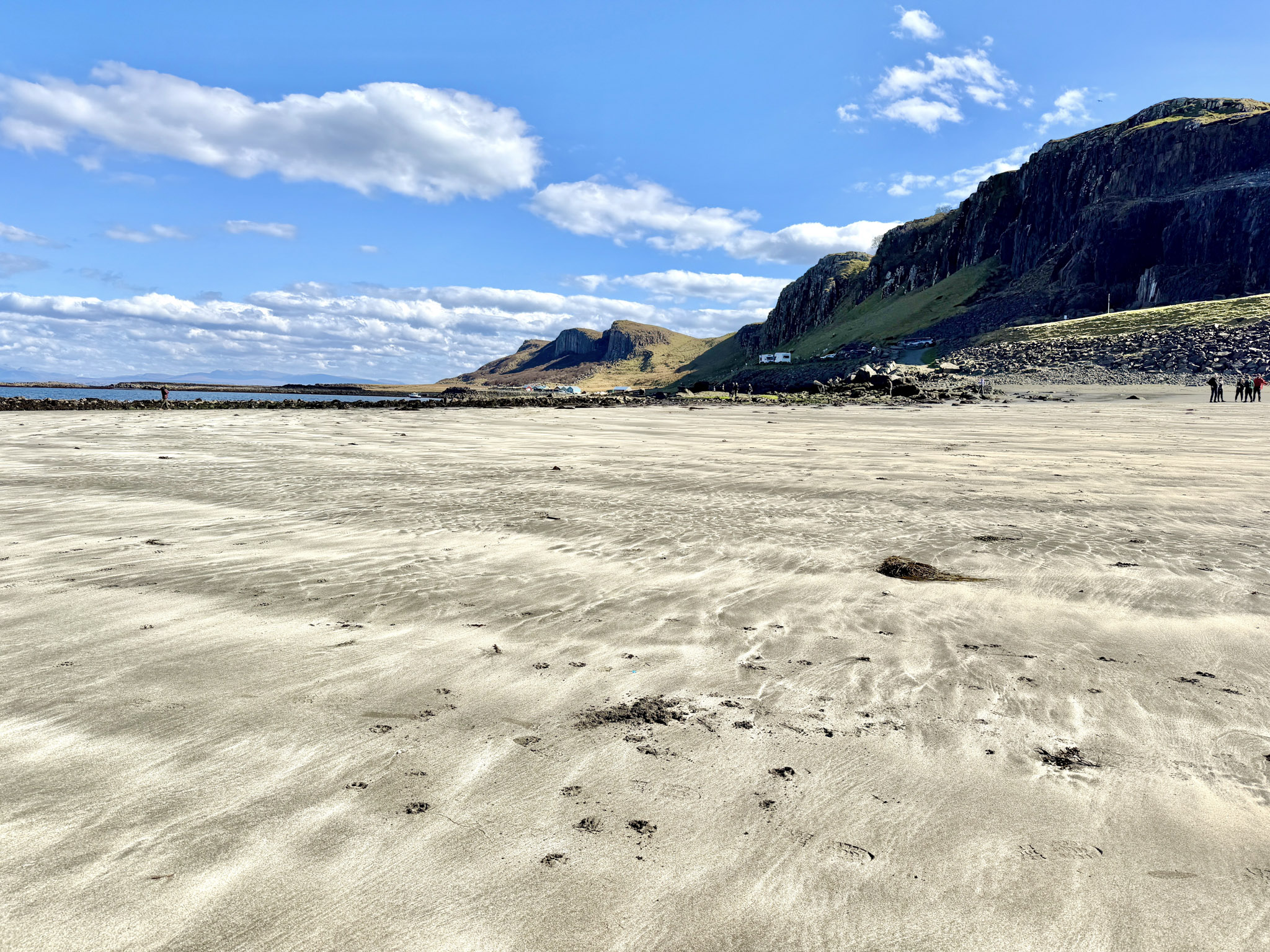
The single most important tip is to visit at low tide. At high tide, many of the tracks are underwater, while even at mid tide they can be covered by pools, seaweed or a thin layer of sand. Winter storms sometimes expose them more clearly, while calmer periods can leave parts of the site buried again.
From the slipway, walk onto the rocky platform. The best-known prints are found among the broad, flat slabs close to the large boulders near the shoreline. Even then, don't expect them to jump out immediately.
Once you spot one, your brain recalibrates, a what looked like an ordinary depression in the rock suddenly becomes unmistakably foot-shaped.
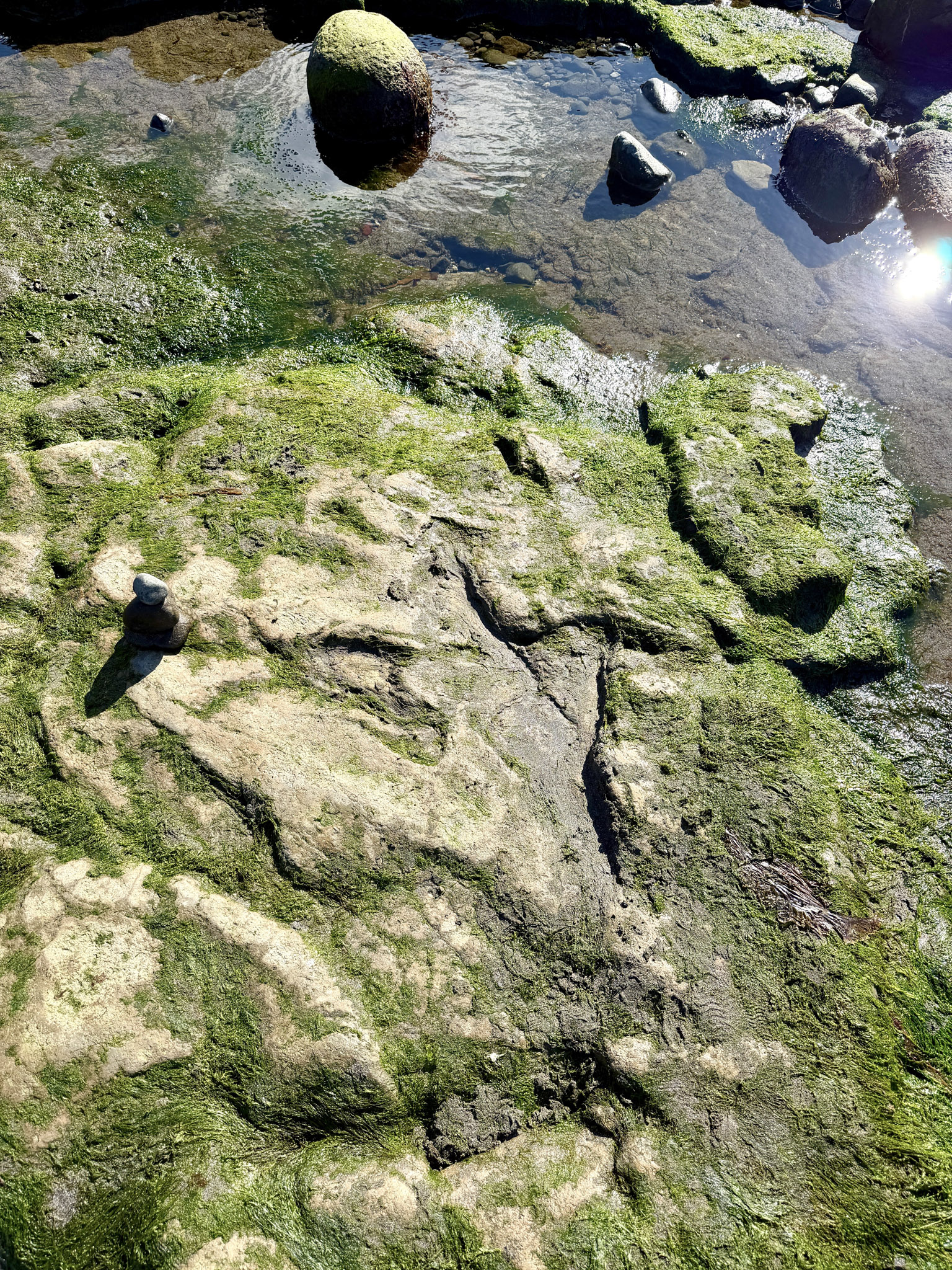
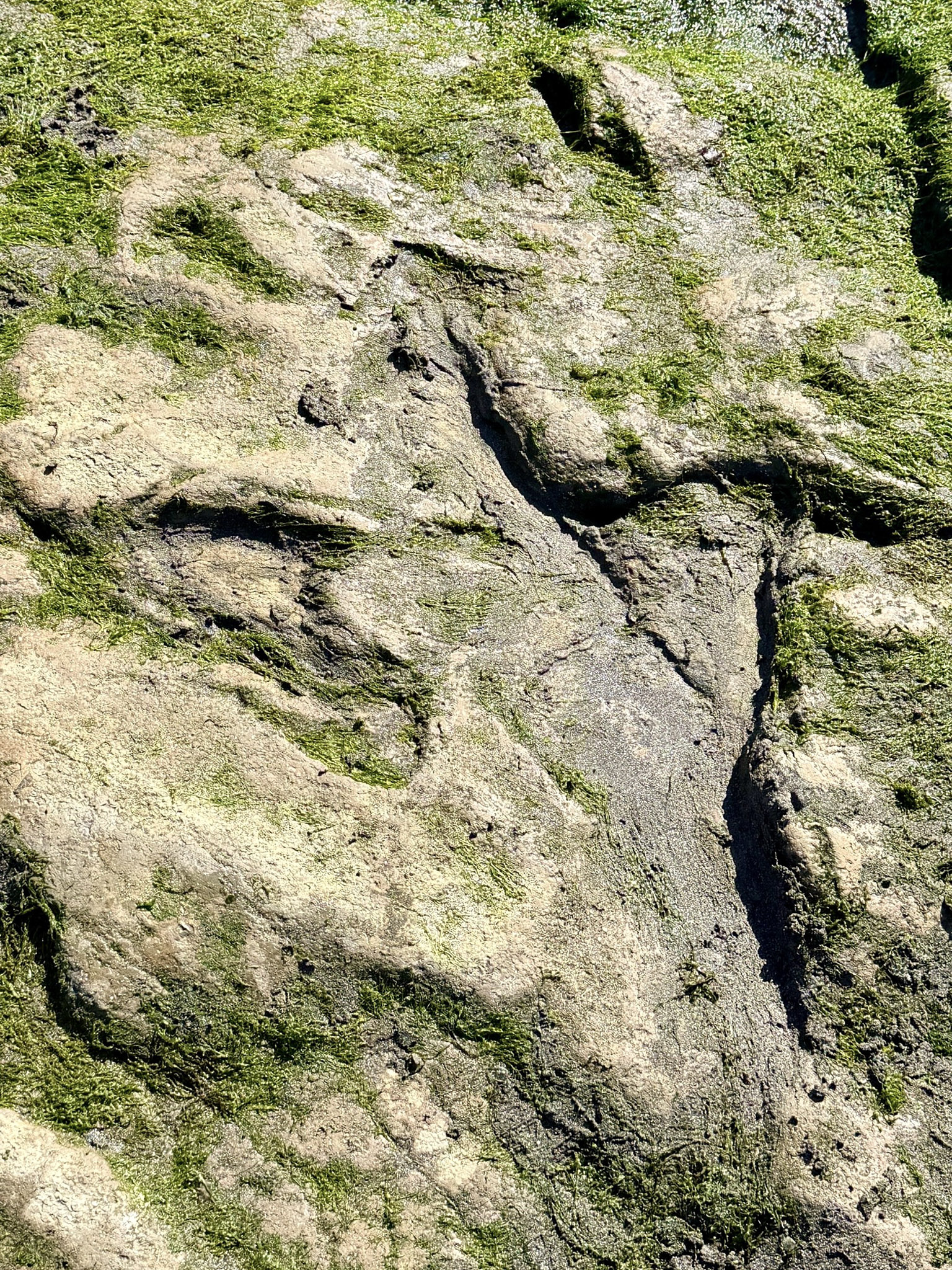
The Big Question: Are They Real?
Yes. After extensive research, I can confirm that the footprints at An Corran have been studied by palaeontologists, measured, photographed and described in a peer-reviewed paper published in the Scottish Journal of Geology. This is not a case of a local guide finding three convenient dents in a rock and building a nice little story around them.
Researchers documented 15 three-toed footprints still preserved in the original Jurassic rock surface. Fossils found in situ have not been moved, rearranged or carried onto the beach from somewhere else. The tracks remain in the layer of sediment in which the animals originally left them.
The largest tracks are roughly half a metre long. Their narrow, three-toed shape led researchers to conclude that they were probably made by a sizeable theropod: one of the group of mainly carnivorous dinosaurs that walked on two legs. You will often see the tracks attributed specifically to Megalosaurus, including on local tourism material, but the scientists were more cautious. The prints are weathered, and a footprint rarely provides enough information to identify its owner.
So, Megalosaurus is possible. “Large theropod, perhaps something megalosaur-like” is more accurate.
Bones and teeth discovered in the region provide additional context and proof. Dinosaur remains found across Skye include vertebrae, limb bones, teeth and other skeletal fragments, while the Staffin area has also produced marine reptile fossils, including a rare plesiosaur tooth. Staffin Museum holds several important local finds, including a slab containing both adult and much smaller dinosaur footprints.
An Corran is not the only place on Skye where this has happened. In 2025, researchers published a study documenting another 131 dinosaur tracks at Prince Charles’s Point on the Trotternish Peninsula, including long sequences left by theropods and sauropods. The tracks were again preserved in ancient lagoon sediments.
Those discoveries proves that this part of Skye contains an unusually rich and scientifically documented Middle Jurassic fossil record.